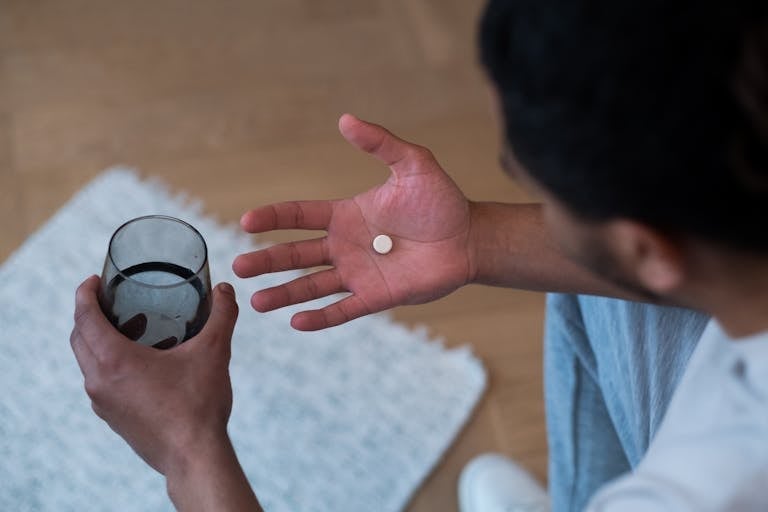

Social anxiety medication is one of the most searched, most debated topics in mental health communities online, and Reddit threads on the subject often surface more honest, lived experience than clinical brochures ever could. The most commonly discussed options include SSRIs like sertraline and escitalopram, SNRIs like venlafaxine, beta-blockers for situational anxiety, and benzodiazepines for short-term relief, though each carries different risk profiles and works differently depending on the individual. No single medication is universally “best,” and the right path almost always involves a conversation with a psychiatrist who knows your full picture.
What Reddit gets right is the emotional texture of that search. People there aren’t asking in the abstract. They’re asking because something in their daily life has become genuinely hard to manage, and they want to know what actually helped someone who felt the way they feel. That kind of raw, peer-to-peer honesty is worth something, even when it can’t replace professional guidance.
If you’re reading this trying to sort through your own experience with social anxiety, you’re in the right place. Our Introvert Mental Health Hub covers the full range of anxiety, overwhelm, and emotional processing that many introverts deal with, and this article fits squarely into that conversation.

Why Do So Many People Turn to Reddit for Medication Advice?
There’s a specific kind of loneliness that comes with social anxiety. Not the loneliness of wanting company and having none, but the loneliness of being in a room full of people and feeling like you’re the only one managing an internal alarm system that won’t stop going off. Clinical descriptions of social anxiety disorder capture the diagnostic criteria well enough, but they rarely capture what it feels like to sit through a client presentation wondering if everyone can see your hands shaking.
What’s your personality type?
Take our free 40-question assessment and get a detailed personality profile with dimension breakdowns, context analysis, and personalised insights.
Discover Your Type8-12 minutes · 40 questions · Free
I know that feeling. During my years running advertising agencies, I sat across from Fortune 500 marketing directors in high-stakes pitches, and there were moments when my internal experience was nothing like the composed exterior I’d learned to project. As an INTJ, I process anxiety quietly and internally, which meant most people around me had no idea how much cognitive energy I was spending just managing the social performance of those rooms. The work itself I loved. The performance of confidence I found exhausting.
That gap between internal experience and external expectation is exactly why people turn to Reddit. They want to hear from someone who actually took the medication, not just read what the manufacturer says it does. The American Psychological Association notes that social anxiety disorder is one of the most common anxiety conditions, yet it remains significantly underdiagnosed, partly because people with it are often skilled at masking. Reddit threads on medication become a kind of confessional space where the mask comes off.
The challenge is that anecdotal experience, however honest, is deeply individual. What worked for one person at one dose in one life context may do nothing for someone else, or may produce side effects that make the original anxiety look manageable by comparison. That’s not a reason to dismiss the Reddit conversations. It’s a reason to read them as data points, not prescriptions.
What Are the Most Commonly Discussed Medications in These Threads?
Spend any time reading Reddit threads on social anxiety medication and a few names come up repeatedly. Understanding what each category actually does, and what the honest trade-offs are, matters more than chasing whichever option got the most upvotes in a given thread.
SSRIs and SNRIs
Selective serotonin reuptake inhibitors are typically the first-line pharmacological treatment for social anxiety disorder. Sertraline, escitalopram, and paroxetine are among the most frequently mentioned in online communities. SNRIs like venlafaxine also appear regularly. These medications work over weeks rather than hours, which is both their limitation and their strength. They don’t blunt acute anxiety in the moment, but many people report a gradual lowering of the baseline threat response that makes social situations feel less like emergencies.
What Reddit threads often capture honestly is the adjustment period. The first few weeks on an SSRI can feel worse before they feel better, and that’s something clinical literature sometimes glosses over. People describe increased anxiety, disrupted sleep, and emotional flatness in the early weeks. Knowing that in advance, from someone who went through it, can make the difference between staying with the medication long enough for it to work and stopping too soon.
The Harvard Health overview of social anxiety treatments confirms that SSRIs and SNRIs are considered first-line pharmacological options, and that response typically takes four to six weeks to assess properly.
Beta-Blockers
Propranolol is the beta-blocker that appears most often in social anxiety discussions. It works peripherally, blocking the physical symptoms of anxiety, the racing heart, the trembling hands, the flushed face, without directly affecting the psychological experience of anxiety itself. For situational social anxiety, like public speaking or high-stakes presentations, many people find this genuinely useful.
I’ll admit this is one I’ve heard about from people in my professional circles for years. A creative director I worked with years ago mentioned taking propranolol before major client presentations, not because she was falling apart, but because the physical symptoms were getting in the way of her actual competence coming through. As an INTJ observing that situation, what struck me was how the medication wasn’t changing who she was. It was just removing a physiological obstacle to being fully herself in the room.
Benzodiazepines
Benzodiazepines like lorazepam or clonazepam come up in Reddit discussions, often with significant caveats from community members who’ve used them. They work quickly and powerfully for acute anxiety, but the dependency risk and cognitive dulling are real concerns that experienced users frequently flag. Most psychiatrists use them cautiously for social anxiety, typically for short-term or situational use rather than ongoing treatment.
Reddit threads on benzos tend to be some of the most nuanced in the social anxiety space, precisely because the community has seen enough people struggle with dependency to take the risks seriously. That collective wisdom, even if unscientific, carries weight.
How Does Social Anxiety Overlap With Introversion and High Sensitivity?
One of the most important distinctions worth making early in any medication conversation is whether what you’re experiencing is social anxiety, introversion, high sensitivity, or some combination of all three. They’re not the same thing, even though they can look similar from the outside and even feel similar from the inside.
Psychology Today draws a useful distinction here: introversion is a preference for less stimulation and a tendency to recharge alone, while social anxiety involves fear, avoidance, and distress specifically tied to social evaluation. An introvert might prefer to skip a party because it sounds draining. Someone with social anxiety might want to go but feel genuinely unable to because the fear of judgment is too overwhelming.
Highly sensitive people add another layer to this picture. Many HSPs experience social situations with heightened intensity, not because they’re afraid of judgment, but because they’re processing more sensory and emotional information than most people. The crowd is louder. The lighting is harsher. The emotional undercurrents in the room are more palpable. If you’ve ever felt overwhelmed in a group setting and wondered whether that was anxiety or something else entirely, the piece on HSP overwhelm and managing sensory overload addresses that distinction in practical terms.
Why does this matter for medication discussions? Because the treatment for genuine social anxiety disorder may be very different from what helps an HSP manage sensory overload, or what helps an introvert set better boundaries around social energy. Medication can be genuinely significant for clinical social anxiety. It’s less likely to be the answer if what you’re actually dealing with is a mismatch between your temperament and your environment.
The American Psychological Association’s overview of anxiety disorders provides a solid grounding in what distinguishes clinical anxiety from typical stress responses, which is worth reading before assuming medication is the right starting point.
What Does the Clinical Research Actually Say About Medication for Social Anxiety?
Reddit threads can tell you what medications people have tried and how they felt about them. What they can’t tell you is the broader picture of how these medications perform across large populations over time. That’s where clinical evidence matters, not to override personal experience, but to put it in context.
A review published in PubMed Central examining pharmacological treatments for social anxiety disorder found that SSRIs and SNRIs consistently show efficacy in reducing social anxiety symptoms, with response rates that outperform placebo in controlled settings. The same review notes that combination approaches, medication alongside cognitive behavioral therapy, tend to produce better long-term outcomes than either alone.
That last point is one that gets underemphasized in Reddit discussions, which tend to focus on medication in isolation. Many people who’ve had the best long-term outcomes with social anxiety describe a combination of pharmacological support and some form of therapy or structured skill-building. The medication creates enough of a window that the psychological work becomes possible. Without that window, the anxiety can be too overwhelming to engage with therapeutically.
Additional research published in PubMed Central on anxiety treatment outcomes suggests that individual variation in treatment response is substantial, which is the clinical way of saying what Reddit users already know from experience: what works for one person may not work for another, and finding the right approach often involves some trial and adjustment.

What Are the Non-Medication Approaches That Reddit Users Also Recommend?
Something worth noting about the better Reddit threads on social anxiety is that they rarely stop at medication. The most upvoted, most substantive responses tend to come from people who’ve tried multiple approaches and can speak to how they work together. Medication often appears as one piece of a larger picture.
Cognitive behavioral therapy comes up constantly, and for good reason. It addresses the thought patterns that feed social anxiety, the catastrophizing, the assumption of negative judgment, the post-event processing that replays every perceived mistake in exhausting detail. For many people, CBT provides skills that persist long after any medication is discontinued.
Mindfulness-based approaches appear frequently too. Not as a cure, but as a way of changing the relationship with anxious thoughts rather than trying to eliminate them. Many introverts find this particularly compatible with how they already process experience, since it leans into internal awareness rather than pushing against it.
Social anxiety also has a complicated relationship with emotional processing more broadly. Many people with social anxiety are also highly attuned to others’ emotional states, which can make social situations feel both more intense and more exhausting. The piece on HSP anxiety and coping strategies explores this intersection in depth, and it’s worth reading alongside any conversation about treatment options.
Lifestyle factors appear in Reddit discussions too, sometimes dismissed as too simple, but consistently mentioned by people who’ve made real progress. Sleep quality, exercise, caffeine reduction, and social exposure in low-stakes contexts all get credited in these threads. None of them replace clinical treatment for genuine social anxiety disorder, but they change the baseline from which any treatment works.
How Does Social Anxiety Interact With Deeper Emotional Patterns?
One thing Reddit threads often surface, even if they don’t always name it explicitly, is the way social anxiety intertwines with other emotional patterns. Fear of rejection, perfectionism, and the weight of others’ emotions all show up in how people describe their experience, and each of those threads pulls in a different direction when it comes to treatment.
Perfectionism, for instance, can both cause and sustain social anxiety. The fear of being judged harshly is often inseparable from the internal standard of being judged at all. When you hold yourself to exacting standards, the possibility of falling short in public becomes genuinely threatening. The piece on HSP perfectionism and breaking the high standards trap gets at this dynamic in a way that resonates for a lot of people who’ve struggled to understand why their anxiety spikes most in situations where they care most about performing well.
Rejection sensitivity is another thread that runs through social anxiety in ways that medication alone doesn’t always address. The anticipation of rejection, the hypervigilance to signs of disapproval, the way a slightly flat response from a colleague can spiral into a full internal narrative about being disliked, these patterns have roots that go deeper than neurotransmitter levels. The article on HSP rejection, processing and healing addresses the emotional architecture of rejection sensitivity with real nuance.
Empathy adds another layer. Many people with social anxiety are also highly empathic, which means they’re not just managing their own anxiety in social situations. They’re also absorbing and processing the emotional states of everyone around them. I managed a team member years ago who described walking into a client meeting and immediately knowing something was wrong before anyone said a word. She’d pick up on tension, disappointment, or conflict before it became visible, and then spend the rest of the meeting managing her own response to what she’d sensed. That’s not anxiety in the clinical sense. It’s the cost of HSP empathy as a double-edged sword, and it requires different tools than medication alone.

What Questions Should You Actually Bring to a Psychiatrist?
Reading Reddit threads can help you walk into a clinical appointment better prepared. That’s genuinely useful. The problem comes when people use Reddit as a substitute for that appointment rather than preparation for it.
A few questions worth bringing to a psychiatrist if you’re exploring medication for social anxiety:
What’s the distinction between what I’m describing and a diagnosis of social anxiety disorder? This matters because the threshold for clinical diagnosis, as outlined in the DSM-5 criteria from the American Psychiatric Association, involves significant impairment and distress, not just occasional social discomfort. Knowing where you fall on that spectrum shapes the treatment conversation.
What’s the expected timeline for seeing results, and what should I watch for in the adjustment period? This is where Reddit experience is genuinely valuable to bring in. Knowing that the first two to four weeks on an SSRI can feel rough, and having that confirmed or contextualized by a clinician, makes the process more manageable.
What’s the plan if the first medication doesn’t work? Social anxiety treatment is rarely a one-and-done decision. Having a sense of the decision tree in advance reduces the anxiety about the process itself, which is a particular irony worth acknowledging.
Should medication be accompanied by therapy? Most clinicians will say yes, but the specifics matter. What kind of therapy, how often, and how does it interact with the medication timeline?
How does my broader emotional processing style factor into this? This is where knowing yourself as an introvert, or as someone who processes deeply and feels intensely, becomes clinically relevant. The article on HSP emotional processing and feeling deeply can help you articulate this part of your experience in terms a clinician can work with.
What Does Managing Social Anxiety Actually Look Like Over Time?
There’s a version of this conversation that treats medication as the destination. Find the right one, take it, and the anxiety goes away. That’s not how most people who’ve managed social anxiety well over time describe the process.
What tends to emerge in the more reflective Reddit threads, and in the clinical literature, is a picture of management rather than cure. Medication can lower the floor significantly, making it possible to engage with situations that previously felt impossible. Therapy can change the cognitive patterns that maintain anxiety even when the acute symptoms are under control. And self-knowledge, understanding your own temperament, your triggers, your limits, becomes an ongoing practice rather than a problem to solve once.
My own experience with social energy management as an INTJ has never involved medication, because what I was dealing with wasn’t clinical anxiety but rather a fundamental mismatch between how I’m wired and the extroverted performance expectations of agency leadership. The work for me was recognizing that distinction, stopping trying to fix something that wasn’t broken, and building a professional life that worked with my temperament rather than against it. That path isn’t available to everyone. For people with genuine social anxiety disorder, the neurological component is real and often needs real clinical support.
What both paths share is the importance of self-understanding. Whether the answer involves medication, therapy, lifestyle changes, or some combination, the foundation is the same: knowing what you’re actually dealing with, being honest about how it affects your life, and being willing to ask for help in the specific form you actually need.
Reddit can be part of that process. So can a good psychiatrist. So can the kind of reflective, honest writing about introvert experience that I try to do here. None of them are complete on their own.

If this article resonated with you, the broader Introvert Mental Health Hub covers anxiety, emotional processing, sensitivity, and the specific mental health challenges that show up for people wired the way we are. It’s worth bookmarking as a resource you return to over time.
About the Author
Keith Lacy is an introvert who’s learned to embrace his true self later in life. After 20 years in advertising and marketing leadership, including running agencies and managing Fortune 500 accounts, Keith now channels his experience into helping fellow introverts understand their strengths and build fulfilling careers. As an INTJ, he brings analytical depth and authentic perspective to every article, drawing from both professional expertise and personal growth.
Frequently Asked Questions
What is the most commonly recommended medication for social anxiety on Reddit?
SSRIs like sertraline and escitalopram appear most frequently in Reddit discussions about social anxiety medication, followed by SNRIs like venlafaxine. Beta-blockers such as propranolol are often mentioned for situational anxiety, particularly around public speaking or presentations. The consistent message in these communities is that individual response varies significantly, and what works well for one person may not work for another. A psychiatrist can help identify the most appropriate starting point based on your specific symptoms and history.
Is social anxiety the same as being introverted?
No, they’re distinct experiences that can overlap but don’t always. Introversion is a temperament characterized by a preference for less stimulation and a tendency to recharge through solitude. Social anxiety is a clinical condition involving fear, avoidance, and significant distress tied to social evaluation and the possibility of judgment. An introvert may prefer quiet environments without experiencing anxiety. Someone with social anxiety may genuinely want social connection but find it blocked by fear. Many introverts have no social anxiety at all, and some extroverts do experience it.
How long does it take for social anxiety medication to work?
For SSRIs and SNRIs, which are the most commonly prescribed medications for social anxiety disorder, meaningful improvement typically takes four to six weeks, with full response often taking longer. The first two to four weeks can sometimes feel harder as the body adjusts. Beta-blockers work more quickly for situational anxiety, taking effect within an hour or so of taking them. Benzodiazepines work quickly but carry dependency risks that make them less suitable for ongoing use. Anyone starting a new medication should discuss the expected timeline and what to watch for with their prescribing clinician.
Can social anxiety be managed without medication?
Yes, many people manage social anxiety effectively without medication. Cognitive behavioral therapy has strong evidence behind it for social anxiety disorder and addresses the thought patterns that maintain anxiety over time. Mindfulness-based approaches, gradual exposure to feared situations, and lifestyle factors like sleep quality and exercise all contribute to symptom management. That said, for some people with more severe social anxiety, medication creates enough of a reduction in symptoms that other approaches become accessible. The question of whether medication is necessary is one best answered with a mental health professional who knows your specific situation.
How do I know if my social discomfort is clinical anxiety or something else?
Clinical social anxiety disorder, as defined in the DSM-5, involves significant fear or anxiety about social situations where you might be scrutinized, avoidance of those situations or endurance with intense distress, and impairment in important areas of functioning. If your social discomfort is primarily about preferring quieter environments or needing recovery time after socializing, that’s more consistent with introversion or high sensitivity than clinical anxiety. If it involves genuine fear of judgment, avoidance of situations you’d otherwise want to engage with, or significant interference with work or relationships, a clinical evaluation is worth pursuing. A psychiatrist or psychologist can help clarify the distinction.