South Padre Island offers solo travelers something genuinely rare: a coastal destination where you can be completely alone in a crowd, or warmly welcomed into conversation, entirely on your own terms. The island’s mix of quiet beach stretches, low-key local spots, and genuinely friendly residents creates a natural rhythm that suits introverts who want to recharge while still feeling connected to something larger than themselves.
As someone who spent two decades running advertising agencies, I logged more miles in airports and conference rooms than I care to count. Solo travel became my pressure valve, the thing that kept me functional between the relentless social demands of agency life. What I discovered over those years is that the best destinations for introverts aren’t necessarily the quietest ones. They’re the ones where solitude feels chosen rather than imposed, and where the occasional human connection happens naturally, without performance.
South Padre Island, tucked at the southern tip of Texas, turned out to be one of those places for me. And I suspect it might be for you, too.

Solo travel and introvert friendship patterns share more common ground than most people realize. Both involve the deliberate management of connection, choosing depth over breadth, and protecting the mental space that lets you actually show up as yourself. Our Introvert Friendships hub explores these patterns in depth, and the lessons there translate surprisingly well to how introverts approach travel, particularly the kind of solo travel that feels restorative rather than isolating.
Why Does South Padre Island Work So Well for Solo Introverts?
There’s a particular quality to small island communities that larger destinations simply can’t replicate. The social ecosystem is compressed. People tend to be genuinely curious rather than performatively friendly. Conversations happen because someone actually wants to have them, not because a hospitality script demands it.
What’s your personality type?
Take our free 40-question assessment and get a detailed personality profile with dimension breakdowns, context analysis, and personalised insights.
Discover Your Type8-12 minutes · 40 questions · Free
South Padre Island has a permanent population of just a few thousand people. Even during peak season, the island retains a character that feels human-scaled. You’re not anonymous in the way you’d be in Miami or Cancun, but you’re also not under any social obligation. That balance matters enormously to introverts who find large tourist destinations exhausting precisely because the social noise is constant and inescapable.
I remember a particular trip I took there during a stretch between agency pitches, one of those brutal periods when we were chasing three major accounts simultaneously. My team was brilliant but the energy drain was significant. I flew into Brownsville, drove the causeway onto the island, and within two hours felt something in my chest physically loosen. Not because nothing was happening around me, but because what was happening didn’t require anything from me.
That’s the specific gift of South Padre Island for introverts. The atmosphere is friendly without being demanding. People smile and mean it. They’ll talk to you if you want to talk. They’ll leave you entirely alone if you don’t. And somehow, that unspoken understanding makes the occasional conversation feel genuinely nourishing rather than depleting.
What Are the Best Spots on the Island for Quiet Recharge?
The northern end of the island is where I always start. Past the main commercial strip, the beach widens and the foot traffic thins considerably. You can walk for a long stretch without passing more than a handful of people. The Gulf water here is shallow and warm, the kind of conditions that invite you to stand knee-deep for twenty minutes doing absolutely nothing, which is, for introverts, genuinely productive time.
The South Padre Island Birding and Nature Center sits at the northern tip and deserves its own mention. Birdwatching is practically a designed activity for introverts: solitary, observational, patient, and deeply absorbing. The center has elevated boardwalks over the Laguna Madre, and on a weekday morning, you can spend an hour there without seeing more than two or three other visitors. The quality of that solitude, surrounded by natural activity, is the kind that actually restores something.
For those who find connection through learning rather than conversation, the Sea Turtle, Inc. facility on the island offers a different kind of engagement. You’re part of something meaningful without the social overhead of group activities. Watching the rehabilitation work happening there gave me the same quiet satisfaction I used to get from sitting alone with a particularly good creative brief, the sense of being present for something that mattered.
One thing I’ve noticed about my own travel patterns, and I hear this consistently from other introverts, is that the friendships and connections that feel most meaningful are rarely formed in high-stimulation environments. The casual conversation with a local fisherman at the public pier, the brief exchange with a bookshop owner in Port Isabel just across the causeway, these interactions carry genuine warmth precisely because they’re not engineered. There’s a connection between this and what I’ve written about why quality actually matters in introvert friendships. The same principle applies to the connections you make while traveling: a few real moments beat a dozen superficial ones every time.
How Do You Meet People Without the Usual Social Exhaustion?
This is the question I spent years getting wrong. In my agency days, I treated every social situation like a client meeting: something to prepare for, perform in, and recover from. Travel was supposed to be different, but I kept applying the same framework. The result was that I’d come home from what should have been a restorative trip feeling like I’d run another sprint.
What changed was understanding that introverts don’t need to avoid connection. We need to find the right conditions for it. Research published in PubMed Central on social behavior and well-being suggests that the quality and context of social interactions matter significantly more than their frequency for overall satisfaction. That finding aligns with everything I’ve experienced personally and observed in the people I’ve worked with.
On South Padre Island, the conditions for low-pressure connection are genuinely good. The local restaurants along Padre Boulevard tend to have bar seating where solo diners are common and welcomed. The fishing pier is a natural gathering point where conversations start around shared observation rather than social obligation. Nobody asks what you do for work. Nobody is networking. The conversations that happen there are about what’s biting, what the weather’s doing, whether that pelican has been hanging around all week.
That kind of side-by-side interaction, where connection emerges from a shared focus rather than direct social performance, is exactly what introverts tend to find most natural. It’s worth being intentional about seeking those situations out rather than forcing yourself into formats that drain you.
Some solo travelers worry that meeting people while traveling will feel hollow, that connections formed in a few days can’t mean anything real. I’d push back on that gently. Some of the most meaningful exchanges I’ve had happened in exactly those conditions. There’s something about the temporary nature of travel connection that actually makes people more honest, more present, less guarded. It’s not unlike the dynamic I’ve explored in thinking about how long-distance friendships can actually work better with less contact. Depth doesn’t always require duration.
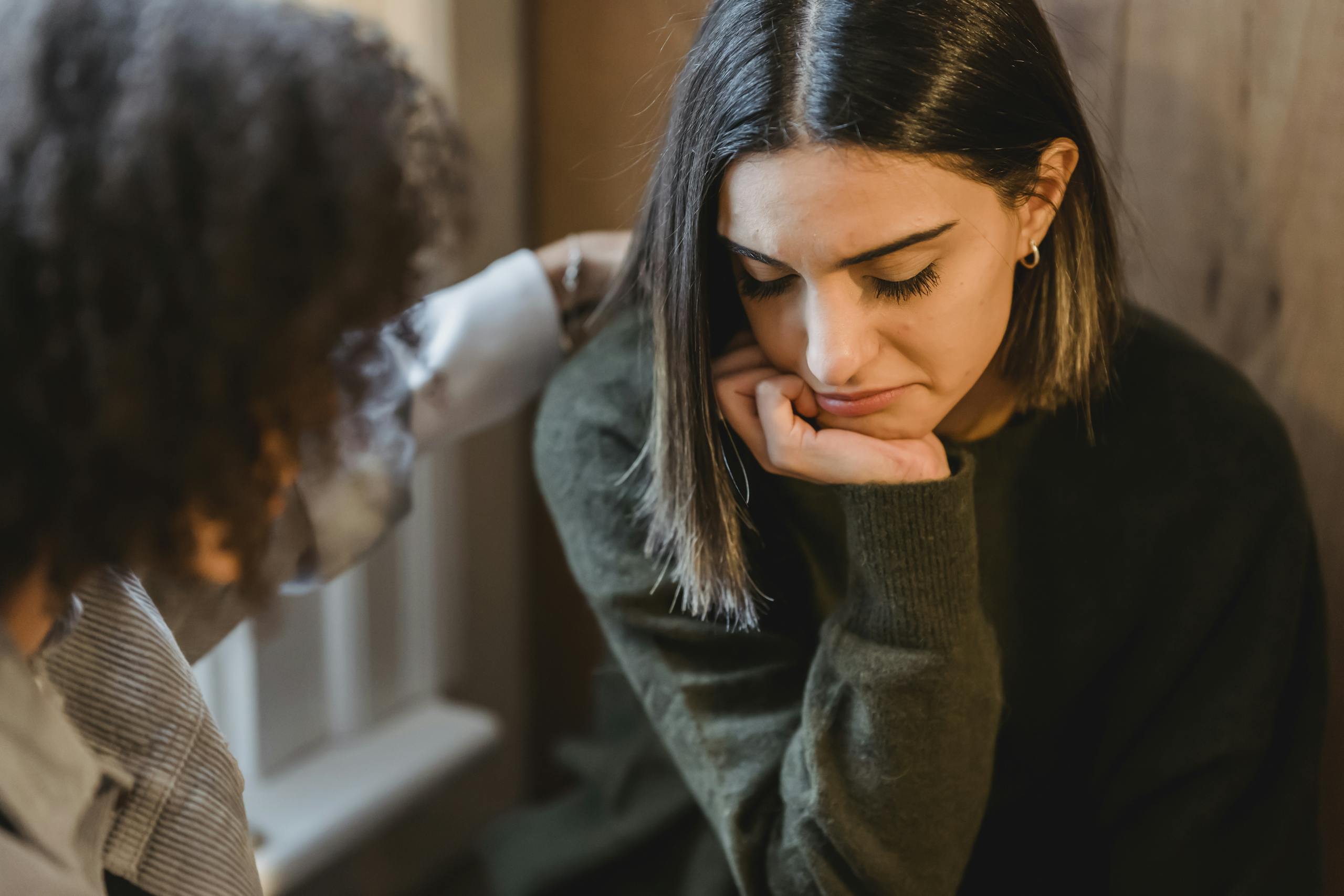
What About the Social Anxiety That Makes Solo Travel Feel Risky?
There’s an important distinction worth making here, one I wish someone had made clearly to me years earlier. Introversion and social anxiety are not the same thing, even though they can coexist and even though the world often treats them as interchangeable. Healthline’s breakdown of introversion versus social anxiety makes this distinction clearly: introversion is a preference for less stimulating environments, while social anxiety involves fear and distress around social situations.
Many introverts carry some degree of social anxiety alongside their introversion, and solo travel can surface both. The good news, if I’m allowed one instance of that phrase, is that South Padre Island’s low-pressure atmosphere is genuinely helpful for both. The stakes feel low. Nobody is watching. The pace is slow enough that you can take your time with any interaction, step back when you need to, and re-engage when you’re ready.
For those whose anxiety runs deeper, cognitive behavioral approaches to social anxiety have a strong evidence base and can make a significant practical difference in how travel feels. Addressing the anxiety component separately from the introversion piece tends to produce better results than trying to manage everything as one undifferentiated problem.
I managed a team member at one of my agencies who was both deeply introverted and carrying real social anxiety. Watching her struggle, I recognized patterns I’d seen in myself, the over-preparation for simple interactions, the exhaustion that came not from the interaction itself but from the anticipatory dread. What helped her most wasn’t learning to be more extroverted. It was learning to distinguish between the discomfort that was simply introversion (normal, manageable, not a problem to solve) and the anxiety that was something else entirely (addressable, with the right support).
Solo travel to a place like South Padre Island can actually serve as a gentle exposure to social situations on your own terms, without the performance pressure that comes with traveling in groups or handling other people’s social needs alongside your own. You set the pace. You choose the interactions. That level of control is genuinely therapeutic for many introverts.
How Does Solo Travel Connect to Your Broader Friendship Patterns?
Solo travel taught me something about myself that years of therapy and self-reflection hadn’t quite landed: I’m not bad at connection. I’m selective about it. There’s a meaningful difference, and recognizing it changed how I approached friendships back home as much as it changed how I approached travel.
When you spend a week alone on an island, you get very clear about what you actually miss. For me, it was never the noise or the activity. It was specific people, specific conversations, specific kinds of depth. That clarity made me a better friend when I returned, more intentional about where I put my limited social energy, less guilty about where I didn’t.
Many introverts find that their friendship patterns get complicated by life circumstances rather than personality alone. The challenge of maintaining friendships when you have kids is one example, where the logistics and energy demands of parenting collide with the already-limited social bandwidth introverts tend to work with. Solo travel can be one way of reclaiming some of that bandwidth, returning to yourself before returning to the relational demands of your regular life.
There’s also something worth naming about the way travel can deepen existing friendships even when you’re traveling alone. Coming back with genuine experiences to share, perspectives that shifted, observations that surprised you, gives you real material for the kind of meaningful conversation that introverts find nourishing. You’re not reporting on a schedule of activities. You’re sharing something that actually changed you, even slightly.
That’s connected to something I think about often in the context of how to deepen friendships without simply spending more time together. The depth of connection has more to do with what you bring to an interaction than how many hours you log. Solo travel has a way of filling your reserves with something worth bringing.

What Practical Logistics Make South Padre Island Ideal for Solo Introverts?
Practicalities matter, and introverts often find that logistical friction amplifies the social exhaustion of travel considerably. South Padre Island has some genuine structural advantages here.
The island is small enough to walk or bike most of it. You don’t need to negotiate rideshares or rental car logistics once you’re there. The accommodation options range from large resort hotels (useful if you want the option of disappearing into anonymity) to smaller vacation rentals (useful if you want genuine privacy and the ability to cook your own meals, which for introverts can be a significant energy-saver). Several vacation rental properties are positioned directly on quieter stretches of beach, which means you can go from your private space to complete solitude in about thirty seconds.
The food situation deserves mention. South Padre Island has a genuine local restaurant culture alongside the expected tourist spots. Blackbeard’s, Pier 19, and several smaller spots along the Laguna Madre side offer the kind of casual, unhurried dining that solo travelers appreciate. Nobody rushes you. Nobody makes you feel conspicuous for eating alone. The service tends to be warm without being intrusive, which is exactly the register introverts tend to find most comfortable.
Port Isabel, just across the causeway, adds another dimension. It’s a small historic town with a lighthouse, a few good independent restaurants, and a pace that makes South Padre Island feel metropolitan by comparison. Day trips there provide a change of scene without requiring significant social effort.
One thing I always recommend to introverts planning solo travel is building in explicit unscheduled time, not as a failure to plan, but as the actual plan. Some of my most restorative travel experiences have come from mornings with no agenda, sitting with coffee and watching the light change over the Laguna Madre, letting my mind do what it does best when nobody needs anything from it.
Are There Social Situations on the Island Worth Seeking Out?
Yes, and this is where the island’s particular character pays off most clearly. The social situations worth seeking out tend to be ones organized around shared activity or observation rather than pure socialization.
The public fishing pier is genuinely one of the better places I’ve found anywhere to have an unforced conversation with a stranger. The activity (fishing, or watching fishing) gives everyone a natural focus. Conversations start and stop organically. Nobody expects you to maintain sustained eye contact or fill silence. It’s the social equivalent of a side-by-side activity rather than a face-to-face one, and that distinction matters more than most people realize for introverts.
The island’s kiteboarding and windsurfing culture draws an interesting community of people who tend to be passionate about something specific. If you share that interest, or are curious about it, the conversations that come out of that shared focus can be surprisingly rich. Enthusiasm for a specific thing tends to produce better connection than general sociability, at least in my experience.
There’s an interesting parallel here to something I’ve thought about in the context of personality-based friendships. Whether friendships between similar personality types become a comfort zone or an echo chamber depends largely on what the friendship is organized around. The same is true of travel connections: shared interest produces better outcomes than shared type.
For introverts who find that social situations feel impossible in certain contexts, it’s worth examining whether the difficulty is situational rather than inherent. ADHD introverts in particular often find that friendship and connection feel impossible in ways that have more to do with executive function and attention patterns than with genuine social incapacity. The unstructured, low-demand social environment of a place like South Padre Island can actually be more accessible for people who struggle in high-stimulation social settings, not less.
A 2019 analysis in PubMed Central examining social connection and psychological well-being found that the subjective quality of social interactions, how meaningful and authentic they felt to the participant, predicted well-being outcomes more reliably than the quantity of interactions. That finding validates something most introverts already know intuitively: we’re not missing out by having fewer but better interactions. We’re actually doing it right.

What Does Solo Travel at South Padre Island Actually Feel Like for an Introvert?
Let me be specific, because I think specificity is more useful than generality here.
On my most memorable trip to South Padre Island, I arrived on a Sunday afternoon after a particularly difficult quarter at the agency. We’d lost a major account, and the process of losing it had involved a lot of public post-mortem analysis that I found genuinely painful, not because of the business loss but because of how it required me to process grief in front of an audience. As an INTJ, I process emotion internally and methodically. Being asked to perform that processing for a room full of people felt like a violation of something essential.
I spent the first two days on the island almost entirely alone. Long walks on the north beach in the early morning. Afternoons reading in a rented condo with the balcony door open. Evenings at a small restaurant where the owner recognized me by the second night and simply brought me what I’d ordered the previous evening, which felt like the perfect level of social acknowledgment: seen, but not interrogated.
By the third day, something had shifted. I found myself wanting a conversation. Not needing one, but genuinely wanting one. That distinction matters enormously. When connection comes from a place of genuine desire rather than social obligation, the quality is entirely different. I ended up talking for an hour with a retired marine biologist who volunteered at Sea Turtle, Inc. We talked about Gulf ecosystems, about the specific challenges of rehabilitation work, about what it meant to care for something that couldn’t communicate its own needs. It was one of the better conversations I’ve had with a stranger.
That’s what South Padre Island at its best offers solo introverts: the space to arrive at genuine connection on your own timeline, without the social architecture of group travel forcing the pace. Recent work in social psychology has reinforced what many introverts already know from lived experience: autonomy over social timing and context significantly affects how restorative or depleting those interactions feel.
The island’s atmosphere, genuinely friendly rather than performatively hospitable, creates the conditions for that kind of authentic encounter. You don’t have to work for it. You just have to show up, take care of your own needs first, and let the rest happen naturally.
For introverts who are building a richer understanding of how they connect, recharge, and relate to others, the full range of perspectives in our Introvert Friendships hub offers a lot to work with, from the science of connection to the practical realities of maintaining relationships across different life stages.
Curious about your personality type?
Our free MBTI assessment goes beyond the four letters. Get a full breakdown of your scores, see how your type shows up at work and in relationships.
Take the Free Test8-12 minutes · 40 questions · Free
About the Author
Keith Lacy is an introvert who’s learned to embrace his true self later in life. After 20 years in advertising and marketing leadership, including running agencies and managing Fortune 500 accounts, Keith now channels his experience into helping fellow introverts understand their strengths and build fulfilling careers. As an INTJ, he brings analytical depth and authentic perspective to every article, drawing from both professional expertise and personal growth.
Frequently Asked Questions
Is South Padre Island a good destination for solo introverted travelers?
South Padre Island works particularly well for solo introverts because its small scale, genuinely friendly local culture, and mix of quiet natural spaces and low-key social settings allow visitors to calibrate their level of engagement entirely on their own terms. The island doesn’t demand performance. You can spend a full day in solitude on the northern beach and feel completely comfortable, or drift into a natural conversation at the fishing pier without any social pressure. That combination of accessible solitude and authentic connection makes it one of the more introvert-compatible coastal destinations in the continental United States.
What are the best quiet spots on South Padre Island for introverts who need to recharge?
The northern end of the island past the main commercial strip offers long stretches of beach with minimal foot traffic, particularly on weekday mornings. The South Padre Island Birding and Nature Center provides elevated boardwalks over the Laguna Madre where solitary, observational time is the norm. The Laguna Madre shoreline on the bay side of the island tends to be significantly quieter than the Gulf-facing beach and offers a different quality of stillness. Port Isabel, just across the causeway, adds a small historic town with an even slower pace for day trips.
How can introverts meet people at South Padre Island without feeling socially drained?
The most effective approach is seeking out side-by-side activities rather than face-to-face social situations. The public fishing pier is a natural gathering point where conversations emerge from shared observation rather than social obligation. Sea Turtle, Inc. and the Birding Center both attract people with specific interests, and conversations that start around shared enthusiasm tend to feel more natural for introverts than general socializing. Local restaurants with bar seating offer another low-pressure option where solo dining is genuinely comfortable and brief, authentic interactions happen organically.
What is the difference between introversion and social anxiety when it comes to solo travel?
Introversion refers to a preference for less stimulating social environments and a tendency to recharge through solitude rather than social activity. Social anxiety involves fear, distress, or avoidance around social situations. The two can coexist, but they’re distinct experiences requiring different responses. Introverts who travel solo are generally managing their energy, choosing when and how to engage rather than avoiding engagement out of fear. Those who also carry social anxiety may find that the low-pressure, self-paced nature of solo travel to a place like South Padre Island is genuinely helpful, though addressing the anxiety component directly with appropriate support tends to produce better long-term results.
Can solo travel actually improve an introvert’s friendships back home?
Solo travel can meaningfully improve introvert friendships by clarifying what you actually value in connection, replenishing the social energy reserves that daily life depletes, and giving you genuine experiences and perspectives to bring back to existing relationships. Many introverts find that time alone helps them identify which friendships are truly nourishing versus which ones feel like obligation. Returning from solo travel with that clarity tends to make you more present and intentional in the friendships that matter most, which is in the end what sustains deep connection over time.