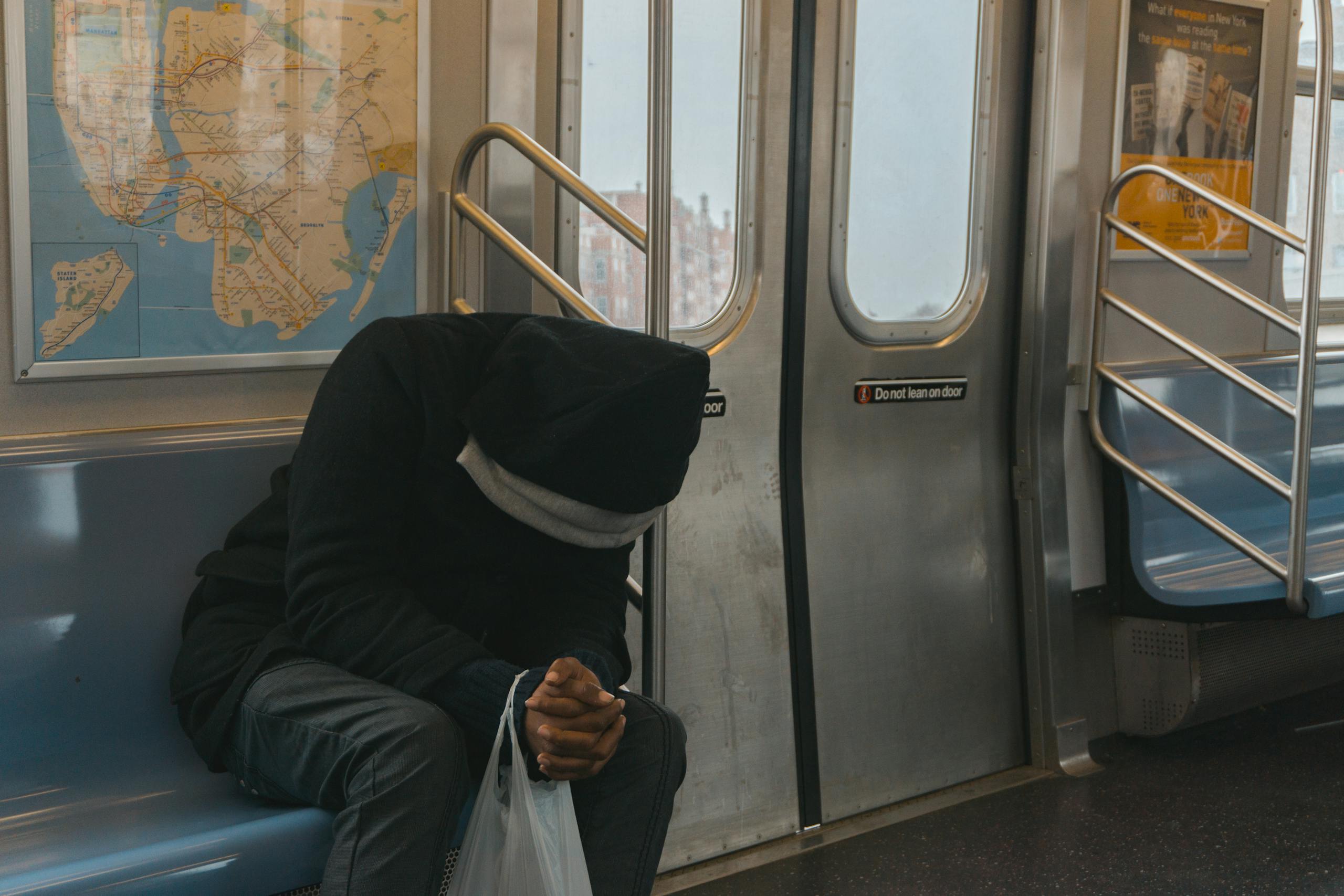

Shyness and introversion are not the same thing, and treating them as if they are leads people down the wrong path entirely. The best way to treat shyness is to address the fear and anxiety underneath it, not to force someone into performing extroversion. Real progress comes from building confidence gradually, challenging the thoughts that fuel social dread, and learning to distinguish between discomfort that signals growth and discomfort that signals genuine distress.
What makes this complicated is that shyness, introversion, and social anxiety all look similar from the outside. Someone who declines a party invitation might be doing it because crowds drain them, because they are terrified of being judged, or simply because they prefer a quiet evening at home. Those are three completely different experiences, and they each call for a different response.
Our Introversion vs Other Traits hub explores how introversion relates to personality traits people often confuse it with, from shyness to social anxiety to ambiversion. If you have ever wondered whether what you experience is truly introversion or something else layered on top of it, that hub is worth spending time with. What follows here is a closer look at shyness specifically: what it actually is, where it comes from, and what genuinely helps.

What Is Shyness, Really?
Shyness is a fear of negative social evaluation. At its core, it is the worry that other people are watching you, judging you, and finding you lacking. That fear creates a kind of hesitation, a pulling back before you speak, a second-guessing of whether you belong in a room, a rehearsal of every possible way a conversation could go wrong before it even starts.
Career Coaching for Introverts
One-on-one career strategy sessions with Keith Lacy. 20 years of Fortune 500 leadership as an introvert, now helping others build careers that work with their wiring.
Learn More50-minute Zoom session · $175
I know that feeling well, even as an INTJ who is not naturally shy. Early in my agency career, I sat in rooms full of Fortune 500 clients and felt a version of that hesitation, not because I lacked confidence in my ideas, but because I was acutely aware of being observed and evaluated. That awareness is something many introverts share, even if it does not rise to the level of clinical shyness. The difference is that for genuinely shy people, the fear is the primary driver of their behavior, not preference or temperament.
Psychologists generally describe shyness as existing on a spectrum. Mild shyness might look like a slight awkwardness in new situations that fades once someone gets comfortable. Severe shyness can overlap significantly with social anxiety disorder, where the fear is persistent, intense, and begins to limit someone’s life in meaningful ways. Understanding where you fall on that spectrum matters, because the approach that helps someone with mild shyness is not necessarily the same one that helps someone whose shyness has become genuinely debilitating.
One thing worth noting: shyness is not a character flaw. It is not evidence of weakness or immaturity. Many of the most perceptive, creative, and deeply capable people I worked with over two decades in advertising carried significant shyness. The problem was never their character. The problem was the fear that kept their contributions locked inside them.
How Does Shyness Differ From Introversion?
Shyness is about fear. Introversion is about energy. Those two things can coexist in the same person, but they do not have to, and conflating them creates real problems.
An introvert who is not shy might genuinely enjoy a one-on-one dinner conversation, feel completely at ease speaking in small groups, and have no anxiety about being evaluated by others. They simply find large social gatherings draining and need quiet time to recharge afterward. There is no fear in that equation, just a preference rooted in how their nervous system processes stimulation.
A shy extrovert, on the other hand, might crave social connection intensely but feel paralyzed by the fear of judgment every time they try to pursue it. They want to be in the room. They want to connect. The anxiety is what stops them, not any preference for solitude.
If you are trying to figure out where you actually land on the personality spectrum, the Introvert Extrovert Ambivert Omnivert Test is a useful starting point. It helps you see whether your patterns reflect genuine introversion, a blend of tendencies, or something more situational. That kind of self-knowledge is not just interesting, it is genuinely useful when you are trying to understand what is driving your social behavior.
Understanding what extroverted actually means can also reframe how you think about shyness. Extroversion is not the absence of fear or awkwardness. It is a neurological tendency to seek stimulation from the external world. Plenty of extroverts are shy. Plenty of introverts are not. Treating shyness by pushing someone toward extroverted behavior misses the point entirely.

Where Does Shyness Come From?
Shyness has both temperamental and environmental roots. Some people are born with a more reactive nervous system, one that registers social threat more quickly and intensely than average. That biological sensitivity does not automatically produce shyness, but it creates a foundation where shyness can develop more easily if the environment reinforces it.
Early experiences matter enormously. A child who is frequently criticized, embarrassed in front of peers, or raised in an environment where mistakes are treated as shameful learns to anticipate judgment everywhere. A child who experiences social rejection repeatedly may begin to withdraw as a protective strategy. Over time, that withdrawal becomes a habit, and the habit becomes an identity.
Cultural context shapes it too. Some cultures treat quiet, reserved behavior as respectful and appropriate. Others treat it as suspicious or problematic. Growing up in an environment that pathologizes quietness, one that rewards loudness and penalizes hesitation, can intensify shyness in children who might otherwise have developed into confident, self-possessed adults.
What I observed across two decades running agencies was that many of the shyest people on my teams had internalized a story about themselves: that they were less capable, less worthy of attention, less deserving of space in a conversation. The shyness was not the original wound. It was the scar tissue that formed around a wound inflicted by repeated experiences of not feeling safe enough to be seen.
That distinction matters for treatment. You cannot address shyness by simply teaching someone social skills if the underlying belief system remains intact. Someone who genuinely believes they will be found lacking will find ways to confirm that belief no matter how polished their small talk becomes.
What Actually Works: Evidence-Based Approaches to Shyness
Cognitive Behavioral Therapy, commonly called CBT, has the strongest track record for treating shyness and social anxiety. The core premise is straightforward: our thoughts about social situations drive our emotional responses, and those emotional responses drive our behavior. Change the thoughts, and you change the pattern.
In practice, CBT for shyness involves identifying the specific thoughts that fuel the fear (“Everyone will notice I’m nervous,” “I’ll say something stupid and they’ll think less of me”), examining whether those thoughts are actually accurate, and gradually replacing them with more realistic assessments. It also involves behavioral experiments, small, structured exposures to feared situations that allow someone to collect real evidence about how those situations actually unfold.
Exposure is the part most people resist, and understandably so. Deliberately putting yourself in situations that frighten you runs counter to every instinct. But avoidance is what keeps shyness alive. Every time someone avoids a feared situation, they reinforce the message that the situation was genuinely dangerous. Every time they move through it, even imperfectly, they chip away at that message.
The exposure has to be gradual and structured, not a cold plunge into the deep end. A therapist working with someone on shyness might start with something as small as making eye contact with a cashier, then build toward initiating a brief conversation with a stranger, then toward attending a small social gathering, then toward speaking up in a group setting. Each step is designed to be challenging but manageable, stretching the comfort zone without snapping it.
Mindfulness-based approaches have also shown meaningful results. Rather than trying to eliminate anxious thoughts, mindfulness teaches people to observe them without being controlled by them. You notice the thought (“They’re judging me”) without treating it as fact, and you redirect your attention to the present moment of the conversation rather than the internal monologue running alongside it. Research published in PubMed Central has examined how mindfulness-based interventions affect social anxiety symptoms, with findings that suggest meaningful reductions in self-focused attention, which is one of the core drivers of shyness.
For more severe cases where shyness has crossed into social anxiety disorder, medication can be a useful part of the picture. SSRIs and SNRIs are sometimes prescribed to reduce the intensity of anxiety symptoms enough that therapeutic work becomes possible. Medication alone rarely resolves shyness, but it can lower the baseline fear enough that someone can actually engage with the behavioral and cognitive work that produces lasting change.

What Does Treating Shyness Look Like in Real Life?
Theory is one thing. Lived experience is another. Let me share what I have seen actually work, both in my own experience and in the people I have managed and mentored over the years.
One of my account managers early in my agency career was genuinely shy in a way that was limiting her. Brilliant analyst, sharp instincts, but she would go almost invisible in client meetings. She would prepare thoroughly, know exactly what she wanted to say, and then say nothing. Afterward, she would send me detailed emails with all the points she had held back. I started doing something simple: I would ask her a direct question in meetings, one I knew she could answer confidently, before the conversation reached a point where she would have had to volunteer. That small structural change gave her a foothold. Over months, she started taking that foothold on her own.
What that experience taught me was that shy people often need a bridge, not a push. A push can feel like exposure therapy administered without consent, and it tends to produce shame rather than growth. A bridge gives someone a structured, lower-risk entry point that lets them build evidence of their own competence.
Preparation is another tool that genuinely helps. Shy people often experience their worst anxiety in ambiguous situations where they do not know what to expect. Reducing ambiguity reduces anxiety. Knowing the agenda before a meeting, having a few conversation openers ready before a social event, understanding who will be in the room, these are not crutches. They are scaffolding that allows someone to function until the underlying fear has been addressed enough that the scaffolding is no longer necessary.
Deeper conversations also matter more than people realize. Psychology Today has written about why meaningful conversation tends to feel more satisfying and less anxiety-provoking than small talk for many people. Shy individuals often do much better in one-on-one settings with genuine substance to discuss than in the cocktail party format that most social skills advice assumes as a baseline. Playing to that strength, seeking out contexts that invite depth rather than breadth, is not avoidance. It is intelligent self-management.
Is Shyness Different for Introverts Than for Extroverts?
Yes, though perhaps not in the ways you might expect. The fear at the center of shyness is the same regardless of personality type. What differs is the context in which it shows up and the strategies that are most natural to reach for.
An introverted person who is also shy may find that their natural preference for smaller social contexts actually works in their favor. They are not fighting two battles simultaneously, the drain of overstimulation and the fear of judgment. They can focus their energy on the social situations they do engage with and work through the fear in those more contained settings.
A shy extrovert faces a different kind of friction. They want more social engagement than their fear allows them to pursue. That gap between desire and capacity can produce a particular kind of frustration and loneliness. They are not drained by social situations. They are blocked from them.
People who identify as ambiverts or omniverts add another layer of complexity. If you are curious about how those distinctions play out, the comparison between omnivert and ambivert tendencies is worth understanding. Someone who shifts dramatically between introverted and extroverted states depending on context may experience shyness very differently across different settings, confident and open in one environment, withdrawn and fearful in another.
There is also the question of how much shyness is actually present versus how much is simply the normal discomfort of being at the introverted end of the spectrum. The difference between fairly introverted and extremely introverted matters here. Someone who is deeply introverted may need more solitude, more processing time, and more intentional social energy than someone who sits closer to the middle of the spectrum. That is not shyness. That is wiring. Treating it as a problem to fix does more harm than good.

When Should You Seek Professional Help for Shyness?
Self-help strategies and gradual exposure work well for mild to moderate shyness. But there are clear signals that professional support would be more appropriate.
Seek professional help when shyness is causing you to avoid situations that matter to your life: career opportunities, relationships, medical appointments, educational settings. When the avoidance is narrowing your world in ways that you feel powerless to stop, that is a sign the fear has moved beyond what willpower and self-awareness alone can address.
Seek professional help when physical symptoms are intense: heart pounding before ordinary conversations, sweating, trembling, nausea, or panic attacks in social situations. Those physical responses indicate a nervous system that has become highly sensitized to social threat, and that kind of sensitization responds well to professional intervention.
Seek professional help when you have been trying to address shyness on your own for a long time without meaningful progress. Sometimes the loop simply cannot be broken from inside the loop. A skilled therapist, particularly one trained in CBT or Acceptance and Commitment Therapy, can provide the external perspective and structured support that makes progress possible. Published findings on social anxiety treatment consistently point to the effectiveness of structured therapeutic approaches over unguided self-help alone.
One thing I want to address directly: seeking therapy for shyness is not an admission that something is fundamentally broken about you. I have worked with incredibly capable people, executives, creatives, strategists, who benefited enormously from professional support in addressing social fears. The willingness to get that support is itself a sign of self-awareness and courage, not weakness.
Some people wonder whether introversion-friendly therapists exist. They do, and the perspective they bring matters. Point Loma Nazarene University has written about introverts in counseling roles, which gives some insight into how introversion and therapeutic work intersect. Finding a therapist who understands introversion as a valid personality orientation rather than a symptom to be corrected makes a real difference in the quality of the work.
What About the Professional World: Shyness at Work
Shyness in professional settings carries a particular cost. Workplaces tend to reward visibility, and visibility requires a willingness to speak up, to take up space in meetings, to advocate for your own ideas. Someone whose shyness keeps them quiet in those moments may find their contributions consistently overlooked, not because they lack capability, but because their fear prevents them from demonstrating it.
I watched this play out repeatedly across my agency years. Some of the most genuinely talented people I employed were also the ones most likely to be passed over for advancement, not because their work was weak, but because they had not yet figured out how to make their thinking visible in group settings. The work spoke for itself in documents and deliverables. In meetings, they disappeared.
The strategies that helped most were structural rather than purely psychological. Written communication channels, pre-meeting agendas shared in advance, explicit invitations to contribute rather than open-floor formats, smaller team discussions before larger presentations. These are not accommodations that lower the bar. They are designs that allow more of the actual thinking in a room to surface, regardless of who is most comfortable performing confidence.
For shy people building careers, there is also value in developing specific competencies that feel more manageable than general social confidence. Negotiation, for instance, is a skill set that can be learned and practiced in structured ways. Harvard’s Program on Negotiation has examined whether introverts are at a disadvantage in negotiation contexts, and the findings are more nuanced than the common assumption. Preparation, careful listening, and the ability to think before speaking, all natural strengths for many introverted and shy people, are genuine assets in negotiation settings.
Marketing and client-facing roles are another area where shy people often assume they cannot succeed. That assumption is worth questioning. Rasmussen University’s research on marketing for introverts points to the ways that introverted strengths, deep research, empathy, strategic thinking, translate powerfully into marketing contexts. Shyness adds a layer of challenge, but it does not eliminate the underlying strengths.
If you have wondered whether your personality type shapes how you show up in professional conflicts, the four-step introvert-extrovert conflict resolution approach from Psychology Today offers a practical framework worth reading. Shyness can make conflict particularly difficult to engage with, and having a structured approach reduces some of the ambiguity that feeds the fear.
The Difference Between Treating Shyness and Erasing It
There is a version of “treating shyness” that I find troubling, the version that aims to produce an extroverted facsimile of the person who walked in. That is not treatment. That is suppression wearing a different label.
Genuine treatment for shyness aims to reduce the fear enough that someone can make choices freely, not to eliminate every trace of quietness or reserve. A person who has worked through shyness should be able to speak up when it matters, engage in new situations without being paralyzed, and pursue the connections and opportunities they genuinely want. They do not need to become the most talkative person in the room.
Some people who address their shyness discover that they are, underneath the fear, genuinely introverted. Once the anxiety lifts, they still prefer depth over breadth, smaller gatherings over large ones, meaningful conversation over small talk. That is not a treatment failure. That is their actual personality emerging from underneath the fear that was obscuring it.
Others discover that the shyness was masking a much more extroverted nature. Once the fear diminishes, they find themselves genuinely energized by social engagement in ways they never expected. That is equally valid.
The point of treating shyness is not to produce a particular personality type. It is to give someone access to themselves, to their own preferences, their own desires, their own capacity for connection, without fear standing as a gatekeeper between them and their own life.
If you are still working out whether your experience is primarily introversion, shyness, or some combination, the introverted extrovert quiz can help you get clearer on where you actually land. And for those who find themselves shifting between very different social modes depending on context, understanding the distinction between otrovert and ambivert tendencies adds another useful lens.

Shyness is one of many traits that intersects with introversion in complex, often misunderstood ways. If you want to keep exploring that complexity, the full Introversion vs Other Traits hub covers the landscape thoroughly, from social anxiety to ambiversion to the many ways personality shows up across different contexts.
About the Author
Keith Lacy is an introvert who’s learned to embrace his true self later in life. After 20 years in advertising and marketing leadership, including running agencies and managing Fortune 500 accounts, Keith now channels his experience into helping fellow introverts understand their strengths and build fulfilling careers. As an INTJ, he brings analytical depth and authentic perspective to every article, drawing from both professional expertise and personal growth.
Frequently Asked Questions
Can shyness be completely cured?
Shyness can be significantly reduced through consistent work, particularly with approaches like Cognitive Behavioral Therapy and gradual exposure. Many people who once considered themselves severely shy reach a point where the fear no longer controls their choices. Whether that constitutes a “cure” depends on how you define the word. The goal is not to eliminate every trace of social hesitation but to reduce the fear enough that it stops limiting your life. Some people retain a gentle quietness even after working through shyness, and that is entirely fine.
Is shyness the same as social anxiety disorder?
Shyness and social anxiety disorder share the same core fear of negative evaluation, but they differ in intensity and impact. Shyness tends to be milder and more situational. Social anxiety disorder is a clinical condition where the fear is persistent, intense, and significantly interferes with daily functioning, including work, relationships, and routine activities. Not all shy people have social anxiety disorder, and not all people with social anxiety disorder would describe themselves as simply shy. If your social fear is causing you to avoid important areas of your life consistently, a professional evaluation is worth pursuing.
What is the fastest way to reduce shyness in social situations?
Preparation is one of the most immediately effective tools. Knowing what to expect, having a few conversation openers ready, and understanding the context of a social situation reduces the ambiguity that feeds shyness. In the moment, shifting your attention outward, focusing on the other person rather than on your own performance, also helps interrupt the self-conscious spiral. Longer term, gradual exposure to feared situations is what produces lasting change. There are no shortcuts that bypass the actual work, but preparation and outward focus can make the next social situation meaningfully more manageable.
Does introversion make shyness worse?
Not inherently. Introversion and shyness are separate traits that can coexist but do not cause each other. An introverted person who is also shy may find certain aspects of their situation easier, such as being naturally comfortable with less social engagement, but they face the same core challenge as any shy person: the fear of negative evaluation. What can complicate things is when introverts internalize the cultural message that their quietness is a problem, which can layer shame onto what is simply a personality orientation. Addressing that shame is often as important as addressing the fear itself.
How do I know if I am shy or just introverted?
Ask yourself what is driving your social behavior: preference or fear. If you decline a party invitation because you genuinely prefer a quiet evening and feel completely at peace with that choice, you are likely acting from introversion. If you decline because you are afraid of being judged, of not knowing what to say, of being seen and found lacking, and that fear leaves you feeling frustrated or ashamed, shyness is more likely in the picture. Many people carry both. The distinction matters because the path forward is different: introversion is something to understand and work with, while shyness is something to address and reduce.