
A good book about burnout does something most wellness advice refuses to do: it tells you the truth. Not the optimistic version where rest and boundaries fix everything, but the harder truth that burnout rewires how you think, how you relate to work, and sometimes who you are at a fundamental level. The best books on burnout treat it as a serious psychological event, not a lifestyle inconvenience you can resolve with a long weekend.
What I’ve found, both from reading extensively on the subject and from living through my own version of it, is that books about burnout fall into two categories. Some give you a framework. Others give you a mirror. The ones that actually help are usually the ones that do both.

If you’re trying to understand what happened to you, or what’s still happening, our Burnout and Stress Management hub covers the full landscape of burnout from its earliest warning signs through long-term recovery, and this article fits into that larger conversation about what actually helps people move through it.
Why Do Books About Burnout Hit Differently Than Articles or Advice?
There’s something about sitting with a book-length treatment of burnout that short articles can’t replicate. When you read a 300-page exploration of exhaustion, depletion, and the slow erosion of meaning in work, you’re not skimming for tips. You’re spending time with someone else’s thinking. That sustained attention matters, especially when your own mind has been running on fumes.
What drains your social battery?
Not all social exhaustion is the same. Our free quiz identifies your specific drain pattern and gives you personalised recharging strategies.
Find Your Drain PatternUnder 2 minutes · 8 questions · Free
I remember picking up my first serious book on burnout during a period when I was running an agency and quietly falling apart. On the surface, everything looked fine. We had good clients, a capable team, and the kind of billings that made other agency owners ask how we did it. But I was exhausted in a way that sleep didn’t touch. I’d sit in client presentations and feel like I was watching myself from across the room, going through motions I’d rehearsed so many times they’d stopped meaning anything.
Reading about burnout was the first time I had language for what was happening. That naming function matters more than people give it credit for. When you can identify what you’re experiencing, it stops feeling like personal failure and starts looking like a recognizable human condition with causes and, sometimes, pathways through it.
Books also move at a pace that matches how introverts process difficult material. We tend to absorb things in layers, returning to an idea multiple times before it fully settles. A chapter you can reread, underline, and sit with is a different experience than a listicle you scan and close. For introverts especially, depth of engagement with an idea often produces more genuine insight than breadth of exposure to many ideas.
What Should You Actually Look for in a Book About Burnout?
Not all burnout books are created equal, and some are actively misleading. The ones that treat burnout as primarily a time management problem, or suggest that a meditation practice and better sleep hygiene will resolve it, are missing the deeper architecture of what burnout actually is. They’re not wrong that those things help. They’re wrong about the scale of the problem.
The books worth your time tend to share a few qualities. They take the physiological dimension seriously, acknowledging that burnout affects your nervous system, your hormonal regulation, and your cognitive functioning in ways that don’t simply reset when you take a vacation. They also grapple with the systemic causes, the workplace cultures, the impossible expectations, the structural conditions that create burnout in the first place. And the best ones acknowledge that recovery is not linear and not guaranteed to be complete.

One thing I’ve noticed is that the books most useful to introverts are the ones that treat internal experience as data. They don’t pathologize the need for solitude or frame social withdrawal as a symptom to be corrected. The relationship between introversion and energy is real and consequential, and a burnout book that ignores it will give you a recovery roadmap that doesn’t fit how you’re actually wired.
What I also look for is honesty about the role of identity in burnout. Many people, myself included, built professional identities so tightly fused to their work that burnout didn’t just exhaust them. It destabilized who they thought they were. A book that only addresses the symptoms without touching that deeper layer of identity disruption will feel incomplete, even if it’s technically accurate.
How Does Reading About Burnout Actually Help You Recover From It?
There’s a legitimate question here, and I think it deserves a direct answer. Reading about burnout is not the same as recovering from it. Intellectual understanding of a problem doesn’t automatically produce healing. I’ve watched people read every book on the subject and still return to the same patterns that broke them in the first place.
That said, reading can do something that’s genuinely hard to replicate through other means: it can interrupt the story you’re telling yourself about what happened. When you’re in burnout, the internal narrative tends to run toward self-blame. You weren’t resilient enough. You couldn’t handle the pressure. Everyone else seems to manage, so why couldn’t you? A good book disrupts that story by offering a more accurate account of what burnout actually is and how it develops.
Part of what makes the psychological research on burnout so important is that it consistently shows burnout as a response to chronic workplace conditions, not a character flaw. Reading that framing, especially in a book that takes time to build the case carefully, can shift something in how you relate to your own experience. That shift matters because shame and self-blame actively impede recovery. You can’t heal something you’re still treating as evidence of your own inadequacy.
Books also provide something I’d call productive distance. When you’re reading about someone else’s experience of burnout, or about the psychological mechanisms behind it, you get a little breathing room from the immediacy of your own pain. That distance can make it easier to see patterns you couldn’t see when you were inside them. I’ve had moments reading where I’d think, “That’s exactly what happened to me,” and feel both recognized and, strangely, less alone in it.
Pair that reading with practical strategies, and the combination becomes more powerful. Things like the approaches covered in these stress management strategies for introverts work better when you understand the underlying dynamics they’re addressing. Knowledge and practice reinforce each other.
What Do the Most Honest Burnout Books Get Right That Others Miss?
The most honest books about burnout are willing to say uncomfortable things. They’ll tell you that returning to the same environment that burned you out, without structural changes, is likely to burn you out again. They’ll tell you that some people don’t fully recover, not because they’re weak, but because the conditions that caused the burnout were genuinely damaging and the recovery window was too short or the support too thin.
They’re also honest about the relationship between burnout and identity. I spent years in advertising leadership performing a version of myself that didn’t match how I was actually wired. As an INTJ, I process the world through internal analysis and strategic thinking. I build frameworks, I work through problems in my head before speaking, and I need significant time alone to function at my best. For a long time, I thought those traits were liabilities in a leadership role that seemed to reward constant visibility, quick verbal processing, and social energy I simply didn’t have.
The books that helped me most were the ones that named that specific exhaustion: the cost of performing a self that doesn’t fit. Emerging research on psychological authenticity and wellbeing supports what many introverts already know intuitively: sustained inauthenticity is genuinely depleting. It’s not just uncomfortable. It costs something real.
The honest books also address what happens when burnout becomes chronic. There’s a difference between acute burnout, where you’ve hit a wall and need substantial recovery, and the kind of entrenched depletion where the recovery never quite comes. If you recognize yourself in that second description, this piece on chronic burnout and why recovery stalls goes deeper into that specific experience and why it’s so hard to break the cycle.
Are There Specific Burnout Books That Speak to Introverts?
Most mainstream burnout books weren’t written with introverts specifically in mind, and that gap shows. The recovery advice often assumes a social support network you’re comfortable leaning on, a willingness to talk through your experience with others, and an extroverted model of healing that involves connection, community, and shared processing. Those things can help, but they’re not the only path, and for many introverts, they’re not the most natural one.
What I’ve found is that the most useful books for introverts are often not the ones marketed specifically to us. They’re the ones that take psychological complexity seriously, that don’t reduce recovery to a checklist, and that acknowledge individual variation in how people deplete and restore. Books grounded in clinical psychology or organizational research tend to be more nuanced about this than popular wellness titles.
That said, personality type genuinely shapes both how burnout develops and what recovery looks like. The patterns that exhaust an INTJ are different from what depletes an ENFP or an ISFJ. Understanding what each type actually needs to prevent burnout is a useful companion to any book you’re reading, because it helps you apply general principles to your specific wiring rather than following generic advice that wasn’t designed for you.
One thing I’d add: be cautious about burnout books that lean heavily on the idea of ambiverts as a kind of balanced middle ground. The assumption that sitting between introversion and extroversion gives you flexibility and resilience doesn’t hold up in practice. Ambivert burnout has its own particular texture, and it often develops precisely because people in that middle space push too hard in both directions without recognizing the cost.
What Does Reading About Burnout Teach You About Boundaries?
Almost every serious book about burnout eventually arrives at the same destination: the question of limits. Not just personal limits, but structural ones. What you’re willing to do, what you’re willing to accept, and what you’re willing to walk away from. That’s where the conversation about boundaries becomes unavoidable.
What the better books get right is that boundaries aren’t primarily about saying no. They’re about having a clear enough sense of your own values and needs that you can recognize when something is violating them, before you’re already depleted. That kind of self-knowledge is harder to build than it sounds, especially if you’ve spent years in environments that rewarded overextension.
I ran agencies where the culture quietly glorified exhaustion. People who left at a reasonable hour were read as less committed. Weekends were theoretically protected but practically porous. I participated in that culture, and I enforced it, which is something I’ve had to reckon with honestly. The books that helped me weren’t the ones that validated my busyness. They were the ones that asked harder questions about what I was actually building and for whom.
Setting limits post-burnout is also a different challenge than setting them preemptively. Once you’ve been through serious depletion, the stakes feel higher and the fear of sliding back is real. These four rules for work boundaries that actually hold after burnout address that specific challenge, the one where you know intellectually what you need but struggle to maintain it under pressure.
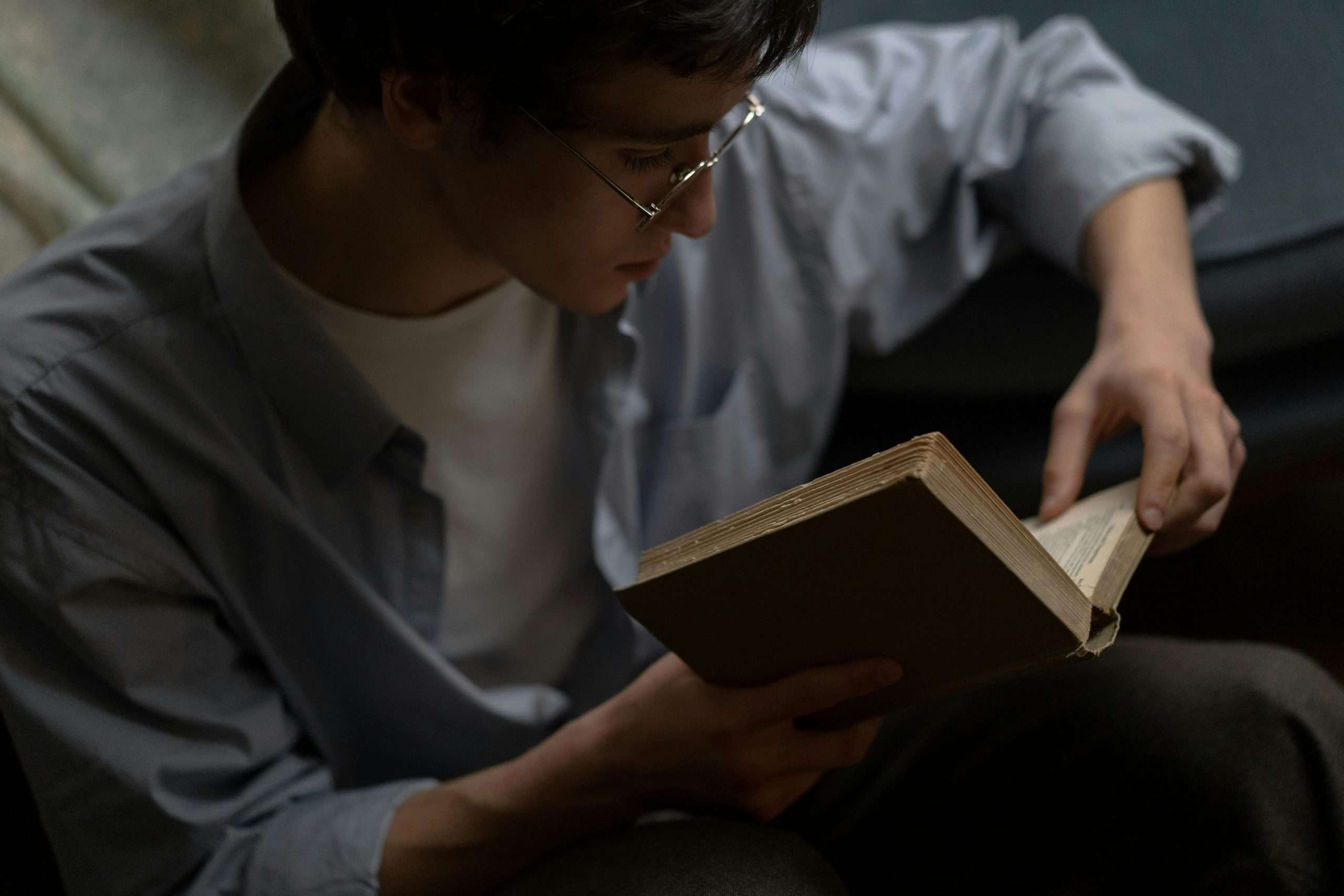
One thing books about burnout can do that real-time advice often can’t: they can give you a framework for understanding your own patterns before you’re in crisis again. Reading about how burnout develops, what the early warning signs look like, and why certain personality types are more vulnerable to specific patterns gives you a kind of internal early warning system. That’s worth something.
How Do You Use a Book About Burnout Without It Becoming Another Form of Avoidance?
This is a real risk, and I want to be honest about it. Reading can become its own form of productive procrastination. You feel like you’re doing something about your burnout because you’re engaged with material about burnout, but the actual changes, the structural ones, the relational ones, the ones that require difficult conversations or genuine rest, keep getting deferred.
I’ve been guilty of this. There’s something almost comfortable about reading about a problem rather than addressing it. The book gives you the feeling of forward movement without the discomfort of actual change. And for introverts, who often prefer processing internally before acting externally, the risk of over-processing and under-acting is real.
The way I’ve found to counteract this is to read with a specific question rather than a general desire to understand. Instead of “I want to learn about burnout,” try “I want to understand why I keep returning to overwork even when I know better.” That specificity forces the reading to connect to something actionable rather than remaining purely intellectual.
It also helps to pair reading with physical recovery practices. The American Psychological Association’s overview of relaxation techniques is a useful reminder that nervous system recovery isn’t optional, it’s foundational. You can read the most insightful book about burnout ever written and still fail to recover if your body is still running in chronic stress mode. The cognitive and the physiological have to move together.
For introverts specifically, the recovery piece often involves reclaiming the kind of deep, uninterrupted solitude that burnout tends to corrupt. When you’re depleted, even alone time stops being restorative. Research on stress and the nervous system helps explain why this happens physiologically, and understanding the mechanism can make it easier to be patient with a recovery process that feels slower than it should.
What Does Returning to Work After Burnout Actually Require?
Books about burnout are often stronger on diagnosis than on the specific mechanics of return. They’ll tell you that you need to recover fully before going back, that you need structural changes in your environment, that you need to rebuild your relationship with work from a different foundation. All of that is true. What they sometimes underspecify is what that actually looks like in practice, particularly for introverts whose recovery needs don’t match the standard template.
Returning to work after burnout is not just a practical transition. It’s a psychological one. You’re going back to an environment that, in some form, contributed to breaking you down, and you’re trying to do it differently this time. That requires more than a rested body. It requires a clearer sense of what you’re willing to do and what you’re not, a better understanding of your own early warning signs, and ideally, some genuine changes in the conditions you’re returning to.
Personality type shapes this transition in specific ways. An INTJ returning from burnout has different needs than an ENFP or an ISFP handling the same process. This breakdown of what each type actually needs when returning to work after burnout goes into that specificity in a way that most general burnout books don’t.
What I know from my own experience is that the return is easier when you’ve done real work on understanding what broke down in the first place. Not just the surface causes, the overwork, the impossible deadlines, the clients who took more than they gave. But the deeper patterns: why you said yes when you should have said no, what you were afraid would happen if you enforced limits, what your identity was resting on that made overextension feel necessary. Books can help you get to those questions. The answers require something more personal.

There’s also the social dimension of return that introverts often find particularly taxing. The social demands of workplace culture, even in the early stages of returning, can feel disproportionately heavy when your reserves are still low. Knowing that in advance, and planning for it rather than being surprised by it, makes a meaningful difference.
And for those who are trying to build practices that address anxiety alongside burnout recovery, grounding techniques like the 5-4-3-2-1 method can be useful tools in the early days of return, when the nervous system is still recalibrating and ordinary workplace stimulation can feel overwhelming.
Books about burnout gave me a language and a framework. What actually moved me through it was the slower, messier work of applying that understanding to specific choices in specific moments. The reading was the beginning, not the end.
There’s much more to explore across the full spectrum of burnout, from its earliest warning signs to long-term recovery and everything in between. Our complete Burnout and Stress Management hub brings all of that together in one place.
Running on empty?
Five drain profiles, each with specific triggers, warning signs, and a recharging playbook.
Take the Free QuizUnder 2 minutes · 8 questions · Free
About the Author
Keith Lacy is an introvert who’s learned to embrace his true self later in life. After 20 years in advertising and marketing leadership, including running agencies and managing Fortune 500 accounts, Keith now channels his experience into helping fellow introverts understand their strengths and build fulfilling careers. As an INTJ, he brings analytical depth and authentic perspective to every article, drawing from both professional expertise and personal growth.
Frequently Asked Questions
Can reading a book about burnout actually help you recover from it?
Reading about burnout can be genuinely useful, but it works best as one part of a broader recovery process rather than a substitute for it. A good book can give you language for what you’re experiencing, interrupt self-blame narratives, and help you identify patterns you couldn’t see from inside the experience. What it can’t do on its own is replace physical recovery, structural changes in your work environment, or the harder personal work of understanding why burnout developed in the first place. The most effective approach pairs the insight that reading provides with concrete changes in behavior and conditions.
What makes a burnout book worth reading versus one that wastes your time?
The books worth your time take burnout seriously as a psychological and physiological event, not just a lifestyle problem. They acknowledge systemic causes rather than placing all responsibility on the individual, they’re honest about the limits of recovery, and they don’t reduce healing to a checklist of wellness habits. Books that treat burnout primarily as a time management or self-care failure tend to miss the deeper architecture of what’s actually happening. Look for books grounded in clinical psychology or organizational research, and be cautious about titles that promise quick recovery or frame burnout as something you simply push through.
Are there burnout books specifically written for introverts?
Few burnout books are written specifically with introverts in mind, and that gap is worth acknowledging. Most mainstream recovery advice assumes a social model of healing that doesn’t always fit introverted processing styles. The most useful books for introverts tend to be those that take psychological complexity seriously and allow for individual variation in how people deplete and restore. It also helps to supplement general burnout reading with resources that address personality type directly, since the patterns that exhaust an introvert and what recovery looks like for them are genuinely different from what extroverts experience.
How do you avoid using burnout books as a form of avoidance?
Reading about burnout can become a comfortable substitute for actually addressing it, particularly for introverts who prefer internal processing before external action. The most effective way to counteract this is to read with a specific question rather than a general desire to understand. Instead of broad reading about burnout in general, focus on a particular pattern you want to understand, such as why you keep returning to overwork or why certain limits are hard to maintain. That specificity forces the reading to connect to something actionable. Pairing reading with physical recovery practices and concrete behavioral changes helps ensure the intellectual engagement translates into genuine movement.
What should introverts know before returning to work after burnout?
Returning to work after burnout is both a practical and psychological transition, and introverts face some specific challenges in that process. The social demands of workplace culture, even at low levels, can feel disproportionately heavy when your reserves are still rebuilding. Planning for that in advance rather than being surprised by it makes a meaningful difference. It’s also worth doing real work on understanding the deeper patterns that contributed to burnout, not just the surface causes, before returning. Structural changes in your environment matter as much as personal readiness. Returning to the same conditions without changes is likely to produce the same outcome.