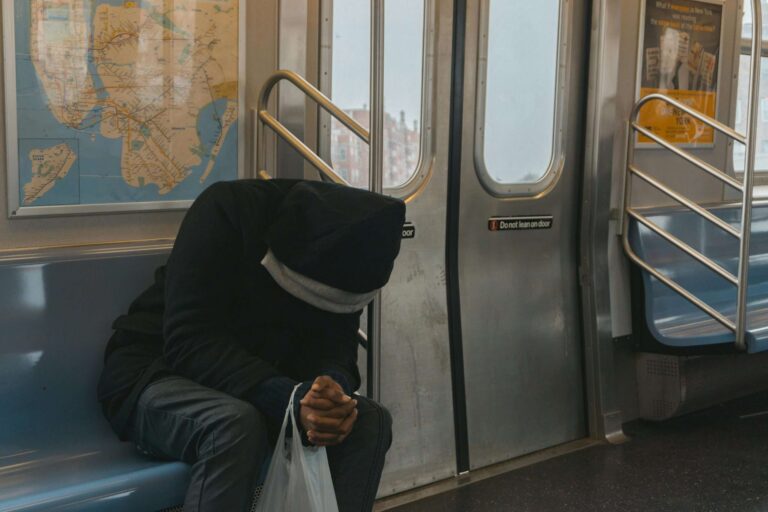
Boston attracts introverts because it rewards depth over performance. The city’s concentration of world-class universities, independent bookshops, quiet museums, and research institutions creates an environment where thinking carefully is considered a strength, not a liability. For people who process the world internally, Boston offers rare permission to simply be.
Contrast that with cities built around spectacle and social display. I’ve worked in a lot of those places. During my years running advertising agencies, I traveled constantly, pitching campaigns in Chicago, Los Angeles, New York. Each city had its own social contract, and most of them required a version of me I had to consciously perform. Boston was different. The first time I spent a real stretch of time there for a client engagement, something felt oddly familiar, like the city had been designed by someone who understood that some of the best thinking happens in quiet rooms.

What follows is my honest take on why Boston works so well for people wired like us. Not a tourist guide. Not a listicle of coffee shops. A real examination of what makes this particular city feel like breathing room for introverts who think deeply and need space to do it.
If you’re exploring how your personality shapes where you thrive and how you work, our Introvert Lifestyle hub covers the full range of environments, habits, and choices that help introverts build lives that actually fit them.
Why Does Boston Feel Different From Other Major Cities?
Most major American cities reward extroversion structurally. The social architecture of Los Angeles centers on visibility. New York runs on relentless stimulation and competitive energy. Miami and Las Vegas are practically built around performance. Boston’s social architecture is different, and I think it comes down to what the city has historically valued: intellectual achievement, institutional prestige, and the kind of slow, careful work that produces lasting results.
What’s your personality type?
Take our free 40-question assessment and get a detailed personality profile with dimension breakdowns, context analysis, and personalised insights.
Discover Your Type8-12 minutes · 40 questions · Free
A 2021 analysis from the American Psychological Association noted that environmental context significantly shapes how personality traits are expressed and how comfortable people feel in social settings. Boston’s context, shaped by centuries of academic culture, tends to make intellectual introversion feel less like a deficit and more like a credential.
Walk through Cambridge on a weekday afternoon and you’ll see what I mean. People reading alone at outdoor tables. Graduate students deep in conversation about ideas rather than social logistics. Researchers moving through the streets with the slightly distracted air of people whose minds are somewhere else entirely. Nobody is performing for an audience. The city’s default mode is internal, and that changes everything about how it feels to exist there as someone who processes the world quietly.
During one of my agency trips, I had a full day between client meetings. I spent it at the Boston Athenaeum, one of the oldest private libraries in the country. I sat in a reading room for four hours. Nobody checked on me. Nobody asked if I was networking or being productive. The assumption was that sitting quietly with ideas was exactly the right thing to be doing. I remember thinking that I couldn’t name another major American city where that assumption would feel so completely natural.
What Makes Boston’s Academic Environment So Welcoming to Deep Thinkers?
The concentration of universities in Greater Boston is genuinely staggering. Harvard, MIT, Boston University, Boston College, Tufts, Northeastern, Wellesley, Brandeis, and dozens of smaller institutions create a kind of intellectual density that shapes the entire region’s culture. According to the National Center for Education Statistics, the Boston metropolitan area has one of the highest concentrations of college and university students per capita in the United States.
What that means practically is that the population skews toward people who chose depth over breadth, who spent years studying something carefully, who find extended periods of focused attention rewarding rather than exhausting. That’s a population that tends to include a disproportionate number of introverts. And when introverts are the majority in a given environment, the social norms shift accordingly.

Conversations in Boston tend to go somewhere. I noticed this in client meetings there. When I worked with a biotech firm outside Kendall Square, the meetings had a different texture than anything I’d experienced with consumer brands in New York or retail clients in Chicago. People came prepared. They wanted to examine ideas from multiple angles. They were comfortable with silence while someone thought through a response. For someone like me, who processes before speaking and finds performative enthusiasm exhausting, those meetings felt like finally playing a game with rules I actually understood.
The academic culture also creates a city that genuinely values expertise. Boston respects people who know things deeply, who’ve spent time mastering a subject, who can speak with precision rather than volume. That’s a value system that maps well onto how many introverts naturally operate.
Are Boston’s Neighborhoods Actually Designed for Introvert Living?
Not by design, exactly. But by accumulation. Boston is one of the oldest cities in the country, and its neighborhoods developed before cars, before suburban sprawl, before the assumption that everyone wanted a yard and a garage. What you get instead are walkable, human-scaled districts where a person can live a complete life within a few blocks.
For introverts, walkability matters in a specific way. It removes the need for constant social negotiation. You can get coffee, pick up groceries, visit a bookshop, and walk along the waterfront without ever having to coordinate with another person. The city supports solitude without requiring isolation. That’s a meaningful distinction. Isolation is absence. Solitude is presence with yourself, and Boston’s neighborhood structure makes solitude genuinely accessible.
Beacon Hill offers gaslit streets and Federal-era architecture that feel genuinely removed from the pace of modern life. The South End has independent galleries and quiet residential blocks. Jamaica Plain has a community feel that doesn’t demand participation. Cambridge’s residential streets around Harvard and Porter Square are full of people who seem to have consciously chosen a life organized around books, ideas, and long walks. Each neighborhood has its own character, but most of them share a quality that I’d describe as permission to be interior.
Research published through the National Institute of Mental Health has documented the relationship between urban environment design and psychological wellbeing, noting that access to green space, reduced noise exposure, and walkable infrastructure all contribute to lower stress responses. Boston performs well on all three measures compared to denser, louder American cities.
How Does Boston’s Cultural Scene Serve People Who Prefer Depth Over Spectacle?
Boston’s cultural institutions tend toward the serious. The Museum of Fine Arts has one of the strongest permanent collections in the country, the kind you can visit repeatedly and keep finding new layers in. The Isabella Stewart Gardner Museum is intimate and eccentric, organized according to its founder’s personal vision rather than conventional curatorial logic. The Boston Symphony Orchestra is widely considered among the finest in the world. These aren’t entertainment venues. They’re places built for sustained attention.

The independent bookshop culture in Boston and Cambridge is also worth noting specifically. Harvard Book Store, Porter Square Books, Trident Booksellers, Brookline Booksmith. These aren’t chain stores. They’re curated environments staffed by people who’ve read the books they’re recommending. Spending an afternoon in any of them feels like a conversation with a thoughtful mind, even if you never speak to anyone.
I’ve spent a lot of time in cities where the cultural calendar is built around spectacle, around events that are really about being seen at events. Boston’s cultural calendar feels different. The lecture series at the public library. The reading events at independent bookshops. The film programs at the Brattle Theatre in Cambridge. These are experiences built around ideas, and they attract people who came for the ideas rather than the social opportunity. As someone who spent years sitting through industry events where the actual content was secondary to the networking, I find that genuinely refreshing.
The Psychology Today research library includes extensive documentation of how introverts experience cultural consumption differently from extroverts, often preferring depth of engagement over breadth of exposure. Boston’s cultural institutions seem built for exactly that preference, whether by intention or by the accumulated character of a city that has always taken ideas seriously.
What Career Opportunities Does Boston Offer Introverts Who Think Strategically?
Boston’s economy is built on industries that reward careful thinking. Biotech and life sciences. Higher education. Healthcare. Technology. Financial services with a research orientation. These are sectors where the work itself requires sustained concentration, where expertise is valued over charisma, where being the person who actually understands the material matters more than being the most energetic person in the room.
That alignment between industry structure and introvert strengths is significant. A 2023 report from Harvard Business Review examined how cognitive style affects performance across different industry sectors, finding that analytical, internally-oriented thinkers tend to perform particularly well in research-intensive, knowledge-based fields. Boston’s economy is essentially a map of those fields.
My own experience with Boston-area clients reinforced this. The biotech firm I mentioned earlier had a leadership culture that was genuinely comfortable with quiet. Their CEO was a researcher by training, someone who had spent years in a lab before moving into an executive role. She ran meetings the way I imagine she’d run experiments: methodically, with attention to evidence, without pressure to perform certainty she didn’t have. Watching her operate made me think about how different my own leadership path might have looked if I’d been surrounded by models like that earlier in my career.
Instead, I spent my first decade in advertising trying to match the energy of extroverted agency leaders, performing a version of confidence that didn’t come naturally and cost me considerably in terms of sustained focus and genuine strategic thinking. Boston’s professional culture, at least in the sectors I experienced, seemed to have figured out something that took me years to accept: that quiet, careful, deeply considered work produces better outcomes than performed enthusiasm.

Does Boston’s Reputation for Being Reserved Actually Help Introverts?
Boston has a reputation, particularly among people from warmer-climate cities, for being socially cool. Reserved. Not immediately warm. People sometimes experience this as unfriendliness. I’ve heard it called “the Boston chill” by colleagues who found the city’s social pace frustrating.
From where I sit, that reputation describes something that functions as a genuine asset for introverts. Boston doesn’t demand immediate social performance. Strangers don’t expect you to be effusive. Small talk isn’t the primary social currency. People are allowed to be in their own heads in public without anyone interpreting it as rudeness or standoffishness.
Compare that to cities where the social expectation is constant warmth and openness, where a quiet demeanor reads as suspicious or unfriendly. In those environments, introverts spend significant energy managing the gap between their natural state and what the social context demands. That energy expenditure is real, and it accumulates. A 2022 study cited by Mayo Clinic in their mental health resources documented how sustained social performance, maintaining a persona that differs from one’s natural disposition, correlates with elevated stress markers and reduced cognitive performance over time.
Boston’s social reserve means that introverts can simply be themselves in public without managing a performance. That’s not a small thing. Over the course of a week, a month, a year, the accumulated relief of not having to perform extroversion in your daily environment is significant. It’s the difference between a city that drains you and one that doesn’t.
What Are the Best Quiet Spaces in Boston for Recharging?
Every introvert needs reliable places to restore. Not just places to be alone, but places that actively support the kind of quiet internal processing that recharges us. Boston has an unusual number of these.
The Arnold Arboretum in Jamaica Plain is 281 acres of managed landscape, free to enter, and genuinely peaceful on most weekdays. The Public Garden in the Back Bay offers a different kind of quiet, more urban, but with a formality that tends to keep it calmer than you’d expect given its central location. The Emerald Necklace, Frederick Law Olmsted’s connected park system, runs through several neighborhoods and provides miles of walking that feel removed from the city even when you’re technically in the middle of it.
For indoor restoration, the Boston Public Library’s Bates Hall reading room is one of the great quiet spaces in any American city. The vaulted ceiling, the long oak tables, the quality of light coming through the high windows. It’s a room that was designed to support concentrated thought, and it still does. I’ve sat there between meetings and felt something reset that I didn’t know was out of alignment.
The National Institute of Mental Health has documented the restorative effects of nature exposure and quiet environments on attention and emotional regulation. Boston’s combination of accessible green space and genuinely quiet indoor cultural spaces makes it unusually well-equipped to support the restoration cycle that introverts depend on.
What I’ve come to understand, partly through years of burning through my own reserves in high-stimulation work environments, is that access to restoration isn’t a luxury. It’s infrastructure. Cities that provide it support a kind of sustained functioning that cities built entirely around stimulation simply don’t. Boston provides it in multiple forms, across multiple neighborhoods, at multiple price points. That matters.

Is Boston the Right City for Every Introvert?
Probably not. No city is. Boston has a cost of living that ranks among the highest in the country. The winters are genuinely harsh, and the compressed darkness of January and February can be isolating in ways that compound rather than complement introversion. The city’s social networks, particularly in professional circles, can feel cliquish and difficult to enter if you didn’t come up through the local institutions. Getting established takes time.
There’s also a particular strain of Boston intellectual culture that can tip into competitive dismissiveness. The assumption that credentials confer authority, that where you went to school determines the weight of your ideas. For introverts who didn’t come through elite academic institutions, that can feel exclusionary rather than welcoming.
What Boston offers, at its best, is a city that takes thinking seriously, that provides genuine infrastructure for solitude and restoration, and that doesn’t demand social performance as the price of belonging. Whether those qualities outweigh the costs depends entirely on what you’re carrying and what you need. For some introverts, particularly those drawn to academic or research-oriented work, those qualities are exactly what they’ve been looking for. For others, a smaller city with lower stakes and warmer social norms might serve better.
What I know from my own experience is that the cities that worked best for me during my agency years weren’t the most exciting ones. They were the ones where I could do my best thinking without constantly managing the gap between who I am and what the environment expected me to be. By that measure, Boston consistently performed well.
Explore more about how introverts build lives that fit their true nature in our complete Introvert Lifestyle Hub.
About the Author
Keith Lacy is an introvert who’s learned to embrace his true self later in life. After 20 years in advertising and marketing leadership, including running agencies and managing Fortune 500 accounts, Keith now channels his experience into helping fellow introverts understand their strengths and build fulfilling careers. As an INTJ, he brings analytical depth and authentic perspective to every article, drawing from both professional expertise and personal growth.
Frequently Asked Questions
Is Boston a good city for introverts?
Boston is widely considered one of the most introvert-compatible major American cities. Its academic culture, walkable neighborhoods, world-class quiet cultural institutions, and socially reserved local norms create an environment where introverts can function without constant social performance. The city rewards depth, expertise, and careful thinking, qualities that align naturally with how many introverts operate.
Why do academics and researchers tend to settle in Boston?
Boston’s concentration of universities and research institutions, including Harvard, MIT, and dozens of others, creates a professional ecosystem that values intellectual depth and sustained expertise. The biotech, healthcare, and technology sectors that dominate the regional economy reward careful, analytical thinking. For academics and researchers, many of whom are introverted by nature, Boston offers both professional opportunity and a cultural environment that respects the kind of work they do.
What are the best quiet spaces in Boston for introverts?
Boston offers exceptional options for quiet restoration. Bates Hall at the Boston Public Library is one of the finest reading rooms in any American city. The Arnold Arboretum provides 281 acres of peaceful landscape at no cost. The Isabella Stewart Gardner Museum offers intimate, unhurried cultural experience. The Emerald Necklace park system connects multiple neighborhoods with walkable green space. Each of these provides genuine solitude rather than simply reduced noise.
How does Boston’s social culture affect introverts?
Boston has a reputation for social reserve that some visitors experience as coldness. For introverts, that same quality functions as relief. The city doesn’t demand immediate warmth or social performance from strangers. People are comfortable in their own heads in public. Small talk isn’t the primary social currency. This means introverts can move through the city without constantly managing the gap between their natural disposition and what the social environment expects, which reduces the accumulated energy cost of daily life significantly.
Are there downsides to Boston for introverts?
Yes, and they’re worth considering honestly. Boston’s cost of living is among the highest in the country. The winters are long and dark, which can deepen isolation rather than support healthy solitude. Professional networks can be difficult to enter without local institutional connections. Some corners of the city’s intellectual culture carry a credential-based hierarchy that can feel exclusionary. Boston works exceptionally well for introverts whose professional interests align with the city’s dominant industries, yet it isn’t the right fit for everyone.