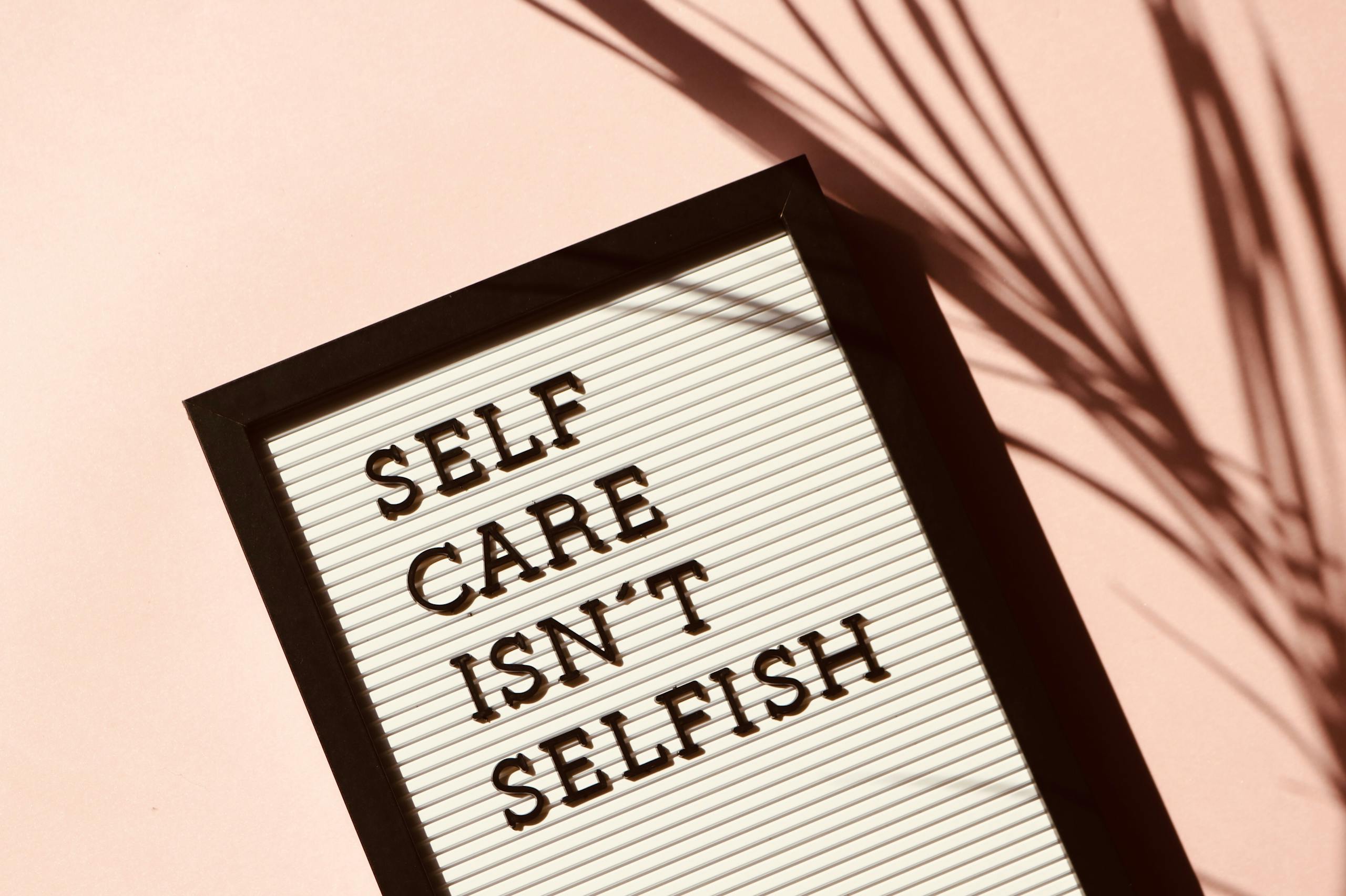

Boundaries, burnout, and self-care have become the holy trinity of wellness culture, and somewhere between the jade rollers and the “protect your energy” Instagram graphics, the actual needs of introverts got buried under a pile of aesthetically pleasing nonsense. If you’ve ever felt more exhausted by the performance of self-care than by the burnout it was supposed to fix, you’re not imagining things.
The problem isn’t that boundaries and rest matter. They absolutely do, especially for people wired the way we are. The problem is that mainstream wellness culture has turned genuine psychological needs into a consumer product, and in doing so, it’s made real recovery harder to recognize and harder to trust.
Everything I’m about to say comes from two decades of learning this the hard way, running advertising agencies, managing dozens of people, and spending years performing a version of leadership that slowly hollowed me out from the inside.

Our Energy Management and Social Battery hub covers the full spectrum of how introverts experience and protect their energy, but this particular angle cuts a little deeper. Because burnout for introverts isn’t just about being tired. It’s about spending years not understanding why you’re tired, and then being handed solutions that don’t actually fit how your nervous system works.
What Does “Goopification” Actually Mean for Introverts?
I’m borrowing the term loosely. Goop, the wellness brand, became shorthand for a specific kind of self-care: expensive, aspirational, vaguely mystical, and completely disconnected from the actual science of how human beings function. You know the aesthetic. Linen robes. $90 candles. Morning routines that require three uninterrupted hours and a dedicated meditation room.
What’s your personality type?
Take our free 40-question assessment and get a detailed personality profile with dimension breakdowns, context analysis, and personalised insights.
Discover Your Type8-12 minutes · 40 questions · Free
The Goopification of self-care isn’t just about price tags. It’s about the way genuine psychological concepts get sanded down into content. “Set boundaries” becomes a quote graphic. “Rest is productive” becomes a throw pillow. “Protect your energy” becomes a caption under a photo of someone drinking tea in a bathtub.
What gets lost in that translation is specificity. And specificity is exactly what introverts need.
When I was running my second agency, I had a team member who kept sharing these kinds of posts in our Slack channels. She was also working 60-hour weeks and crying in the bathroom on Thursdays. The gap between the content she consumed and the life she was actually living was enormous. She knew the language of self-care fluently. She had no idea what she actually needed.
That gap is what I want to talk about here. Because I’ve lived in it too, and I suspect many of you reading this have as well.
Why Burnout Hits Introverts Differently Than the Wellness Industry Assumes
Mainstream burnout discourse is largely built around extroverted models of stress. Work too hard, rest more. Too much output, increase input. The solution is almost always additive: add a yoga class, add a vacation, add a gratitude journal, add a sound bath.
For introverts, burnout is frequently subtractive. We don’t need more things added to our lives. We need things removed. Fewer obligations. Fewer social demands. Fewer environments that require us to perform extroversion for hours at a stretch.
Psychology Today’s overview of introversion describes the core difference clearly: introverts lose energy through social interaction and recover through solitude. That’s not a preference or a mood. It’s a neurological pattern. And when you spend years in environments that demand constant social output, the cumulative drain is real and measurable in how you feel, think, and function.
What the wellness industry sells as burnout recovery often adds more social stimulation, not less. Group retreats. Community challenges. Accountability partners. Shared healing circles. These things genuinely help some people. For many introverts, they’re just a different kind of drain wearing a spa robe.
I once attended a “leadership wellness retreat” that a client insisted our agency participate in. Three days, shared cabins, group meals, mandatory evening activities. By day two, I had developed what I can only describe as a low-grade social fever. I was present, I was functional, but something behind my eyes had gone quiet in a way that felt like warning lights. I came home more depleted than when I left.

The reason an introvert gets drained so easily isn’t weakness or antisocial behavior. It’s a fundamental difference in how the nervous system processes social and sensory input. That difference doesn’t disappear because the social interaction is labeled “wellness.”
The Boundary Conversation We’re Not Having
“Set boundaries” has become one of the most repeated phrases in modern self-help, and also one of the least useful in its current form. Not because boundaries don’t matter. They matter enormously. But the way the concept gets packaged tends to skip over the parts that are actually hard.
Setting a boundary requires, first, that you know what you need. Second, that you believe you’re allowed to need it. Third, that you can communicate it without collapsing under the social pressure that follows. For introverts who have spent years being told (implicitly or explicitly) that their needs are inconvenient, all three of those steps are loaded with accumulated weight.
The wellness content skips straight to step three. “Just say no.” “Your time is valuable.” “Protect your peace.” What it doesn’t address is the years of conditioning that made saying no feel dangerous, or the very real professional consequences that can follow when an introvert in a leadership role starts declining things that extroverted colleagues handle without blinking.
In my agency years, I managed several highly sensitive people on my creative teams. I could see them absorbing the emotional temperature of every room, every client call, every internal conflict. The ones who had learned the boundary language of wellness could say “I need to protect my energy” fluently. What they couldn’t do was actually protect it in a work environment that treated availability as a virtue. The language was there. The structural support for honoring it wasn’t.
That’s not a personal failing. That’s a systems problem dressed up as a self-care problem.
Sensory Overload and the Self-Care Solutions That Miss the Point
Many introverts, particularly those who identify as highly sensitive, experience burnout that is significantly sensory in nature. It’s not just too many conversations. It’s too much noise, too much light, too much physical contact, too many competing inputs demanding simultaneous processing.
Psychology Today’s resource on highly sensitive people notes that this trait, estimated to be present in roughly 15 to 20 percent of the population, involves deeper processing of sensory and emotional information. That depth is a genuine strength in many contexts. It’s also a genuine vulnerability in environments that weren’t designed with it in mind.
Sensory burnout is real and specific. If you’ve ever left a crowded open-plan office with a headache that felt like it lived behind your eyes, or spent a long day under fluorescent lights feeling vaguely dissociated by 3pm, you know what I mean. If you’ve ever found that the noise of a busy restaurant made it genuinely difficult to think, not just annoying but cognitively disruptive, that’s sensory processing at work.
Good resources on HSP noise sensitivity and coping strategies get into the practical specifics of this. So do pieces on HSP light sensitivity and how to manage it in environments that weren’t built for your nervous system. What mainstream wellness culture offers instead is “take a bath” or “do a digital detox.” Those aren’t wrong suggestions. They’re just operating at a level of abstraction that doesn’t match the specificity of the problem.
My own sensory thresholds became impossible to ignore during a particularly brutal pitch season at the agency. We were in a shared creative space with exposed ceilings, concrete floors, and the kind of acoustic properties that turned normal conversation into a wall of ambient noise. I was losing focus by mid-morning every day and couldn’t figure out why my thinking felt sluggish and scattered. It wasn’t until I started working from a quieter back office that I realized the environment itself had been a constant low-grade drain on my capacity to think.
That’s the kind of specific, practical insight that actually helps. Not “protect your energy.” Protect it from what, specifically, and how.
The same principle applies to physical sensitivity. If you find certain textures or physical environments deeply uncomfortable in ways that seem disproportionate to others, that’s not fussiness. Understanding HSP touch sensitivity and tactile responses puts that experience in a framework that actually makes sense of it.
What Real Recovery Looks Like When You’re Wired This Way
Genuine recovery for introverts tends to be quieter, more specific, and less photogenic than what wellness culture sells. It doesn’t usually look like a retreat or a morning routine. It looks like an afternoon where no one needs anything from you. It looks like a commute home with no podcast, no phone calls, just the specific quality of silence that lets your mind decompress at its own pace.
There’s actual neuroscience behind why this matters. Cornell University’s research on brain chemistry and personality points to differences in how introverts and extroverts process dopamine, which helps explain why the same social environment that energizes one person depletes another. This isn’t about preference or attitude. It’s about how different nervous systems are calibrated.
Practical recovery for introverts often involves what I’d call granular awareness: knowing not just that you’re depleted, but what specifically depleted you, and what specifically restores you. Those answers are individual. They’re also learnable, but only if you’re paying attention to your actual experience rather than following a generic wellness protocol.
For me, the most reliable recovery tool I’ve found after a heavy week of client work and presentations isn’t a spa day or a meditation app. It’s a long walk alone, preferably somewhere with trees rather than traffic, followed by a few hours of reading something completely unrelated to work. No agenda. No productivity. Just the specific kind of mental space that lets me feel like myself again.
That’s not glamorous. It won’t sell candles. But it works, because it matches what my nervous system actually needs rather than what the wellness aesthetic suggests I should need.
Understanding how to protect your energy reserves as a highly sensitive person gets into the practical mechanics of this in ways that generic self-care advice doesn’t. And finding the right level of stimulation, not too much and not too little, is its own skill worth developing. The piece on HSP stimulation and finding that balance addresses something that wellness culture almost never acknowledges: that understimulation is also a problem, and that the goal isn’t zero input but calibrated input.
The Productivity Trap Hidden Inside Self-Care Culture
There’s a particularly insidious version of self-care that has infiltrated professional culture, and it’s especially damaging for introverts who are already prone to self-doubt about their productivity. It’s the idea that self-care should make you more productive. Rest to perform better. Meditate to focus harder. Set boundaries so you can give more when you show up.
This framing turns recovery into a means to an end, and the end is always output. Which means that rest that doesn’t result in measurably improved performance starts to feel like failure. Which means that an introvert who needs a genuinely slow weekend to feel human again starts to feel guilty about not optimizing their downtime.
I watched this play out in my own thinking for years. I would take a Sunday off and then spend Monday morning cataloging whether I felt more productive. If the answer was “not noticeably,” the rest started to feel unjustified. I had internalized a model of recovery that was still fundamentally about output, which meant I was never actually resting. I was just performing rest and then grading it.
Burnout research, including work published through PubMed Central on occupational burnout, points consistently to the importance of psychological detachment from work during recovery periods. Not optimized rest. Actual detachment. The kind where you’re not monitoring your own recovery for signs of productivity improvement.
For introverts, this is both more important and harder to achieve. More important because our recovery requires genuine mental space, not just physical rest. Harder because many of us have spent years in environments that treated any form of disengagement as a character flaw.
When Boundaries Become a Performance of Their Own
Here’s a dynamic I’ve noticed in myself and in people I’ve worked with over the years: sometimes the public articulation of a boundary becomes a substitute for actually holding it.
You post about protecting your peace. You tell your colleagues you don’t check email after 6pm. You use the vocabulary of self-care fluently in conversations. And then you check your email at 9pm because the anxiety of not checking is worse than the drain of checking. The performance of the boundary was easier than the internal work of actually honoring it.
This isn’t hypocrisy. It’s what happens when the tools of self-care are social and public but the actual need they’re meant to address is private and internal. Introverts in particular tend to do their most important psychological work internally, quietly, without an audience. A boundary that exists primarily as a public statement is a boundary built for the wrong medium.
The boundaries that actually changed my experience of work weren’t the ones I announced. They were the ones I quietly built into my calendar, my physical environment, and my daily structure. I stopped scheduling calls before 10am. I built in a 20-minute transition between back-to-back meetings. I started treating my lunch hour as genuinely non-negotiable, not because I told anyone about it, but because I stopped treating it as flexible.
Nobody needed to know. The boundary worked because I honored it, not because I’d declared it.
Additional perspectives on the broader relationship between energy, sensitivity, and recovery are worth exploring. PubMed Central’s research on psychological resilience and stress recovery offers useful context for understanding why recovery isn’t one-size-fits-all, and why individual differences in nervous system sensitivity genuinely matter for how people restore themselves.
What Actually Helps, Without the Aesthetic
After two decades of trial and error, some of which was genuinely painful, consider this I’ve found actually moves the needle for introverts dealing with burnout and boundary fatigue. None of it requires a linen robe.
First, get specific about your drain. Not “people exhaust me” but “back-to-back meetings with no processing time between them exhaust me.” Not “I need quiet” but “I need 30 minutes of genuine silence after a client call before I can think clearly again.” Specificity makes the problem solvable. Generality keeps it chronic.
Second, build recovery into structure rather than relying on willpower. Willpower is a finite resource, and introverts in demanding environments often have very little left over by the time they need to use it for self-protection. If your recovery depends on you choosing it in the moment against competing pressures, it won’t happen consistently. Put it in the calendar. Make it structural.
Third, distinguish between social fatigue and emotional depletion. They feel similar but they have different causes and different remedies. Social fatigue comes from too much interaction and is relieved by solitude. Emotional depletion often comes from unprocessed feelings and is relieved by reflection, writing, or conversation with someone you genuinely trust. Treating emotional depletion with social isolation can make it worse.
Fourth, stop auditing your recovery. Rest that you’re monitoring for productivity gains isn’t rest. Give yourself permission to be unproductive without treating it as data.
And fifth, be skeptical of any self-care solution that requires you to be more social, more visible, or more performatively well. The wellness industry has a financial interest in selling you things. Your nervous system has no such agenda. Trust the latter.
If you want to go deeper on the energy side of all of this, the full picture is in our Energy Management and Social Battery hub, which covers everything from daily depletion patterns to longer-term reserve building in ways that actually account for how introverts are wired.
About the Author
Keith Lacy is an introvert who’s learned to embrace his true self later in life. After 20 years in advertising and marketing leadership, including running agencies and managing Fortune 500 accounts, Keith now channels his experience into helping fellow introverts understand their strengths and build fulfilling careers. As an INTJ, he brings analytical depth and authentic perspective to every article, drawing from both professional expertise and personal growth.
Frequently Asked Questions
Why does self-care advice often make introverts feel worse instead of better?
Most mainstream self-care frameworks were built around extroverted models of stress and recovery. They tend to be additive, suggesting more activities, more community, more structured routines, when introverts often need the opposite. Genuine recovery for people wired this way usually means fewer demands, more solitude, and less sensory input, none of which photographs particularly well for social media. When the prescribed solution doesn’t match the actual need, following it can deepen the depletion rather than relieve it.
What’s the difference between burnout and regular introvert energy depletion?
Regular depletion is the daily or weekly drain that comes from social interaction and stimulation. It’s expected, and it resolves with adequate rest and solitude. Burnout is cumulative and structural. It happens when depletion is chronic and recovery never fully occurs, often because the environment or schedule doesn’t allow for genuine restoration. Burnout tends to affect motivation, cognition, and emotional regulation in ways that a single quiet weekend can’t fix. It usually requires changes to the underlying conditions, not just more rest layered on top of an unsustainable situation.
How do you set real boundaries without the wellness industry script?
The most effective boundaries for introverts tend to be structural rather than declarative. Instead of announcing that you need to protect your energy, build the protection into your calendar, your environment, and your daily habits. Block transition time between meetings. Make your lunch hour genuinely non-negotiable. Create physical spaces in your home or office that signal recovery rather than availability. Boundaries that live in your structure require less willpower to maintain than boundaries that depend on you making a fresh choice under pressure every time.
Is sensory sensitivity a separate issue from introversion, or are they connected?
They’re related but distinct. Introversion refers specifically to how people gain and lose energy through social interaction. Sensory sensitivity, particularly in highly sensitive people, refers to deeper processing of sensory and emotional information across all inputs, not just social ones. Many introverts are also highly sensitive, which means their burnout has a sensory dimension as well as a social one. Noise, light, physical environment, and emotional atmosphere all contribute to depletion in ways that purely social models of introversion don’t fully capture. Addressing sensory sensitivity specifically, rather than treating it as just another facet of needing quiet, tends to produce more targeted and effective relief.
Can introverts genuinely recover from deep burnout, or is it always a management game?
Genuine recovery from deep burnout is possible, but it typically requires more than self-care tactics. It requires identifying and changing the conditions that produced the burnout in the first place. For introverts, that often means restructuring their work environment, their social commitments, or their relationship with availability and output. Tactics help. Structure helps more. And the willingness to take your own needs seriously, not as a luxury but as a legitimate requirement for functioning well, is probably the most important shift of all. Many introverts find that recovery also involves grieving the years spent trying to operate as someone they weren’t, which is its own form of processing that takes time.