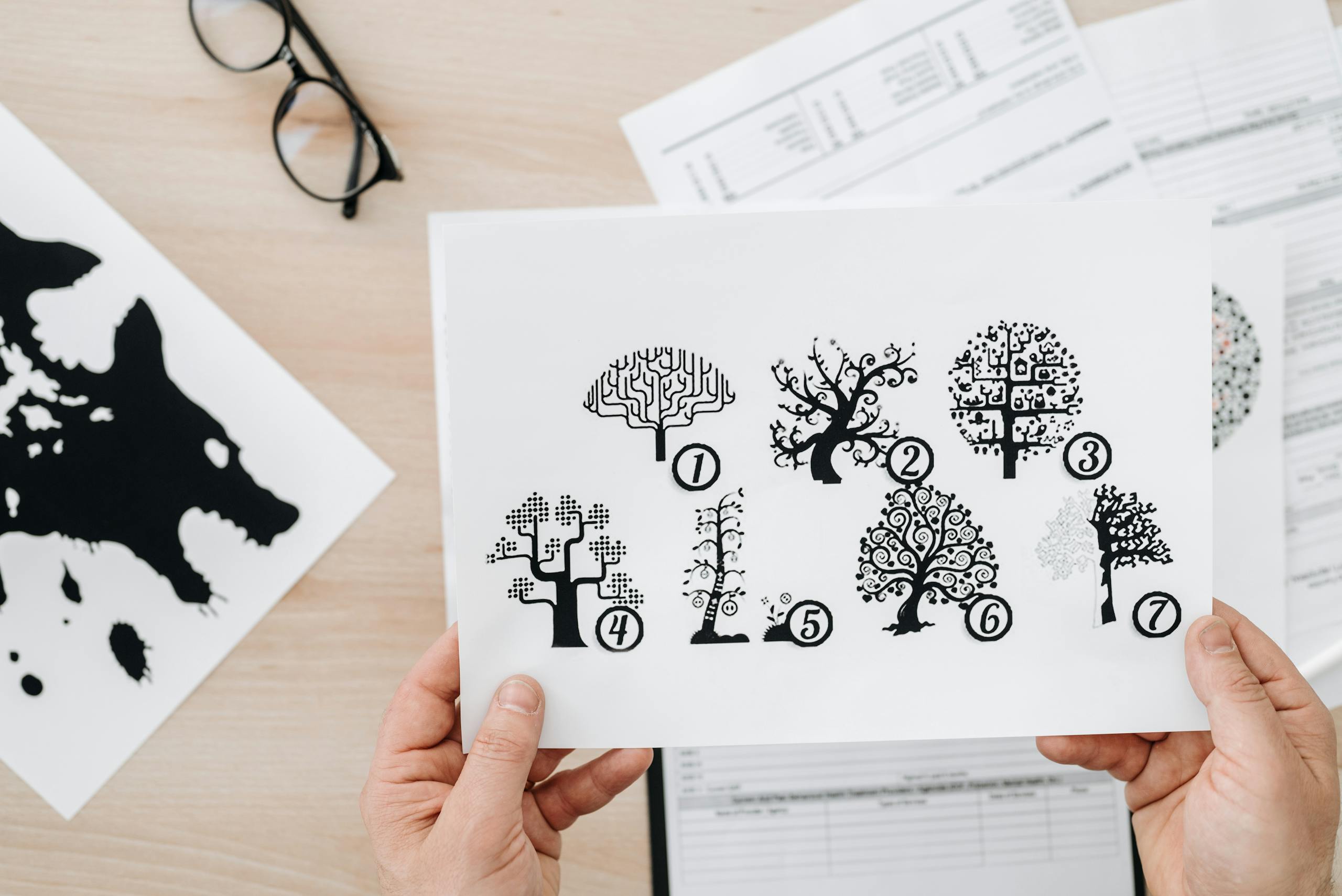
A boyfriend personality test is a tool that helps you understand how a partner’s core psychological traits, including how he processes information, makes decisions, and recharges his energy, shape the way he shows up in a relationship. Rather than predicting whether someone is “good” or “bad,” these assessments reveal patterns that explain communication styles, conflict approaches, and emotional needs.
Personality typing, particularly through the Myers-Briggs framework, gives couples a shared language for differences that might otherwise feel personal or confusing. When you understand that your partner’s need for quiet isn’t withdrawal, or that his preference for logic over emotion isn’t coldness, things that once created friction start making sense.
What follows is a practical look at how personality assessment actually works in relationships, what the results mean, and how to use them without turning your partner into a fixed label.

Personality and compatibility have a complicated relationship, and I’ve spent years thinking about both. Our MBTI General and Personality Theory hub covers the full landscape of how the Myers-Briggs framework works, from cognitive functions to type dynamics. This article focuses on a specific angle: how personality typing applies to romantic relationships, and what it actually tells you that’s worth knowing.
Why Does Personality Type Matter in a Relationship?
Early in my agency years, I hired people based almost entirely on skill and portfolio. It took several painful team implosions before I started paying attention to how people were wired, not just what they could do. A brilliant strategist who processed everything internally would clash constantly with an account director who thought out loud in every meeting. Neither person was wrong. They were just operating from completely different psychological defaults.
Romantic relationships work the same way. Two people can be genuinely compatible in values, attraction, and life goals, and still create friction because they process the world differently. One person needs to talk through conflict immediately. The other needs 48 hours of internal processing before they can even articulate what they feel. Without a framework for understanding that difference, it reads as avoidance or aggression depending on which side you’re on.
Personality type doesn’t explain everything. But it explains enough to make a real difference in how couples interpret each other’s behavior. A 2005 piece from the American Psychological Association highlighted how people tend to project their own psychological tendencies onto others, assuming partners experience the world the same way they do. Personality typing interrupts that assumption in a useful way.
One of the most meaningful dimensions is the introversion and extraversion axis. My own experience as an INTJ shaped how I showed up in relationships long before I had language for it. I needed time alone not because I was disengaged, but because that’s genuinely how I restored myself. Understanding the real difference between extraversion and introversion in Myers-Briggs changed how I explained myself to people who cared about me, and how I understood partners who were wired differently.
What Does a Boyfriend Personality Test Actually Measure?
Most personality assessments used in relationship contexts are built on the Myers-Briggs Type Indicator framework or something closely derived from it. They measure four core preference dimensions: where you direct your energy (Introversion or Extraversion), how you take in information (Sensing or Intuition), how you make decisions (Thinking or Feeling), and how you orient to the outer world (Judging or Perceiving).
The combination of those four preferences produces one of 16 personality types, each with a distinct pattern of strengths, blind spots, and relational tendencies. An ENFP partner brings spontaneity, emotional warmth, and a hunger for meaningful connection. An ISTJ brings reliability, consistency, and a quiet kind of loyalty that shows up in actions more than words. Neither is better. They’re just different operating systems.
What makes these assessments genuinely useful isn’t the four-letter type itself. It’s the cognitive functions underneath it. Every type has a preferred mental stack: a dominant function, an auxiliary, a tertiary, and an inferior. These functions describe how someone actually thinks, perceives, and processes experience. If you want to understand why your partner responds the way he does, the functions tell a richer story than the letters alone.
Take someone with strong Extraverted Sensing (Se) as a dominant or auxiliary function. He’s going to be tuned into the physical world in real time, responsive to sensory input, energized by action and experience. In a relationship, that might look like spontaneity, physical presence, and a preference for doing things together rather than talking about feelings in the abstract. That’s not emotional unavailability. That’s a particular way of being present.

How Do You Actually Run a Boyfriend Personality Test?
There are a few ways to approach this, and they’re not all equally useful.
The most straightforward approach is to have your partner take an assessment directly. Our free MBTI personality test is a good starting point. It’s designed to surface genuine preferences rather than social desirability, and the results give you a foundation for a real conversation. The test works best when someone approaches it honestly, answering based on who they naturally are rather than who they think they should be.
Some couples do this together, which can turn into a surprisingly revealing experience. Comparing results side by side, talking through where you overlap and where you diverge, often surfaces things that had been creating friction without either person quite understanding why.
A second approach is typing by observation. If your partner is resistant to formal assessments, or if you’re simply curious before bringing it up, you can develop a working hypothesis based on behavioral patterns. Watch how he recharges. Notice whether he makes decisions based on logical frameworks or interpersonal values. Pay attention to whether he plans ahead or stays flexible. These patterns point toward type even without a formal test.
That said, observational typing has real limits. One of the most common problems is misreading someone’s type because of stress behavior, social conditioning, or context. A man raised in a culture that rewards emotional stoicism might test as a Thinker when he’s actually a Feeler who learned to suppress that function. A naturally introverted person might appear extraverted in professional settings because he’s adapted. This is exactly why cognitive functions matter more than surface behavior, and why mistyping is so common when people rely on behavior alone.
A third approach, and the one I find most valuable, is using the assessment as a conversation starter rather than a verdict. success doesn’t mean classify your partner. It’s to open a dialogue about how you each experience the world and what you need from a relationship.
What Do Different Types Look Like as Partners?
Every type brings something distinct to a relationship. Rather than covering all 16 in exhaustive detail, it’s more useful to look at the underlying patterns that shape relational behavior.
The Thinking vs. Feeling Dimension
A partner who leads with Thinking, whether Extraverted Thinking (Te) or Introverted Thinking (Ti), will tend to approach conflict as a problem to solve. He wants to identify the issue, find the logical solution, and move forward. Emotional processing feels less efficient to him, not because he doesn’t care, but because his mind is oriented toward fixing rather than feeling.
Te-dominant types tend to be decisive, organized around outcomes, and comfortable with direct communication. They can come across as blunt or even cold to partners who need more emotional attunement. Ti-dominant types are more internally oriented, building their own logical frameworks rather than deferring to external systems. They can seem detached or overly analytical in emotional conversations.
A partner who leads with Feeling, by contrast, will prioritize relational harmony and emotional resonance. He’ll be more attuned to how decisions affect people, more likely to consider your emotional state before responding, and more invested in the quality of connection between you. The challenge is that high-Feeling types can sometimes struggle with direct conflict or difficult truths that risk disrupting harmony.
Neither orientation is superior. A 2020 study published in PubMed Central found that relationship satisfaction depends far less on whether partners share personality traits and far more on how they understand and adapt to each other’s differences. Complementary types can work beautifully when both people have enough self-awareness to bridge the gap.
The Introversion vs. Extraversion Dimension
This one creates more relationship friction than almost any other dimension, in my experience. An introverted partner needs solitude to restore. That’s not preference or personality quirk. It’s neurological. According to PubMed Central’s neuroscience reference library, introversion and extraversion reflect genuine differences in how the brain processes stimulation and reward.
An extraverted partner who interprets his introvert boyfriend’s need for quiet evenings as rejection is going to create a painful dynamic. An introverted partner who can’t understand why his extraverted girlfriend needs a full social calendar every weekend is going to feel equally confused. The gap isn’t about caring. It’s about fundamentally different energy economies.
I’ve watched this play out in professional contexts too. At one of my agencies, I had two senior creatives, one a classic extravert who generated ideas best in collaborative sessions, and one an introvert who produced his best work after long periods of solitary thinking. Managing them as though they had identical needs was a mistake I made for longer than I should have. The same principle applies in relationships. Treating a partner’s energy needs as identical to your own, when they’re not, creates invisible pressure that compounds over time.

The Judging vs. Perceiving Dimension
Judging types want structure, closure, and forward planning. They make decisions efficiently and feel settled once things are resolved. Perceiving types prefer to stay open, adapt as they go, and resist locking things in before they feel ready. In a relationship, this creates a classic tension: the J partner wants to know where things stand, and the P partner feels pressured by that need for definition.
This isn’t about commitment. A Perceiving type can be deeply committed while still resisting the structure that makes a Judging type feel secure. Understanding that distinction changes the conversation entirely.
Can Personality Type Predict Compatibility?
Short answer: partially, and with important caveats.
Some type combinations do tend to create more natural compatibility, based on shared cognitive functions or complementary mental stacks. INFJs and INTPs, for example, share Introverted Intuition and Extraverted Thinking in their functional stacks, which creates a certain resonance in how they process ideas and communicate. ENFPs and INFJs are frequently cited as a strong pairing because their dominant and auxiliary functions mirror each other in a way that feels both familiar and stimulating.
That said, compatibility based on type is probabilistic, not deterministic. I’ve seen type combinations that “should” work beautifully produce miserable relationships, and combinations that look mismatched on paper work remarkably well because both partners had high emotional intelligence and genuine curiosity about each other.
A piece from Psychology Today on the introvert advantage makes a point worth applying here: the traits that look like liabilities on the surface often become assets when understood and channeled well. An introverted partner who seems withdrawn might actually be the most thoughtful, attentive person in the room. A Thinking type who seems cold might be the most reliable problem-solver you’ll ever have in your corner.
What personality typing does well is give you a map of potential friction points before they become entrenched patterns. Knowing that your partner’s type tends toward conflict avoidance, or toward blunt directness, or toward needing significant alone time, means you can build structures that work for both of you rather than discovering the incompatibility through repeated painful arguments.
How Do You Use Results Without Reducing Your Partner to a Label?
This is the part that matters most, and the part most people skip.
Personality typing is a tool for understanding, not a verdict. The moment you start using a type as an explanation that ends the conversation rather than starting one, you’ve stopped using it well. “He’s an INTJ, that’s just how he is” can become a way of avoiding real dialogue just as easily as it can be a bridge to understanding.
I’ve been typed as INTJ my entire adult life. That type describes real patterns in how I think and operate. But it doesn’t capture everything. My years in advertising, the relationships I’ve had, the failures I’ve worked through, all of those shaped me in ways that no four-letter code can fully represent. My introversion is real and central to how I experience the world. So is the warmth I’ve developed over decades of working with people I genuinely cared about. Both things are true simultaneously.
A Truity article on deep thinking points out that many introverted personality types process experience with unusual depth and nuance, which means their internal world is often far richer than their external behavior suggests. Typing someone as an introvert tells you something real. It doesn’t tell you everything.
Use the assessment to open questions, not close them. “I noticed you tend to go quiet when we’re in conflict. Is that about needing time to process, or something else?” is a much more useful application of personality insight than “You’re an INFP, so you’re conflict-avoidant.” One invites your partner to help you understand him. The other puts him in a box.

What If His Results Don’t Seem to Match Who He Actually Is?
This happens more often than people expect, and it’s worth taking seriously.
Personality assessments measure self-perception at a specific moment in time. Someone who’s been in a high-stress environment for years, or who grew up in a household that rewarded a particular set of behaviors, may have adapted in ways that mask their genuine preferences. A naturally introverted man who spent a decade in sales might test as an extravert because he’s so practiced at performing extraversion that he’s lost touch with his natural baseline.
This is where cognitive functions become more revealing than the four-letter type. Rather than asking “does he prefer Thinking or Feeling,” ask which function seems to drive him most naturally when he’s relaxed and not performing. Our cognitive functions test is specifically designed to surface these deeper patterns, which often give a more accurate picture than a standard preference-based assessment.
There’s also the question of growth and development. Personality type describes a person’s natural preferences, not a fixed ceiling. A research overview from PubMed Central on personality development found that while core personality traits remain relatively stable, people do develop and integrate new capacities over time, particularly as they mature and work through psychological growth. An ISTP who has done significant emotional work might express empathy and warmth that looks nothing like the stereotypical version of his type.
If your partner’s results feel off, explore the cognitive functions with him rather than defaulting to the surface type. The functions often reveal a more nuanced and accurate picture of who someone actually is, rather than who they’ve learned to appear to be.
What Are the Most Important Questions to Ask After You Get Results?
Getting the results is the easy part. Knowing what to do with them is where most people stall. A few questions that tend to generate the most useful conversations:
Does this type description resonate with how you experience yourself, or does it feel like it’s missing something? This question immediately signals that you’re not treating the result as a fixed truth, and it invites your partner to be an active participant in the conversation rather than a subject being analyzed.
What parts of this feel most true in our relationship specifically? Type descriptions are written for general contexts. Asking how they apply to your specific dynamic brings the abstract into something concrete and actionable.
Where do you think our types create friction, and where do they complement each other? This reframes the conversation from “consider this’s wrong with you” to “here’s how we’re different, and how do we work with that.” In my experience running teams, the most productive conversations about difference always started from curiosity rather than critique.
What do you need from me that your type suggests you might not be getting? Some people find this question easier to answer through the lens of personality typing than through direct emotional disclosure. The type framework gives them a vocabulary and a degree of distance that makes vulnerability feel safer. That’s not a limitation. That’s a genuine use of the tool.
According to WebMD’s overview of empathy in relationships, emotional attunement is one of the strongest predictors of relationship satisfaction. Personality typing, used well, is one practical way to build that attunement by helping partners understand each other’s inner experience rather than projecting their own.

Should You Take the Test Together or Separately?
Both approaches have merit, and the right choice depends on where you are in the relationship and what you’re hoping to get out of it.
Taking it separately first gives each person the chance to answer honestly without the implicit pressure of knowing their partner is watching. Some people, particularly those who are more socially attuned, will unconsciously adjust their answers to align with what they think their partner wants or expects. Separate completion removes that variable.
Taking it together, or at least reviewing results together in real time, can be a bonding experience. There’s something disarming about sitting side by side and reading descriptions of your own psychological patterns out loud. Laughter helps. So does genuine curiosity. Some of the most honest conversations I’ve had about how I’m wired have come from exactly those kinds of shared moments, where the framework gave both people permission to be real without it feeling like a confrontation.
One approach I’ve seen work well in long-term relationships is revisiting the assessment periodically. Not to check whether someone has “changed type,” because core preferences tend to be stable, but to see how each person’s understanding of themselves has evolved and whether the conversation about difference still reflects where both people actually are.
Personality isn’t static in its expression even when it’s stable in its core. A man who was deeply conflict-avoidant at 28 may have developed real capacity for direct communication by 38. His type might still be the same, but his relationship to his own patterns has shifted. Revisiting the conversation honors that growth rather than locking someone into an old version of themselves.
There’s much more to explore about how personality theory shapes the way we connect with others and understand ourselves. The full range of those ideas lives in our MBTI General and Personality Theory hub, which covers everything from cognitive functions to how the 16 types show up in real-world contexts.
About the Author
Keith Lacy is an introvert who’s learned to embrace his true self later in life. After 20 years in advertising and marketing leadership, including running agencies and managing Fortune 500 accounts, Keith now channels his experience into helping fellow introverts understand their strengths and build fulfilling careers. As an INTJ, he brings analytical depth and authentic perspective to every article, drawing from both professional expertise and personal growth.
Frequently Asked Questions
What is a boyfriend personality test and how does it work?
A boyfriend personality test is typically an MBTI-style assessment that measures four psychological preference dimensions: Introversion vs. Extraversion, Sensing vs. Intuition, Thinking vs. Feeling, and Judging vs. Perceiving. The results produce one of 16 personality types, each with distinct relational patterns. The test works by asking a series of questions about how someone naturally thinks, makes decisions, and engages with the world. The resulting type description offers insight into communication style, emotional needs, conflict approach, and how a partner tends to show up in relationships.
Which MBTI types are most compatible in romantic relationships?
There’s no universally “best” pairing, but certain type combinations do tend to create natural resonance because their cognitive function stacks complement each other. INFJs and INTPs, ENFPs and INFJs, and ESTJs and ISFPs are frequently cited as compatible pairings. That said, compatibility depends far more on emotional intelligence, communication skills, and mutual curiosity than on type match alone. Two people with “compatible” types who lack self-awareness can struggle just as much as a seemingly mismatched couple who genuinely invest in understanding each other.
Can personality type change over time?
Core personality preferences tend to remain stable across a lifetime, but how someone expresses those preferences can shift significantly with growth, experience, and intentional development. An introverted partner who has worked on his communication skills may seem more extraverted than his baseline type suggests. A Thinking type who has developed emotional intelligence may express warmth and empathy that goes well beyond the stereotypical description of his type. Revisiting personality assessments periodically can help couples track how each person’s self-understanding has evolved, even when core type remains consistent.
What should I do if my partner’s personality type results don’t seem accurate?
Start by exploring the cognitive functions rather than relying solely on the four-letter type. Mistyping is common, particularly when someone has adapted their behavior to fit social expectations or professional demands. A cognitive functions assessment often surfaces more accurate patterns than a standard preference-based test. It’s also worth asking whether stress, environmental conditioning, or social performance might be influencing the results. The most useful response is curiosity rather than correction: explore the results together and treat them as a starting point for conversation rather than a final verdict.
How should couples use personality type results without reducing each other to labels?
Use type descriptions as conversation openers, not conversation closers. When a result resonates, ask your partner what it feels like from the inside, not just whether it matches from the outside. Avoid using type as an explanation that ends dialogue, such as “that’s just how he is.” Instead, treat the framework as a shared vocabulary for exploring difference with curiosity. The goal is mutual understanding, not classification. Personality typing works best when both partners hold their own type lightly, recognizing that the description captures tendencies rather than fixed traits, and that every person contains more complexity than any four letters can represent.