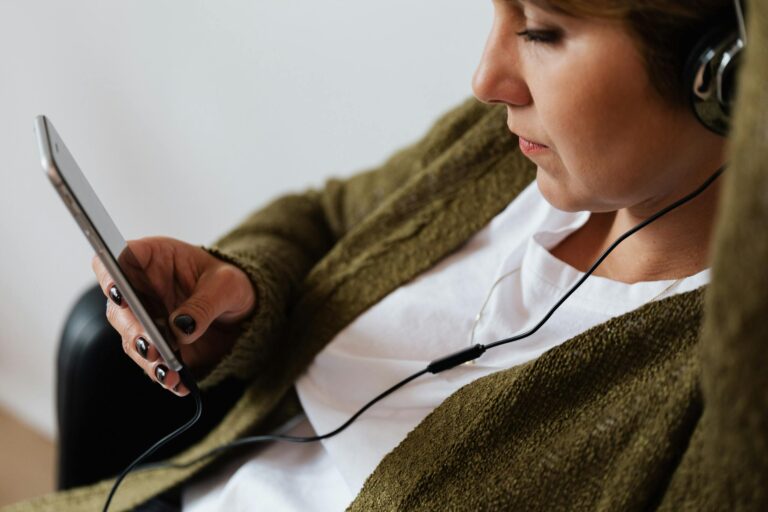
Budget travel for introverts works best when you design your trip around solitude rather than squeezing it in afterward. Choosing private accommodations, off-peak timing, slow travel pacing, and destinations with natural quiet built in gives you the energy to actually enjoy what you came to see, without the social recovery tax that drains most trips.
Quiet people can travel on a budget. That sentence shouldn’t need defending, but somehow the conventional wisdom around affordable travel still defaults to hostels, group tours, and shared everything. I tried that approach exactly once, in my late twenties, before I understood what being an INTJ actually meant for how I moved through unfamiliar spaces. I lasted two nights in a Barcelona hostel common room before I found a cheap private guesthouse three blocks away and felt my entire nervous system exhale.
Running advertising agencies for two decades taught me something that applies directly to travel: the most expensive thing you can do is ignore how you actually function. I watched colleagues burn through budgets chasing the wrong metrics. I did the same thing on vacations, booking “social” itineraries because that’s what travel was supposed to look like, and returning home more depleted than when I left. The math never worked until I stopped treating my introversion as a constraint and started treating it as the design brief.

What follows are eleven strategies that actually hold up, financially and energetically, for people who recharge in stillness rather than crowds.
Why Does Conventional Budget Travel Feel So Wrong for Introverts?
Standard budget travel advice was written by and for people who find strangers energizing. Shared dorm rooms, pub crawls, group cooking nights, communal everything. The savings are real. So is the cost, just not the kind that shows up on a spreadsheet.
What’s your personality type?
Take our free 40-question assessment and get a detailed personality profile with dimension breakdowns, context analysis, and personalised insights.
Discover Your Type8-12 minutes · 40 questions · Free
A 2021 study published through the American Psychological Association found that introverts experience significantly higher cognitive load in socially dense environments, which means the “savings” of a hostel dorm can translate directly into diminished capacity to enjoy the actual destination. You’re paying less per night and spending more of yourself per hour. That’s not a deal.
The good news, practically speaking, is that the alternatives are neither exotic nor expensive. They just require a different framework. One built around how your brain actually works rather than how travel marketing assumes it does.
Is Slow Travel Actually Cheaper Than Moving Around Constantly?
Yes, and the margin is substantial. Staying in one place for a week or two rather than hopping cities every two days eliminates a category of costs that add up quietly: transit fees, luggage storage, the premium pricing on last-minute bookings, and the energy tax of constant reorientation.
Slow travel also plays directly to introvert strengths. When you stay somewhere long enough to find your corner café, your preferred walking route, your quiet grocery store, you stop performing tourism and start actually inhabiting a place. That depth of experience is what most introverts are after anyway. The financial savings are almost a side effect.
During a stretch between agency contracts in my early fifties, I spent three weeks in Lisbon rather than the two-week whirlwind I’d originally planned. My daily costs dropped by about thirty percent once I had a rhythm. I cooked half my meals, walked everywhere because I knew where I was going, and found a library with a reading room that became my afternoon anchor. That trip cost less and gave me more than any packed itinerary I’d attempted before it.
What Accommodation Options Work Best Without Hostels?
Private rooms in guesthouses, small family-run hotels, and apartment rentals all offer genuine privacy at prices that compete with or beat hostel dorms once you factor in what you’re actually getting. A private room in a guesthouse in most of Southeast Asia, Eastern Europe, or Latin America runs between fifteen and forty dollars a night. That’s not a luxury premium. That’s a reasonable baseline.
Apartment rentals become even more cost-effective on longer stays. Most platforms offer weekly and monthly discounts that bring the nightly rate below what a mid-range hotel would charge, and you get a kitchen, which changes your food budget entirely. Cooking two meals a day in a rented apartment can cut your daily food spend by half or more in expensive cities.
House-sitting is worth mentioning separately because the economics are unusual: you stay for free in exchange for caring for a home and often pets. The tradeoff is flexibility, since you’re working around homeowner schedules. For introverts who are comfortable with animals and genuinely enjoy quiet domestic environments, it can be an ideal arrangement. Several platforms connect house-sitters with homeowners globally, and the vetting process on both sides tends to filter for exactly the kind of calm, reliable people who make good house-sitters.

How Do Off-Peak Travel Dates Change Both the Cost and the Experience?
Dramatically, on both counts. Shoulder season pricing on flights and accommodations can run thirty to fifty percent below peak rates, depending on the destination. That’s not a minor discount. It’s the difference between a trip that strains a budget and one that fits comfortably within it.
What the pricing tables don’t capture is the experiential difference. Visiting a cathedral, a national park, or a coastal town in the shoulder season means encountering it closer to its actual self rather than its tourist performance. Crowds thin out. Locals become more present. The ambient noise level drops. For people who process environments deeply and notice what others skim past, this matters enormously.
Psychology Today has written extensively about how sensory overload affects introverts differently than extroverts, noting that high-stimulation environments can trigger a withdrawal response that makes it harder to engage with even genuinely interesting experiences. Choosing quieter travel windows is, in practical terms, a cognitive strategy as much as a financial one.
My own pattern now is to target the first two weeks of shoulder season, before the crowds have fully cleared but after the peak pricing has dropped. You get the financial benefit without waiting for the off-season, when some attractions close or reduce hours.
Can Introverts Travel Cheaply Solo Without Feeling Isolated?
Solo travel and isolation are not the same thing, and conflating them is one of the more persistent misconceptions about introverted travelers. Solitude is chosen. Isolation is imposed. Most introverts are extraordinarily good at the former and genuinely want to avoid the latter.
The practical difference lies in how you structure your days. Having a few anchoring activities, a morning walk route, a regular café, a museum you return to more than once, creates a sense of continuity that prevents the hollow feeling that can come from moving through a place without connecting to it. You don’t need other people to feel that connection. You need depth, which is something you can create alone.
Solo travel also eliminates the negotiation tax that comes with group travel. Every decision, where to eat, how long to stay somewhere, when to leave, gets made according to your own energy levels rather than a group consensus. For introverts who have spent professional lives managing other people’s preferences, that autonomy is genuinely restorative. I spent years in agency leadership translating between client needs, creative teams, and account managers. My solo travel days are, in part, a recovery from decades of that particular kind of labor.
The financial angle on solo travel is real but manageable. Single supplements on tours and some accommodations add cost. The workaround is to avoid situations where the supplement applies: book directly with guesthouses rather than through tour operators, choose apartment rentals where single occupancy is the baseline, and select tour formats where solo travelers pay the same rate as paired ones.
What Destinations Naturally Suit Introverted Travelers on a Budget?
Some destinations are structurally better suited to introverted travel than others, and the overlap with affordability is stronger than you might expect. Countries with strong public transit, walkable cities, strong café culture, and a general social norm of leaving people alone tend to score well on both dimensions.
Portugal sits near the top of most lists for good reason. Costs are lower than Western European averages, the culture is quieter and more reserved than Mediterranean stereotypes suggest, and Lisbon and Porto both have the kind of layered, walkable neighborhoods that reward slow exploration. Japan is another example worth examining: the cultural premium on personal space and quiet public behavior makes it one of the most introvert-friendly countries on earth, and while Tokyo can be expensive, smaller cities like Kyoto, Kanazawa, and Matsuyama offer comparable experiences at significantly lower costs.

Within the United States, the introvert-friendly and budget-friendly categories overlap in places like the rural Pacific Northwest, the Upper Peninsula of Michigan, and parts of New Mexico. National parks offer extraordinary solitude if you avoid the most popular entry points and visit during weekdays or off-peak months. A backcountry permit to a less-trafficked area of a major park costs a fraction of what a resort stay would, and the quiet is absolute.
How Can You Use Technology to Protect Your Energy While Traveling?
Strategic use of technology is one of the most underrated tools in the budget introvert traveler’s approach. Booking accommodations with self-check-in eliminates the social performance of arrival. Ordering groceries for delivery to a rental apartment sidesteps the disorienting experience of finding a supermarket in an unfamiliar city while jet-lagged. Translation apps reduce the cognitive friction of handling a language barrier, which matters because that friction is real and accumulates.
Noise-canceling headphones deserve their own mention. They’re not a luxury item for introverts who travel; they’re infrastructure. The ability to create a personal acoustic boundary in a train, an airport, or a busy public square is genuinely protective. A good pair is an upfront cost that pays back across every trip you take.
Mapping apps that work offline are worth downloading before you leave. The confidence of knowing you can find your way without data service reduces a low-grade anxiety that, for introverts who process environments carefully, can otherwise consume a meaningful portion of your mental bandwidth. Freed from that background task, you can actually notice where you are.
Are There Budget-Friendly Tour Formats That Don’t Require Constant Socializing?
Yes, and knowing which formats to look for makes a significant difference. Audio tours are the obvious starting point: you move at your own pace, stop when something interests you, skip what doesn’t, and never have to manage the social dynamics of a group. Most major museums offer them, and many cities have self-guided walking tour apps that cover neighborhoods in real depth.
Small-group tours with a maximum of six to eight people are a different category from large coach tours, and the experience is proportionally different. The group is small enough that you can engage selectively without disappearing, and the guide-to-participant ratio is high enough that you actually learn something. These tours often cost more per person than large group options, but the experiential return is higher and the social cost is lower.
Private tours are worth pricing out before assuming they’re out of reach. In many destinations, a private half-day tour with a local guide costs less than you’d expect, particularly outside peak season. Splitting the cost with one other traveler, a partner, a sibling, a friend who travels at a compatible pace, brings it well within budget range while keeping the group small enough to feel comfortable.

How Does Meal Planning Save Money and Protect Your Social Energy?
Restaurant meals in tourist areas are expensive and often socially demanding in ways that are easy to underestimate. Finding a table, managing servers, eating in a crowded room, handling menus in a second language: each of these is a small task, but they compound. By the third meal of the day, the cumulative weight of those micro-interactions can be substantial.
Cooking in an apartment kitchen eliminates most of that. Shopping at a local market, which is often cheaper than a supermarket and far more interesting, becomes one of the day’s pleasures rather than a logistical burden. You’re moving through a space that locals actually use, at a pace you control, selecting things that interest you. That’s a form of cultural engagement that doesn’t require performing sociability.
Eating one restaurant meal a day, chosen deliberately rather than by default, also means you can afford to eat well when you do sit down. Budget travelers who eat out three times a day in tourist zones spend more and enjoy it less than those who cook twice and choose one good meal with intention. The math and the experience both improve.
The NIH has published findings on decision fatigue that are relevant here: each decision you make draws from a finite cognitive resource, and the cumulative effect of many small decisions across a day degrades the quality of later choices. Meal planning removes a category of repeated decisions, which preserves that resource for the parts of travel you actually came for.
What’s the Real Cost of Ignoring Your Introvert Needs While Traveling?
I’ve watched people return from vacations more exhausted than when they left and attribute it to “just how travel is.” Some of the time, that’s true. Travel is tiring. But a meaningful portion of that exhaustion, for introverts specifically, comes from spending ten days in social overdrive and calling it rest.
The Mayo Clinic has noted that chronic overstimulation contributes to elevated cortisol levels and impaired cognitive function. That’s not a minor inconvenience. It’s a measurable physiological state that affects mood, memory, and the ability to process new experiences. A trip that puts you in that state isn’t a vacation. It’s a different kind of work.
Building in genuine recovery time, a morning with no plans, an afternoon in a park with a book, an evening in rather than out, isn’t an admission of failure. It’s what makes the rest of the trip sustainable. My agency years taught me that the people who worked without breaks didn’t produce better work. They produced more work of decreasing quality. Travel follows the same pattern.
Protecting your energy isn’t a luxury accommodation. It’s the foundation that makes everything else possible. A trip designed around your actual needs will cost less in recovery time on the back end, which has real value even if it doesn’t appear on the budget sheet.
How Do You Set Limits on Social Obligations Without Ruining Group Trips?
Traveling with others as an introvert requires a specific kind of advance communication that most people skip because it feels awkward. Having a direct conversation before the trip about needing some solo time each day is far less disruptive than disappearing mid-itinerary or quietly building resentment toward people you actually like.
The framing matters. “I need a few hours each afternoon to recharge so I can be fully present the rest of the time” is accurate, understandable, and positions the request as something that benefits the group rather than withdrawing from it. Most travel companions, once they understand the logic, are accommodating. The ones who aren’t are useful information for future trip planning.
Structuring group travel so that mornings are shared and afternoons are flexible tends to work well. Mornings are when energy is highest and the best experiences are often less crowded. Afternoons give everyone space to follow their own interests, which benefits extroverts too, since they can seek out social experiences the introvert might find draining. Evenings become a natural reunion point, and everyone arrives with something to talk about.
The American Psychological Association has resources on interpersonal communication that address exactly this kind of needs-based conversation, and the underlying principle is consistent: direct, early communication about personal needs produces better outcomes than hoping the situation will sort itself out. That applies in agency conference rooms and it applies in travel planning equally.

Building a Budget Travel Approach That Actually Fits You
The eleven strategies in this article aren’t a rigid system. They’re a set of principles that work because they start from an honest assessment of how introverts actually function rather than how travel culture assumes everyone functions.
Slow travel, private accommodations, off-peak timing, solo autonomy, deliberate meal planning, technology as a buffer, destination selection based on cultural fit: each of these independently improves both the financial and experiential return on a trip. Combined, they produce a fundamentally different kind of travel, one that doesn’t require recovering from the vacation itself.
What I’ve found, across my own years of getting this wrong and then gradually getting it right, is that the trips I remember most vividly are not the ones where I pushed through and did everything. They’re the ones where I moved slowly enough to actually see where I was. The library reading room in Lisbon. A Tuesday morning at a museum in Kyoto with almost no one else there. A week in a rented cottage in the Scottish Borders where the most demanding thing I did was walk for two hours each morning before the day opened up.
Those trips cost less and gave more. That’s the whole argument.
Explore more travel strategies and lifestyle insights in our complete Introvert Life Hub.
About the Author
Keith Lacy is an introvert who’s learned to embrace his true self later in life. After 20 years in advertising and marketing leadership, including running agencies and managing Fortune 500 accounts, Keith now channels his experience into helping fellow introverts understand their strengths and build fulfilling careers. As an INTJ, he brings analytical depth and authentic perspective to every article, drawing from both professional expertise and personal growth.
Frequently Asked Questions
Can introverts really travel on a tight budget without staying in hostels?
Absolutely. Private rooms in guesthouses, apartment rentals, and house-sitting arrangements all offer genuine solitude at prices that compete with hostel dorms, particularly on longer stays where weekly discounts apply. The assumption that budget travel requires shared spaces is a product of how the travel industry markets to extroverts, not a financial reality.
What is slow travel and why does it work well for introverts?
Slow travel means staying in one location for an extended period rather than moving frequently between destinations. It reduces transit costs, eliminates last-minute booking premiums, and allows you to build a personal rhythm in a place, finding your regular café, your preferred walking routes, your quiet corners. That depth of engagement is precisely what most introverts are seeking from travel in the first place.
How do you handle solo travel as an introvert without feeling isolated?
Solitude and isolation are distinct experiences. Solitude is chosen and restorative. Isolation is imposed and depleting. Solo travel becomes fulfilling when you build anchoring routines into your days, returning to the same café, taking a morning walk along the same route, revisiting a museum more than once. These habits create continuity and connection to a place without requiring other people to provide it.
Which destinations are most introvert-friendly for budget travelers?
Portugal, Japan’s smaller cities, and parts of Scandinavia consistently rank well for both affordability and introvert-compatible culture. Within the United States, rural areas of the Pacific Northwest, the Upper Peninsula of Michigan, and off-peak visits to national parks offer significant solitude at reasonable cost. The best destinations combine walkability, strong public transit, and a cultural norm of leaving people alone in public spaces.
How much does off-peak travel actually save compared to peak season?
Savings vary by destination and timing, but shoulder season pricing on flights and accommodations typically runs thirty to fifty percent below peak rates. Beyond the financial benefit, traveling in shoulder season means smaller crowds, more authentic interactions with locals, and lower ambient stimulation, all of which matter significantly to introverts who process environments carefully and are more affected by sensory overload than extroverts tend to be.