
Burnout, overwhelm, and emotional exhaustion are not character flaws. They are signals, specific and urgent ones, that your nervous system has been running on empty for too long. For introverts especially, these states often arrive quietly, accumulating beneath the surface until one ordinary Tuesday morning you realize you have nothing left to give.
Sometimes a single sentence from someone who has felt exactly what you’re feeling can do what weeks of self-analysis cannot: it can make you feel seen. The right quote lands not because it’s poetic, but because it names something you’ve been carrying without words.
That’s what this collection is for. Not inspiration in the motivational-poster sense. More like recognition. A quiet acknowledgment that what you’re experiencing is real, that others have been here, and that there’s a path forward.
If you’ve been wondering why your energy keeps bottoming out no matter how much sleep you get, the broader patterns behind that depletion are worth examining. Our Energy Management and Social Battery hub covers the full landscape of how introverts process, spend, and recover their energy, and it’s a useful companion to everything in this article.
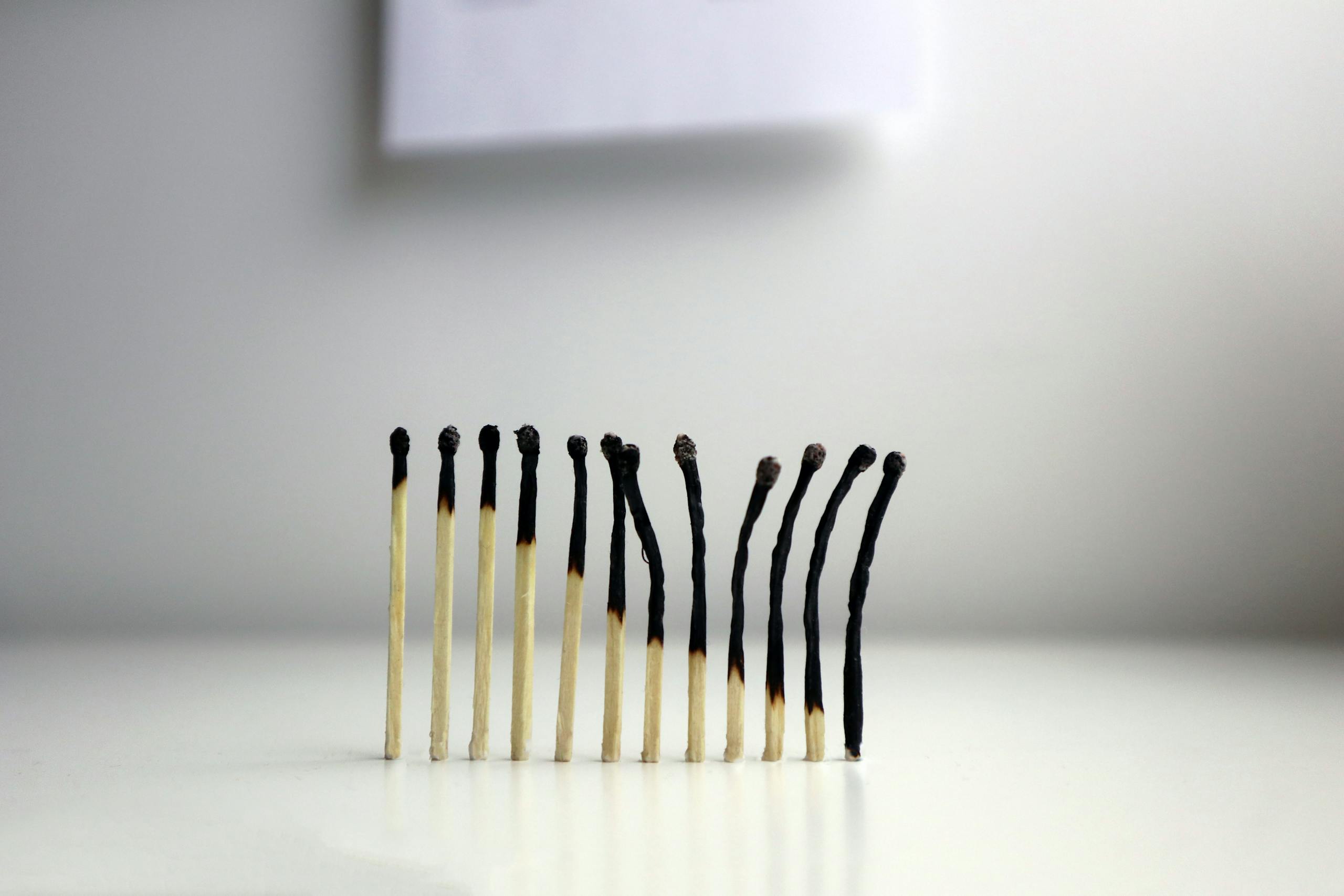
Why Do Quotes About Burnout Hit Differently When You’re an Introvert?
There’s something particular about the way introverts experience burnout that doesn’t always map onto the general conversation about workplace stress or overwork. Most of the cultural dialogue around burnout focuses on doing too much, taking on too many tasks, working too many hours. And yes, those things matter. But for introverts, the exhaustion often comes from a different direction entirely.
Career Coaching for Introverts
One-on-one career strategy sessions with Keith Lacy. 20 years of Fortune 500 leadership as an introvert, now helping others build careers that work with their wiring.
Learn More50-minute Zoom session · $175
It comes from the texture of the day, not just the volume of it.
I spent over two decades running advertising agencies. On paper, many of those days weren’t especially long. But they were dense with interaction: client calls back to back, creative reviews with a room full of opinionated people, the constant performance of enthusiasm and availability that agency culture demands. By the time I drove home, I wasn’t tired in any way I could explain to someone who hadn’t felt it. My body was fine. My mind felt like a browser with forty tabs open and no way to close any of them.
That specific flavor of depletion is what makes quotes about emotional exhaustion resonate so deeply for introverts. We’re not just looking for someone to say “work is hard.” We’re looking for someone who understands that existing in certain environments is hard, that social performance costs something real, and that the bill eventually comes due.
What Psychology Today has explored about why socializing drains introverts more than extroverts points to something fundamental in how our brains process stimulation and reward. It’s not a preference. It’s a physiological reality. And once you understand that, the burnout quotes that resonate aren’t dramatic, they’re just accurate.
Quotes That Capture the Feeling of Being Completely Overwhelmed
“You can’t pour from an empty cup.” Most people have seen this one on a coffee mug. But strip away the decoration and it’s pointing at something true: giving from a place of genuine depletion doesn’t just hurt you, it produces hollow output. I’ve watched this play out in agency work more times than I can count. A creative director grinding through month six of a demanding account, producing technically competent work that has no soul left in it. The cup was empty. Everyone could feel it, even if no one named it.
“Rest is not idleness.” John Lubbock wrote that in the nineteenth century, and it still has to be said out loud because the culture still argues otherwise. For introverts who have spent years apologizing for needing quiet time, this sentence carries weight. Recovery isn’t a luxury. It’s maintenance.
“Almost everything will work again if you unplug it for a few minutes, including you.” Anne Lamott wrote this, and it’s both funny and genuinely useful. The humor softens the landing, but the point is serious. Introverts often need longer unplugging periods than the culture allows for. Understanding that need, and defending it, is a form of self-knowledge, not weakness.
“Burnout is nature’s way of telling you, you’ve been going through the motions your soul has departed.” Sam Keen’s framing is worth sitting with. Not just the exhaustion part, but the departure part. Many introverts describe burnout not as feeling tired but as feeling absent from their own lives. Going through the mechanics of the day while something essential has quietly checked out.
That description matches something I felt during a particularly brutal pitch season early in my agency career. I was present in every meeting. I was saying the right things. But I was watching myself from a distance, performing competence while something underneath had gone very quiet. It took me a long time to recognize that as burnout, because I hadn’t collapsed. I was still functional. I just wasn’t there.

What Do the Most Honest Quotes About Emotional Exhaustion Actually Say?
The quotes that tend to resonate most aren’t the ones promising recovery or reframing struggle as growth. The ones that land hardest are the ones that simply describe the experience without dressing it up.
“I’m so tired, but I can’t sleep.” That’s not from a famous author. It’s something people say to each other in the dark, and it captures a specific kind of exhaustion that introverts know well: the kind where your body is depleted but your mind won’t stop processing. Research published in PubMed Central has examined the relationship between emotional exhaustion and sleep disruption, and the pattern is consistent. Overloaded nervous systems don’t simply power down when you want them to.
“I am so emotionally drained that I don’t even know how to explain it to people who haven’t felt it.” This one circulates without attribution, but its staying power comes from precision. The secondary exhaustion of trying to explain introvert-specific depletion to people who don’t share the wiring is its own tax. You’re not just tired. You’re tired of having to justify being tired.
“Numbing the pain for a while will make it worse when you finally feel it.” Dumbledore said this, technically J.K. Rowling did, and it applies directly to how many introverts handle overwhelm. We are often skilled at compartmentalizing, at continuing to function while quietly absorbing more than we should. The problem is that compartmentalization has a capacity limit. When it fills, the release is rarely gentle.
“Sometimes you need to step outside, get some air, and remind yourself of who you are and where you’re going.” Gossip Girl, of all sources, offered this one. But the core of it is sound. Physical withdrawal, even briefly, is one of the few reliable resets available to an overloaded introvert. The act of leaving a space, breathing different air, and returning to your own internal voice matters more than it sounds.
One thing I’ve noticed across all the quotes that actually help people is that they don’t demand anything. They don’t tell you to push through, reframe, or find the silver lining. They simply witness. And sometimes that’s what an emotionally exhausted person needs most: to be witnessed without being fixed.
This connects to something worth exploring if you identify as a highly sensitive person alongside being an introvert. The experience of how easily introverts get drained is real and documented, and it’s compounded significantly when sensitivity runs high.
How Do Quotes About Overwhelm Connect to the Introvert Experience Specifically?
Overwhelm for introverts often has a sensory dimension that gets overlooked in general burnout conversations. It’s not always about emotional content. Sometimes it’s about volume, literally and figuratively.
Open-plan offices became the standard in advertising during my agency years. The logic was collaboration and energy. The reality, for me and for many of the introverts on my teams, was a constant low-grade assault that made deep work nearly impossible. I once tracked how many times I was interrupted in a single afternoon in our main workspace. Nineteen times in four hours. Not because anyone was being careless. Just because that’s what open environments produce.
The quotes that speak to sensory overwhelm often come from writers and artists who understood this intuitively. “In order to understand the world, one has to turn away from it on occasion.” Albert Camus wrote that, and while he wasn’t writing about open-plan offices, the principle holds. Turning away isn’t avoidance. It’s the condition required for actual understanding.
“Solitude is where I place my chaos to rest and awaken my inner peace.” Nikki Rowe’s framing here is worth noting because it positions solitude not as withdrawal but as active restoration. That distinction matters for introverts who have internalized the cultural message that needing alone time is antisocial or self-indulgent.
For introverts who are also highly sensitive, sensory overwhelm compounds emotional exhaustion in ways that are worth understanding specifically. Managing noise sensitivity as an HSP is one dimension of this, and the strategies there often apply more broadly to anyone whose nervous system is running hot from overstimulation.
“The quieter you become, the more you can hear.” Ram Dass offered this, and it points to something introverts often know instinctively but struggle to protect: the value of internal quiet. When everything outside is too loud for too long, the internal signal gets lost. Burnout, in part, is what happens when you can no longer hear yourself.

Which Quotes About Recovery Actually Help When You’re in the Middle of It?
There’s a meaningful difference between quotes that help you understand burnout and quotes that help you move through it. When you’re genuinely depleted, inspirational content can feel tone-deaf. What tends to help instead are words that normalize the pace of recovery and lower the pressure to bounce back quickly.
“Healing is not linear.” This phrase has become so common it risks losing its meaning, but the underlying truth is important. Introverts in recovery from burnout often feel additional shame when they have a good day followed by a hard one. The non-linear reminder gives permission to have setbacks without treating them as failures.
“You don’t have to be productive every moment of every day.” This one tends to land hard for high-achieving introverts who have tied their self-worth to output. I spent the better part of my agency career operating on the assumption that value was demonstrated through visible effort. Quiet thinking, which is often where my best strategic work happened, felt like I was getting away with something. That’s a costly misunderstanding to carry for twenty years.
“Give yourself the same compassion you would give a good friend.” Most introverts I know, and most of the people who write to me at Ordinary Introvert, are considerably harder on themselves than they would ever be on someone they care about. When a friend is burned out, you’d tell them to rest. You’d mean it. Applying that same logic inward is harder than it sounds, but it’s the right direction.
Recovery also has a physical dimension that’s easy to underestimate. Protecting your energy reserves as an HSP involves understanding not just emotional and social inputs but physical ones too, including light, sound, and touch. Each of these can either support or undermine the recovery process in ways that aren’t always obvious.
One of the more useful things I did during a difficult recovery period in my mid-forties was start treating my energy like a finite resource with a daily budget, rather than something I should be able to will into existence. That shift in framing, from “why can’t I handle more?” to “what am I spending, and is it worth it?”, changed how I structured my days. Some of the best guidance I found during that time pointed to why introverts genuinely need downtime, not as preference but as neurological requirement. Having that framing made it easier to protect.
What Do Quotes About Being Emotionally Drained Reveal About Introvert Needs?
Emotional drainage for introverts often comes from a specific source that’s worth naming: the sustained effort of managing other people’s emotional states while also processing your own.
In agency environments, this is constant. Clients are anxious about campaigns. Creatives are defensive about their work. Account managers are triangulating between the two. As a leader, you’re absorbing all of it while also trying to maintain your own clarity and direction. For an extrovert, some of that energy exchange might actually be stimulating. For me, it was like trying to have a conversation in a room where everyone is talking at once. I could do it. I did it for years. But it cost something I wasn’t always replenishing.
“Empathy without boundaries is self-destruction.” That quote, widely attributed to various sources, captures something introverts who lean toward sensitivity need to hear regularly. Caring deeply about the people around you is a genuine strength. Absorbing their distress without any filtration is a path to depletion.
“I am not what happened to me. I am what I choose to become.” Carl Jung’s framing applies here in a specific way: the emotional drainage you’ve accumulated doesn’t define your capacity going forward. But it does need to be acknowledged before it can be addressed. Skipping the acknowledgment step is where many introverts get stuck.
There’s also a physical sensitivity component worth understanding. For those who find that touch, texture, or physical environments amplify emotional exhaustion, exploring how tactile sensitivity works can explain why certain environments feel so draining even when the social content seems manageable. Similarly, light sensitivity affects more introverts and HSPs than most people realize, and it compounds the overall load on an already taxed nervous system.
“You are allowed to be both a masterpiece and a work in progress simultaneously.” Sophia Bush said this, and it’s a useful counterweight to the all-or-nothing thinking that burnout tends to produce. When you’re depleted, it’s easy to see yourself as broken. The reality is usually more complicated and more forgiving than that.

How Can You Use These Quotes as Actual Tools, Not Just Comfort?
Reading a quote that resonates is one thing. Letting it do any real work is another. There are a few ways to move from passive recognition to something more active.
Write down the ones that hit hardest. Not in a journaling-as-performance way, but literally just the sentence, on paper, somewhere you’ll see it. The physical act of writing slows down the processing enough to let the meaning settle. I keep a small notebook that has nothing in it but sentences I’ve encountered that stopped me. Some are quotes. Some are things clients said. Some are things I told myself on hard days that turned out to be true.
Use them as diagnostic tools. When a quote about emotional exhaustion makes you feel seen, that’s information. It means something in your current situation is depleting you in the way the quote describes. That’s worth paying attention to, not just as validation, but as a signal to examine what’s happening and whether anything can change.
Share them selectively. One of the quieter gifts of a well-chosen quote is that it can say something to someone else that you haven’t found words for yet. Sending a quote to a colleague or friend who seems burned out is a low-pressure way of saying “I see what’s happening with you.” It doesn’t demand a response. It just opens a door.
Pair them with concrete action. A quote about rest is most useful when it’s followed by actual rest. I’ve noticed a tendency in myself and in many introverts to collect insight without acting on it. We understand our needs in theory while continuing to override them in practice. The quote is the reminder. The action is the point.
Understanding the full spectrum of what drains introverts also means looking at how stimulation itself affects your system. Finding the right balance of input is something HSP stimulation research addresses directly, and the principles apply broadly to anyone whose system is wired for depth over breadth.
There’s also value in understanding the neurological basis for why certain environments overwhelm introverts more than others. Cornell’s research on brain chemistry and extroversion helps explain why the same conference room that energizes one person depletes another. That understanding doesn’t fix the situation, but it removes the self-blame that often makes burnout worse.
And for those looking at the longer-term picture, recent public health research has been examining the relationship between personality traits, social environments, and wellbeing outcomes. The pattern that emerges consistently is that sustainable wellbeing requires alignment between your environment and your actual wiring, not just willpower applied to mismatched conditions.
One more external perspective worth having: Harvard Health’s guidance on introverts and socializing addresses the practical side of managing social energy in ways that are grounded and realistic. It’s a useful read when you’re trying to build systems, not just survive the current week.

A Few More Quotes Worth Carrying
“Sometimes the most productive thing you can do is rest.” Mark Black said this, and it’s the kind of sentence that needs repeating because the culture keeps arguing the opposite.
“The most important thing in the world is to learn how to give out love, and to let it come in.” Morrie Schwartz, from Tuesdays with Morrie, offered this. It’s worth including here because burnout often closes the receiving end. We keep giving, or trying to, while blocking anything coming back in. Recovery involves reopening that channel.
“Not all those who wander are lost.” Tolkien wasn’t writing about burnout, but the sentence applies to the meandering quality of introvert recovery. It doesn’t always look purposeful from the outside. Days spent doing very little, reading without agenda, sitting somewhere quiet. That’s not lost. That’s finding your way back.
“What drains your spirit drains your body.” Carolyn Myss wrote this, and it’s a useful reminder that emotional exhaustion has physical consequences. Research on the mind-body connection supports this consistently: sustained psychological stress produces measurable physical effects. Treating burnout as purely a mental or emotional matter misses half the picture.
“Knowing yourself is the beginning of all wisdom.” Aristotle said this roughly two and a half millennia ago, and it remains the most useful starting point for any introvert trying to understand their own patterns of depletion and recovery. You can read every quote ever written about burnout, but if you don’t know your own specific triggers and thresholds, the knowledge stays abstract.
That self-knowledge is what all of this points toward. The quotes, the research, the frameworks, they’re all tools for building a clearer picture of how you actually work, so you can stop fighting your own wiring and start working with it.
There’s a lot more to explore in this space. Our complete Energy Management and Social Battery hub brings together everything we’ve written about how introverts process, spend, and restore their energy, and it’s worth bookmarking for the longer work of building sustainable patterns.
About the Author
Keith Lacy is an introvert who’s learned to embrace his true self later in life. After 20 years in advertising and marketing leadership, including running agencies and managing Fortune 500 accounts, Keith now channels his experience into helping fellow introverts understand their strengths and build fulfilling careers. As an INTJ, he brings analytical depth and authentic perspective to every article, drawing from both professional expertise and personal growth.
Frequently Asked Questions
Why do quotes about burnout resonate so strongly with introverts?
Introverts often experience burnout through emotional and sensory depletion rather than simply overwork, and they can struggle to articulate that experience to others. A well-chosen quote names something that’s been hard to put into words, which creates a powerful sense of recognition. That feeling of being seen, without having to explain yourself, is particularly meaningful for people who spend a lot of energy translating their inner experience for an extroverted world.
What’s the difference between being overwhelmed and being burned out?
Overwhelm tends to be acute and situational: too much happening at once, too many demands converging in a short period. Burnout is chronic and cumulative. It develops when depletion is sustained over time without adequate recovery. Many introverts experience repeated cycles of overwhelm that, without sufficient restoration between them, eventually build into full burnout. The distinction matters because the response is different: overwhelm often resolves with a break, while burnout requires a more sustained change in how you’re living or working.
Can reading quotes actually help with emotional exhaustion, or is it just passive comfort?
Quotes are most useful as diagnostic and orienting tools rather than as solutions in themselves. When a quote about emotional exhaustion resonates strongly, it’s often pointing toward something specific in your current situation that needs attention. Used that way, quotes can accelerate self-awareness and validate the need for change. Paired with concrete action, such as protecting time, adjusting environments, or seeking support, that awareness becomes genuinely useful. Passive comfort alone isn’t enough, but recognition is often where meaningful change begins.
How do introverts recover from burnout differently than extroverts?
Introvert recovery typically requires solitude and reduced stimulation as core elements, not just rest in the general sense. While an extrovert might recover from a hard week by spending time with friends, that same activity would likely deepen depletion for an introvert. Effective introvert recovery usually involves protecting extended quiet time, reducing social obligations temporarily, minimizing sensory inputs like noise and bright environments, and allowing the internal processing that gets crowded out during high-demand periods. The pace of recovery also tends to be slower than the culture expects or rewards.
Is emotional exhaustion the same as being introverted?
No, though they’re related in important ways. Introversion describes how someone gains and spends energy, with introverts recharging through solitude and expending energy in social and stimulating environments. Emotional exhaustion is a state that results from sustained depletion without adequate recovery. Introverts are not inherently emotionally exhausted, but they are more vulnerable to exhaustion in environments that don’t account for their energy needs. The distinction matters because introversion is a stable trait, while emotional exhaustion is a condition that can be addressed through changes in environment, habits, and boundaries.