

Yes, a psychopath can experience social anxiety, though the underlying mechanisms look very different from what most people associate with the condition. Where social anxiety in the general population typically involves fear of judgment, shame, and a deep desire for connection, the anxiety some people with psychopathic traits experience tends to be more instrumental, rooted in concerns about exposure, loss of control, or the failure of a carefully constructed social performance.
Psychopathy exists on a spectrum, and its relationship with anxiety is one of the most debated areas in personality research. Some profiles show remarkably low fear responses. Others, particularly what clinicians sometimes call “secondary psychopathy,” carry significant anxiety alongside the manipulation and emotional detachment we more commonly associate with the label.

Sitting with a question like this one forces me to think carefully about how we categorize emotional experience. As an INTJ who spent two decades in advertising, I watched people construct social personas every single day. Some were charming, some were calculating, and a few seemed to operate with a kind of emotional distance that I found both fascinating and unsettling. None of them were psychopaths, as far as I know. But the question of who experiences anxiety, and why, cuts closer to the bone than most people expect.
These questions connect to a broader set of topics I explore in the Introvert Mental Health Hub, where we look honestly at the emotional and psychological terrain that introverts, sensitives, and reflective people move through. This particular topic sits at an unusual intersection, but it’s worth examining carefully.
What Do We Actually Mean When We Say “Psychopath”?
The word “psychopath” carries enormous cultural weight and very little clinical precision in everyday conversation. In professional settings, clinicians typically work with the diagnosis of Antisocial Personality Disorder as defined in the DSM, though psychopathy itself is not a formal DSM diagnosis. The American Psychiatric Association’s DSM-5 changes moved toward dimensional personality assessments, which actually opens up more nuanced ways of thinking about traits like callousness, disinhibition, and boldness rather than treating psychopathy as a binary category.
What’s your personality type?
Take our free 40-question assessment and get a detailed personality profile with dimension breakdowns, context analysis, and personalised insights.
Discover Your Type8-12 minutes · 40 questions · Free
Most psychological frameworks distinguish between two broad expressions of psychopathic traits. Primary psychopathy is characterized by low fear, low anxiety, emotional shallowness, and a kind of fearless dominance. Secondary psychopathy involves more impulsivity, emotional dysregulation, and, critically, higher levels of anxiety. These aren’t clean categories with hard borders. They’re more like regions on a map, and plenty of individuals occupy the territory in between.
What this means practically is that asking whether a psychopath can have social anxiety isn’t a yes or no question. It depends heavily on where someone falls on that spectrum, what specific traits are most pronounced, and what the anxiety is actually responding to.
How Social Anxiety Works in Most People
Before we can understand how psychopathic traits intersect with social anxiety, it helps to be clear about what social anxiety actually involves. The American Psychological Association describes anxiety disorders as involving persistent, excessive fear or worry that interferes with daily functioning. Social anxiety specifically centers on fear of social situations, particularly the fear of being negatively evaluated, embarrassed, or humiliated.
What makes social anxiety so consuming for many people is the emotional depth of the experience. There’s a vulnerability at the core of it, a genuine longing to connect paired with a terror that connection will expose something shameful. People with high sensitivity often feel this acutely. I’ve written about how HSP anxiety operates differently from general anxiety, partly because sensitive people process social information so thoroughly that the anticipation of judgment can become overwhelming before a social event even begins.

The emotional engine driving typical social anxiety is empathy and the fear of social consequences. People with social anxiety care, often intensely, about what others think. They imagine the internal states of the people around them and dread being found wanting. That caring is, paradoxically, what makes the condition so painful. It’s anxiety born from connection, not detachment.
Psychopathic traits, particularly in primary presentations, tend to involve reduced empathic concern and reduced fear of social consequences. That’s precisely why the question of whether psychopaths experience social anxiety is so counterintuitive. The emotional architecture that typically generates social anxiety seems to be partially or significantly absent.
The Mask Problem: Anxiety About Being Seen Through
Here’s where the picture gets genuinely interesting. Even if someone with psychopathic traits doesn’t experience the shame-based, empathy-driven anxiety most of us recognize, they may experience something that functions like social anxiety for entirely different reasons.
Many individuals with significant psychopathic traits invest considerable effort in social performance. They learn to mimic emotional responses, to read rooms, to project warmth or vulnerability strategically. That performance requires constant monitoring. And the prospect of that performance failing, of being exposed as hollow or manipulative, can generate real anxiety, not because they fear rejection in the way a sensitive person does, but because exposure threatens their ability to get what they want.
I think about this sometimes in the context of the advertising world I came from. I worked with a handful of account executives over the years who were extraordinarily skilled at social performance. They could read a client’s mood within thirty seconds of walking into a room and adjust their entire presentation accordingly. As an INTJ, I found that kind of social fluency both impressive and slightly alien. My own approach to client relationships was built on substance and honesty, not performance. What I noticed about the most performative people on my teams was that they sometimes seemed anxious in ways that didn’t quite track with the situation. They weren’t worried about the work. They were worried about the room. About whether the mask was holding.
That’s a different kind of social anxiety. It’s not rooted in caring what people think of the real you. It’s rooted in the fear that the constructed version of you might crack under scrutiny.
Secondary Psychopathy and the Anxiety Connection
The clearest clinical pathway to understanding psychopathy and social anxiety together runs through secondary psychopathy. Where primary psychopathy involves low arousal and fearlessness, secondary psychopathy is associated with higher emotional reactivity, greater impulsivity, and more pronounced anxiety. Some researchers frame secondary psychopathy as developing partly in response to adverse early environments, with anxiety serving as a kind of emotional scar tissue.
People in this category may genuinely experience social anxiety in ways that overlap with more common presentations. They might fear social judgment, feel uncomfortable in unfamiliar social settings, or struggle with the anticipation of social interactions. Yet these experiences coexist with the callousness, manipulation, and disregard for others that define psychopathic traits more broadly.
That coexistence is uncomfortable to sit with. We tend to think of anxiety as humanizing, as evidence of vulnerability and care. Finding it present alongside traits we associate with harm and exploitation forces a more complicated picture. Anxiety doesn’t make someone safe. It doesn’t mean they’re fundamentally connected to others in the way that most anxious people are. It simply means their nervous system is generating threat responses in social contexts, for whatever reason.
A useful parallel appears in the literature on highly sensitive people, where deep emotional processing can generate both profound connection and profound distress. The difference is that in HSP presentations, the emotional depth tends to be oriented toward others. In secondary psychopathy, emotional reactivity is more self-focused, more concerned with threat and control than with genuine relational attunement.

What the Research Landscape Actually Shows
The relationship between psychopathy and anxiety has been examined from multiple angles in personality and clinical psychology. A useful entry point is the work on the triarchic model of psychopathy, which breaks the construct into three components: boldness (fearless dominance), meanness (callousness and exploitation), and disinhibition (impulsivity and poor self-regulation). Anxiety tends to be negatively associated with boldness but can coexist with, or even be elevated in, profiles dominated by disinhibition and meanness.
The PubMed Central literature on personality and emotional processing provides a broader context for understanding how traits that seem contradictory can coexist within the same individual. Personality is not a set of clean compartments. Traits interact, compensate for each other, and express differently depending on context and life history.
What’s particularly relevant for this discussion is that social anxiety specifically, as distinct from general anxiety, involves the appraisal of social situations as threatening. That appraisal process can operate in psychopathic individuals, even if the content of the threat is different. Rather than fearing humiliation or rejection in the emotionally connected sense, the threat might be loss of social leverage, detection of deception, or failure to achieve a desired social outcome.
The broader research on social threat processing suggests that the brain’s threat detection systems can be activated by a wide range of social cues, not all of which require the kind of empathic attunement we typically associate with social anxiety. This helps explain how someone with reduced empathy might still experience heightened physiological arousal in certain social situations.
The Empathy Gap and What It Changes
One of the defining features of psychopathic presentations is reduced affective empathy, the ability to genuinely feel what another person is feeling. Cognitive empathy, the ability to understand and predict what another person is thinking or feeling, is often preserved or even heightened. This distinction matters enormously for understanding how social anxiety might manifest.
For most people with social anxiety, the condition is fueled by both cognitive and affective empathy. You imagine how others see you, and you feel the sting of that imagined judgment. The emotional resonance is part of what makes it so painful. In someone with psychopathic traits, the cognitive piece might be very much intact, they’re highly attuned to what others are thinking and feeling, but the affective piece is diminished. They might experience something like social anxiety in terms of behavioral vigilance and threat monitoring, without the emotional suffering that typically accompanies it.
This connects to a broader point about empathy as a double-edged quality. For highly sensitive people, deep empathic attunement can be both a gift and a source of significant distress. The capacity to feel others’ pain makes connection richer, but it also makes social environments much harder to move through. In psychopathic profiles, reduced affective empathy removes one source of social distress while potentially leaving others intact.
What this means practically is that two people can both show behavioral signs of social anxiety, avoidance, heightened vigilance, discomfort in certain social settings, while the internal experience is almost entirely different. One is driven by fear of judgment from people they genuinely care about. The other might be driven by something closer to strategic threat assessment.
When Sensory and Social Overload Enter the Picture
There’s another angle worth considering here, one that doesn’t get much attention in discussions of psychopathy and anxiety. Some individuals with psychopathic traits, particularly those with higher levels of disinhibition and emotional reactivity, may also experience something like sensory overload in intense social environments. Not because they’re absorbing others’ emotions, but because their nervous systems are dysregulated in ways that make high-stimulation environments genuinely uncomfortable.
This is very different from what I’ve written about regarding HSP overwhelm and sensory overload, where the overwhelm comes from processing depth and emotional sensitivity. In psychopathic presentations, any sensory discomfort is more likely rooted in general dysregulation than in the kind of rich, empathy-driven processing that characterizes highly sensitive people. The behavioral outcome might look similar. The internal experience is fundamentally different.
I find this distinction important because it’s easy to conflate behavioral similarities with psychological equivalence. Two people can both leave a crowded party early for completely different reasons. One might be overwhelmed by the emotional intensity of the room. The other might be calculating their exit because the environment stopped being useful to them. Behavior alone doesn’t tell you much about what’s happening underneath.
Rejection, Shame, and the Psychopathic Response
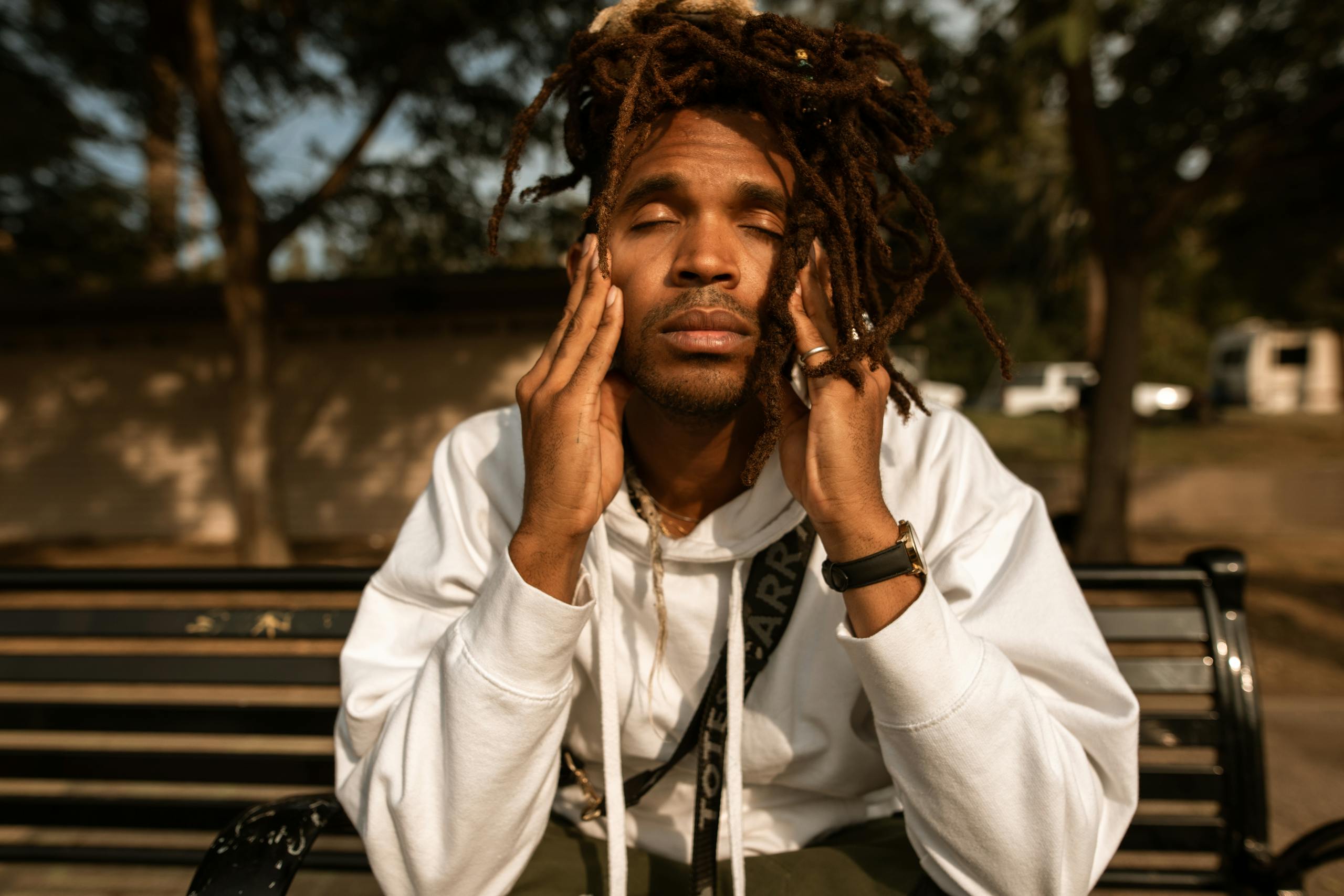
Social anxiety in most people is deeply entangled with the fear of rejection and the experience of shame. Being excluded, criticized, or dismissed by others activates some of the most painful emotional responses humans are capable of. Much of what makes social anxiety so debilitating is that it anticipates these responses before they happen, generating suffering in advance of any actual rejection.
For people with high sensitivity, rejection can be particularly destabilizing. I’ve explored how HSP rejection processing involves a depth of emotional response that can take considerable time and intentional work to move through. The pain is real and it’s connected to how deeply sensitive people invest in their relationships.
In psychopathic presentations, the relationship with rejection is more complicated. Primary psychopaths tend to show reduced sensitivity to social rejection, partly because the emotional investment in others’ approval is lower. Yet some individuals with psychopathic traits do respond strongly to perceived rejection, not with the grief and shame that characterizes typical responses, but with something more like rage, contempt, or intensified efforts to reassert dominance.
That response pattern can still generate avoidance of certain social situations, which is one of the hallmarks of social anxiety. If someone with psychopathic traits has learned that particular social contexts tend to produce outcomes they find threatening or destabilizing, they may avoid those contexts. Whether that constitutes social anxiety in a clinically meaningful sense depends on the specific criteria being applied, but functionally it can look similar from the outside.
Perfectionism, Control, and Social Performance Pressure
One more thread worth pulling on is the relationship between psychopathic traits, perfectionism, and the pressure of social performance. Some individuals with psychopathic traits, particularly those who have built their lives around social manipulation and strategic impression management, develop a kind of perfectionism around their social performance that can generate real anxiety when it feels at risk.
This isn’t the same as the perfectionism I’ve written about in the context of highly sensitive people, where HSP perfectionism tends to be rooted in a deep internal standard and a genuine fear of falling short. In psychopathic profiles, the perfectionism around social performance is more instrumental. The standard isn’t about being good enough as a person. It’s about maintaining a facade that continues to serve its purpose.
Still, the anxiety that arises when that performance feels shaky can be real. I’ve seen versions of this in corporate settings, though never in anyone I’d characterize as having psychopathic traits. But the pattern of someone who has built their professional identity entirely on a certain kind of social performance becoming anxious when that performance is challenged, that’s something I recognized across twenty years of agency work.
The most revealing moment in any long-term client relationship was always when something went wrong. Some people, the ones with genuine emotional grounding, could sit in the discomfort of a difficult conversation without losing themselves. Others, the ones whose identity was entirely wrapped up in being perceived a certain way, became visibly destabilized. Their anxiety wasn’t about the client’s wellbeing or the quality of the work. It was about the image.
Why This Question Matters for Understanding Anxiety More Broadly
You might be wondering why this question matters if you’re not a clinician and don’t have psychopathic traits. I think it matters for a few reasons that go beyond the clinical specifics.
First, it challenges the assumption that anxiety is always a sign of emotional depth or genuine connection. Anxiety is a threat response. It can be activated by many different kinds of perceived threats, not all of them rooted in care for others or vulnerability about the self. Understanding this helps us think more clearly about what anxiety actually is, rather than romanticizing it as evidence of sensitivity.
Second, it helps explain why some people who seem socially confident and emotionally detached can still show patterns of avoidance, hypervigilance, or discomfort in certain social contexts. The Psychology Today piece on introversion and social anxiety makes the point that these categories overlap in complex ways. Adding psychopathic traits to the mix makes the picture even more layered.
Third, and most practically, it reminds us that social anxiety is not a monolithic experience. The behavioral signs can look similar across very different psychological profiles, but the internal experience, the meaning of the anxiety, and what would actually help, varies enormously. This matters for anyone trying to understand their own anxiety, or trying to support someone else through theirs.
The APA’s resources on shyness and social discomfort offer a useful reminder that social anxiety exists on a spectrum and expresses differently across personality types. What looks like the same problem from the outside can have very different roots.
Holding Complexity Without Losing Compassion
One thing I’ve come to appreciate more as I’ve gotten older is that psychological complexity doesn’t require us to abandon moral clarity. Understanding that someone with psychopathic traits might experience something like social anxiety doesn’t mean we minimize the harm those traits can cause. It means we’re being accurate about how human psychology actually works, which is always more useful than a simplified story.
For those of us who experience social anxiety in the more typical form, rooted in genuine care about others and vulnerability about connection, there’s something clarifying about understanding the contrast. Our anxiety, as painful as it is, is connected to something real. It reflects our investment in people, our sensitivity to social dynamics, our desire to be seen and accepted. That’s worth something, even when it hurts.
The Harvard Health overview of social anxiety disorder notes that the condition is highly treatable when properly understood and addressed. That’s encouraging for anyone whose social anxiety is rooted in the kind of genuine emotional vulnerability that makes human connection possible in the first place.
As an INTJ, I’ve spent a lot of time in my own head analyzing social situations rather than feeling my way through them. My social anxiety, when I’ve experienced it, has always been about the gap between the depth of what I’m thinking and my ability to translate that into connection with another person. It’s not the anxiety of a performer worried about the mask slipping. It’s the anxiety of someone who genuinely wants to be understood and isn’t sure they know how to make that happen.
That distinction feels important. Not because one kind of anxiety is more valid than another, but because understanding what your anxiety is actually about is the first step toward doing something useful with it.
If you want to keep exploring the emotional and psychological dimensions of introvert experience, the full Introvert Mental Health Hub covers everything from anxiety and overwhelm to emotional processing and the specific challenges that come with being wired for depth in a world that rewards performance.
About the Author
Keith Lacy is an introvert who’s learned to embrace his true self later in life. After 20 years in advertising and marketing leadership, including running agencies and managing Fortune 500 accounts, Keith now channels his experience into helping fellow introverts understand their strengths and build fulfilling careers. As an INTJ, he brings analytical depth and authentic perspective to every article, drawing from both professional expertise and personal growth.
Frequently Asked Questions
Can someone with psychopathic traits genuinely experience social anxiety?
Yes, though the experience differs significantly from typical social anxiety. Primary psychopathy is associated with low fear and reduced anxiety, but secondary psychopathy, which involves higher emotional reactivity and impulsivity, can include genuine anxiety responses. Even in primary presentations, some individuals may experience performance-based anxiety rooted in fear of exposure or loss of social control, rather than the shame and connection-driven anxiety most people recognize.
What is the difference between primary and secondary psychopathy?
Primary psychopathy is characterized by fearlessness, low emotional reactivity, emotional shallowness, and calculated manipulation. Secondary psychopathy involves higher impulsivity, emotional dysregulation, and more pronounced anxiety, sometimes linked to adverse developmental experiences. Secondary psychopathy is more likely to coexist with social anxiety, while primary psychopathy typically involves reduced anxiety across most domains.
How is social anxiety in psychopathic individuals different from typical social anxiety?
Typical social anxiety is driven by empathy, fear of negative judgment, and a genuine desire for connection. The anxiety in psychopathic profiles, when present, tends to be more instrumental, focused on threats to social performance, detection of manipulation, or loss of control. The behavioral signs may look similar, including avoidance and hypervigilance, but the internal experience and the meaning of the anxiety are fundamentally different.
Is psychopathy the same as Antisocial Personality Disorder?
Not exactly. Antisocial Personality Disorder is the formal DSM diagnosis, characterized by a persistent pattern of disregard for and violation of the rights of others. Psychopathy is a related but distinct construct that emphasizes specific traits like emotional shallowness, fearless dominance, and interpersonal manipulation. All psychopaths would likely meet criteria for ASPD, but not all people with ASPD would score high on measures of psychopathy. Psychopathy itself is not a formal DSM diagnosis.
Can understanding psychopathy help people with typical social anxiety?
It can, in an indirect way. Examining how anxiety operates differently across personality profiles clarifies what social anxiety actually is at its core. For most people, social anxiety is connected to genuine care about others and vulnerability about connection. Understanding that contrast can reframe social anxiety as evidence of emotional investment rather than weakness, which is a more useful and accurate perspective than seeing it as a flaw to be eliminated.