
Yes, lack of social interaction can cause anxiety, though the relationship is more layered than a simple cause-and-effect. Humans are wired for some degree of connection, and when that connection drops below a certain threshold, the nervous system can begin generating signals that feel a lot like threat responses: restlessness, worry, a vague but persistent unease. For introverts especially, this can be confusing, because the quiet we often crave is not the same as the isolation that quietly erodes us.
Sorting out that distinction took me longer than I’d like to admit.
There were stretches during my agency years when I’d go weeks without a real conversation, not the kind that actually meant something. Plenty of meetings, plenty of client calls, plenty of performance reviews. But genuine human contact? I was running on fumes and didn’t realize it until the anxiety showed up uninvited, sitting in my chest during Sunday evenings like an unwelcome houseguest.
If you’re wrestling with questions about introversion, anxiety, and mental health, you’re not wandering through this alone. Our Introvert Mental Health Hub brings together articles across the full spectrum of these experiences, from sensory overwhelm to emotional processing to the particular weight that highly sensitive introverts carry.
What Actually Happens in the Brain When We Pull Away From Others?
The brain doesn’t experience social isolation neutrally. When meaningful connection is absent for extended periods, the nervous system can interpret that absence as a low-grade threat. This isn’t a character flaw or a sign of weakness. It’s biology doing what biology does: scanning the environment and flagging potential danger.
What’s your personality type?
Take our free 40-question assessment and get a detailed personality profile with dimension breakdowns, context analysis, and personalised insights.
Discover Your Type8-12 minutes · 40 questions · Free
Social connection has historically been tied to survival. Being part of a group meant safety, resources, and support. So when the brain registers a significant drop in connection, it can trigger the same alert systems that respond to physical threats. The result can look and feel a lot like anxiety: hypervigilance, racing thoughts, difficulty settling, a sense that something is wrong even when you can’t name what it is.
For introverts, this creates a genuinely complicated situation. We often feel drained by social interaction and recharged by time alone. So when anxiety shows up after a stretch of solitude, the instinct is sometimes to pull back further, which can deepen the cycle rather than break it. The American Psychological Association notes that anxiety disorders involve more than ordinary nervousness and can intensify when left unaddressed, including when the underlying cause is something as seemingly benign as prolonged social withdrawal.
What matters is understanding the difference between chosen solitude that restores you and prolonged isolation that quietly depletes you. One fills the tank. The other drains it.
Why Introverts Can Miss the Warning Signs Longer Than Most
One of the more uncomfortable truths I’ve sat with over the years is that my preference for solitude made it easier to rationalize unhealthy withdrawal. When you genuinely enjoy your own company, and when social interaction often feels like effort, it’s easy to mistake isolation for self-care.
At one point in my mid-forties, I was running a mid-sized agency and managing a team of about twenty people. From the outside, I was extraordinarily social by necessity. Presentations, client dinners, strategy sessions. But I had almost no relationships outside of work that felt real. I’d structured my life to minimize what I called “unnecessary social exposure,” which sounded principled but was really just avoidance wearing a sensible coat.
The anxiety that followed wasn’t dramatic. It was low and steady, like a hum I’d gotten so used to that I stopped hearing it as unusual. That’s often how it works for introverts. We’re skilled at internal processing, and we can rationalize our way around warning signs that might be more obvious to someone less comfortable with their inner world.
Highly sensitive introverts face an additional layer here. When social interaction feels overwhelming because of sensory or emotional intensity, the pull toward withdrawal becomes even stronger. If you recognize that pattern in yourself, the piece on HSP Overwhelm: Managing Sensory Overload offers a useful frame for understanding why overstimulation and isolation can feed each other in ways that aren’t immediately obvious.

Is There a Meaningful Difference Between Loneliness and Isolation?
Loneliness and isolation are related but distinct, and the difference matters when we’re trying to understand what’s actually driving anxiety.
Isolation is a measurable condition: fewer social contacts, less interaction, reduced connection to others. Loneliness is a subjective experience: the feeling that your social needs aren’t being met, regardless of how many people are physically around you. You can be profoundly lonely in a full room, and you can feel completely at peace in genuine solitude.
Anxiety from lack of social interaction tends to emerge from loneliness more than from isolation alone. What the nervous system seems to respond to is the perceived absence of meaningful connection, not just the raw count of social interactions. This is partly why introverts can go long stretches with minimal social contact and feel fine, until suddenly they don’t. The quality and meaning of connection matters more than the quantity.
A review published in PubMed Central examining social isolation and mental health outcomes found that the subjective experience of loneliness was more consistently tied to anxiety and depression than objective social isolation alone. This aligns with what many introverts describe: it’s not the absence of people that creates distress, but the absence of people who actually see them.
That distinction changed how I thought about my own social needs. I didn’t need more interactions. I needed better ones.
How Prolonged Withdrawal Changes the Way We Process Social Situations
Something worth paying attention to: extended social withdrawal doesn’t just cause anxiety in the moment. Over time, it can change how we interpret and respond to social situations when we do encounter them.
When social interaction becomes infrequent enough, the brain can start treating ordinary social scenarios as unfamiliar territory. What might have once felt manageable, a casual conversation with a neighbor, a team meeting, a phone call with an old friend, can begin to feel like a bigger lift than it should. The social muscles, for lack of a better metaphor, get stiff from disuse.
This is distinct from social anxiety disorder, which has specific diagnostic criteria and often has roots that go deeper than withdrawal patterns. The Psychology Today piece on introversion and social anxiety does a thoughtful job of separating the two, which is worth reading if you’re trying to figure out which category your experience falls into.
What I noticed in myself after particularly isolated stretches was a kind of social rustiness. Re-entering social situations felt effortful in a way that had less to do with introversion and more to do with having been out of practice. My mind would work overtime interpreting signals, second-guessing responses, reading too much into pauses in conversation.
That kind of hypervigilance in social settings is worth paying attention to. It’s often a signal that the withdrawal has crossed a line from restorative into something that needs addressing.
Highly sensitive introverts tend to feel this acutely. The deep emotional processing that HSPs engage in means that even small social interactions carry significant weight, and when those interactions have been absent for a while, re-entry can feel disproportionately intense.
The Compounding Effect: When Anxiety Makes Withdrawal Feel Safer
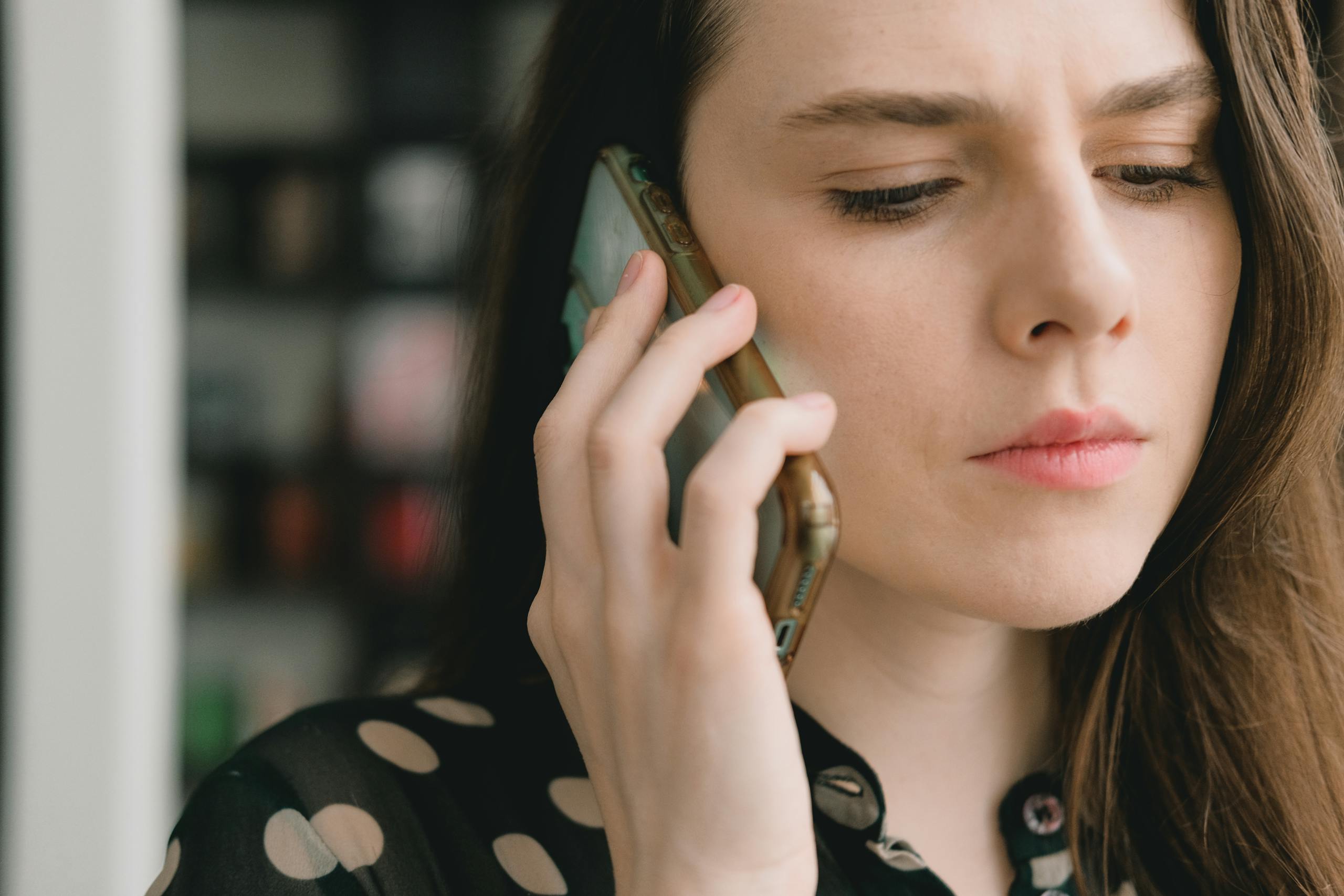
Here’s where the cycle becomes genuinely tricky. Anxiety that emerges from lack of social interaction can make social interaction feel more threatening, which reinforces the withdrawal, which deepens the anxiety. It’s a loop that feels logical from the inside even as it tightens.
The mind offers what feel like perfectly reasonable justifications. You’re tired. You need more time to yourself. People are exhausting. You’ll reach out next week. Next week becomes next month. The anxiety hums a little louder.
For introverts who also carry traits of high sensitivity, this loop can be particularly persistent. The experience of HSP anxiety often involves a nervous system that’s already running at higher baseline intensity, which means the threshold between “I need rest” and “I’m avoiding” can be genuinely hard to locate.
I managed a creative director at one of my agencies who was a highly sensitive introvert, though neither of us had that language at the time. She’d go through cycles of intense engagement followed by long stretches of what looked like withdrawal. Her work remained excellent, but she’d become increasingly hard to reach. When I finally had a real conversation with her about it, she described a feeling I recognized immediately: the more she pulled back, the harder it became to imagine re-engaging, and the anxiety about re-engaging made pulling back feel like the only sensible option.
What helped her wasn’t forcing more interaction. It was identifying one or two relationships where the connection felt genuinely safe and low-stakes, and maintaining those even when everything else felt like too much. That became her anchor.
Empathy plays a complicated role in this dynamic too. Highly sensitive introverts often absorb the emotional states of others, which can make social interaction feel costly in ways that are hard to explain to people who don’t experience it that way. The piece on HSP empathy as a double-edged sword gets at this well, particularly the way that the same capacity for deep connection can also make withdrawal feel like self-protection.
What Happens When Perfectionism Keeps You From Reaching Out
There’s another dimension to social withdrawal that doesn’t get discussed enough: the role of perfectionism in keeping people isolated.
For many introverts, especially those who are analytically wired, reaching out to others carries an implicit performance standard. The conversation has to go well. The message has to land right. The timing has to be appropriate. The relationship has to be worth the energy investment. When none of those conditions feel perfectly met, it’s easier to do nothing.
I spent years doing this. Drafting emails to old colleagues and then not sending them because they didn’t quite capture what I wanted to say. Thinking about calling a friend and then deciding the moment wasn’t quite right. The perfectionism wasn’t just about work. It had quietly colonized my relationships too.
The HSP perfectionism piece frames this in a way that clicked for me: when your standards for connection are so high that most interactions feel like they’ll fall short before they begin, you end up with fewer connections than you actually want. The anxiety that follows isn’t irrational. It’s the predictable result of a standard that was never designed to be met.
Lowering that standard, not abandoning it, but making it human-sized, was one of the more significant adjustments I made in my fifties. Imperfect outreach is infinitely more valuable than perfectly reasoned silence.

Rejection Sensitivity and the Fear That Keeps Introverts Isolated
Underneath a lot of social withdrawal is something that rarely gets named directly: the fear of rejection. Not just the fear of being turned down for a date or a job, but the quieter fear that reaching out will reveal that the connection you thought was there isn’t actually there. That you matter less to someone than they matter to you.
For introverts who invest deeply in the relationships they do have, this fear carries particular weight. We tend not to have large social networks. The connections we maintain feel significant, which means the stakes around them feel higher. The prospect of reaching out and receiving a lukewarm response, or no response at all, can feel like confirmation of something we were afraid was true.
So we don’t reach out. And the isolation deepens. And the anxiety follows.
This dynamic is explored thoughtfully in the piece on HSP rejection processing and healing, which addresses the particular intensity with which sensitive introverts can experience even minor social disappointments. Understanding that sensitivity isn’t weakness, it’s a feature of how some nervous systems are wired, can make it easier to take the risk of reaching out anyway.
A study in PubMed Central examining the relationship between social connection and mental health outcomes found that perceived social support, meaning the belief that connection is available when needed, was a significant protective factor against anxiety. You don’t have to use the support constantly. Knowing it’s there matters.
That finding resonated with me personally. Some of my most grounding relationships are ones I’m in contact with infrequently. But knowing those people are there, and knowing the connection is real, does something for the nervous system that’s hard to quantify but impossible to miss.
Finding the Right Dosage, Not the Most Interaction
The answer to anxiety from lack of social interaction isn’t to become extroverted. It’s to find the right dosage of connection for your particular nervous system, and then protect it.
For some introverts, that might be a weekly dinner with one close friend. For others, it’s a standing phone call with a sibling, or a small group that meets around a shared interest. The format matters less than the consistency and the quality.
What I’ve found, both in my own life and in conversations with other introverts over the years, is that the most effective antidote to isolation-driven anxiety isn’t more social activity. It’s anchored social activity. Predictable points of genuine connection that the nervous system can rely on, even when everything else feels uncertain.
Professional support is worth considering when the anxiety has become persistent or is significantly affecting daily functioning. The Harvard Health overview of social anxiety and treatment offers a useful starting point for understanding what evidence-based approaches look like, even if what you’re dealing with is closer to isolation-driven anxiety than clinical social anxiety disorder.
The American Psychological Association’s resources on shyness and social discomfort are also worth exploring, particularly for introverts who aren’t sure whether what they’re experiencing is temperament, anxiety, or some combination of both.

What This Looks Like in Practice
After I left my last agency, I went through a period of significant social contraction. The built-in social structure of running a business, clients, staff, partners, disappeared almost overnight. What I hadn’t realized was how much of my social connection had been organizational rather than intentional. When the organization went away, so did most of the connection.
The anxiety that followed wasn’t immediate. It crept in over several months, quiet enough that I kept attributing it to other things: adjustment, transition, normal post-career recalibration. Eventually I had to be honest with myself about what was actually happening. I was isolated in a way that my introversion had made it easy to rationalize, and my nervous system was telling me, in the only language it had, that something needed to change.
What I did wasn’t dramatic. I identified three people whose company I genuinely valued and made a point of staying in regular contact with each of them. Not elaborate plans. Just consistent, low-key contact. A call. A coffee. An email that didn’t have to be perfect before I sent it.
The anxiety didn’t vanish. But it shifted. It became less ambient and more manageable, which is often the most realistic outcome when you’re dealing with something that’s built up over months rather than days.
Carl Jung’s foundational work on introversion and extraversion, explored in this Psychology Today piece on Jung’s typology, framed introversion not as a deficiency but as a different orientation toward energy and the world. That framing matters here. Introverts don’t need to become something else to address isolation-driven anxiety. They need to meet their actual social needs, which are real even when they’re smaller and differently shaped than an extrovert’s.
More resources on the mental health dimensions of introversion, including anxiety, emotional processing, and sensitivity, are gathered in our Introvert Mental Health Hub, which covers these topics with the kind of depth they deserve.
About the Author
Keith Lacy is an introvert who’s learned to embrace his true self later in life. After 20 years in advertising and marketing leadership, including running agencies and managing Fortune 500 accounts, Keith now channels his experience into helping fellow introverts understand their strengths and build fulfilling careers. As an INTJ, he brings analytical depth and authentic perspective to every article, drawing from both professional expertise and personal growth.
Frequently Asked Questions
Can lack of social interaction cause anxiety even in introverts who prefer being alone?
Yes. Introverts genuinely need less social interaction than extroverts, but “less” is not the same as “none.” When meaningful connection drops below a certain threshold, even introverts can experience anxiety as a signal that something is missing. The distinction to watch for is the difference between chosen solitude that feels restorative and prolonged isolation that begins to feel hollow or unsettling.
How do I know if my anxiety is coming from isolation or something else?
One useful indicator is timing and pattern. If anxiety tends to increase during periods when you’ve had less meaningful contact with others, and eases when you reconnect with people you trust, isolation is likely a contributing factor. That said, anxiety can have multiple causes operating simultaneously, and if it’s persistent or significantly affecting your daily life, working with a mental health professional is the most reliable way to sort out what’s driving it.
Is loneliness the same as social isolation?
Not exactly. Social isolation describes an objective reduction in social contact. Loneliness is the subjective experience of feeling disconnected or unseen, regardless of how many people are physically around you. Anxiety from lack of social interaction tends to be more closely tied to loneliness than to isolation alone, which is why quality of connection often matters more than quantity of interactions.
What’s the difference between social anxiety disorder and anxiety caused by isolation?
Social anxiety disorder is a clinical condition with specific diagnostic criteria, typically involving intense fear of social situations and a persistent concern about being judged or embarrassed. Anxiety caused by isolation is more situational: it tends to emerge when meaningful connection is absent and often eases when connection is restored. The two can overlap, and distinguishing between them is worth doing carefully, ideally with professional support if you’re unsure.
What’s a realistic starting point if I think isolation is contributing to my anxiety?
Start smaller than you think you need to. Identify one or two relationships where the connection feels genuine and relatively low-stakes, and commit to maintaining those consistently, even if the contact is brief and imperfect. success doesn’t mean fill a social calendar. It’s to give your nervous system reliable evidence that meaningful connection is available. From that anchor, expanding gradually becomes much more manageable.