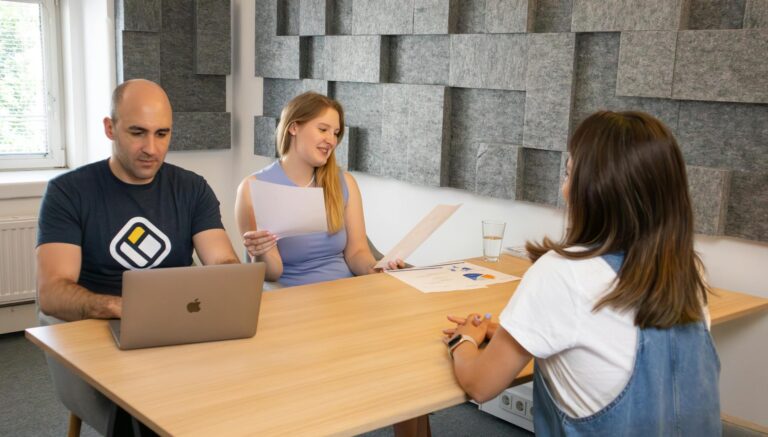

Yes, someone can absolutely be extroverted and closed off at the same time. Extroversion describes where a person draws their energy, specifically from social interaction and external stimulation, not how much of themselves they’re willing to share. A person can light up every room they walk into, dominate conversations, and still keep their inner world carefully guarded from almost everyone around them.
It’s a combination that confuses people, because we tend to assume that talkativeness equals openness. But those are two entirely different things. One is about social energy. The other is about emotional access. And the gap between them can be enormous.
Running advertising agencies for over two decades, I watched this play out constantly. Some of my most gregarious account directors, the ones who could charm a room full of skeptical clients without breaking a sweat, were also the most emotionally opaque people I’ve ever worked with. They gave you energy, enthusiasm, and presence. They rarely gave you themselves.
If you’ve been exploring where you fall on the personality spectrum, our Introversion vs Other Traits hub covers the full range of these distinctions, including how energy, openness, and social behavior interact in ways that don’t always fit the labels we expect.

What Does Being Extroverted Actually Mean?
Before we can make sense of this combination, it helps to get clear on what extroversion actually is, and what it isn’t. If you’ve ever wondered about the full definition, I’ve written a more thorough breakdown of what it means to be extroverted, because the word gets used loosely in ways that muddy the water.
Career Coaching for Introverts
One-on-one career strategy sessions with Keith Lacy. 20 years of Fortune 500 leadership as an introvert, now helping others build careers that work with their wiring.
Learn More50-minute Zoom session · $175
At its core, extroversion is about energy regulation. Extroverts feel energized by external stimulation: social interaction, group settings, conversation, and activity. They tend to process thoughts by talking through them. They often seek out people when they’re stressed, rather than withdrawing. That’s the engine.
What extroversion does not determine is how emotionally transparent someone is, how willing they are to be vulnerable, or how deeply they connect with others. Those qualities are shaped by personality structure, life experience, attachment patterns, and personal choice. An extrovert can be warm and wide open. An extrovert can also be charming and completely inaccessible.
As an INTJ, I’ve always been the one who processes internally and guards my inner world carefully. That’s introversion combined with a particular personality structure. But I’ve managed plenty of extroverts over the years who were just as guarded as I am, sometimes more so, despite their outward sociability. Their walls were just harder to see because they were covered in conversation.
Why Do Extroverts Sometimes Keep People at a Distance?
This is where it gets genuinely interesting. Social fluency and emotional openness feel like they should go together, but they don’t have to. There are several distinct reasons an extrovert might be socially active while remaining emotionally closed.
One of the most common is that social interaction becomes a form of protection. If you’re always performing, always “on,” always steering the conversation, no one ever gets close enough to see what’s underneath. I watched this happen with a senior creative director I managed early in my agency career. He was magnetic. Clients loved him. He could riff, tell stories, hold a room. But in three years of working together, I never once heard him talk about anything that actually mattered to him. Every personal question got deflected with humor or redirected into a story about someone else. His extroversion was real. His accessibility was not.
Another pattern involves people who are genuinely energized by social interaction but have learned, often through painful experience, that vulnerability leads to hurt. They show up fully in social settings because that’s authentic to how they’re wired. They just don’t let anyone past a certain point. The sociability is real. The guard is also real. Both things coexist without contradiction.
There’s also a professional dimension worth naming. In high-stakes environments, being likable and being known are two very different strategies. Some extroverts are extraordinarily skilled at the former while deliberately avoiding the latter. In my years working with Fortune 500 clients, I saw this in executives who could build rapport in minutes and reveal nothing in hours. It was a skill, and they’d honed it deliberately.

How Is This Different From Being an Introvert Who’s Closed Off?
When an introvert is closed off, people often assume they’re shy, antisocial, or simply uninterested. The introversion provides a kind of cover story, even if it’s an inaccurate one. When an extrovert is closed off, it tends to confuse people more, because the social behavior sends one signal while the emotional unavailability sends another.
The confusion is compounded by the fact that extroverts who are closed off often don’t look closed off at all. They’re engaging, warm on the surface, responsive, and socially present. The distance only becomes apparent when someone tries to go deeper, and finds that the conversation always stays at a certain level, or that the extrovert redirects with remarkable consistency every time something personal comes up.
For introverts, the closed-off quality tends to be more visible. We’re quieter, more selective about social engagement, and less likely to project warmth in group settings. People read that as guardedness, sometimes accurately, sometimes not. The introvert who’s actually quite open with people they trust still gets labeled as closed off because the social behavior matches the stereotype.
Neither type has a monopoly on emotional openness or emotional guardedness. Those qualities run across the full spectrum of personality. If you’re curious about where you fall between these poles, the introvert, extrovert, ambivert, and omnivert test can help you get a clearer read on your actual energy patterns before you draw conclusions about what they mean for your emotional style.
What Role Does Personality Type Play in This Pattern?
Within the MBTI framework, extroversion is one dimension of a four-part personality structure. An extrovert who leads with Thinking over Feeling, for example, may be socially energized but naturally less oriented toward emotional expression. An extrovert with a strong Judging preference may be outgoing in structured social settings while remaining quite private about their internal life.
ENTJ types, for instance, tend to be powerfully extroverted and socially commanding, but they often lead with strategy and logic rather than emotional disclosure. They can fill a room and still leave everyone in it with very little insight into their inner experience. That’s not dysfunction. It’s just how that particular combination of traits tends to show up.
As an INTJ, I’ve always found it easier to connect with extroverted types who have that same Thinking-Judging structure, because we share a certain pragmatic directness, even if we differ on where we get our energy. We tend to understand each other’s preference for keeping personal matters personal. What’s interesting is that even within extroverted types, the degree of openness varies enormously based on the full personality profile, not just the E in their type code.
Attachment theory adds another layer. Early experiences with trust, safety, and emotional availability shape how willing anyone, regardless of their introversion or extroversion, will be to let people in. An extrovert who grew up in an environment where vulnerability was punished or exploited may have developed a very sophisticated social persona precisely because it keeps people engaged without letting them get close. The social skill becomes a kind of armor.

Where Do Ambiverts and Omniverts Fit Into This Picture?
Not everyone sits clearly at one end of the introversion-extroversion spectrum, and that complexity makes the closed-off question even more layered. Ambiverts, people who share traits of both orientations, can be socially flexible in ways that make their openness or guardedness harder to read. An ambivert might be outgoing in some contexts and withdrawn in others, which can look like inconsistency to people who don’t understand the underlying pattern.
Omniverts take this further. Where ambiverts tend to find a middle ground, omniverts swing more dramatically between the two states depending on circumstances. In social mode, an omnivert can seem like a full extrovert, high energy, engaging, socially fluent. In withdrawal mode, they pull back significantly. If you’ve wondered about the distinction between these two categories, the comparison of omnivert vs ambivert breaks down how those patterns differ in practice.
For someone who’s also emotionally closed off, being an omnivert creates a particularly confusing picture for the people around them. In extroverted mode, they seem open and engaged. In introverted mode, they seem distant and unavailable. But neither state actually reflects emotional openness. The shift is about energy, not access. People who care about them may spend years trying to figure out which version is the “real” one, not realizing that both are real, and neither is particularly transparent.
There’s a related concept worth mentioning here as well. The otrovert vs ambivert distinction explores another angle on this middle-ground territory, specifically how people who appear extroverted in behavior sometimes have more internally oriented processing styles than their social presence suggests.
Can You Be Extroverted, Closed Off, and Deeply Lonely?
Yes. And this may be the most important thing in this article.
There’s a particular kind of loneliness that comes from being surrounded by people who engage with your performance rather than your person. Extroverts who are closed off often experience this acutely. They have full social calendars, active friendships on the surface, and a reputation for being fun or engaging or the person everyone wants at the party. And they can still feel profoundly unseen.
I’ve thought about this a lot in the context of what Psychology Today describes as the need for deeper conversations, the kind that move past surface-level exchange into something that actually matters. For introverts, the craving for depth over breadth is well-documented. But extroverts who are closed off often have the opposite problem: they’re excellent at breadth and starving for depth, without necessarily knowing how to create it or whether they’re willing to risk it.
One of the most honest conversations I ever had at my agency was with a senior account manager who was the social center of our office. He organized every team event, remembered everyone’s birthdays, and could make a client feel like the most important person in the room within minutes of meeting them. After he resigned, he told me that he’d felt completely alone the entire time he worked there. Nobody knew him. They knew his personality. Those are different things, and he’d made sure of it.
That conversation stayed with me. It made me think about how much of what we call “connection” in professional settings is actually just mutual performance, and how some people, particularly extroverts who’ve learned to keep their distance, are the most skilled performers of all.

How Does This Show Up in Professional Settings?
In workplace environments, extroverts who are closed off often rise quickly. They’re visible, articulate, and socially skilled, which tends to get noticed and rewarded in most organizational cultures. Their guardedness doesn’t hold them back professionally the way it might in personal relationships, because professional contexts don’t typically demand deep emotional access. You can be excellent at your job and completely opaque about your inner life.
Where it tends to create friction is in leadership. Teams generally want to feel that their leader is genuinely invested in them as people, not just as performers. An extroverted leader who’s emotionally closed off can create a culture where everyone feels the energy but no one feels the trust. People work hard, because the environment is stimulating and the leader is engaging, but they don’t feel safe being honest about problems, fears, or failures.
I saw this dynamic play out when I was brought in to consult on a team that was performing well by metrics but bleeding talent. The division head was charismatic, extroverted, and relentlessly positive in group settings. He was also completely unreachable on anything that mattered. People didn’t quit because the work was bad. They quit because they never felt like they could actually talk to him. His extroversion made him approachable in theory. His guardedness made him inaccessible in practice.
There’s interesting territory here around negotiation as well. Being socially fluent gives extroverts an advantage in many negotiation settings, as Harvard’s Program on Negotiation has explored in the context of introvert-extrovert dynamics. Yet an extrovert who’s emotionally closed off may struggle with the empathic listening that effective negotiation often requires, because genuine listening means letting the other person’s reality actually land, and that requires a degree of openness that guardedness resists.
Is Being Closed Off a Fixed Trait or Something That Can Shift?
Extroversion as a personality trait is relatively stable across a lifetime, though it can moderate with age and experience. Emotional guardedness is different. It’s more responsive to context, relationship quality, and personal work. Someone who’s been closed off for years can, with the right circumstances and enough motivation, begin to open up without changing their fundamental social orientation.
What tends to shift it is safety, specifically the repeated experience of vulnerability not being punished or exploited. For extroverts who’ve learned to use their social skill as a shield, this often means finding relationships where the other person is patient enough to stay present without pushing, and consistent enough over time to create a track record of trustworthiness.
It can also shift through deliberate personal reflection, therapy, or simply reaching a point where the loneliness of being unseen outweighs the perceived risk of being known. Some of the research on personality change over the lifespan, including work published through sources like PubMed Central, suggests that while core traits remain relatively stable, behavioral patterns associated with those traits can be more flexible than we assume.
For introverts watching an extroverted person who seems closed off, the instinct is sometimes to pull back, assuming the extrovert doesn’t need or want deeper connection. That’s often a misread. The social fluency can look like self-sufficiency. It frequently isn’t.
What Should You Do If You Recognize This Pattern in Yourself?
If you’re extroverted and you’ve started to notice that your social life is full but your actual connections feel thin, that’s worth paying attention to. The pattern of using social engagement to avoid emotional exposure is common enough, and understandable enough, but it tends to have a cumulative cost.
One starting point is getting clearer on where exactly you fall on the social energy spectrum, because that can help you separate what’s about energy from what’s about access. If you haven’t already, the introverted extrovert quiz can help you identify whether you might have more introverted tendencies than your social behavior suggests, which sometimes explains why the constant social engagement feels hollow rather than fulfilling.
It’s also worth distinguishing between being selective about vulnerability, which is healthy, and being uniformly guarded with everyone, which tends to produce isolation. Depth doesn’t require broadcasting your inner life to everyone. It requires letting a few people in, really in, and tolerating the discomfort that comes with being known imperfectly.
The Psychology Today framework for introvert-extrovert conflict resolution touches on something relevant here: the importance of understanding your own emotional processing style before you can effectively engage with others. For extroverts who are closed off, the work often starts internally, with understanding why the guard went up in the first place, before it becomes possible to lower it selectively.
There’s also a spectrum worth acknowledging. Not everyone who’s somewhat reserved emotionally is deeply closed off. The distinction between being fairly introverted vs extremely introverted has a parallel here: there’s a difference between someone who’s moderately guarded and someone who’s built a complete system around keeping people out. Both are real, but they’re not the same situation and they don’t require the same response.
Personality and social neuroscience have both contributed to our understanding of why people develop these patterns. Work available through resources like PubMed Central’s research on personality and social behavior points to the interplay between trait-level dispositions and the learned behavioral strategies people develop in response to their environments. Being extroverted and closed off isn’t a contradiction. It’s a specific adaptation, and like most adaptations, it made sense at some point even if it’s creating costs now.
Additional perspectives on how personality intersects with emotional style and professional life are collected in our Introversion vs Other Traits hub, which brings together the full range of these distinctions in one place.

About the Author
Keith Lacy is an introvert who’s learned to embrace his true self later in life. After 20 years in advertising and marketing leadership, including running agencies and managing Fortune 500 accounts, Keith now channels his experience into helping fellow introverts understand their strengths and build fulfilling careers. As an INTJ, he brings analytical depth and authentic perspective to every article, drawing from both professional expertise and personal growth.
Frequently Asked Questions
Can someone be extroverted and emotionally unavailable at the same time?
Yes, and it’s more common than people realize. Extroversion describes how someone gets their energy, specifically through social interaction and external stimulation. Emotional availability is a separate quality shaped by personality structure, life experience, and personal choice. An extrovert can be socially energized and highly engaging while keeping their inner world carefully protected from almost everyone around them. The social skill and the emotional guardedness don’t cancel each other out. They coexist, and in some people they reinforce each other, with the social fluency functioning as a way to keep people engaged without letting them get close.
Why would an extrovert choose to be closed off if they enjoy being around people?
Enjoying social interaction and being willing to be vulnerable are two different things. Many extroverts who are closed off genuinely love people and social settings. What they’ve learned, often through experience with betrayal, criticism, or emotional risk, is that social engagement can be managed in a way that keeps them connected without exposing anything that matters to them. The social activity is real and fulfilling. The guard is a separate layer that sits underneath it. Some extroverts aren’t even fully aware they’re doing it until someone they care about points out that despite years of closeness, they still feel like they don’t really know them.
How can you tell if an extrovert is genuinely open or just socially skilled?
The clearest signal is whether the conversation ever moves below the surface level, and whether that movement comes from them or only happens when someone else pushes. An extrovert who’s genuinely open will occasionally initiate depth, share something that costs them something, or acknowledge difficulty without deflecting. An extrovert who’s closed off but socially skilled will be engaging, warm, and responsive, but will consistently redirect personal questions, pivot to humor, or keep their own disclosures at a safe, impersonal level. Over time, the pattern becomes apparent: you walk away from interactions feeling entertained and liked, but not actually knowing anything real about them.
Does being closed off mean an extrovert is unhappy or has something wrong with them?
Not necessarily, though it often creates costs that build over time. Being emotionally guarded is usually an adaptation, a strategy that developed in response to real experiences where openness felt unsafe or was met with negative consequences. It’s not a character flaw or a disorder. That said, extroverts who are closed off frequently describe a particular kind of loneliness: being surrounded by people who respond to their performance rather than their person. The social life can be full while the sense of being genuinely known remains empty. Whether that’s a problem depends on the individual, but for many people who recognize this pattern in themselves, it eventually becomes one worth addressing.
Can an extrovert who’s closed off change that pattern without becoming less extroverted?
Yes. Extroversion as a trait is relatively stable, but emotional guardedness is more responsive to experience and personal work. Someone can remain fully extroverted, continuing to draw energy from social settings and thrive in group environments, while gradually becoming more willing to let specific people in at a deeper level. The shift doesn’t require becoming quieter or more introspective. It requires building enough trust with particular people that vulnerability starts to feel less dangerous, and developing the self-awareness to recognize when the social performance is functioning as avoidance rather than genuine connection. That’s work that happens in individual relationships, not a personality overhaul.