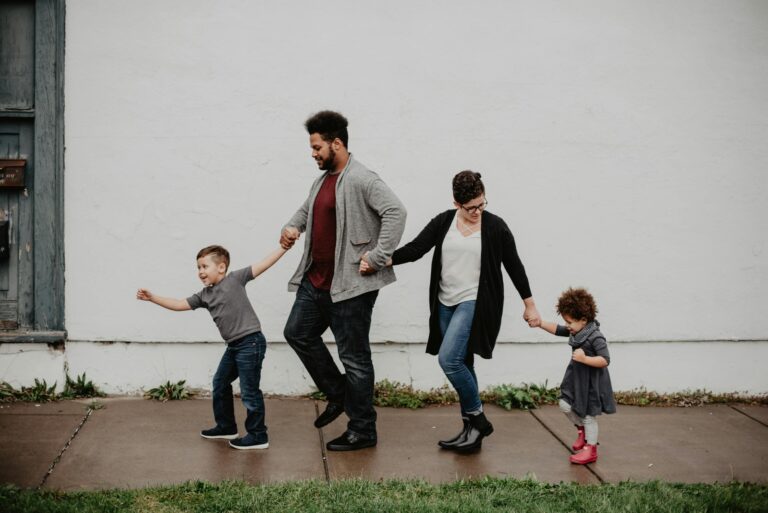

Can the introvert extrovert personality be influenced in children? The short answer is yes, partially. A child’s position on the introvert-extrovert spectrum has a strong genetic foundation, but environment, parenting style, and lived experience genuinely shape how that temperament expresses itself over time. You can’t rewire a child’s core wiring, but you can absolutely influence how comfortably and confidently they inhabit it.
That distinction matters more than most parents realize. And getting it wrong, pushing a quiet child toward constant socialization or shielding an outgoing one from challenge, can create friction that follows them well into adulthood.

My own experience with this started long before I had any language for it. Growing up, I was the kid who needed to go home after a birthday party and sit quietly for an hour before I felt like myself again. Nobody called it introversion. They called it shyness, or sensitivity, or being “in your own world.” My parents, well-meaning and extroverted in their own ways, kept nudging me toward more. More socializing. More group activities. More presence. It took me decades, and a career running advertising agencies, to understand that their nudging didn’t change who I was. It just made me better at performing extroversion while quietly exhausting myself in the process.
If you’re parenting an introverted child, or wondering whether your approach is shaping their personality in helpful or harmful ways, you’re asking exactly the right question. Our Introvert Family Dynamics and Parenting Hub covers the full landscape of raising children across the personality spectrum, and this piece adds a layer that I think gets overlooked: the difference between influencing a child’s personality and simply teaching them to suppress it.
What Does the Science Actually Tell Us About Personality and Children?
Temperament, the raw material of personality, appears early. Remarkably early. Parents often notice it within the first few months of life, in how a baby responds to stimulation, noise, new faces, and change. Some infants lean into novelty. Others pull back, process, and need more time before engaging. Neither response is a flaw. Both are wired in.
What’s your personality type?
Take our free 40-question assessment and get a detailed personality profile with dimension breakdowns, context analysis, and personalised insights.
Discover Your Type8-12 minutes · 40 questions · Free
According to MedlinePlus, temperament is influenced by both genetic factors and early environment, and it tends to remain relatively stable across a person’s life. That word “relatively” is doing a lot of work in that sentence. Stability doesn’t mean fixed. It means the foundation is consistent even as the expression of it changes.
The introversion-extroversion dimension is one of the most studied aspects of personality. It shows up across frameworks, from the 16Personalities model to formal psychological assessments. At its core, it describes where a person draws energy: from internal reflection and solitude, or from external interaction and stimulation. Children show this preference clearly, often before they have words for it.
What environment shapes is not the preference itself, but the child’s relationship to that preference. A child raised in a household that values quiet, depth, and reflection will likely feel more at ease with their introverted nature than one who’s constantly told they need to “come out of their shell.” That messaging, repeated over years, doesn’t change the child’s wiring. It changes how they feel about their wiring. And that difference has enormous consequences.

I’ve taken the Big Five Personality Traits Test more times than I’d like to admit, each time hoping the results might shift. They never did. My introversion score remained consistent across years and life changes. What changed was my interpretation of that score, and the self-acceptance that came with understanding it as a feature rather than a limitation.
Can Parents Actually Shift Where a Child Falls on the Spectrum?
Honestly? Not much. And I’d argue that’s a good thing.
What parents can do is influence how a child expresses, manages, and feels about their natural temperament. An introverted child can absolutely learn social skills, develop confidence in group settings, and become comfortable with extroverted behaviors when the situation calls for them. That’s adaptation. That’s healthy. What they can’t do, without real psychological cost, is sustain a fundamentally extroverted way of being when their nervous system is wired differently.
I watched this play out in my agencies over and over. I’d hire someone who interviewed brilliantly, all energy and presence and quick wit. Six months in, they’d be burning out, not because the work was too hard, but because the environment demanded constant extroversion from someone who needed quiet to do their best thinking. The opposite happened too. I’d overlook quiet candidates in early rounds, then discover later that their analytical depth and internal processing produced some of the most original strategic thinking I’d seen. The environment hadn’t changed their personality. It had either supported it or ground against it.
Children experience the same friction. A highly introverted child placed in a relentlessly stimulating environment doesn’t become more extroverted. They become more anxious, more withdrawn, or more skilled at performing extroversion while quietly paying for it later. Parents who understand this distinction become far more effective at supporting their child’s actual development rather than fighting their nature.
One angle worth exploring here is the overlap between introversion and high sensitivity. Many introverted children are also highly sensitive, processing sensory and emotional input more deeply than their peers. If you recognize that in your child, or in yourself as a parent, the piece on HSP Parenting: Raising Children as a Highly Sensitive Parent is worth reading alongside this one. The two traits often travel together, and understanding both changes how you respond to your child’s needs.
What Environmental Factors Actually Do Influence Personality Expression?
Even if core temperament is largely stable, the way it expresses itself is genuinely shaped by experience. Several factors have a real impact on how introverted or extroverted traits develop and show up in a child’s behavior.
Parental Modeling
Children watch their parents constantly. An introverted parent who models comfortable solitude, who reads alone without apology, who says “I need some quiet time to think,” is teaching their child that those needs are normal and valid. An extroverted parent who treats every quiet moment as a problem to be solved is sending a very different message, even without saying a word.
As an INTJ, I’ve always processed decisions internally before bringing them to the table. In my agency years, I noticed that the team members who observed this style over time began to trust the quiet before a decision. They stopped interpreting my silence as disengagement and started reading it as the precursor to something considered. That shift in perception, from “he’s checked out” to “he’s thinking,” changed the team dynamic entirely. Children do the same reading of their parents, and what they conclude shapes their own self-perception.
School and Social Environment
Schools that reward verbal participation, group projects, and constant collaboration create a challenging environment for introverted children. Not because those children can’t do those things, but because the environment signals, repeatedly, that the way they naturally function is less valued. Over time, that signal becomes internalized.
Peer relationships matter too. An introverted child with one or two deep friendships is often thriving, even if they’re not the most socially active kid in the class. The mistake parents make is comparing their child’s social life to an extroverted standard and concluding something is wrong. Depth over breadth is a legitimate social preference, not a deficit.
Parenting Style and Validation
Perhaps the most powerful environmental influence is simply whether a child’s personality is accepted or resisted by the adults around them. A child who hears “you’re so quiet, why don’t you talk more?” repeatedly learns to see their quietness as a flaw. A child who hears “you think things through carefully, that’s a real strength” learns something entirely different about the same trait.
Validation doesn’t mean never challenging your child. It means separating the challenge of skill-building from the message about identity. Teaching an introverted child to speak up in class is a skill. Telling them they’re broken for not wanting to is an identity wound. Those two things are not the same, and the long-term effects are very different.

How Do Introverted Children Develop Social Skills Without Losing Themselves?
Social skill development is not the same as personality change. That distinction is worth repeating because so many parents conflate the two.
An introverted child can absolutely become a skilled communicator, a confident public speaker, and someone who genuinely enjoys social interaction in the right context. What they won’t become, no matter how much practice they get, is someone who finds large social gatherings energizing rather than draining. The skill and the energy equation are separate things.
Some of the most effective social skill development for introverted children happens in low-stakes, one-on-one settings. Structured activities that give them a role or a purpose, drama class, debate team, a part-time job, a leadership role in a small group, allow them to practice social engagement without the overwhelming stimulation of unstructured group settings. They build the skills. They find their footing. And they do it without being asked to pretend they’re someone they’re not.
There’s also something to be said for helping introverted children understand themselves early. When I finally had language for my own introversion in my thirties, it felt like someone had handed me a map I’d been missing for decades. Imagine having that map at twelve. The self-awareness alone changes how a child relates to their own needs, their own limits, and their own strengths.
Worth noting here: personality understanding is a spectrum, and some children may benefit from broader assessment. Tools like the Likeable Person Test can offer useful self-reflection prompts for older children and teens exploring how they come across socially, which is often a real concern for introverted kids who worry their quietness is misread as unfriendliness.
What About Children Who Seem to Shift Over Time?
Many parents notice what looks like a personality shift in their children across developmental stages. The shy toddler becomes a surprisingly social teenager. The outgoing child retreats into themselves during adolescence. Are these real changes, or something else?
Most of the time, what’s changing is the expression of a stable underlying temperament, not the temperament itself. A child who appears more extroverted in their teens may have simply found a social context that fits them: a friend group that accepts them, an activity that gives them a natural role, a school environment that values what they bring. The introversion is still there. It’s just not in conflict with the environment anymore.
Adolescence is also a period when many introverted children become more skilled at code-switching, adapting their behavior to social expectations while maintaining their internal orientation. That’s a healthy adaptation. It only becomes a problem when the code-switching is so constant and so unsupported that the child loses track of who they actually are underneath the performance.
Some shifts, though, are worth paying closer attention to. A child who moves dramatically away from their baseline personality, becoming very withdrawn when they were previously engaged, or suddenly erratic and impulsive, may be responding to stress, trauma, or something worth exploring with a professional. The Psychology Today overview of family dynamics offers useful context for understanding how family environment intersects with personality development across childhood.
For families handling more complex dynamics, including blended households where children are adjusting to new family structures, the Psychology Today resource on blended family dynamics is worth a read. Personality expression in children is always happening within a family context, and that context matters enormously.

What’s the Difference Between Healthy Influence and Harmful Pressure?
This is where I think most well-meaning parents get into trouble. The line between expanding a child’s comfort zone and pressuring them to deny their nature is real, and crossing it has costs that don’t always show up immediately.
Healthy influence looks like this: encouraging an introverted child to attend the birthday party, staying for an hour, and then giving them the quiet recovery time they need afterward without commentary or judgment. It looks like teaching them to introduce themselves, make eye contact, and engage in small talk as a skill, not as evidence that they’ve “improved.” It looks like celebrating the deep friendship they have with one person as much as you’d celebrate a wide social circle.
Harmful pressure looks like this: making a child feel ashamed of needing alone time. Comparing them unfavorably to more outgoing siblings or peers. Treating every social hesitation as a problem to be fixed rather than a preference to be understood. Signing them up for relentless activities to “fix” their quietness without asking what they actually want.
I managed a creative director at one of my agencies, a deeply introverted woman who had spent her entire career trying to perform extroversion because she believed it was required for leadership. By the time she joined my team, she was exhausted in a way that had nothing to do with workload. When I explicitly told her that her style, the careful thinking, the written communication preference, the need for heads-down time, was valued and not a liability, something visibly shifted in her work. She didn’t become extroverted. She became effective in a way she hadn’t been able to access before, because she stopped spending energy fighting herself.
Children respond the same way. When the pressure to be different lifts, the energy that was spent on performance gets redirected into actual growth.
It’s also worth noting that some children who struggle significantly with social situations may be dealing with more than introversion. Anxiety, sensory processing differences, and other factors can layer on top of temperament in ways that benefit from professional support. Assessments like the Personal Care Assistant Test Online can be a useful starting point for parents exploring whether additional support might be appropriate for their child’s specific needs.
How Does Understanding Your Own Personality Help You Parent Better?
One thing I’ve noticed in conversations with parents is that the most effective ones have done real work on understanding their own personality first. An extroverted parent who genuinely understands their own need for social energy can recognize, without resentment, that their introverted child operates on a different fuel. An introverted parent who has made peace with their own nature is far less likely to project anxiety onto a child who shares their traits.
The mismatch between parent and child temperament is one of the more underexplored sources of family friction. An extroverted parent with an introverted child may genuinely not understand why their child doesn’t want to come to the party, not because they’re unkind, but because the child’s experience is genuinely foreign to them. That gap in understanding, left unexamined, becomes a repeated source of conflict and shame for the child.
Peer-reviewed work published in Frontiers in Psychology has examined how parental sensitivity and responsiveness interact with child temperament in shaping outcomes. The consistent finding is that fit matters: not whether a parent and child share the same temperament, but whether the parent is attuned enough to respond to the child’s actual needs rather than a projected version of them.
Additional work available through PubMed Central explores how early temperament interacts with parenting behavior across development, reinforcing that the relationship between nature and nurture is genuinely bidirectional. Children shape their parents just as parents shape their children, and the most effective parenting accounts for that dynamic rather than assuming influence flows in only one direction.
For parents handling more complex emotional terrain, it’s worth noting that personality assessment tools can surface patterns worth exploring. Some parents find that their own emotional reactivity or difficulty with boundaries shows up in how they respond to their child’s temperament. The Borderline Personality Disorder Test available on this site is one resource for adults who want to better understand their own emotional patterns before drawing conclusions about their child’s.
When Should Parents Seek Outside Support?
Most introverted children don’t need intervention. They need understanding. But there are situations where outside support genuinely helps.
Social anxiety is not the same as introversion, and the two are frequently confused. An introverted child who is content with their social life, who has relationships they value and activities that engage them, is almost certainly fine. A child who is distressed about their social situation, who wants connection but feels unable to access it, or who experiences significant anxiety around ordinary social situations, may benefit from professional support regardless of their underlying temperament.
Similarly, if a child’s personality seems to be causing them real suffering, not just inconvenience or a mismatch with parental expectations, that’s a signal worth taking seriously. A school counselor, child psychologist, or family therapist can help distinguish between temperament, anxiety, depression, and other factors that may be shaping the child’s behavior.
Some children also benefit enormously from working with coaches or mentors who help them build specific skills without pathologizing their personality. A speech coach, a drama teacher, or even a Certified Personal Trainer who works with kids on physical confidence can all contribute to a child’s overall sense of self-efficacy in ways that translate into social confidence. success doesn’t mean change who they are. It’s to expand what they feel capable of doing.

What Do Introverted Children Actually Need Most?
After everything I’ve observed, both in raising my own understanding of introversion and in two decades of watching personality dynamics play out in professional settings, the answer is surprisingly simple.
Introverted children need to be seen accurately. Not fixed. Not pushed. Not compared. Seen.
They need a parent who can say, “I notice you need some quiet after school, so let’s give you that before we talk about your day,” and mean it without resentment. They need environments that sometimes demand more than feels comfortable, because growth requires that, but that also provide genuine recovery space. They need to hear that their way of moving through the world is legitimate, not just tolerated.
What they don’t need is a parent who secretly believes that introversion is a problem to be solved. Children read that belief clearly, even when it’s never spoken aloud. And the message it sends, that there is something fundamentally wrong with the way they are, is one of the most damaging things a child can carry into adulthood.
I know because I carried it for a long time. And the work of setting it down, of understanding that my quiet, internal, reflective way of being was never the problem, has been some of the most significant work of my life. The children who don’t have to do that work because their parents did it for them, by understanding and accepting them early, those children have a real advantage. Not because they’re more extroverted. Because they’re more themselves.
If you’re exploring these questions across the full arc of family life, from how personality shapes parenting to how introverted parents and children find their rhythm together, our Introvert Family Dynamics and Parenting Hub is the place to go deeper.
About the Author
Keith Lacy is an introvert who’s learned to embrace his true self later in life. After 20 years in advertising and marketing leadership, including running agencies and managing Fortune 500 accounts, Keith now channels his experience into helping fellow introverts understand their strengths and build fulfilling careers. As an INTJ, he brings analytical depth and authentic perspective to every article, drawing from both professional expertise and personal growth.
Frequently Asked Questions
Can you change whether a child is introverted or extroverted?
No, not in any fundamental way. A child’s position on the introvert-extrovert spectrum is strongly influenced by genetics and temperament, which appear early in life and remain relatively stable. What parents and environment can shape is how comfortably and skillfully a child expresses their natural temperament, not the temperament itself. Pushing a child to be more extroverted than they are naturally wired to be tends to produce anxiety and exhaustion rather than genuine personality change.
How early can you tell if a child is introverted?
Temperament differences are often visible within the first few months of life. Some infants are drawn to stimulation and novelty while others pull back, process slowly, and need more time before engaging with new people or environments. These early patterns are often consistent with later introversion-extroversion tendencies, though the full picture becomes clearer as children develop language and more complex social behavior, typically between ages three and seven.
Is introversion in children the same as shyness?
No, and conflating the two causes real problems. Introversion is an energy orientation: introverted children recharge through solitude and find sustained social interaction draining. Shyness is a fear-based response to social situations and is not inherently linked to introversion. An introverted child can be socially confident and genuinely enjoy connection in the right context. A shy child may desperately want social connection but feel anxious about pursuing it. The two can overlap, but they are distinct traits with different implications for how parents should respond.
Should introverted children be pushed to socialize more?
Gentle encouragement to practice social skills is healthy and appropriate. Pressure that communicates shame about a child’s natural preferences is not. The difference lies in the message behind the push. Encouraging a child to attend an event and then honoring their need for recovery time afterward is healthy. Treating every social hesitation as a flaw to be corrected sends a damaging message about identity. Introverted children benefit from skill-building in social contexts, and they benefit even more from knowing that their quieter way of engaging with the world is valid.
Does having introverted parents make a child more likely to be introverted?
Genetics does play a role in temperament, so introverted parents are somewhat more likely to have introverted children. That said, the relationship is probabilistic, not deterministic. Extroverted parents can have deeply introverted children and vice versa. What matters more than whether parents and children share the same temperament is whether parents are attuned to their child’s actual needs rather than their own assumptions about how a child should be. A mismatched parent-child temperament pair that communicates well often produces better outcomes than a matched pair where the parent’s expectations override the child’s experience.