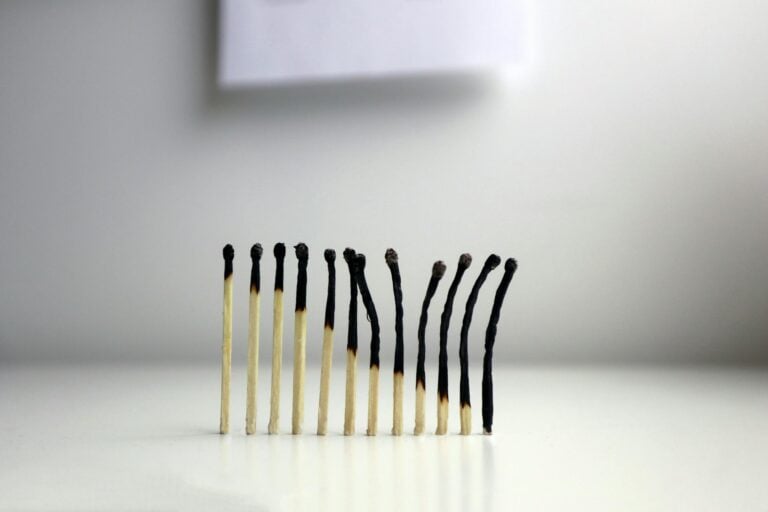

Traumatic events can shape a child’s personality in lasting ways, and yes, they can contribute to more introverted behavior. That said, it’s important to distinguish between a child who is naturally wired for quiet and inward processing and one who has withdrawn as a protective response to pain. Both patterns look similar on the surface, but they come from very different places.
As someone who spent decades in fast-paced agency environments, I’ve watched this distinction matter enormously in the adults I managed. Some of my quietest, most perceptive team members were natural introverts who thrived in solitude. Others had learned silence as a survival skill long before they ever walked into a conference room. Knowing the difference changed how I led them.

If you’re a parent trying to make sense of a child who has become quieter, more withdrawn, or harder to reach after a difficult experience, this article is for you. We’ll work through what the science and psychology actually tell us, what warning signs to watch for, and how to support a child without mislabeling who they are.
This topic sits at the heart of what we explore in our Introvert Family Dynamics and Parenting hub, where we look honestly at how personality, temperament, and family experience shape the people our children become. If questions like this one keep you up at night, that hub is a good place to spend some time.
What Does Childhood Trauma Actually Do to a Developing Personality?
Childhood is when the architecture of personality gets built. Temperament arrives at birth, shaped by genetics and biology, but experience fills in the walls. When a child encounters something overwhelming, whether that’s abuse, loss, family instability, or chronic stress, the brain responds by reorganizing its priorities. Safety becomes the primary concern, and everything else, including social engagement, curiosity, and openness, gets filtered through that lens.
What’s your personality type?
Take our free 40-question assessment and get a detailed personality profile with dimension breakdowns, context analysis, and personalised insights.
Discover Your Type8-12 minutes · 40 questions · Free
The American Psychological Association describes childhood trauma as any event or series of events that overwhelms a child’s capacity to cope. That definition is deliberately broad, because what overwhelms one child may not affect another in the same way. A child who already tends toward sensitivity and inward processing may be more susceptible to withdrawal after a difficult experience than a child with a more naturally resilient or extroverted temperament.
What trauma does, neurologically, is heighten the threat-detection system. The amygdala, the part of the brain that processes fear, becomes more reactive. Social situations that feel unpredictable or emotionally charged start to register as potentially dangerous. A child who was once chatty and engaged may begin to prefer the predictability of solitude. They’re not necessarily becoming introverted in the personality-trait sense. They’re retreating to safety.
This is a critical distinction. Research from the National Institutes of Health has found that introversion as a personality trait has strong biological roots, with infant temperament showing measurable connections to introverted behavior in adulthood. Introversion, in other words, tends to be something you’re born leaning toward. Trauma-driven withdrawal is something that happens to you. One is a personality trait. The other is a coping mechanism.
How Can You Tell the Difference Between Introversion and Trauma Response?
This is the question parents ask most often, and it’s the right one. The behavioral overlap is real. Both a naturally introverted child and a traumatized child may prefer solitary play, avoid large social gatherings, seem hard to read emotionally, or need significant time to warm up to new people. So how do you tell them apart?

The most reliable signal is change over time. A child who has always been quiet, who preferred one close friend over a crowd even as a toddler, who recharges through alone time and seems content doing so, is likely wired that way. A child who was previously social, talkative, and engaged with others and then became withdrawn after a specific event is showing you something different. The shift itself is the signal.
Other markers that suggest trauma-driven withdrawal rather than natural introversion include persistent anxiety in social situations (not just preference for quiet, but visible fear or distress), physical complaints like stomachaches or headaches before school or social events, sleep disturbances, heightened startle responses, and emotional dysregulation that seems disconnected from the immediate situation. A naturally introverted child who skips a party might feel relieved. A traumatized child who skips that same party might feel terrified of what they narrowly avoided.
I’ve seen this play out in adult professionals, too. During my agency years, I managed a senior account director who had grown up in a volatile household. She was extraordinarily capable and deeply private, but her quietness came with a constant vigilance I recognized over time. She wasn’t recharging in solitude the way my genuinely introverted team members did. She was monitoring. There’s a texture to protective silence that’s different from restorative silence, and once you learn to see it, you can’t unsee it.
If you’re a highly sensitive parent trying to read these signals in your child, the experience can feel overwhelming. HSP Parenting: Raising Children as a Highly Sensitive Parent addresses exactly that dynamic, exploring how your own sensitivity shapes what you notice and how you respond.
Can Trauma Permanently Change a Child’s Personality Toward Introversion?
This is where the answer gets more complicated, and more hopeful at the same time.
Personality is not a fixed object. The research published in PubMed Central on personality development across the lifespan shows that traits can and do shift in response to significant life experiences, particularly during childhood and adolescence when the brain is still forming. A child who experiences chronic stress or trauma during formative years may develop personality patterns that lean more introverted over time, even if their baseline temperament was more extroverted.
That’s not necessarily a tragedy. Some of the most perceptive, empathetic, and internally rich people I’ve known developed those qualities partly in response to difficult early experiences. The depth that comes from processing pain isn’t fake depth. But there’s a meaningful difference between a child who grows into a thoughtful, grounded introvert and one who remains trapped in a defensive crouch that limits their ability to connect, trust, and thrive.
The PubMed Central research on early adversity and personality development suggests that the relationship between trauma and personality is bidirectional. Temperament influences how a child responds to trauma, and trauma influences how personality develops from there. A child with a naturally sensitive or inhibited temperament may be more vulnerable to lasting personality shifts after difficult experiences. That doesn’t mean the outcome is sealed. It means early support matters more for those children.
Personality assessments can actually be useful here, not as diagnostic tools, but as conversation starters. When a child is old enough, something like the Big Five Personality Traits Test can help them understand their own tendencies in a framework that feels neutral and descriptive rather than clinical. Knowing that high neuroticism or low extraversion are measurable traits, not character flaws, can be genuinely freeing for a young person trying to make sense of themselves.
What Types of Traumatic Events Are Most Likely to Trigger Withdrawal in Children?
Not all difficult experiences carry the same weight. Acute trauma, a single overwhelming event like an accident, a sudden loss, or a frightening incident, tends to produce more immediate and visible changes in behavior. A child may become clingy, then avoidant, then gradually return toward their baseline with support. Chronic or relational trauma is often more insidious and more likely to produce lasting personality-level shifts.

Relational trauma, which includes emotional neglect, inconsistent caregiving, domestic conflict, or being raised by a caregiver with untreated mental illness, is particularly powerful in shaping withdrawal patterns. When the source of danger is also the source of comfort, a child’s entire framework for human connection gets distorted. Social engagement stops feeling safe because people have proven unpredictable. Solitude becomes the only reliable refuge.
Bullying deserves its own mention here. Peer rejection and social humiliation during childhood can produce withdrawal patterns that look almost identical to introversion. A child who was socially confident before being targeted by a bully may become quiet, avoidant, and reluctant to initiate connection. What looks like a personality shift is actually a learned response to a specific kind of pain. The child hasn’t become introverted. They’ve become afraid of what social exposure might cost them.
Family dynamics, including divorce, parental mental illness, and economic instability, can also contribute to withdrawal. The Psychology Today overview of family dynamics is a useful starting point for understanding how household environments shape children’s emotional and social development. The patterns that form in a child’s first family system tend to persist in some form well into adulthood, which is part of why early intervention matters so much.
Some families don’t fit neatly into traditional structures, and blended families carry their own particular stressors. Blended family dynamics can introduce loyalty conflicts, attachment disruptions, and identity confusion that some children process by turning inward. That withdrawal isn’t a sign of failure. It’s often a child’s way of trying to make sense of a world that suddenly has new rules.
What Should Parents Do When They Suspect Trauma-Driven Withdrawal?
The first and most important thing is to resist the urge to fix the quietness. A child who has withdrawn after a difficult experience doesn’t need to be coaxed back into social performance. They need to feel safe. Safety comes before engagement, every time.
That means creating consistent, low-pressure opportunities for connection without demanding a specific response. Sitting near a withdrawn child without requiring conversation. Sharing a meal without interrogating their feelings. Being present without an agenda. This kind of steady, non-intrusive presence is often more healing than any structured intervention, particularly in the early stages.
Professional support is worth pursuing when withdrawal persists beyond a few weeks after a known stressor, when it’s accompanied by other signs of distress like sleep problems or school avoidance, or when you simply can’t identify what triggered the change. A child therapist who specializes in trauma can do things a loving parent cannot, not because the parent isn’t enough, but because a skilled professional offers something different: a relationship with no history, no emotional stakes, and specific tools for helping children process experiences they can’t yet put into words.
One thing I’ve come to believe, both from my own experience as an INTJ who spent years misreading my own quietness, and from watching people I’ve managed work through their histories, is that self-knowledge is protective. Children who understand themselves, who have language for their inner experience and permission to honor it, are more resilient. That’s true whether their quietness comes from temperament or from pain.
Tools that help children understand their own relational style can be part of that process. The Likeable Person Test is one resource that can help older children and teenagers explore how they come across socially and what genuine connection looks like for them, without the pressure of performance. Sometimes naming a pattern is the first step toward changing a relationship with it.
How Does This Play Out Differently for Children Who Are Already Naturally Introverted?
Naturally introverted children face a particular challenge when trauma enters the picture, because their withdrawal can be harder to detect. A child who already preferred solitude, already chose one friend over a crowd, and already needed time to process experiences internally may not look dramatically different after a difficult event. The signal gets lost in the baseline.

As an INTJ who has spent a lot of time reflecting on my own childhood patterns, I can say honestly that I didn’t always know which of my quieter tendencies were genuinely mine and which were responses to things that had happened. That kind of internal archaeology takes time, and it’s not something most children have the tools to do on their own.
For parents of naturally introverted children, the task is to know their child’s baseline well enough to notice deviation from it. Not just the social behavior, but the quality of their inner engagement. A naturally introverted child who is doing well is typically absorbed in something: a book, a creative project, a line of thought they’re working through. A naturally introverted child who is struggling tends to be absent rather than absorbed. There’s a difference between a child who is quiet because they’re thinking and one who is quiet because they’ve gone somewhere you can’t reach.
It’s also worth noting that some children who are naturally introverted may also carry traits associated with high sensitivity. If you’re exploring whether your child’s responses to the world might reflect a deeper sensitivity profile, our article on raising children as a highly sensitive parent touches on what that looks like from both sides of the parent-child relationship.
In professional settings, I’ve noticed that naturally introverted adults who experienced childhood trauma often have a harder time advocating for their own needs than those whose introversion was simply temperamental. They’ve learned to make themselves small not just because they prefer quiet, but because they learned at some point that taking up space was unsafe. That pattern, once established in childhood, tends to show up in careers, in relationships, and in how people respond to authority. Recognizing it is the beginning of working through it.
Are There Long-Term Career and Relationship Implications for Children Who Withdraw After Trauma?
Yes, and they’re worth taking seriously without catastrophizing them. Children who develop withdrawal as a coping mechanism often carry that pattern into adulthood in ways that shape their professional lives and their capacity for intimacy. The good news, in the most genuine sense of that phrase, is that patterns learned in childhood can be examined and changed. They’re not destiny.
In the workplace, adults who withdrew during childhood as a trauma response sometimes struggle with visibility. They’ve learned to stay quiet, stay out of the way, and avoid drawing attention. In agency environments, I saw this most clearly in creative professionals who had extraordinary talent but seemed almost allergic to presenting their own work. They’d hand it off, deflect credit, and disappear from the room before the applause landed. Some of that was genuine introversion. Some of it was something older and harder to name.
In relationships, the implications can be more complex. Adults who learned in childhood that closeness equals danger often find themselves in a push-pull dynamic with intimacy. They want connection but fear it. They may appear introverted to partners when what they’re actually experiencing is a kind of relational hypervigilance. Understanding that distinction, both for the person living it and for those who love them, can change the entire quality of a relationship.
If you’re an adult who suspects your own quietness has roots in childhood experience rather than pure temperament, exploring your personality profile through a structured lens can be clarifying. The Borderline Personality Disorder Test is one resource that can help adults identify whether certain patterns of emotional intensity or relational difficulty might have a clinical dimension worth exploring with a professional. It’s not a diagnostic tool, but it can be a useful starting point for self-understanding.
Career choices are also shaped by this history in ways people don’t always recognize. Adults who withdrew after childhood trauma sometimes gravitate toward roles that minimize social exposure, not because those roles fit their strengths, but because they feel safe. There’s nothing wrong with choosing a quieter professional path, but it’s worth examining whether you’re choosing it or hiding in it. I’ve spent a lot of time thinking about that question in my own life, and the answer has changed at different stages.
Some adults find that roles focused on one-on-one support, whether formal or informal, feel like a natural fit for the empathy they’ve developed through their own difficult experiences. If you’re exploring whether a caregiving career might align with your personality and history, the Personal Care Assistant Test Online offers a structured way to assess whether that kind of work might suit you. Similarly, adults who find that structured, goal-oriented support roles appeal to them might explore the Certified Personal Trainer Test as a way of understanding whether a role built around individual guidance and accountability could be a meaningful fit.

What Does Healing Look Like for a Child Who Has Withdrawn After Trauma?
Healing rarely looks like a return to who the child was before. That’s an important thing for parents to understand, and to accept. success doesn’t mean restore a previous version of your child. It’s to help them build a relationship with themselves that is honest, grounded, and expansive enough to hold both their pain and their potential.
For some children, healing looks like gradually re-engaging with peers, finding one safe friendship that becomes a bridge back to connection. For others, it looks like finding a creative outlet, writing, drawing, music, or movement, that gives the internal world somewhere to go. For naturally introverted children who have also experienced trauma, healing often means learning to distinguish between the solitude they genuinely love and the isolation they’ve been using as armor.
Therapeutic approaches that work well with withdrawn children tend to be experiential rather than purely verbal. Play therapy, art therapy, and somatic approaches that work through the body rather than asking a child to articulate what they feel can be particularly effective. Children who have learned silence as a survival strategy often don’t have words for their experience yet. Healing happens in the body before it happens in language.
For parents, healing also means examining your own responses. If you grew up in a household where emotional expression was unsafe, you may inadvertently communicate to your child that their withdrawal is acceptable or even preferable. That’s not a judgment. It’s a pattern worth noticing. The most powerful thing a parent can do is model the kind of emotional honesty and safe vulnerability they want their child to develop.
I didn’t fully understand my own introversion until my late thirties, and even then, I spent years untangling what was genuinely mine from what I had learned to perform or protect. That process changed how I led teams, how I showed up in relationships, and how I thought about the quieter members of my agencies. Everyone’s inner life has a history. Understanding that history is part of understanding the person.
There’s much more to explore about how personality and family experience intersect across every stage of life. Our complete Introvert Family Dynamics and Parenting hub covers the full range of these questions, from how introverted parents raise children to how personality shapes the way families communicate, conflict, and connect.
About the Author
Keith Lacy is an introvert who’s learned to embrace his true self later in life. After 20 years in advertising and marketing leadership, including running agencies and managing Fortune 500 accounts, Keith now channels his experience into helping fellow introverts understand their strengths and build fulfilling careers. As an INTJ, he brings analytical depth and authentic perspective to every article, drawing from both professional expertise and personal growth.
Frequently Asked Questions
Can a child become permanently introverted after a traumatic experience?
Trauma can shift a child’s personality in lasting ways, particularly if it occurs during formative developmental years and goes unaddressed. That said, personality is not permanently fixed by any single experience. A child who withdraws after trauma may develop more introverted patterns over time, but with appropriate support, those patterns can evolve. The distinction that matters most is whether the child’s quietness feels like a genuine preference or a protective response to fear. Both can coexist, and both can be worked with.
How do I know if my child’s introversion is natural or a response to trauma?
The most reliable indicator is change over time. A naturally introverted child tends to show consistent preferences for solitude and small social circles from an early age. A child whose withdrawal developed after a specific event or period of stress is showing you a response rather than a trait. Watch for accompanying signs like anxiety, sleep disturbances, physical complaints before social situations, or visible fear rather than simple preference. A child therapist can help you assess which pattern is driving the behavior.
What types of trauma are most likely to cause children to withdraw socially?
Relational trauma, including emotional neglect, inconsistent caregiving, domestic conflict, and peer bullying, tends to have the strongest impact on social withdrawal because it directly disrupts a child’s sense of safety in relationships. Acute traumatic events like accidents or sudden losses can also trigger withdrawal, though children often show more visible and immediate distress in those cases. Chronic, low-level stress within the family system can be particularly insidious because the changes happen gradually and are easier to miss.
Should I push a withdrawn child to be more social?
Pushing a withdrawn child toward social performance before they feel safe tends to deepen the withdrawal rather than resolve it. Safety comes before engagement. What helps more is creating consistent, low-pressure opportunities for connection without demanding a specific response. Sit near them without requiring conversation. Share activities without interrogating feelings. If the withdrawal is trauma-driven, a child therapist can provide structured support that goes beyond what a parent can offer alone. If the child is simply naturally introverted, honoring that preference while gently expanding their comfort zone over time is the more effective approach.
Can adults recognize if their own introversion stems from childhood trauma?
Yes, though it often takes deliberate reflection and sometimes professional support to make that distinction clearly. Adults whose quietness developed as a childhood coping mechanism often notice that their solitude doesn’t feel restorative the way naturally introverted people describe it. It may feel more like vigilance, avoidance, or relief at escaping something rather than genuine enjoyment of time alone. Other signals include difficulty trusting people in close relationships, chronic self-effacement in professional settings, and a persistent sense that taking up space is somehow dangerous. Therapy, personality assessment tools, and honest self-reflection can all be part of working through that history.