

CBT for social anxiety in Los Angeles gives people with persistent social fear a structured, evidence-based path toward meaningful change. Cognitive behavioral therapy works by identifying the thought patterns and avoidance behaviors that keep anxiety locked in place, then gradually replacing them with more accurate thinking and direct experience. For introverts and highly sensitive people living in a city that often rewards extroversion loudly and publicly, finding the right therapeutic approach can feel like the difference between surviving LA and actually belonging here.
I want to be clear about something before we go further. Social anxiety is not introversion. I spent years conflating the two in my own mind, and that confusion cost me. As an INTJ who ran advertising agencies for over two decades, I worked alongside some of the most socially confident people I had ever met. Watching them, I assumed my discomfort in certain social situations meant something was wrong with me. It took real self-examination to separate the wiring I was born with from the anxiety I had accumulated. If you are reading this in Los Angeles wondering whether what you feel is normal introversion or something that deserves professional attention, that question alone is worth sitting with carefully.
Mental health for introverts is a layered topic, and social anxiety is one of its most misunderstood corners. Our Introvert Mental Health Hub covers the full range of emotional and psychological experiences that show up differently for quieter, more internally oriented people. Social anxiety fits squarely into that conversation, especially in a city like Los Angeles where the social performance pressure is constant and visible.

What Makes CBT Different From Other Anxiety Treatments?
Cognitive behavioral therapy has a long track record with social anxiety disorder, and its effectiveness is well-documented by major psychological institutions including the American Psychological Association. What separates CBT from other approaches is its focus on the relationship between thoughts, feelings, and behaviors. Rather than spending years excavating childhood memories, CBT asks a more immediate question: what are you thinking right now, and is that thought accurate?
What’s your personality type?
Take our free 40-question assessment and get a detailed personality profile with dimension breakdowns, context analysis, and personalised insights.
Discover Your Type8-12 minutes · 40 questions · Free
In my agency years, I had a senior account director who froze before every client presentation. She was brilliant, genuinely one of the sharpest strategic thinkers I had ever worked with. But the moment a room filled with Fortune 500 executives, something shifted in her. She once described it to me as a certainty that she was about to say something catastrophically wrong. Not a fear. A certainty. That distinction matters enormously in CBT, because that kind of cognitive distortion, treating a prediction as a fact, is exactly what the therapy is designed to address.
CBT for social anxiety typically involves two core components working together. The cognitive side helps you examine and reframe distorted thinking patterns: catastrophizing, mind-reading, assuming others are judging you harshly. The behavioral side uses exposure, carefully structured situations where you face social fears in graduated steps rather than avoiding them. Avoidance feels like relief in the short term. Over time, it teaches your nervous system that the feared situation is genuinely dangerous, which deepens the anxiety rather than resolving it.
For people who also identify as highly sensitive, the cognitive distortions can be particularly intense. HSP anxiety often involves a nervous system that processes stimulation more deeply, which can amplify both the perceived threat of social situations and the emotional aftermath of difficult interactions. CBT does not eliminate sensitivity. What it does is help you respond to that sensitivity with more accuracy and less automatic fear.
Why Los Angeles Creates Specific Challenges for People With Social Anxiety
Los Angeles is a city built on visibility. The entertainment industry sets a cultural tone that ripples outward into every professional sector. Even if you have nothing to do with film or television, the ambient expectation in LA is that you should be comfortable being seen, comfortable networking, comfortable performing a version of yourself in public spaces. For someone managing social anxiety, that cultural pressure is not just uncomfortable. It is relentless.
I moved through LA’s advertising world for years, pitching to studios and tech companies and consumer brands that all had their own particular social cultures. The entertainment-adjacent work was especially charged. Rooms full of people who were expert at reading other people, at performing confidence, at making snap judgments about whether you belonged. As an INTJ, I could hold my own analytically. But the social performance dimension of those rooms was something I had to consciously work through, not because I was anxious in a clinical sense, but because the environment was genuinely demanding in ways that did not suit my natural wiring.
For someone with actual social anxiety disorder, those same environments can be genuinely destabilizing. The Harvard Health overview of social anxiety disorder describes it as more than shyness, it is a persistent fear of social or performance situations where embarrassment or judgment feels inevitable. In a city where social performance is essentially a professional skill, that fear can limit careers, relationships, and quality of life in ways that are hard to overstate.

The good news about LA specifically is that it has a genuinely sophisticated mental health infrastructure. The concentration of licensed therapists, specialized CBT practitioners, and group therapy programs in the greater Los Angeles area is significant. The challenge is finding the right fit, someone who understands the particular texture of social anxiety rather than treating it as a generic anxiety problem.
How CBT Actually Works in Practice for Social Anxiety
The mechanics of CBT for social anxiety are worth understanding before you walk into a therapist’s office, because the process asks something of you that anxiety naturally resists: engagement with the thing you fear.
Early sessions typically focus on psychoeducation. Your therapist helps you understand what social anxiety is, how it operates in the brain and body, and why avoidance perpetuates it. This phase is often genuinely relieving for people who have spent years wondering if they are simply broken. Social anxiety disorder is a recognized condition with clear diagnostic criteria, as outlined in resources from the American Psychological Association on shyness and social anxiety, and understanding that framework can reduce the shame that often accompanies it.
From there, CBT moves into cognitive restructuring. You learn to identify automatic negative thoughts that arise in social situations, examine the evidence for and against those thoughts, and generate more balanced interpretations. A thought like “everyone in this room thinks I am incompetent” gets examined not with positivity-speak but with actual evidence. What specifically suggests that? What contradicts it? What would you say to a friend who had this thought?
For highly sensitive people, this cognitive work intersects with something deeper. The capacity for deep emotional processing that many HSPs carry means that social interactions leave longer, more detailed impressions. A slightly awkward exchange at a networking event can replay for days. CBT does not try to make you less emotionally responsive. It helps you process those replays with more accuracy and less self-punishment.
Exposure work comes next, and this is where the real change happens. A therapist trained in CBT for social anxiety will help you build what is called a fear hierarchy, a ranked list of social situations from mildly uncomfortable to genuinely terrifying. You work through them in order, staying in each situation long enough for your anxiety to peak and then naturally decrease. The brain learns, through direct experience, that the feared outcome did not materialize, or that if it did, you could handle it.
One of my former creative directors, an INFP I managed for several years at my second agency, went through a version of this process after a particularly difficult client presentation went sideways. She had a strong tendency toward what I would describe as anticipatory dread, the certainty that social situations would end in judgment or rejection. Watching her work through that, methodically and with real courage, changed how I thought about professional vulnerability. She eventually became one of the most confident presenters on my team, not because she stopped feeling nervous, but because she stopped letting the nervousness make decisions for her.
Finding a CBT Therapist in Los Angeles Who Actually Fits
Los Angeles has no shortage of therapists. What it can feel short on is clarity about who specializes in what, and how to tell the difference between someone who lists CBT as a modality and someone who genuinely practices it with depth and specificity for social anxiety.
A few practical filters help. Look for therapists who specifically name social anxiety disorder in their practice descriptions, not just “anxiety” as a broad category. Social anxiety has its own treatment protocols, and a therapist who primarily works with generalized anxiety or trauma may approach it differently than someone with focused social anxiety training. The Psychology Today therapist directory allows you to filter by specialty and modality, which can narrow the field considerably.
Ask directly whether the therapist uses exposure-based techniques. Some practitioners describe their approach as CBT but rely primarily on talk therapy without the behavioral component. For social anxiety specifically, the exposure work is where the most durable change tends to happen. If a therapist seems hesitant about exposure or frames it as optional, that is worth noting.

Group CBT programs are also worth considering, and LA has several. The exposure component of social anxiety treatment is uniquely well-suited to group formats, because the group itself becomes a practice environment. Sitting with others who share the same fears, doing structured exposure exercises together, and receiving honest feedback in a contained, therapeutic setting can accelerate progress in ways that individual therapy sometimes cannot replicate on its own.
For introverts specifically, the idea of group therapy can feel like asking someone with a fear of heights to practice by jumping out of a plane. That reaction makes complete sense. A good CBT group for social anxiety starts with lower-stakes interactions and builds gradually. The introversion does not disappear, but the anxiety that has been layered on top of it begins to separate out.
It is also worth knowing that telehealth has expanded access significantly. Many LA-based CBT therapists offer remote sessions, which can be a useful entry point for someone whose anxiety makes the idea of sitting in a waiting room feel like its own exposure exercise. That said, for the exposure components of treatment, in-person work often has advantages that are hard to replicate through a screen.
The Introvert-Anxiety Overlap: What CBT Needs to Account For
One of the more nuanced aspects of seeking CBT for social anxiety as an introvert is making sure your therapist understands the difference between the two. As Psychology Today has noted, introversion and social anxiety can coexist, overlap, and mask each other in ways that complicate both self-understanding and treatment.
Introversion is a preference for less stimulating environments and a tendency to restore energy through solitude. Social anxiety is a fear response tied to perceived judgment or humiliation. An introvert who declines a party invitation because they genuinely prefer a quiet evening at home is not anxious. An introvert who declines because they are terrified of saying something wrong and being judged may be dealing with anxiety on top of their introversion. The distinction matters because CBT should not try to make introverts into extroverts. That is not the goal and it is not a reasonable one.
What CBT can do is help you separate the authentic preference from the fear-driven avoidance. After that separation, you get to make genuine choices. Some social situations you will still decline, because you are an introvert and that is appropriate. Others you will engage with more freely, because the anxiety that was blocking access to them has loosened its grip.
This distinction also shows up in how highly sensitive people experience social environments. The sensory and emotional intensity of certain social settings can be genuinely overwhelming, not because of anxiety, but because of how deeply HSPs process stimulation. Understanding what is sensory overload versus what is anxiety-driven avoidance is part of the self-knowledge that good CBT work can help clarify.
I have watched this confusion play out in professional settings more times than I can count. At one of my agencies, I had a senior strategist, an INTJ like me, who consistently declined after-work social events. His manager flagged it as a potential performance issue, read it as antisocial behavior, and suggested he might benefit from coaching on executive presence. What nobody had asked was whether he was avoiding because he preferred solitude or because he was genuinely anxious about those gatherings. Those are completely different problems requiring completely different responses.
When Social Anxiety Intersects With Perfectionism and Rejection Sensitivity
Two patterns come up repeatedly in social anxiety that deserve specific attention, especially for highly sensitive and introspective people: perfectionism and rejection sensitivity. Both can fuel social anxiety in ways that are not always obvious, and both are areas where CBT has specific tools.
Perfectionism in social contexts often looks like an impossibly high standard for how interactions should go. The person with social anxiety who is also perfectionistic does not just fear judgment. They fear any deviation from a mental script of how the conversation should unfold. When reality inevitably diverges from the script, the gap gets interpreted as evidence of failure. HSP perfectionism adds another layer, because the sensitivity that makes HSPs so perceptive also makes them acutely aware of every micro-moment where they fell short of their own standard.
CBT addresses perfectionism through cognitive restructuring, helping people examine the actual cost of imperfection versus the imagined cost. It also uses behavioral experiments, deliberately doing something imperfectly in a social situation and observing what actually happens. Most of the time, the catastrophic outcome does not materialize. That direct evidence, accumulated over time, begins to erode the perfectionism’s hold.
Rejection sensitivity is a different but related pattern. For people with social anxiety, the anticipation of rejection can be so powerful that it triggers the same physiological response as actual rejection. The body does not always distinguish between the two. This is part of why social anxiety can feel so exhausting: you are essentially experiencing rejection repeatedly in your imagination before a single social interaction has taken place.
For highly sensitive people, the experience of actual rejection, when it does occur, can be particularly intense. The process of processing and healing from rejection takes longer and cuts deeper when you are wired to feel things at a higher amplitude. CBT helps by creating more accurate appraisals of rejection risk and by building the emotional tolerance to sit with discomfort without immediately retreating.
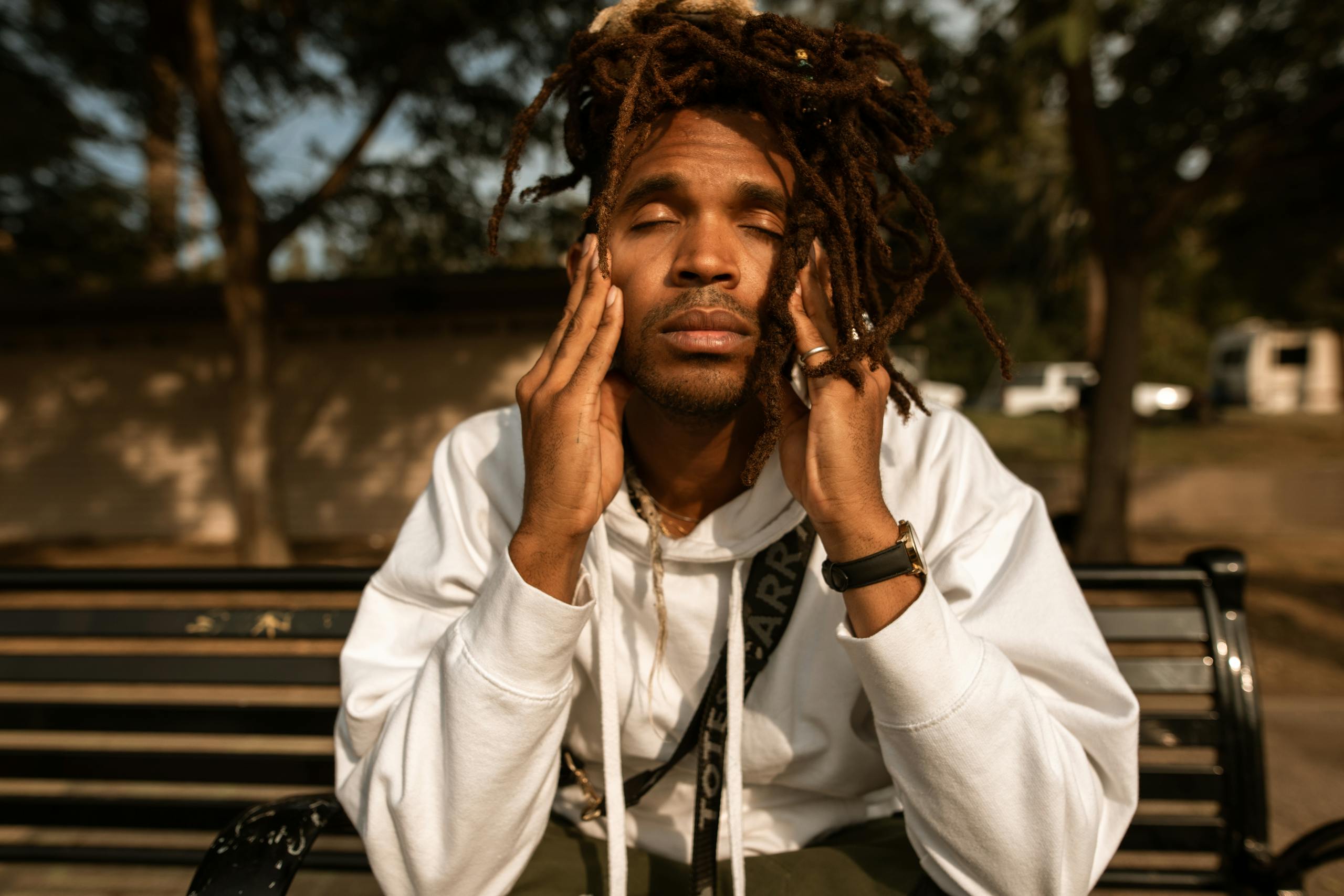
There is also something worth naming about empathy and social anxiety. Many people who struggle with social anxiety are also highly empathic, attuned to others’ emotional states in ways that can feel like a liability in social situations. HSP empathy can make social interactions feel like emotional minefields, where you are simultaneously managing your own anxiety and absorbing everyone else’s emotional weather. CBT does not reduce empathy, but it can help you create clearer boundaries between what belongs to you and what belongs to the room.
What Progress Actually Looks Like in CBT for Social Anxiety
One of the most important things to understand about CBT for social anxiety is that progress does not look like the absence of discomfort. It looks like a changed relationship with discomfort.
Early in treatment, many people expect to reach a point where social situations simply stop feeling difficult. That is not typically how it works. What changes is the intensity of the fear response, the accuracy of the thoughts accompanying it, and the degree to which anxiety drives behavior. A person who completes a solid course of CBT for social anxiety may still feel nervous before a presentation. What they will not do is let that nervousness convince them the presentation is going to be catastrophic, or avoid the presentation entirely to escape the feeling.
The research available through PubMed Central on cognitive behavioral interventions for social anxiety disorder indicates that CBT produces meaningful reductions in social anxiety symptoms for many people, with effects that tend to be durable over time. That durability matters because it suggests the treatment is teaching skills and changing patterns, not just temporarily suppressing symptoms.
Timeline varies considerably. Some people notice significant shifts within eight to twelve weeks of weekly sessions. Others work through CBT over six months or longer, particularly if the anxiety is longstanding or if there are complicating factors like depression, trauma history, or significant life stressors. In Los Angeles, where life stressors tend to include things like career volatility in entertainment-adjacent industries, housing costs, and the particular loneliness that can accompany living in a sprawling, car-dependent city, those complicating factors are common.
Medication is sometimes used alongside CBT, particularly for people whose anxiety is severe enough to make engaging with exposure work extremely difficult. This is a conversation to have with both a therapist and a psychiatrist, and it is worth knowing that in LA, the infrastructure for that kind of coordinated care exists and is accessible. Some people use medication as a bridge, something that lowers the anxiety enough to make CBT possible, and then taper off as the therapeutic gains take hold.
Building a Life in LA That Works With Your Wiring, Not Against It
CBT for social anxiety is not about becoming someone who loves networking events and thrives on constant social stimulation. It is about expanding your range of what feels manageable, so that your choices are driven by genuine preference rather than fear.
For introverts in Los Angeles, that distinction is meaningful. The city offers genuine pockets of quiet, genuine communities of people who prefer depth over breadth in their social lives, genuine professional environments where introversion is an asset rather than a liability. Getting there, being able to access those spaces and relationships without anxiety blocking the path, is what effective treatment makes possible.
I think about my own experience of learning to stop performing extroversion in professional settings and starting to lead from my actual strengths. That shift did not happen in therapy for me. It happened through years of accumulated self-knowledge and some significant professional failures that forced honesty. But I have worked alongside people for whom therapy, specifically CBT, was the thing that made that kind of self-knowledge accessible. It gave them a framework for understanding what was anxiety and what was just who they were.
Additional context on social anxiety and personality type, including how introversion and social fear interact in clinical and non-clinical populations, is available through this PubMed Central resource on personality dimensions and anxiety. The science is nuanced, and it supports the idea that introversion and social anxiety are genuinely distinct constructs that happen to share some surface-level similarities.

What I have come to believe, after two decades of watching people work, lead, struggle, and grow in high-pressure environments, is that the most meaningful professional and personal development usually involves getting clearer about what is genuinely you and what is fear wearing your face. CBT for social anxiety, done well, is fundamentally a process of making that distinction. In a city as externally demanding as Los Angeles, that clarity is not just therapeutically valuable. It is practically essential.
If you want to keep exploring the mental health landscape for introverts and highly sensitive people, our complete Introvert Mental Health Hub covers anxiety, emotional processing, sensory sensitivity, and more in depth.
About the Author
Keith Lacy is an introvert who’s learned to embrace his true self later in life. After 20 years in advertising and marketing leadership, including running agencies and managing Fortune 500 accounts, Keith now channels his experience into helping fellow introverts understand their strengths and build fulfilling careers. As an INTJ, he brings analytical depth and authentic perspective to every article, drawing from both professional expertise and personal growth.
Frequently Asked Questions
Is CBT effective for social anxiety disorder?
CBT is one of the most well-supported treatments for social anxiety disorder. It works by addressing both the distorted thinking patterns and the avoidance behaviors that keep anxiety in place. Many people experience meaningful, lasting reductions in social anxiety symptoms through a structured course of CBT, particularly when exposure-based techniques are included alongside cognitive restructuring work.
How do I find a CBT therapist for social anxiety in Los Angeles?
Start by looking for therapists who specifically list social anxiety disorder as a specialty, not just general anxiety. Ask whether they use exposure-based techniques, which are a core component of effective CBT for social anxiety. Online directories with specialty filters, referrals from your primary care doctor, and LA-based university training clinics are all reasonable starting points. Telehealth options are also widely available through LA-based practitioners.
What is the difference between social anxiety and introversion?
Introversion is a personality trait characterized by a preference for less stimulating environments and a tendency to restore energy through solitude. Social anxiety is a fear-based condition involving persistent dread of social or performance situations where judgment or humiliation feels likely. The two can coexist, but they are distinct. Introversion is not a problem to solve. Social anxiety, when it significantly limits your life, is something that responds well to treatment.
How long does CBT for social anxiety typically take?
Many people notice meaningful progress within eight to twelve weeks of weekly CBT sessions. Others work through the process over six months or longer, particularly when anxiety is longstanding or complicated by other factors. The timeline depends on the severity of the anxiety, how consistently you engage with between-session practice, and whether complicating factors like depression or significant life stress are present.
Can highly sensitive people benefit from CBT for social anxiety?
Yes, and CBT can be particularly valuable for HSPs who experience social anxiety, because it helps separate what is genuine sensitivity from what is anxiety-driven fear. CBT does not aim to reduce sensitivity or change your fundamental wiring. What it does is help you respond to social situations with more accurate thinking and less automatic avoidance, so your choices reflect genuine preference rather than fear.