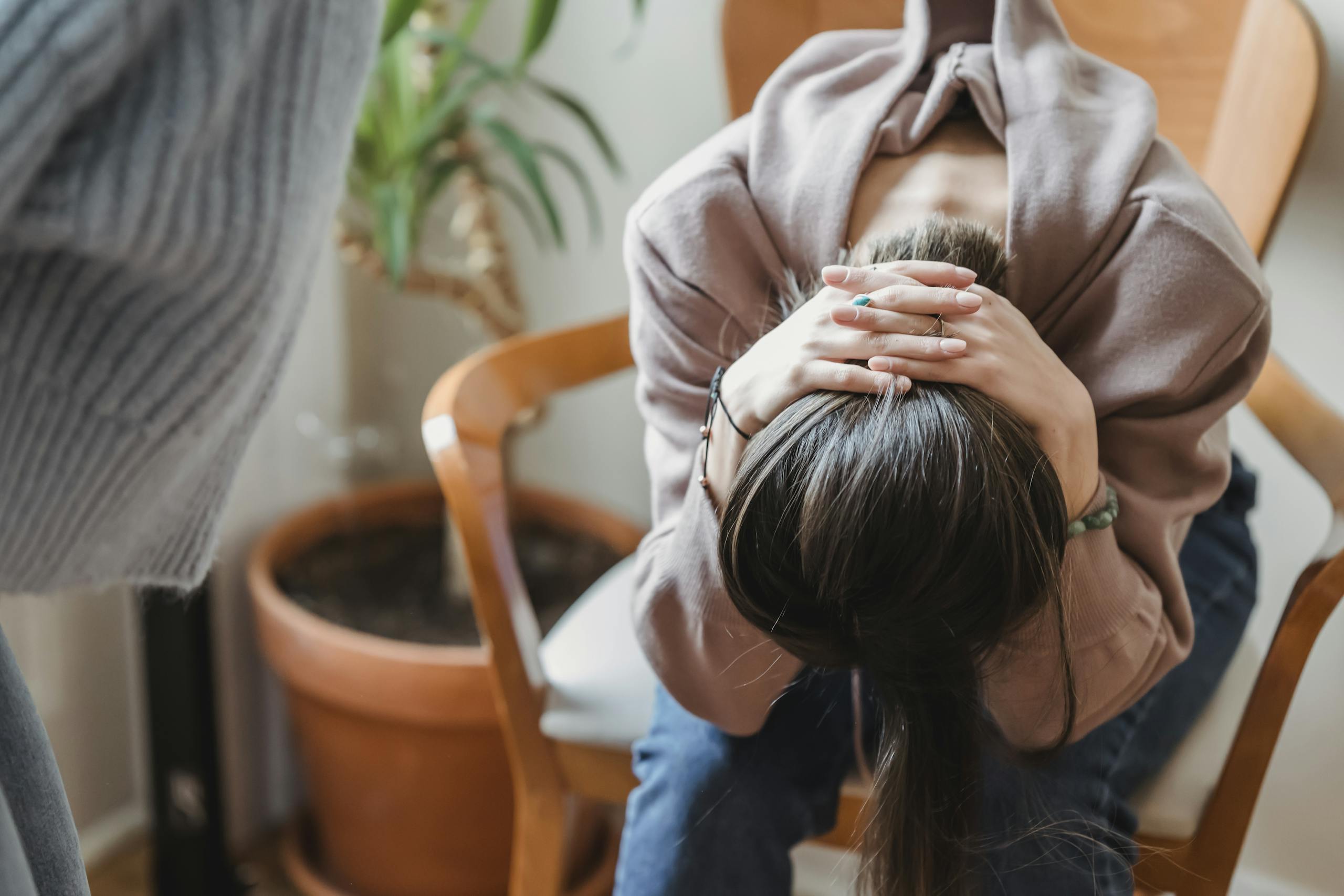
Some of the most recognized faces in entertainment, sports, and public life quietly carry a condition that makes being seen feel almost unbearable. Celebrities with social anxiety experience the same racing heart, the same fear of judgment, and the same urge to disappear that millions of ordinary people feel every day, despite performing in front of thousands. What makes their stories worth paying attention to isn’t the irony of a famous person fearing social situations. It’s the reminder that anxiety doesn’t care about your résumé, your platform, or your Grammy collection.
Social anxiety disorder affects an estimated 12.1% of adults in the United States at some point in their lives, according to the American Psychological Association. It’s not shyness, and it’s not introversion, though those traits can overlap in ways that get confusing. Social anxiety is a clinical condition marked by intense fear of social situations where scrutiny or embarrassment might occur. For the people on this list, that fear didn’t disappear when the cameras turned on. Many of them simply learned to perform through it.
If you’ve ever wondered whether your own social discomfort crosses into something more serious, our Introvert Mental Health Hub covers the full landscape of anxiety, emotional health, and self-understanding for people wired the way we are. These celebrity stories fit right into that broader conversation.
Why Do So Many Celebrities Have Social Anxiety?
At first glance, it seems contradictory. Someone who chose a life in the public eye, who auditioned, networked, and competed to reach the top, shouldn’t be paralyzed by social fear. But that framing misunderstands both social anxiety and the nature of performance careers.
What drains your social battery?
Not all social exhaustion is the same. Our free quiz identifies your specific drain pattern and gives you personalised recharging strategies.
Find Your Drain PatternUnder 2 minutes · 8 questions · Free
Many performers are drawn to their craft precisely because it offers a structured, scripted version of social interaction. On stage or on camera, there are lines to deliver, roles to inhabit, and clear expectations. That’s fundamentally different from an unscripted dinner party or a backstage conversation where the rules aren’t defined. A 2021 study published in PubMed Central found that performance anxiety and social anxiety disorder share overlapping neurological pathways, yet they manifest differently depending on context. For some performers, the stage is the one place they feel completely in control.
There’s also a selection effect worth considering. People who experience intense emotional sensitivity, who feel things deeply and process the world through careful observation, often gravitate toward creative fields. That same emotional depth that makes a performance compelling can also make casual social situations feel overwhelming. My own experience as an INTJ running advertising agencies for two decades taught me something similar. I could present a campaign strategy to a room of Fortune 500 executives without flinching, because I’d prepared every detail and knew exactly what I was there to do. But the cocktail hour afterward, the unstructured mingling with no clear agenda? That’s where I’d quietly count the minutes until I could leave.
Social anxiety in high-achievers often goes unrecognized precisely because those people develop sophisticated coping mechanisms. They prepare obsessively, control their environments, and project confidence so convincingly that no one suspects the internal experience. That’s not inauthenticity. It’s survival.
Which Celebrities Have Spoken Openly About Social Anxiety?
The list of public figures who’ve discussed their social anxiety is longer than most people realize. What’s striking isn’t just that these people struggle, but how candidly many of them have described the specific texture of their experience.
Barbra Streisand is perhaps the most famous case in entertainment history. After a 1967 concert in Central Park where she forgot her lyrics mid-performance, she didn’t perform live again for 27 years. She’s described the fear as physically debilitating, a terror of forgetting words in front of an audience that eventually extended to avoiding public performance entirely. When she returned to touring in the 1990s, she did so with teleprompters and years of therapeutic work behind her.
Adele has spoken in multiple interviews about severe stage fright and anxiety that makes performing feel, in her words, like a near-death experience. She’s described vomiting before shows and once reportedly climbed out a fire exit to escape the anxiety of a pre-show environment. What’s remarkable is that she continued performing anyway, not because the anxiety disappeared, but because she found ways to work alongside it.
Donny Osmond had a panic attack during a stage performance in the early 1990s that he’s described as the beginning of a years-long battle with social anxiety disorder. He’s been remarkably specific about the clinical nature of his experience, distinguishing it from ordinary nervousness and crediting therapy with helping him return to performing.
Emma Stone began experiencing panic attacks as a child and has spoken about how anxiety shaped her decision to pursue acting, in part as a way to channel overwhelming internal experience into something structured and purposeful. She’s described the anxiety as something she’s managed rather than cured.
Kim Basinger became so severely affected by agoraphobia and social anxiety in the early 1990s that she rarely left her home for extended periods. She’s been open about the years it took to rebuild her ability to function in social and professional contexts.
Oprah Winfrey, despite spending decades as one of the most visible communicators in the world, has described significant social anxiety in certain contexts, particularly around situations where she feels evaluated or unprepared. Her willingness to discuss vulnerability publicly has made her a meaningful voice in mental health conversations.
Ryan Reynolds has discussed anxiety in interviews with characteristic humor, describing the nervous energy he feels before interviews and public appearances. He’s been candid that the persona he projects publicly is partly a coping mechanism, a performance of ease that masks genuine discomfort.
Is Social Anxiety the Same as Introversion?
This is a question I find myself returning to often, partly because I spent years conflating the two in my own life. Understanding the distinction matters enormously, both for accurate self-knowledge and for finding the right kind of support.
Introversion is a personality orientation. It describes how a person gains and expends energy, with introverts generally recharging through solitude and finding extended social interaction draining. There’s no fear component inherent to introversion. An introvert can feel completely comfortable in social situations while still preferring fewer of them. Our article on Social Anxiety Disorder: Clinical vs Personality Traits goes into this distinction in careful detail, and I’d encourage anyone who finds themselves uncertain about which category fits them to read it.
Social anxiety disorder, as defined in the DSM-5, involves marked fear or anxiety about social situations where the person might be scrutinized, a fear of acting in ways that will be humiliating or embarrassing, and avoidance behavior that significantly interferes with daily functioning. The American Psychiatric Association’s DSM-5 criteria make clear that this is a clinical condition, not a personality trait.
A 2022 study in PubMed Central found that while introversion and social anxiety frequently co-occur, they are statistically distinct constructs with different neurological and behavioral profiles. Many introverts have no social anxiety whatsoever. Many socially anxious people are actually extroverts who desperately want social connection but are terrified by it.
A Psychology Today analysis of the overlap between introversion and social anxiety notes that the two can reinforce each other in ways that make them difficult to separate from the inside. An introverted person who also has social anxiety may attribute all their discomfort to being “just an introvert,” missing the clinical piece that could actually be treated. That misattribution kept me from understanding my own experience for a long time.
Early in my agency career, I assumed my discomfort at industry networking events was simply introversion. I’d tell myself I just wasn’t a “people person” and leave it at that. It took years before I recognized that some of what I was experiencing, the anticipatory dread before client dinners, the way I’d replay conversations afterward searching for moments of embarrassment, was something more specific than a preference for quiet evenings. Naming it accurately changed how I approached it.
How Do Celebrities Manage Social Anxiety While Maintaining Public Careers?
The strategies that high-profile people use to manage social anxiety aren’t fundamentally different from what works for anyone else. What differs is the scale of the stakes and the visibility of any public stumble. Understanding how they cope offers genuinely useful insight for anyone dealing with similar challenges.
Therapy and Professional Support
Cognitive behavioral therapy remains the most evidence-based treatment for social anxiety disorder, according to Harvard Health. Many of the celebrities who’ve spoken most candidly about their anxiety, Donny Osmond, Emma Stone, and Barbra Streisand among them, have credited therapy as central to their ability to continue working. CBT helps people identify and challenge the thought patterns that fuel anxiety, particularly the catastrophic predictions about social judgment that characterize the disorder.
Finding the right therapeutic approach matters as much as finding the right therapist. Our piece on Therapy for Introverts: Finding the Right Approach explores how different modalities suit different personality types and anxiety profiles, which is worth considering before committing to a particular approach.
Controlled Exposure
Gradual, intentional exposure to feared social situations is a core component of effective anxiety treatment. Many performers describe a version of this that isn’t clinically designed but functionally similar: starting with smaller venues, building toward larger ones, or accepting only the types of public appearances that feel manageable before expanding. Adele’s career arc, from small London venues to stadium tours, mirrors the exposure hierarchy that therapists use deliberately.
The same principle applies to travel and unfamiliar environments, which can be particularly challenging for people with social anxiety. Our guide on Introvert Travel: 12 Proven Strategies to Overcome Travel Anxiety and Explore With Confidence covers how to approach new environments in ways that don’t trigger overwhelm, strategies that work for anyone managing anxiety alongside a preference for familiarity.
Environmental Management
Many people with social anxiety are also highly sensitive to their physical environments. Noise, crowds, unpredictable sensory input, and overstimulation can all amplify anxiety symptoms. Celebrities with the resources to do so often build careful control into their professional environments: private entrances, limited backstage access, structured interview formats, and specific pre-show rituals that create a sense of predictability.
Those environmental adjustments aren’t diva behavior. They’re anxiety management. If you recognize that pattern in yourself, our resource on HSP Sensory Overwhelm: Environmental Solutions offers practical approaches to designing your surroundings in ways that reduce the sensory load that feeds anxiety.

Reframing the Anxiety Response
Several celebrities have described a cognitive shift that proved more useful than trying to eliminate anxiety: treating the physical sensations of anxiety as energy rather than danger. Ryan Reynolds has described channeling pre-interview nervousness into the kind of alertness and presence that makes him engaging on screen. That reframe, from “I’m terrified” to “I’m activated,” doesn’t make the anxiety disappear, but it changes the relationship to it.
I used this approach during high-stakes client presentations at my agency. Before a major pitch to a Fortune 500 brand, my body would run through every symptom you’d associate with anxiety: elevated heart rate, heightened awareness, a kind of electric tension in my chest. At some point I stopped trying to calm that response down and started treating it as my system preparing to perform at its best. The anxiety didn’t go away, but it stopped feeling like a malfunction.
What Can We Learn From Celebrities Who’ve Shared Their Anxiety Stories?
There’s a risk in celebrity mental health disclosure that’s worth naming. When a famous person talks about anxiety in a magazine interview, it can flatten the reality of the condition into something that sounds manageable and even glamorous. “Even Adele gets nervous!” misses the point when someone’s anxiety is preventing them from attending their child’s school play or applying for a job they’re qualified for.
Even so, these disclosures serve a real function. They normalize the experience of social fear in a culture that tends to pathologize any deviation from extroverted ease. They demonstrate that high achievement and significant anxiety can coexist. And they show that treatment works, that people who’ve been genuinely debilitated by social anxiety disorder can, with the right support, build lives and careers that feel meaningful.
The APA’s broader resource on anxiety and anxiety disorders makes clear that these conditions are among the most treatable in mental health, with response rates to CBT and medication that outperform many other clinical presentations. That matters. The celebrity stories aren’t just inspiring. They point toward a realistic outcome.
What I find most valuable in these stories is the honesty about the ongoing nature of the work. Almost none of the celebrities I’ve mentioned describe being cured. They describe learning to manage, to cope, to work alongside their anxiety rather than waiting for it to disappear before living their lives. That’s a more honest and more useful message than any story of complete recovery.
Does Social Anxiety Affect Introverts Differently Than Extroverts?
The honest answer is: somewhat, yes. Not because the clinical condition is fundamentally different, but because the way it intersects with personality creates different patterns of experience and different challenges in treatment.
An extrovert with social anxiety faces a particularly painful contradiction: they’re energized by social connection but terrified of it. The gap between what they want and what their anxiety allows can be acutely distressing. An introvert with social anxiety may find the avoidance that anxiety encourages easier to rationalize, since solitude is genuinely comfortable for them. That can make the condition harder to identify and treat, because the avoidance doesn’t feel like a problem from the inside.
Introverts with social anxiety also tend to be highly attuned to the internal experience of anxiety, noticing subtle shifts in their emotional and physical state with a precision that can amplify the experience. My mind has always processed social situations through multiple layers simultaneously: observing the room, tracking individual reactions, anticipating what might be said next, monitoring my own internal state. That depth of processing is a genuine strength in analytical work. In social situations, it can turn a minor awkward moment into an extended internal examination.
Understanding what your mental health actually needs as an introvert, separate from what it needs as someone with anxiety, is foundational work. Our piece on Introvert Mental Health: Understanding Your Needs approaches this from the inside out, helping you identify what’s personality, what’s anxiety, and what support actually fits your wiring.
How Does Social Anxiety Show Up Specifically in Professional Settings?
For many people, the workplace is where social anxiety causes the most concrete damage. Missed promotions because someone couldn’t advocate for themselves in meetings. Avoided networking that would have opened real doors. Projects that never got pitched because the thought of presenting them felt impossible. These aren’t small costs.
Celebrities experience a version of this that maps directly onto professional performance: the interview declined, the collaboration avoided, the public appearance cancelled at the last minute. The professional consequences are visible precisely because their careers are public. For most people, the consequences are quieter but no less real.
Managing anxiety in professional contexts requires a specific set of strategies that go beyond general coping advice. Our resource on Introvert Workplace Anxiety: Managing Professional Stress and Thriving at Work addresses the specific texture of anxiety in professional environments, from performance reviews to team meetings to the particular hell of open-plan offices.
One pattern I noticed repeatedly across my agency years was the gap between how capable my most introverted team members were and how visible that capability was to clients and senior leadership. Several of the best strategic thinkers I ever worked with were nearly invisible in group settings, not because they lacked ideas, but because the social cost of speaking up in a room full of people felt too high. Helping them find formats where their thinking could be seen without requiring them to perform extroversion was one of the more meaningful things I did as a leader. It also produced better work, because the ideas that were getting lost in group dynamics were often the sharpest ones.
What’s the Difference Between Stage Fright and Social Anxiety Disorder?
Stage fright, or performance anxiety, is common, situational, and experienced by the majority of performers at some point. It’s characterized by nervousness before or during performance and typically resolves once the performance begins or ends. Most people who experience stage fright function normally in everyday social situations.
Social anxiety disorder is broader, more persistent, and more pervasive. It extends across social situations beyond performance, affects daily functioning, and involves a level of anticipatory fear and post-event rumination that stage fright doesn’t. A performer with stage fright might be nervous before a show but perfectly comfortable at the after-party. A performer with social anxiety disorder might manage the show through sheer preparation and then spend the next three days replaying every interaction at the after-party, searching for evidence of embarrassment.
Barbra Streisand’s 27-year performance hiatus suggests something beyond ordinary stage fright. The avoidance was total and extended across decades, a pattern that aligns with the clinical picture of social anxiety disorder rather than situational performance nerves. Donny Osmond’s description of his experience, including the clinical panic attacks and the subsequent years of treatment, similarly points toward the disorder rather than the more common performance anxiety that most entertainers describe.
The distinction matters because the treatment approaches differ. Stage fright often responds well to relaxation techniques, breathing exercises, and incremental exposure. Social anxiety disorder typically requires more structured intervention, often including CBT, sometimes medication, and sustained therapeutic work over time. Misidentifying one as the other can lead to years of ineffective coping strategies.

Why Does Talking About It Matter?
Every time a public figure describes their social anxiety with specificity and honesty, they do something that clinical resources alone can’t accomplish: they make the experience feel less shameful. Shame is the force that keeps people from seeking help, from naming what they’re experiencing, and from making the changes that would actually improve their lives.
I’ve had conversations with former colleagues who spent years in high-functioning careers while quietly managing anxiety that was costing them enormously in energy, in sleep, in the quality of their relationships. Several of them told me they’d never considered that what they experienced had a name, let alone a treatment. They’d assumed it was just how they were wired, a character flaw to manage rather than a condition to address.
The celebrity stories on this page aren’t meant to be aspirational in a simplistic way. They’re not saying “if Adele can do it, so can you.” What they’re saying is more useful: this experience is real, it’s recognized, it’s common enough to affect people at every level of achievement, and there are paths through it that don’t require you to simply white-knuckle your way past the fear forever.
That’s a message worth amplifying. And it’s one that resonates differently when it comes from someone who had everything to lose by saying it publicly.
If you want to go deeper on any of the mental health topics we’ve touched on here, the Introvert Mental Health Hub brings together our full collection of resources on anxiety, emotional wellbeing, therapy, and self-understanding for people wired toward depth and internal processing.
Running on empty?
Five drain profiles, each with specific triggers, warning signs, and a recharging playbook.
Take the Free QuizUnder 2 minutes · 8 questions · Free
About the Author
Keith Lacy is an introvert who’s learned to embrace his true self later in life. After 20 years in advertising and marketing leadership, including running agencies and managing Fortune 500 accounts, Keith now channels his experience into helping fellow introverts understand their strengths and build fulfilling careers. As an INTJ, he brings analytical depth and authentic perspective to every article, drawing from both professional expertise and personal growth.
Frequently Asked Questions
Do celebrities with social anxiety ever fully recover?
Most people who receive effective treatment for social anxiety disorder don’t describe a complete elimination of anxiety so much as a significant reduction in its intensity and a much greater ability to function despite it. Celebrities like Donny Osmond and Emma Stone have described ongoing management rather than cure. With consistent therapeutic work, many people reach a point where social anxiety no longer controls their decisions or limits their lives in meaningful ways, even if some degree of anxiety remains present in certain situations.
Is social anxiety more common in introverts?
Social anxiety disorder occurs across the personality spectrum and is not inherently more common in introverts. That said, introversion and social anxiety frequently co-occur, and the two can reinforce each other in ways that make them difficult to distinguish from the inside. Introverts may be more likely to rationalize anxiety-driven avoidance as simple preference for solitude, which can delay recognition and treatment. The clinical research distinguishes them as separate constructs with different neurological profiles, even when they appear together.
What treatments have celebrities used for social anxiety?
The most commonly cited approaches among celebrities who’ve spoken publicly about their social anxiety include cognitive behavioral therapy, medication (particularly SSRIs), gradual exposure to feared situations, and various mindfulness-based practices. Many have also described the importance of working with therapists who specialize in anxiety disorders rather than general practitioners. Harvard Health identifies CBT as the most evidence-based treatment for social anxiety disorder, with medication often used in combination for more severe presentations.
How is social anxiety different from being shy?
Shyness is a temperament trait that involves discomfort or inhibition in social situations, particularly unfamiliar ones. It exists on a spectrum and doesn’t necessarily interfere with daily functioning. Social anxiety disorder is a clinical condition involving intense fear of social situations where scrutiny might occur, significant anticipatory anxiety, avoidance behavior, and functional impairment. Shyness is a personality characteristic. Social anxiety disorder is a diagnosable mental health condition that responds to clinical treatment. Many shy people don’t have social anxiety disorder, and some people with social anxiety disorder don’t identify as shy.
Can someone be successful in a public career while having social anxiety disorder?
Yes, and the celebrities on this list are evidence of that. Barbra Streisand, Adele, Emma Stone, and others have built extraordinary careers while managing significant social anxiety. Success alongside anxiety typically involves a combination of effective treatment, carefully structured environments, strong support systems, and the development of coping strategies that allow functioning in high-demand situations. It also often involves accepting that anxiety may always be part of the experience, rather than waiting for it to disappear before pursuing meaningful work.