
Cell phones and social anxiety have a complicated relationship, one that feels like relief on the surface but often functions more like a feedback loop underneath. Reaching for your phone in an uncomfortable social situation feels instinctive, even logical. Yet that same habit can quietly reinforce the very anxiety you’re trying to escape.
For many introverts and highly sensitive people, the phone has become a primary tool for managing social discomfort. What matters is whether that tool is actually helping, or whether it’s making the underlying anxiety harder to address over time.
If you’ve ever found yourself reaching for your phone the moment a social situation felt overwhelming, you’re in good company. Many introverts share this experience, and it connects to broader patterns around anxiety, avoidance, and the way our nervous systems respond to perceived social threat. Our Introvert Mental Health Hub explores these patterns in depth, and this particular angle deserves its own careful look.
Why Does the Phone Feel So Comforting in Social Situations?
There’s a specific kind of relief that comes from pulling out your phone at a networking event or a crowded party. Your eyes drop to the screen, your shoulders relax slightly, and for a moment you have somewhere to be that isn’t the room you’re standing in. I know this feeling well. During my agency years, I attended more industry mixers and client dinners than I can count, and before I understood my introversion, my phone was my escape hatch. I’d check emails I didn’t need to check, scroll through nothing, do anything that gave me a plausible reason to not be fully present in a conversation that was draining me.
What’s your personality type?
Take our free 40-question assessment and get a detailed personality profile with dimension breakdowns, context analysis, and personalised insights.
Discover Your Type8-12 minutes · 40 questions · Free
What’s happening in that moment is real and physiological. Social situations that feel threatening, whether the threat is rejection, judgment, or simply overstimulation, activate a stress response. The phone offers what psychologists call a safety behavior: an action that reduces immediate discomfort without addressing the underlying source of anxiety. The American Psychological Association describes anxiety disorders as involving patterns of avoidance that feel protective in the short term but tend to maintain or worsen the anxiety over time. The phone fits that pattern almost perfectly.
For introverts wired for depth and internal reflection, social environments often carry a particular kind of weight. We’re processing more than we’re letting on, noticing conversational undercurrents, reading facial expressions, filtering our own responses before they leave our mouths. That cognitive load is real. The phone offers a way to step out of it temporarily, which is why it feels so appealing and why it can become habitual so quickly.
Is Phone Use Actually Making Social Anxiety Worse?
Honest answer: it depends on how you’re using it, and more importantly, why. There’s a meaningful difference between texting a close friend to decompress after a hard social interaction and reflexively reaching for your phone every time a conversation gets uncomfortable. One is genuine self-care. The other is avoidance dressed up as self-care.
The avoidance piece is where things get complicated for people managing social anxiety. Safety behaviors, including phone use, work in the moment. They lower the immediate distress. But they also prevent you from discovering that you could have handled the situation without the escape. Over time, that missed experience keeps the anxiety intact. Your nervous system never gets the chance to update its threat assessment because you kept leaving before the threat resolved.
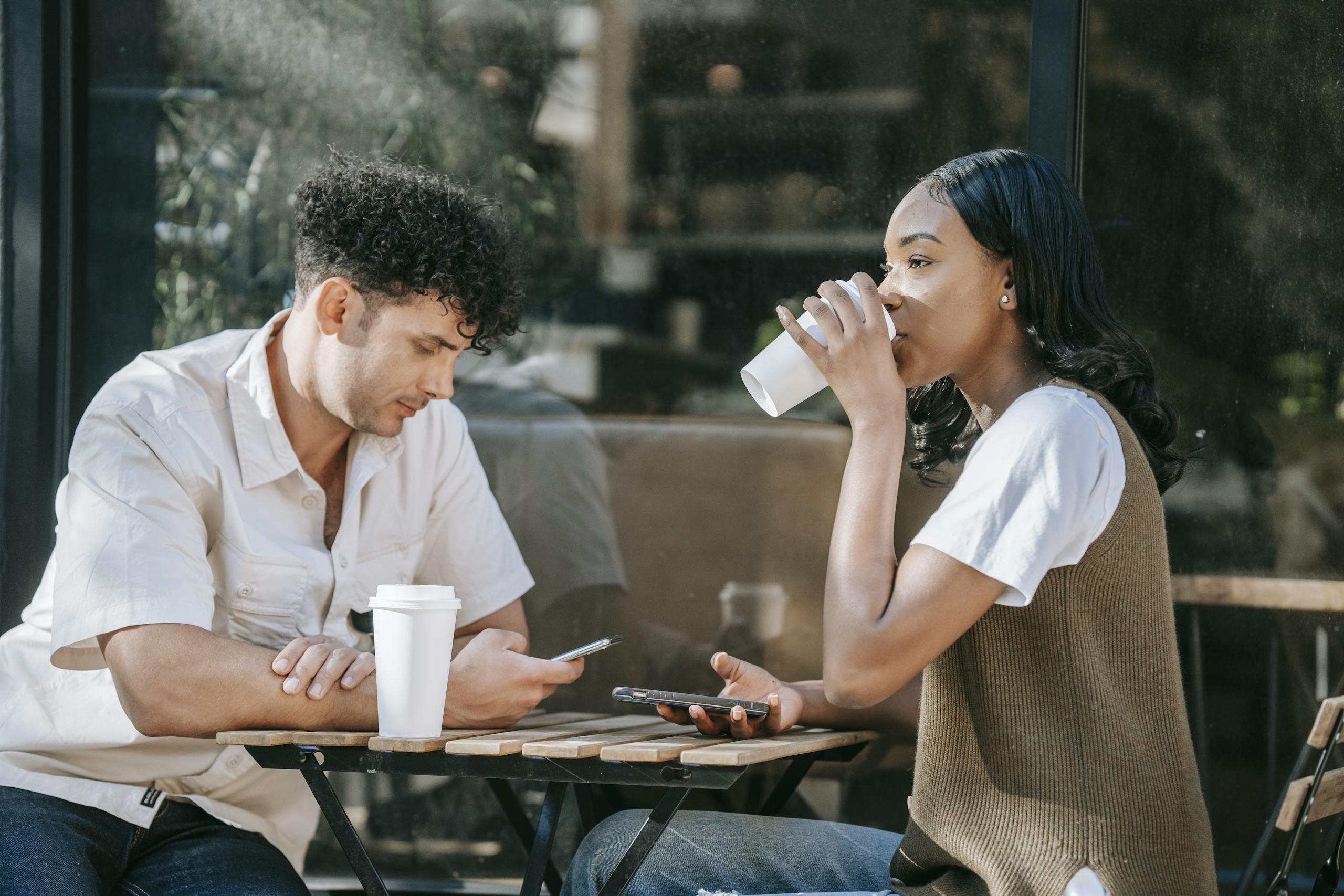
Social media adds another layer entirely. Research published in PubMed Central has examined the relationship between social media use and anxiety, with findings pointing toward how comparison and social evaluation online can activate the same threat-response systems that fire during in-person social interactions. For someone already prone to social anxiety, scrolling through curated highlights of other people’s social lives during a moment of social discomfort is a particularly unhelpful combination.
There’s also the issue of what happens to social skills that don’t get practiced. I watched this play out in my own team over the years. Younger staff who had grown up with smartphones as constant companions sometimes struggled in client-facing situations in ways that more seasoned people didn’t. Not because they were less capable, but because the muscle of sitting with social discomfort and working through it had been less exercised. The phone had always been there to soften the edges.
How Notification Culture Feeds the Anxiety Cycle
Beyond in-person social situations, there’s a subtler way phones and social anxiety interact: the constant availability they demand. When you’re reachable at all hours, every ping carries a faint social obligation. Did someone respond to my message? Did I say something wrong? Why haven’t they replied? That low-grade vigilance is exhausting for anyone, and for people who already process social information more intensely, it can become genuinely depleting.
Highly sensitive people often experience this most acutely. If you’re someone who processes emotional information deeply, the volume of social signals coming through a smartphone can create a kind of sensory and emotional overwhelm that’s hard to distinguish from general anxiety. The phone never fully turns off, which means the social environment never fully turns off either.
I had a creative director at one of my agencies who was exceptionally talented and also visibly anxious about client communications. She’d check her phone compulsively between meetings, not because she was distracted, but because she was dreading what might be there. Every notification felt like a potential judgment. We eventually worked out a system where she’d designate specific times to check client messages rather than staying on constant alert. It didn’t eliminate her anxiety, but it gave her nervous system some actual rest between interactions.
That kind of anxiety around social evaluation is worth taking seriously, because it often runs deeper than phone habits alone. The phone is frequently a symptom of something the underlying anxiety is doing, not the root cause of the anxiety itself.
What About Using Your Phone to Prepare for Social Situations?
Not everything about phones and social anxiety is a negative feedback loop. Introverts, in particular, often use their phones in genuinely useful ways around social situations. Researching who will be at an event beforehand, texting a friend to process feelings afterward, using a notes app to capture thoughts before a difficult conversation, these are examples of phone use that actually supports rather than undermines social functioning.
As an INTJ, preparation has always been one of my core strategies for managing social environments. Before major client presentations or industry panels, I’d use my phone to review notes, run through key points, and settle my thinking. That kind of deliberate preparation is different from avoidance. It’s using a tool to build confidence rather than to escape discomfort.
Psychology Today points out that introversion and social anxiety are distinct, though they often co-occur. Introverts prefer less social stimulation by temperament. People with social anxiety fear negative evaluation and actively dread social situations. Many introverts experience both, which means their relationship with phones in social contexts is shaped by both temperament and anxiety, sometimes at the same time.
Understanding which dynamic is operating matters because the solutions are different. If you’re an introvert who simply needs less social stimulation, strategic phone use for preparation and recovery makes sense. If social anxiety is also present, some of those same phone behaviors might be reinforcing avoidance patterns that are worth examining more carefully.
The Social Comparison Problem Hidden in Your Feed
One of the more insidious ways phones feed social anxiety is through what happens when you open social media during or after a social situation you found difficult. You’ve just left a gathering feeling drained and self-conscious, wondering if you said the wrong thing or came across as awkward. You open Instagram and see photos from the same event where everyone looks effortlessly at ease and genuinely happy. That comparison is almost never accurate, but it lands hard anyway.
For people who already process emotion deeply and at length, that kind of social comparison doesn’t just sting and fade. It gets turned over, examined, and integrated into a narrative about how you measure up socially. The phone, in those moments, becomes a delivery system for material that amplifies the very anxiety you were trying to soothe.
I’ve seen this pattern in people I’ve mentored over the years. One account manager I worked with was genuinely skilled at her job but struggled intensely with self-doubt after client meetings. She’d replay conversations on the drive home, then open LinkedIn and see her peers posting about wins and milestones, and arrive at her desk the next morning convinced she was falling behind. The phone wasn’t creating her self-doubt, but it was absolutely feeding it.
There’s a related dynamic worth naming here: the way social media can amplify the sting of perceived rejection. When someone doesn’t respond to a message, when a post gets fewer reactions than expected, when you see a gathering you weren’t included in, these small social signals can carry outsized weight for people already prone to anxiety. Processing that kind of social rejection is already difficult without a device that surfaces new examples of it every few minutes.
Does the Empathy Piece Make It Harder?
Many introverts, and particularly highly sensitive ones, bring a strong empathic awareness to social situations. That awareness is a genuine strength in the right contexts. It also means that social interactions carry more emotional weight, because you’re not just tracking your own experience but absorbing the emotional texture of everyone around you.
Phones complicate this in an interesting way. On one hand, they offer a way to step back from that emotional absorption temporarily. On the other, social media extends the circle of people whose emotional states you’re exposed to, essentially giving your empathy more to process rather than less. That empathic sensitivity can make scrolling feel emotionally exhausting in ways that are hard to explain to people who don’t experience it the same way.
Additional research from PubMed Central has looked at how social media use intersects with emotional processing and wellbeing, with findings suggesting that passive scrolling tends to be more negatively associated with mood than active, intentional engagement. For empathic, emotionally sensitive people, that distinction is particularly relevant. Mindlessly absorbing your feed is a very different experience from intentionally connecting with people who matter to you.
There’s also a perfectionism thread woven through all of this. Many introverts and highly sensitive people hold themselves to high standards in social situations, reviewing their own performance afterward with a critical eye. Social media, with its curated presentation of other people’s social lives, can fuel that tendency. That perfectionist pull around social performance is worth examining separately from phone habits, because it often drives the phone behavior rather than the other way around.
What Actually Helps: Practical Approaches That Don’t Require Throwing Your Phone Away
Nobody is suggesting you abandon your phone. That’s not realistic, and for introverts who use it thoughtfully, it genuinely serves important functions. What’s worth examining is the specific patterns of phone use that are maintaining anxiety rather than easing it.
One of the most useful shifts is moving from reactive phone use to intentional phone use. Reactive use means reaching for your phone automatically whenever social discomfort spikes. Intentional use means deciding in advance when and how you’ll use it. That might look like keeping your phone in your bag during the first hour of an event, giving yourself permission to check it during a designated break, and leaving it away again afterward. The structure gives you the same eventual relief without the constant avoidance that keeps anxiety in place.
Harvard Health notes that cognitive behavioral approaches remain among the most effective for social anxiety, and a core component of those approaches involves gradually reducing safety behaviors. Phone use as a safety behavior doesn’t need to be eliminated entirely, but reducing it in targeted situations gives your nervous system the chance to discover that the situation was manageable without the escape.
What I’ve found personally useful, and what I’ve recommended to people I’ve mentored, is being honest about what you’re actually feeling before you reach for your phone. Are you bored? Tired? Genuinely overwhelmed and in need of a break? Or are you anxious and hoping the phone will make the anxiety disappear? Those are different situations that call for different responses. The phone is a fine solution for the first three. For the fourth, it usually just delays the reckoning.
The American Psychological Association’s resources on shyness and social anxiety emphasize that gradual exposure to feared situations, rather than avoidance, is central to building lasting confidence in social contexts. That principle applies to phone-mediated avoidance just as much as it applies to avoiding social situations altogether.
Finding the Right Balance as an Introvert
There’s a version of this conversation that implies introverts should simply toughen up and stop using their phones as a crutch. That framing misses something important. Introverts have genuine, legitimate needs around social energy, and managing those needs isn’t weakness. The question isn’t whether to honor those needs, it’s whether the specific strategies you’re using are actually serving you.
After two decades in advertising, I have a fairly clear-eyed view of what introvert-friendly social management looks like in practice. It involves knowing your limits before you walk into a situation, building in genuine recovery time, and being selective about where you invest your social energy. Phones can support all of that. They become a problem when they substitute for the harder work of building tolerance for discomfort, or when they become the primary way you avoid the social interactions that actually matter to you.
The goal, if there is one, is a relationship with your phone that reflects your actual values rather than your anxiety. Most introverts I know value genuine connection, even if they need less of it and prefer it in smaller doses. A phone habit driven by anxiety tends to pull you away from that genuine connection, even while it promises the comfort of staying socially engaged through a screen.
That tension, between the comfort the phone offers and the connection it sometimes prevents, is worth sitting with. Not to generate guilt about your screen time, but because understanding what’s actually driving your phone use in social situations gives you more genuine choice about it.
There’s more to explore on these intersecting themes across the Introvert Mental Health Hub, where we examine the full range of anxiety, sensitivity, and emotional processing patterns that shape how introverts move through the world.
About the Author
Keith Lacy is an introvert who’s learned to embrace his true self later in life. After 20 years in advertising and marketing leadership, including running agencies and managing Fortune 500 accounts, Keith now channels his experience into helping fellow introverts understand their strengths and build fulfilling careers. As an INTJ, he brings analytical depth and authentic perspective to every article, drawing from both professional expertise and personal growth.
Frequently Asked Questions
Can using your phone in social situations make social anxiety worse over time?
Yes, when phone use functions as a safety behavior, meaning you reach for it specifically to escape social discomfort, it can maintain or worsen social anxiety over time. Safety behaviors reduce immediate distress but prevent you from discovering that you could handle the situation without the escape. Over time, the anxiety stays intact because it never gets the chance to resolve on its own.
Is there a difference between introversion and social anxiety when it comes to phone use?
Yes, and the distinction matters. Introverts prefer less social stimulation by temperament and may use phones to manage energy in social environments, which can be a healthy strategy. People with social anxiety fear negative evaluation and use phones to avoid situations they dread. Many introverts experience both, but the underlying driver shapes whether phone use is genuinely supportive or quietly reinforcing avoidance patterns.
Why does scrolling social media after a hard social situation often make things worse?
Social media tends to surface curated, positive presentations of other people’s social lives. After a social situation that felt uncomfortable or draining, comparing your internal experience to those external highlights can amplify self-doubt and anxiety. For people who process emotion deeply, that comparison doesn’t just sting briefly. It gets integrated into a broader narrative about social competence and belonging.
What’s the difference between helpful phone use and avoidance when it comes to social anxiety?
Helpful phone use is intentional and serves a clear purpose: preparing for a social situation, connecting with a trusted friend afterward, or managing overstimulation during a break. Avoidance looks similar from the outside but is driven by anxiety rather than intention. The clearest signal is whether you’re using your phone to build toward something or to escape from something. Reactive, automatic phone-reaching in moments of social discomfort is the pattern most worth examining.
How can introverts manage social anxiety around phones without giving up the benefits of having one?
The most practical approach is moving from reactive to intentional phone use. That means deciding in advance when you’ll check your phone during social situations rather than reaching for it automatically. Building in designated times for phone use, keeping it away during specific interactions that matter to you, and being honest with yourself about what’s driving the urge to reach for it are all useful starting points. Cognitive behavioral approaches, which involve gradually reducing safety behaviors rather than eliminating them all at once, are worth exploring with a therapist if social anxiety is significantly affecting your daily life.