

If you’ve ever searched “chance for an introvert to recharge crossword clue,” the answer you’re probably looking for is ALONE TIME, or sometimes simply SOLITUDE. Crossword constructors love this clue because the concept is clean and widely understood: introverts restore their energy through quiet, private time away from social demands. But as someone who spent over two decades in the thick of advertising agency life, I can tell you the real answer is considerably more layered than any five-letter fill will ever capture.
Recharging as an introvert isn’t just about being alone. It’s about recovering something specific, something that gets spent in ways most people around you never notice.

My broader thinking on social energy, what it is, how it works, and why introverts experience it so differently, lives in the Energy Management and Social Battery hub. What I want to do here is something a little different: use that simple crossword clue as a doorway into understanding what recharging actually means for introverts, what it looks like in practice, and why so many of us spend years getting it wrong before we finally get it right.
Why Does “Alone Time” Feel Like Such an Incomplete Answer?
Crossword puzzles deal in shorthand. The clue “chance for an introvert to recharge” points to a clean, culturally legible concept, and ALONE TIME or SOLITUDE fits the squares. Most people nodding along to that clue understand the general idea: introverts need space away from people to feel better. Fair enough.
What’s your personality type?
Take our free 40-question assessment and get a detailed personality profile with dimension breakdowns, context analysis, and personalised insights.
Discover Your Type8-12 minutes · 40 questions · Free
But consider this gets lost in the shorthand. Alone time isn’t the mechanism. It’s the container. What actually happens inside that container, the specific cognitive and emotional processes that restore an introvert’s capacity to engage with the world again, is something most of us have never been taught to articulate. We just know we need it, urgently, and that not getting it has consequences.
At my first agency, I ran a team of twelve people across account management and creative. The job required near-constant availability: client calls stacked back to back, internal reviews, new business pitches, hallway conversations that somehow became hour-long strategy sessions. I was good at all of it. My clients trusted me, my team respected me, and by every external measure I was thriving. But by Thursday of most weeks I felt scraped hollow. Not tired exactly. Hollow. Like something essential had been used up and I had no reliable way to refill it.
What I didn’t understand then was that I wasn’t just fatigued from a busy schedule. I was experiencing something specific to how introverts process the world. Psychology Today has written about why socializing drains introverts more than extroverts, pointing to differences in how introverts process stimulation and social information. The short version: we’re not antisocial, we’re just running a more energy-intensive internal process during social engagement. And that process has a cost.
Alone time matters because it’s when that process gets to pause. But the quality of the alone time, what you do with it, how protected it is, how free from ambient demands it feels, determines whether you actually recover or just stop spending energy for a while.
What Does Genuine Recharging Actually Look Like?
Many introverts I’ve spoken with over the years describe a version of this: they carve out alone time, they sit with it, and they still feel exhausted. They’re alone but not recharging. The distinction matters enormously.
Genuine recharging requires more than physical solitude. It requires what I’d call low-demand presence: a mental state where you’re not performing, not anticipating, not managing anyone else’s experience of you. You’re just existing in your own mind without the weight of social obligation pressing down on it.

For me, genuine recharging has almost always involved some form of quiet creative or intellectual engagement. Reading. Writing in a notebook. Walking without a destination. Cooking something that requires attention but no conversation. These activities share a quality: they engage my mind without demanding that I perform for anyone. My thoughts can move at their own pace. I can follow a thread of reasoning without needing to translate it into something another person can use.
What doesn’t recharge me, even when I’m technically alone: scrolling through social media, watching content that keeps interrupting itself with notifications, being “available” on my phone while trying to decompress. These things look like alone time from the outside. They don’t function like it on the inside. The social demand is still present, just mediated through a screen.
There’s also the question of sensory environment. Many introverts, particularly those who identify as highly sensitive, find that genuine recharging requires not just social quiet but sensory quiet too. I’ve written elsewhere about how an introvert gets drained very easily when the environment keeps making demands, even subtle ones. The background noise of a coffee shop, the flicker of harsh lighting, the physical discomfort of a crowded space: all of these things draw on the same reserves that social interaction does.
How Sensory Sensitivity Changes the Recharging Equation
Not every introvert is a highly sensitive person (HSP), and not every HSP is an introvert, but there’s meaningful overlap between the two groups. And for those who sit in that overlap, the crossword answer of “alone time” needs a significant asterisk.
Highly sensitive people process sensory input more deeply than others. That’s not a metaphor; it’s a neurological reality. Sounds, lights, textures, and temperatures that most people filter out automatically demand more processing bandwidth for HSPs. Which means that even in physically solitary settings, the environment itself can prevent genuine recharging if it’s throwing too much sensory information at you.
I managed a creative director at one of my agencies who was both introverted and highly sensitive. She was brilliant, one of the sharpest conceptual thinkers I’ve ever worked with. But she would come back from client presentations visibly depleted in a way that went beyond normal social fatigue. We eventually figured out that the combination of fluorescent conference room lighting, the ambient noise of open-plan offices, and the physical sensation of sitting in uncomfortable chairs for three hours was hitting her from multiple directions at once. Her recharge requirements were correspondingly more specific than most.
If you recognize yourself in that description, understanding how sensory factors interact with your energy is worth real attention. HSP noise sensitivity has specific coping strategies that go well beyond just “find a quiet room,” and similarly, HSP light sensitivity has its own management considerations that can dramatically affect how restorative your alone time actually is.
The broader principle here is that effective recharging is personalized. What works for one introvert won’t work for another, and what works for you in your thirties might be different from what worked in your twenties. Your nervous system has specific preferences, and learning them is one of the more practical things you can do for your long-term wellbeing.

Why Do So Many Introverts Feel Guilty About Needing to Recharge?
This is the part the crossword clue definitely can’t capture. The answer isn’t just ALONE TIME. For a lot of us, the full answer is ALONE TIME (THAT I FEEL BAD ABOUT NEEDING).
Spending years in advertising meant spending years in a culture that treated extraversion as the default mode of professional competence. Being “on” was expected. Enthusiasm for group work was a signal of commitment. The person who ducked out of the post-pitch celebration to sit quietly in their car for twenty minutes was the odd one out, not the person who could sustain five hours of client entertainment without visible fatigue.
I was that person in the car. And for a long time, I genuinely believed something was wrong with me for needing those twenty minutes. I’d frame it as tiredness, or a headache, or needing to check in with my family. Anything except the truth, which was that I had given everything I had to that room for five hours and I needed to stop giving for a little while before I could give anything else.
The guilt around recharging is worth examining because it actively interferes with the recharging itself. If you spend your alone time feeling anxious about what people think of you for taking it, you’re not actually in a low-demand mental state. You’re still performing, just internally. Truity’s exploration of why introverts need their downtime touches on this: the need isn’t a character flaw or a social limitation. It’s a feature of how introverted nervous systems work.
Something that helped me was reframing recharging not as withdrawal but as maintenance. Every high-performance system requires maintenance cycles. My car doesn’t apologize for needing fuel. My laptop doesn’t feel guilty for requiring a charge. The fact that I needed structured recovery time wasn’t a sign of weakness. It was a sign that I was running a complex, high-output system that had real requirements.
Once I stopped treating my recharge needs as something to manage around and started treating them as legitimate operational requirements, everything changed. I started scheduling them deliberately. I stopped double-booking myself on days when I knew I’d be depleted. I got honest with close colleagues about what I needed after intensive client engagements. The work didn’t suffer. If anything, it improved, because I was showing up with actual capacity instead of running on fumes and willpower.
What Happens When Recharging Gets Skipped Too Long?
There’s a difference between being temporarily depleted and running a chronic deficit. Most introverts know what temporary depletion feels like: the quiet craving after a long day, the relief of closing the door, the way a good night’s sleep can restore enough capacity to function well the next morning.
Chronic deficit is different. It builds over weeks and months when recharging consistently gets pushed aside in favor of demands that feel more urgent. And it has a particular texture that’s hard to describe until you’ve felt it: a kind of flatness, an inability to find genuine interest in things that normally engage you, a low-grade irritability that doesn’t have a specific cause. You’re not just tired. You’re depleted in a way that sleep alone can’t fix.
I hit that wall during a particularly brutal new business push at my second agency. We were pitching three major accounts simultaneously over six weeks, which meant six weeks of near-daily presentations, team meetings, client dinners, and strategy sessions. I was sleeping fine. I was eating fine. But by week four I had essentially stopped caring about any of it. Not in a dramatic way. Just a quiet, worrying absence of investment in work I had previously found genuinely compelling.
What I was experiencing is something that research on introversion and arousal thresholds helps explain: introverts operate optimally within a specific range of stimulation. Sustained over-stimulation doesn’t just tire you out. It begins to affect your cognitive and emotional functioning in ways that compound over time.
Recovery from that kind of deficit takes longer than a weekend. It often requires deliberate, extended periods of low-demand time, sometimes combined with a hard look at the structural patterns that created the deficit in the first place. For those who are also highly sensitive, the recovery process has additional layers. Protecting your energy reserves as an HSP isn’t just about individual recharge sessions. It’s about designing your life so that chronic deficit becomes structurally harder to fall into.

The Specific Textures of Introvert Recharging
One thing I’ve found genuinely useful is getting specific about what recharging actually looks like for me, not in the abstract, but in the concrete details of a given day or week. Because “alone time” as a concept is too vague to be actionable. What kind of alone time? For how long? In what environment? Doing what?
For me, the most restorative activities tend to share a few qualities. They engage my mind without requiring me to produce anything for anyone else. They involve some form of gentle physical grounding, a walk, cooking, working in the garden. They happen in environments with low sensory demand: natural light rather than fluorescent, ambient sound rather than sudden noise, comfortable physical surroundings.
The physical environment piece is something I’ve come to take seriously. Finding the right balance of stimulation isn’t just about managing social input. It includes the full sensory picture of where you spend your recovery time. And for those with particular sensitivities around touch and physical comfort, even something like the fabric of a chair or the temperature of a room can affect how restorative a period of solitude actually is. Understanding tactile responses is one of those areas that sounds almost too specific until you realize how much ambient physical discomfort can prevent genuine mental rest.
I’ve also found that the timing of recharging matters as much as the duration. A thirty-minute window of genuine low-demand solitude immediately after an intensive social engagement is worth more to me than two hours of solitude the following morning. The closer the recovery is to the depletion event, the more efficiently it works. This is why I started building buffer time into my schedule around major client interactions: not as a luxury, but as a functional necessity.
One of the most honest things I can say about my experience as an INTJ in a high-contact profession is that learning to recharge effectively was less about finding the right activity and more about giving myself permission to treat recharging as non-negotiable. The activity matters. The environment matters. But the permission to need it at all is where most introverts have to start.
How to Create Genuine Recharge Opportunities in a Demanding Life
Most of the introverts I know aren’t struggling to understand that they need recharge time. They’re struggling to actually get it in lives that don’t naturally accommodate it. So let me share what’s worked for me in practical terms.
The single most effective thing I did was stop treating recharge time as what was left over after everything else. For years, I would schedule my professional and social obligations first and hope that some quiet time would appear in the margins. It almost never did. Once I started scheduling recharge time with the same intentionality I brought to client meetings, it became reliably available.
That looks different for different people. For me in my agency years, it meant keeping the first hour of every morning completely clear of calls and meetings. It meant building a hard stop into my workday at a consistent time. It meant being honest with my team that I was not available for non-urgent contact after a certain hour. None of these things required me to explain my introversion to anyone. They just required me to treat my own recovery needs as legitimate enough to protect.
A broader perspective on how introverts can think about managing their social energy and recovery patterns is worth exploring systematically. The full range of strategies, from daily habits to longer-term lifestyle design, is something the Energy Management and Social Battery hub covers in depth. The practical question for each person is which of those strategies fits their specific life, personality, and sensory profile.
It’s also worth noting that recharging isn’t always a solo activity in the strictest sense. Many introverts, myself included, find that time with one or two deeply trusted people can actually be restorative rather than depleting. The key variable isn’t the presence of another person. It’s the absence of social performance. A conversation where I can think out loud, be uncertain, follow a tangent, and not worry about how I’m coming across can leave me feeling more restored than an equivalent period of physical solitude. Harvard Health’s guidance on socializing for introverts makes a similar point: quality of connection matters more than quantity of time spent alone.
Finally, there’s the longer arc of building a life that requires less recovery in the first place. Not by avoiding challenge or engagement, but by making structural choices that reduce unnecessary energy expenditure. Choosing environments that suit your sensory preferences. Building professional relationships with enough trust that you don’t have to perform constantly. Saying no to commitments that drain without returning anything meaningful. These aren’t luxuries. They’re the architecture of a sustainable life as an introvert.
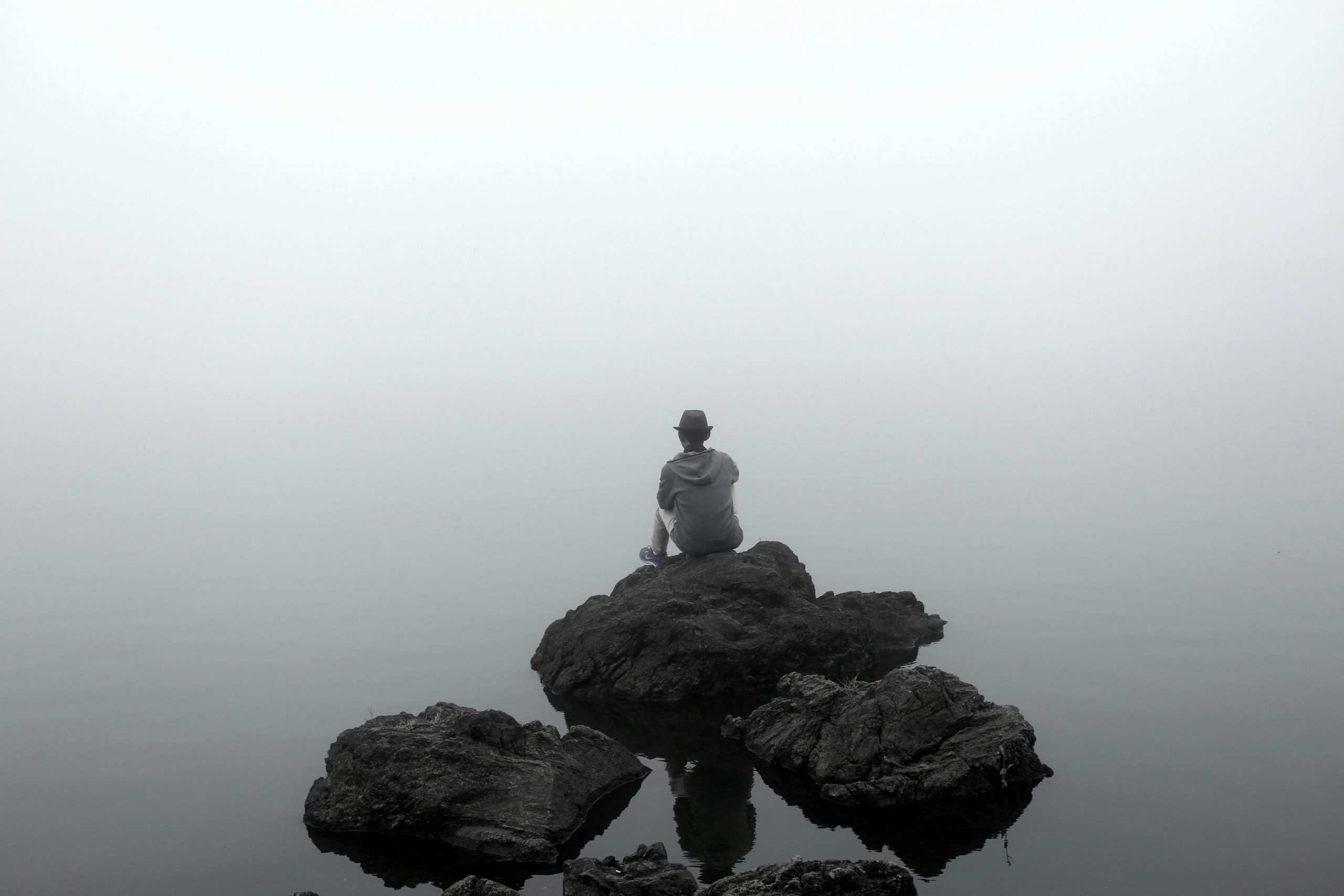
The crossword answer is ALONE TIME. But the real answer is something closer to: a protected space, physical and psychological, where your nervous system can stop working so hard and remember what it feels like to simply be. That’s worth more than five letters. And it’s worth more than most of us were ever taught to claim for ourselves.
If you want to go deeper on all of this, the full collection of resources on social energy, sensory sensitivity, and recovery strategies is gathered in the Energy Management and Social Battery hub, which is where I keep building out the practical side of what it means to manage your energy well as an introvert.
About the Author
Keith Lacy is an introvert who’s learned to embrace his true self later in life. After 20 years in advertising and marketing leadership, including running agencies and managing Fortune 500 accounts, Keith now channels his experience into helping fellow introverts understand their strengths and build fulfilling careers. As an INTJ, he brings analytical depth and authentic perspective to every article, drawing from both professional expertise and personal growth.
Frequently Asked Questions
What is the crossword answer for “chance for an introvert to recharge”?
The most common crossword answers for this clue are ALONE TIME or SOLITUDE. These clues appear in many general knowledge crosswords because the concept of introverts restoring energy through quiet, private time is widely understood. That said, the real experience of introvert recharging is considerably more nuanced than any single phrase captures.
Why do introverts need alone time to recharge?
Introverts tend to process social and sensory information more intensively than extroverts, which means social engagement draws more heavily on their energy reserves. Alone time provides a break from that processing demand, allowing the nervous system to recover. It’s not that introverts dislike people; it’s that sustained social engagement has a real energy cost that requires deliberate recovery.
What’s the difference between alone time and genuinely recharging?
Physical solitude is the container, not the mechanism. Genuine recharging happens when you’re in a low-demand mental state: not performing, not anticipating social interaction, not managing ambient stress. Many introverts find that scrolling social media or staying “available” on their phones during alone time doesn’t actually restore their energy, even though they’re technically alone. The quality and character of the solitude matters as much as the duration.
How does sensory sensitivity affect introvert recharging?
For introverts who are also highly sensitive people, sensory factors like noise, lighting, and physical discomfort draw on the same energy reserves as social interaction. This means that even physically solitary environments can prevent genuine recharging if they’re overstimulating. Creating a genuinely restorative space often means attending to sensory conditions, not just social ones.
How can introverts create more recharge time in a demanding schedule?
The most effective shift is treating recharge time as a scheduled priority rather than what’s left over after other obligations. Practically, this can mean protecting the first or last hour of your day, building buffer time around intensive social engagements, and being honest with yourself about which commitments drain without returning meaningful value. Treating your recovery needs as legitimate operational requirements, rather than preferences to be accommodated when convenient, is where sustainable change tends to start.