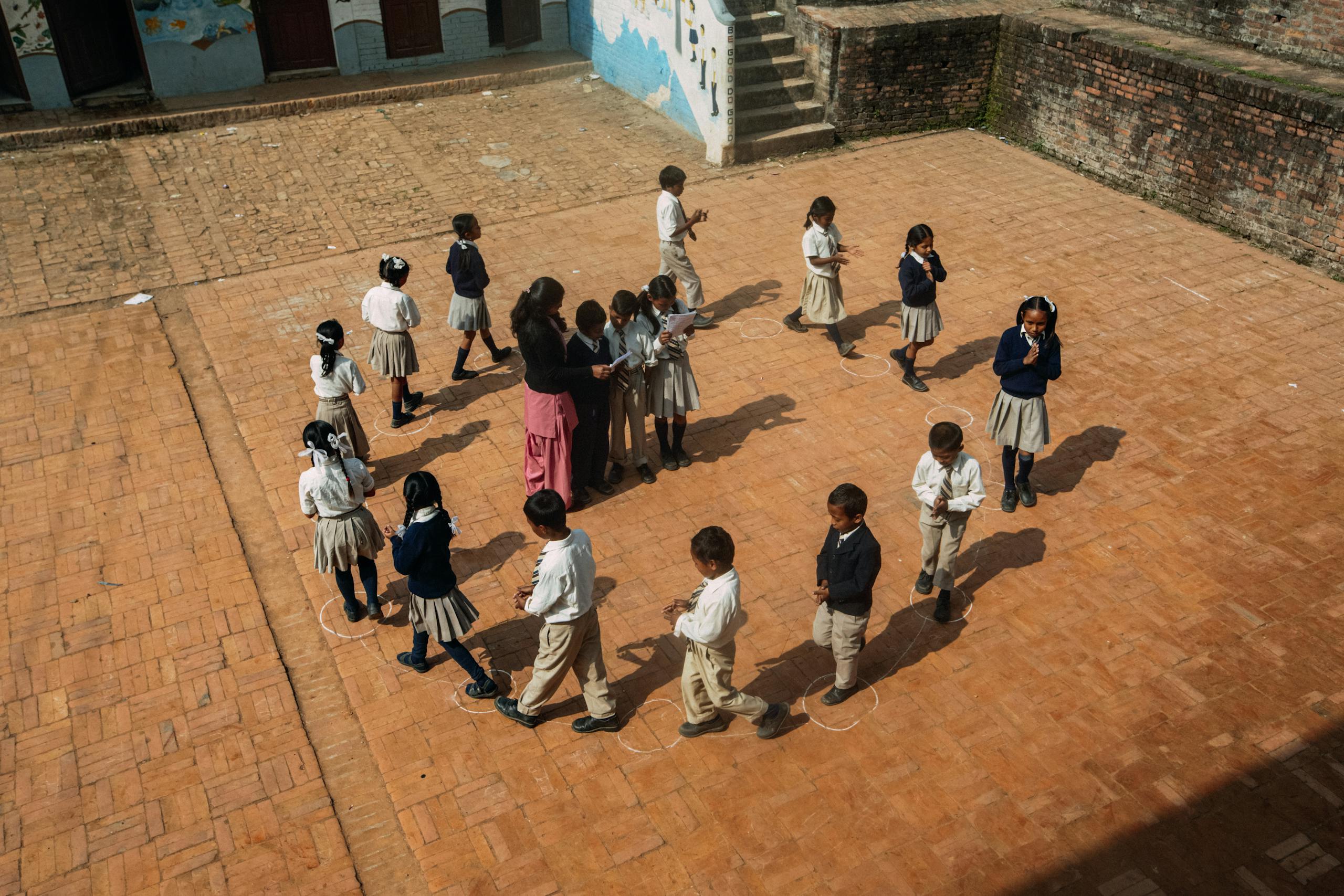
Child social anxiety and friendships are deeply intertwined. When a child fears judgment, avoids group settings, or retreats from peer interaction, making and keeping friends becomes genuinely hard, not just uncomfortable.
Social anxiety in children isn’t shyness dressed up in clinical language. It’s a pattern of real distress that shapes how a child moves through every social moment, from the school cafeteria to birthday parties to the simple act of saying hello to a neighbor. And for children who are also introverted by nature, the picture gets more complicated still.
As someone who spent decades in high-pressure advertising environments, managing client relationships and leading teams across multiple agencies, I can tell you that the social patterns we develop as children don’t just disappear. They evolve. They inform how we handle conflict, how we form trust, and how much energy we spend just trying to feel safe in a room full of people. What a child experiences with friendships matters far beyond the playground.
If you’re exploring how introverted children form connections and why friendship can feel so complicated for them, our Introvert Friendships hub covers the full landscape, from childhood patterns to adult relationship dynamics.
Is My Child Shy or Socially Anxious?
Most parents ask this question at some point, and it’s worth taking seriously. Shyness is a temperament trait. A shy child might hang back in new situations, take longer to warm up, and prefer smaller groups. That’s not a disorder. That’s a personality style, and for many introverted children, it’s simply how they’re wired.
What’s your personality type?
Take our free 40-question assessment and get a detailed personality profile with dimension breakdowns, context analysis, and personalised insights.
Discover Your Type8-12 minutes · 40 questions · Free
Social anxiety is different. It involves persistent fear of social situations where the child might be watched, judged, or embarrassed. The National Institute of Mental Health describes social anxiety disorder as more than ordinary nervousness, noting that it can significantly interfere with daily functioning when left unaddressed. A child with social anxiety doesn’t just prefer smaller groups. They may refuse to go to school, experience physical symptoms like stomachaches before social events, or become so distressed by the anticipation of interaction that they avoid it entirely.
The overlap with introversion creates real confusion for parents and even for the children themselves. An introverted child who needs quiet time to recharge isn’t anxious about people. They simply have a different energy economy. A socially anxious child, introverted or not, is caught in a cycle of fear and avoidance that actively prevents connection, even when they want it.
I think about this distinction often when I look back at my own childhood. I was quiet. I preferred books to birthday parties. But I wasn’t afraid of other kids. I just didn’t find large group socializing particularly rewarding. That’s introversion. What I’ve watched in some of the children of colleagues and friends over the years is something more painful: a genuine longing for friendship paired with an almost paralyzing fear of reaching for it.
How Does Social Anxiety Actually Affect a Child’s Friendships?
Friendship requires vulnerability. You have to say something, offer something, risk something. For a child with social anxiety, every one of those steps feels loaded with potential failure. What if I say the wrong thing? What if they laugh at me? What if I’m rejected? These aren’t passing worries. They’re recurring, intrusive thoughts that can make even a simple playground interaction feel like walking a tightrope.
The result is often avoidance. The child doesn’t approach the group. Doesn’t raise their hand in class. Doesn’t accept the birthday party invitation. And avoidance, while it temporarily reduces anxiety, actually reinforces the fear over time. Each avoided situation sends a message to the child’s nervous system: “That was dangerous. Good thing we didn’t go.” The anxiety grows stronger, not weaker.
What makes this particularly hard for introverted children is that their natural preference for fewer, deeper friendships can look like social withdrawal even when it isn’t. An introverted child who has one close friend and seems content isn’t struggling. But a socially anxious child who desperately wants connection and can’t reach for it is a different story entirely.
There’s also the matter of what happens inside existing friendships. Children with social anxiety often struggle to assert themselves, share opinions, or handle conflict. They may agree with everything a friend says to avoid disapproval. They may apologize excessively. Over time, this creates friendships that feel unbalanced and leave the anxious child feeling unseen. It’s not that they don’t know how to care about people. It’s that the fear of getting it wrong overshadows everything else.
This pattern of prioritizing depth over breadth in friendship is something I’ve written about extensively, because it’s one of the genuine strengths of introverted people when it’s driven by preference rather than fear. You can read more about why introvert friendships thrive on quality over quantity, but the important distinction here is that quality-focused friendship is only a strength when the child actually has access to those deep connections. Social anxiety can block the door entirely.

What Does the Research Actually Tell Us About Socially Anxious Children and Peer Relationships?
The connection between social anxiety and peer relationship difficulties in children is well-documented. A study published in PubMed Central examining childhood anxiety and social functioning found that socially anxious children tend to have smaller peer networks and report lower satisfaction with their friendships, even when friendships do exist. The anxiety doesn’t just make it harder to make friends. It colors the experience of the friendships they do have.
What’s particularly striking is the bidirectional nature of the problem. Social anxiety reduces social engagement, which means fewer opportunities to practice social skills, which in turn can increase anxiety about social situations. It’s a cycle that can be difficult to interrupt without deliberate support.
There’s also meaningful evidence that cognitive behavioral approaches can help. Healthline’s overview of CBT for social anxiety disorder explains how this approach helps children and adults identify distorted thinking patterns and gradually face feared situations in manageable steps. For children specifically, this often involves working with a therapist while also coaching parents on how to support exposure at home without reinforcing avoidance.
More recent work has examined how anxiety treatment outcomes vary based on individual factors. A 2024 study indexed on PubMed looked at predictors of treatment response in youth anxiety, highlighting that children with stronger baseline social connections tended to show better outcomes, which underscores why addressing friendship difficulties early matters so much.
None of this means a socially anxious child is broken or that their path to friendship is impossibly narrow. It means the path needs to be approached thoughtfully, with patience, and often with professional support alongside parental warmth.
How Does Introversion Complicate the Picture for Anxious Children?
Here’s where I want to be honest about something that took me years to fully understand, even about myself. Introversion and social anxiety can coexist, and when they do, they amplify each other in ways that are easy to misread.
An introverted child already processes social information more deeply than their extroverted peers. There’s real neurological basis for this. Cornell University research on brain chemistry and extroversion found that extroverts and introverts respond differently to dopamine, which helps explain why social stimulation feels energizing to some and draining to others. An introverted child isn’t being difficult when they need to leave the party early. Their nervous system is genuinely working harder.
Add social anxiety to that mix, and you have a child who is both more sensitive to social stimulation and more fearful of negative evaluation. Every social interaction carries more weight. Every potential misstep feels more significant. The introvert’s natural preference for reflection before speaking can, in an anxious child, become a paralysis where they rehearse conversations so thoroughly that they never actually have them.
I managed a young account coordinator at one of my agencies years ago who reminded me of this dynamic. She was clearly introverted, thoughtful, and brilliant in one-on-one conversations. But in team meetings, she would go completely silent. Not because she had nothing to contribute, she’d told me privately she had opinions on almost everything, but because the fear of saying something wrong in front of the group was overwhelming. Her introversion wasn’t the problem. Her anxiety about the group’s judgment was. We worked out a system where she’d send me her thoughts before meetings, and I’d create space for her to share them. It wasn’t a perfect solution, but it gave her a foothold.
Children in similar situations need similar footholds. Not pressure to perform extroversion, but structured, low-stakes opportunities to practice connection in ways that feel manageable.
It’s also worth noting that some children who struggle with friendship have additional factors at play. Neurodivergence, for instance, can create its own layer of social complexity. The piece on why ADHD introverts struggle with friendships explores how attention and executive function differences intersect with introversion in ways that make connection harder, and many of those dynamics apply to anxious children as well.

What Can Parents Actually Do to Help?
Parents of socially anxious children often find themselves caught between two instincts: protecting their child from distress and pushing them toward connection. Both instincts come from love. Both, taken to extremes, can make things worse.
Accommodation, meaning arranging the child’s world so they never have to face feared situations, feels kind in the moment. But it reinforces the message that social situations are genuinely dangerous. Over time, the child’s world shrinks. What they can tolerate narrows. Friendships become harder to form, not easier.
Forcing exposure without support has the opposite problem. A child who is pushed into overwhelming social situations without tools or scaffolding doesn’t learn that social interaction is safe. They learn that their fear was justified and that the adults in their life don’t understand what they’re experiencing.
What actually helps tends to sit between those extremes. Research published in Springer’s Cognitive Therapy and Research journal has examined how graduated exposure, combined with parental coaching on how to respond to anxiety without reinforcing avoidance, produces meaningful improvement in socially anxious youth. The emphasis is on gradual, supported steps toward feared situations, not avoidance and not overwhelming immersion.
Practically, this might look like:
Starting small. One playdate with one child, rather than a group birthday party. A structured activity, like a class or club, where the social interaction has a built-in purpose and doesn’t require the child to generate conversation from scratch. Brief exposure to feared situations followed by genuine acknowledgment of what the child managed, not just what they avoided.
Validating the feeling without validating the avoidance. “I know this feels scary” is different from “Okay, we won’t go then.” Children need to hear that their feelings make sense and that they’re capable of handling them anyway.
Modeling. This one doesn’t get talked about enough. Children watch how their parents handle social discomfort. If a parent visibly avoids social situations, makes self-deprecating comments about their own social failures, or expresses anxiety about what others think, children absorb those patterns. As an INTJ who spent years watching my own relationship with social energy, I know how easy it is to model avoidance while telling yourself you’re just being selective.
Seeking professional support when needed. A child psychologist or therapist with experience in childhood anxiety can offer tools that go well beyond what any parent can provide alone. CBT-based approaches have a strong track record with childhood social anxiety, and early intervention tends to produce better long-term outcomes.
How Do Friendships Actually Form for Socially Anxious Children?
Friendship formation for a socially anxious child rarely looks like the spontaneous, effortless connection we see in movies. It tends to be slower, more deliberate, and more dependent on context than it is for children without anxiety.
Shared activities are often the most reliable entry point. When two children are focused on a task together, whether that’s building something, playing a game, or working on a project, the social pressure of direct interaction decreases. The activity provides structure. It gives both children something to talk about that isn’t themselves. For anxious children, this kind of side-by-side engagement can feel far more accessible than face-to-face conversation.
Repeated, low-pressure exposure to the same peer also matters more than many parents realize. Familiarity reduces anxiety. A child who sees the same classmate at a weekly art class will gradually feel safer with that person, even without any dramatic breakthrough moment. Friendship often grows in the quiet accumulation of shared time, not in a single meaningful conversation.
This is actually one of the insights that translates well into adult introvert friendship patterns. The article on deepening friendships without more time explores how consistent, low-key contact builds connection more reliably than occasional intense socializing, and that principle applies to children too. A child doesn’t need elaborate playdates. They need regular, predictable contact with someone they’re gradually learning to trust.
One thing I’ve noticed, both in my own experience and in watching others, is that socially anxious children often form their strongest early friendships through distance rather than proximity. A pen pal, an online connection through a shared interest, or even a cousin who lives far away can become a genuinely meaningful relationship precisely because the stakes feel lower. The child can take their time. They can think before responding. They can be themselves without the pressure of immediate in-person judgment.
There’s something worth honoring in that. The piece on why long-distance friends work better for introverts gets at this dynamic in the adult context, but the roots of it often trace back to childhood, to those early experiences of finding connection easier when there’s a little more space around it.

What Role Do Parents’ Own Friendships Play?
This angle doesn’t come up often enough in conversations about child social anxiety, and I think it matters. Children learn about friendship by watching the adults closest to them. They observe how their parents handle conflict with friends, how they prioritize (or deprioritize) social connection, and what friendship looks like in practice.
Parents of young children often find their own friendships under enormous strain. Time is scarce. Energy is depleted. Social connection gets pushed to the bottom of the list. I’ve seen this pattern in colleagues who were brilliant at managing client relationships but whose personal friendships quietly withered once parenthood arrived. The piece on why parent friendships fall apart examines this honestly, and it’s worth reading if you recognize yourself in it.
What children observe in their parents’ friendships shapes their understanding of what friendship is supposed to feel like. If a parent models friendship as something that requires effort, warmth, and occasional discomfort, the child absorbs that. If a parent models friendship as something that fades when life gets busy, the child absorbs that too.
This doesn’t mean parents need to perform social ease they don’t feel. Introverted parents who are honest about needing quiet time, who show children that it’s okay to have a small circle of close friends, who demonstrate that friendship can be sustained through less frequent but genuinely meaningful contact, are modeling something valuable. The problem arises when social anxiety in a parent leads to modeling avoidance as a default response to social discomfort.
My own experience here is humbling. As an INTJ who spent years performing extroversion in professional settings, I was simultaneously sending my children messages about what social engagement looked like. Some of those messages were useful. Some of them, I suspect, weren’t. That’s the honest truth of it.
When Should a Parent Be Genuinely Concerned?
Not every quiet child needs intervention. Not every preference for solitude signals anxiety. Distinguishing between the two requires attention to several things beyond just how often a child plays with others.
Concern is warranted when the child expresses distress about their social situation, not just preference. An introverted child who is content with one friend and doesn’t want more is different from a child who cries about not having friends, dreads going to school, or expresses persistent feelings of being unlikable or unwanted.
Physical symptoms that appear consistently before social situations, stomachaches, headaches, sleep disruption, are worth taking seriously. So is a pattern of refusing social invitations that the child initially seemed to want to accept. The anxiety-driven reversal, “I want to go but I can’t make myself go,” is particularly telling.
A PubMed Central study examining anxiety trajectories in children found that early-onset social anxiety that persists across multiple settings and relationships tends to be more stable over time without intervention, making early identification genuinely important rather than alarmist.
Teachers’ observations matter here too. A child who appears comfortable at home but is consistently isolated or distressed at school is showing something important. The gap between home behavior and school behavior is often where social anxiety becomes most visible, because school is where the peer judgment the child fears most actually lives.
There’s also the question of how the child talks about other children. Socially anxious children often attribute negative intentions to peers even when none exist. “They don’t like me” becomes a fixed belief rather than a passing thought. “Everyone laughed at me” gets held onto long after others have forgotten the moment. These cognitive patterns, left unchallenged, can shape a child’s entire social self-concept.
One more consideration: the type of friendships a child gravitates toward can sometimes offer insight. Children with social anxiety sometimes find it easier to befriend children who are significantly younger or older, because the power dynamics feel less threatening. They may also gravitate heavily toward children who share their exact interests, which isn’t inherently problematic, but can become limiting if the preference for sameness is driven by anxiety about difference rather than genuine affinity. The piece on same-type friendships as comfort or echo chamber explores this tension in the adult context, and the seeds of it often appear in childhood.

What Does Long-Term Friendship Look Like for Children Who Struggled Early?
Here’s something I want parents to hold onto: childhood social anxiety doesn’t write a child’s entire social story. Many adults who struggled profoundly with peer connection in childhood go on to build genuinely meaningful friendships. The path is often longer and less linear than it is for children without anxiety, but it exists.
What tends to help over the long term is a combination of factors. Early, appropriate support, whether through therapy, parental coaching, or structured social opportunities, matters. So does finding environments where the child’s particular strengths are visible and valued. An anxious, introverted child who finds a drama club, a robotics team, or a book group where their depth and thoughtfulness are assets rather than liabilities often experiences a meaningful shift in their social confidence.
I’ve seen this play out repeatedly in professional settings. Some of the most socially capable adults I’ve worked with over my advertising career described childhoods marked by profound social difficulty. What changed for them wasn’t that they became extroverted. It was that they found contexts where their way of being in the world made sense to the people around them. They stopped trying to fit a social mold that wasn’t theirs and started finding the people who valued what they actually offered.
That shift, from performing social ease to finding genuine connection, is available to anxious children too. It just requires patience, the right support, and adults who understand the difference between a child who is choosing solitude and a child who is trapped in it.
There’s much more to explore on this topic across the full range of introvert relationship experiences. Our Introvert Friendships hub brings together everything from childhood patterns to adult dynamics, and it’s worth spending time there if this topic resonates with you or someone you love.
Curious about your personality type?
Our free MBTI assessment goes beyond the four letters. Get a full breakdown of your scores, see how your type shows up at work and in relationships.
Take the Free Test8-12 minutes · 40 questions · Free
About the Author
Keith Lacy is an introvert who’s learned to embrace his true self later in life. After 20 years in advertising and marketing leadership, including running agencies and managing Fortune 500 accounts, Keith now channels his experience into helping fellow introverts understand their strengths and build fulfilling careers. As an INTJ, he brings analytical depth and authentic perspective to every article, drawing from both professional expertise and personal growth.
Frequently Asked Questions
Is my introverted child socially anxious or just shy?
Shyness is a temperament trait where a child takes longer to warm up in new situations but generally doesn’t experience significant distress. Social anxiety involves persistent, intense fear of social situations where the child might be judged or embarrassed, often accompanied by physical symptoms and active avoidance. An introverted child who is content with fewer friends and quiet time is likely not anxious. A child who desperately wants friends but feels unable to reach for them, or who experiences consistent physical symptoms before social events, may be dealing with something more than shyness.
How can I help my child make friends without pushing too hard?
Start with low-pressure, structured activities where the social interaction has a built-in purpose, like a class, club, or team. Arrange one-on-one time with a single peer rather than group situations. Validate your child’s feelings without reinforcing avoidance. Saying “I know this feels scary and I think you can handle it” is different from either dismissing the fear or allowing the child to skip every difficult situation. Gradual, supported exposure tends to work better than either forcing immersion or accommodating avoidance entirely.
At what age does social anxiety typically appear in children?
Social anxiety can appear at various ages, but it often becomes more pronounced in middle childhood and early adolescence, when peer relationships become more complex and the social stakes feel higher to children. Some children show signs earlier, particularly around school entry when peer interaction becomes a daily requirement. The important thing is not the age at which it appears but whether it’s persistent, whether it’s causing the child real distress, and whether it’s interfering with their daily functioning and ability to form connections.
Should I seek professional help for my child’s social anxiety?
Professional support is worth considering when social anxiety is causing your child consistent distress, when it’s interfering with school attendance or functioning, when physical symptoms appear regularly before social situations, or when the child’s world seems to be narrowing rather than expanding over time. A child psychologist or therapist with experience in childhood anxiety can offer structured approaches, including cognitive behavioral therapy, that have a strong track record with social anxiety in young people. Early support tends to produce better outcomes than waiting to see if the child grows out of it.
Can a child with social anxiety still have meaningful friendships?
Yes, absolutely. Social anxiety makes friendship harder to form and maintain, but it doesn’t make it impossible. Many children with social anxiety form deep, meaningful connections with one or two peers, often through shared interests or structured activities. The friendships may look different from the large social networks some children have, but they can be genuinely nourishing. With appropriate support, many children with social anxiety develop richer social lives over time. success doesn’t mean make an anxious child into a social butterfly. It’s to help them access the connection they want without being blocked by fear.