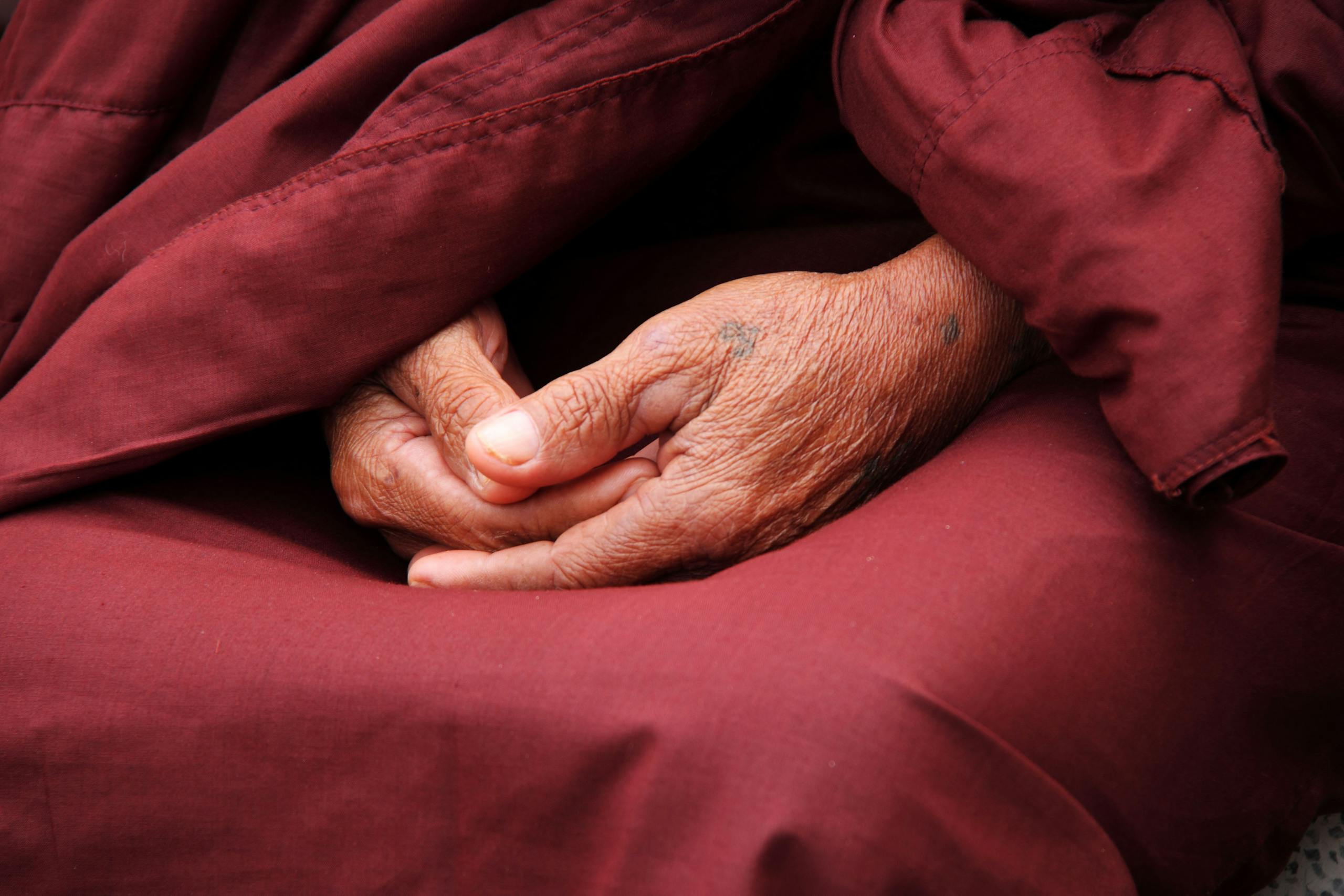
A Christian empath is someone whose deep sensitivity to the emotions and suffering of others is woven into their faith, shaping how they pray, serve, love, and process the world around them. This combination of spiritual conviction and heightened emotional perception creates a person who feels called not just to believe, but to feel alongside others in a way that goes far beyond ordinary compassion. For many, this pairing is both a profound gift and an exhausting weight to carry.
Faith communities often celebrate empathy as a virtue while rarely acknowledging the real cost it carries for people who experience it at an intense, almost cellular level. Christian empaths frequently find themselves absorbing the grief in a room before anyone speaks, sensing tension in a congregation that looks perfectly fine on the surface, or leaving Sunday service more drained than restored. That experience deserves honest conversation, not just spiritual platitudes.

My own path through this territory has been shaped by years of running advertising agencies where emotional intelligence wasn’t discussed openly, but it determined everything. I noticed things in client meetings that my colleagues missed: the slight tension in a brand manager’s jaw when we presented a concept she couldn’t sell upward, the quiet pride of a junior account executive whose idea got credited to someone else. That kind of perception felt like a burden for a long time before I understood it as something worth examining more carefully. Much of what I’ve explored since then lives in our HSP and Highly Sensitive Person hub, where I dig into the science and lived experience of sensitivity in all its forms.
What Makes the Christian Empath Experience Distinctly Different?
Empathy exists on a spectrum, and high sensitivity is a documented neurological trait. A 2019 study published in PubMed found that highly sensitive individuals show greater activation in brain regions associated with awareness, empathy, and sensory processing. That’s not metaphor. That’s measurable difference in how certain nervous systems engage with the world.
What drains your social battery?
Not all social exhaustion is the same. Our free quiz identifies your specific drain pattern and gives you personalised recharging strategies.
Find Your Drain PatternUnder 2 minutes · 8 questions · Free
For someone operating inside a Christian framework, that neurological reality gets layered with theological meaning. Empathy becomes a calling. Suffering becomes something you’re meant to sit with, not escape. Compassion fatigue gets reframed as spiritual weakness rather than a physiological response to chronic emotional overload. That reframing is where things get complicated and sometimes genuinely harmful.
It’s worth being clear about what distinguishes a highly sensitive person from an empath, because these terms get used interchangeably in ways that blur important distinctions. As Psychology Today notes, highly sensitive people process sensory and emotional information more deeply, while empaths describe an experience of actually absorbing others’ emotions into their own bodies. Many Christian empaths report both traits operating simultaneously, which creates a particularly intense inner life. If you’ve ever wondered where you fall on that spectrum, the comparison I wrote on introversion versus high sensitivity might help clarify things.
What makes the Christian empath experience distinctly different from secular empathy is the interpretive lens applied to every emotional encounter. Pain isn’t just pain. It’s an invitation to ministry. Feeling overwhelmed isn’t just exhaustion. It’s potentially a failure of faith. That interpretive layer can either deepen the meaning of sensitivity or weaponize it against the person experiencing it, depending on the community and theology surrounding them.
How Does High Sensitivity Shape Spiritual Life?
Spiritual practice tends to go deeper for people wired this way. Prayer isn’t a quick checklist. It’s an extended internal conversation where every word carries weight and every silence holds meaning. Worship can feel almost overwhelming in its intensity, whether that’s in the soaring acoustics of a cathedral or the quiet of a personal devotional moment before sunrise.
I remember attending a client retreat years ago at a conference center that happened to be on the grounds of an old monastery. Everyone else was networking over cocktails by the second evening. I found myself sitting alone in the chapel for an hour, not because I’m particularly religious in a formal sense, but because the stillness and the weight of that space pulled at something in me I didn’t have language for yet. That pull toward contemplative depth is something many Christian empaths describe as a defining feature of their spiritual life.

Scripture lands differently for people with this kind of perceptual depth. Passages about suffering, lament, and divine presence in darkness resonate in ways that more triumphalist readings of faith often don’t. The Psalms, with their raw emotional honesty, tend to feel more spiritually nourishing than texts that promise easy resolution. There’s something deeply validating about a tradition that includes the full spectrum of human emotional experience as sacred text.
That said, high sensitivity is not a trauma response, even when it gets triggered by painful experiences. A piece in Psychology Today makes this point clearly: sensitivity is a biological trait present from birth, not a wound that needs healing. Christian empaths sometimes internalize a narrative that their emotional intensity is the result of spiritual damage, when the reality is far more neutral and even positive. Sensitivity is a feature of how certain nervous systems are built, not evidence of something broken.
Where Does the Gift End and the Burden Begin?
Every strength has a shadow side, and for Christian empaths, the shadow can be long. The same capacity that makes someone an extraordinary listener, a perceptive counselor, or a deeply compassionate friend also makes them vulnerable to emotional depletion in ways that are hard to explain to people who don’t share the trait.
In my agency years, I had a senior account director who was one of the most gifted client relationship people I’ve ever seen. She read rooms with uncanny accuracy, anticipated client concerns before they surfaced, and had a way of making every person in a meeting feel genuinely seen. She was also the person most likely to be completely hollowed out by a difficult campaign review. She’d come into my office afterward, sit down, and just look exhausted in a way that went beyond tired. It took me too long to understand that she wasn’t being dramatic. She was processing something real.
For Christian empaths, this depletion often happens in the spaces that should be most restorative. Small group ministry, pastoral care, prayer partnerships, hospital visits, grief support. These are contexts where sensitivity is most needed and where it also costs the most. The theological expectation to give without limit, to be present without reserve, can make it nearly impossible to set the boundaries that would actually sustain the ministry over time.
A 2024 study in Frontiers in Psychology examined the relationship between high sensitivity and emotional regulation, finding that while highly sensitive people often demonstrate greater empathic accuracy, they also require more deliberate recovery strategies to maintain psychological stability. For Christian empaths, those recovery strategies are not a retreat from faith. They’re what makes sustained, meaningful service possible.
How Do Christian Empaths Function in Relationships and Community?
Relationships for people with this combination of traits tend to be intense, meaningful, and sometimes overwhelming in equal measure. The depth of connection they’re capable of is real and rare. So is the potential for emotional enmeshment, boundary confusion, and the particular exhaustion that comes from caring too much about too many people at once.

Intimacy, both emotional and physical, carries particular weight for highly sensitive people. The experience of closeness is amplified, which means both the joy and the friction register more intensely. If you’re in a relationship with someone who has these traits, the piece I wrote on HSP and intimacy offers some honest perspective on what that looks like from the inside. And if you’re the partner or family member trying to understand someone wired this way, living with a highly sensitive person walks through the practical dynamics in a way that I hope feels useful rather than clinical.
Faith communities present their own relational complexity. Churches often function as extended families, which means all the warmth and belonging of family, along with all the conflict, triangulation, and emotional entanglement. For a Christian empath, handling congregational life can feel like being permanently tuned to a frequency that everyone else can only hear occasionally. The unspoken tensions, the grief that sits beneath cheerful Sunday greetings, the loneliness in a room full of people singing together. All of it registers.
When a Christian empath is in a relationship that crosses the introvert-extrovert divide, the dynamics get even more layered. The extroverted partner may find community life energizing while the sensitive partner is quietly drowning in it. That gap can look like a spiritual problem when it’s actually a neurological one. The exploration of HSP dynamics in introvert-extrovert relationships gets into this territory in more depth, and it’s worth reading if you recognize that pattern in your own relationship.
What Happens When Christian Empaths Become Parents?
Parenting with this level of sensitivity is its own particular territory. The attunement that makes Christian empaths extraordinary caregivers also means they feel their children’s pain with an intensity that can be destabilizing. A child’s bad day at school doesn’t just register as information. It lands as something to be processed, prayed over, and sometimes carried long after the child has moved on.
There’s a genuine gift in this. Children raised by parents who truly feel their emotional reality tend to develop secure attachment and strong emotional intelligence. The research on sensitive parenting consistently points toward better outcomes for children when caregivers are attuned rather than dismissive. The challenge is that the parent’s own emotional reserves get depleted in the process, often without anyone noticing, including the parent themselves.
Christian empaths who are parents often add another layer of spiritual responsibility to an already full emotional load. They’re not just raising children. They’re raising souls, nurturing faith, modeling grace. That’s a beautiful calling and a potentially crushing one if it’s held without adequate support. The piece I put together on HSP parenting addresses this directly, including the ways sensitive parents can protect their own emotional health while remaining deeply present for their kids.
One thing worth naming directly: sensitive parents often raise sensitive children. When a highly attuned parent recognizes the same traits in their child, there’s a particular opportunity to help that child understand their own wiring early, before the world has a chance to tell them something is wrong with them. That early validation can change the entire trajectory of how a person relates to their own emotional life.
How Does Nature and Solitude Restore the Christian Empath?
Something consistent emerges when Christian empaths describe what actually restores them: time alone, and time outdoors. These aren’t just preferences. For many, they’re genuine necessities. The combination of solitude and nature seems to work on something deep in the nervous system, allowing the accumulated emotional weight of relational life to settle and dissipate.

Research from Yale’s e360 publication on ecopsychology documents what many sensitive people already know intuitively: immersion in natural environments measurably reduces cortisol levels, lowers blood pressure, and restores attentional capacity. For someone whose nervous system is constantly processing more than the average person, that kind of physiological reset isn’t a luxury. It’s maintenance.
Within a Christian framework, this pull toward nature often gets expressed as contemplative prayer, creation spirituality, or simply the sense that God is more accessible in a forest than in a fluorescent-lit fellowship hall. That’s not anti-community sentiment. It’s honest self-knowledge. Many Christian empaths find that their most genuine encounters with the sacred happen in solitude, and they need permission to honor that without guilt.
After particularly grueling new business pitches at my agency, I had a ritual of driving out to a state park about forty minutes from the office. Not to pray formally, not to journal, just to walk until the noise in my head quieted enough that I could think clearly again. My team thought I was eccentric. Looking back, I was doing exactly what my nervous system required. Christian empaths who find similar restoration in solitary, natural spaces are not retreating from their faith or their community. They’re doing the necessary work of coming back to themselves so they can show up fully for others.
What Vocational Paths Align with This Combination of Traits?
When sensitivity and faith combine, they tend to draw people toward work that carries meaning, involves genuine human connection, and allows for depth over breadth. The vocational pull is usually toward helping, healing, creating, or teaching, often in contexts where the work feels like an extension of spiritual purpose rather than separate from it.
Pastoral counseling, spiritual direction, chaplaincy, social work, and hospice care are fields where Christian empaths often find a natural home. So are creative fields: writing, music, visual art, and liturgical design. These are spaces where emotional depth is an asset rather than a liability, and where the work itself carries the kind of meaning that sustains sensitive people through the inevitable difficulties.
That said, vocation doesn’t always align neatly with temperament, and many Christian empaths find themselves in workplaces that don’t accommodate their wiring well. The broader question of which career environments genuinely suit highly sensitive people is something I’ve addressed in depth in the piece on career paths for highly sensitive people, and much of that applies directly to Christian empaths weighing vocational decisions.
One thing I’d add from my own experience: the most meaningful work I did in advertising wasn’t the big brand campaigns or the award-show submissions. It was the pro bono work we took on for nonprofit clients, usually organizations doing grief support or community mental health work. Those projects drew something out of me that the commercial work rarely did. The alignment between the work’s purpose and my own internal values created a kind of energy that felt genuinely sustainable. Christian empaths tend to need that alignment more than most. Without it, even a well-paying, stable career can feel quietly hollow.
How Can Christian Empaths Protect Their Inner Life Without Abandoning Their Calling?

The tension at the center of this experience is real: how do you honor a calling to compassion and service while protecting a nervous system that absorbs everything it touches? The answer isn’t to choose one over the other. It’s to build structures that make both possible over the long term.
Boundaries in Christian community carry a particular stigma. The word itself can feel theologically suspect, as if limits on availability signal a failure of love. Yet the most effective caregivers, counselors, and ministers consistently demonstrate that clear limits are what allow sustained presence rather than preventing it. Burning out quietly while refusing to acknowledge limits doesn’t serve anyone. It just defers the collapse.
Practical structures that Christian empaths often find genuinely helpful include designated solitude time that’s treated as non-negotiable rather than optional, a small number of deep relationships rather than broad social obligation, regular engagement with beauty in some form whether that’s music, art, or the natural world, and honest conversations with a trusted few about the actual experience of carrying this kind of sensitivity. That last one is harder than it sounds in communities that sometimes reward performed strength over authentic struggle.
There’s also something important in finding theological frameworks that honor sensitivity rather than pathologize it. The tradition of contemplative Christianity, from the Desert Fathers and Mothers through figures like Thomas Merton and Henri Nouwen, offers a rich lineage of people who understood that depth of feeling and spiritual depth are not opposites. They’re often the same thing, expressed differently. Christian empaths who locate themselves within that lineage often find that their sensitivity stops feeling like a problem to manage and starts feeling like a legitimate form of spiritual perception.
A 2024 study published in Nature examined how environmental sensitivity affects long-term wellbeing outcomes, finding that sensitive individuals who develop effective self-regulation strategies show significantly better psychological health over time than those who don’t. The capacity for self-regulation, for knowing when to engage and when to withdraw, isn’t selfishness. It’s wisdom. And for Christian empaths, it may be the most important spiritual discipline they can develop.
There’s more to explore across all of these dimensions in the full collection of resources at the HSP and Highly Sensitive Person hub, where I’ve gathered everything I’ve written about sensitivity, perception, and what it means to move through the world feeling more than most.
Running on empty?
Five drain profiles, each with specific triggers, warning signs, and a recharging playbook.
Take the Free QuizUnder 2 minutes · 8 questions · Free
About the Author
Keith Lacy is an introvert who’s learned to embrace his true self later in life. After 20 years in advertising and marketing leadership, including running agencies and managing Fortune 500 accounts, Keith now channels his experience into helping fellow introverts understand their strengths and build fulfilling careers. As an INTJ, he brings analytical depth and authentic perspective to every article, drawing from both professional expertise and personal growth.
Frequently Asked Questions
Is being a Christian empath a spiritual gift or a personality trait?
It’s both, and the distinction matters less than how you relate to it. High sensitivity is a documented neurological trait present in roughly 15 to 20 percent of the population, meaning the capacity to feel deeply and process emotional information intensely has a biological foundation. Within a Christian framework, many people experience this sensitivity as spiritually purposeful, a particular attunement to suffering and human experience that shapes how they love and serve. Treating it as either purely biological or purely spiritual tends to miss the fullness of what it actually is for most people who carry it.
Why do Christian empaths often feel more drained by church than restored by it?
Church environments involve sustained emotional exposure: other people’s grief, conflict, unspoken tension, and the accumulated weight of a community’s shared life. For someone whose nervous system processes all of that more intensely than average, a Sunday morning can register as a significant emotional event rather than a restorative one. Add the cultural expectation to be present, available, and cheerful, and the drain compounds. This doesn’t mean church isn’t valuable for Christian empaths. It means they likely need more intentional recovery time after community engagement than others do, and that’s not a spiritual failing.
How can a Christian empath set limits without feeling like they’re abandoning their calling?
Reframing what limits actually accomplish is a good starting point. A Christian empath who burns out completely is no longer available to anyone. One who maintains clear, honest limits about their capacity remains available over years and decades. The most effective ministers, counselors, and caregivers in any tradition tend to be people who’ve learned to protect their own inner resources as seriously as they protect their time. Limits aren’t a retreat from calling. They’re what makes the calling sustainable across a lifetime of service.
Do Christian empaths tend to attract people who need emotional support?
Yes, and this is one of the more complex dynamics to manage. People in pain tend to gravitate toward those who genuinely feel their experience rather than just performing sympathy. Christian empaths often emit a kind of emotional availability that draws people who are struggling, sometimes in healthy ways that lead to meaningful connection and genuine help, and sometimes in patterns that become draining and one-sided. Learning to distinguish between relationships that are mutually nourishing and those that are primarily extractive is an important and sometimes difficult skill for people with this combination of traits to develop.
Can someone be a Christian empath without being an introvert?
Absolutely. High sensitivity and introversion often co-occur, but they’re not the same thing, and extroverts can carry the same depth of empathic perception. An extroverted Christian empath might restore their energy through social connection while still absorbing emotional information from others at an intense level. The experience of depletion from emotional overload may look different for them, arriving after particularly heavy relational encounters rather than after social interaction generally. The core features of Christian empath experience, depth of feeling, spiritual attunement, and the weight of absorbing others’ pain, can be present regardless of where someone falls on the introvert-extrovert spectrum.