
I spent years believing that a truly clean home required massive weekend cleaning sessions. Those marathon sessions where I would tackle every surface, scrub every corner, and collapse on the couch afterward, thoroughly drained. My agency career demanded enormous mental energy during the week, and by the time Saturday arrived, the last thing my introverted brain wanted was another exhausting task that required sustained effort and decision making.
The breakthrough came when I stopped fighting my nature and started working with it. I realized that the cleaning approaches designed for extroverts who thrive on busy activity simply drained my limited social battery reserves. I needed something different. Something quieter, more systematic, and infinitely more sustainable.
If you have spent years feeling like a failure because you cannot maintain the cleaning routines that seem effortless for others, you are not alone. The problem is not your motivation or your character. The problem is that most cleaning advice ignores how introverted minds actually work.
Why Traditional Cleaning Advice Fails Introverts
Most cleaning systems assume you have unlimited energy reserves and thrive on variety and movement. They suggest cleaning parties with friends, recommend tackling entire rooms in single sessions, and promise that momentum will carry you through. For those of us who process the world differently, these approaches create more problems than they solve.
Research from Princeton University’s psychology department found that visual clutter competes directly with our brain’s ability to pay attention. Professor Sabine Kastner’s 20 years of attention research revealed that the more objects in our visual field, the harder our brain works to filter them out, causing cognitive fatigue over time. This finding carries particular significance for introverts, whose brains already process environmental stimuli more deeply than their extroverted counterparts.
When I managed large creative teams at the agency, I noticed that my introverted team members consistently performed better in organized, minimal spaces. At first, I attributed this to personal preference. Now I understand the neuroscience behind it. Our brains require clean environments not because we are particular, but because we are processing everything around us at a deeper level.

The Introvert Cleaning Principle: Small Systems Over Big Sessions
The fundamental shift I made transformed everything. Instead of dreading weekend cleaning marathons, I created micro systems that worked with my energy patterns rather than against them. Building effective daily routines became my foundation for maintaining a clean space without the exhaustion.
Studies published in the British Journal of General Practice show that habits form through repetition in consistent contexts, with automaticity plateauing around 66 days after first daily performance. This timeline matters for introverts because it means we can build cleaning habits that require almost no mental energy once established. The key is consistency over intensity.
I learned this lesson the hard way when I tried adopting one of those popular cleaning challenges. You know the type. Clean your entire bathroom in 15 minutes. Deep clean your kitchen every night. By day three, I was so mentally depleted that I abandoned the whole thing. The shame spiral that followed kept me from attempting any cleaning system for months.
What finally worked was reducing everything to the smallest possible action. Instead of clean the kitchen, it became wipe one counter. Instead of organize the bedroom, it became make the bed. These micro tasks require almost no decision making and can be completed before my brain even registers that I am cleaning.
Building Your Introvert Friendly Cleaning Schedule
The schedule that follows has evolved through years of trial and error. It respects the introvert need for minimal decision making while ensuring your space remains consistently clean. The goal is not perfection. The goal is sustainable maintenance that never overwhelms your system.
Daily Anchors: Two Minutes or Less
Daily tasks should feel almost invisible. They attach to existing routines, require no setup or cleanup, and complete before you have time to dread them. Research on habit formation shows that connecting new behaviors to established routines dramatically increases success rates.
Morning anchors include making your bed immediately upon waking, wiping bathroom counters after brushing teeth, and putting any stray items in their designated spot. Evening anchors include loading dishes immediately after dinner, doing a quick counter wipe in the kitchen, and placing tomorrow’s clothes where you can find them.
The total time investment amounts to perhaps ten minutes spread across your entire day. None of these tasks require sustained focus or decision making. Each one takes less than two minutes. Combined, they prevent the accumulation that leads to overwhelming cleaning sessions.

Weekly Focus Areas: One Room, One Day
Weekly cleaning follows a rotation that eliminates decision fatigue entirely. Monday is bathrooms. Wednesday is kitchen deep work. Friday is floors throughout the house. Saturday handles any catch up needed.
The specific days matter less than the consistency. Once your brain associates Monday with bathroom cleaning, it stops registering as a decision and becomes automatic. I found that creating my home sanctuary required removing the mental load of constantly deciding what to clean and when.
Each weekly task takes 15 to 30 minutes maximum. Set a timer. When it rings, you stop. This boundary protects your energy and prevents the perfectionist spiral that can transform a simple bathroom cleaning into a three hour deep scrub. The house does not need to be perfect. It needs to be maintained.
During my agency days, I applied this same principle to team management. Rather than trying to solve everything at once, we focused on one priority per week. The results improved dramatically because attention stayed concentrated rather than scattered. Your home responds to this same focused approach.
Monthly Deep Tasks: Plan and Protect
Monthly tasks include those deeper cleaning activities that do not need weekly attention. Cleaning refrigerator shelves, washing windows, decluttering closets, and deep cleaning appliances fall into this category. The key is scheduling these tasks on your calendar as you would any appointment, then protecting that time from other obligations.
I schedule monthly tasks on the first Saturday of each month, rotating through a list that covers the entire house over a quarter. This rhythm prevents anything from becoming disgustingly neglected while respecting my need for recovery time between intensive cleaning sessions.
Plan these sessions for times when your energy levels are naturally higher. Understanding your energy management patterns helps you identify whether morning or afternoon works better for sustained physical activity. For me, Saturday mornings after coffee but before noon provide the sweet spot between alertness and not yet depleted.
The Science of Clean Spaces and Mental Clarity
The connection between physical environment and mental state extends beyond preference into measurable biological effects. Research from North Carolina State University documents that cluttered environments overwhelm the brain and impair its ability to process information, contributing to heightened stress levels and elevated cortisol.
For introverts who already process stimuli more intensively, these effects compound. Every object in our visual field requires some degree of neural processing. When our environments overflow with clutter, our brains work constantly to filter and categorize, leaving fewer cognitive resources for meaningful work, creative thinking, and genuine rest.
The research aligns perfectly with my personal experience. When my home office became cluttered during especially demanding project periods, my writing quality declined noticeably. Ideas felt harder to access. Connections I would normally make easily remained just out of reach. Clearing the space always preceded my best creative work.
Headspace’s exploration of this topic highlights how people experience psychological and physiological transformations when working with professional organizers. They report feeling more relaxed with open space and experiencing immediate flashes of creativity. This momentum in previously blocked areas breeds hope, vision, and excitement toward important goals.
Practical Tools That Support Your Schedule
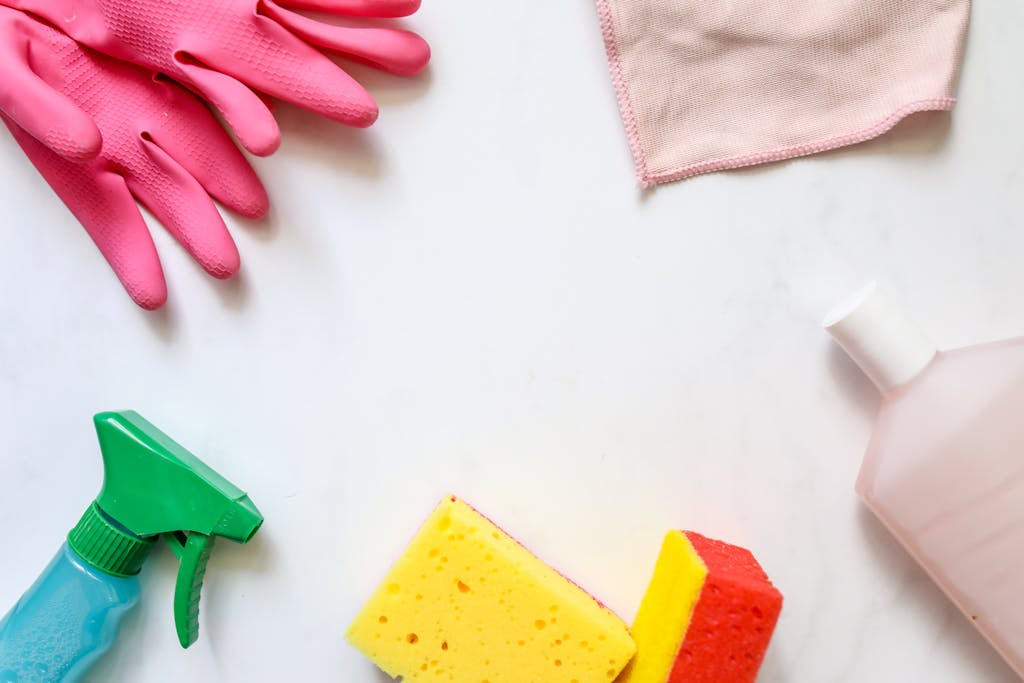
The right tools reduce friction and make maintaining your schedule easier. Invest in supplies that work efficiently so cleaning tasks complete quickly. Quality microfiber cloths, a lightweight vacuum that stores conveniently, and all purpose cleaners that work on multiple surfaces eliminate the need for switching products constantly.
Keep cleaning supplies where you use them. Bathroom cleaning supplies stay in the bathroom. Kitchen supplies remain in the kitchen. This simple change removes the barrier of gathering supplies before starting, which often provides just enough friction to prevent beginning at all.
I keep a small caddy under each bathroom sink with glass cleaner, surface cleaner, toilet cleaner, and a few microfiber cloths. When my daily anchor prompts a counter wipe, everything sits within arm’s reach. No excuses. No barriers. Just completion.
Consider noise canceling headphones for weekly and monthly tasks. Podcasts or audiobooks transform cleaning time into learning time, which reframes the activity from chore to opportunity. Transforming your home into a productivity powerhouse often starts with small mindset shifts like this one.
When the Schedule Falls Apart
Every cleaning schedule encounters disruption. Travel, illness, demanding work periods, and family emergencies all interrupt routines. The difference between sustainable schedules and abandoned ones lies in the recovery protocol.
When life interrupts your schedule, do not attempt to catch up on everything at once. This triggers the same overwhelm that made traditional cleaning advice fail in the first place. Instead, restart with your daily anchors. Make the bed. Wipe the counter. These micro actions signal to your brain that the routine is resuming without demanding impossible effort.
Research on habit formation shows that occasional lapses do not seriously impair the habit formation process. Automaticity gains resume quickly after missed performances. This finding should bring relief to anyone who has felt like a failure after missing a few days of their cleaning routine. The habit remains intact, waiting for you to pick it back up.
I experienced this directly after a particularly intense product launch at the agency. Two weeks of near constant work left my apartment in chaos. Rather than spending my first day off attacking the mess, I simply made my bed and wiped the kitchen counters. The next day, I added one more task. Within a week, the routine had restored itself without the crushing effort a full reset would have required.
The Connection Between Clean Space and Quality Sleep
The National Sleep Foundation reports that people who make their beds every morning are significantly more likely to report getting a good night’s sleep. Clean sheets and clutter free bedrooms signal safety to our nervous systems, allowing deeper relaxation and better quality rest.
For introverts, sleep quality connects directly to daily functioning. Essential self care strategies almost always include sleep optimization because our brains require quality rest to process the depth of information we absorb each day. A messy bedroom works against this biological need.
The bedroom benefits from being the cleanest room in your home. Treat it as a sanctuary. No work materials. No piles of laundry waiting to be folded. No stacks of books you mean to read someday. Just the essentials that support rest and recovery.
I noticed dramatic improvements in my sleep quality after applying these principles to my bedroom. The discipline of maintaining a minimal sleep environment felt difficult initially but quickly became automatic. Now walking into a clean bedroom triggers a relaxation response that no cluttered space could ever produce.

Sample Weekly Schedule for Introverts
The following schedule works as a starting point. Adjust it based on your home’s specific needs and your personal energy patterns. Remember that the goal is sustainability over perfection.
Monday: Bathrooms. Wipe mirrors, counters, and toilets. Clean shower walls if needed. Empty wastebaskets. Time limit of 20 minutes.
Tuesday: Daily anchors only. Use this lighter day for recovery.
Wednesday: Kitchen deep work. Wipe down appliances, clean inside microwave, address any refrigerator issues. Time limit of 25 minutes.
Thursday: Daily anchors only. Another recovery day.
Friday: Floors throughout the house. Vacuum carpeted areas, mop hard floors. Time limit of 30 minutes.
Saturday: Catch up day. Address anything missed during the week. Handle one monthly task if scheduled. Spend remaining time on laundry and general tidying.
Sunday: Rest day. Daily anchors only. Protect your energy for the week ahead.
Building Momentum Through Small Wins
The psychology of momentum suggests that small wins build confidence and motivation for larger tasks. Self care that actually works starts with achievable actions that compound over time rather than dramatic interventions that cannot be sustained.
Each completed micro task generates a small hit of dopamine that reinforces the behavior. Over time, these hits accumulate into genuine satisfaction with your environment. The messy house that once felt overwhelming becomes the clean space that feels natural and earned.
This principle guided my approach to building teams at the agency. Rather than setting overwhelming quarterly targets, we focused on weekly wins that accumulated toward larger goals. Morale improved because people experienced regular success rather than constant striving toward distant milestones. Your cleaning schedule benefits from this same psychology.
Start with one week of daily anchors only. Once those feel automatic, add one weekly task. Then another. Build slowly, testing each addition before committing to more. Rushing the process triggers the same overwhelm that defeats ambitious cleaning attempts every time.
The Sustainable Path Forward
A cleaning schedule that actually works is one you can maintain indefinitely. It accommodates your energy patterns, respects your need for recovery, and never demands more than you can sustainably give. The measure of success is not a spotless home on any given day but a consistently maintained space over months and years.
Trust the process. The first few weeks may feel awkward as new habits form. By week ten, according to the research, these behaviors approach automaticity. What required conscious effort becomes unconscious routine. What drained energy begins generating it through the satisfaction of a well maintained environment.
Your introverted brain is not broken because traditional cleaning advice never worked for you. It simply required an approach designed for how you actually function. Small systems, consistent contexts, and protected recovery time create the conditions under which sustainable habits form.
The clean home you imagine is achievable without exhaustion. It starts with making your bed tomorrow morning and builds from there, one tiny anchor at a time.
Explore more Home Environment resources in our complete Introvert Home Environment Hub.
About the Author
Keith Lacy is an introvert who’s learned to embrace his true self later in life. With a background in marketing and a successful career in media and advertising, Keith has worked with some of the world’s biggest brands. As a senior leader in the industry, he has built a wealth of knowledge in marketing strategy. Now, he’s on a mission to educate both introverts and extroverts about the power of introversion and how understanding this personality trait can unlock new levels of productivity, self-awareness, and success.
Frequently Asked Questions
How long does it take for a cleaning schedule to become automatic?
Research indicates that habits plateau around 66 days after consistent daily performance, though individual variation exists. Simple actions like wiping counters become automatic more quickly than complex routines. Expect the initial awkwardness to fade within a few weeks, with full automaticity developing within two to three months of consistent practice.
What should I do if I miss several days of my cleaning routine?
Resume with your simplest daily anchors rather than attempting to catch up on everything at once. Make your bed, wipe one counter, and let the momentum rebuild naturally. Studies show that occasional lapses do not significantly impair the habit formation process, so missing a few days will not erase your progress.
How do introverts stay motivated to clean when feeling drained?
The key lies in making tasks so small they require almost no motivation. Two minute micro tasks bypass the need for substantial willpower. Additionally, using noise canceling headphones with audiobooks or podcasts transforms cleaning into personal development time, which can actually feel restorative rather than draining.
Why do clean spaces matter more for introverts than extroverts?
Introverts process environmental stimuli more deeply, meaning every object in our visual field requires neural resources to filter and categorize. Cluttered environments create a constant low level cognitive drain that compounds throughout the day. Clean spaces reduce this processing load, leaving more mental energy for meaningful work and genuine rest.
How can I prevent my cleaning schedule from becoming overwhelming?
Use strict time limits for each task. When the timer ends, you stop regardless of completion. Start with daily anchors only and add weekly tasks gradually, testing each addition before committing to more. Build recovery days into your schedule where only minimal anchors apply. Remember that sustainability matters more than perfection.