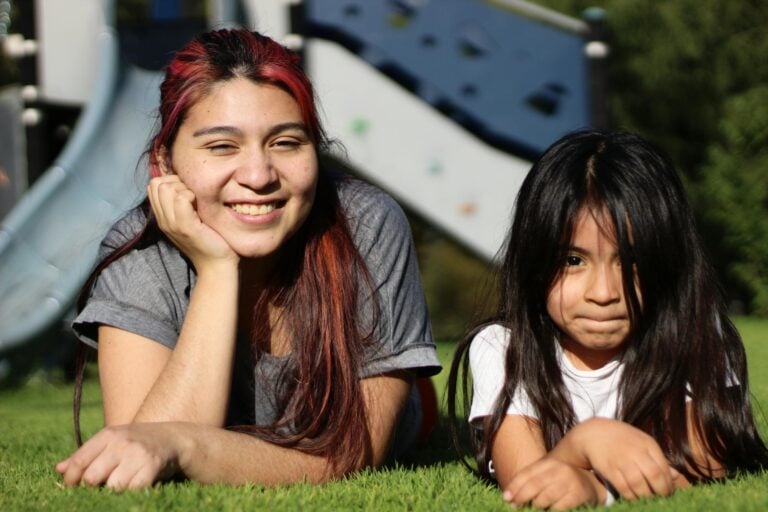

Communication and boundary setting in middle school is genuinely hard, and not just because of the social chaos of early adolescence. For introverted kids, those years represent a collision between who they naturally are and what the social environment demands of them, often before they have any language to describe the mismatch. Setting boundaries at that age means learning to say “this is too much for me” in a world that hasn’t yet taught you that’s a valid thing to say.
Decades removed from my own middle school years, I still recognize the patterns. The exhaustion after a loud lunch period. The dread of group projects that never seemed to end. The quiet guilt of wanting to go home instead of hanging out after school. Those weren’t character flaws. They were signals I didn’t know how to read yet.
What I’ve come to understand, both from my own experience and from years of thinking carefully about introvert psychology, is that the communication and boundary-setting skills we either develop or miss during middle school tend to follow us for a long time. Getting them right, or at least better, matters more than most people realize.
If you’re exploring how social energy works for introverts more broadly, our Energy Management and Social Battery hub covers the full landscape, from understanding your baseline to building sustainable social rhythms. This article focuses on something more specific: what middle school actually teaches introverted kids about communication and limits, and what it gets wrong.

Why Is Middle School So Particularly Hard for Introverted Kids?
Middle school occupies a strange developmental space. Kids are old enough to feel the full weight of social judgment but not yet equipped with the self-awareness or vocabulary to process it. For introverted students, that gap is especially painful.
What’s your personality type?
Take our free 40-question assessment and get a detailed personality profile with dimension breakdowns, context analysis, and personalised insights.
Discover Your Type8-12 minutes · 40 questions · Free
The structure of middle school itself works against introvert needs. Classes change every period, which means repeated social recalibration throughout the day. Lunch is loud and unstructured. Group work is constant. After-school activities are framed as essential for belonging. Every part of the environment is optimized for social stimulation, and very little of it offers the quiet recovery time that introverted nervous systems genuinely need.
What makes this particularly complicated is that introverted kids often don’t yet understand why they feel so depleted. They just know that school feels exhausting in a way it doesn’t seem to for their peers. Introverts get drained very easily by sustained social exposure, and the middle school day is essentially a marathon of it. Without that understanding, a kid might interpret their exhaustion as weakness, antisocial behavior, or something being fundamentally wrong with them.
I remember sitting in a conference room early in my agency career, watching a new account manager, fresh out of college, power through back-to-back client calls with what looked like effortless energy. I was genuinely confused by her. Not jealous exactly, more puzzled. I’d been doing similar work for years and still found that kind of sustained social output quietly grinding. It took me longer than I’d like to admit to recognize that she and I were simply wired differently, not that one of us was better at the job.
That confusion starts in middle school. And it tends to produce one of two outcomes: kids who learn to mask their introversion and push through at significant personal cost, or kids who withdraw and get labeled as antisocial. Neither outcome serves them well.
What Does Poor Boundary Communication Look Like at This Age?
Middle schoolers rarely set limits through direct communication. More often, they set them through avoidance, which looks like skipping events, making excuses, or simply disappearing from social situations without explanation. For introverted kids, this pattern makes complete sense as a coping strategy. It works in the short term. The problem is that it doesn’t build any actual skill.
Avoidance-based boundary setting teaches kids that they can manage their energy by escaping demanding situations, but it doesn’t teach them how to stay present and still protect themselves. It also tends to damage relationships, because the people on the other side of that avoidance often interpret it as rejection or indifference.
I saw this dynamic play out with a junior copywriter I managed early in my agency years. She was quiet, deeply talented, and consistently produced her best work when she had room to think. She also had a habit of simply not showing up to optional team lunches or after-work gatherings, without ever saying anything to anyone. Her colleagues started assuming she didn’t like them. Her manager thought she wasn’t a team player. Nobody understood that she was simply managing her limits the only way she knew how.
When I sat down with her one afternoon, not to reprimand her but just to understand her better, she said something I’ve never forgotten. She said, “I didn’t know I was allowed to just say I needed a break.” That sentence stayed with me. She had spent years operating under the assumption that her introvert needs were not legitimate enough to communicate directly. That belief almost certainly started somewhere in adolescence.

Poor boundary communication at this age also shows up as over-commitment followed by burnout. An introverted kid joins the school play, the student council, and a study group all at once, partly because they want to belong and partly because they haven’t yet learned to assess their own capacity accurately. Then they collapse under the weight of it and withdraw entirely. The cycle repeats. Each time, it reinforces the false belief that they’re simply not built for social participation.
What’s missing isn’t willingness. It’s the specific communication skills that would let them participate on terms that actually work for them.
How Do Sensory Factors Complicate Social Communication for Introverted Kids?
Not every introverted middle schooler is also a highly sensitive person, but the overlap is significant. And for kids who experience both, the social environment of middle school isn’t just socially demanding, it’s physically overwhelming.
Middle school hallways are loud. The cafeteria is loud. Gym class is loud. For a kid with noise sensitivity, that constant auditory assault isn’t just unpleasant, it actively depletes the capacity to engage socially. When you’re spending energy just tolerating the environment, there’s less available for the actual work of communication and connection.
The same applies to visual stimulation. Fluorescent lighting, crowded classrooms, and the constant visual noise of a busy school can push sensitive kids toward overwhelm before the first period even ends. Light sensitivity is a real physiological factor, not a quirk or an excuse, and it shapes how much social energy a kid has available at any given moment.
Physical contact adds another layer. Middle school is full of incidental touch: crowded hallways, shared desks, sports, drama rehearsals. For kids with heightened tactile sensitivity, these constant small intrusions can register as genuinely distressing. A kid who flinches from a casual shoulder pat isn’t being dramatic. They’re experiencing something real. And if nobody around them understands that, they’re likely to feel profoundly misunderstood.
What all of this means for communication is important. A kid who is simultaneously managing sensory overload, social exhaustion, and the emotional intensity of adolescence has very little bandwidth left for the kind of clear, direct communication that healthy boundary-setting requires. Finding the right balance of stimulation isn’t just a comfort preference. It’s a prerequisite for functioning well socially.
Adults working with introverted or sensitive middle schoolers would do well to understand this. The kid who seems checked out after lunch isn’t disengaged. They may simply be recovering from a morning’s worth of sensory and social input that would exhaust most adults if they experienced it consciously.
What Communication Skills Actually Help Introverted Middle Schoolers?
Direct, honest communication about needs is a skill, not a personality trait. It can be taught, practiced, and improved. The challenge is that most middle school environments don’t explicitly teach it, and many inadvertently punish it.
The most valuable skill is learning to name your state without apologizing for it. “I’m feeling a bit overwhelmed right now, can we talk later?” is a complete, appropriate communication. It doesn’t require justification or self-deprecation. It simply conveys accurate information about your current capacity. For introverted kids who have been taught, implicitly or explicitly, that their need for quiet is a social failing, learning to say something like this without shame is genuinely significant work.

Another skill worth developing is the ability to make specific, bounded commitments rather than open-ended ones. “I’ll come to the party for an hour” is a more honest and sustainable commitment than “I’ll be there,” followed by a last-minute cancellation. Introverted kids who learn to make realistic commitments early tend to be more reliable socially, not less, because they’re no longer over-promising and under-delivering.
I spent years in client services making promises I couldn’t sustain because I hadn’t yet learned to accurately assess my own capacity. I’d agree to a Friday afternoon presentation, a Monday morning strategy session, and a Wednesday evening client dinner all in the same week, and then spend the whole week running on empty and producing work that didn’t reflect what I was actually capable of. The skill I was missing wasn’t work ethic. It was honest self-assessment communicated clearly upfront.
A third skill, and perhaps the most important one for middle schoolers specifically, is learning to distinguish between social discomfort and genuine depletion. Not every awkward interaction requires retreat. Some social discomfort is normal, even for introverts, and pushing through it can build confidence and connection. Genuine depletion, on the other hand, is a signal that recovery is needed. Learning to tell the difference is a form of emotional literacy that pays dividends for decades.
Psychology Today’s coverage of introvert energy depletion offers useful context here. The neurological reality is that introverts and extroverts process social stimulation differently, and that difference is real, not a matter of attitude or effort. Understanding that at a young age changes everything about how a kid relates to their own social needs.
How Can Parents and Teachers Support Healthier Communication Around Introvert Needs?
Adults play an enormous role in whether introverted middle schoolers develop healthy communication patterns or spend years in shame-driven avoidance. The difference often comes down to whether the adults in their lives validate or pathologize introvert needs.
Validation doesn’t mean excusing avoidance or letting kids skip every challenging social situation. It means acknowledging that needing quiet time, finding large groups draining, and preferring depth over breadth in friendships are legitimate ways of being, not problems to fix. A parent who says “I know that party sounds exhausting, let’s figure out how you can go for a bit and still protect your evening” is teaching something completely different from a parent who says “you need to stop being so antisocial.”
Teachers can help by building structured quiet time into the school day without framing it as a punishment or a remedial measure. They can offer alternative ways to participate in group work that don’t require constant verbal performance. They can recognize that a quiet kid in the back row who submits thoughtful written responses may be more engaged than the kid who talks constantly.
What adults often miss is that introverted kids are frequently watching and processing everything around them. They’re not absent from social situations, they’re present in a different register. Research published in PubMed Central on introversion and cognitive processing suggests that introverts tend to process information more deeply and with greater attention to nuance than their extroverted peers. That’s not a liability. It’s a resource, if the environment supports it.
Supporting healthy energy management and protecting reserves at this age means creating conditions where introverted kids don’t have to spend every ounce of their capacity just surviving the school day. When they have some reserves left, they can actually practice the communication skills that will serve them later.

What Happens When These Skills Don’t Develop in Middle School?
The honest answer is that the patterns established during adolescence tend to persist. Not permanently, and not without the possibility of change, but they do create grooves that take real effort to redirect.
Adults who never learned to communicate their introvert needs directly often default to one of two patterns. Some become chronic people-pleasers, agreeing to social commitments they can’t sustain and then quietly resenting the people they’ve over-committed to. Others become rigid avoiders, protecting their energy so fiercely that they miss out on relationships and opportunities that would actually enrich their lives.
I’ve been both at different points in my career. In my early agency years, I said yes to everything because I didn’t know how to say anything else. Client dinners, industry events, team happy hours, weekend strategy retreats. I showed up to all of it and came home feeling hollowed out. By my mid-thirties, I’d swung to the opposite extreme, protecting my time so aggressively that I was turning down things I actually wanted to do because I’d stopped trusting my own ability to manage my energy in social contexts.
What I was missing in both phases was the middle ground: the ability to assess a situation honestly, communicate my actual capacity, and make choices that balanced my needs with genuine engagement. That’s the skill set that healthy boundary communication in middle school is supposed to start building.
Truity’s overview of why introverts need downtime frames this well. The need for recovery isn’t optional or negotiable. It’s built into how introverted nervous systems function. The question isn’t whether introverts need quiet time, it’s whether they’ve developed the communication tools to create it without damaging their relationships in the process.
Adults who recognize these patterns in themselves can still do the work. It’s harder than it would have been at twelve, but it’s absolutely possible. The starting point is usually the same: learning to name your state without apologizing for it, and trusting that the people who matter will respect that honesty.
How Do Introverted Kids Build Genuine Friendships While Maintaining Their Limits?
One of the persistent myths about introversion is that introverts don’t want deep connections. That’s simply not accurate. Most introverted people want meaningful relationships. What they don’t want, and genuinely can’t sustain, is the volume and frequency of social interaction that extroverted social norms tend to require.
For middle schoolers, this creates a real tension. The social currency of adolescence is often measured in how many people you know, how many events you attend, how visible you are. Introverted kids who prefer one close friend to a large social group, or who’d rather have a long conversation than attend a crowded party, are operating by different values than their social environment rewards.
What helps is reframing the goal. The aim isn’t to match extroverted social output. It’s to build a small number of relationships that are genuinely sustaining, with people who understand and respect how you’re wired. That’s a more achievable and more satisfying goal than trying to be socially ubiquitous.
A study published in Springer’s public health journal found that the quality of social connections matters significantly more than quantity for wellbeing outcomes. That’s worth holding onto. An introverted middle schooler with one genuinely close friend is not socially deficient. They may actually be building something more durable than peers with large but shallow social networks.
Communication plays a central role here. Introverted kids who can say “I really value our friendship, I just need some time to recharge after school before I can hang out” are giving their friends accurate information. Friends who respond well to that honesty are worth keeping. Friends who interpret it as rejection are probably not a good fit for an introvert’s social style, and that’s useful information too.
Learning to communicate honestly about your social needs is also, paradoxically, a way of deepening relationships. Vulnerability and directness tend to create intimacy. The kid who says “I’m really drained today, can we just sit quietly together?” is offering something more real than the kid who performs enthusiasm they don’t feel. Most people, even extroverted ones, respond to that kind of honesty with warmth.

What Does Healthy Boundary Communication Actually Sound Like for This Age Group?
Concrete language matters, especially for younger people who are still developing their social vocabulary. Abstract concepts like “setting limits” or “honoring your needs” don’t translate easily into actual conversations. What helps is having specific phrases available that feel natural and don’t require a lengthy explanation.
Some of the most effective communication patterns for introverted middle schoolers are genuinely simple. “I need a few minutes to myself before I can talk about this” is honest and complete. “I’m going to sit this one out, but let’s hang out one-on-one later” communicates both a limit and continued interest in the relationship. “I’m feeling a bit overwhelmed right now” is enough, without needing to justify or elaborate.
What makes these phrases work is that they don’t frame the introvert’s needs as a problem with the other person. They’re self-referential, which is both more accurate and less likely to trigger defensiveness. “You’re being too loud” is an accusation. “I’m having a hard time with the noise right now” is an honest report of an internal state. One creates conflict. The other opens a conversation.
Harvard Health’s guide to socializing as an introvert touches on this framing well. The emphasis on self-awareness as a foundation for social success is something I’ve found consistently true in my own experience. When I know what I need and can say it clearly, I’m a better colleague, a better friend, and a better leader than when I’m running on empty and hoping nobody notices.
Adults modeling this kind of communication matters enormously. Kids learn how to talk about their needs partly by watching the adults around them do it. A parent who says “I’ve had a long day and I need some quiet time before dinner” is demonstrating something important: that naming your state is normal, acceptable, and doesn’t require an apology.
Research from PubMed Central on adolescent social development supports the idea that communication modeling by adults has a measurable effect on how young people develop their own interpersonal skills. What we demonstrate matters as much as what we teach explicitly.
The communication patterns an introverted kid develops in middle school, whether they’re built on honesty and self-knowledge or on avoidance and performance, will shape how they handle social situations for years. That’s not a reason for anxiety. It’s a reason for intentionality. Getting this right, or at least better, is worth the effort.
There’s much more to explore about how introverts manage their social energy across different life stages. Our complete Energy Management and Social Battery hub is a good place to continue that exploration, with articles covering everything from sensory sensitivity to long-term energy building.
About the Author
Keith Lacy is an introvert who’s learned to embrace his true self later in life. After 20 years in advertising and marketing leadership, including running agencies and managing Fortune 500 accounts, Keith now channels his experience into helping fellow introverts understand their strengths and build fulfilling careers. As an INTJ, he brings analytical depth and authentic perspective to every article, drawing from both professional expertise and personal growth.
Frequently Asked Questions
Why do introverted middle schoolers struggle so much with setting social limits?
Introverted middle schoolers often lack both the vocabulary and the permission to communicate their needs directly. They haven’t yet developed the language to describe social depletion, and many have absorbed the message, from peers, media, or even well-meaning adults, that needing quiet time is a social failing rather than a legitimate need. Without that foundation, avoidance becomes the default strategy, which works short-term but doesn’t build real communication skills.
How can parents help introverted kids communicate their limits without encouraging avoidance?
The most effective approach combines validation with skill-building. Parents can acknowledge that their child’s need for quiet time is real and legitimate while also helping them develop specific phrases for communicating that need directly. Practicing language like “I need some time to recharge before I can hang out” gives kids a concrete tool. Modeling the same kind of honest self-communication as adults reinforces it further.
Is it normal for introverted kids to prefer one close friend over a large social group?
Completely normal, and arguably well-suited to introvert psychology. Most introverted people find that depth of connection is more sustaining than breadth of social contact. A middle schooler with one genuinely close friendship is not socially deficient. They may be building something more durable than peers with large but shallow social networks. The quality of social connection matters more than the quantity for long-term wellbeing.
How does sensory sensitivity affect an introverted middle schooler’s ability to communicate?
When a kid is spending significant energy managing sensory overload, whether from noise, lighting, crowding, or physical contact, there’s less available for the work of communication and social engagement. Sensory sensitivity and introversion frequently overlap, and the middle school environment is often highly stimulating across multiple channels simultaneously. Recognizing this connection helps adults understand why a sensitive, introverted kid may seem withdrawn or uncommunicative in demanding environments.
What long-term effects can poor boundary communication in middle school have?
The patterns established during adolescence tend to persist into adulthood without deliberate intervention. Adults who never developed healthy communication around their introvert needs often oscillate between over-commitment and rigid avoidance, neither of which serves them or their relationships well. fortunately that these patterns can be changed at any age. The starting point is usually the same: learning to name your state honestly without apologizing for it, and trusting that direct communication is more sustainable than either performance or withdrawal.