
Self-care restores energy for introverts when it prioritizes solitude, sensory calm, and deep mental engagement rather than social activity. Because introverts process stimulation internally, recovery requires deliberate quiet time, reduced social obligations, and activities that match their natural cognitive rhythm.
Everyone told me I needed to “get out more.” After a brutal client presentation week, my team would head to the bar, and I’d find myself calculating how quickly I could slip away. Not because I didn’t like them. Because something in me was running on fumes in a way that small talk and loud music could only make worse.
It took me embarrassingly long to connect that what I called “being antisocial” was actually my nervous system asking for something specific. Not rest in the passive sense. Not isolation. Something more deliberate. A particular quality of quiet that social situations, no matter how enjoyable, couldn’t provide.
What I eventually built wasn’t a spa routine or a productivity hack. It was a way of understanding what actually restored me versus what I’d been told should restore me. Those are two very different things when you’re wired the way we are.

Before we get into the specifics, I want to point you toward something broader. The way we care for ourselves connects directly to how we understand our introversion in the first place. If you’re still piecing together what it means to be wired this way, the Introvert Hub at Ordinary Introvert covers the full picture, from personality science to practical strategies for daily life.
Why Do Introverts Need a Different Kind of Self-Care?
Standard self-care advice was written for everyone, which means it was written for no one in particular. “Spend time with loved ones.” “Join a class.” “Get social support.” That advice isn’t wrong exactly. It’s just incomplete for people whose nervous systems process stimulation differently.
What’s your personality type?
Take our free 40-question assessment and get a detailed personality profile with dimension breakdowns, context analysis, and personalised insights.
Discover Your Type8-12 minutes · 40 questions · Free
A 2012 study published by the American Psychological Association found meaningful differences in how introverts and extroverts respond to dopamine, the brain’s reward chemical. Extroverts tend to feel energized when dopamine pathways fire in response to social stimulation. Introverts, by contrast, are more sensitive to dopamine and respond more strongly to acetylcholine, a neurotransmitter associated with inward focus, memory, and calm alertness. You can explore that research through the APA’s psychology resources.
What that means practically is that the same dinner party that charges an extrovert up can genuinely deplete someone like me. Not because I’m broken or shy or antisocial. Because my brain is doing more processing per interaction, filtering more, holding more, and that costs something.
Effective self-care, for people wired this way, accounts for that cost. It’s not about avoiding people forever. It’s about building recovery into the rhythm of your life in ways that actually match your neurology.
What Drains Introverts That Most People Don’t Notice?
Spend twenty years running advertising agencies and you get very good at identifying your drain points. Mine weren’t always the obvious ones.
Yes, all-day client meetings were exhausting. But so was the open-plan office where I couldn’t finish a thought without someone stopping by my desk. So was the expectation that I’d be “on” at every agency social event, performing enthusiasm I didn’t feel. So was the ambient noise of a creative department that never really went quiet.
Introverts often drain from sources that go unacknowledged in self-care conversations. Small talk that goes nowhere. Background noise that demands low-level attention. Decisions made too fast in rooms full of people. Being observed while thinking. Having to explain why you need quiet when you’re not tired, just full.
The Mayo Clinic notes that chronic stress from environments that don’t fit a person’s natural temperament can contribute to fatigue, reduced concentration, and physical tension. Their health and wellness resources are worth exploring if you’ve ever wondered whether your exhaustion has a physical component beyond the psychological one.
Recognizing your specific drain points matters because self-care that doesn’t address the actual source of depletion is just decoration. You can take all the baths you want. If you go back to the same overstimulating environment without changing anything, you’ll be depleted again by Tuesday.

How Does Solitude Actually Restore an Introvert’s Energy?
There’s a version of solitude that’s just loneliness with the lights off. That’s not what I’m talking about.
Restorative solitude is purposeful. It’s time when your mind can stop performing and start processing. When I ran my first agency, I had a habit of arriving forty-five minutes before anyone else. Not to get more work done, though I did. Mostly because those forty-five minutes were the only time in my day when my thoughts felt like mine. No one needed anything from me. No one was watching me think. I could move through ideas at my own pace without having to translate them into presentations or defend them in real time.
That early morning quiet wasn’t a luxury. It was the thing that made the rest of the day possible.
Research from the National Institutes of Health has explored how periods of mental quiet support memory consolidation, creative thinking, and emotional regulation. The NIH’s research database contains a growing body of work on the cognitive benefits of deliberate rest that goes well beyond sleep. What the data suggests is that the mind doesn’t idle during quiet time. It integrates.
For introverts, that integration is what recovery actually looks like. The mind sorting through what happened, making sense of it, filing it away. Without that time, everything starts to feel like unfinished business.
Practical solitude doesn’t require hours. It requires consistency. Fifteen minutes of genuine quiet, meaning no podcast, no scrolling, no half-attention, can shift how you move through the rest of a demanding day. The specifics matter less than the regularity.
Are There Physical Self-Care Practices That Work Especially Well for Introverts?
Physical self-care and mental restoration aren’t separate categories for us. They’re deeply connected.
Movement that doesn’t require social performance tends to work well. Solo walks, swimming, cycling, yoga at home. Not because group fitness is bad, but because for many introverts, the social layer of a group class adds a cognitive overhead that reduces the restorative benefit. You’re monitoring how you look, whether you’re keeping up, what the instructor thinks. That’s not rest.
Sleep quality is particularly significant. The CDC recommends adults get seven or more hours per night, and their public health resources document the cascading effects of sleep deprivation on cognitive function and emotional regulation. For introverts who are already processing more per interaction, poor sleep compounds the depletion in ways that feel disproportionate to what happened that day.
I went through a period in my mid-forties when I was sleeping six hours a night and wondering why I felt like I was operating underwater. I’d convinced myself that was just the cost of running a business. It wasn’t. It was a choice I was making poorly.
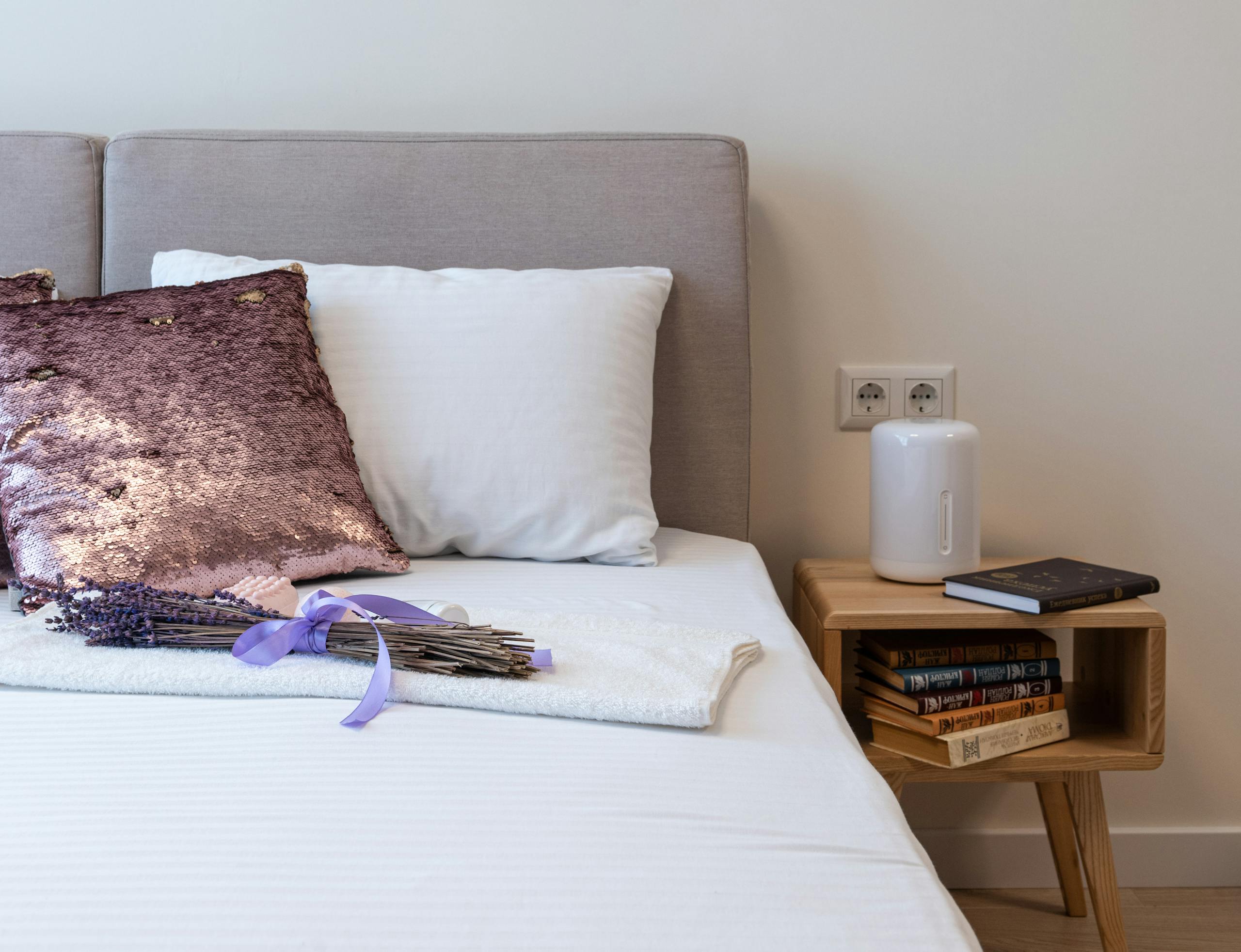
Sensory environment matters too. Introverts often have a lower threshold for sensory overstimulation. Bright lights, constant noise, and cluttered spaces aren’t just uncomfortable. They’re actively depleting. Creating a physical space that’s calm, organized, and low-stimulation isn’t precious. It’s strategic.
Even small adjustments compound over time. Noise-canceling headphones at the office. A tidy desk before you leave for the day. A specific chair or corner that signals to your nervous system that this is where you recover. These aren’t indulgences. They’re infrastructure.

How Can Introverts Protect Their Energy Without Damaging Relationships?
This was the hardest part for me. Not the self-care itself. The communication around it.
Early in my career, I’d cancel plans at the last minute because I couldn’t explain why I needed to stay home. I didn’t have the language. I’d say I wasn’t feeling well, which was true in a sense, but it wasn’t the whole truth. The whole truth was that I’d used everything I had and needed to stop giving for a while.
Over time, I learned that honest, calm communication about what I needed worked far better than avoidance. Not long explanations. Not apologies. Just clarity. “I need a quiet evening after this week. Can we plan for Sunday instead?” Most people, when you give them a concrete alternative, respond better than you expect.
The relationships that suffered weren’t the ones where I asked for space. They were the ones where I disappeared without explanation and left people guessing.
Psychology Today has published extensively on how introverts can communicate their social needs without framing it as rejection. Their personality and relationships section includes practical frameworks for these conversations that don’t require you to over-explain your neurology to every person in your life.
Protecting your energy isn’t the same as withdrawing from relationships. It’s showing up more fully when you do show up, because you’ve actually recovered instead of just white-knuckling through another obligation.
What Does a Sustainable Introvert Self-Care Rhythm Actually Look Like?
Sustainable is the word that matters here. Not perfect. Not elaborate. Sustainable.
A rhythm that works for introverts tends to have three layers: daily recovery, weekly restoration, and periodic deep rest. Each serves a different function.
Daily recovery is the small stuff. The quiet morning before anyone else is up. The lunch break spent alone instead of in the break room. The fifteen minutes after work before you engage with family or roommates. These micro-recoveries prevent the kind of cumulative depletion that hits you like a wall on Friday afternoon.
Weekly restoration is more intentional. A longer block of time, maybe a Saturday morning, where you do something that genuinely engages you without social demand. Reading, writing, a long solo walk, working on a project that absorbs you. Not scrolling. Not passive consumption. Active, absorbing engagement that matches your natural depth.
Periodic deep rest is what I’d call the reset. A weekend with minimal commitments. A vacation that includes genuine downtime rather than packed itineraries. A day where you don’t owe anyone anything. These are harder to protect in a busy life, but they’re what prevent the kind of chronic depletion that starts to look like depression or burnout.
The Harvard Business Review has written thoughtfully about how high performers, many of whom are introverts, build recovery into their professional lives rather than treating it as something that happens when they finally get a break. Their leadership and performance resources reframe rest as a professional strategy, not a personal indulgence.
What I’ve found, across two decades of running agencies and the years since, is that the people who seem inexhaustible aren’t the ones who never need rest. They’re the ones who’ve built recovery into their structure so consistently that depletion never gets a chance to compound.
How Do You Know When Your Self-Care System Is Actually Working?
You’ll know it’s working when you stop dreading the week ahead on Sunday night.
That sounds simple, but it’s actually a meaningful marker. Sunday dread, for introverts in demanding environments, is often a signal that the week ahead holds more output than the previous week allowed recovery for. When your rhythm is working, Sunday feels like a transition, not a countdown to something you’re already too depleted to face.
Other signs: You can engage in difficult conversations without feeling like you’re running on borrowed energy. You can be present with people you care about instead of mentally calculating when you can leave. You have opinions again, real ones, not just the path-of-least-resistance agreement that shows up when you’re too tired to think clearly.
At my worst, I was agreeing to things in meetings that I knew were wrong because I didn’t have the reserves to push back. That’s not introversion. That’s depletion masquerading as agreeableness. A functioning self-care rhythm gave me back the capacity to actually lead, to have positions, to say no when no was the right answer.
The World Health Organization defines mental health not as the absence of disorder but as a state in which a person can cope with normal stresses, work productively, and contribute to their community. Their global mental health resources offer a useful framework for thinking about wellbeing as capacity rather than just the absence of symptoms.
Capacity is what good self-care builds. Not happiness exactly, though that often follows. The capacity to be fully yourself in the moments that matter.
What Are the Biggest Mistakes Introverts Make With Self-Care?
Mistake one: treating self-care as something you do after you’ve already crashed.
Reactive self-care, the kind where you finally take a day off because you’ve hit a wall, is better than nothing. Yet it’s the least efficient version. You spend the first half of your recovery just getting back to baseline before you can actually restore anything. Proactive self-care, built into your regular rhythm, prevents you from ever getting that far down.
Mistake two: choosing self-care activities based on what sounds good rather than what actually works for you.
Yoga retreats are marketed as restorative. For some introverts, a retreat full of group sharing circles and communal meals is just a different kind of exhausting. Know the difference between what the wellness industry sells as restoration and what your specific nervous system actually needs.
Mistake three: apologizing for your needs instead of communicating them.
I spent years framing my need for quiet as a character flaw. “Sorry, I’m just not a people person.” That framing made it harder to ask for what I needed and harder for others to respect it. When I started communicating my needs as practical information rather than personal apology, everything shifted. “I work better with focused time in the morning” lands differently than “I’m sorry, I’m just introverted.”
Mistake four: conflating introversion with depression and not getting support when you actually need it.
Needing quiet is introversion. Losing interest in things you used to care about, persistent low mood, inability to feel restored even after adequate rest, those warrant a conversation with a professional. The two can coexist, and mistaking one for the other in either direction doesn’t serve you.

Building Something That Actually Fits You
What I’ve described here isn’t a prescription. It’s a framework for building something that fits your specific life.
Your drain points are probably different from mine. Your restorative activities might look nothing like early morning solitude or solo walks. Some introverts restore through creative work. Some through physical labor. Some through deep one-on-one conversation with a single trusted person. The common thread isn’t the activity. It’s the quality of engagement, low social performance demand, high internal absorption, and genuine alignment with how your mind actually works.
Start with observation rather than prescription. Spend a week noticing what depletes you and what restores you, without judgment. Not what should restore you. What actually does. The data you collect from your own experience is more useful than any article, including this one.
Then build one small, consistent practice. Not a complete overhaul. One thing you protect. For me, it was that early morning quiet. For you, it might be a no-plans Sunday morning, a solo lunch break, or a firm end time on your social obligations for the week.
Consistency over intensity. A small practice you actually maintain will do more for you than an elaborate system you abandon after two weeks.
You deserve to feel like yourself. Not the version of yourself that’s been running on empty and white-knuckling through overstimulating days. The version that has something to give because you’ve actually been taking care of what you need.
That version shows up better in every room. And it starts with understanding what actually restores you, not what you’ve been told should.
Find more on living well as an introvert in the Ordinary Introvert Introvert Hub, where we cover everything from energy management to career strategy for people wired like us.
About the Author
Keith Lacy is an introvert who’s learned to embrace his true self later in life. After 20 years in advertising and marketing leadership, including running agencies and managing Fortune 500 accounts, Keith now channels his experience into helping fellow introverts understand their strengths and build fulfilling careers. As an INTJ, he brings analytical depth and authentic perspective to every article, drawing from both professional expertise and personal growth.
Frequently Asked Questions
Is it normal for introverts to feel exhausted after socializing even when they enjoyed it?
Yes, and this is one of the most misunderstood aspects of introversion. Enjoying a social experience and being drained by it are not mutually exclusive. Introverts process social interaction more intensively than extroverts, which means even positive, enjoyable events carry an energy cost. Feeling tired after a dinner you loved doesn’t mean you didn’t want to be there. It means your nervous system did a lot of work.
How much alone time do introverts actually need each day?
There’s no universal number, and anyone who gives you one is guessing. The right amount depends on how socially demanding your day was, your baseline sensitivity to stimulation, your sleep quality, and what’s happening in your life at a given time. A useful approach is to treat solitude as something you calibrate based on how you feel rather than a fixed quota. Start with protecting at least fifteen to thirty minutes of genuine quiet daily and adjust from there based on what you observe about your own energy levels.
Can introverts enjoy social activities and still prioritize self-care?
Absolutely. Self-care for introverts isn’t about eliminating social life. It’s about building recovery into the rhythm around social engagement. Many introverts genuinely love spending time with people they care about. The difference between draining and sustaining social time often comes down to context: the size of the group, the depth of conversation, the level of performance expected, and whether you had adequate recovery before and after. Protecting your energy makes you more present and engaged when you do show up socially, not less.
What should introverts do when their self-care needs conflict with work demands?
This is a real tension, and pretending it isn’t doesn’t help. The most practical approach is to identify the micro-recoveries available within demanding workdays rather than waiting for large blocks of time that may not come. A solo lunch break, a ten-minute walk between meetings, noise-canceling headphones during focused work, and a clear end time on your availability after hours all add up. In the longer term, communicating your working style to managers and colleagues, framing it in terms of productivity rather than personality, tends to create more accommodation than suffering silently does.
How do you tell the difference between needing introvert self-care and experiencing depression?
Introversion is a stable trait that describes how you process stimulation and restore energy. Depression is a clinical condition that affects mood, motivation, sleep, appetite, and your ability to feel pleasure in things you normally care about. A key distinction: introvert self-care, when practiced, works. You feel restored after adequate solitude and recovery. With depression, rest often doesn’t restore the same way, and low mood persists regardless of circumstances. If you’re consistently unable to feel restored even after meeting your self-care needs, or if you’ve lost interest in things that used to matter to you, speaking with a mental health professional is worth prioritizing.