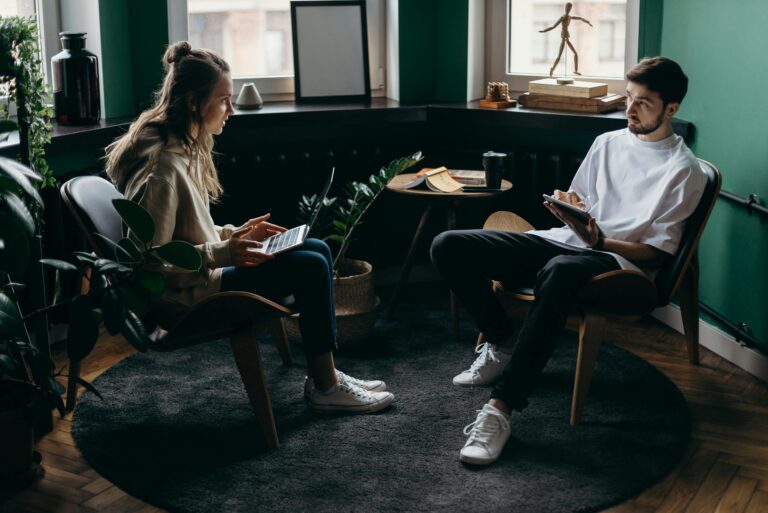

Moving in together felt like the natural next step. You were excited, maybe a little nervous, and definitely ready to share your life with your partner in a deeper way. But somewhere between unpacking boxes and establishing routines, you discovered something unexpected. The solitude that once recharged you became harder to find. Your reading nook disappeared into shared space. Those quiet mornings with coffee? Now filled with conversation before you’ve had time to wake up internally.
If this sounds familiar, you’re experiencing one of the most common yet least discussed challenges introverts face in cohabiting relationships. Creating space when you share an address isn’t selfish or a sign that something’s wrong with your relationship. It’s actually essential for your wellbeing and, paradoxically, for the health of your partnership.
I learned this the hard way. When my partner and I first moved in together, I assumed love meant wanting to be together constantly. It took months of feeling inexplicably drained before I understood that my need for solitude hadn’t disappeared. It had simply become harder to honor. That realization transformed not just how I approached our living arrangement, but how I understood the relationship between space and intimacy altogether.
Why Introverts Need Space Even in Loving Relationships
The misconception that loving someone means wanting constant togetherness runs deep in our culture. Movies end with couples moving in together as the ultimate happy ending. Social media celebrates couples who do everything together. But this narrative ignores a fundamental truth about how introverts function.
What’s your personality type?
Take our free 40-question assessment and get a detailed personality profile with dimension breakdowns, context analysis, and personalised insights.
Discover Your Type8-12 minutes · 40 questions · Free
Your introvert brain processes stimulation differently than your extroverted counterparts. According to personality science research from Truity, introverts have heightened sensitivity to dopamine, meaning they reach optimal stimulation levels faster. What feels energizing for an extrovert can feel overwhelming for you, even when that stimulation comes from someone you love deeply.
This isn’t about loving your partner less. It’s about how your nervous system is wired. Sharing space with another person, no matter how beloved, requires ongoing social processing. Even comfortable silence involves awareness of another person’s presence, their movements, their energy. For introverts, this constant low-level processing accumulates throughout the day.

Understanding this neurological reality helped me stop feeling guilty about needing alone time. I wasn’t rejecting my partner when I needed an hour to myself. I was maintaining the internal resources that allowed me to be genuinely present when we were together. Successful introvert marriages recognize this truth and build structures that honor it.
The Real Challenge of Shared Living Space
Cohabitation presents unique challenges that visiting or dating simply don’t. When you live separately, you naturally have built-in alone time. Your commute home, your evening routine, your morning ritual. These moments of solitude happen without negotiation.
Once you share an address, every moment of solitude requires either physical absence or explicit arrangement. This shift can feel surprisingly disorienting. The Journal of Social and Personal Relationships has documented that couples who respect each other’s need for autonomy report significantly higher relationship satisfaction. But creating that respect in practice requires intentional effort.
The physical reality of shared space compounds the challenge. In most living situations, there simply aren’t enough rooms for everyone to have dedicated private territory. You might share a bedroom, a bathroom, a kitchen. Even if you have separate home offices, walls don’t block out awareness of another person’s presence entirely.
I remember one particularly difficult period when both my partner and I were working from home. We had separate workspaces, but I could still hear their video calls through the wall. I knew their lunch break schedule, their bathroom trips, their frustrated sighs during difficult meetings. By evening, I felt like I’d been socializing all day despite barely exchanging more than a few words. The constant ambient awareness had drained me completely.
Communicating Your Space Needs Without Creating Distance
Perhaps the trickiest aspect of creating space in a cohabiting relationship is communicating your needs without making your partner feel rejected. The words “I need space” carry cultural baggage. They’re associated with relationships in trouble, with impending breakups, with emotional withdrawal.
Reframing this conversation becomes essential. Relationship therapists at Williamsburg Therapy Group emphasize that wanting space isn’t about escaping your partner. It’s about maintaining the self that makes you a good partner in the first place.
When I finally had this conversation with my partner, I focused on what I needed to give rather than what I needed to escape. Instead of saying “I need to get away from you,” I said “I want to be fully present when we’re together, and that means I need time to recharge alone.” This small shift in language changed everything about how the conversation landed.

Being specific helps enormously. Vague statements like “I need more alone time” leave too much room for interpretation and anxiety. Instead, try concrete requests. “I’d love Saturday mornings to myself until about 11.” Or “Can we establish a quiet hour after dinner where we both do our own thing?” These clear boundaries feel less threatening than open-ended requests.
Timing matters too. Don’t initiate this conversation when you’re already depleted and desperate for space. That desperation will seep into your words and make them sound more urgent, more like a crisis than a sustainable arrangement. Choose a moment when you’re feeling connected and content. This demonstrates that your request comes from a place of relationship health, not relationship distress.
Practical Strategies for Creating Physical Space
Theory is helpful, but you need concrete strategies that work in real apartments with real square footage limitations. Here’s what I’ve learned actually works for creating physical space when you share an address.
Designate a personal retreat zone, even if it’s small. This doesn’t require a spare room. A corner with a comfortable chair, a section of the bedroom that’s understood to be your space, even a spot on the balcony. The key is establishing this territory explicitly so that when you’re in it, your partner knows you’re recharging rather than avoiding.
In our home, we eventually designated what we call “the reading chair.” When either of us is in that chair, we’ve agreed it signals a need for quiet focus. No conversation initiation, no requests for help with tasks, no casual observations about the day. This simple arrangement eliminated countless small interruptions and the accompanying guilt of having to repeatedly ask for quiet.
Create temporal boundaries alongside physical ones. Perhaps mornings before 8 AM are quiet time. Maybe Sunday afternoons are reserved for individual pursuits. These scheduled windows of solitude become as natural and non-negotiable as work hours or sleep schedules. Introverts show love in ways that often include thoughtful boundary-setting, and this is one of the most loving things you can do for your relationship.
Consider noise-canceling headphones as a physical signal. When the headphones go on, it communicates “I’m in my own world right now” without requiring words. This works especially well for partners who struggle to remember or honor verbal requests in the moment.

The Paradox of Space and Intimacy
Here’s what surprised me most about creating space in our cohabiting relationship. We actually became closer. This seems counterintuitive. Wouldn’t spending more time apart lead to less connection?
But the opposite proved true. Psychology Today notes that introverts don’t want to be alone all the time. They want to connect deeply, which requires having full internal resources. When I stopped being constantly depleted, I had more to give during our together time.
The quality of our interactions improved dramatically. Instead of half-listening while internally craving solitude, I could be fully present. Instead of feeling vaguely irritated for reasons I couldn’t articulate, I felt genuinely glad to spend time together. The space I carved out didn’t create distance between us. It created the conditions for real closeness.
Studies examining relationship satisfaction have consistently found that partners who maintain individual identities alongside their couple identity report higher long-term happiness. Research published in SAGE journals confirms that social connection benefits introverts and extroverts alike, but the nature and amount of that connection needs to match individual needs. Forcing constant togetherness doesn’t create intimacy. It creates exhaustion.
Navigating Different Space Needs Between Partners
Not every cohabiting relationship involves two introverts. Many of us partner with people who fall elsewhere on the introvert-extrovert spectrum. This mismatch can complicate space negotiations significantly.
If your partner is more extroverted, they may genuinely not understand your need for solitude. Their own battery recharges through interaction. Your retreat to read alone might feel like rejection to them, not restoration. Mixed marriages between introverts and extroverts require extra communication and compromise around these differences.
Education helps enormously here. Sharing articles about introversion, explaining the neurological basis for your needs, helping them understand that this isn’t about them. When my partner finally grasped that my need for alone time was as real and unavoidable as their need for social connection, something shifted. They stopped taking my retreats personally.
Compromise becomes essential in mixed-temperament relationships. Perhaps you attend some social events together while skipping others. Maybe you establish that weeknight evenings are quieter while weekends allow for more social activity. The specific arrangement matters less than finding one that honors both partners’ fundamental needs.
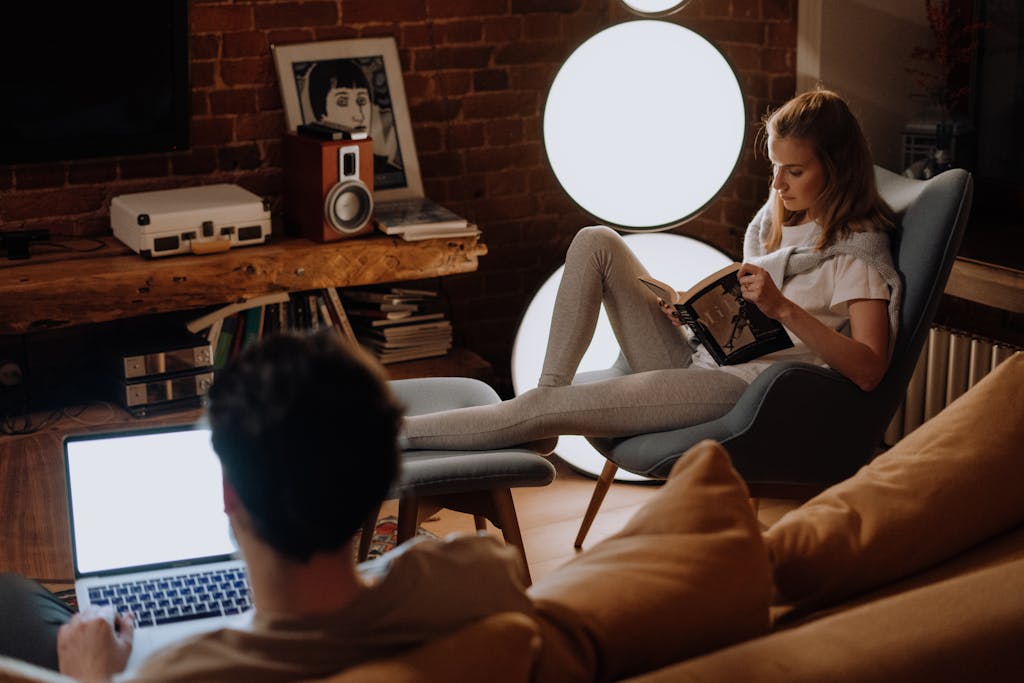
Parallel activity can bridge different needs beautifully. This involves being in the same space while doing different things. You read while they scroll social media. You work on a puzzle while they watch sports. You’re technically together, which satisfies their need for connection, while the lack of direct interaction gives you partial restoration. It’s not as recharging as true solitude, but it’s a sustainable middle ground.
Maintaining Individual Identity While Building Shared Life
Cohabitation can gradually erode individual identity if you’re not intentional about preventing it. Your hobbies become shared hobbies. Your friends become couple friends. Your schedule synchs entirely with your partner’s. Before you know it, “I” has completely dissolved into “we.”
For introverts especially, this dissolution poses dangers. So much of who we are lives in our internal world, cultivated through reflection and solitary pursuits. Lose access to that inner life and you lose touch with yourself. When two introverts date, they often naturally protect each other’s need for individual identity. But it requires conscious effort regardless of your partner’s temperament.
Maintain at least one hobby or interest that’s entirely your own. Something your partner has no part in, no opinion about, no claim to. This isn’t about secrecy or exclusion. It’s about preserving a piece of yourself that exists independent of the relationship.
Keep some friendships that are yours alone. Couple friendships serve important functions, but you also need people who know you as an individual, who remember who you were before this relationship, who can offer perspective that isn’t filtered through your partner’s presence.
Protect your internal processing time fiercely. Introverts need time to digest experiences, to sort through thoughts, to make sense of their own responses to the world. This processing can’t happen while engaged with another person. Guard those moments of reflection as the essential maintenance they are.
When Space Issues Signal Larger Problems
Sometimes the need for space indicates something beyond introvert battery management. It’s worth being honest with yourself about whether your space requests are about temperament or about avoiding deeper relationship issues.
If you’re constantly seeking escape rather than restoration, if time apart doesn’t leave you wanting to reconnect, if solitude feels like relief from your partner specifically rather than from stimulation generally, these patterns deserve attention. They might indicate relationship problems that hiding in alone time won’t solve.
The difference often shows in how you feel during your alone time. Healthy introvert solitude feels restorative, peaceful, generative. You emerge ready to engage. Avoidance-based solitude feels more like hiding, accompanied by dread about eventual return to togetherness. Pay attention to these distinctions.
If you suspect your space needs have crossed from temperament territory into avoidance territory, professional support can help sort through what’s happening. Couples therapy isn’t just for crisis situations. It can help healthy couples build better patterns around issues exactly like this one.
Building Sustainable Patterns Together
The goal isn’t to establish space arrangements once and consider it handled. Living together is dynamic. Work situations change, health fluctuates, external stressors come and go. Your space needs will shift accordingly.
Build in regular check-ins about how your current arrangements are working. Maybe monthly conversations about what’s feeling sustainable and what needs adjustment. This normalizes ongoing negotiation rather than treating any request for change as a sign of problems. Attraction and connection in introvert relationships actually deepens when partners demonstrate ongoing attentiveness to each other’s needs.
Be willing to experiment. What works during one season of life might not work during another. A pandemic that keeps you both home 24/7 requires different strategies than a period when one partner travels frequently for work. Stay flexible while remaining committed to the underlying principle that you both deserve the space you need.

Celebrate what’s working. When your space arrangements lead to better connection, name that out loud. “I really loved our conversation last night. I think having that quiet afternoon to myself helped me be more present.” This positive reinforcement helps both partners see space as relationship enhancement rather than relationship threat.
Frequently Asked Questions
How much alone time do introverts typically need when living with a partner?
There’s no universal answer because needs vary significantly among introverts. Some people need an hour or two daily, while others might be fine with a few hours weekly as long as they’re truly uninterrupted. Start by paying attention to your own signals. When do you feel depleted? How long does it take to feel restored? Your body will tell you what you need if you listen to it.
What if my partner feels hurt or rejected when I ask for space?
This is extremely common, especially early in cohabitation. Focus on education and reframing. Help them understand that your need for space is about your nervous system, not about them. Emphasize that taking space allows you to be a better partner. Show them through your behavior that time apart leads to more connected time together. Most partners eventually see the positive results and stop taking space requests personally.
Can you create meaningful alone time in a small apartment with no spare room?
Yes, though it requires more creativity. Use temporal boundaries since you can have the whole apartment to yourself if your partner goes out or wakes at different times. Designate small zones rather than entire rooms. Use signals like headphones or a specific chair to indicate “alone time in progress.” Some couples also find that taking turns with short outings, like a coffee shop or library visit, provides needed solitude even when home space is limited.
Is it normal to need more space in the early months of cohabitation?
Absolutely. Moving in together is a massive adjustment to your daily routine and environment. Your nervous system needs time to adapt to constantly sharing space. Many introverts find that their space needs moderate somewhat after the initial adjustment period, once living together feels less novel. Give yourself grace during this transition and don’t assume current needs will remain permanent.
How do I know if my space needs are healthy or if I’m avoiding my relationship?
Check your emotional state during and after alone time. Healthy introvert solitude feels restorative and leaves you ready to reconnect. Avoidance-based isolation feels like escape and comes with reluctance to return to togetherness. Also notice whether your space requests happen consistently based on your energy levels or spike specifically after interactions with your partner. Pattern recognition can reveal whether you’re managing temperament or avoiding problems.
Explore more relationship guidance in our complete Introvert Dating & Attraction Hub.
About the Author
Keith Lacy is an introvert who’s learned to embrace his true self later in life. With a background in marketing and a successful career in media and advertising, Keith has worked with some of the world’s biggest brands. As a senior leader in the industry, he has built a wealth of knowledge in marketing strategy. Now, he’s on a mission to educate both introverts and extroverts about the power of introversion and how understanding this personality trait can unlock new levels of productivity, self-awareness, and success.