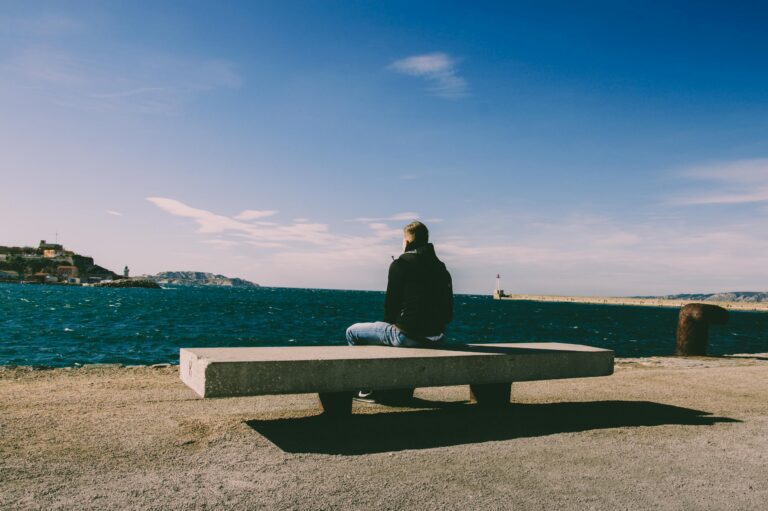
The digital marketing presentation was due in 72 hours. My team had already brainstormed for three days straight, generating plenty of ideas but nothing that felt right. I excused myself from the conference room and found an empty office on a different floor. Two hours of quiet work later, I had the creative direction that eventually won us the account. That experience taught me something about creativity that the brainstorming books never mentioned: sometimes the best ideas come when you step away from the noise.
Solitude gets misunderstood in our collaboration-obsessed culture. Many associate being alone with loneliness or lack of social skills. Yet research consistently shows that time spent alone can be one of the most powerful catalysts for creative thinking. Understanding how solitude fuels creativity changes how you approach problem-solving, innovation, and personal projects.
Spending time alone offers more than just peace and quiet. Our Solitude, Self-Care & Recharging hub explores the full range of benefits alone time provides, and creativity stands out as one of the most significant advantages. When external distractions fade, your mind gains the space needed for original thinking to emerge.
- Step away from group brainstorming sessions when stuck, as solitude often produces better creative solutions than collaboration.
- Distinguish between unsociability and shyness: preference for alone time naturally fuels creativity without social anxiety.
- Create uninterrupted solo work blocks to enable the loose, associative thinking that generates novel ideas.
- Recognize that a calm nervous system state during solitude provides optimal conditions for creative problem-solving.
- Pair peer interaction with substantial alone time to recharge mental resources needed for breakthrough thinking.
Why Does Solitude Make Introverts More Creative?
Psychologists Christopher Long and James Averill described the connection between solitude and creativity as “so ubiquitous that it has become almost a cliché: the scientist alone in a laboratory, the writer in a cabin in the woods, or the painter in a bare studio.” Their research examined why this pattern repeats across creative fields and throughout history.
What’s your personality type?
Take our free 40-question assessment and get a detailed personality profile with dimension breakdowns, context analysis, and personalised insights.
Discover Your Type8-12 minutes · 40 questions · Free
A University at Buffalo study by Julie Bowker revealed that unsociable individuals demonstrated higher creativity scores than their shy or avoidant counterparts. The distinction matters because unsociability reflects a genuine preference for solitude rather than social anxiety. As Bowker explained, these individuals “spend some time with peers” but “get just enough peer interaction so that when they are alone, they are able to enjoy that solitude. They’re able to think creatively and develop new ideas.”
During my agency years, I noticed this pattern among the most innovative team members. The designers who generated breakthrough concepts often worked best with headphones on, disconnected from the constant chatter. They weren’t antisocial; they participated in reviews and meetings. But their most creative work happened during uninterrupted solo sessions.

The mechanism behind this creativity boost involves how solitude affects cognitive processing. Research from the University of Rochester found that solitude creates what they call a “deactivation effect” on high-arousal affects. Your nervous system downshifts, reducing both positive and negative intense emotions. This calmer state provides ideal conditions for the kind of loose, associative thinking that generates novel ideas.
How Does Alone Time Trigger Creative Flow States?
Psychologist Mihaly Csikszentmihalyi spent decades studying what he called “flow” – that state where you become so absorbed in an activity that time disappears. His research with artists, scientists, and other creative professionals revealed something significant about personality and environment. Studies comparing flow experiences showed that personality traits strongly influence where people achieve optimal creative states.
People with extroverted tendencies typically experience more frequent flow during social activities. Those with introverted characteristics reach flow more easily in solitude. The research team found that participants reported more intense flow experiences when alone, regardless of personality type. Working solo seems to deepen the quality of creative absorption even for naturally social individuals.
My most productive creative periods aligned with this pattern. Presentations for major clients demanded collaborative input during strategy phases, but the actual creative development required isolation. I’d block out entire mornings, silence my phone, and work without interruption. Those sessions produced the campaigns that won awards and client renewals.
Mind Wandering as Creative Fuel
Research on creative individuals discovered they engage differently with idle thoughts compared to less creative people. Higher scores on divergent thinking tasks correlated with more freely moving thoughts and loosely associative mental transitions during rest periods. Creative minds don’t just tolerate mind wandering – they actively use it as a thinking tool.
Solitude provides the environment where mind wandering thrives. Without conversation to follow or social cues to monitor, your attention drifts naturally between ideas. These seemingly random connections often produce the insights that structured thinking misses. The shower, the commute, the morning walk – these solitary moments generate “aha!” experiences because your mind moves freely through its knowledge network.

Can You Be Creative Alone and Still Collaborate Well?
Before concluding that all creative work demands isolation, consider research by Robert Coplan showing the importance of balance. Studies found that people who alternated between solitary and group brainstorming sessions generated more new ideas than those who only brainstormed alone or only worked in groups.
Different phases of creative projects benefit from different social contexts. Solitary work helps develop ideas fully, engage in deep research, and allow mind wandering to suggest new directions. Collaborative sessions provide exposure to other perspectives, opportunities to test assumptions, and feedback that refines rough concepts. Neither approach works optimally without the other.
Leading the creative team taught me this lesson repeatedly. Agency life glorified brainstorming sessions, but our best work emerged from a rhythm: brief collaborative kickoffs to align thinking, extended solo development periods, targeted review sessions for feedback, then more isolation to integrate insights. The pattern respected both the social and solitary aspects of creative work.
What Are the Best Ways to Use Solitude for Creative Work?
Establishing regular alone time for creative work requires intention in our constantly connected environment. Start by identifying your most creative hours through self-observation. Track when ideas flow most easily and energy levels support focused work. Protect these hours from meetings and social obligations.
Physical environment significantly impacts creative solitude. Some people need complete silence; others prefer ambient sound. Experiment with different settings until you find conditions that support sustained focus. The location itself matters less than consistency – using the same space trains your mind to enter creative mode faster.
Consider implementing what I call “creative blackouts” – scheduled periods where communication devices stay off and doors remain closed. I blocked four-hour sessions twice weekly during peak agency years. Colleagues learned these times were non-negotiable unless actual emergencies occurred. The quality of work produced during those sessions justified the boundary.

Building a routine that incorporates solitary and social phases creates sustainable creative practice. Just as breaking bad habits without willpower relies on environmental design, developing consistent creative solitude depends on structured support systems. Establish clear signals that mark transitions into and out of creative isolation.
Managing the Transition Back to Social Interaction
Extended creative sessions in solitude can make returning to social interaction feel jarring. After hours of deep focus, your nervous system needs time to recalibrate for conversation and collaboration. Schedule buffer periods between intensive solo work and team meetings or social commitments.
Simple transition activities help bridge the gap. Take a short walk, make tea, or handle administrative tasks that require minimal cognitive load. These activities allow your mind to shift gears gradually rather than forcing an abrupt context switch. Respecting this transition preserves both the benefits of creative solitude and your capacity for productive social engagement.
How Do You Know When Healthy Solitude Becomes Harmful Isolation?
Recent research on solitude and well-being emphasizes distinguishing between chosen solitude and involuntary isolation. Self-determined solitude – time alone pursued for creative engagement or emotional benefits – correlates with positive outcomes. Non-self-determined solitude, whether from social exclusion or lack of confidence, typically produces negative effects.
For more on this topic, see i-come-to-the-garden-alone-spiritual-solitude.
Monitor your emotional state during and after solitary creative work. Chosen solitude should feel energizing even when mentally demanding. You emerge with a sense of accomplishment and renewed capacity for social connection. Isolation produces loneliness, increased negative self-talk, and reluctance to engage with others even when opportunities arise.
Maintaining social connections alongside creative solitude matters for long-term well-being. Studies on creative individuals demonstrate they benefit from a rhythm that includes both focused alone time and meaningful social interaction. Balance looks different for everyone, but complete withdrawal undermines the very creativity that solitude is meant to enhance.
During periods when creative demands intensified, I explicitly scheduled social activities to maintain balance. Monthly dinners with friends outside the industry, weekly check-ins with mentors, weekend family time – these touchpoints prevented creative solitude from sliding into unhealthy isolation. The complete self-care system requires attention to both solitary recharge and social connection.

How Do You Build a Creative Solitude Routine That Actually Works?
Developing effective creative solitude starts with small, consistent practices rather than dramatic changes. Begin with fifteen-minute daily sessions dedicated to creative thinking without distractions. Notice what happens during these brief periods – which ideas surface, how your attention moves, what feels productive versus forced.
Gradually extend session length as your capacity builds. Many people find their creative endurance increases significantly over weeks of regular practice. What initially feels sustainable for thirty minutes eventually supports two or three-hour sessions. The consistency matters more than duration, especially when establishing new patterns.
Track the relationship between solitary creative work and overall output quality. Notice whether ideas generated during alone time differ from those produced in collaborative settings. Document which projects benefit most from extended solitude and which require more frequent social input. This data helps optimize your creative process over time.
Managing energy alongside creativity becomes essential for sustainable practice. Just as breaking phone addiction requires awareness of digital habits, maintaining productive solitude demands attention to when isolation energizes versus depletes you. Learn your limits and respect them rather than forcing extended periods that produce diminishing returns.
Creative solitude offers profound benefits when approached intentionally. Research confirms what many creative professionals experience directly – time alone provides unique advantages for generating original ideas and developing complex projects. Understanding these benefits allows you to structure environments and schedules that support your most innovative thinking.
The connection between solitude and creativity doesn’t suggest constant isolation produces optimal results. Balance remains essential, alternating between focused alone time and collaborative engagement. What matters most is recognizing solitude as a legitimate creative tool rather than a limitation to overcome.
After decades in leadership roles that often demanded constant social presence, I’ve learned that protecting time for solitary creative work isn’t selfish – it’s strategic. The ideas generated during those quiet hours consistently proved more valuable than anything produced through sheer force of collaborative effort. Your best creative thinking likely emerges the same way: in moments of chosen, purposeful solitude.
Explore more solitude and recharging resources in our complete Solitude, Self-Care & Recharging Hub.
About the Author
Keith Lacy is an introvert who’s learned to embrace his true self later in life. With a background in marketing and a successful career in media and advertising, Keith has worked with some of the world’s biggest brands. As a senior leader in the industry, he has built a wealth of knowledge in marketing strategy. Now, he’s on a mission to educate both introverts and extroverts about the power of introversion and how understanding this personality trait can reveal new levels of productivity, self-awareness, and success.