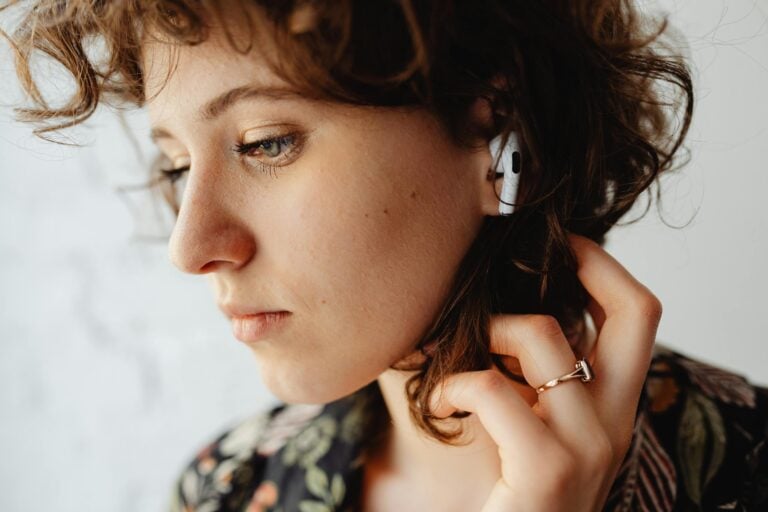

Dating with social anxiety means working through a specific kind of fear: the worry that who you are, once seen up close, won’t be enough. What actually works isn’t pretending the anxiety doesn’t exist. It’s building dating habits that match how your nervous system genuinely functions, choosing lower-pressure environments, being honest about your needs early, and giving yourself recovery time between dates so anxiety doesn’t compound into avoidance.
Social anxiety and introversion aren’t the same thing, though they often travel together. Introversion is a wiring preference for depth over breadth, for meaning over noise. Social anxiety is the fear of judgment, of being evaluated and found lacking. Many of us carry both, and dating pulls both into sharp focus at the same time.
I spent more than two decades running advertising agencies, managing Fortune 500 accounts, and sitting across conference tables from some of the most confident people I’d ever met. From the outside, I probably looked like someone who had the social piece figured out. Inside, I was running constant calculations about how I was being perceived, whether I’d said the wrong thing, whether my quietness was being read as disinterest or arrogance. Dating, for most of those years, felt like a high-stakes performance review I hadn’t studied for.
What changed wasn’t that the anxiety disappeared. What changed was that I stopped trying to date like an extrovert and started building an approach that actually fit how I’m wired.
If you’re an introvert working through the social anxiety side of dating, the Introvert Dating and Attraction hub covers the full landscape of how introverts connect, attract, and build relationships on their own terms. This article goes deeper into the anxiety-specific piece: what makes dating harder when your nervous system is already running hot, and what genuinely helps.

Why Does Dating Feel So Much Harder When You Have Social Anxiety?
Social anxiety isn’t shyness, and it isn’t just nerves. A 2021 report from the National Institute of Mental Health identified social anxiety disorder as one of the most common anxiety conditions in adults, affecting roughly 7% of the population in any given year. The core feature is an intense fear of being scrutinized or negatively evaluated in social situations.
What’s your personality type?
Take our free 40-question assessment and get a detailed personality profile with dimension breakdowns, context analysis, and personalised insights.
Discover Your Type8-12 minutes · 40 questions · Free
Dating is, almost by definition, a situation designed around being evaluated. You’re presenting yourself to someone who is actively deciding whether they want to spend more time with you. For someone with social anxiety, that setup doesn’t just feel uncomfortable. It can feel genuinely threatening.
Add introversion to that mix and the challenge compounds. Introverts process social information more slowly and more deeply than extroverts. We notice more, feel more, and need more time to recover afterward. A first date that an extrovert walks away from feeling energized might leave an introvert feeling wrung out, even if it went well.
One of the patterns I noticed in myself during my agency years was how differently I functioned in one-on-one client dinners versus large networking events. In a dinner, I was engaged, curious, present. At a cocktail party with thirty people, I was performing a version of myself that took enormous energy to maintain. Dating in loud bars or group outings triggered every anxiety mechanism I had. Dating over coffee, in a quiet booth, with one person? That was a completely different experience.
The environment shapes the anxiety. And you have more control over the environment than most dating advice suggests.
What Does Social Anxiety Actually Do to Your Brain During a Date?
Understanding the mechanics helps, not because knowledge eliminates anxiety, but because it makes the experience less mysterious and less shameful.
When social anxiety activates, the brain’s threat-detection system fires as if the social situation were a genuine physical danger. The amygdala flags the interaction as risky. Cortisol and adrenaline rise. Your attention narrows. You start monitoring yourself from the outside, watching how you’re coming across rather than actually being present in the conversation.
Psychologists call this “self-focused attention,” and it’s one of the most disruptive features of social anxiety in dating contexts. Instead of listening to what your date is saying, part of your mental bandwidth is occupied with questions like: Am I being boring? Did that pause last too long? Did that joke land wrong? That internal monitoring is exhausting, and it makes genuine connection harder to access.
The American Psychological Association notes that social anxiety often involves a significant gap between how anxious people believe they appear and how they actually come across to others. Most people with social anxiety look far more composed than they feel. Your date almost certainly cannot see the internal chaos you’re managing.
Knowing that didn’t make my anxiety vanish during difficult client pitches, but it did help me stop treating every awkward pause as evidence that the whole thing had fallen apart. That same reframe applies directly to dating.

How Do You Choose Date Environments That Actually Work for You?
Most conventional dating advice assumes you’ll follow the standard script: drinks at a bar, dinner at a busy restaurant, maybe a movie. That script was written by and for people whose nervous systems handle high-stimulation social environments without much friction. It doesn’t fit everyone.
Choosing environments deliberately is one of the most practical things you can do when dating with social anxiety. Consider what conditions help you actually show up as yourself.
Quieter settings reduce the cognitive load of trying to hear and be heard over ambient noise. Daytime dates remove some of the pressure that nighttime venues carry. Activity-based dates (a walk, a museum, a farmers market) give both people something external to focus on, which eases the intensity of sustained eye contact and direct conversation. Shorter first dates with a clear endpoint reduce the anxiety of not knowing how long you have to perform.
When I was running my agency, some of my best client relationships were built during walks between meetings, not in formal conference rooms. The side-by-side dynamic changed everything. The same principle applies to dating. Walking next to someone is fundamentally different from sitting across from them under bright lights while a server hovers nearby.
You’re not being difficult by having preferences about where you meet. You’re being honest about what helps you connect. A date who respects that early signal is showing you something important about how they’ll handle your needs later.
Does Being Honest About Social Anxiety Make Dating Harder?
Many people with social anxiety spend enormous energy hiding it, which creates a strange paradox: the effort of concealment makes the anxiety worse, and it prevents the kind of authentic connection that dating is supposed to build toward.
You don’t owe anyone a clinical disclosure on a first date. That’s not what honesty means here. What it does mean is that you don’t have to pretend to be someone who thrives on spontaneous large gatherings, or who never needs a quiet evening to recharge, or who finds crowded venues energizing.
There’s a real difference between performing confidence you don’t feel and presenting yourself accurately. Saying “I tend to do better in quieter spots, would you be open to coffee somewhere low-key?” is honest, specific, and practical. It’s also a filter. Someone who finds that preference strange or inconvenient is probably not someone whose company will feel easy over time.
Part of what makes building deep conversations as an introvert feel so natural is that depth requires honesty. You can’t have a genuinely meaningful exchange while simultaneously performing a version of yourself designed to avoid judgment. The two goals pull in opposite directions.
The people worth dating are the ones who respond to your honesty with curiosity rather than alarm. And finding those people faster is worth the discomfort of a few early conversations that don’t go anywhere.

What Actually Helps Manage Anxiety Before and After Dates?
Preparation and recovery are two underrated tools in dating with social anxiety. Most advice focuses on what to do during the date. The before and after matter just as much.
Before a date, anxiety tends to spike in the anticipation window. Your brain runs worst-case scenarios. You rehearse awkward moments that haven’t happened yet. One thing that genuinely helps is shifting your preparation toward curiosity rather than performance. Instead of rehearsing what to say, spend a few minutes thinking about what you actually want to learn about this person. What are you genuinely curious about? That reframe moves your mental orientation from “how will I perform?” to “what will I discover?”
Physical grounding helps too. A 2018 study published through the National Institutes of Health found that slow, controlled breathing directly reduces physiological markers of anxiety by activating the parasympathetic nervous system. A few minutes of intentional breathing before you walk in isn’t a magic solution, but it does bring your baseline down to something more workable.
After a date, the post-event processing that social anxiety triggers can be brutal. You replay every moment, identify every possible mistake, and build a case for why it went worse than it did. Giving yourself a deliberate recovery window, some quiet time before you pick up your phone and analyze every text exchange, is protective. Introverts need that recharge time anyway. Treating it as a non-negotiable part of your dating process rather than a weakness helps you stay in the game longer without burning out.
The Mayo Clinic recommends cognitive behavioral approaches for managing social anxiety, including challenging the automatic negative thoughts that fire after social interactions. You don’t need a therapist to start applying that principle. When you catch yourself replaying a moment and labeling it a disaster, ask yourself: what’s the actual evidence? What would I say to a friend who described this same moment?
How Do You Build Connection When Anxiety Is Getting in the Way?
Anxiety narrows attention. It pulls you inward, toward self-monitoring, away from the person sitting across from you. One of the most effective ways to work against that pull is to focus outward with genuine intention.
Ask real questions. Not the standard interview questions that first dates often devolve into, but questions you’re actually curious about. What matters to this person? What did they almost do with their life? What do they find genuinely difficult? Those questions create the conditions for real conversation, and real conversation is where anxiety tends to quiet down because you’re engaged rather than performing.
Introverts are often better at this than we give ourselves credit for. We notice things. We pick up on what someone isn’t saying as much as what they are. We ask follow-up questions because we’re actually processing what we heard. Those are real strengths in a dating context, and they’re worth claiming.
I’ve watched extroverted colleagues dominate every room they entered and still leave people feeling unseen. Some of the most meaningful conversations I’ve had, in business and in my personal life, happened because I was quiet enough to actually listen. That quality doesn’t disappear when you’re anxious. It gets buried. Part of what good dating conditions do is give it room to surface.
When two introverts date each other, the dynamic shifts in ways that aren’t always obvious at first. If you’re curious about that specific experience, what happens when two introverts date gets into the nuances that most relationship advice overlooks.

What Happens When Dating Anxiety Follows You Into a Relationship?
Getting into a relationship doesn’t automatically resolve social anxiety. In some ways, it changes the terrain rather than eliminating it. The fear of judgment shifts from “will this person like me?” to “will this person keep liking me?” The stakes feel higher because more is invested.
Social anxiety within relationships often shows up as over-apologizing, difficulty expressing needs directly, avoiding conflict to prevent rejection, and interpreting a partner’s neutral moods as evidence of disapproval. Those patterns are worth recognizing because they’re workable once you can see them clearly.
One of the things that helped me most was learning to articulate what I actually needed rather than hoping a partner would figure it out or getting quietly resentful when they didn’t. Introverts often struggle with this because we process internally and assume others do the same. They don’t always.
Needing alone time, for example, is one of the most misunderstood introvert needs in relationships. It often gets read as withdrawal or rejection when it’s actually maintenance. The guilt that comes with needing alone time in a relationship is something many introverts carry without naming, and it’s worth addressing directly with a partner rather than managing silently.
Social anxiety and introversion together can also create friction around social obligations as a couple. Parties, family events, work functions: these situations carry their own specific pressures. Handling social obligations as a couple requires honest conversation about capacity and a shared approach that doesn’t leave one partner consistently depleted.
A 2020 analysis from Psychology Today noted that social anxiety often improves significantly within secure, consistent relationships, partly because the predictability of a trusted partner reduces the threat-detection that drives anxious responses. Finding the right person doesn’t cure anxiety, but it can change the context in which it operates.
When Should You Consider Professional Support for Dating Anxiety?
There’s a range here. Feeling nervous before dates is normal. Feeling nervous to the point that you’re consistently avoiding dating entirely, or that the anxiety is significantly affecting your wellbeing, is worth addressing with professional support.
Cognitive behavioral therapy has strong evidence behind it for social anxiety. The American Psychological Association identifies CBT as one of the most effective treatments available, with benefits that extend well beyond the therapy room. Exposure work, in particular, helps because it gradually reduces the fear response through repeated contact with the feared situation, in this case, social interactions and dating scenarios.
Seeking that kind of support isn’t a sign that something is fundamentally wrong with you. It’s a practical decision to stop white-knuckling something that has effective solutions. I wish I’d made that decision earlier in my life rather than spending years developing workarounds that were, at best, partial fixes.
Online therapy options have also made access significantly easier. If the idea of walking into a therapist’s office feels like too much of a barrier, that barrier is now lower than it’s ever been.
How Do You Keep Your Energy Sustainable While Dating?
Dating is a sustained effort over time, not a single event. One of the ways social anxiety makes it harder is by making each individual date feel so high-stakes that you either burn through your energy reserves quickly or avoid the whole process to protect yourself from the cost.
Sustainable dating means pacing yourself deliberately. Not scheduling dates back-to-back. Building in genuine recovery time. Recognizing when you’re dating from a depleted baseline and giving yourself permission to slow down without labeling it failure.
Quality time in relationships, once you’re in one, follows a similar logic. What actually restores introverts isn’t always what looks like quality time from the outside. Understanding your own version of connection and rest, and communicating it to a partner, matters more than matching someone else’s definition of what togetherness should look like.
During the years I was building my agency, I learned that I could sustain high performance in client-facing work if I protected certain recovery conditions. Early mornings alone. Quiet lunches. Deliberate limits on back-to-back meetings. The same logic applies to dating. Protecting your energy isn’t selfishness. It’s how you stay available for the connections that actually matter.
And if dating eventually leads somewhere serious, the energy management conversation doesn’t end. Even decisions like planning a wedding as an introverted couple carry their own version of this challenge, managing expectations, handling other people’s needs, protecting what matters to you both.
What Does Progress Actually Look Like When Dating with Social Anxiety?
Progress in this area rarely looks like the anxiety vanishing. It looks more like the anxiety becoming smaller relative to your willingness to act anyway. You still feel nervous before a date. You go anyway. The nervous feeling doesn’t mean you’re doing it wrong.
Progress looks like choosing environments that work for you without apologizing for the preference. It looks like being honest about your needs early rather than waiting to see if a partner figures them out. It looks like giving yourself recovery time without guilt. It looks like recognizing that a quiet, thoughtful presence is genuinely attractive, not a consolation prize for failing to be louder.
One of the things I’ve come to believe, after years of watching myself and other introverts work through this, is that the anxiety often diminishes most when we stop treating our introversion as the problem to be solved. The introversion isn’t the obstacle. The mismatch between how we’re wired and the environments and scripts we’ve been handed is the obstacle. Change the environment, change the script, and the anxiety has less to feed on.
You’re not trying to become someone who doesn’t feel nervous. You’re building an approach to dating that fits who you actually are. That’s a different goal, and it’s a more achievable one.
Find more articles on connecting, attracting, and building relationships as an introvert in the complete Introvert Dating and Attraction hub.
About the Author
Keith Lacy is an introvert who’s learned to embrace his true self later in life. After 20 years in advertising and marketing leadership, including running agencies and managing Fortune 500 accounts, Keith now channels his experience into helping fellow introverts understand their strengths and build fulfilling careers. As an INTJ, he brings analytical depth and authentic perspective to every article, drawing from both professional expertise and personal growth.
Frequently Asked Questions
Is social anxiety the same as being introverted?
No. Introversion is a personality trait describing how you process energy and information. Social anxiety is a fear-based response to perceived social evaluation. Many introverts don’t have social anxiety, and some extroverts do. The two can coexist, which is common, but they’re distinct experiences with different roots and different approaches to managing them.
Should I tell someone I’m dating that I have social anxiety?
You’re not obligated to disclose on a first date, but being honest about your preferences and needs early tends to work better than hiding them. You don’t need to frame it clinically. Saying you prefer quieter environments, or that you need some time to recharge after social events, communicates what matters without requiring a full explanation. As a relationship develops, more honest conversation about how anxiety affects you becomes both possible and worthwhile.
What kinds of dates work best for people with social anxiety?
Lower-stimulation environments tend to work better: coffee shops, daytime walks, museums, quiet restaurants. Activity-based dates reduce the pressure of sustained face-to-face conversation. Shorter first dates with a clear endpoint help by limiting the anticipatory anxiety of an open-ended timeline. The best date is one where you can actually be present rather than spending the whole time managing your nervous system.
How do I stop overthinking after a date?
Post-event processing is one of the most common features of social anxiety, and it’s worth addressing directly. Give yourself a deliberate recovery window before analyzing the date or checking your phone obsessively. When you catch yourself replaying moments and catastrophizing, ask what the actual evidence is for your worst-case interpretation. Most of the time, you came across better than you think. The gap between how anxious people feel and how they actually appear to others is consistently larger than expected.
Can social anxiety get better when you’re in a relationship?
Yes. Secure, consistent relationships tend to reduce the threat-detection that drives social anxiety because the uncertainty that feeds anxiety decreases. That said, anxiety often shifts rather than disappears, moving from “will they like me?” to other relationship-specific fears. Building honest communication habits early, including being clear about your needs for alone time and lower-stimulation environments, creates the conditions where anxiety has less room to grow.