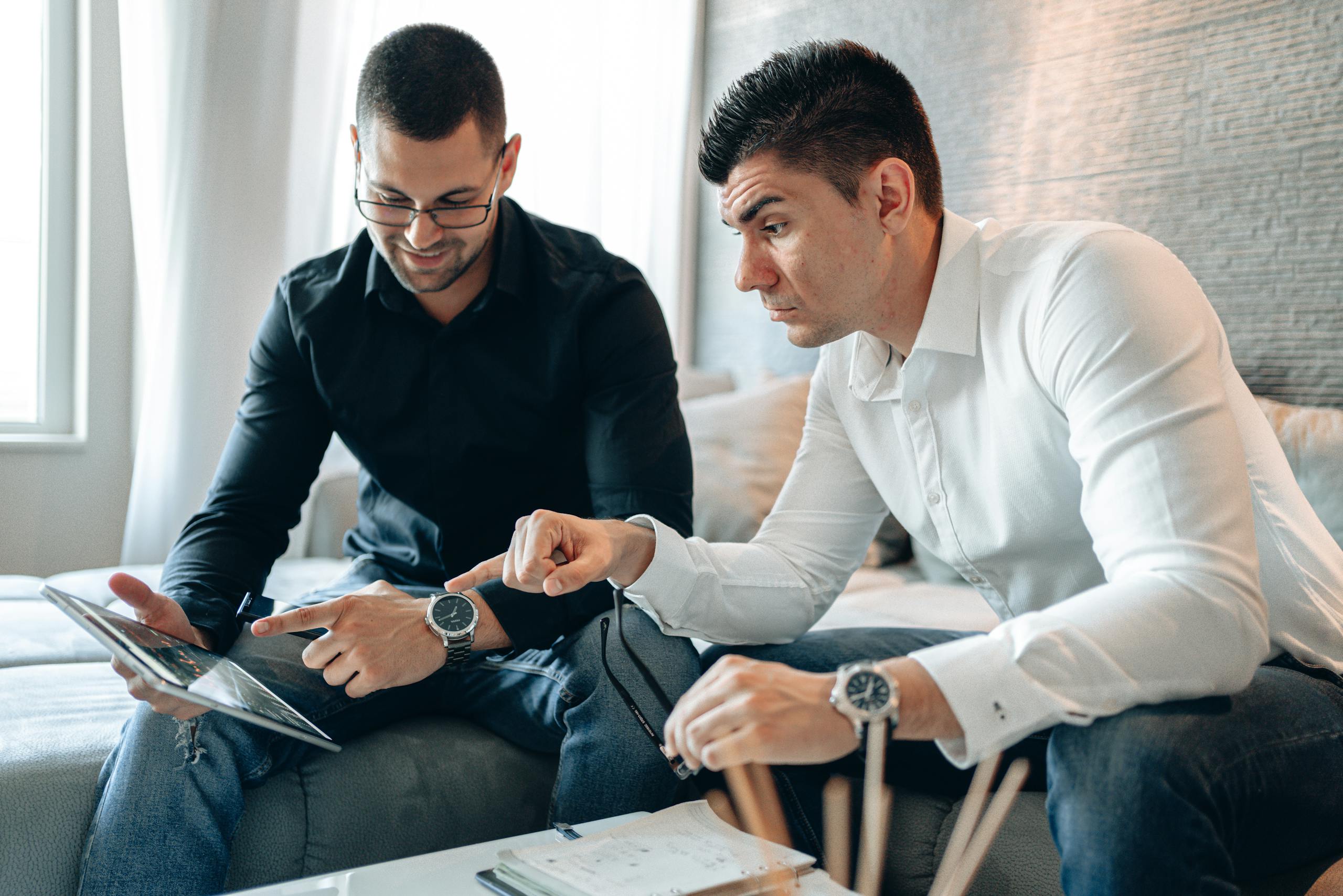
Assertive behaviour means expressing your needs, opinions, and boundaries clearly and respectfully, without diminishing others in the process. Aggressive behaviour, by contrast, pushes those same needs forward at someone else’s expense, using pressure, intimidation, or emotional force to win. The difference between the two isn’t always obvious in the moment, but it shapes every professional relationship, every difficult conversation, and every negotiation you’ll ever have.
Most people can identify extreme aggression when they see it. Raised voices, threats, personal attacks. What’s harder to spot is the subtle version: the colleague who frames every disagreement as a personal challenge, the manager whose “feedback” consistently leaves people smaller than when they walked in, or the person who mistakes relentlessness for strength. I spent years in advertising leadership watching this play out, and I’ll be honest, I wasn’t always sure which side of that line I was standing on.
As an INTJ who spent two decades running agencies and managing large creative teams, I processed most of my communication internally before it ever reached my mouth. That internal filtering is a genuine strength. But it also meant I sometimes held back when I should have spoken, or overcorrected and came across as blunt when I finally did. Finding the assertive middle ground took real work, and it changed how I led, how I negotiated, and how I showed up in rooms that weren’t always comfortable for someone wired the way I am.

If you’re working on how you communicate, how you hold space in conversations, or how you respond when someone pushes back, you’ll find a lot of connected thinking in our Introvert Social Skills and Human Behavior hub. This article sits inside that larger conversation about how introverts engage with the world on their own terms.
What Actually Separates Assertive From Aggressive Behaviour?
The clearest way I’ve come to understand this distinction is through intention and impact. Assertiveness is about being heard. Aggression is about winning. Those two goals can look similar from the outside, especially when someone is passionate or under pressure, but they produce very different results in the people around you.
Career Coaching for Introverts
One-on-one career strategy sessions with Keith Lacy. 20 years of Fortune 500 leadership as an introvert, now helping others build careers that work with their wiring.
Learn More50-minute Zoom session · $175
Assertive communicators hold their position while staying genuinely open to the other person’s perspective. They say “I disagree with that approach, and here’s why” without needing the other person to feel wrong. Aggressive communicators need the outcome to validate them. The conversation becomes a contest, and someone has to lose.
There’s also a physical and tonal dimension worth noting. Communication research from the National Institutes of Health points to how tone, pacing, and physical cues carry as much meaning as the words themselves. Assertive communication tends to be steady, grounded, and direct. Aggressive communication often escalates, either in volume, speed, or emotional intensity, as a way of overwhelming the other person’s resistance rather than addressing it.
One of the patterns I noticed most often in agency life was the difference between assertive negotiation and aggressive pressure. When pitching to a Fortune 500 client, some of my competitors would push hard on price, timelines, and deliverables in ways that felt coercive. They’d manufacture urgency, imply that hesitation meant weakness, or subtly dismiss the client’s concerns. Short term, it sometimes worked. Longer term, those relationships rarely held. Assertive negotiation, where you state your value clearly, hold your position with confidence, and respect the client’s right to think it through, built the accounts that lasted.
Why Do Introverts Struggle With This Distinction More Than Most?
There’s a particular trap many introverts fall into, and I’ve been in it myself. Because we tend to avoid conflict and dislike confrontation, we often swing between two extremes: staying silent when we should speak, then finally reaching a breaking point and coming across far more forcefully than we intended. Neither end of that swing is assertive. One is passive, the other tips into aggression, even if it’s not how we meant it.
Part of what makes this harder is that introverts often overthink the conversation before it happens. We rehearse, anticipate responses, build arguments. By the time we actually speak, we’ve been in the debate for hours internally. The other person is just hearing our conclusion, with all the emotional weight of that internal process behind it. That can read as intensity or pressure, even when the intent was simply to be clear.
If you recognise that pattern in yourself, the kind of mental loop that makes every conversation feel higher-stakes than it needs to be, it’s worth looking at overthinking therapy approaches that can help you interrupt that cycle before it shapes how you communicate.
There’s also a confidence issue underneath this. Many introverts have been told, directly or indirectly, that their natural communication style is too quiet, too hesitant, or not leadership material. So when they try to correct for that, they sometimes overcorrect. They perform assertiveness rather than practice it, and performance has a way of feeling forced, which can tip into aggression without anyone intending it.

Understanding your MBTI type can offer real clarity here. If you haven’t already, take our free MBTI test to get a clearer picture of your natural communication tendencies and where you might be compensating in ways that don’t serve you.
How Does Personality Type Shape the Way People Communicate?
Personality type doesn’t determine whether someone is assertive or aggressive, but it does influence the form each tendency takes. As an INTJ, my version of aggression was rarely loud. It showed up as intellectual dismissal: cutting off a line of thinking before it had been fully heard, or framing a disagreement in a way that made the other person feel logically outmatched rather than genuinely engaged. That’s still aggression. It just wears a quieter coat.
On my teams over the years, I managed people across a wide range of types, and each had their own version of this challenge. The ENTJs I worked with could be assertive and inspiring, but under pressure they sometimes bulldozed. The INFJs on my creative teams were often the most emotionally attuned people in the room, picking up on tension before anyone named it, but when they felt unheard they’d sometimes withdraw entirely, which created its own kind of passive pressure on the group dynamic.
What Psychology Today’s work on introvert leadership advantages captures well is that introverts often bring a more considered, less reactive communication style to high-pressure situations. That’s genuinely valuable. The challenge is learning to express that consideration outwardly, so it reads as confidence rather than hesitation.
Emotional intelligence is the bridge between natural tendency and effective communication. Understanding what you’re feeling, why you’re feeling it, and how your expression of that feeling lands with others is what separates someone who communicates well from someone who communicates powerfully. If you want to develop that capacity more intentionally, the perspective of an emotional intelligence speaker can offer frameworks that go well beyond the generic advice you usually find.
What Does Assertive Communication Actually Look Like in Practice?
Assertive communication has a few consistent qualities regardless of the context or personality type involved. It’s direct without being dismissive. It holds a position without needing the other person to abandon theirs. And it stays grounded even when the conversation gets uncomfortable.
In practical terms, that looks like using “I” statements rather than “you” accusations. Saying “I need more time to review this before we decide” rather than “You’re rushing this and it’s going to be a problem.” Both sentences might reflect the same concern, but one invites dialogue and one creates defensiveness.
It also means being specific. Vague assertiveness, “I just feel like my input isn’t valued,” leaves the other person with nothing concrete to respond to. Specific assertiveness, “In the last three project meetings, my proposals have been moved past without discussion, and I’d like to understand why,” gives the conversation somewhere to go.
One of the most useful shifts I made in my agency work was learning to separate the content of a disagreement from the relationship underneath it. Early on, I sometimes handled pushback on creative work as though it were a personal challenge. Someone questioning a campaign direction felt like they were questioning my judgment, and I’d respond with a kind of cold certainty that shut down the room. Over time, I learned that genuine assertiveness means holding your view firmly while staying genuinely curious about what the other person sees that you might not. That’s not weakness. That’s how good work gets made.

Developing the conversational skills to hold that kind of grounded dialogue takes practice. The guidance in how to be a better conversationalist as an introvert is a good place to work on the mechanics of this, particularly the listening side of assertiveness that often gets overlooked.
What Makes Aggressive Behaviour So Difficult to Recognize in Yourself?
Nobody thinks of themselves as the aggressive one. That’s what makes this genuinely hard. Most people who communicate aggressively believe they’re being direct, passionate, or appropriately firm. The subjective experience of aggression rarely feels like aggression from the inside.
There are a few internal signals worth paying attention to. One is the feeling of needing to win rather than needing to be understood. If you find yourself in a conversation where the goal has quietly shifted from “we need to resolve this” to “I need to be right about this,” that’s a signal worth noticing.
Another signal is the body. Aggression tends to live in physical tension: a tightening in the chest, a faster heart rate, a sharpening of focus that narrows rather than opens. Physiological research on stress response shows how the body’s threat-response system can activate in social conflict the same way it does in physical danger. When that system is running, it’s very hard to stay genuinely open to another person’s perspective.
This is where self-awareness practices become practically useful rather than just conceptually interesting. Meditation and self-awareness work can help you build the capacity to notice these internal states before they drive your behaviour. Not to suppress them, but to create enough space between the feeling and the response that you can choose how you want to show up.
I’ve had moments in my career where I recognised, after the fact, that I’d been aggressive in a way I didn’t intend. A particular conversation with a senior account director comes to mind. She’d raised a concern about a client relationship, and I’d responded with a kind of efficient certainty that essentially told her she was wrong without really engaging with what she was seeing. She was right, as it turned out. And the way I’d handled it meant she was much more cautious about bringing concerns forward after that. That’s a real cost, not just to her, but to the quality of information I was getting.
How Does This Play Out Differently for Introverts in the Workplace?
Introverts face a specific double standard in professional environments. When an extrovert is direct and firm, it often reads as confident leadership. When an introvert is direct and firm, it can read as cold, difficult, or unexpectedly aggressive, precisely because it contrasts with the quieter baseline people have come to expect.
This creates a real communication challenge. An introvert who has worked hard to become more assertive may find that their assertiveness is misread, not because they’re communicating poorly, but because the context around them is interpreting it through a biased lens. Harvard’s writing on introvert social engagement touches on this, noting that introverts often need to be more deliberate about how they signal their intent, since their natural communication style doesn’t always broadcast warmth and openness in the way extroverts’ does.
One practical approach is to be explicit about your process. In my agency, I eventually got into the habit of naming what I was doing in high-stakes conversations: “I want to think about this carefully before I respond, so give me a moment.” That simple statement changed how people received my eventual response. Instead of reading my pause as dismissal or my directness as coldness, they understood it as deliberateness.
Building the broader skill set of social confidence as an introvert is an ongoing process, not a one-time fix. The practical strategies in how to improve social skills as an introvert offer a grounded starting point, particularly for those who are working on assertiveness in environments that don’t always make it easy.

What Role Does Emotional History Play in How We Communicate?
Communication patterns don’t emerge in a vacuum. The way we express ourselves under pressure, the way we respond when we feel dismissed or threatened, the way we hold or abandon our own needs in a conversation, all of that has roots. Some of it is personality type. A lot of it is history.
People who have experienced betrayal or repeated dismissal often develop communication patterns that are either overly accommodating or defensively aggressive, sometimes alternating between the two depending on the situation. If you’ve been through a significant breach of trust in a relationship, the emotional residue of that experience can show up in how you assert yourself long afterward. The work of processing that kind of overthinking after betrayal is directly connected to how clearly and calmly you can communicate in future situations where trust feels uncertain.
There’s also a learned helplessness pattern worth naming. Some people, particularly those who grew up in environments where assertiveness was punished or where aggression was the only model of strength they saw, genuinely don’t have a clear internal picture of what healthy assertiveness looks or feels like. They’re not choosing poorly. They’re working from an incomplete map.
The research on emotional regulation and interpersonal behaviour from PubMed Central points to how early emotional experiences shape the nervous system’s default responses to social conflict. That’s not a life sentence. It’s a starting point for understanding why the work of becoming more assertive can feel harder for some people than the advice columns suggest it should.
How Can You Build Genuine Assertiveness Without Faking It?
Genuine assertiveness is built through small, repeated acts of honest communication, not through a single decision to “be more confident.” That framing sets people up to perform assertiveness rather than practice it, and performance is exhausting and unsustainable.
Start with low-stakes situations. State a preference you’d normally let slide. Disagree with something small and do it clearly, without apologising for the disagreement. Notice how it feels and what happens. Most of the time, nothing catastrophic occurs. The world doesn’t end. The relationship doesn’t break. And that experience, repeated enough times, rewires the internal calculus that says speaking up is dangerous.
Pay attention to the physical experience of assertiveness versus aggression. Assertiveness tends to feel grounded and clear, even when it’s uncomfortable. Aggression tends to feel hot, urgent, and pressured. Learning to distinguish those internal states gives you a real-time signal about where you are in any given conversation.
The Healthline distinction between introversion and social anxiety is relevant here too, because many introverts who struggle with assertiveness are actually dealing with anxiety rather than introversion. Those require different approaches. Anxiety-driven communication avoidance isn’t an introvert trait; it’s a fear response, and it responds well to specific therapeutic and behavioural work.
Finally, give yourself time to process. One of the most assertive things I ever learned to say in a meeting was “I need to think about this before I respond.” Not as a delay tactic, but as an honest acknowledgment of how I work best. That sentence protected me from reactive aggression on difficult days and gave me space to bring my actual thinking to the table rather than a pressured version of it.

The APA’s framework on introversion as a personality dimension is a useful reminder that the traits introverts sometimes treat as liabilities, depth of reflection, preference for precision, careful processing, are also the raw material of genuinely effective assertive communication. success doesn’t mean become someone else. It’s to express who you are with more clarity and less noise.
There’s much more to explore about how introverts handle the full spectrum of social and professional communication. Our Introvert Social Skills and Human Behavior hub brings together articles on everything from reading a room to holding difficult conversations, all written with the introvert experience at the centre.
About the Author
Keith Lacy is an introvert who’s learned to embrace his true self later in life. After 20 years in advertising and marketing leadership, including running agencies and managing Fortune 500 accounts, Keith now channels his experience into helping fellow introverts understand their strengths and build fulfilling careers. As an INTJ, he brings analytical depth and authentic perspective to every article, drawing from both professional expertise and personal growth.
Frequently Asked Questions
What is the simplest way to explain the difference between assertive and aggressive behaviour?
Assertive behaviour means expressing your needs and opinions clearly while respecting the other person’s right to do the same. Aggressive behaviour pushes those needs forward at someone else’s expense, using pressure, force, or intimidation to win rather than to communicate. The intent matters, but so does the impact. Assertiveness invites dialogue. Aggression shuts it down.
Can introverts be aggressive communicators?
Yes, and it often looks different from extroverted aggression. Introvert aggression tends to be quieter, showing up as intellectual dismissal, cold withdrawal, passive pressure, or a kind of precise certainty that leaves no room for the other person’s perspective. It’s no less damaging for being less loud. Recognising the form your own aggression takes is a meaningful step toward more assertive communication.
Is being assertive the same as being confident?
They’re related but not identical. Confidence is an internal state, a belief in your own value and capability. Assertiveness is a communication behaviour, the outward expression of your needs and boundaries. You can practice assertive communication even when you don’t feel particularly confident, and doing so consistently tends to build genuine confidence over time. Many people wait to feel confident before they act assertively, which reverses the actual sequence of how that development works.
Why do some people mistake assertiveness for aggression?
Context and contrast matter enormously. Someone who is typically quiet or accommodating can seem aggressive when they finally speak directly, simply because the shift is surprising. There are also genuine cultural and social biases at play, where the same directness reads differently depending on who is expressing it. If your assertiveness is consistently misread, it’s worth examining both your delivery and the context, but it’s also worth recognising that the misreading sometimes says more about the listener’s expectations than about your actual behaviour.
How do you become more assertive without tipping into aggression?
Practice in low-stakes situations before high-stakes ones. Use specific, grounded language rather than vague emotional appeals. Stay genuinely curious about the other person’s perspective, even while holding your own position. Pay attention to your physical state during conflict, since aggression tends to feel hot and urgent while assertiveness feels grounded and clear. And give yourself permission to pause before responding, especially in conversations that carry emotional weight. That pause is not weakness. It’s one of the most assertive tools available.