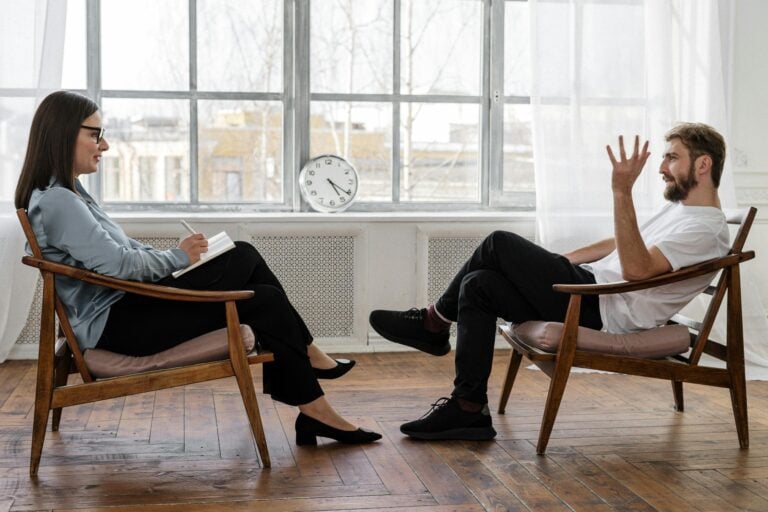

Nobody wants to believe they’re difficult to be around. Yet most of us, at some point, have walked away from a conversation wondering if we said something wrong, came across as cold, or pushed someone away without meaning to. The dislikable person test is a self-reflection tool designed to surface those blind spots, the habits and patterns that quietly erode how others experience us, often without our awareness.
At its core, this kind of assessment measures interpersonal tendencies that others may find off-putting: emotional unavailability, conversational dominance, passive withdrawal, chronic negativity, or a lack of warmth. For introverts especially, some of these traits can be misread by others even when the intent behind them is completely neutral.
As someone who spent two decades leading advertising agencies, I can tell you that understanding how others perceive you is not vanity. It’s a professional and personal survival skill, and one that took me far too long to take seriously.

If you’re exploring how personality shapes your closest relationships, our Introvert Family Dynamics and Parenting hub covers a wide range of topics, from how introverts show up as parents to how personality tests can help families understand each other better. The dislikable person test fits naturally into that conversation, because how likable or unlikable we appear to others often starts at home, long before it shows up at work.
What Does the Dislikable Person Test Actually Measure?
The dislikable person test is not a clinical diagnosis. It doesn’t measure pathology or disorder. What it measures is something more subtle: the degree to which your everyday behaviors, communication patterns, and emotional habits create friction in your relationships.
What’s your personality type?
Take our free 40-question assessment and get a detailed personality profile with dimension breakdowns, context analysis, and personalised insights.
Discover Your Type8-12 minutes · 40 questions · Free
Think of it as a mirror, one that reflects not who you are at your core, but how you land with other people. That distinction matters enormously. You might be deeply loyal, thoughtful, and caring, and still come across as dismissive or cold if your communication style doesn’t translate the way you intend.
The test typically evaluates things like: How often do you interrupt or redirect conversations back to yourself? Do you give others the benefit of the doubt, or do you default to suspicion? Are you consistent in your moods and reactions, or do people around you feel like they’re walking on eggshells? Do you show genuine interest in other people’s lives?
These questions are not designed to shame you. They’re designed to give you information. And information, as any good strategist knows, is where change begins.
It’s worth noting that the dislikable person test shares conceptual territory with other self-assessment tools. If you’ve ever taken the Likeable Person Test, you’ll recognize the flip side of that same coin. Likeability and dislikeability aren’t opposites so much as they are a spectrum, and most of us sit somewhere in the middle depending on context, stress level, and the relationship involved.
Why Introverts Are Disproportionately Misread
Early in my agency career, I had a creative director pull me aside after a client presentation. She told me, gently but directly, that the client thought I was annoyed with them. I wasn’t. I was processing. I was in that quiet, internal place where my best thinking happens, filtering what had been said, weighing options, preparing a response that would actually be useful. But from the outside, that looked like disengagement. Maybe even contempt.
That moment stayed with me. Not because I was embarrassed, though I was, but because it revealed a gap I hadn’t known existed. My internal experience and my external presentation were telling two completely different stories.
Introverts are wired to process deeply before responding. We tend to observe before participating. We often need time alone to recharge, which means we sometimes withdraw at moments when others interpret our absence as rejection. None of this makes us dislikable by nature, but it does make us more vulnerable to being misread.
The National Institutes of Health has noted that introversion appears to have biological roots, with temperament observable even in infancy. That means the way introverts process the world isn’t a choice or a flaw. It’s a fundamental orientation. Yet in social contexts built around extroverted norms, that orientation can easily be misinterpreted as aloofness, arrogance, or indifference.
Personality frameworks can help clarify this. The Big Five Personality Traits Test, for example, includes agreeableness and extraversion as distinct dimensions. A person can score low on extraversion (introversion) while scoring high on agreeableness (warmth, cooperation, empathy). Those two things are not the same, yet they’re often conflated in everyday social perception. People assume quiet equals unfriendly. That assumption is where a lot of introvert misery begins.

The Behaviors That Actually Make Someone Hard to Like
Here’s where I want to be honest with you, because I think a lot of articles on this topic are too gentle. Some behaviors really do make people difficult to be around, and those behaviors can show up in introverts and extroverts alike. The dislikable person test is most useful when it helps you distinguish between traits that are simply misunderstood and traits that genuinely need attention.
Chronic negativity is one of the most consistent relationship-eroding patterns. Not the occasional bad day or honest frustration, but a habitual orientation toward what’s wrong, what won’t work, and who’s to blame. I managed a senior account strategist for several years who was brilliant and analytically precise, but every brainstorm session with her felt like a slow leak. Every idea got punctured before it could breathe. Over time, people stopped bringing ideas around her. Her negativity wasn’t malicious. It was a habit she hadn’t examined.
Emotional unavailability is another significant factor. This is different from introversion. An introvert can be fully present, warm, and emotionally engaged while still needing solitude to recharge. Emotional unavailability is a consistent pattern of deflecting vulnerability, dismissing others’ feelings, or keeping relationships at arm’s length even when closeness is appropriate and welcome.
Conversational self-centeredness shows up in people who consistently redirect conversations back to their own experiences, interrupt others mid-sentence, or fail to ask follow-up questions. In agency life, I watched this pattern derail client relationships more than almost anything else. A client doesn’t just want their problem solved. They want to feel heard first.
Inconsistency in behavior, what some people call being “hot and cold,” creates anxiety in others. When people can’t predict how you’ll show up, they protect themselves by pulling back. Over time, that protective distance becomes a permanent feature of the relationship.
Passive aggression deserves its own mention. It’s one of the most corrosive patterns in family and workplace dynamics because it combines hostility with deniability. The person on the receiving end often can’t name exactly what’s wrong, which makes it nearly impossible to address. According to Psychology Today’s overview of family dynamics, unresolved communication patterns like these tend to calcify over time, becoming the invisible architecture of how a family or team operates.
How These Patterns Show Up in Family Relationships
Family is where our interpersonal habits are forged, and where they tend to be most entrenched. The patterns we develop in our families of origin, the ways we learned to seek connection or protect ourselves from rejection, follow us into every relationship we form as adults.
For introverted parents, the dislikable person test can surface some uncomfortable truths. Not because introverted parents are bad parents, but because the traits that make introverts effective in many areas (independence, self-sufficiency, preference for depth over breadth) can sometimes translate into behaviors that children experience as emotional distance.
A child who reaches for connection and gets a distracted nod doesn’t know their parent is processing something internally. They just feel the absence. Over time, that absence shapes how the child understands their own worth and how they seek connection with others.
Highly sensitive parents face their own version of this challenge. If you’re raising children while managing your own sensory and emotional intensity, the HSP Parenting guide on raising children as a highly sensitive parent addresses that specific intersection in detail. The dislikable person test, in a family context, is less about whether your children find you unlikable and more about whether your habitual patterns of withdrawal, criticism, or emotional unavailability are creating distance you don’t intend.
Blended families add another layer of complexity. When children are handling loyalty conflicts, new authority figures, and disrupted attachment, even well-intentioned behavior can land badly. Psychology Today’s resources on blended family dynamics offer useful context for understanding how personality differences compound in these environments.

When the Test Reveals Something Deeper
Sometimes a dislikable person test doesn’t just surface social habits. It points toward something more significant. Patterns of chronic emotional unavailability, persistent difficulty forming close relationships, intense fear of abandonment combined with push-pull behavior, or a consistent inability to empathize can indicate something worth exploring with a mental health professional.
Personality disorders, for example, are often characterized by rigid, pervasive patterns of relating to others that cause significant distress. If you’ve ever wondered whether your relational struggles go beyond introversion or communication style, the Borderline Personality Disorder Test is one resource worth reviewing as a starting point for reflection, though it’s not a substitute for professional assessment.
The American Psychological Association notes that early trauma is a significant factor in how people develop their interpersonal styles. Many of the behaviors that read as “dislikable” are actually adaptive responses to environments where those behaviors once served a protective function. Recognizing that doesn’t excuse the behavior, but it does change how we approach changing it.
I want to be clear about something. Taking a dislikable person test and finding areas of concern is not a verdict on your character. It’s an invitation to look more closely. The people I’ve respected most throughout my career were the ones willing to examine themselves honestly, not the ones who insisted they had nothing to work on.
What the Test Can and Cannot Tell You About Yourself
Self-report assessments have real limitations. When we answer questions about ourselves, we’re drawing on our own perception of our behavior, which is shaped by our blind spots, our ego protection, and the stories we’ve been telling ourselves for years. The dislikable person test is most useful when you answer it with genuine honesty rather than the version of yourself you’d like to be.
One thing I’ve found helpful is to answer these kinds of tests twice: once from my own perspective, and once imagining how someone who knows me well would answer on my behalf. The gap between those two sets of answers is often where the real insight lives.
The test also can’t account for context. A behavior that reads as dislikable in one setting may be entirely appropriate in another. Directness that comes across as cold in a personal relationship might be exactly what’s needed in a boardroom. Emotional expressiveness that builds connection at a family dinner might feel overwhelming in a professional negotiation. Context shapes perception, and perception shapes whether someone experiences you as likable or difficult.
For those interested in a more comprehensive personality framework, pairing the dislikable person test with a broader assessment can add useful nuance. Research published in PubMed Central has examined how personality traits interact with social perception across different relationship contexts, suggesting that no single trait predicts likeability universally. What matters is the overall pattern and how it plays out across relationships over time.

How Introverts Can Build Genuine Likeability Without Performing Extroversion
There’s a version of “becoming more likable” that I want to push back against firmly. That version says: be more outgoing, talk more, smile bigger, fill silences, be the energy in the room. For an introvert, that prescription is exhausting and in the end unsustainable. Worse, it’s inauthentic, and people can sense inauthenticity even when they can’t name it.
Genuine likeability for introverts doesn’t come from performing extroversion. It comes from letting your actual strengths show up consistently. Introverts tend to be excellent listeners when they’re engaged. They often bring depth and care to one-on-one conversations. They notice things others miss. They follow through on what they say they’ll do. These are all qualities that build trust, and trust is the foundation of being genuinely liked rather than merely tolerated.
A few things that helped me close the gap between my internal warmth and my external presentation: I started making small, explicit gestures that communicated engagement. Asking a follow-up question instead of going quiet. Saying “I’m thinking about what you just said” instead of letting silence create ambiguity. Sending a short message after a difficult conversation to acknowledge it. None of these required me to become a different person. They just required me to make my internal experience visible in small, consistent ways.
Caring for yourself matters too. When I was running on empty, which happened often in the agency world, my introvert tendencies amplified into something that probably did read as dislikable. Short responses. Visible impatience. A kind of flat affect that communicated “I’m done.” Protecting my energy wasn’t selfish. It was what made me someone others could actually count on.
Some introverts also find that having a specific role or purpose in social situations reduces the friction significantly. Knowing you’re there to solve a problem, support a colleague, or help a client makes the interaction feel purposeful rather than performative. That shift in framing changes everything about how you show up.
For those in caregiving or service roles, understanding your own relational patterns is especially important. If you’re exploring whether a helping profession is the right fit, the Personal Care Assistant Test Online can offer some useful self-reflection around the interpersonal demands of caregiving work. Similarly, if you’re considering a role like personal training where your likeability directly affects client retention, the Certified Personal Trainer Test touches on the relational competencies that matter in that field.
Using the Test as a Starting Point, Not a Verdict
One of the most useful things about any personality or behavioral assessment is that it gives you a language for patterns you may have felt but never named. That language is the beginning of change, not the end of it.
If the dislikable person test surfaces something uncomfortable, sit with it before reacting. My instinct, early in my career, was always to defend myself against uncomfortable feedback. I’d find the flaw in the methodology or the bias in the observer. What I eventually learned is that defensiveness is often a sign you’ve hit something real.
The most productive approach is to treat the results as a hypothesis rather than a conclusion. “People may experience me as cold when I go quiet” is a hypothesis worth testing. Ask someone you trust. Pay attention to how people respond to you in low-stakes situations. Notice what changes when you make a small adjustment.
Some patterns are deeply rooted and benefit from professional support. Research indexed through PubMed Central has explored how interpersonal patterns develop across the lifespan and how therapeutic intervention can shift them meaningfully. If you find yourself returning to the same relational difficulties regardless of context or relationship, that persistence is worth taking seriously.
What the dislikable person test in the end offers is a chance to see yourself through someone else’s eyes, briefly, imperfectly, but usefully. That perspective is rare. Most people will never tell you directly that you’re difficult to be around. They’ll just quietly step back. The test gives you a chance to ask the question before the relationship pays the price.

There’s a lot more to explore at the intersection of personality and family relationships. Our complete Introvert Family Dynamics and Parenting hub brings together articles on how introverts parent, connect, and sometimes struggle within their closest relationships. If this topic resonated, that hub is a natural next step.
About the Author
Keith Lacy is an introvert who’s learned to embrace his true self later in life. After 20 years in advertising and marketing leadership, including running agencies and managing Fortune 500 accounts, Keith now channels his experience into helping fellow introverts understand their strengths and build fulfilling careers. As an INTJ, he brings analytical depth and authentic perspective to every article, drawing from both professional expertise and personal growth.
Frequently Asked Questions
What is the dislikable person test?
The dislikable person test is a self-reflection tool that helps identify interpersonal habits and behavioral patterns that others may find off-putting or difficult. It covers tendencies like emotional unavailability, chronic negativity, conversational self-centeredness, and inconsistency in behavior. The test is not a clinical diagnosis. It’s designed to surface blind spots and start a more honest conversation about how you come across in relationships.
Are introverts more likely to score as dislikable on this test?
Not inherently, but introverts are more likely to be misread in ways that can affect their scores. Traits like quiet processing, social withdrawal for recharging, and limited small talk can appear as aloofness or disinterest to others, even when the intent is entirely neutral. The test is most useful for introverts when it helps distinguish between traits that are genuinely problematic and traits that simply need better communication or context.
Can the dislikable person test help with family relationships?
Yes, and family relationships are often where these patterns are most entrenched. The habits we developed in our families of origin tend to shape how we relate to everyone around us. Taking the test with your family relationships in mind can surface patterns of emotional withdrawal, inconsistency, or passive communication that you may not have examined before. It’s a starting point for reflection, not a replacement for honest conversation with the people involved.
What should I do if the test reveals behaviors I want to change?
Start by treating the results as a hypothesis rather than a verdict. Test the insight by asking someone you trust whether your self-assessment matches their experience of you. Make one small, specific adjustment and observe how people respond. Some patterns are deeply rooted and benefit from working with a therapist or counselor, particularly if they’ve shown up consistently across multiple relationships over time. Change in interpersonal behavior is possible, but it tends to happen gradually through consistent practice rather than sudden transformation.
How is the dislikable person test different from other personality assessments?
Most personality assessments, like the Big Five or MBTI, describe your natural tendencies and preferences without labeling them as good or bad. The dislikable person test is more specifically focused on how your behaviors land with others, particularly in social and relational contexts. It’s less about who you are and more about how you come across. Used together, these different tools give a much fuller picture of your interpersonal style than any single assessment can provide on its own.