

Shyness, introversion, and a preference for deep thinking are not liabilities in a brainstorming room. They are, in many cases, the exact qualities that produce the ideas everyone else wishes they had thought of first. The problem is that most brainstorming formats are designed for the loudest voice, not the clearest one, and human resources teams have spent decades wondering why their diversity initiatives stall at the ideation stage.
If you have ever sat in a brainstorming session and watched a perfectly good idea get steamrolled by someone more comfortable with noise, you already understand what is at stake. Genuine cognitive diversity, the kind that actually moves organizations forward, requires rethinking how we invite people into the creative process.
Before we get into what actually works, it helps to understand the broader landscape of personality and communication style. Our Introversion vs Other Traits hub covers the full spectrum of how people process the world differently, and the question of brainstorming sits right at the center of that conversation. Who gets heard in a room says a great deal about whose ideas an organization values.
Why Traditional Brainstorming Quietly Excludes Introverts
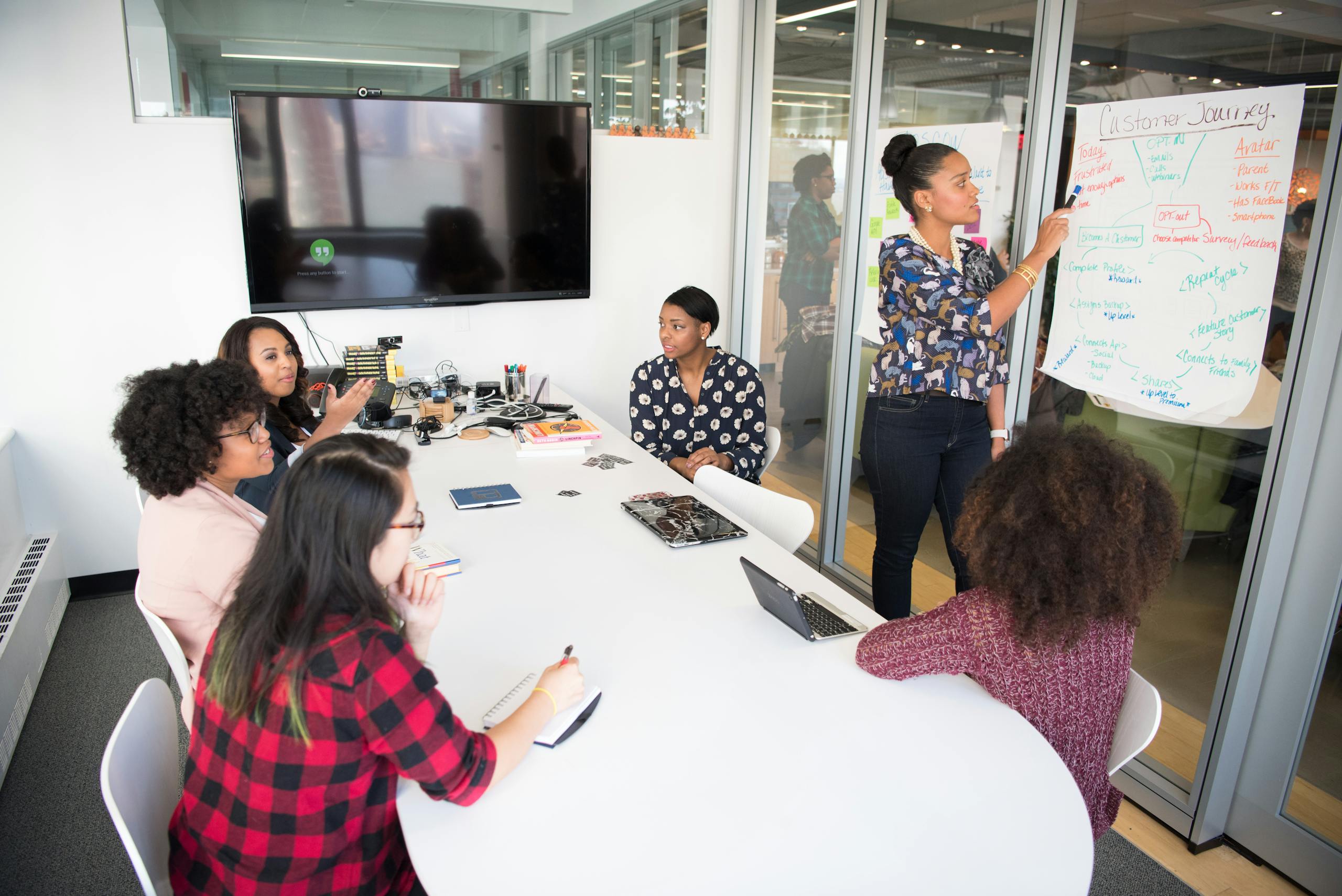
Picture the standard corporate brainstorming session. Someone wheels in a whiteboard. A facilitator says “no bad ideas” and then proceeds to write down only the ideas shouted loudest. The extroverts hit their stride. The introverts sit, processing, forming something careful and considered, and by the time they are ready to speak, the conversation has moved three topics ahead.
Career Coaching for Introverts
One-on-one career strategy sessions with Keith Lacy. 20 years of Fortune 500 leadership as an introvert, now helping others build careers that work with their wiring.
Learn More50-minute Zoom session · $175
I lived this dynamic for two decades running advertising agencies. We were a creative business, which meant brainstorming was practically a religion. And for years, I ran those sessions the way I had been taught: open floor, fast pace, energy in the room. I thought volume of participation meant quality of output. I was wrong about that, and it cost us ideas we never knew we missed.
The issue is not that introverts lack ideas. Most introverted thinkers I have worked with carry richer interior libraries of reference, pattern, and possibility than they ever get credit for. The issue is that the format itself creates a participation gap. When you reward speed over depth, you systematically filter out a certain kind of intelligence.
Shyness adds another layer. Shyness is not the same as introversion, a distinction worth pausing on. A shy person may desperately want to contribute but feel held back by social anxiety or fear of judgment. An introvert may simply prefer to think before speaking. Both experiences lead to the same outcome in a poorly designed brainstorm: silence from someone who had something worth saying.
Understanding where someone falls on the personality spectrum matters here. Are they fairly introverted or extremely introverted? That difference shapes how much processing time they need, how draining group environments feel, and what accommodations would actually help them contribute at their best.
What Does Cognitive Diversity Actually Mean for HR?
Human resources departments have gotten good at talking about diversity in terms of demographics: gender, race, age, background. These things matter enormously. Yet cognitive diversity, the variation in how people think, process information, and generate ideas, often gets less structured attention, even though it directly affects innovation outcomes.
Cognitive diversity includes personality orientation, but it is broader than that. It encompasses risk tolerance, processing speed, communication style, and the degree to which someone thinks out loud versus internally. An organization that has achieved demographic diversity but runs every meeting the same way, at the same pace, with the same participation format, has not yet tapped the full value of the people it hired.

One of the more clarifying frameworks for HR professionals is understanding the full range of personality orientations, not just introvert versus extrovert. Many people do not fit neatly into either category. Some people shift significantly depending on context, which is different from someone who blends traits more consistently. The distinction between an omnivert and an ambivert matters practically: an omnivert might be highly extroverted in a creative pitch and intensely introverted when doing deep analytical work, while an ambivert tends to sit more steadily in the middle. Both need different things from a brainstorming environment.
When I started paying attention to this variation on my teams, I stopped designing one-size sessions. Some people on my creative staff were energized by rapid-fire group ideation. Others did their best thinking alone and needed time before a group session to develop their ideas. Once I started giving people both options, the quality of what we brought to clients improved noticeably.
A piece from Frontiers in Psychology examining personality and workplace performance reinforces what many managers have observed informally: personality traits shape not just how people work, but how effectively they contribute when the environment either supports or conflicts with their natural style.
How Shyness Gets Misread as Disengagement
One of the most costly misreads in any organization is confusing shyness with indifference. A shy employee who says little in a brainstorm is not checked out. They may be hyperaware of the room, processing every comment, building something internally that they are not yet confident enough to voice.
I managed a copywriter early in my agency career who barely spoke in group sessions. Her manager flagged her as “not a team player” in a performance review. I pulled her aside and asked her directly what she thought of a campaign we had been developing. What came out of that conversation was the sharpest strategic critique I had heard in months. She had seen three problems with our approach that none of us had caught. She just had not felt safe enough to say it in a room full of people.
After that, I changed how I ran creative reviews. I started sending briefs ahead of time and asking people to come with written notes. That one adjustment changed who contributed. The shy and introverted members of my team started showing up in the conversation, not because they had changed, but because the format finally matched how they actually thought.
HR professionals who want to address this pattern need to distinguish between personality-driven quietness and disengagement. They are not the same thing, and treating them the same way produces the wrong interventions. Pushing a shy person into more high-pressure group settings does not build confidence. It usually builds avoidance.
If you are unsure where your own tendencies fall, or want to better understand a colleague’s communication style, tools like the introvert extrovert ambivert omnivert test can offer a useful starting point for self-reflection and team conversations.
What Extroverted Brainstorming Culture Gets Wrong
Extroverted brainstorming culture is not wrong because extroverts are wrong. It is wrong because it was designed without the full picture of how ideas actually form.
Part of understanding the problem requires clarity about what extroversion actually means in practice. What extroverted means, at its core, is a preference for external stimulation and energy drawn from social interaction. Extroverts genuinely think better out loud. Group brainstorming is their natural habitat. That is not a flaw, it is a strength. The flaw is assuming everyone shares it.
When brainstorming formats are built entirely around extroverted processing styles, several things happen. First, ideas get evaluated before they are fully formed, because the social pressure to respond quickly cuts off the deeper processing that produces more refined thinking. Second, the most verbally confident person in the room tends to anchor the group’s thinking, which is a well-documented phenomenon in group dynamics. Third, the people who need quiet to generate their best ideas learn, over time, that their ideas are not the ones that get heard.

That last outcome is the most damaging. Organizations do not just lose the ideas from that session. They lose the willingness of those people to keep trying. Over time, the quieter thinkers on your team stop preparing for brainstorms because they have learned, through experience, that preparation does not pay off for them.
Psychology Today has written thoughtfully about why depth of conversation matters and how introverts often bring a different quality of thinking to exchanges that reward substance over speed. That depth is exactly what gets filtered out in high-energy, fast-moving brainstorm formats.
Building Brainstorming Formats That Work for Everyone
The good news, practically speaking, is that fixing brainstorming for introverts and shy contributors does not require dismantling the process entirely. It requires adding structure that gives different processing styles room to contribute.
Here is what actually worked in my agencies over the years.
Pre-session prompts sent 24 to 48 hours in advance gave introverted team members time to think without the pressure of performing in real time. They arrived with ideas already developed, which meant they could engage in the group discussion from a position of confidence rather than scrambling to keep up with faster processors.
Anonymous idea submission at the start of a session, before anyone spoke out loud, leveled the playing field considerably. When ideas were written on cards or entered into a shared document before discussion began, the group evaluated the idea on its merits rather than on the confidence of the person who delivered it. Some of the most interesting concepts came from people who had never spoken first in a group setting.
Rotating facilitation gave quieter team members a structured reason to lead. When a shy or introverted person is running the session, the dynamic shifts. They are no longer waiting to be called on. They are in charge of the room. Several people on my teams who rarely spoke in standard brainstorms turned out to be exceptional facilitators when given the chance.
Breaking into smaller groups before reconvening with the full team reduced the social pressure that silences many introverts. A one-on-one or three-person conversation is a fundamentally different experience than performing in front of twelve people. Ideas that would never have surfaced in a large group emerged naturally in smaller clusters.
None of these adjustments made the process slower or less creative. In most cases, they made it richer. The sessions where I implemented these structures consistently produced more varied ideas than the open-floor formats that had been standard practice for years.
The HR Case for Personality-Aware Ideation Practices
Human resources professionals are often the people best positioned to make the structural case for changing how brainstorming works. They have access to the data on who is contributing, who is being promoted, and whose ideas are being credited. When those patterns cluster around personality type or communication style, that is a systemic issue, not an individual one.
Personality-aware ideation is not about accommodating weakness. It is about designing for the full range of human cognitive strength. An organization that consistently extracts ideas only from its most verbally confident employees is leaving significant intellectual capacity on the table.
Some personality frameworks can help HR teams begin these conversations. Understanding where team members fall across the spectrum, whether someone identifies as an introvert, extrovert, or somewhere in the middle, is a starting point. The introverted extrovert quiz is one accessible tool that can help individuals reflect on their own tendencies and open up productive dialogue within teams.
There is also a meaningful distinction worth naming between what might be called an otrovert and an ambivert, two terms that sometimes get used interchangeably but carry different implications for how someone engages in group settings. Exploring the otrovert vs ambivert distinction can help HR professionals get more precise about the personality diversity already present on their teams.

The Harvard Program on Negotiation has explored whether introverts face disadvantages in high-stakes environments and found that the picture is more nuanced than it first appears. Introverts often bring preparation, patience, and careful listening to negotiations, qualities that can be decisive advantages when the format allows for them. The same logic applies to brainstorming.
HR departments that want to build genuine innovation cultures need to audit their ideation practices the same way they audit hiring practices. Who is contributing? Whose ideas are being implemented? Who has stopped raising their hand? The answers often reveal patterns that have nothing to do with talent and everything to do with format.
What Introverts Bring to Creative Collaboration
There is a particular quality of attention that introverted thinkers bring to creative problems. Because they process internally, they tend to hold more variables in mind simultaneously, turning an idea over from multiple angles before committing to it. This is not slowness. It is depth.
As an INTJ, I notice this in myself constantly. When I am working through a strategic problem, I am not ready to speak until I have mentally stress-tested the idea from several directions. The ideas I offer in a group setting are rarely first drafts. They have already been through a few rounds of internal revision before they reach the room. That process takes time, and traditional brainstorming formats rarely provide it.
I watched this play out with a senior account strategist on one of my teams, a deeply introverted woman who managed some of our most complex Fortune 500 relationships. In group ideation sessions, she rarely spoke in the first twenty minutes. Some of my junior staff read that as disinterest. What was actually happening was that she was listening to everything, cataloguing connections, and waiting until she had something worth saying. When she spoke, the room went quiet. Her contributions almost always reframed the problem in a way that made the previous twenty minutes of ideas suddenly more useful.
That quality, the ability to synthesize before speaking, is genuinely rare and genuinely valuable. Organizations that design brainstorming formats to capture it will generate better outcomes than those that continue to reward whoever speaks first.
A perspective from PMC research on personality and cognitive processing supports the view that introverted individuals tend toward more thorough internal processing before expressing conclusions, which is a strength when the environment is designed to capture it rather than rush past it.
Conflict and Collaboration Across Personality Lines
One of the underappreciated friction points in diverse teams is the collision between processing styles during creative sessions. An extrovert who thinks out loud can inadvertently dominate a conversation not because they are trying to, but because silence feels like an invitation to them. An introvert who needs silence to think may interpret that same extrovert as dismissive or overbearing, when the reality is a mismatch in communication style.
Psychology Today offers a practical framework for resolving introvert-extrovert conflict that is worth exploring for any team that has experienced this kind of friction. The core insight is that most of these conflicts are not personality clashes in the adversarial sense. They are failures of mutual understanding about how different people need to operate.
I spent years managing creative teams where this tension was constant. The extroverted art directors and the introverted writers occupied different rhythms, and when I did not actively manage the space between them, the writers got steamrolled and the art directors got frustrated that no one was matching their energy. The solution was not to change either group. It was to build a process that gave both groups what they needed to do their best work.
That process looked different depending on the project. For campaigns that needed rapid iteration, I leaned into the extroverts’ strength and gave them the fast-paced sessions they thrived in. For strategy work that required deeper thinking, I gave the introverts time and space first, then brought everyone together. The results were consistently better than when I tried to run everything the same way.

Practical Steps HR Can Take Starting Now
Changing brainstorming culture does not require a complete organizational overhaul. It requires a few deliberate shifts in how ideation sessions are designed and facilitated.
Send materials in advance. Give people the problem, the constraints, and any relevant context at least 24 hours before the session. This is especially valuable for introverts and shy contributors who need processing time, but it benefits everyone.
Start sessions with individual writing before group discussion. Even five minutes of silent individual ideation before anyone speaks changes who contributes. Ideas that would never have survived the social pressure of a group setting get a chance to exist on paper first.
Vary the size of working groups. Not every conversation needs to happen with the full team present. Smaller groups reduce performance anxiety and create conditions where quieter voices are more likely to be heard.
Create asynchronous contribution channels. Not all brainstorming needs to happen in real time. Shared documents, idea boards, or even a simple email thread where people can contribute before and after a session can capture thinking that never surfaces in a live meeting.
Train facilitators to actively invite quieter voices. Not by putting people on the spot, which backfires with shy contributors, but by creating structured moments where everyone is expected to share something. “Let’s go around the table and hear one idea from each person” is a low-pressure way to ensure the conversation does not belong entirely to the loudest voices.
Resources on how introverts approach professional contribution can help HR teams understand the practical implications of personality diversity in workplace settings, including how to design environments where introverted employees feel genuinely included rather than merely tolerated.
Additional perspective from PMC research on social behavior and personality offers useful grounding for understanding why environmental design, not just individual personality, shapes how much people contribute in group settings.
If you want to go deeper on how personality orientation shapes workplace behavior and creative contribution, the full range of resources in our Introversion vs Other Traits hub offers a comprehensive look at the spectrum from introversion to extroversion and everything in between.
About the Author
Keith Lacy is an introvert who’s learned to embrace his true self later in life. After 20 years in advertising and marketing leadership, including running agencies and managing Fortune 500 accounts, Keith now channels his experience into helping fellow introverts understand their strengths and build fulfilling careers. As an INTJ, he brings analytical depth and authentic perspective to every article, drawing from both professional expertise and personal growth.
Frequently Asked Questions
Is shyness the same as introversion in a brainstorming context?
Shyness and introversion are related but distinct. Shyness involves social anxiety or fear of judgment that can hold someone back from contributing even when they want to. Introversion is a preference for internal processing and a need for quiet reflection before speaking. Both can lead to silence in a poorly designed brainstorm, but the reasons differ and so do the solutions. A shy person may benefit from lower-stakes contribution formats, while an introvert primarily needs more processing time before group discussion begins.
Why do introverts often struggle in traditional brainstorming sessions?
Traditional brainstorming rewards speed and verbal confidence, which aligns naturally with extroverted processing styles. Introverts typically think before speaking, which means they need more time to develop and refine ideas before they are ready to share them. In fast-paced, open-floor sessions, the conversation often moves past introverts before they are ready to contribute, creating the impression that they have nothing to offer when the reality is simply a mismatch between format and processing style.
How can HR teams build more inclusive brainstorming practices?
HR teams can make brainstorming more inclusive by sending session materials in advance, starting with individual silent ideation before group discussion, using smaller working groups, creating asynchronous contribution channels, and training facilitators to actively invite quieter voices through structured rather than spontaneous participation. These adjustments do not slow the process down. In most cases they improve the quality and variety of ideas that surface.
What is cognitive diversity and why does it matter for innovation?
Cognitive diversity refers to variation in how people think, process information, and generate ideas. It includes personality orientation, communication style, processing speed, and risk tolerance. Organizations that achieve demographic diversity but run every meeting the same way have not yet tapped the full value of their people. Cognitive diversity matters for innovation because different thinking styles tend to catch different problems, generate different solutions, and stress-test ideas from angles that more homogeneous groups miss.
Can introverts actually be strong contributors in creative team environments?
Introverts can be exceptionally strong creative contributors, often bringing qualities that are rare and valuable in ideation contexts: depth of processing, pattern recognition, willingness to hold complexity before drawing conclusions, and the ability to synthesize multiple inputs into a coherent perspective. The condition is that the environment needs to be designed in a way that gives these qualities room to operate. In formats that reward speed and volume, introverted contribution gets filtered out. In formats that reward depth and preparation, it tends to stand out.