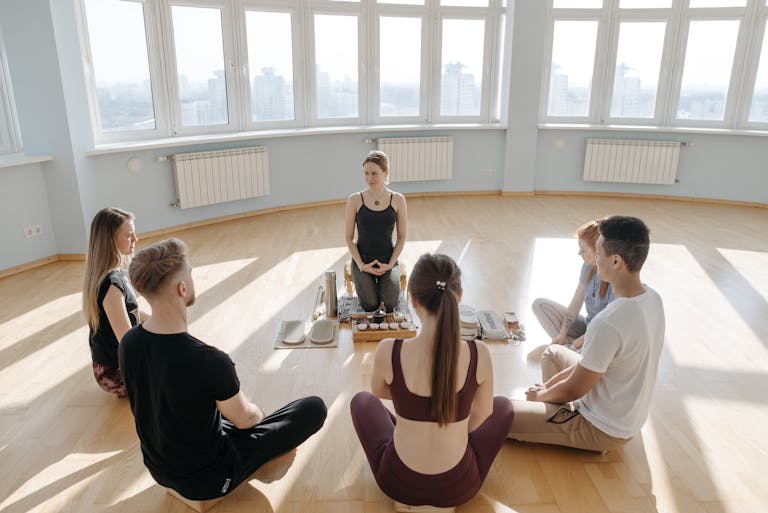

Extroverts do tend to talk more than introverts, but not because they’re careless with words. Talking is how many extroverts think, process, and connect. It’s less about volume and more about how their brains are wired to engage with the world around them.
That distinction took me years to fully appreciate. Running advertising agencies for two decades, I sat across from some extraordinarily talkative people. Clients who thought out loud through every meeting. Account managers who filled every silence with a new idea. Creative directors who could pitch the same concept five different ways before I’d finished forming my first response. For a long time, I read all that talking as confidence, as authority, as something I was supposed to emulate. I was wrong about what it meant.
What I eventually understood is that extroverted talkativeness isn’t a performance. It’s a processing style. And once I stopped treating it as a standard I needed to meet, I got a lot better at working alongside it.

If you’re trying to make sense of the introvert-extrovert spectrum and where talkativeness fits in, our Introversion vs Other Traits hub covers the full picture. But this particular question, why extroverts talk so much and what that actually signals, deserves its own honest look.
What Does Extroversion Actually Have to Do With Talking?
Before we can answer whether extroverts talk a lot, it helps to get clear on what extroversion actually is. The word gets used loosely, often as a synonym for outgoing, loud, or socially fearless. But the psychological definition is more specific than that.
Career Coaching for Introverts
One-on-one career strategy sessions with Keith Lacy. 20 years of Fortune 500 leadership as an introvert, now helping others build careers that work with their wiring.
Learn More50-minute Zoom session · $175
Extroversion, at its core, describes where a person draws energy. People on the extroverted end of the spectrum tend to feel energized by external stimulation: other people, conversation, activity, and novelty. Solitude, for many of them, feels draining rather than restorative. If you want a fuller breakdown of what this really means, this piece on what extroverted actually means goes deeper into the definition.
Talking, then, isn’t incidental to extroversion. It’s a natural expression of it. When you’re energized by external engagement, conversation becomes a primary mode of connection, exploration, and even thinking. Many extroverts genuinely work through their thoughts by speaking them aloud. The words aren’t the finished product. They’re the process.
I noticed this clearly in one of my agency’s senior account directors, a person I’d describe as a textbook extrovert. She would walk into a briefing with half-formed thoughts and, by the time she’d talked through them with the room, she’d arrived somewhere genuinely sharp. Her ideas didn’t exist fully until she’d spoken them. My process was the opposite. I needed to think before I spoke, which meant I often said less but with more precision. Neither approach was wrong. They just looked very different from the outside.
Is Talking a Lot the Same as Being Extroverted?
Not exactly. This is where the stereotype gets complicated.
Talkativeness and extroversion overlap significantly, but they’re not the same thing. Some introverts talk a great deal, especially on topics they care deeply about or in one-on-one conversations where they feel safe. Some extroverts are surprisingly measured communicators, particularly in professional settings where they’ve learned to channel their energy strategically.
Personality science also recognizes that many people don’t sit cleanly at either end of the spectrum. Ambiverts, for instance, share traits from both sides and may adjust their communication style depending on context. And then there are omniverts, who swing more dramatically between social and withdrawn modes depending on their circumstances. The comparison between omniverts and ambiverts is worth reading if you’ve ever felt like you don’t fit neatly into either category.
What this means in practice is that you can’t reliably predict how much someone talks based on their personality type alone. Context, relationship, topic, environment, and emotional state all shape verbal behavior. Still, as a general pattern, extroverts do tend toward more frequent and sustained talking, particularly in group settings, because social interaction is where they feel most alive.

Why Do Extroverts Think Out Loud?
One of the most useful reframes I ever made was understanding that extroverts often don’t know what they think until they say it. This isn’t a flaw. It’s a cognitive style.
There’s a concept sometimes called “external processing,” where a person works through ideas, decisions, and emotions by externalizing them, usually through speech. Extroverts tend to be external processors. Introverts tend toward internal processing, working through the same material quietly inside their own minds before sharing conclusions.
This difference created real friction in my agencies for years before I named it. I’d sit in a brainstorm watching extroverted team members throw out half-baked ideas, build on each other’s half-baked ideas, and somehow arrive at something brilliant. Meanwhile, my introverted designers and strategists would sit quietly through most of the session, then email me their best thinking two hours later. Both groups were being creative. They just needed different conditions to do it.
The problem was that meetings are built for external processors. The person who talks the most in a brainstorm gets the most airtime, which often gets misread as having the most ideas. As an INTJ, I had to consciously build structures that made room for both styles, things like pre-meeting prompts sent in advance, written idea submissions alongside verbal ones, and deliberate pauses in conversation to invite quieter voices. It didn’t silence the extroverts. It just stopped privileging volume over quality.
One piece from Psychology Today on why deeper conversations matter makes a related point: the depth of an exchange often matters more than the quantity of words exchanged. That resonated with me. I’d rather have a ten-minute conversation that actually moves something forward than an hour of verbal processing that circles back to where it started.
Does Talking More Mean Extroverts Are Better Communicators?
No. And I’d argue the opposite is sometimes true, though not because talking is a weakness.
Volume of speech and quality of communication are genuinely different things. Extroverts who talk a lot can be extraordinarily effective communicators because they’re comfortable in conversation, quick to read a room, and often skilled at building rapport through casual exchange. Those are real strengths.
But talking more also carries risks. External processors sometimes share thoughts before they’re fully formed, which can muddy a message. The person who fills every silence may miss signals from quieter people in the room. And in high-stakes settings, like negotiations or client presentations, the ability to say less with more precision can be a significant advantage.
A piece from Harvard’s Program on Negotiation addresses this directly, noting that introverts often bring careful listening and deliberate speech to negotiations, traits that can be highly effective even when they look quieter on the surface. I’ve seen this play out. Some of the most persuasive people I’ve worked with said very little. When they spoke, everyone paid attention precisely because they didn’t speak constantly.
Effective communication isn’t about how much you say. It’s about whether what you say lands.

How Does This Show Up in the Workplace?
The extrovert-as-talker dynamic plays out constantly in professional environments, and not always fairly.
In most meeting cultures, verbal participation gets rewarded. The person who speaks up first, speaks most often, and fills the room with energy tends to be perceived as the most engaged, the most capable, the most leadership-ready. This is a bias built into how most organizations run, and it consistently disadvantages people who process internally before speaking.
I ran agencies where this played out in ways I’m not proud of, looking back. Early on, I promoted people partly based on how they showed up in rooms. Confident speakers. Quick responders. People who could command a client presentation without visible hesitation. It took me years to recognize that I was selecting for extroverted communication styles rather than actual capability. Some of my quietest employees were doing the most sophisticated thinking. I just wasn’t creating the conditions to see it.
Conflict dynamics are another place where this shows up. Extroverts who process verbally may want to talk through a disagreement immediately and at length. Introverts often need time to think before they can engage productively. Neither approach is wrong, but when they collide without awareness, the extrovert can read the introvert as disengaged or avoidant, and the introvert can read the extrovert as overwhelming or aggressive. A thoughtful Psychology Today piece on introvert-extrovert conflict resolution offers a practical framework for bridging exactly this gap.
What Happens When You’re Somewhere in the Middle?
Not everyone fits cleanly into the introvert or extrovert box. Many people find themselves somewhere in the middle, or shifting between modes depending on circumstances.
If you’ve ever wondered whether you’re an introverted extrovert, a social introvert, or something else entirely, many introverts share this in the confusion. The introverted extrovert quiz is a good starting point for figuring out where you actually land. And if you want a broader sense of the full personality spectrum, the introvert, extrovert, ambivert, omnivert test covers all four types with more nuance.
I’ve also found it useful to think about the difference between being fairly introverted and extremely introverted, because those two experiences aren’t the same. Someone who leans mildly introverted might genuinely enjoy social settings but need a bit of quiet time afterward. Someone who’s deeply introverted may find extended social interaction genuinely depleting in ways that go beyond preference. If you’re trying to understand where you fall on that continuum, the comparison between fairly introverted and extremely introverted is worth reading.
There’s also an interesting distinction between omniverts and people who identify as otroverts, a newer term some use to describe extroverts who’ve developed strong introverted tendencies. The comparison between otroverts and ambiverts gets into the nuances of how these middle-ground identities actually differ.
All of this matters for the talking question because people in the middle of the spectrum often have genuinely variable communication patterns. They might be the loudest person in a room one day and the quietest the next, depending on energy levels, familiarity, and stakes. That variability isn’t inconsistency. It’s a real feature of how they’re wired.

Why Introverts Sometimes Misread Extroverted Talkativeness
Here’s something I had to work through personally: I used to interpret extroverted talkativeness as a kind of dominance, as if talking more meant claiming more space, more authority, more worth. That reading said more about my own insecurities than about what was actually happening.
When you’re wired to measure your words, someone who uses them freely can feel like a challenge. Like they’re taking something. But most extroverts aren’t talking to crowd you out. They’re talking because that’s genuinely how they function. The account manager who talked over me in client meetings wasn’t trying to undermine me. She was thinking. Loudly. In public.
Once I stopped reading extroverted speech as competitive, I could actually hear what was being said. And more often than not, it was worth hearing. The external processor who seemed to ramble was actually surfacing things I hadn’t considered. The client who couldn’t stop talking in briefings was giving me everything I needed to understand what they actually wanted, not just what they’d written in the brief.
Personality research exploring the neuroscience of introversion and extroversion, including work published in PubMed Central, points to genuine differences in how introverted and extroverted brains respond to stimulation. These aren’t just behavioral preferences. They reflect different baseline arousal levels and reward sensitivity. Extroverts aren’t performing when they talk a lot. They’re responding to stimulation in a way that genuinely feels good to them.
That reframe was meaningful for me. It moved the dynamic from competition to compatibility. We weren’t fighting over airtime. We were using different instruments to play the same song.
What Extroverts Might Not Realize About Their Talking
Fairness requires saying this: the flip side is real too.
Extroverts who talk a great deal don’t always realize how much space they’re occupying. In a meeting of ten people, the person who speaks 60 percent of the time is structurally limiting what everyone else can contribute. That’s not always intentional, but it has consequences.
Introverts who are quieter in group settings aren’t disengaged. They’re often doing exactly what they need to do to think well, which is listen. When extroverts interpret that silence as passivity or disinterest, they’re misreading the signal. And when they respond by filling the silence with more words, they may be inadvertently shutting down the very contributions they’d benefit from most.
Personality and communication research published in PubMed Central has examined how personality traits shape interpersonal dynamics, including the ways extroverted communication patterns can create uneven participation in group settings. Awareness is the starting point for changing that.
Some of the most effective extroverted leaders I’ve known were people who’d learned to pause. Not because silence came naturally to them, but because they’d recognized that their natural instinct to fill space was sometimes a liability. They’d developed the discipline to wait, to ask, to genuinely listen before responding. That discipline didn’t make them less extroverted. It made them more effective.
There’s interesting work on how personality traits connect to communication styles in therapeutic and professional contexts, including research published in Frontiers in Psychology that explores how individual differences shape the way people engage in conversation. The takeaway isn’t that one style is better. It’s that awareness of style differences opens up better collaboration.
Can Introverts Learn to Talk More, and Should They?
This question used to haunt me. For most of my career, I believed the answer was yes, that I needed to talk more, contribute more verbally, be more present in the room in ways that looked like what I saw around me.
What I eventually realized is that the question itself was wrong. Asking whether introverts should talk more is like asking whether left-handed people should learn to write with their right hand. You can do it. But you’re spending energy adapting to a norm rather than developing what you’re already good at.
The more useful question is: what does effective communication look like for you, given how you’re actually wired? Some introverts become excellent public speakers. Some build reputations on the precision and weight of what they say in meetings. Some do their most powerful communicating in writing. There are many paths to being heard, and not all of them require talking more.
That said, developing range is genuinely valuable. Being able to speak up in a moment that matters, to hold the floor when you need to, to engage verbally even when it doesn’t come naturally, these are skills worth building. Not to become extroverted, but to expand your own repertoire. success doesn’t mean talk like an extrovert. It’s to talk when it counts.

What Introverts Bring to the Conversation
There’s a version of this conversation that ends with introverts feeling like they’re somehow deficient because they don’t talk as much. That reading is worth pushing back on directly.
Listening is a communication skill, and it’s one that introverts tend to develop well. When you’re not busy formulating your next comment, you can actually hear what someone is saying. You catch the hesitation behind the confident pitch. You notice when the stated problem and the real problem aren’t the same thing. You pick up on what’s not being said.
In my agency years, some of my most valuable contributions in client meetings came from noticing something no one else had flagged. Not because I was smarter than the extroverts in the room, but because I’d been listening while they were talking. That’s not a small thing. In marketing, in leadership, in any relationship, the ability to actually hear what’s being communicated is rarer and more valuable than most people realize.
There’s also something to be said for the quality of introverted speech when it does come. Words chosen carefully tend to land differently than words produced continuously. I’ve watched introverted team members say one thing in a meeting that reframed the entire conversation, not because they spoke loudest or longest, but because they’d been waiting for the right moment and the right words.
Introversion and strong communication aren’t in conflict. They just express themselves differently. And in the right environment, with the right awareness, both styles make the work better.
There’s more to explore across the full spectrum of introversion and extroversion, including how these traits intersect with personality type, energy management, and social behavior. Our Introversion vs Other Traits hub is a good place to keep reading if you want to go further.
About the Author
Keith Lacy is an introvert who’s learned to embrace his true self later in life. After 20 years in advertising and marketing leadership, including running agencies and managing Fortune 500 accounts, Keith now channels his experience into helping fellow introverts understand their strengths and build fulfilling careers. As an INTJ, he brings analytical depth and authentic perspective to every article, drawing from both professional expertise and personal growth.
Frequently Asked Questions
Do extroverts always talk more than introverts?
Not always, though it’s a common pattern. Extroverts tend to talk more in group settings because social interaction energizes them and many process their thoughts by speaking aloud. Introverts often prefer to think before speaking, which means they contribute less verbally in real-time but can be highly articulate when they do speak. Context matters too: an introvert discussing a topic they’re passionate about one-on-one may talk at length, while an extrovert in an unfamiliar or high-stakes environment might be more measured.
Why do extroverts think out loud?
Many extroverts are external processors, meaning they work through ideas and decisions by speaking them rather than reflecting silently. For these individuals, talking isn’t just sharing finished thoughts. It’s the actual process of forming them. This is a genuine cognitive style difference, not a lack of depth or preparation. External processing tends to happen naturally in conversation, brainstorming, and social interaction, all environments where extroverts feel most energized.
Does talking more make someone a better communicator?
No. Volume of speech and communication effectiveness are different things. Extroverts who talk frequently can be excellent communicators because they’re comfortable in conversation and skilled at building rapport. Introverts who speak less often tend to choose words carefully and listen attentively, which are also powerful communication assets. Effective communication depends on whether your message lands clearly, not on how much you say to deliver it.
Is it possible to be extroverted but not very talkative?
Yes. Extroversion describes where a person draws energy, primarily from external stimulation and social interaction, not how much they talk. Some extroverts are naturally more reserved in their verbal expression, particularly in professional settings or in one-on-one conversations. Additionally, people who identify as ambiverts or omniverts may shift their communication style depending on context, sometimes being quite talkative and other times more contained. Personality type is one factor among many that shapes how much someone talks.
Should introverts try to talk more to keep up with extroverts?
Not as a general rule. Trying to match an extroverted communication style when it doesn’t come naturally tends to produce strained, less authentic interactions and can be genuinely draining. A more productive approach is developing the ability to speak up when it matters, while also advocating for environments and structures that make room for different communication styles. Introverts often communicate most effectively through writing, one-on-one conversations, and well-timed contributions in group settings. Building on those strengths tends to produce better results than forcing a style that doesn’t fit.