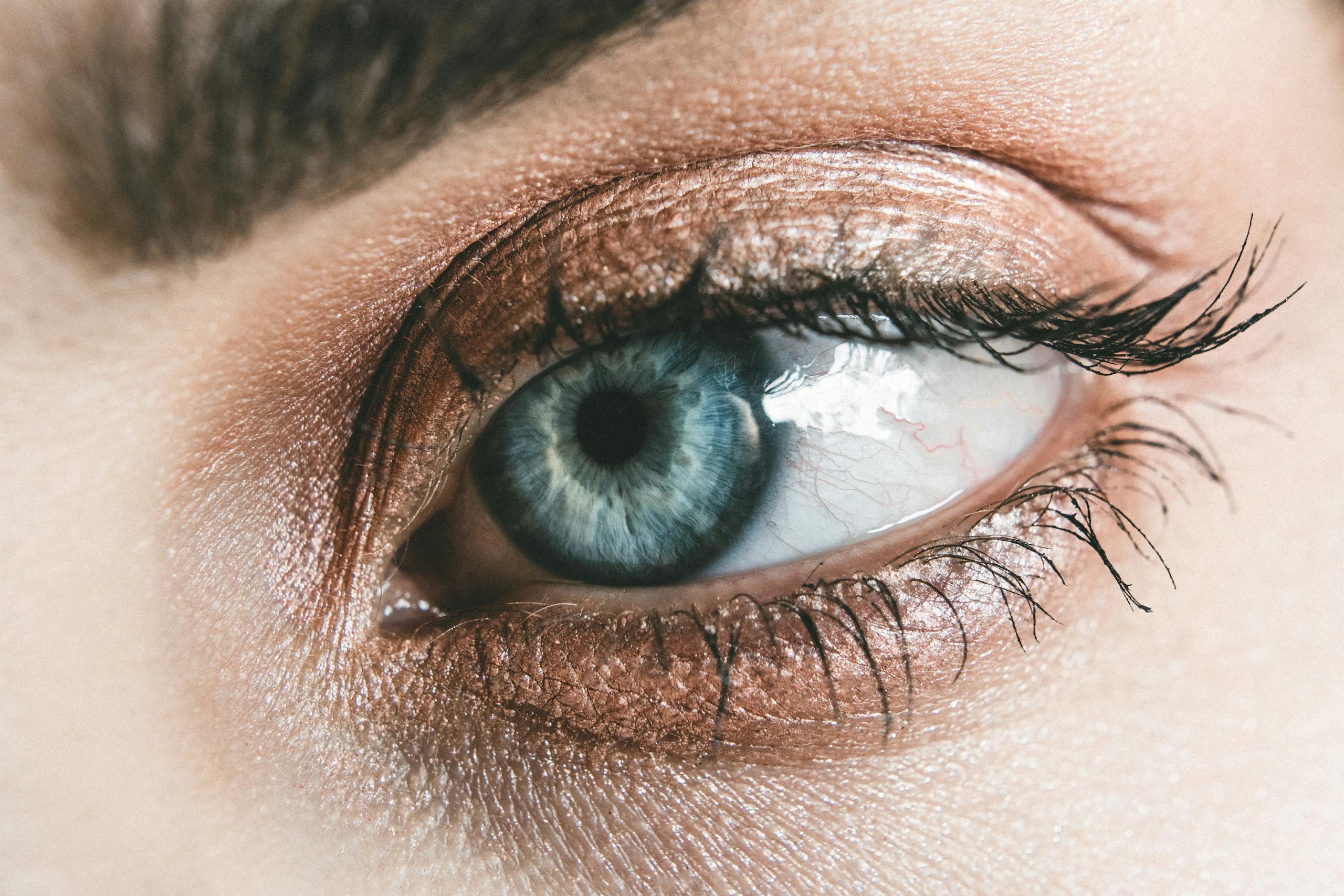
Yes, INFJs do make eye contact, but the way they do it is unlike almost any other personality type. For most people, eye contact is a social reflex. For INFJs, it’s something closer to a portal, an intense, deliberate form of connection that can feel overwhelming to give and to receive.
What makes this complicated is that INFJs also experience significant discomfort with prolonged eye contact in certain situations, particularly with strangers or in high-stimulation environments. So the honest answer is: it depends entirely on context, trust, and emotional safety.

If you’ve ever wondered whether you might be an INFJ or want to understand your own type more precisely, take our free MBTI test before reading further. Knowing your type adds a useful layer to everything that follows.
The INFJ personality type is one of the most layered and misunderstood in the entire Myers-Briggs framework. Our INFJ Personality Type hub covers the full range of what makes this type tick, from how they communicate to how they handle conflict. Eye contact is just one window into a much richer interior world.
Why Does Eye Contact Feel So Loaded for INFJs?
Most people treat eye contact as a simple social cue. INFJs experience it as something far more charged. A lot of that comes down to cognitive function architecture. The INFJ’s dominant function is introverted intuition (Ni), which processes the world by absorbing patterns, reading beneath the surface, and synthesizing meaning from subtle signals. Their auxiliary function is extraverted feeling (Fe), which is constantly scanning the emotional landscape of the people around them.
Put those two together and you get someone who, when they make eye contact, is essentially receiving a flood of information. Micro-expressions, emotional undercurrents, unspoken tension, genuine warmth versus performed warmth. INFJs pick up on all of it, often without consciously choosing to. A 2023 study published in Frontiers in Psychology found that individuals higher in empathic accuracy show measurably different physiological responses during face-to-face interaction, which helps explain why some people find sustained eye contact genuinely taxing rather than neutral.
That’s not a weakness. It’s a form of perceptual depth. But it does mean that eye contact for an INFJ carries weight that most people don’t feel.
I’ve seen this play out in my own life more times than I can count. During my years running advertising agencies, I’d sit across from a client in a pitch meeting and within about thirty seconds of eye contact, I’d have a read on whether they were genuinely interested or just being polite. My team used to joke that I had a “vibe detector.” What I actually had was an INTJ’s pattern recognition amplified by years of watching people across conference tables. INFJs have something similar, except their Fe antenna is even more finely tuned to emotional resonance.
When INFJs Make Intense Eye Contact, What Does It Signal?
There’s a reason the INFJ gaze gets talked about so often. People who’ve spent time with an INFJ frequently describe feeling truly seen during a conversation, sometimes uncomfortably so. That’s not accidental.
When an INFJ is genuinely engaged with someone, their eye contact becomes almost magnetic. They’re not performing attentiveness. They’re actually present in a way that’s rare. Their dominant Ni is processing, their auxiliary Fe is connecting, and the result is a quality of attention that most people only experience a handful of times in their lives.

Research on empathy published by Psychology Today consistently points to gaze behavior as one of the primary channels through which deep empathic connection is established. For highly empathic personality types, eye contact isn’t just communication, it’s communion. And INFJs, who are often described in terms that overlap significantly with what Healthline defines as empathic sensitivity, tend to experience this communion very literally.
Intense INFJ eye contact typically signals one of a few things: deep interest in the person, active processing of something emotionally significant, or a moment of genuine connection that the INFJ doesn’t want to break. It can also signal that they’re reading you, absorbing information about your emotional state that you may not have consciously offered.
This intensity is also part of why understanding INFJ influence and how quiet intensity actually works matters so much. The gaze is part of a broader communication style that operates below the surface of words.
When Do INFJs Avoid Eye Contact?
Here’s where it gets interesting, and where a lot of people misread INFJs entirely. The same type that can hold someone’s gaze with almost unsettling depth will also look away, down at the table, or off to the side in other contexts. And it’s not shyness, at least not usually.
Several specific situations tend to trigger eye contact avoidance in INFJs:
When they’re thinking deeply. INFJs process internally before speaking. When they’re working through a complex idea, their eyes often drift away because maintaining eye contact would split their attention. The gaze going inward is a sign of genuine cognitive engagement, not disinterest.
When they’re overwhelmed by emotional input. Because Fe is constantly absorbing the emotional atmosphere of a room, there are moments when an INFJ simply needs to reduce the incoming signal. Looking away is a form of self-regulation, a way of managing sensory and emotional overload before it becomes too much.
When trust hasn’t been established. With strangers or people they’re uncertain about, INFJs often maintain more guarded, intermittent eye contact. They’re observing rather than connecting. There’s a difference between watching someone and being with someone, and INFJs know exactly which mode they’re in.
When the interaction feels performative. Large group settings, networking events, and situations that feel socially scripted tend to flatten INFJ engagement. Without the possibility of genuine depth, the eye contact becomes uncomfortable rather than connective.
A 2022 study in PubMed Central on social anxiety and gaze aversion noted that avoidance of eye contact in cognitively demanding or emotionally loaded situations is a common and adaptive response, not necessarily a marker of social difficulty. For INFJs, what looks like avoidance from the outside is often active internal processing from the inside.
How Does Eye Contact Connect to INFJ Communication Patterns?
Eye contact doesn’t exist in isolation. It’s one thread in a much larger communication tapestry, and for INFJs, understanding that tapestry reveals a lot about why they connect deeply with some people and feel chronically misread by others.
INFJs communicate with layers. What they say out loud is often the smallest part of what they’re actually expressing. Their tone, their pauses, their body language, and yes, their gaze, all carry meaning that they sometimes assume others are picking up on. This assumption is one of the core issues explored in INFJ communication blind spots that may be hurting your relationships. The expectation that others read subtext as fluently as INFJs do is a recurring source of frustration and disconnection.

Eye contact for INFJs is also deeply tied to authenticity. They can tell, usually quite quickly, when someone’s warmth is genuine versus performed. This isn’t magic, it’s pattern recognition built on years of careful observation. A 2016 study in PubMed Central on nonverbal communication and emotional accuracy found that individuals who score higher on empathic accuracy measures are significantly better at detecting incongruence between verbal and nonverbal signals. INFJs, with their Fe-driven emotional attunement, tend to sit at the high end of this spectrum.
What this means practically is that an INFJ’s eye contact behavior is a reliable signal of their internal state. When they’re holding your gaze, they’re with you. When they’re looking away, they’re processing. And when they stop making eye contact altogether, something has shifted in the dynamic, and it’s worth paying attention to.
Does INFJ Eye Contact Differ in Conflict Situations?
Conflict is where INFJ eye contact behavior gets particularly revealing. And it’s also where many people misinterpret what they’re seeing.
INFJs have a complicated relationship with conflict. Their Fe pushes them toward harmony and away from confrontation. Their Ni gives them a clear-eyed view of what’s actually happening in a relationship, including when something has gone fundamentally wrong. These two forces are often in direct tension.
In the early stages of a conflict, INFJs will often maintain eye contact while simultaneously suppressing what they’re actually feeling. They’re trying to hold the relationship together through connection even as something inside them is pulling away. This is part of what makes the eventual “door slam” so shocking to people who experience it. The INFJ seemed fine, they were looking you in the eye, and then suddenly they were gone. What happened? The answer is that the eye contact was doing double duty: genuine connection on one level, and an attempt to manage their own distress on another.
Understanding the full pattern of why INFJs door slam and what alternatives exist helps explain why eye contact changes so dramatically across the arc of an INFJ conflict. Early on, they’re present. As the situation deteriorates without resolution, the gaze becomes more guarded. And if they reach the point of emotional shutdown, eye contact may disappear almost entirely.
There’s also an interesting parallel with INFPs here. Both types are deeply sensitive and prone to internalizing conflict, but they express it differently. Where an INFJ’s eye contact during conflict tends to be controlled and deliberate, an INFP’s can become flooded with visible emotion. Anyone working through relational dynamics with either type would benefit from reading about why INFPs take conflict so personally, because the surface behaviors look similar even when the underlying mechanisms differ.
What About Eye Contact in Professional Settings?
Professional environments create a specific kind of pressure around eye contact, and INFJs feel that pressure acutely. There’s a cultural expectation, particularly in Western business contexts, that sustained eye contact signals confidence, competence, and engagement. For INFJs, who experience eye contact as something far more intimate than a professional signal, this expectation can feel genuinely exhausting.
I spent years managing client relationships at the agency level, and I watched this play out in my own behavior constantly. In a one-on-one meeting with a client I trusted, my eye contact was natural and steady. In a room full of stakeholders where I was presenting campaign strategy, I’d find myself scanning rather than connecting, using eye contact as a tool rather than experiencing it as a genuine exchange. The difference in energy expenditure between those two modes was significant.
What I’ve come to understand is that INFJs in professional settings often develop a kind of “professional eye contact” that’s distinct from their natural relational gaze. It’s competent, it reads well to others, but it’s also a performance in a way that their genuine eye contact never is. That performance has a cost, and INFJs who don’t recognize it as performance often wonder why they feel so drained after a day of meetings that seemed to go well.
The hidden cost of keeping peace, including the emotional labor of maintaining a composed, professionally appropriate exterior while processing a great deal internally, is something this deeper look at INFJ difficult conversations addresses directly. Eye contact is part of that labor in ways that rarely get named.

How Does Trust Affect the INFJ Gaze?
Trust is the single most important variable in understanding INFJ eye contact. More than personality type, more than context, more than emotional state, the presence or absence of trust determines whether an INFJ’s gaze is open or guarded.
With people they trust deeply, INFJs can maintain eye contact with an ease and depth that feels almost meditative. They’re not monitoring, not performing, not managing input. They’re simply present. This is the INFJ gaze that people describe as feeling “seen,” because in those moments, the INFJ actually is seeing, fully and without filter.
With people they don’t yet trust, or with whom trust has been damaged, the eye contact shifts. It becomes more intermittent, more evaluative, more careful. The INFJ is still reading, but now they’re reading for safety rather than for connection.
This trust-dependency also explains why INFJs can seem like completely different people in different social contexts. A colleague who knows them only in professional settings might describe them as reserved and somewhat guarded. A close friend would describe them as intensely present and deeply connected. Both descriptions are accurate. They’re just seeing different modes of the same person.
The 16Personalities framework describes INFJs as having a strong divide between their public and private selves, and eye contact behavior is one of the clearest expressions of which self is present in a given moment.
Can INFJs Learn to Manage Eye Contact More Intentionally?
Yes, and many do, but success doesn’t mean override their natural tendencies. It’s to understand them well enough to work with them rather than against them.
A few things that tend to help:
Naming the mode you’re in. There’s a difference between “I’m avoiding eye contact because I’m processing” and “I’m avoiding eye contact because I’m shutting down.” INFJs who can distinguish between these two states in real time are much better equipped to communicate what’s actually happening to the people around them.
Giving yourself permission to look away when thinking. Many INFJs have internalized the cultural message that looking away signals disrespect or disengagement. Letting go of that assumption, and sometimes explaining to others that looking away is actually how they access their best thinking, reduces the performance pressure significantly.
Using eye contact deliberately as a trust signal. Because INFJs’ natural gaze carries such weight, they can use it intentionally to signal genuine engagement in moments when words feel insufficient. A steady, warm look during a difficult conversation can communicate care more effectively than almost anything they could say.
For INFPs reading this, the parallel experience is worth noting. Both types wrestle with the gap between their internal depth and how they come across externally. The strategies around how INFPs can work through hard conversations without losing themselves overlap meaningfully with what INFJs face in high-stakes relational moments.
What neurological research tells us is also useful here. A study in PubMed Central on social cognition found that the processing demands of direct eye contact can actually compete with verbal processing in some individuals, particularly those with higher sensitivity to social stimuli. For INFJs, this isn’t a deficit. It’s a feature of how their perceptual system is organized, and managing it intentionally is far more effective than trying to suppress it.

What the INFJ Gaze Tells You About Depth, Connection, and Authenticity
There’s something worth sitting with here. In a world that often treats eye contact as a performance metric, INFJs are doing something genuinely different. They’re not making eye contact to signal confidence or to check a social box. When they look at you, they’re actually looking at you.
That quality of attention is rare. And because it’s rare, it can feel startling to people who aren’t used to being truly seen. Some people find it magnetic. Others find it slightly unnerving. Both reactions make sense.
What I’ve noticed, both in myself and in the INFJs I’ve worked with over the years, is that the gaze is inseparable from the values. INFJs look deeply because they care deeply. They read carefully because they want to understand, not to judge. The eye contact is an expression of their fundamental orientation toward people, which is one of genuine curiosity, genuine care, and a persistent desire for something real beneath the surface of social interaction.
That same orientation is what makes INFJs so effective in roles that require reading people accurately, building trust over time, and communicating with quiet authority. The gaze isn’t separate from the influence. It’s part of how the influence works.
If you want to go deeper into the full picture of how INFJs move through the world, including how they connect, communicate, and occasionally disconnect, the INFJ Personality Type hub is the most complete resource we have on the subject.
About the Author
Keith Lacy is an introvert who’s learned to embrace his true self later in life. After 20 years in advertising and marketing leadership, including running agencies and managing Fortune 500 accounts, Keith now channels his experience into helping fellow introverts understand their strengths and build fulfilling careers. As an INTJ, he brings analytical depth and authentic perspective to every article, drawing from both professional expertise and personal growth.
Frequently Asked Questions
Do INFJs make eye contact naturally or does it feel forced?
With people they trust, INFJ eye contact is entirely natural and often unusually deep. In unfamiliar or high-stimulation environments, it can feel more effortful because their system is managing a high volume of incoming emotional and perceptual information simultaneously. The difference between the two modes is usually visible to anyone paying close attention.
Why do INFJs make such intense eye contact?
The intensity comes from the combination of dominant introverted intuition (Ni) and auxiliary extraverted feeling (Fe). When an INFJ looks at someone, they’re simultaneously processing patterns, reading emotional subtext, and connecting empathically. That’s a lot happening at once, and it shows in the quality of their gaze. They’re not staring. They’re receiving.
Is it normal for INFJs to avoid eye contact sometimes?
Completely normal, and it usually means one of two things: they’re processing deeply and need to look inward to access their thinking, or they’re in a context where the emotional input from sustained eye contact feels like too much to manage alongside everything else. Neither is a sign of disinterest or rudeness, even when it can read that way from the outside.
How does INFJ eye contact change when they’re upset or withdrawing?
As an INFJ moves toward emotional withdrawal, their eye contact typically becomes more guarded and intermittent. In the early stages of a conflict, they may maintain steady eye contact while suppressing what they’re feeling internally. As the situation deteriorates, the gaze becomes more evaluative and less connective. By the time they reach full emotional shutdown, sustained eye contact may disappear almost entirely.
Can INFJs improve their eye contact in professional settings?
Yes, and the most effective approach is understanding rather than suppression. INFJs who recognize that looking away during thinking is a cognitive need rather than a social failure can communicate that to colleagues, reducing misreads. They can also use their naturally intense gaze deliberately in moments where connection matters most, treating it as a strength rather than something to manage around.