Dodge Challenger Hellcat burnout is what happens when raw power meets zero traction: the engine screams, the wheels spin, and nothing actually moves forward. For introverts running on empty, that image lands with uncomfortable precision. You can be working at full throttle and still feel completely stuck, depleted, and invisible to the people around you.
Introvert burnout rarely announces itself loudly. It builds in the spaces between meetings, in the forced small talk, in the constant performance of energy you don’t actually have. By the time most introverts recognize what’s happening, they’ve already been spinning their wheels for months.
My own version of this took years to fully understand, and I’m still learning. What follows is what I wish someone had told me about the mechanics of burning out quietly, in plain sight, while everyone around you assumes you’re fine.

If you’re working through the broader picture of stress and depletion, our Burnout and Stress Management hub covers the full range of these experiences, from early warning signs to long-term recovery. This article focuses on a specific angle that doesn’t get enough attention: what burnout actually looks like when it’s invisible, and why introverts are so often the last to be taken seriously when they’re in it.
Why Do Introverts Burn Out Differently Than Everyone Else?
There’s a particular cruelty to introvert burnout that I don’t think gets talked about enough. Because introverts tend to be quiet about their distress, and because they often continue functioning at a surface level long after they’re genuinely depleted, the burnout goes unnoticed. By colleagues. By managers. Sometimes even by the introvert themselves.
What’s your personality type?
Take our free 40-question assessment and get a detailed personality profile with dimension breakdowns, context analysis, and personalised insights.
Discover Your Type8-12 minutes · 40 questions · Free
During my agency years, I watched this play out repeatedly. I had a senior account director, an introvert through and through, who managed some of our most demanding Fortune 500 relationships. She was meticulous, calm, always prepared. She never raised her voice or complained. She also quietly handed in her resignation one Tuesday afternoon after eighteen months of what I later understood was severe burnout. I hadn’t seen it coming. In retrospect, every sign was there.
The energy equation is different for introverts. As Psychology Today has described it, introverts draw energy from internal sources and expend it in social environments, which means that high-contact professional settings drain them in ways that are physiologically real, not just preferences or attitudes. An open-plan office, back-to-back client calls, team lunches, impromptu hallway conversations: each one costs something. When the costs consistently outpace the recovery time, the deficit compounds.
What makes this especially difficult is that the symptoms often look like introversion itself. Withdrawal. Quietness. Reduced engagement. People around the burned-out introvert frequently interpret these signals as personality rather than distress. That misread can delay support by months.
What Does Hellcat-Level Burnout Actually Feel Like From the Inside?
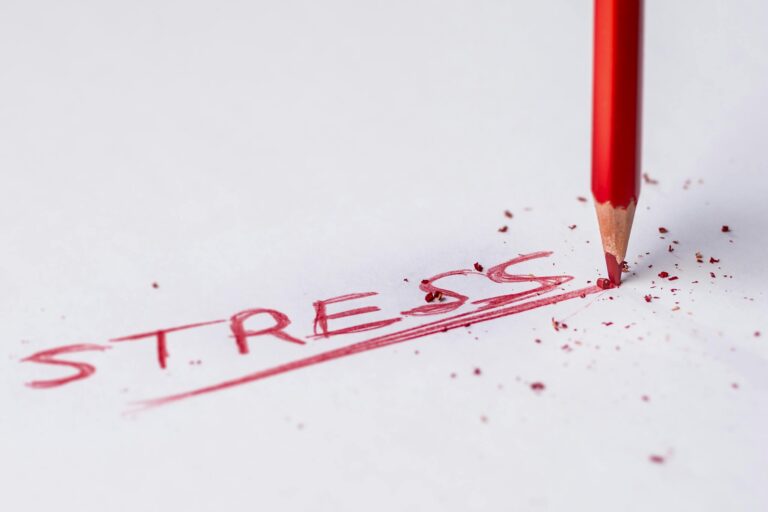
The Dodge Challenger Hellcat produces 717 horsepower. In a burnout, that power goes nowhere. The tires shred, smoke fills the air, and the car stays put. That’s a surprisingly accurate description of what severe introvert burnout feels like from the inside: tremendous internal effort producing almost no visible output.
I know this feeling personally. There was a stretch during my third year running an agency when I was working twelve-hour days, attending every client dinner, leading every pitch, and genuinely producing almost nothing of value. My thinking had gone shallow. My creativity, which had always been my strongest professional asset, felt like it had simply switched off. I was spinning in place and generating a lot of noise and heat while accomplishing very little.
The internal experience of this kind of burnout tends to move through recognizable stages, though not always in a clean sequence. Early on, there’s a persistent flatness, a sense that the things that used to engage you no longer do. Work that once felt meaningful starts feeling mechanical. Then comes the cognitive friction: simple tasks take longer, decisions feel harder than they should, and the mental agility that introverts often pride themselves on starts to feel unreliable.
Later stages get darker. Cynicism creeps in. The emotional detachment that introverts sometimes use as a healthy boundary starts functioning instead as a wall. Relationships at work feel transactional. Even the solitude that used to restore you stops working properly, because the tank has a hole in it and rest alone can’t fill it back up. This is the territory that chronic burnout describes, when recovery never really seems to arrive no matter how much you rest.

Why Does the “High Performer” Label Make Introvert Burnout Worse?
Many introverts, particularly INTJs and INTPs, build reputations as reliable, independent, low-maintenance contributors. In agency environments, I saw this constantly. The introverts on my teams were often the ones who delivered quietly, asked for little, and never made scenes. They were also, I came to understand, the ones most likely to hit a wall without warning.
The “high performer” label creates a specific trap. When you’ve built a reputation for handling things, admitting that you can’t handle things feels like a betrayal of your own identity. The introvert who has always been the steady one, the one who doesn’t need managing, faces enormous internal pressure to keep performing even when the performance is hollowing them out.
There’s also an external pressure that operates in parallel. Managers and colleagues who have come to rely on a high-performing introvert often don’t look closely enough to notice the signs of strain. The introvert’s competence becomes a kind of camouflage. And because introverts tend not to broadcast their struggles, the gap between how they appear and how they actually feel can grow very wide before anyone notices.
Personality type shapes both the burnout experience and what recovery actually requires. What depletes an INTJ is genuinely different from what depletes an INFP or an ISFJ, and the path back is different too. If you want to understand your specific type’s burnout profile, the breakdown in burnout prevention strategies by type is worth reading carefully.
How Does Social Pressure Accelerate the Burnout Cycle?
One of the less-discussed accelerants of introvert burnout is the pressure to perform extroversion. In most professional environments, visibility and social engagement are implicitly rewarded. The person who speaks up in meetings, who works the room at company events, who seems energized by collaboration, gets noticed. The introvert who does excellent work quietly often doesn’t.
For years, I tried to close that gap by performing extroversion. I pushed myself to be more present in social situations, more vocal in meetings, more available for the impromptu conversations that seemed to happen naturally for my extroverted colleagues. The performance was exhausting in ways that went beyond ordinary tiredness. It was the kind of exhaustion that accumulates in layers, and it fed directly into my burnout cycles.
What I didn’t understand at the time was that this performance had a compounding cost. Every hour spent in forced social engagement was an hour not spent in the quiet, focused work that actually restored my sense of competence and purpose. The things that should have been refueling me were being crowded out by the things that were draining me.
The social dimension of burnout is something recent psychology research has been examining more closely, particularly around how personality traits interact with workplace demands to create differential burnout risk. The short version: environments that systematically reward extroverted behavior put introverts at a structural disadvantage that has nothing to do with their actual capabilities.
Even the seemingly small demands add up. The cognitive and emotional cost of small talk for introverts is something that extroverted colleagues often genuinely don’t understand, not because they’re dismissive, but because the experience is simply different for them. When those small costs accumulate across an entire workday, week after week, they become significant.

What Makes Recovery So Hard When You’re Wired This Way?
Burnout recovery for introverts is complicated by several factors that don’t get enough attention. The first is that the conventional wisdom about burnout recovery, rest more, take a vacation, spend time with people you love, doesn’t map cleanly onto introvert experience.
Vacations, for example, are often socially dense. Family gatherings, travel logistics, the pressure to be present and engaged with people you care about: these can be genuinely restorative in some ways and depleting in others. An introvert returning from a two-week family vacation may be emotionally enriched and still more exhausted than when they left.
The second complicating factor is that genuine recovery requires structural change, not just rest. Taking a week off and returning to the same environment that produced the burnout is, at best, a temporary patch. The conditions that created the depletion are still there. Without changing something about how you work, what you agree to, or how you protect your energy, the burnout cycle simply restarts.
After my own worst burnout period, I spent a long time trying to recover through rest alone. It helped, but only so much. What actually made a difference was changing the structure of my work: protecting certain hours for deep, uninterrupted thinking, reducing the number of meetings I attended in person, and getting much more deliberate about which social commitments I said yes to. The boundaries that stick after burnout aren’t the ones you feel good about in principle. They’re the ones you’re willing to actually enforce when someone pushes back.
The third factor is psychological. Burnout often comes with a residue of shame, particularly for high-achieving introverts who have built their identity around competence. Admitting that you’re not okay, that you’ve hit a limit, can feel like a fundamental failure rather than a normal human response to an unsustainable situation. That shame makes it harder to ask for what you need, which prolongs the recovery.
There’s also the question of personality type and what recovery actually looks like for different introverts. Some need extended solitude. Others need meaningful one-on-one connection. Some need to engage with creative work; others need to step away from all cognitive demands for a while. The return to work after burnout looks genuinely different depending on your type, and trying to follow a generic recovery template can slow things down considerably.
Are There Physical Signs That Introverts Tend to Overlook?
Burnout is not purely psychological. The physical dimension is real and often shows up in ways that introverts, who tend to live in their heads, can be slow to connect to their mental state.
Sleep disruption is common. Not the inability to sleep, necessarily, but a change in sleep quality: waking at 3am with a racing mind, sleeping long hours and still feeling unrefreshed, or experiencing a kind of physical heaviness that doesn’t resolve with rest. Immune function often takes a hit too. I noticed, during my worst burnout periods, that I seemed to catch every cold that circulated through the office. At the time I attributed it to the volume of client travel. Looking back, the pattern was clear.
Digestive issues, persistent tension headaches, and a general sense of physical flatness are also common. The body and mind are not separate systems, and when the mind is chronically overloaded, the body keeps score in ways that are easy to dismiss as unrelated.
There’s solid support in the literature for the connection between chronic stress and physical health outcomes. Research published in PubMed Central has documented the physiological pathways through which sustained psychological stress affects immune function, cardiovascular health, and hormonal regulation. These aren’t minor effects. They’re the body’s way of signaling that something needs to change.
Physical symptoms also tend to appear before the psychological ones become obvious, which means paying attention to your body can give you earlier warning than your mind alone. Introverts who are skilled at internal reflection sometimes have an advantage here, if they’re willing to treat physical signals as data rather than inconveniences to push through.

What Practical Strategies Actually Work for Introvert Burnout?
Generic stress management advice, breathe deeply, exercise more, practice gratitude, has its place. But introvert burnout often requires more targeted approaches that account for the specific ways introverts deplete and restore.
Protecting recovery time is not the same as scheduling downtime. Downtime that gets interrupted, that carries ambient guilt about what you should be doing, or that happens in environments that are subtly stimulating doesn’t actually restore introvert energy. True recovery time is protected, predictable, and genuinely quiet. I block it on my calendar the same way I block client calls, and I’ve learned to treat attempts to encroach on it with the same seriousness I’d treat a missed client deadline.
Cognitive load management matters enormously. Introverts often do their best work in states of deep focus, and burnout erodes the ability to reach those states. Protecting at least one block of uninterrupted, low-stimulation work time each day, even when everything else is chaotic, can help maintain a thread of competence and purpose that keeps the burnout from spiraling.
Somatic regulation techniques, approaches that work through the body rather than the mind, can be surprisingly effective for introverts who tend to get caught in cognitive loops. The 5-4-3-2-1 grounding technique from the University of Rochester is one I’ve recommended to people on my teams who were struggling with anxiety and overwhelm. It sounds almost too simple, but it works precisely because it interrupts the mental spiral by redirecting attention to immediate sensory experience.
The American Psychological Association’s guidance on relaxation techniques also offers a useful framework for thinking about the difference between passive rest and active recovery. Passive rest, watching television, scrolling, lying on the couch, can reduce stimulation but doesn’t always restore the specific kind of energy that burnout depletes. Active recovery approaches, progressive muscle relaxation, mindful breathing, time in nature, tend to be more effective over time.
Meaning-making is another underrated recovery tool. Burnout has a way of stripping the sense of purpose from work that used to feel significant. Reconnecting with why the work matters, even in a modest way, can help reestablish the internal motivation that burnout erodes. For INTJs in particular, this often means reconnecting with the strategic or intellectual dimensions of work rather than the relational ones.
A more detailed breakdown of coping strategies that are specifically calibrated for introvert neurology is worth having in your toolkit. The strategies that actually work for introvert stress go deeper on the specific approaches that account for how introverts process and regulate.
Does Burnout Look Different for Ambiverts Who Lean Introvert?
One thing worth addressing directly: not everyone experiencing introvert-style burnout identifies as a clear introvert. Many people sit somewhere in the middle of the spectrum, drawing energy from both internal and external sources depending on context. These ambiverts face a specific burnout risk that’s worth understanding separately.
The danger for ambiverts is the assumption that their flexibility means they don’t have real limits. Because they can function in social environments and also value solitude, they sometimes push hard in both directions, using social energy to compensate for internal depletion and then using isolation to recover from the social push. Over time, this oscillation can become its own kind of exhaustion. Ambivert burnout has its own particular character, and the middle-ground flexibility that usually serves ambiverts well can actually make them harder to recognize and treat.
I managed several ambiverts during my agency years, people who seemed adaptable and resilient precisely because they could code-switch between introvert and extrovert modes. They were often the last people I thought to check in on. In retrospect, their flexibility was masking a real vulnerability.
Some of the most relevant research on personality and occupational stress points to the complexity of how personality traits interact with environmental demands, and how those interactions don’t always follow simple introvert/extrovert lines. Burnout is a multidimensional experience, and personality is just one of several variables that shape how it develops and what it takes to recover.
What Does Moving Past the Burnout Cycle Actually Require?
Getting past a single burnout episode is hard. Getting past the pattern, the recurring cycle of depletion and partial recovery and depletion again, requires something more fundamental. It requires changing how you relate to your own limits.
For most of my agency career, I treated my introversion as a liability to manage. I worked around it, compensated for it, and pushed through it. That approach worked, after a fashion, for a long time. And then it stopped working, and the burnout that followed was proportional to how long I’d been ignoring the signals.
What actually helped was a shift in framing. My introversion isn’t a weakness to overcome. It’s a set of characteristics that come with genuine strengths and genuine costs. The strengths are real: depth of thinking, careful observation, the ability to sustain focus on complex problems, a preference for meaningful work over performative busyness. The costs are also real: social environments deplete me in ways they don’t deplete everyone, and I need more recovery time than the average extroverted colleague.
Accepting both sides of that equation, without apology and without pretending the costs don’t exist, is what sustainable professional life actually looks like for me. Not a permanent burnout-free existence, but a relationship with my own limits that allows me to notice when I’m approaching them and respond before I’m already over the edge.
Some of the academic work on introversion and workplace performance supports the idea that introverts thrive not by becoming more extroverted, but by finding or creating environments that align with their actual working style. That’s a structural solution, not a personal development one. And it’s the kind of solution that holds.
The Hellcat metaphor is worth returning to one more time. In a proper burnout, the driver controls the throttle. The smoke and noise and spinning are intentional, a demonstration of power. The difference between that and uncontrolled burnout is exactly that: control. Knowing where your limits are, respecting them, and choosing when to push and when to ease off. That’s not a limitation. That’s how you stay on the road.
There’s a lot more to work through on this topic, and the resources in our Burnout and Stress Management hub go deep on everything from early warning signs to type-specific recovery strategies. If any part of this article resonated, that’s a good place to keep reading.
Curious about your personality type?
Our free MBTI assessment goes beyond the four letters. Get a full breakdown of your scores, see how your type shows up at work and in relationships.
Take the Free Test8-12 minutes · 40 questions · Free
About the Author
Keith Lacy is an introvert who’s learned to embrace his true self later in life. After 20 years in advertising and marketing leadership, including running agencies and managing Fortune 500 accounts, Keith now channels his experience into helping fellow introverts understand their strengths and build fulfilling careers. As an INTJ, he brings analytical depth and authentic perspective to every article, drawing from both professional expertise and personal growth.
Frequently Asked Questions
What is “Dodge Challenger Hellcat burnout” as a metaphor for introverts?
The Dodge Challenger Hellcat burnout describes what happens when massive power meets zero traction: the engine runs at full force, the wheels spin, but nothing moves forward. For introverts, this captures the experience of working at full effort while feeling completely stuck and depleted. The metaphor reflects how introvert burnout often involves tremendous internal effort that produces little visible output, because the fundamental energy deficit makes genuine progress almost impossible.
Why do introverts often miss the early signs of burnout?
Introverts tend to miss early burnout signs for several reasons. Their symptoms, withdrawal, quietness, reduced engagement, can look identical to normal introvert behavior, making it hard to distinguish distress from personality. Many introverts also build identities around competence and self-sufficiency, which creates internal pressure to keep performing even when they’re genuinely depleted. Additionally, because introverts process internally and don’t broadcast their struggles, neither they nor the people around them may notice how serious things have become until the burnout is well advanced.
How is introvert burnout recovery different from general burnout recovery?
Introvert burnout recovery requires accounting for how introverts specifically deplete and restore energy. Generic advice like “spend time with loved ones” or “take a vacation” may not be restorative if those activities are socially demanding. Genuine introvert recovery typically requires protected solitude, reduced cognitive load, and structural changes to the work environment, not just rest. Without changing the conditions that created the burnout, rest alone rarely holds. Type-specific recovery strategies also matter: what works for an INTJ may not work for an INFP, even though both are introverts.
Can performing extroversion at work cause burnout even if you’re good at it?
Yes, and this is one of the most common and underrecognized burnout pathways for introverts. Being skilled at performing extroversion, speaking up in meetings, working social events, appearing energized by collaboration, doesn’t reduce the energy cost of doing so. If anything, being good at the performance can make it harder to justify stepping back, because you appear to be handling it well. Over time, the gap between how you appear and how you actually feel becomes a significant source of depletion. The performance crowds out the recovery time and focused work that introverts need to sustain themselves.
What are the physical signs of burnout that introverts tend to overlook?
Introverts, who tend to process experience internally and intellectually, sometimes disconnect physical symptoms from their mental state. Common physical signs of burnout include disrupted sleep quality, persistent fatigue that doesn’t resolve with rest, frequent illness due to suppressed immune function, tension headaches, and digestive issues. These physical signals often appear before the psychological symptoms become obvious, which means paying attention to the body can provide earlier warning. Treating physical symptoms as inconveniences to push through, rather than meaningful data about your overall state, is a pattern that frequently delays recognition and response.