Empath medical services refer to healthcare approaches specifically designed to meet the needs of highly sensitive people, empaths, and those who experience the medical environment as overwhelming rather than healing. These services prioritize sensory accommodation, emotional attunement, and pacing that respects how deeply sensitive people process both physical and emotional information. For many HSPs, finding this kind of care changes not just their health outcomes but their entire relationship with seeking help.
Most of us have sat in a fluorescent-lit waiting room, surrounded by noise and strangers and a television mounted too high on the wall, and felt something tighten in our chest before anyone even called our name. That reaction isn’t anxiety in the clinical sense. It’s your nervous system doing exactly what it was built to do: absorb everything.
Spending over two decades running advertising agencies taught me a lot about environments that reward performance over authenticity. I watched colleagues breeze through high-stimulus situations that left me quietly depleted for hours afterward. I assumed something was wrong with me. It took years to understand that I wasn’t broken. I was wired differently, and that wiring deserved a different kind of care.
If you’ve ever left a doctor’s appointment feeling more drained than when you arrived, or avoided scheduling care because the whole process felt like too much, you’re not handling something unusual for your personality type. This experience is common among highly sensitive people, and it’s one of the core reasons empath-centered healthcare has started to emerge as a meaningful category. Our HSP and Highly Sensitive Person hub covers the broader landscape of what it means to live with high sensitivity, and this piece adds a layer that often gets overlooked: what happens when that sensitivity meets the medical system.
Why Standard Healthcare Often Fails Highly Sensitive People
Standard healthcare wasn’t designed with sensory sensitivity in mind. It was designed for efficiency, throughput, and clinical outcomes measured in objective data. That’s not a criticism. It’s just an honest description of a system built around the average patient, and highly sensitive people are not average in their processing depth or their physiological response to stimulation.
What drains your social battery?
Not all social exhaustion is the same. Our free quiz identifies your specific drain pattern and gives you personalised recharging strategies.
Find Your Drain PatternUnder 2 minutes · 8 questions · Free
A 2024 study published in Frontiers in Psychology examined how sensory processing sensitivity affects stress response and found meaningful differences in how HSPs process environmental and emotional input at a neurological level. This isn’t a preference or a personality quirk. It’s a measurable difference in how the nervous system handles information. When a medical environment layers in bright lights, unfamiliar smells, physical touch from strangers, emotional vulnerability, and time pressure all at once, an HSP’s system doesn’t just register mild discomfort. It registers something closer to overload.
I remember sitting in a specialist’s office years ago, waiting for test results that could have gone several directions. The room was cold. There was a television in the corner playing daytime programming at full volume. The doctor came in, delivered a fairly complex explanation in about four minutes, handed me a pamphlet, and left. I walked to my car and sat there for twenty minutes trying to remember what he’d actually said. My mind had been so occupied managing the environment that it hadn’t fully absorbed the information I’d come for.
That’s not a failure of intelligence. It’s what happens when a sensitive nervous system is pushed past its processing threshold at exactly the moment it needs to be most receptive.
It’s worth noting here that high sensitivity isn’t a trauma response, even though the two can look similar from the outside. Psychology Today addresses this distinction directly, pointing out that HSP traits are largely innate rather than developed through adverse experience. Understanding that difference matters in a medical context because it shapes what kind of support is actually useful.
What Empath Medical Services Actually Look Like in Practice
The term “empath medical services” covers a spectrum of approaches rather than one specific program or certification. At one end, you have individual practitioners who’ve adapted their communication style and environment to better serve sensitive patients. At the other end, you have clinics and integrative health centers that have built their entire model around sensory accommodation and emotional attunement.
Practically speaking, empath-aware care tends to include several consistent elements. Appointment pacing is one of the most significant. Sensitive patients often need more time, not because they’re slow, but because they process information deeply and may need a moment to formulate questions or absorb what they’ve just heard. Providers who understand this build buffer time into their schedules rather than treating the appointment like a transaction to be completed.
Environmental modifications matter too. Softer lighting, reduced ambient noise, and a waiting area that doesn’t feel like a busy airport terminal can shift the entire experience for an HSP. Some practices have started offering quiet waiting options, separate from the main area, for patients who find group waiting rooms particularly draining. Sound sensitivity is real enough that I’ve written about testing solutions for it elsewhere. My piece on eight white noise machines for sensitive sleepers came directly from my own search for ways to manage auditory overwhelm, and that same sensitivity shows up in medical settings just as much as it does at bedtime.
Communication style is perhaps the most important variable. Empath-centered providers tend to ask open-ended questions, leave space for silence, and avoid the kind of rushed delivery that makes sensitive patients feel like they’re being processed rather than heard. They’re also more likely to check in about emotional state alongside physical symptoms, recognizing that for HSPs, the two are rarely fully separate.
The Empath-HSP Distinction and Why It Matters for Healthcare
One thing worth clarifying: the terms “empath” and “highly sensitive person” are often used interchangeably, but they describe overlapping rather than identical experiences. Psychology Today’s Empath’s Survival Guide draws a useful distinction, noting that HSPs process sensory and emotional information with unusual depth, while empaths often describe absorbing others’ emotions as if they were their own. Many people are both. Some are one without the other.
In a medical context, this distinction shapes what kind of support is most useful. An HSP who isn’t particularly empathic may primarily need sensory accommodation: quieter spaces, gentler lighting, more time. An empath who processes others’ emotions deeply may need a provider who understands why sitting in a waiting room full of anxious or suffering people is genuinely exhausting, not melodramatic. A person who is both may need all of the above.
There’s also a personality dimension worth acknowledging. Personality type research has long documented differences in how people process stimulation and social interaction. My article on what makes a personality type rare explores some of the science behind why certain trait combinations produce such distinct experiences of the world. Sensitivity, whether measured by the HSP scale or through personality frameworks, isn’t distributed evenly across the population, and that unevenness means medical systems calibrated for the majority will consistently miss something for the minority.
A 2019 study in PubMed examined sensory processing sensitivity and its relationship to both positive and negative affect, finding that HSPs show heightened reactivity in both directions. This is important in healthcare settings because it means HSPs may respond more strongly to positive interventions too. A genuinely warm, unhurried appointment can have an outsized positive effect on a sensitive patient’s wellbeing, not just their satisfaction score.
How Personality Type Shapes the Medical Experience
My own experience as an INTJ adds another layer to this. INTJs tend to process information internally, dislike being rushed through decisions, and can come across as reserved in ways that get misread by providers as either disengaged or unconcerned. I’ve had doctors interpret my quiet, careful questioning as skepticism or non-compliance. What they were actually seeing was my natural processing style: I absorb information, run it through my internal framework, and then ask the question that matters most to me. That takes a beat longer than the rapid back-and-forth some providers expect.
There’s a broader pattern here that shows up across personality types. People who are highly sensitive, deeply introverted, or both often find that their natural communication style creates friction in medical settings that were designed around more externally expressive patients. The patient who asks a lot of questions quickly, expresses concern loudly, and responds visibly to reassurance is easier for a time-pressured provider to read and respond to. The patient who sits quietly, processes internally, and needs a moment before they can articulate what they’re feeling can get less of what they need simply because they’re harder to read.
This connects to something I’ve noticed across my work on personality development. My piece on MBTI development and what actually matters gets into how self-awareness about your type can change the way you advocate for yourself in situations designed for different personalities. That self-advocacy piece is particularly relevant in healthcare, where the stakes of being misunderstood are higher than they are in most other contexts.
People who identify as ambiverts sometimes assume they’ll have an easier time in medical settings because they can flex between introversion and extroversion. My honest take, explored more in my piece on why ambiverts may be more confused than balanced, is that the flexibility doesn’t necessarily protect against sensitivity. You can be socially adaptable and still have a nervous system that finds clinical environments genuinely overwhelming.
Finding and Evaluating Empath-Aware Providers
Searching for empath medical services isn’t as straightforward as searching for a specialist in a particular condition. There’s no universal certification, no standard directory, and the terminology varies widely. Some providers use the language of trauma-informed care. Others describe themselves as integrative or comprehensive (in the literal sense, meaning they consider the whole person). Some simply have a reputation, built through word of mouth in HSP and empath communities, for being particularly attuned.

A few practical approaches have worked well for people in this community. Asking directly during an initial consultation is one of the most reliable. Telling a provider something like “I process information deeply and sometimes need a moment before I can respond” gives them useful information and lets you observe how they receive it. A provider who is genuinely empath-aware will adjust. One who isn’t will often reveal that through their response.
Telehealth has been a meaningful development for many HSPs and empaths. Receiving care from a familiar, controlled environment removes a significant portion of the sensory challenge. You control the lighting, the sound level, and the physical comfort of your surroundings. You’re not absorbing the energy of a waiting room full of strangers. For routine consultations, prescription management, and mental health support, telehealth can be genuinely superior for sensitive people, not just more convenient.
Integrative medicine practices, which often combine conventional care with approaches like acupuncture, mindfulness-based interventions, or naturopathic medicine, tend to attract providers who are more attuned to the whole-person experience. That said, integrative doesn’t automatically mean empath-aware. The same evaluation criteria apply: pace, environment, communication style, and willingness to accommodate.
Nature-based therapeutic approaches are also worth mentioning here. A growing body of evidence, including work highlighted by Yale Environment 360, supports the idea that immersion in natural settings has measurable health benefits. Some empath-aware practitioners incorporate outdoor or nature-adjacent elements into their practice environments, recognizing that sensitive people often regulate more effectively in natural settings than in clinical ones.
The Career Side: HSPs Working in Healthcare
There’s another dimension to this topic that doesn’t get enough attention: highly sensitive people who work in healthcare themselves. The same traits that make an HSP a challenging patient to serve in a standard system often make them exceptional caregivers when they’re working in an environment that supports their nature.
The attunement, the depth of observation, the ability to pick up on what a patient isn’t saying as much as what they are, these are genuine clinical assets. An HSP nurse who notices that a patient’s affect has shifted subtly, or an empath therapist who senses that a client is holding something back, is bringing a form of perceptual acuity that has real value in care settings.
The challenge is that healthcare is also one of the most demanding environments for sensitive people. The emotional weight is significant. The sensory load is constant. The pace is often relentless. HSPs in healthcare careers need systems and strategies that allow them to sustain their sensitivity as a strength rather than burning it out as a liability. My HSP career survival guide covers the broader landscape of how sensitive professionals can build sustainable working lives, and many of those principles apply directly to healthcare roles.
A 2024 study in Nature examined environmental sensitivity in occupational contexts and found that highly sensitive individuals show stronger responses to both positive and negative work environments. In practical terms, this means an HSP in a supportive healthcare setting may perform exceptionally well, while the same person in a chaotic or emotionally draining environment may struggle significantly more than a less sensitive colleague. The environment isn’t incidental. It’s central.
During my agency years, I watched this dynamic play out in creative departments. The most perceptive, emotionally intelligent people on my teams were often the ones who burned out first when the environment got chaotic. Not because they were weak, but because they were absorbing more of what was happening around them. Managing them well meant managing their environment, not just their workload.
What Rare Sensitivity Looks Like Inside a Medical System
There’s something worth sitting with here: highly sensitive people are a minority within the general population. Estimates suggest somewhere between 15 and 20 percent of people have this trait. That means the medical system, like most systems, was built by and for the majority. The accommodations that would make healthcare genuinely accessible for sensitive people are often treated as special requests rather than standard options.
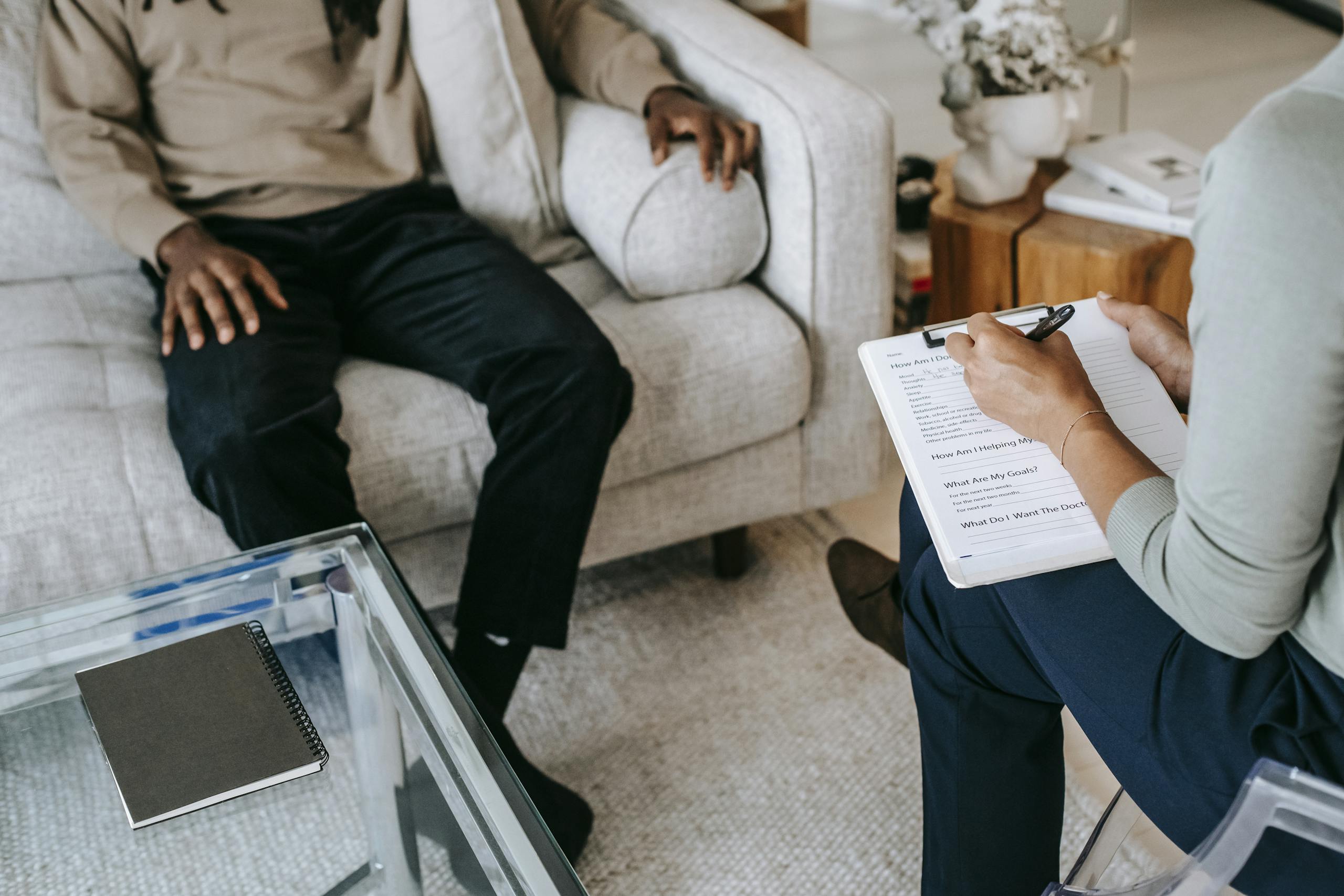
My piece on why rare personality types struggle at work explores how being in the minority within a system designed for the majority creates friction that can look like personal failing when it’s actually structural mismatch. The same dynamic operates in healthcare. When an HSP avoids scheduling care because the process is overwhelming, that avoidance can look like irresponsibility. What it actually represents is a rational response to an environment that consistently costs more than it should.
Empath medical services, at their best, are an attempt to close that structural gap. Not to make sensitive people tougher or more tolerant of environments that don’t serve them, but to build environments that actually serve them. That’s a meaningful difference in framing, and it matters for how we think about what good healthcare looks like for this population.
I’ve come to believe that the accommodations that work for HSPs in medical settings tend to work for everyone. Quieter waiting areas, providers who make eye contact and leave space for questions, appointments that don’t feel like they’re running on a timer, these things improve the experience for most patients. Designing for sensitivity often means designing for humanity.
If you’re building a fuller picture of what it means to live as a highly sensitive person, including how sensitivity shapes everything from career choices to daily environments to healthcare needs, the HSP and Highly Sensitive Person hub is the most comprehensive place to start on this site.
Running on empty?
Five drain profiles, each with specific triggers, warning signs, and a recharging playbook.
Take the Free QuizUnder 2 minutes · 8 questions · Free
About the Author
Keith Lacy is an introvert who’s learned to embrace his true self later in life. After 20 years in advertising and marketing leadership, including running agencies and managing Fortune 500 accounts, Keith now channels his experience into helping fellow introverts understand their strengths and build fulfilling careers. As an INTJ, he brings analytical depth and authentic perspective to every article, drawing from both professional expertise and personal growth.
Frequently Asked Questions
What are empath medical services?
Empath medical services are healthcare approaches specifically designed to accommodate the needs of highly sensitive people and empaths. They typically include sensory-friendly environments, slower-paced appointments, emotionally attuned communication, and providers trained to recognize how deep processing affects the patient experience. The term covers a spectrum from individual practitioners who’ve adapted their style to clinics built entirely around sensitive patient needs.
How is an empath different from a highly sensitive person in a medical context?
Highly sensitive people process sensory and emotional information with unusual depth, which means clinical environments can become overwhelming quickly. Empaths often experience the additional dimension of absorbing others’ emotions as if they were their own, which makes waiting rooms and shared clinical spaces particularly draining. Many people are both. In practice, empath-aware medical services tend to address both dimensions, though the specific accommodations that help most will vary by individual.
How do I find a provider who understands high sensitivity?
Start by asking directly during an initial consultation. Explaining that you process information deeply and may need more time can help you gauge a provider’s receptiveness quickly. Integrative medicine practices and telehealth platforms tend to attract providers who are more attuned to whole-person care. HSP and empath communities online often share recommendations for specific practitioners. Trauma-informed care practices frequently overlap with empath-aware approaches, so that’s another useful search term.
Can telehealth work well for highly sensitive people?
Yes, often very well. Telehealth removes a significant portion of the sensory challenge by allowing sensitive patients to receive care from a familiar, controlled environment. You manage the lighting, sound, and physical comfort of your surroundings rather than absorbing whatever the clinical environment delivers. For routine consultations, mental health support, and prescription management, telehealth can be genuinely superior for HSPs, not just more convenient. In-person care is still necessary for many clinical needs, but telehealth is worth considering as a default where it’s appropriate.
Are highly sensitive people more affected by medical environments than other patients?
Research supports that highly sensitive people show heightened physiological and emotional responses to environmental stimulation, which means clinical settings that are loud, bright, rushed, or emotionally charged will register more intensely for them than for less sensitive patients. This isn’t a matter of preference or fragility. It reflects measurable differences in nervous system processing. The same heightened responsiveness also means HSPs tend to benefit more from positive environmental and relational adjustments, so the investment in empath-aware care pays off in meaningful ways for this population.