Some zodiac signs are consistently described as the emotional anchors of any room, the ones who sense tension before a word is spoken and carry other people’s feelings long after everyone else has moved on. The empath zodiac signs, Cancer, Pisces, Scorpio, and a handful of others, share a depth of emotional perception that goes well beyond ordinary sensitivity. They don’t just notice how people feel. They absorb it, process it, and often struggle to separate their own emotional state from the atmosphere around them.
I recognize that quality immediately. As an INTJ who spent decades in advertising leadership, I was surrounded by people who processed emotion outwardly and loudly. I processed it inward, quietly, and in layers. The empath signs operate in a similar register, even if astrology and personality psychology approach the same territory from very different directions.
If you’ve ever wondered why certain people in your life seem to feel everything so intensely, or if you’ve always suspected that you feel more than most people around you, the connection between astrology and emotional depth is worth examining honestly. And if that sensitivity feels less like a gift and more like a weight some days, you’re in good company. Our HSP and Highly Sensitive Person hub covers the full spectrum of what it means to move through the world with heightened emotional perception, from the science behind it to practical ways to protect your energy.
Which Zodiac Signs Are Most Commonly Associated With Empathic Traits?
Astrologers and personality enthusiasts tend to point to the same cluster of signs when the topic of empathy comes up. Water signs dominate the list because water, as an elemental symbol, represents emotional depth, intuition, and the fluid movement between internal and external worlds. But a few earth and air signs earn their place on this list too, for different reasons.
What drains your social battery?
Not all social exhaustion is the same. Our free quiz identifies your specific drain pattern and gives you personalised recharging strategies.
Find Your Drain PatternUnder 2 minutes · 8 questions · Free
Cancer (June 21 to July 22) is almost universally considered the most empathic sign in the zodiac. Ruled by the Moon, which governs emotional cycles and instinct, Cancer individuals are deeply attuned to the emotional states of people they care about. They pick up on shifts in tone, unspoken sadness, and relational friction with an accuracy that can feel almost psychic. The downside is that their boundaries are porous. They absorb what they sense, and that absorption can become exhausting when they haven’t learned to create intentional emotional separation.
Pisces (February 19 to March 20) is the other sign most frequently placed at the top of this list. As the final sign of the zodiac, Pisces is said to carry the emotional residue of every sign that came before it. Ruled by Neptune, the planet of dreams, illusion, and spiritual connection, Pisces individuals often describe experiencing the emotions of others as if they were their own. A 2017 Psychology Today piece on the differences between highly sensitive people and empaths noted that true empaths feel they actually absorb the energy and emotions of others, rather than simply recognizing them. That description maps precisely onto how Pisces is typically characterized.
Scorpio (October 23 to November 21) brings a different flavor of empathy. Where Cancer and Pisces tend toward open emotional receptivity, Scorpio’s empathy is more investigative. Scorpios read beneath the surface of what people say, sensing motivations, hidden pain, and unspoken truths. Their empathy is penetrating rather than soft, which sometimes makes it feel more like perception than feeling. Still, the emotional intelligence operating underneath that intensity is considerable.
Virgo (August 23 to September 22) earns a place here through a different route. Virgo’s empathy expresses itself through service and attentiveness. These individuals notice when something is off with a person they care about and respond by trying to fix it, help it, or organize around it. Their emotional sensitivity is channeled into practical care, which can look less like feeling and more like doing, but the underlying attunement is real.
Libra (September 23 to October 22) rounds out the most commonly cited empath signs. Libras are acutely sensitive to relational harmony and disharmony. They feel the weight of conflict in a room and are often compelled to resolve it, sometimes at the cost of their own needs. Their empathy is socially oriented, tuned to the dynamics between people rather than the internal states of individuals.
Is There Any Real Connection Between Astrology and Emotional Sensitivity?
This is the question that honest people have to sit with. Astrology isn’t a validated psychological framework. No peer-reviewed study has confirmed that birth month reliably predicts empathic capacity. And yet, the conversation around empath zodiac signs persists because it gives people a language and a framework for something they genuinely experience but struggle to articulate.
What the science does confirm is that emotional sensitivity itself is real, measurable, and distributed unevenly across the population. A 2024 study published in Frontiers in Psychology examined how individual differences in sensory processing sensitivity relate to emotional reactivity and interpersonal functioning. The research found that people with higher sensitivity scores showed significantly different patterns of emotional processing, not just in how intensely they felt things, but in how deeply they processed social and relational information. That’s the underlying reality that astrology is pointing at, even if it’s pointing with an imprecise instrument.

I’ve spent a lot of time thinking about frameworks for understanding personality, partly because understanding myself was something I had to work at deliberately. Running advertising agencies meant I was constantly surrounded by frameworks: brand archetypes, consumer psychology models, MBTI profiles for team building. None of them were perfect. All of them were useful when treated as maps rather than territory. Astrology functions the same way for many people. It’s a map. A rough one, but sometimes a map with rough edges is better than no map at all.
One important clarification worth making: high sensitivity isn’t the same as being an empath, and neither is a product of trauma or emotional damage. A 2025 Psychology Today piece made the case clearly that high sensitivity is not a trauma response, it’s a neurological trait present from birth. That matters because it shifts the frame from pathology to personality, which is exactly where it belongs.
How Does Empathic Sensitivity Actually Show Up in Daily Life?
People who identify with the empath zodiac signs often describe a set of experiences that feel distinctly different from ordinary emotional awareness. These aren’t people who are simply “in touch with their feelings.” They’re people whose nervous systems seem calibrated to receive and process emotional information from their environment at a higher resolution than most.
A few of the most consistent patterns show up across both astrological descriptions and psychological research on high sensitivity.
Absorbing the Emotional Atmosphere of a Room
Empathic people frequently report walking into a space and immediately sensing the emotional temperature, even before anyone has said a word. A meeting that started badly before they arrived. A friendship in tension that no one has acknowledged. A colleague who is struggling but performing fine on the surface. I noticed this in myself during client pitches. Before the formal introductions were finished, I had already read the room: who was skeptical, who was genuinely interested, who had already made up their mind. That wasn’t mysticism. It was pattern recognition running on emotional data, the same capacity the empath signs are described as having in abundance.
Difficulty Distinguishing Personal Feelings From Absorbed Ones
One of the more disorienting aspects of deep empathic sensitivity is the blurring of emotional ownership. Highly empathic people, particularly those who identify with Cancer or Pisces placements, often describe feeling sad, anxious, or drained without being able to trace those feelings back to anything in their own life. The emotion arrived from somewhere outside them and settled in without a clear label attached.
A 2019 PubMed study on sensory processing sensitivity and its relationship to introversion found that highly sensitive individuals showed greater neural activation in response to others’ emotional states, suggesting the absorption isn’t metaphorical. Something neurologically distinct is happening.
Needing Significant Recovery Time After Social or Emotional Intensity
Empathic people across all the signs associated with this trait tend to need more recovery time after emotionally demanding interactions. A difficult conversation, a crowded event, or even a particularly moving film can leave them feeling depleted in ways that others don’t seem to experience. Sleep quality often suffers during high-stress periods. The connection between emotional sensitivity and sleep disruption is real enough that I’ve covered it practically: finding the right sleep environment matters enormously for people wired this way, which is why I spent time testing options in my review of 8 white noise machines for sensitive sleepers. The body needs help quieting down when the mind won’t stop processing.

Do the Empath Signs Process Personality Differently Than Other Types?
Astrology and personality psychology don’t map onto each other cleanly, but there are interesting overlaps worth examining. The signs most associated with empathic depth tend to share qualities with certain MBTI types, particularly those with strong Feeling preferences and Intuitive processing.
Pisces and Cancer, with their fluid emotional attunement and preference for meaning over mechanics, share qualities with INFJ and INFP profiles. Scorpio’s penetrating emotional intelligence echoes INTJ and INFJ patterns. Virgo’s service-oriented empathy maps loosely onto ISFJ tendencies. These aren’t rigid correspondences, and I’d be cautious about treating them as such. But if you’re someone who identifies with both an empath zodiac sign and an introverted or feeling-dominant MBTI type, the overlap isn’t coincidental. Both systems are describing the same underlying trait through different lenses.
What makes a personality type rare, whether in astrological or psychological frameworks, often comes down to the intensity and combination of traits rather than any single quality. My piece on what makes a personality type rare examines this from a psychological angle, and the same logic applies here. Empathic depth isn’t rare because it’s exotic. It’s rare because it operates at an intensity that most people don’t share and often don’t fully recognize in others.
One pattern worth noting: people who land somewhere in the middle of the introversion-extroversion spectrum sometimes misidentify their empathic sensitivity as evidence that they’re “balanced” or ambivert in nature. That’s worth examining more carefully. My article on ambiverts and why that label often obscures more than it reveals gets into why the “best of both worlds” framing can actually prevent people from understanding their genuine needs.
How Do the Empath Signs Handle Professional Environments?
This is where things get genuinely complicated, and where I have a lot of personal material to draw from.
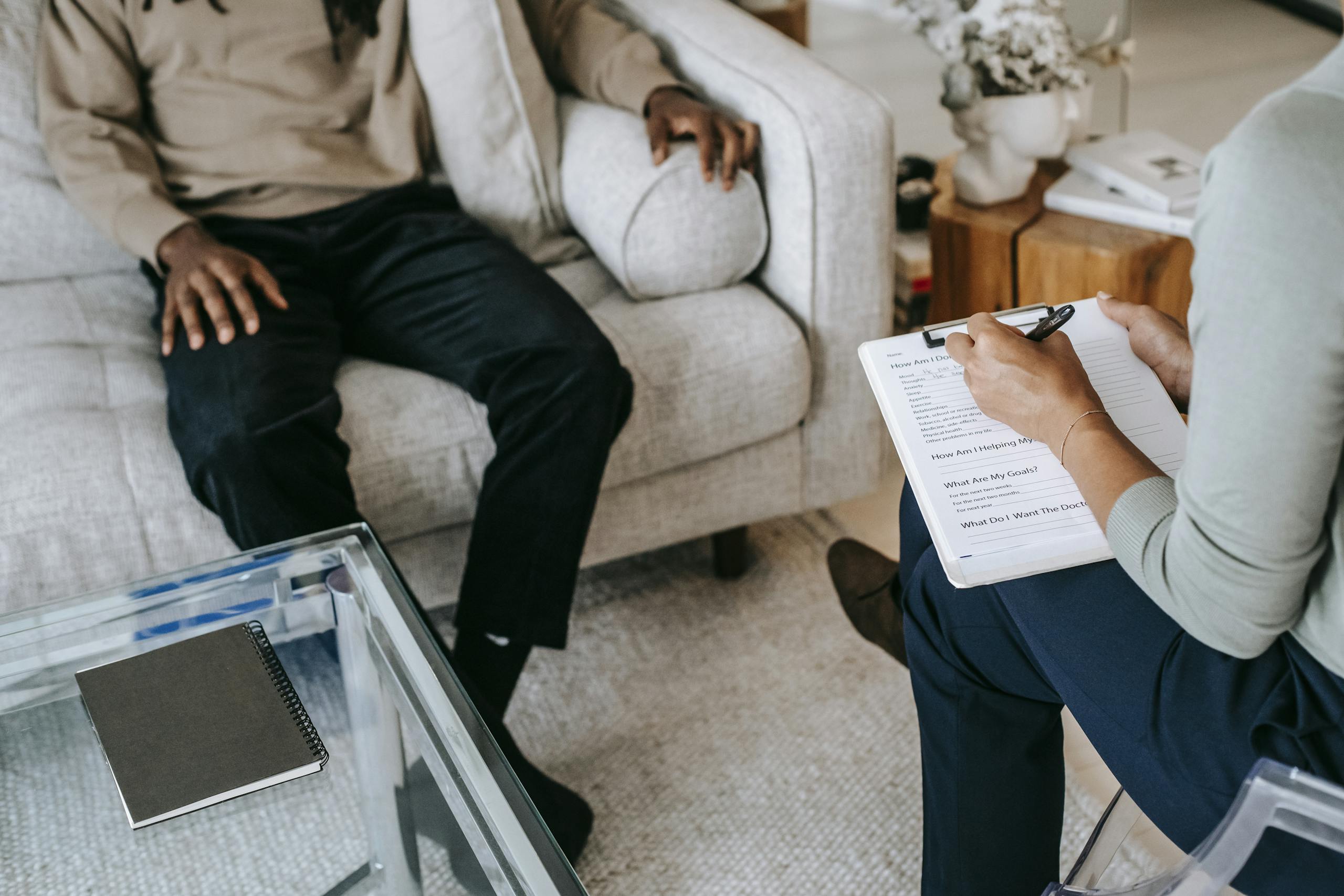
Professional environments are rarely designed with emotional depth in mind. They reward decisiveness, visible confidence, and the ability to compartmentalize. People who absorb the emotional atmosphere of a room, who process relational dynamics before they process the agenda, and who need recovery time after high-intensity interactions are often working against the grain of most workplace cultures.
At the agency, I managed teams of 30 to 50 people at peak periods, handling accounts for brands that expected fast, confident, high-energy presentations. I was good at it. But I was also exhausted by it in ways I couldn’t fully explain until I stopped trying to perform extroversion and started working with my actual wiring. The emotional processing I was doing in every client meeting, every internal review, every difficult conversation with a creative director who felt their work had been compromised, that was real work. It was invisible work. And it cost energy that I wasn’t accounting for.
People who identify with the empath zodiac signs often describe the same experience in professional settings. They’re doing significant emotional labor that goes unrecognized, uncompensated, and often misread as weakness or indecision.
The practical strategies for handling this are real and learnable. My HSP career survival guide for sensitive professionals covers the specific workplace dynamics that tend to be most challenging for people with high empathic sensitivity, along with concrete approaches for protecting your energy without dimming your effectiveness.
What I’ve observed, both in my own career and in conversations with others who share this trait, is that the empath signs often gravitate toward roles that allow their emotional intelligence to function as a genuine asset. Counseling, creative direction, teaching, strategic advisory work, conflict mediation. These are fields where the ability to read emotional subtext and respond with precision is a professional advantage rather than a liability. Personality type does shape career fit, and for people wired toward empathic depth, understanding that fit matters enormously. My article on why rare personality types really struggle at work examines how being wired differently from the dominant workplace culture creates specific friction points worth understanding.
Can Empathic Depth Become Overwhelming, and What Helps?
Yes. Without question. And I think it’s worth being direct about this rather than packaging it entirely in optimistic framing.
The same sensitivity that makes Cancer, Pisces, Scorpio, and the other empath signs so attuned to emotional nuance also makes them vulnerable to overload. When you’re absorbing environmental emotion constantly, when you can’t easily turn off the signal, the cumulative effect can be significant. Anxiety, emotional fatigue, difficulty setting limits with people who drain you, a tendency to take on others’ pain as your own responsibility, these are real patterns that show up consistently in people with high empathic sensitivity.
Nature is one of the most consistently cited forms of relief for people with high sensitivity. A Yale e360 feature on ecopsychology and the health benefits of nature immersion documented how time in natural environments reduces cortisol, lowers physiological stress markers, and provides the kind of sensory reset that highly sensitive people often need. For the empath signs, this isn’t a luxury. It functions more like maintenance.
Intentional solitude is another non-negotiable for most empathic people. Not isolation, not avoidance, but deliberate time alone where the emotional input from others is removed and the internal landscape can settle. I built this into my agency years out of necessity. Sunday mornings were protected time. No calls, no email, no social obligations. That wasn’t antisocial behavior. It was the thing that made me functional for everything else.
The MBTI lens adds another useful dimension here. People with strong Feeling preferences who haven’t developed their auxiliary functions often find emotional regulation harder than it needs to be. Growth in personality type development isn’t about becoming less sensitive. It’s about building the internal architecture to work with your sensitivity rather than being overwhelmed by it. My piece on MBTI development and the five truths that actually matter covers this in depth, and much of it applies directly to people who identify with the empath signs.
Environmental design matters more than most people acknowledge. Lighting, sound levels, the amount of visual stimulation in a space, all of these register differently for empathic and highly sensitive people. The research published in Nature on environmental sensitivity and health outcomes found that individuals with higher sensitivity scores showed stronger physiological responses to environmental stressors, making thoughtful environment design a genuine health consideration rather than a preference.
What’s the Difference Between Being an Empath and Being Highly Sensitive?
These terms get used interchangeably, and they’re not quite the same thing, though they overlap substantially.
High sensitivity, as described by Dr. Elaine Aron’s research on sensory processing sensitivity, is a measurable neurological trait. Roughly 15 to 20 percent of the population scores high on sensitivity measures, and this trait involves deeper processing of sensory and emotional information, greater responsiveness to subtle stimuli, and a tendency toward overstimulation in high-intensity environments. It’s biological, consistent across cultures, and present in many animal species.
Being an empath, as the term is commonly used, adds a relational dimension. Empaths don’t just process information deeply. They specifically absorb and internalize the emotional states of other people. The distinction matters because a highly sensitive person might be overwhelmed by sensory input without being particularly attuned to others’ emotions, while an empath’s sensitivity is specifically interpersonally directed.
Most people who identify with the empath zodiac signs score high on both dimensions. The water signs in particular seem to combine deep sensory processing with strong interpersonal emotional attunement, which is why they dominate these conversations.
What both groups share is the experience of moving through the world at a different emotional resolution than most people around them. More detail, more texture, more weight. That’s not a flaw. It’s a different kind of perception, and like any form of perception, it comes with both advantages and costs.
How Can People With Empath Zodiac Signs Work With Their Sensitivity Rather Than Against It?
The framing matters enormously here. For most of my advertising career, I treated my sensitivity as something to manage, contain, or compensate for. The turning point wasn’t a single revelation. It was a gradual accumulation of evidence that the qualities I’d been suppressing were actually the source of my best work.
My ability to read a client’s unspoken concerns before they articulated them. My instinct for when a campaign concept had emotional truth versus when it was technically correct but hollow. My capacity to sense when a team dynamic was breaking down before it became a performance problem. These weren’t soft skills. They were competitive advantages that I’d spent years apologizing for.
For people who identify with the empath zodiac signs, the practical shift involves a few consistent elements.
First, name what you’re experiencing accurately. “I’m overwhelmed” is less useful than “I’ve been absorbing a lot of emotional input today and I need quiet time to process it.” Specificity creates agency. Vague overwhelm feels like a condition. Named sensitivity feels like something you can work with.
Second, build emotional limits that are structural rather than reactive. Don’t wait until you’re depleted to protect your energy. Build the protection into your schedule, your environment, and your commitments proactively. I had to learn this the hard way after a particularly brutal new business pitch season left me running on empty for three months straight.
Third, find environments and roles where your emotional intelligence is valued rather than tolerated. This isn’t always possible immediately, but it’s a worthy long-term goal. People with high empathic sensitivity do their best work in contexts where depth is rewarded.
Fourth, stop treating your sensitivity as a problem to be solved. It’s a trait to be understood and worked with. The empath zodiac signs are described as they are because the qualities they represent, depth, attunement, emotional intelligence, are genuinely valuable. The challenge is building the self-knowledge and practical skills to express those qualities sustainably.
There’s much more to explore on this topic across the full range of HSP and sensitivity research. Our complete HSP and Highly Sensitive Person resource hub brings together articles on the science, the career implications, the relationship dynamics, and the day-to-day strategies that make a real difference for people wired this way.
Running on empty?
Five drain profiles, each with specific triggers, warning signs, and a recharging playbook.
Take the Free QuizUnder 2 minutes · 8 questions · Free
About the Author
Keith Lacy is an introvert who’s learned to embrace his true self later in life. After 20 years in advertising and marketing leadership, including running agencies and managing Fortune 500 accounts, Keith now channels his experience into helping fellow introverts understand their strengths and build fulfilling careers. As an INTJ, he brings analytical depth and authentic perspective to every article, drawing from both professional expertise and personal growth.
Frequently Asked Questions
Which zodiac sign is considered the most empathic?
Cancer is most consistently identified as the most empathic zodiac sign, largely due to its Moon rulership and deep attunement to emotional cycles. Pisces is a close second, often described as absorbing the emotional states of others so completely that the boundary between personal and absorbed feeling becomes unclear. Both signs are water signs, which in astrological tradition represents the element most associated with emotional depth and intuitive perception.
Are empath zodiac signs always introverted?
Not necessarily. Libra, one of the signs commonly associated with empathic sensitivity, is often quite socially engaged. Cancer can be warm and expressive in close relationships. Pisces varies widely. That said, the qualities associated with empathic depth, needing recovery time after emotional intensity, processing experience internally before expressing it, and being sensitive to overstimulation, do align with introversion in many cases. The overlap is real, even if it isn’t universal.
Is being an empath the same as being a highly sensitive person?
They overlap but aren’t identical. High sensitivity, as defined by sensory processing sensitivity research, refers to deeper neural processing of all sensory and emotional information. Being an empath specifically refers to absorbing and internalizing the emotional states of other people. Most empaths are highly sensitive, but not all highly sensitive people are empaths in the interpersonal sense. The empath zodiac signs tend to combine both qualities, which is part of what makes their emotional experience so intense.
Can someone with a non-empath zodiac sign still be highly empathic?
Absolutely. Astrological sun signs are one small piece of a complex natal chart, and many astrologers would argue that Moon sign and rising sign have as much or more influence on emotional temperament. Beyond astrology, empathic sensitivity is a neurological trait distributed across the population regardless of birth date. Someone with a Sagittarius or Capricorn sun sign can be deeply empathic if other factors in their chart, or their neurology, support it. The empath signs are tendencies and archetypes, not definitive categories.
How do empath zodiac signs protect their energy in high-demand environments?
The most effective strategies tend to be structural rather than reactive. Building intentional solitude into daily schedules, designing sleep and recovery environments that minimize sensory disruption, setting clear relational limits before reaching depletion, and finding professional roles that value emotional intelligence rather than penalize it. Nature immersion, creative expression, and time with people who feel genuinely safe are also consistently cited as restorative practices. The common thread is proactive protection rather than waiting for overwhelm to signal that something needs to change.