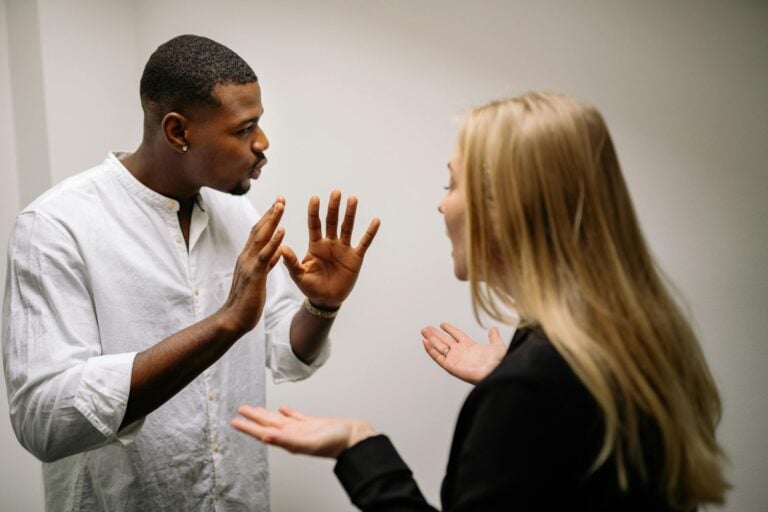

Enneagram Type 9, called the Peacemaker, is one of the nine core personality types in the Enneagram system. Type 9s are defined by a deep desire for inner and outer peace, a natural ability to see multiple perspectives, and a tendency to merge with others’ priorities while quietly setting aside their own. They are empathetic, adaptable, and often the steadying presence in any room.

Something about this type has always resonated with me, even as an INTJ. My own personality runs more toward strategy and structure than accommodation, but over two decades running advertising agencies, I worked alongside more Type 9s than I could count. They were the account managers who kept clients calm during creative chaos. The art directors who absorbed everyone’s feedback without complaint. The project leads who somehow made every stakeholder feel heard. I watched them pour so much energy into maintaining harmony that they sometimes forgot to advocate for themselves entirely.
That observation has stayed with me. And it’s part of why I wanted to write this guide carefully, not as a clinical breakdown, but as a real look at what it means to move through the world as someone wired for peace in a culture that often rewards conflict.
If you’re exploring the Enneagram alongside other personality frameworks, our Enneagram and Personality Systems hub covers the full landscape of types, wings, and how these systems interact with introversion and temperament. Type 9 sits at a particularly interesting intersection of all of it.
- Type 9s absorb emotional tension from others and adjust their behavior accordingly, sometimes forgetting to advocate for themselves entirely.
- Recognize that Type 9 peacemaking involves constant internal effort to maintain harmony, not simple passivity or lack of opinion.
- Type 9s hold multiple perspectives simultaneously and excel at making stakeholders feel heard, making them valuable in collaborative settings.
- Self-forgetting is a core Type 9 trait where personal agendas get deprioritized, requiring conscious effort to voice individual needs.
- Type 9s often experience inertia when starting tasks despite genuine motivation, suggesting they need external accountability or structured support systems.
What Are the Core Traits of Enneagram Type 9?
Type 9s are often described as easygoing, but that word doesn’t do them justice. What looks like easygoing from the outside is usually something much more complex on the inside: a careful, constant process of absorbing the emotional temperature of a room and adjusting accordingly. Type 9s are extraordinarily attuned to other people. They notice tension before it surfaces. They feel discomfort in others almost as if it were their own.
What’s your personality type?
Take our free 40-question assessment and get a detailed personality profile with dimension breakdowns, context analysis, and personalised insights.
Discover Your Type8-12 minutes · 40 questions · Free
The American Psychological Association has long documented how individual differences in empathy and social sensitivity shape interpersonal behavior. Type 9s sit at one end of that spectrum, with a sensitivity so finely tuned that it can feel like both a gift and a weight.
Core traits that show up consistently in Enneagram 9 personalities include:
- A genuine desire to avoid conflict, not out of weakness but out of a deep belief that harmony matters
- An ability to hold multiple perspectives simultaneously without needing to declare a winner
- A tendency toward what Enneagram teachers call “self-forgetting,” prioritizing others’ agendas over their own
- A calm, reassuring presence that others often seek out during difficult moments
- A rich inner world that rarely gets fully expressed in conversation
- A pattern of inertia, where starting things feels harder than it should, even when the Type 9 genuinely wants to begin
That last trait is one I saw play out in agency life more times than I can count. A talented Type 9 copywriter on my team had ideas that genuinely impressed me in one-on-one conversations. In group brainstorms, she’d go quiet. Not because she lacked confidence exactly, but because the energy of competing voices seemed to pull her inward rather than outward. Her best work always came after the meeting, when she had space to think without the noise.
What Motivates Enneagram Type 9 at a Deeper Level?
Every Enneagram type is driven by a core fear and a core desire. For Type 9, the core desire is connection and wholeness, specifically the feeling that everything is okay, that relationships are intact, and that there’s no tension lurking beneath the surface. The core fear is loss and separation, the sense of being cut off from others or from their own sense of inner peace.
What makes this particularly layered is that Type 9s often manage their fear by minimizing themselves. If they don’t assert strong opinions, they can’t be the cause of conflict. If they go along with what others want, they preserve connection. The logic makes emotional sense, even when it costs them something real.
A 2019 study published through the National Institutes of Health examined how conflict avoidance patterns develop in early attachment relationships, finding that individuals who learned to suppress their own needs to maintain relational harmony often carried those patterns well into adulthood. Type 9 behavior maps closely onto these findings. The Peacemaker’s self-effacement isn’t a character flaw. It’s a deeply ingrained survival strategy that once served a purpose.
Understanding that distinction matters enormously for growth. Type 9s aren’t passive by nature. They’re often running a constant, exhausting internal calculation about how to keep everyone connected and comfortable, including themselves. The passivity others observe is frequently the visible surface of an invisible effort.

How Does Enneagram Type 9 Show Up at Work?
In professional settings, Type 9s are often the most genuinely collaborative people in the room. They’re not performing teamwork for optics. They actually care about making sure everyone’s voice lands. In a culture that often rewards the loudest person in the meeting, that quality gets undervalued constantly.
At one of my agencies, we had a creative director who was a textbook Type 9. He could take a room full of people with competing visions for a campaign and find the thread that connected all of them. Clients loved him. The team trusted him. He was genuinely gifted at synthesis. What he struggled with was advocating for his own creative instincts when they ran counter to what a client wanted. He’d soften his position, find the middle ground, and sometimes we’d end up with work that was fine instead of great.
That’s the professional tension for Type 9s. Their collaborative strength is real and valuable. The challenge is learning when to hold their ground, not because conflict is good in itself, but because their perspective genuinely deserves space at the table.
Careers where Type 9 strengths tend to shine include counseling, mediation, social work, teaching, human resources, and creative fields that benefit from synthesis and collaboration. The Harvard Business Review has written extensively about how emotionally intelligent leaders who can hold space for multiple perspectives create more psychologically safe teams, and that’s essentially a description of a healthy Type 9 in a leadership role.
Worth noting: if you’re still figuring out your own personality type alongside the Enneagram, taking a structured MBTI personality test can add useful context. Many Type 9s find they cluster in certain MBTI categories, particularly INFP, ISFP, and INFJ, though the overlap is never perfectly clean.
What Are the Enneagram Type 9 Wings?
In the Enneagram system, wings are the adjacent types that color and shape how your core type expresses itself. Type 9 sits between Type 8 and Type 1 on the Enneagram circle, so Peacemakers typically have either a 9w8 or 9w1 configuration.
Type 9 Wing 8 (9w8)
The 9w8 is sometimes called the Referee. The Type 8 wing brings assertiveness and a certain groundedness into the Type 9’s natural desire for peace. These individuals are still fundamentally oriented toward harmony, but they have more capacity to hold their position when challenged. They can be quietly forceful in a way that pure Type 9s often aren’t. In my agency experience, the 9w8s were the account directors who could push back on a client without making it feel like a fight.
Type 9 Wing 1 (9w1)
The 9w1 is sometimes called the Dreamer. Type 1’s influence brings idealism, a strong internal sense of right and wrong, and a desire for things to be done properly. These Type 9s are often more principled and organized than their core type alone would suggest. They care about peace, yes, but they also care about fairness and integrity. The inner critic that defines Enneagram Type 1’s experience shows up in milder form here, adding a layer of self-reflection that can be both clarifying and exhausting.
How Does Enneagram Type 9 Behave Under Stress?
When Type 9s move into stress, they shift toward the less healthy expressions of Type 6, the Loyalist. This means anxiety rises, decision-making becomes harder, and the Type 9 may start seeking reassurance more actively or becoming more reactive than their usual calm self would suggest.
The stress pattern for Type 9s often looks like this: they absorb tension from their environment for a long time without expressing it. They accommodate. They smooth things over. And then, when the accumulated pressure becomes too much, they either shut down entirely or express frustration in ways that surprise the people around them. Because Type 9s are usually so even-keeled, the occasional eruption can feel disproportionate to observers who don’t realize how much the Type 9 has been quietly carrying.
The Mayo Clinic’s research on chronic stress and emotional suppression is relevant here. Consistently pushing down emotional responses doesn’t eliminate them. It stores them, often with compounding interest. Type 9s who never learn to express disagreement or discomfort in real time tend to pay for it later, either through sudden emotional discharge or through the slow accumulation of resentment that quietly erodes relationships they genuinely care about.
Understanding how stress breaks down a personality type is something I’ve written about in other contexts. The pattern of gradual accumulation followed by sudden collapse shows up across different types. If you’re familiar with how Enneagram Type 1 behaves under stress, you’ll recognize some structural similarities, even though the surface behaviors look quite different.

What Does Growth Look Like for Enneagram Number 9?
In growth, Type 9s move toward the healthy expressions of Type 3, the Achiever. This doesn’t mean they become competitive or status-driven. It means they develop a clearer relationship with their own goals, their own voice, and their own capacity to take action on behalf of what they actually want.
A healthy Type 9 in growth looks like someone who has learned that their presence matters. That their opinions don’t just add noise to a conversation, they add something necessary. That advocating for themselves doesn’t rupture connection, it deepens it, because authentic relationship requires two real people, not one person and their accommodating shadow.
Practical growth areas for Enneagram 9 include:
- Practicing stating a preference before checking what others want, even in low-stakes situations like choosing a restaurant
- Noticing when inertia is showing up and naming it, rather than letting it masquerade as contentment
- Building a tolerance for the discomfort of mild conflict, recognizing that disagreement doesn’t equal disconnection
- Developing awareness of when self-forgetting is happening in real time, not just in retrospect
- Finding forms of expression, writing, art, movement, that allow the rich inner world to surface without requiring a social performance
That last point matters more than it might seem. Type 9s often have an extraordinarily developed interior life that rarely gets fully communicated. I’ve seen this in introverts across personality types: the gap between what’s happening internally and what gets expressed externally can be enormous. For Type 9s specifically, finding a private channel for that inner world can be genuinely grounding.
Are Enneagram Type 9s Usually Introverts?
Not necessarily, though the overlap is significant. Enneagram type and MBTI type are different systems measuring different things, and a Type 9 can be either introverted or extroverted in the MBTI sense. That said, the inner-world orientation of Type 9, the preference for processing quietly, the tendency to absorb rather than broadcast, does align with introversion in ways that make the combination common.
What I’ve noticed, both in my own experience and in the people I’ve worked with, is that introverted Type 9s face a compounded version of the self-expression challenge. An extroverted Type 9 might at least have the social energy to stay in conversation long enough to eventually share their perspective. An introverted Type 9 is managing both the introvert’s need for solitude and the Type 9’s pull toward accommodation, which can make finding and using their voice feel like swimming against two currents at once.
The APA’s research on introversion and social processing suggests that introverts tend to process social information more deeply and more slowly than extroverts, which means the introvert Type 9’s apparent passivity in group settings is often active, thorough processing happening beneath a quiet surface. That’s not a deficit. It’s a different rhythm that gets misread in environments built for faster, louder expression.
Some of the most common MBTI pairings with Enneagram 9 include INFP and INFJ, both of which carry their own relationship with introversion, depth, and the challenge of asserting an inner world that doesn’t always translate easily into social settings. If you’re curious about how those personality dynamics play out differently across MBTI types, the patterns around ISTJ leadership and systems-based thinking offer an interesting contrast to the Type 9’s more fluid, relational approach.
What Are the Relationship Patterns of Enneagram Type 9?
In relationships, Type 9s are often described as the most genuinely supportive partners, friends, and family members. They listen without immediately trying to fix. They hold space without judgment. They remember what matters to the people they love and show up accordingly.
The challenge in close relationships is what Enneagram teachers call “merging.” Type 9s can become so attuned to a partner’s preferences, rhythms, and needs that they gradually lose track of their own. They adopt the other person’s tastes, defer to the other person’s plans, and over time can feel a quiet but growing sense of resentment that they struggle to name or express, because naming it would require the kind of direct confrontation they’ve spent years learning to avoid.
Healthy relationships for Type 9s require a partner or friend who actively creates space for the Type 9’s preferences to surface. Not just asking “what do you want?” once, but genuinely staying curious, because a Type 9’s first answer is often a deflection rather than a real response. The real answer comes when they feel safe enough to stop managing the other person’s comfort and start attending to their own.
I’ve thought about this in the context of my own working relationships. As an INTJ, I tend to be direct and decisive in ways that can inadvertently crowd out the people around me. Learning to slow down, ask better questions, and genuinely wait for answers rather than filling the silence with my own analysis was something I had to develop deliberately. The Type 9s on my teams taught me more about that than any leadership book ever did.

How Does Enneagram Type 9 Compare to Other Types?
Type 9 is sometimes confused with Type 2 (the Helper) because both types are oriented toward other people’s wellbeing. The difference is in motivation. Type 2s help because they need to feel needed and appreciated. Type 9s accommodate because they want to preserve peace and connection. A Type 2 who isn’t thanked feels hurt. A Type 9 who isn’t thanked often doesn’t even register the absence, because they weren’t accommodating in order to receive something back.
Type 9 is also sometimes compared to Type 4 (the Individualist) because both types have rich inner worlds and can struggle with a sense of being somehow separate from others. The difference is that Type 4s lean into their distinctiveness and often want to be seen as unique, while Type 9s tend to minimize their distinctiveness in favor of blending in and keeping the peace.
Compared to Type 1, the contrast is instructive. Where Enneagram Type 1 at work is driven by an internal standard of correctness that can make compromise feel like moral failure, Type 9 finds compromise genuinely comfortable, sometimes to a fault. The Type 1’s challenge is learning to soften. The Type 9’s challenge is learning to hold firm.
What Mental Health Considerations Apply to Enneagram Type 9?
Enneagram type doesn’t determine mental health outcomes, but it does shape the specific patterns that can develop when someone is struggling. For Type 9s, the mental health risks that tend to show up most often are depression, dissociation, and a particular kind of low-grade anxiety that comes from years of suppressing their own needs.
The NIH has published substantial work on the relationship between emotional suppression and depressive symptoms, finding that people who consistently inhibit emotional expression show higher rates of depressive episodes over time. For Type 9s, the suppression often isn’t dramatic. It’s quiet and gradual, the slow accumulation of unspoken preferences, unexpressed frustrations, and deferred desires.
The pattern has some structural similarities to what happens when any personality type’s core coping strategy stops working. There’s a useful parallel in what happens when an ISTJ’s systems fail them: the very mechanism that kept everything functioning becomes the source of the breakdown. For Type 9s, the peace-keeping strategy that once preserved relationships can eventually hollow them out.
Therapeutic approaches that tend to work well for Type 9s include somatic therapies that help reconnect them with their physical experience (since Type 9s can become quite disconnected from their bodies), mindfulness practices that build awareness of present-moment preferences, and relational therapies that create a safe container for practicing directness without catastrophic consequences.
There’s also something worth saying about the intersection of Type 9 patterns and the kind of slow-burn burnout that can develop in high-accommodation environments. The type-specific mental health challenges that show up in different personality profiles often share a common thread: the person’s greatest strength, turned up too high, for too long, without enough recovery, becomes the thing that breaks them. For Type 9, that strength is accommodation. The antidote is learning that their own needs aren’t a threat to the peace they’re trying to protect.

What Are the Strengths of Enneagram Type 9 Worth Celebrating?
It would be easy to read everything above and conclude that being a Type 9 is mostly a series of challenges to overcome. That would be a significant misreading. The strengths of this type are genuinely rare and genuinely valuable.
Type 9s are among the most naturally gifted mediators in any group. Their ability to hold multiple perspectives without immediately collapsing into one is something most people have to work hard to develop. In a culture increasingly defined by polarization, that capacity is not just useful. It’s essential.
They also bring a quality of presence that’s difficult to manufacture. When a healthy Type 9 is fully engaged with you, you feel it. Not because they’re performing attentiveness, but because they genuinely are attending. That quality of real listening, without the constant undercurrent of waiting to respond, is something most people experience rarely and remember long afterward.
Their synthesis ability, the capacity to take disparate ideas and find the connecting thread, is an intellectual strength that often goes unrecognized because it doesn’t look like the more visible forms of intelligence. But in creative work, in strategy, in any context where integration matters more than domination, Type 9s are often the ones who make the whole greater than the sum of its parts.
Running agencies for two decades taught me that the people who could hold complexity without rushing to resolve it were often the most valuable people in the room. They weren’t always the loudest. They weren’t always the ones whose names ended up on the award submissions. But they were frequently the reason the work held together at all.
If you want to explore more about how different Enneagram types and personality frameworks interact with introversion, temperament, and professional life, our Enneagram and Personality Systems hub is a good place to keep reading.
About the Author
Keith Lacy is an introvert who’s learned to embrace his true self later in life. After 20 years in advertising and marketing leadership, including running agencies and managing Fortune 500 accounts, Keith now channels his experience into helping fellow introverts understand their strengths and build fulfilling careers. As an INTJ, he brings analytical depth and authentic perspective to every article, drawing from both professional expertise and personal growth.
Frequently Asked Questions
What is Enneagram Type 9 known for?
Enneagram Type 9, the Peacemaker, is known for an exceptional ability to see multiple perspectives, a deep desire for inner and outer harmony, and a natural gift for mediation and synthesis. Type 9s are empathetic, steady, and genuinely collaborative, though they often struggle to prioritize their own needs and voice in the process of keeping peace around them.
What are the biggest challenges for Enneagram number 9?
The most significant challenges for Enneagram Type 9 include self-forgetting (losing track of their own desires while attending to others’), inertia (difficulty initiating action even when they genuinely want to), and a tendency to suppress conflict rather than address it directly. Over time, these patterns can lead to accumulated resentment, disconnection from their own identity, and a quiet but persistent sense of dissatisfaction.
What Enneagram types are most compatible with Type 9?
Type 9s tend to build strong connections with Type 2 (the Helper), Type 3 (the Achiever), and Type 1 (the Perfectionist), though compatibility in the Enneagram is more about health level and self-awareness than type pairing. A Type 9 in a healthy, self-aware state can build deep relationships across all types. The most important factor is having partners and friends who actively create space for the Type 9’s preferences and perspective to surface.
How does type 9 enneagram grow and develop?
Growth for Enneagram Type 9 involves moving toward the healthy qualities of Type 3: developing a clearer relationship with personal goals, learning to take action on their own behalf, and building tolerance for the discomfort of mild conflict. Practical growth practices include stating preferences before deferring to others, noticing inertia in real time, and finding expressive outlets for the rich inner world that rarely gets fully communicated in social settings.
Are most Enneagram 9s introverts?
Not all Enneagram 9s are introverts, but the overlap is meaningful. The Type 9’s natural orientation toward internal processing, absorption rather than broadcasting, and preference for depth over breadth in relationships aligns with many introvert traits. Introverted Type 9s often face a compounded challenge: managing both the introvert’s need for solitude and the Type 9’s pull toward accommodation, which can make finding and expressing their own voice particularly demanding.