
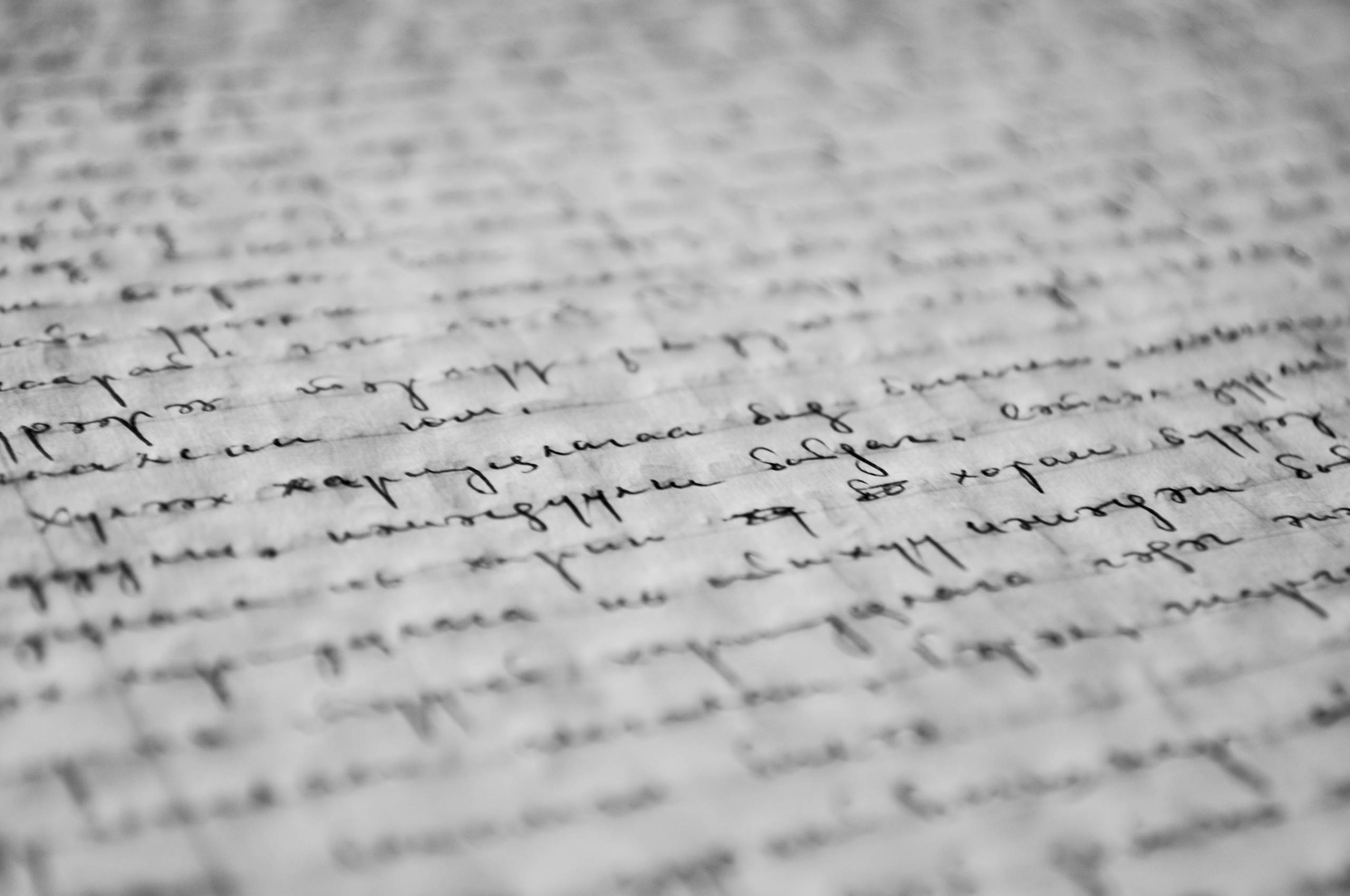
ENTP handwriting tends to be fast, irregular, and full of personality. The letters often vary in size, the baseline shifts, and the overall impression is energetic rather than precise. What shows up on the page reflects what’s happening inside: a mind that moves quickly, thinks in multiple directions at once, and resists the kind of rigid consistency that slows things down.
Of course, handwriting analysis isn’t a science in the way cognitive psychology is, and no single trait applies universally. But many ENTPs describe their own writing in remarkably similar terms: rushed, sprawling, readable enough but never quite neat. There’s something worth exploring in that pattern.
Our ENTP Personality Type hub covers the full picture of this type, from cognitive strengths to communication patterns. This article focuses on one specific and often overlooked window into the ENTP mind: what their handwriting might tell us, and why it matters more than you’d expect.

Why Does Handwriting Reflect Personality at All?
Graphology, the formal study of handwriting as a personality indicator, has a complicated reputation. Some practitioners make sweeping claims that go well beyond what the evidence supports. Even so, the general idea that how we write reflects something about how we think isn’t entirely without basis. The physical act of writing involves motor control, attention, and cognitive processing all at once. When someone is rushing mentally, their hand often rushes too.
Career Coaching for Introverts
One-on-one career strategy sessions with Keith Lacy. 20 years of Fortune 500 leadership as an introvert, now helping others build careers that work with their wiring.
Learn More50-minute Zoom session · $175
What I find more interesting than formal graphology is the informal observation that people with similar cognitive styles often describe their handwriting in similar ways. I’ve worked alongside a lot of different personality types over the years, running agencies and managing creative teams. The ENTPs I’ve known, and there were several who were absolute forces in brainstorming rooms, had handwriting that looked like their thinking: fast, non-linear, and a little hard to follow if you weren’t already inside their head.
One ENTP strategist I worked with on a major retail account used to fill whiteboards with ideas so quickly that the marker would skip. His handwriting on paper looked the same way: words that started clearly and trailed off, letters that got smaller as a thought accelerated, arrows connecting ideas across the page in ways that made perfect sense to him and required a translator for everyone else. That wasn’t sloppiness. That was his mind on paper.
Personality frameworks like MBTI offer one lens for understanding these patterns. If you haven’t yet identified your own type, our free MBTI personality test is a good place to start. Knowing your cognitive preferences helps you interpret not just how you write, but how you process, communicate, and connect with others.
What Does Dominant Ne Actually Do to Handwriting?
ENTPs lead with dominant Extraverted Intuition, or Ne. This function is externally oriented and constantly scanning for connections, possibilities, and patterns across a wide field of information. It’s generative rather than convergent. Ne doesn’t settle on one idea and develop it slowly. It fires across multiple ideas simultaneously, looking for the links between them.
When that cognitive style translates to handwriting, you tend to see a few consistent features. Speed is the most obvious one. Ne moves fast, and the hand tries to keep up. Letters get compressed or simplified. Words sometimes blur together. Spacing becomes inconsistent because the mind is already three sentences ahead of where the pen is.
Baseline irregularity is another common feature. The line of writing drifts up or down rather than staying flat. Some graphologists interpret an upward drift as optimism or enthusiasm, and a downward drift as fatigue or discouragement. For ENTPs, the drift often seems to follow the energy of the idea itself: when something excites them, the writing climbs; when a thought feels routine, it settles back down.
Size variation is also worth noting. ENTPs often write larger when emphasizing a point and smaller when recording something they consider secondary. The size isn’t random. It reflects an internal hierarchy of importance that Ne is constantly recalibrating.
According to Frontiers in Psychiatry, motor expression and cognitive processing share overlapping neural pathways, which helps explain why cognitive style and physical writing behavior tend to correlate in observable ways. The connection isn’t deterministic, but it’s real enough to be worth paying attention to.

How Does Ti Shape the Way ENTPs Write and Think on Paper?
Auxiliary Introverted Thinking, Ti, is what gives ENTP thinking its analytical edge. While Ne generates possibilities, Ti evaluates them against an internal logical framework. Ti cares about precision, but it’s precision in reasoning rather than precision in presentation. An ENTP can write messily and still think rigorously. The two aren’t in conflict for this type.
What Ti tends to produce in handwriting is a kind of selective clarity. ENTPs often write key terms or critical phrases more carefully than surrounding text. The logical anchor points get more attention. Everything else gets shorthand. If you look at ENTP notes, you’ll often find a few words written with real intention surrounded by a sea of abbreviations, symbols, and half-finished sentences.
I noticed this pattern clearly when I was working with an ENTP creative director on a pitch for a Fortune 500 consumer goods brand. Her notes from our strategy sessions were almost impossible to read in full, but the three or four phrases she’d circled or underlined were always perfectly legible. She knew which ideas mattered most, and her hand reflected that judgment automatically. Ti was doing its work even in the physical act of writing.
This selective precision also shows up in how ENTPs approach formal writing versus informal note-taking. When the audience matters and the logic needs to land, they can be surprisingly careful. When they’re just capturing thought for themselves, the writing becomes a private shorthand that serves Ne’s need for speed rather than Ti’s capacity for precision.
Understanding how ENTPs connect with others through their ideas is part of what makes their communication style so distinctive. Their approach to networking authentically as an ENTP often mirrors this same pattern: high energy in the moment, selective depth when something genuinely engages them.
Does Tertiary Fe Show Up in Handwriting?
Tertiary Extraverted Feeling, Fe, is less developed in ENTPs than their Ne and Ti, but it still influences how they present themselves. Fe attunes to group dynamics and shared emotional tone. It’s the function that makes ENTPs surprisingly charming and socially aware, even when their dominant function is pulling them in ten different directions at once.
In handwriting, Fe’s influence is subtle. ENTPs who are writing for an audience often unconsciously adjust their style to be more legible or expressive. They add flourishes, use more space, or vary their pressure in ways that feel performative rather than functional. When writing for themselves, those accommodations disappear entirely.
There’s also a warmth that can appear in personal correspondence. ENTPs writing notes to people they care about sometimes slow down visibly. The letters become more deliberate. The energy shifts from capturing thought to connecting with a person. Fe creates that shift even in a type that isn’t primarily oriented toward emotional expression.
As a note-taker, the ENTP is primarily serving their own Ne and Ti. But as a communicator putting pen to paper for someone else, Fe steps in and changes the calculus. That dual mode, private capture versus social expression, produces two very different handwriting styles in the same person.

How Does Inferior Si Create Tension in ENTP Writing Habits?
Inferior Introverted Sensing, Si, is the ENTP’s least developed function. Si attunes to internal sensory impressions, body awareness, and the comparison of present experience to past patterns. It’s the function responsible for consistency, routine, and careful attention to established detail. For ENTPs, Si is often a source of friction rather than comfort.
In practical terms, this means ENTPs often struggle with the kind of disciplined consistency that produces neat, uniform handwriting. Neat handwriting requires the same pressure, the same letter formation, the same spatial rhythm, maintained across an entire page. That’s a Si-dominant activity. For an Ne-dominant type, that level of repetitive consistency can feel almost physically uncomfortable.
Many ENTPs report that they start writing neatly with genuine intention and then watch their handwriting deteriorate as the content of their thinking takes over. The mind accelerates, Si’s careful attention falls away, and Ne reclaims the pen. The result is handwriting that looks like two different people wrote the beginning and end of the same paragraph.
This isn’t a flaw to fix. It’s a natural expression of how the ENTP cognitive stack operates under pressure. When ENTPs are in their element, thinking fast and generating connections, the inferior function simply can’t keep pace. The handwriting reflects that honestly.
The same dynamic plays out in verbal communication. ENTPs who are working through their approach to public speaking without draining themselves often describe a similar tension: the impulse to go wherever the idea leads versus the discipline required to stay structured and legible to an audience.
How Does ENTP Handwriting Compare to ENTJ Handwriting?
ENTPs and ENTJs share Extraverted orientation and Thinking in their function stack, but their cognitive priorities are quite different. ENTJs lead with dominant Extraverted Thinking, Te, which is externally focused, goal-oriented, and concerned with efficient execution. Te wants things organized, clear, and actionable.
That difference tends to show up visibly in handwriting. ENTJ handwriting is typically more consistent and purposeful than ENTP handwriting. ENTJs write to communicate and to act. The writing serves a function, and Te ensures that function is served efficiently. Letters tend to be more uniform, spacing more deliberate, and the overall impression is one of controlled energy rather than scattered energy.
ENTPs write to think. The handwriting is part of the cognitive process rather than a record of conclusions already reached. That’s a meaningful distinction. For ENTJs, the thinking often happens before the writing. For ENTPs, the writing is often where the thinking happens.
I’ve seen this contrast play out in meeting rooms more times than I can count. ENTJs in my agency took notes that looked like action item lists: clean, structured, ready to be shared. The ENTPs took notes that looked like mind maps exploded across a legal pad. Both approaches were effective for the person using them. Neither approach translated easily to the other person’s style.
These cognitive differences also shape how each type handles high-stakes communication. The way ENTJs approach negotiation by type tends to be more structured and outcome-focused than the ENTP’s more exploratory style. And ENTJs tend to bring a different kind of presence to public speaking than ENTPs do, even when both are effective on stage.
Even in networking, the contrast holds. ENTJs who are networking authentically tend to be more strategic and deliberate in how they build connections, while ENTPs tend to follow curiosity and let relationships develop organically from intellectual engagement.

What Can ENTPs Learn From Paying Attention to Their Handwriting?
There’s a practical dimension to this conversation that goes beyond personality analysis. Handwriting, for ENTPs, is often a real-time record of cognitive state. When the writing is especially chaotic, it frequently reflects a mind that’s overloaded or overstimulated. When it’s unusually careful, it often means the ENTP is operating in a more deliberate, reflective mode.
Some ENTPs find that deliberately slowing their handwriting down helps them access more depth in their thinking. The act of writing more slowly forces Ne to pause long enough for Ti to catch up and evaluate. The result is often better quality ideas rather than more ideas. For a type that tends to generate faster than it filters, that’s a meaningful shift.
Journaling is one context where this pays off. ENTPs who journal consistently often report that the physical act of writing by hand, rather than typing, creates a different quality of reflection. The constraint of handwriting speed creates a productive friction that typing doesn’t. It forces a kind of selectivity that Ne doesn’t naturally impose on itself.
There’s also something worth noting about the relationship between handwriting and memory. Research published in PubMed Central has examined how handwriting engages encoding processes differently than typing, suggesting that the physical act of forming letters involves deeper cognitive processing for retention. For ENTPs, whose inferior Si means they don’t naturally anchor to past experience, handwriting might offer a useful tool for creating stronger memory traces.
I’ve started keeping a handwritten notebook for my own strategic thinking, not because I’m an ENTP, but because the constraint of writing by hand forces me to be more selective about what I record. As an INTJ, my dominant Introverted Intuition tends to synthesize quietly before I ever put pen to paper. Watching the ENTPs I’ve worked with use handwriting as a thinking tool rather than a recording tool gave me a new appreciation for how differently we arrive at our best ideas.
Does Digital Writing Change Anything for ENTPs?
Most ENTPs are enthusiastic adopters of digital tools, and for good reason. Typing removes the physical constraint of handwriting speed, which means Ne can finally move at its natural pace. The result is often an explosion of output: long emails, sprawling documents, chat messages that arrive in rapid succession.
What gets lost in the digital shift is the embodied quality of handwriting. There’s a physical engagement with ideas that handwriting provides that typing doesn’t replicate. Some ENTPs find that their best creative and strategic thinking still happens on paper, even when their daily workflow is entirely digital. The two modes serve different cognitive functions.
Digital writing also tends to flatten the expressiveness that shows up in handwriting. You can’t really tell from a typed document whether someone wrote it in a state of high excitement or grinding obligation. Handwriting preserves that information. For ENTPs, who experience significant variation in cognitive energy depending on how engaged they are, that expressiveness is part of what makes their handwriting interesting to look at.
The ENTP’s natural inclination toward debate and intellectual challenge also shapes their digital writing. Their approach to negotiation by type tends to show up in how they construct written arguments: exploratory, multi-sided, and comfortable with complexity in a way that can read as indecisive to more decisive types.
According to 16Personalities’ profile of ENTP leadership, this type’s communication style, whether written or verbal, tends to prioritize intellectual engagement over clarity of direction. That observation rings true across both handwritten and digital contexts.
The entrepreneurial dimension of ENTP thinking also matters here. MIT Sloan’s research on entrepreneurship highlights the cognitive flexibility and tolerance for ambiguity that characterizes effective entrepreneurial thinking, traits that ENTPs tend to embody naturally. Their writing, in any format, often reflects that comfort with open-ended exploration.
What Does ENTP Handwriting Tell Us About Self-Expression More Broadly?
Handwriting is intimate in a way that most forms of communication aren’t. It carries personality in its physical form, not just its content. For ENTPs, whose self-expression is so often verbal and performative, handwriting offers a more unguarded window into the cognitive style underneath the performance.
What you tend to see in ENTP handwriting is a mind that hasn’t been edited for an audience. The irregularity, the speed, the selective clarity around important ideas, all of it reflects the raw operation of Ne and Ti working together without the social polish that Fe adds in spoken communication.
That rawness is worth something. In a world where most professional communication is typed, formatted, and filtered through multiple layers of revision, handwriting preserves something authentic about how a person actually thinks. For ENTPs, whose authentic thinking style is one of their greatest strengths, that authenticity is worth preserving.
The broader literature on personality and physical expression supports this general direction. PubMed Central’s resources on personality psychology note that expressive behaviors, including writing style, tend to correlate with underlying personality dimensions in consistent ways across individuals. The correlation isn’t deterministic, but it’s meaningful enough to inform how we understand ourselves.
ENTPs who want to understand their own cognitive patterns more deeply might find it worthwhile to look at their handwriting not as a presentation of self but as a record of thinking. What does it show about where your attention goes? What ideas get the most physical energy? Where does your hand slow down, and what does that tell you about what matters?
Those questions don’t have definitive answers, but they’re exactly the kind of open-ended inquiry that ENTPs tend to find genuinely engaging. And that might be the most ENTP thing about this whole topic: the willingness to take something as ordinary as handwriting and find a dozen interesting questions inside it.
Explore more about what makes this type distinctive across different contexts in our complete ENTP Personality Type hub, where we cover everything from cognitive strengths to career patterns and communication styles.
About the Author
Keith Lacy is an introvert who’s learned to embrace his true self later in life. After 20 years in advertising and marketing leadership, including running agencies and managing Fortune 500 accounts, Keith now channels his experience into helping fellow introverts understand their strengths and build fulfilling careers. As an INTJ, he brings analytical depth and authentic perspective to every article, drawing from both professional expertise and personal growth.
Frequently Asked Questions
Is ENTP handwriting always messy?
Not always, but many ENTPs describe their handwriting as fast and irregular rather than neat. The dominant Ne function pushes for speed and idea generation, which often means consistency and tidiness fall away under cognitive load. ENTPs can write carefully when the context demands it, particularly when their tertiary Fe is engaged by writing for someone they care about, but their default mode tends toward expressive rather than precise.
What cognitive function most influences ENTP handwriting?
Dominant Ne has the most visible influence. It drives the speed, the baseline irregularity, and the size variation that characterize many ENTP handwriting samples. Auxiliary Ti contributes selective clarity around key logical points. Inferior Si creates the tension between the ENTP’s desire to write neatly and their natural tendency to let the mind’s pace override physical consistency.
Can handwriting analysis accurately identify an ENTP?
Graphology as a formal discipline doesn’t have the scientific validation to reliably identify MBTI types from handwriting samples. What’s more defensible is the observation that cognitive style and writing behavior tend to correlate in consistent ways. Many ENTPs describe their handwriting in similar terms, and those descriptions align with what we’d expect from an Ne-dominant type. It’s a useful lens for self-reflection, not a diagnostic tool.
How does ENTP handwriting differ from INTJ handwriting?
INTJs lead with dominant Introverted Intuition, Ni, which is convergent and synthesizing rather than expansive and generative. INTJ handwriting tends to be more controlled and deliberate, reflecting a cognitive style that processes internally before externalizing. ENTPs process externally through writing itself, which produces more visible cognitive activity on the page. The INTJ’s writing often looks like conclusions. The ENTP’s writing often looks like the process of reaching them.
Does handwriting speed affect the quality of ENTP thinking?
Many ENTPs report that deliberately slowing their handwriting improves the depth of their thinking rather than reducing the quantity of ideas. Writing slowly forces Ne to pause long enough for Ti to evaluate each idea before moving to the next. The result tends to be fewer but better-developed thoughts. For ENTPs who find that their ideas feel scattered or hard to act on, experimenting with slower, more intentional handwriting can be a practical way to engage Ti more actively in the thinking process.