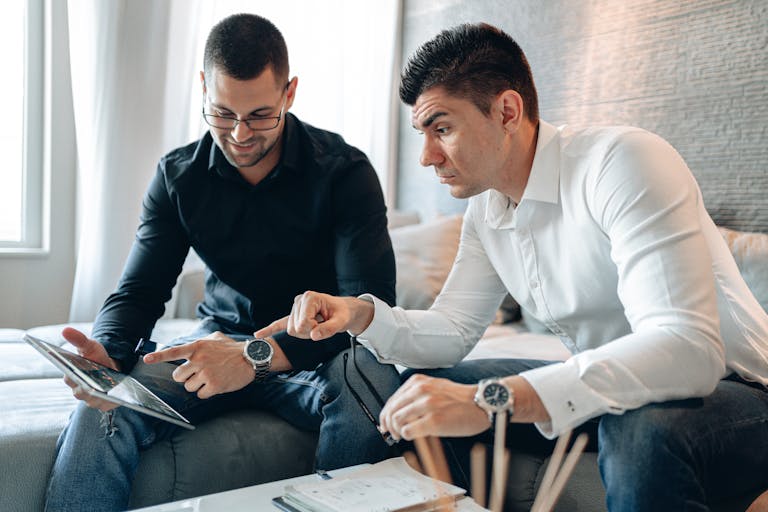
ENTPs bring something rare to healthcare: a mind that refuses to accept “that’s how we’ve always done it” as a valid answer. People with this personality type thrive when they can challenge assumptions, generate creative solutions, and push systems toward something better, and healthcare is full of broken systems desperately waiting for exactly that kind of pressure.
So what does a fulfilling healthcare career actually look like for an ENTP? The honest answer is that it depends less on the specific role and more on whether the environment gives them room to think, question, and build. Put an ENTP in a rigid, protocol-only setting with no intellectual latitude, and you’ll watch a brilliant person slowly go numb. Put them somewhere that rewards curiosity and rewards initiative, and they’ll change how the whole department operates.
I’ve spent a lot of time thinking about how personality type shapes professional fit. Running advertising agencies for over two decades, I watched people either flourish or wither based on whether their environment matched how their mind actually worked. Healthcare is no different. The wiring matters enormously.
If you’re an ENTP exploring healthcare as a career path, or you’re already in the field trying to figure out why something feels off, this guide is built around the questions that actually matter: where you’ll thrive, where you’ll struggle, and how to position yourself for work that feels meaningful rather than suffocating.
This article is part of a broader exploration of extroverted analytical personalities. Our MBTI Extroverted Analysts (ENTJ & ENTP) hub covers the full range of how these types show up at work, in leadership, and in relationships. The ENTP in healthcare specifically deserves its own treatment because the industry creates a unique set of tensions and opportunities for this personality type that don’t show up the same way in other fields.

Why Does Healthcare Attract ENTPs in the First Place?
Healthcare is one of the few industries where intellectual complexity, human stakes, and systemic dysfunction all coexist in the same building. For an ENTP, that combination is magnetic.
What’s your personality type?
Take our free 40-question assessment and get a detailed personality profile with dimension breakdowns, context analysis, and personalised insights.
Discover Your Type8-12 minutes · 40 questions · Free
People with this personality type are driven by problems that actually matter. They want to work on things with real consequences, not just quarterly metrics. Healthcare delivers that in abundance. Every inefficiency in a hospital system, every outdated treatment protocol, every gap between what patients need and what they receive, these are genuine problems with genuine human costs. ENTPs feel that weight and it energizes them rather than paralyzes them.
There’s also the intellectual density of the field. Medicine is one of the most complex knowledge domains humans have ever constructed. A 2021 analysis published through PubMed Central highlights how the integration of clinical knowledge, patient psychology, and systemic factors creates an environment that demands constant cognitive engagement. For a mind that gets bored the moment it stops being challenged, that density is a feature, not a burden.
ENTPs are also drawn to healthcare because it’s a field in genuine transformation. Digital health, AI-assisted diagnostics, value-based care models, telehealth infrastructure, the entire industry is being rebuilt in real time. That’s not a stable, predictable environment. That’s an ENTP playground.
I remember working with a healthcare client during a major campaign repositioning. Their internal team was full of people who could execute brilliantly but nobody who could step back and question whether the entire strategy needed rethinking. The moment we brought in a consultant with classic ENTP energy, the whole conversation shifted. She didn’t just solve the problem we brought her. She reframed what the problem actually was. That’s what this personality type does at its best.
| Career / Role | Why It Fits | Key Strength Used | Watch Out For |
|---|---|---|---|
| Health Policy Analyst | Combines structured argumentation with real-world impact. Allows ENTPs to apply analytical skills to problems affecting millions of patients while advocating for meaningful change. | Complex problem-solving, persuasive argumentation, systems-level thinking | Regulatory constraints and political processes move slowly. Ideas may face institutional resistance before implementation. |
| Healthcare Consultant | Involves solving complex organizational problems across different healthcare settings. Provides variety, autonomy, and connection to systemic change without being locked into one institution. | Rapid analysis, cross-contextual pattern recognition, challenging status quo | Success depends on implementation follow-through, which ENTPs often struggle to sustain without external accountability structures. |
| Medical Innovation Director | Directly focuses on identifying and implementing new approaches within healthcare organizations. Rewards the ability to question established practices and drive organizational change. | Visionary thinking, intellectual courage, culture-building for innovation | Must balance desire for rapid iteration with healthcare’s necessary protocols and safety requirements. Risk of abandoning initiatives before they’re fully implemented. |
| Healthcare IT Systems Designer | Addresses genuine inefficiencies in healthcare delivery through technology. Combines intellectual complexity with real consequences and allows for problem-solving autonomy. | Systems thinking, innovation capability, identifying process gaps | Regulatory constraints and implementation timelines can feel restrictive. Requires sustained attention to detail and long-term project execution. |
| Clinical Research Investigator | Intellectual density of medicine combined with the freedom to question established protocols. Allows ENTPs to work on genuinely complex problems with human stakes. | Complex knowledge synthesis, hypothesis generation, challenging assumptions | Research moves slowly and requires meticulous documentation. Can feel suffocating to someone wired for rapid iteration and novelty. |
| Healthcare Startup Founder | Offers maximum autonomy and allows immediate action on ideas. Combines intellectual challenge with entrepreneurial freedom to build better systems from scratch. | Visionary thinking, rapid problem-solving, challenging industry norms | Requires exceptional execution skills and sustained focus. High risk of idea generation without follow-through on implementation and funding challenges. |
| Medical Operations Manager | Identifies inefficiencies in healthcare delivery and implements systemic solutions. Bridges clinical and administrative contexts, allowing cross-functional problem-solving. | Systems optimization, analytical firepower, institutional awareness | Heavy emphasis on protocol compliance and detail-oriented execution. May struggle with the sustained, routine nature of operational management. |
| Hospital Administrator/Chief Innovation Officer | Leadership position enabling organizational vision and culture change. ENTPs can question status quo at scale while building environments where innovation flourishes. | Strategic vision, intellectual challenge to status quo, leadership presence | Requires disciplined follow-through and emotional intelligence with diverse teams. Risk of creating instability through constant questioning without consensus-building. |
| Biomedical Engineer | Addresses complex healthcare problems through technical innovation. Combines intellectual density with practical solutions that genuinely improve patient outcomes. | Complex systems analysis, innovation, technical problem-solving | Regulatory approval processes are lengthy and cautious. Requires sustained attention to implementation details and safety protocols. |
| Healthcare Quality Improvement Specialist | Systematically challenges ineffective practices and implements evidence-based improvements. Provides autonomy to question protocols while staying grounded in measurable outcomes. | Process analysis, challenging assumptions, data-driven argumentation | Success depends on collaborative buy-in from skeptical teams. Requires patience with incremental change and detailed documentation of improvements. |
Which Healthcare Roles Actually Fit the ENTP Mind?
Not every healthcare role rewards the ENTP’s natural strengths. Some positions require the kind of sustained, detail-oriented routine that slowly drains a mind wired for novelty and debate. The roles that genuinely fit tend to share a few characteristics: they involve complex problem-solving, they allow for autonomy, and they connect individual work to broader systemic change.
Health Policy and Advocacy is a natural fit. ENTPs love arguing for things they believe in, and health policy is essentially structured argumentation with real-world consequences. Whether working in government, think tanks, or nonprofit advocacy organizations, people with this personality type can apply their analytical firepower to problems that genuinely shape how millions of people receive care.
Healthcare Consulting gives ENTPs the variety and intellectual challenge they crave without locking them into a single institutional culture. Moving between clients, industries, and problem types keeps the work fresh. The 16Personalities profile for ENTPs at work specifically notes their affinity for roles that combine strategic thinking with the freedom to challenge existing approaches, which describes consulting almost perfectly.
Medical Research and Clinical Innovation rewards the ENTP’s love of hypothesis-driven thinking. Designing studies, questioning existing findings, pushing toward new treatment models, these activities align naturally with how ENTPs process information. The challenge here is the long timelines. Research moves slowly, and ENTPs need to build in mechanisms to stay engaged across extended projects.
Health Technology and Digital Health sits at the intersection of two domains ENTPs love: complex systems and innovation. Building products that change how patients interact with care, or how providers access information, gives this personality type a canvas that rewards both their analytical depth and their appetite for creative problem-solving.
Medical Education is worth considering for ENTPs who want to influence the field at scale. Teaching gives them a platform to challenge assumptions, debate ideas, and shape how the next generation of clinicians thinks. The classroom dynamic, with its built-in intellectual sparring, suits them well.
Clinical Roles with Diagnostic Complexity can work for ENTPs who pursue clinical paths, particularly in specialties like emergency medicine, psychiatry, or internal medicine where diagnosis requires integrating ambiguous information quickly. The risk is that the administrative burden of clinical practice often swallows the intellectual reward, so ENTPs in clinical roles need to be intentional about protecting time for the work that actually energizes them.

Where Do ENTPs Run Into Trouble in Healthcare Settings?
Healthcare has a culture of protocol. That’s not a flaw, it’s a feature. When the stakes are someone’s life, you want systems that don’t depend on individual improvisation. But that same culture can feel suffocating to an ENTP who sees a better way and wants to move on it immediately.
The tension between ENTP energy and institutional caution shows up in predictable ways. ENTPs generate ideas constantly, and in healthcare, most of those ideas will hit regulatory walls, liability concerns, or change-resistant cultures before they ever get tested. That friction is genuinely hard for a mind wired to move fast and iterate.
There’s also the execution problem. People with this personality type are exceptional at generating possibilities and genuinely struggle with the sustained, detail-oriented follow-through that implementation requires. In healthcare, incomplete follow-through isn’t just an efficiency issue, it can have serious consequences. If you recognize yourself in the pattern described in Too Many Ideas, Zero Execution: The ENTP Curse, healthcare may amplify that tension more than most industries because the cost of dropped balls is higher.
Interpersonal dynamics present another challenge. ENTPs love debate and can mistake intellectual sparring for connection. In healthcare, where colleagues are often under significant emotional and physical stress, that approach can land badly. A physician who’s just come out of a difficult patient conversation doesn’t want to be challenged on their diagnostic reasoning as an intellectual exercise. Reading the room matters enormously, and it’s not always an ENTP’s strongest skill.
The American Psychological Association’s work on listening makes a point that lands differently when you apply it to ENTPs specifically: genuine listening requires suspending the impulse to respond, reframe, or redirect. For a personality type whose mind is always three steps ahead, that suspension takes real effort. In healthcare settings where patients and colleagues need to feel genuinely heard, that effort isn’t optional.
I saw a version of this play out when I was managing a large healthcare account at my agency. We had a strategist on the team who was genuinely brilliant, classic ENTP energy, always the smartest read in the room. But she had a habit of finishing other people’s sentences and pivoting conversations toward her own analysis before the other person had finished their thought. Our client noticed. Not in a complimentary way. The relationship nearly broke because of it. As this article on ENTP love languages and debate as foreplay suggests, competence alone doesn’t carry you when the other person feels like they’re not being heard. What I didn’t realize at the time was that this pattern of relentless intensity and dismissing others’ input can eventually undermine the kind of INTJ P&L ownership and bottom line leadership that requires genuine stakeholder buy-in, or lead to the ENTJ burnout and system failure that demands a complete recalibration of how we show up professionally.
How Should ENTPs Approach Collaboration in Healthcare Teams?
Healthcare is inherently collaborative. Physicians, nurses, administrators, technicians, social workers, these roles intersect constantly, and the quality of patient outcomes depends significantly on how well those intersections work. ENTPs need to be intentional about how they show up in those collaborative moments.
One of the most useful reframes for ENTPs in healthcare teams is shifting from “how do I contribute the best idea” to “how do I help this team make the best decision.” Those sound similar but they’re not. The first centers the ENTP’s individual contribution. The second centers the team’s collective outcome. Healthcare cultures tend to reward the second orientation much more than the first.
The skill of listening without immediately pivoting to debate is something ENTPs in healthcare need to develop deliberately. There’s a full exploration of this at ENTPs: Learn to Listen Without Debating, and the core insight applies directly to clinical and administrative healthcare environments: the impulse to challenge isn’t wrong, but the timing and framing of that challenge determines whether it lands as a contribution or a disruption.
ENTPs also need to be aware of a pattern that can damage working relationships over time: disappearing when things get emotionally complicated. ENTPs Ghost People They Actually Like captures something real about how this personality type handles relational friction. In healthcare, where teams work in high-stress environments and relationships need to be maintained through difficulty, that ghosting pattern can be genuinely harmful to both the team and the ENTP’s own reputation.
What works better is building explicit check-in habits. Not because ENTPs naturally want to do emotional maintenance, but because the investment pays off in sustained trust and working relationships that can handle disagreement without fracturing.

What Does ENTP Leadership Look Like in Healthcare Organizations?
ENTPs in healthcare leadership positions can be genuinely significant. They bring vision, intellectual courage, and a willingness to challenge the status quo that healthcare desperately needs at the organizational level. The question isn’t whether they have leadership potential. It’s whether they develop the discipline to sustain it.
ENTP leaders in healthcare tend to excel at building cultures of innovation. They create environments where people feel safe questioning established practices, where new ideas get a fair hearing, and where the organization stays oriented toward what’s actually working rather than what’s always been done. Those are genuinely valuable leadership contributions in an industry that often defaults to inertia.
The failure modes are equally predictable. ENTP leaders can become so focused on the next idea that they leave their teams without the consistent direction and follow-through they need to function. They can mistake intellectual debate for team alignment, when in reality the team has stopped engaging and is just waiting for the conversation to end. They can also underestimate the emotional labor that leadership requires, particularly in healthcare where staff are regularly absorbing significant human suffering.
There’s a useful contrast here with ENTJ leadership failures. Reading through When ENTJs Crash and Burn as Leaders reveals a different set of failure patterns, mostly around rigidity and emotional unavailability. ENTPs tend to crash differently: through inconsistency, over-commitment, and the inability to stay focused on implementation once the exciting problem-solving phase is over. Knowing your specific failure mode is the first step toward preventing it.
The Myers-Briggs Foundation’s overview of the MBTI framework emphasizes that type awareness is most valuable not as a label but as a tool for self-understanding and growth. For ENTP leaders in healthcare, that means using their type knowledge to build systems around their weaknesses, not just celebrate their strengths.
Practically, that might look like pairing with a detail-oriented COO or operations director who can translate ENTP vision into executable plans. It might mean building in regular accountability structures that keep projects moving after the initial excitement fades. It definitely means developing the emotional intelligence to lead teams through the sustained difficulty that healthcare work regularly involves.
How Do ENTPs Handle the Emotional Weight of Healthcare Work?
This is the question that doesn’t get asked enough. ENTPs are often framed purely in terms of their intellectual capabilities, and the emotional dimension of their experience gets underexplored. Healthcare is a field saturated with human suffering, moral complexity, and ethical weight. How does an ENTP actually process that?
The honest answer is: often by intellectualizing it. ENTPs tend to process difficult emotional experiences by analyzing them, which can look like detachment from the outside but is often a genuine coping mechanism. The problem is that in healthcare, that detachment can be misread by colleagues and patients as indifference, and it can also prevent the ENTP from accessing the emotional information they need to make good decisions.
A 2011 study published in PubMed Central on physician empathy and patient outcomes found meaningful correlations between clinician emotional engagement and patient satisfaction, treatment adherence, and even clinical results. For ENTPs in clinical or patient-facing roles, developing genuine emotional attunement isn’t just a personal growth aspiration. It’s professionally consequential.
There’s also a gender dimension worth acknowledging. The pressures on ENTP women in healthcare leadership can be particularly acute, because the same directness and intellectual confidence that serves an ENTP well can be penalized in women in ways it isn’t in men. The dynamics explored in What ENTJ Women Sacrifice For Leadership parallel what ENTP women often experience: the expectation that they’ll soften their intellectual edge in ways their male counterparts aren’t asked to do.
Managing the emotional weight of healthcare also requires ENTPs to build recovery practices that actually work for their specific wiring. They need intellectual stimulation outside of work to decompress, which sounds counterintuitive but reflects the reality that ENTPs don’t restore themselves through quiet and stillness the way introverts do. They restore through engagement with ideas that aren’t weighted with professional stakes.

What Career Development Path Makes Sense for ENTPs in Healthcare?
ENTPs rarely thrive on linear career paths. The traditional healthcare ladder, where you spend decades moving incrementally up a single institutional hierarchy, tends to feel like a slow suffocation for a personality type that needs variety and new challenges to stay engaged. A more effective approach is building a career that deliberately incorporates lateral moves, cross-functional experiences, and periodic reinvention.
Early career ENTPs in healthcare benefit from broad exposure rather than narrow specialization. Time spent across different departments, different patient populations, or different institutional types builds the cross-contextual understanding that later becomes a genuine competitive advantage. An ENTP who has worked in both clinical and administrative contexts, or in both large hospital systems and startup health companies, brings a synthesis perspective that specialists often lack.
Mid-career is often where ENTPs in healthcare face their most significant choice: do they go deep into an area of genuine expertise, or do they leverage their breadth to move into leadership or consulting roles? Both paths can work, but the choice should be made consciously rather than by default. ENTPs who drift into senior clinical roles without developing genuine management skills often find themselves technically excellent but organizationally frustrated.
The American Psychological Association’s research on personality types in professional contexts suggests that long-term career satisfaction correlates strongly with alignment between personality traits and role demands. For ENTPs, that means actively seeking roles that reward intellectual flexibility and strategic thinking, rather than settling for positions that happen to be available.
One pattern I’ve observed consistently, both in my own career and in the careers of people I’ve advised, is that the most fulfilled professionals are the ones who stopped trying to fit themselves into existing role descriptions and started defining what they actually brought to an organization. ENTPs in healthcare are particularly well-positioned to do this because their combination of analytical depth and creative thinking is genuinely rare in a field that tends to attract more systematic personalities.
Pursuing advanced credentials strategically can also open doors. An ENTP with clinical training who adds an MBA or MPH creates a profile that bridges worlds most healthcare organizations struggle to connect. That bridge position, sitting between clinical reality and organizational strategy, is exactly where ENTP strengths tend to generate the most value.
How Should ENTPs Choose Which Healthcare Organization to Join?
Not all healthcare organizations are equally hospitable to ENTP energy. Some institutional cultures actively reward the kind of questioning and innovation this personality type brings. Others have calcified around existing practices and treat challenge as threat. Knowing how to read organizational culture before accepting a position is one of the most valuable skills an ENTP in healthcare can develop.
Look for organizations with explicit innovation mandates. Not just mission statements that mention innovation, but actual structural evidence: dedicated innovation teams, internal incubator programs, leadership that has a track record of implementing new approaches rather than just studying them. ENTPs can smell the difference between genuine innovation culture and performative change-talk pretty quickly, but it’s worth doing that assessment before you’re six months into a role that’s slowly grinding you down.
Pay attention to how the organization handles disagreement. In interviews, ask about a time when a significant practice was changed based on internal challenge or new evidence. The answer tells you a great deal about whether intellectual courage is actually valued or just tolerated. An organization where the answer involves a long story about committee approvals and multi-year review processes is probably not going to give an ENTP the responsiveness they need to stay engaged.
Consider the leadership above you carefully. ENTPs need managers who can handle being challenged without feeling threatened. A leader who interprets an ENTP’s questioning as insubordination rather than contribution will create a miserable working environment for both parties. The dynamics around vulnerability and control in leadership relationships are explored in depth in articles like ESFP vs ISFP: Key Differences, and these dynamics apply in professional contexts too: leaders who can’t tolerate challenge tend to surround themselves with agreement, and that’s a stifling environment for an ENTP.
Startups and early-stage health companies often suit ENTPs well, particularly in the growth phase where roles are still being defined and the organization is genuinely building rather than maintaining. The risk is that ENTPs can thrive in the chaos of early growth and then find themselves miserable once the company matures and systematizes. Being honest with yourself about what phase of organizational development actually energizes you is important information for making good career choices.

What Practical Strategies Help ENTPs Sustain Long-Term Success in Healthcare?
Long-term success in healthcare for an ENTP requires more than finding the right initial role. It requires building habits and structures that compensate for the places where ENTP wiring creates friction with the demands of the field.
Build accountability partnerships deliberately. ENTPs are much better at following through when they’ve made a commitment to a specific person rather than just to a goal. In healthcare, where implementation matters enormously, having a colleague or mentor who checks in on whether projects are actually from here creates the external structure that ENTP internal motivation often can’t sustain alone.
Develop a personal system for managing idea generation. ENTPs in healthcare often generate more good ideas than they can possibly act on, and the frustration of seeing good ideas die because there’s no bandwidth to pursue them is a real drain on motivation. Keeping a running list of ideas with honest assessments of what would actually be required to implement them helps separate the ideas worth pursuing from the ones that are intellectually interesting but practically unworkable in the current context.
Invest in relationships across the organization, not just within your immediate team. ENTPs in healthcare who build genuine connections across departments, specialties, and levels of the hierarchy end up with both better information and more allies when they want to push something new through the system. Those relationships are also a buffer against the isolation that can come from being the person who always challenges the status quo.
Find your intellectual community outside your immediate workplace. Healthcare can be isolating for ENTPs who don’t have peers who can engage with ideas at the level they want. Professional associations, research collaborations, conference communities, these are places where ENTPs can find the intellectual sparring they need without putting undue pressure on their immediate working relationships to provide it.
Finally, take the emotional labor of healthcare seriously as a professional discipline, not just a personal challenge. Learning to be present with patients and colleagues who are in distress, without immediately pivoting to problem-solving mode, is a skill that develops with practice. It’s also a skill that makes ENTPs significantly more effective in healthcare contexts, because the relational quality of the work matters as much as the intellectual quality. The best healthcare professionals I’ve ever seen in action combined sharp analytical minds with genuine human presence. That combination is possible for ENTPs, but it requires intentional development.
Explore more resources on extroverted analytical personality types in our complete MBTI Extroverted Analysts (ENTJ & ENTP) Hub.
About the Author
Keith Lacy is an introvert who’s learned to embrace his true self later in life. After 20 years in advertising and marketing leadership, including running agencies and managing Fortune 500 accounts, Keith now channels his experience into helping fellow introverts understand their strengths and build fulfilling careers. As an INTJ, he brings analytical depth and authentic perspective to every article, drawing from both professional expertise and personal growth.
Frequently Asked Questions
Are ENTPs well-suited for careers in healthcare?
ENTPs can be exceptionally well-suited for healthcare careers, particularly in roles that reward intellectual complexity, systemic thinking, and innovation. They thrive in environments that allow them to challenge existing practices and develop creative solutions. Clinical roles with significant diagnostic complexity, health policy, consulting, research, and health technology are among the strongest fits. The challenge is finding environments with enough intellectual latitude and organizational flexibility to match the ENTP’s need for variety and autonomy.
What are the biggest challenges ENTPs face in healthcare settings?
The most significant challenges for ENTPs in healthcare include the tension between their appetite for innovation and the protocol-driven culture of the field, difficulty sustaining focus through long implementation phases after the initial problem-solving excitement fades, and the interpersonal demands of a high-stress collaborative environment. ENTPs may also struggle with the emotional weight of healthcare work if they rely too heavily on intellectualizing as a coping mechanism, which can create distance from colleagues and patients who need genuine emotional engagement.
Can ENTPs succeed in clinical healthcare roles like medicine or nursing?
Yes, ENTPs can succeed in clinical roles, and often excel in specialties that require rapid integration of ambiguous information, such as emergency medicine, psychiatry, or internal medicine. The risk is that the administrative burden and routine elements of clinical practice can drain an ENTP’s energy over time. ENTPs who pursue clinical paths tend to be most fulfilled when they combine clinical work with teaching, research, or policy involvement, creating a portfolio of work that keeps the intellectual engagement high across multiple domains.
How should ENTPs approach leadership roles in healthcare organizations?
ENTPs in healthcare leadership are most effective when they pair their natural vision and intellectual courage with deliberate systems for follow-through and team support. This often means building strong operational partnerships with detail-oriented colleagues who can translate ENTP-generated strategy into executable plans. Developing genuine emotional intelligence is also critical, because healthcare teams operate under significant stress and need leaders who can provide consistent support, not just intellectual direction. Being aware of the ENTP tendency to disengage once the exciting problem-solving phase is over helps leaders build in accountability structures that keep projects moving.
What types of healthcare organizations are the best fit for ENTPs?
ENTPs tend to thrive in healthcare organizations with genuine innovation cultures, including health technology startups, research institutions, consulting firms, and forward-thinking health systems with dedicated innovation functions. The most important factors to evaluate are how the organization handles internal challenge and disagreement, whether leadership has a track record of implementing new approaches, and whether the role provides enough variety and autonomy to keep an ENTP engaged over time. Organizations with rigid hierarchies and change-resistant cultures tend to be poor fits regardless of the specific role.