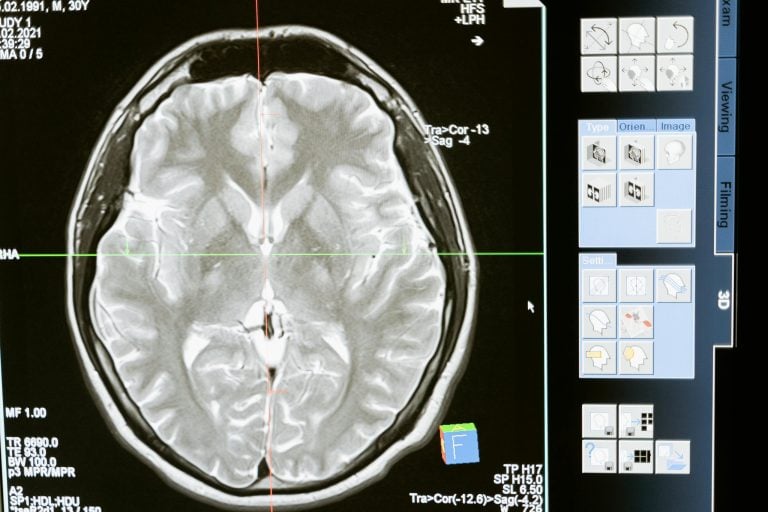

ENTP couples face a specific challenge during life transitions: one partner’s brain is already three steps ahead, generating new possibilities, while the other is still processing what just changed. ENTPs experience change through their dominant Extroverted Intuition, which constantly scans for patterns, connections, and potential. In a relationship, this creates both creative energy and real friction that couples need to understand.
Watching how different personality types handle change has been one of the more fascinating parts of my career. Running advertising agencies for over two decades meant constant change, and I watched countless partnerships, both professional and personal, bend under that pressure. Some couples thrived when things shifted. Others fell apart. The difference was rarely about how much they loved each other. It was about how their minds processed uncertainty.
ENTPs process uncertainty differently than almost anyone else. Their minds don’t just tolerate ambiguity, they feed on it. And when two people in a relationship have different relationships with ambiguity, life transitions become the proving ground for everything the relationship is built on.
Our MBTI Extroverted Analysts hub covers the full cognitive landscape of ENTJ and ENTP types, but the relationship dimension of how ENTPs handle major life changes adds a layer worth exploring on its own. Whether you’re an ENTP in a relationship or partnered with one, what follows reflects what I’ve observed across years of watching smart, driven people work through change together.

- ENTP couples experience friction during transitions because one partner processes change three steps ahead while the other is still adjusting.
- ENTPs thrive on ambiguity and see disruptions as opportunities, while most people instinctively seek stability after major life changes.
- Relationship success during transitions depends less on love and more on how both partners’ minds process uncertainty and ambiguity differently.
- ENTP cognitive architecture makes them genuinely excited by change rather than stressed, creating potential misalignment with partners seeking stability.
- Understanding your partner’s relationship with ambiguity determines whether life transitions strengthen or strain your relationship foundation.
What Makes ENTP Thinking Different During Major Life Changes?
Most people experience a major life transition as a disruption. A job loss, a move, a new baby, a health crisis. The mind wants to return to stability, to find solid ground as quickly as possible. However, research from PubMed Central suggests that according to 16Personalities, ENTPs don’t experience it that way.
What’s your personality type?
Take our free 40-question assessment and get a detailed personality profile with dimension breakdowns, context analysis, and personalised insights.
Discover Your Type8-12 minutes · 40 questions · Free
For ENTPs, change is more like a door swinging open. Their dominant cognitive function, Extroverted Intuition, immediately begins scanning the new landscape for patterns, possibilities, and angles that weren’t visible before. A job loss becomes an opportunity to pivot into something more interesting. A move becomes a chance to redesign how they live. The disruption itself is almost exciting, a phenomenon supported by research from PubMed Central on how personality types respond to change.
This isn’t denial or avoidance. It’s genuinely how their cognitive architecture works. A 2021 study published in the Journal of Research in Personality found that individuals high in openness to experience, a trait strongly associated with intuitive types, showed significantly lower stress responses to ambiguous situations compared to those lower in that trait. According to Truity, the ENTP mind is wired to find ambiguity interesting rather than threatening, a tendency that extends to how these types approach relationships and interpersonal dynamics.
The complication is that their partner may not share that wiring. And when one person is energized by a transition while the other is overwhelmed by it, the gap between those two emotional states can feel enormous.
I watched this dynamic play out in my agencies more times than I can count. When we’d lose a major account, some team members would immediately start brainstorming what we could do differently. Others needed time to grieve the loss before they could think about what came next. Neither response was wrong. But they needed to happen at different speeds, and that created friction.
How Does Extroverted Intuition Shape the Way ENTPs Communicate During Transitions?
One of the most consistent patterns I’ve noticed in ENTP communication is that their thinking happens out loud. They’re not presenting finished conclusions. They’re processing in real time, and that processing looks like a rapid-fire stream of ideas, questions, hypotheticals, and tangents.
During a stable period, this can be energizing and fun to be around. During a major life transition, it can feel destabilizing to a partner who needs clarity and reassurance.
Understanding how Extroverted Intuition operates as a dominant function helps explain why ENTPs communicate the way they do under pressure. When Ne is dominant, the mind is constantly generating new inputs. It’s not a linear process. It branches, loops back, and generates new branches. For the ENTP, this feels like productive thinking. For their partner, it can feel like chaos.
The American Psychological Association notes that communication quality during periods of stress is one of the strongest predictors of relationship satisfaction. Couples who can maintain honest, open dialogue even when things are uncertain tend to weather transitions significantly better than those who shut down or avoid difficult conversations.
For ENTP couples, the challenge isn’t usually a lack of communication. It’s that the communication style itself can create confusion. An ENTP might say “what if we just sold everything and moved to Portugal?” during a stressful transition, and genuinely mean it as one possibility among many they’re considering. Their partner might hear it as a serious proposal, or worse, as evidence that the ENTP isn’t taking the current situation seriously.
Learning to signal the difference between “I’m exploring ideas” and “I’m proposing something real” is one of the most valuable communication skills an ENTP can develop in a relationship.

What Happens When an ENTP’s Partner Needs Stability While the ENTP Craves Reinvention?
This is the central tension in many ENTP relationships during transitions, and it’s worth sitting with honestly.
ENTPs don’t just tolerate change. At some level, many of them require it. Stagnation can feel almost physically uncomfortable to a dominant Ne type. When life forces a transition, part of the ENTP may feel quietly relieved, even if they’d never say so out loud. The old structure is gone. Now they can build something better.
Their partner may be experiencing something completely different. They may need the transition to end so they can feel safe again. They may need a plan, a timeline, a sense of what the new normal will look like. And the ENTP’s enthusiasm for possibility can read as indifference to their partner’s need for security.
I’ve been on both sides of this dynamic in professional settings. As an INTJ, I process change differently than ENTPs do, but I’ve worked closely enough with ENTP colleagues and clients to understand how their minds operate. One of the most talented creative directors I ever hired was an ENTP. She was extraordinary at generating ideas and terrible at helping her team feel grounded during agency transitions. Not because she didn’t care, but because she genuinely couldn’t understand why the transition felt threatening to them. To her, it was just an interesting problem to solve.
What helped her was learning to separate her internal experience of a transition from her partner’s experience. Her excitement was real. Their anxiety was also real. Both could be true at the same time.
For ENTP couples, this often means developing what I’d call a dual-track approach to transitions. One track is the ENTP’s natural mode of exploring possibilities and generating options. The other track is deliberately attending to the emotional reality of the transition for both partners. The second track doesn’t come naturally to most ENTPs, but it can be learned.
How Does the ENTP’s Auxiliary Thinking Function Affect Decision-Making as a Couple?
ENTPs lead with Extroverted Intuition, but their auxiliary function is Introverted Thinking. This combination creates a mind that generates ideas rapidly and then evaluates them through a rigorous internal logic framework. ENTPs don’t just brainstorm. They pressure-test their ideas against their own internal standards.
In couple decision-making during transitions, this can create a specific problem. The ENTP may have already run an idea through their internal logic and concluded it’s the best option, all before their partner has even heard it. When they present the idea, they’re not really asking for input. They’re announcing a conclusion. And their partner, who hasn’t had the chance to process the idea at all, may feel steamrolled.
A 2019 study from the Gottman Institute found that feeling heard and respected during decision-making was more predictive of relationship satisfaction than whether couples actually agreed on outcomes. The process matters as much as the result.
ENTPs who want to make major life decisions well as a couple often need to slow down the reveal. Rather than presenting a finished conclusion, sharing the thinking process, including the uncertainties and the options they considered and rejected, gives their partner room to actually participate. It also tends to produce better decisions, because the partner may catch things the ENTP’s internal logic missed.
I learned a version of this in my agency work. My natural tendency as an INTJ is to work through a problem internally and present the solution. But I found that when I showed my leadership team the reasoning process, not just the conclusion, they were more committed to the outcome and more likely to spot gaps I’d missed. The same principle applies in relationships.

Are ENTPs Actually Good Partners During Difficult Transitions?
Yes, with some important nuances.
ENTPs bring genuine strengths to a relationship under pressure. They’re creative problem-solvers who can see options that other types miss. They’re typically resilient, because their minds don’t catastrophize the way some other types do. They’re often good at reframing difficult situations in ways that reduce despair and open up new angles. And their energy and enthusiasm can be genuinely sustaining when a partner is feeling depleted.
The challenges are real too. ENTPs can get so absorbed in the intellectual dimensions of a transition that they neglect the emotional ones. They can generate so many options that their partner feels more overwhelmed, not less. They can be impatient with the need to revisit decisions they feel they’ve already made. And their natural debating instinct can turn supportive conversation into an argument neither person wanted.
Understanding how Extroverted Intuition functions in a supporting role is useful here. When Ne is in auxiliary position, as it is for INTJs and INFJs, it operates differently than when it’s dominant. But for ENTPs, Ne is always primary, always generating, always scanning. That’s not something they switch off. It’s something they learn to work with consciously.
The Mayo Clinic’s resources on relationship health consistently emphasize that self-awareness is one of the most important factors in healthy partnership. Knowing how your own mind works, and being honest with your partner about it, creates the foundation for working through difficult periods together.
ENTPs who understand their own cognitive patterns, and who take the time to help their partners understand those patterns too, tend to be remarkably effective partners during transitions. The brain that never stops generating possibilities can be an extraordinary asset when both people in the relationship understand how to use it well.
What Do ENTPs Need From Their Partners During Times of Change?
This question doesn’t get asked often enough. Most conversation about ENTPs in relationships focuses on what their partners need from them. But ENTPs have real needs during transitions too, and those needs are often invisible because ENTPs don’t tend to broadcast vulnerability.
ENTPs need intellectual engagement. When they’re working through a major transition, they need someone who will think with them, not just listen to them. A partner who engages with the ideas, asks questions, challenges assumptions, and adds new angles is providing something genuinely valuable to an ENTP mind.
They also need permission to explore without commitment. One of the most frustrating experiences for an ENTP is having a partner treat every idea they voice as a proposal requiring an immediate yes or no. ENTPs think out loud. They need space to explore possibilities without their partner treating every thought as a decision that needs to be made right now.
Psychology Today has written extensively about how personality type affects what people need from their partners during stress. Intuitive types in particular tend to need partners who can tolerate ambiguity alongside them, rather than rushing toward premature closure.
ENTPs also need to feel respected for their competence. They’re often highly capable people who can solve complex problems, and having a partner who trusts that capability, even when the path forward isn’t clear yet, matters more than most ENTPs will admit. Doubt from a partner during a transition can be surprisingly destabilizing for a type that otherwise projects confidence.
If you’re not sure whether you or your partner might be an ENTP, taking a personality type assessment can offer useful clarity. Knowing your type, and your partner’s, changes how you interpret each other’s behavior during stressful periods.

How Can ENTP Couples Build Stronger Communication Habits Around Change?
The couples I’ve watched handle transitions well share a few consistent practices. None of them are complicated. Most of them are just intentional.
First, they create explicit space for brainstorming that’s separate from decision-making. The ENTP gets to generate ideas freely, and both partners understand that nothing said in brainstorming mode is a commitment. This removes the pressure that makes ENTPs self-censor and makes their partners anxious.
Second, they develop a shared language for emotional check-ins. ENTPs aren’t naturally inclined toward emotional processing conversations, but they can learn to initiate them when they understand the purpose. Something as simple as “how are you actually doing with all of this?” asked regularly can prevent the emotional distance that builds up when one partner is in idea-generation mode and the other is quietly struggling.
Third, they agree on decision-making processes in advance. Rather than figuring out how to make a major decision in the middle of making it, couples who handle transitions well have usually already talked about how they want to approach big choices together. Who needs to be consulted? What information do they need before deciding? How much time does each person need to process before committing?
The Harvard Business Review has published work on how high-performing teams handle uncertainty, and the principles translate directly to couples. Clear communication norms, explicit processes for decision-making, and regular check-ins on how people are doing emotionally all matter significantly when the ground is shifting.
Understanding how Extroverted Thinking operates can also help ENTP couples who include ENTJ or other Te-dominant types. When a Te-dominant partner needs structure and clear outcomes while an ENTP partner is still exploring possibilities, having agreed-upon communication norms prevents that difference from becoming a source of conflict.
What Role Does Emotional Intelligence Play in ENTP Relationship Success?
ENTPs are often described as intellectually brilliant and emotionally underdeveloped. That characterization is too simple, but it points at something real.
ENTPs’ tertiary function is Extroverted Feeling, which means emotional attunement to others is an area of genuine development for most ENTPs, particularly earlier in life. Understanding how Extroverted Feeling works helps explain why ENTPs can sometimes seem tone-deaf to their partner’s emotional state, not because they don’t care, but because reading emotional cues isn’t their natural mode of processing.
The good news, and I say this as someone who has also had to develop emotional intelligence skills that didn’t come naturally, is that this is learnable. ENTPs who invest in developing their emotional awareness tend to become extraordinarily effective partners, because they combine their natural intellectual capabilities with a genuine ability to connect emotionally.
A 2020 study from the NIH found that emotional intelligence was a stronger predictor of relationship quality than either cognitive intelligence or personality type alone. The capacity to recognize, understand, and respond to emotional information, both your own and your partner’s, matters enormously during periods of stress and change.
For ENTPs, developing emotional intelligence often starts with slowing down. Their minds move quickly, and they can miss emotional signals that are more subtle. Deliberately pausing to ask “how is my partner feeling right now, not just thinking?” is a practice that can change the texture of a relationship significantly over time.
Understanding how tertiary Ne development challenges show up in different types also illuminates why growth in this area can feel uncomfortable. Development always requires moving into less familiar cognitive territory. For ENTPs, that territory is often the emotional and relational domain.

How Can ENTP Couples Protect Their Relationship During Career Transitions Specifically?
Career transitions hit ENTP couples particularly hard, and not always for the reasons you’d expect.
ENTPs are often drawn to careers that allow for autonomy, creativity, and variety. When those careers shift, whether through a layoff, a pivot, or a deliberate reinvention, the ENTP’s identity can be more wrapped up in the change than they realize. They may project confidence and excitement about what comes next while privately processing a significant loss of identity and structure.
I’ve seen this pattern repeatedly in my work with agency teams. The most confident-seeming people were sometimes the ones most privately destabilized by career upheaval, precisely because their identity was so tied to their professional role. They’d never let it show, which meant their partners often had no idea they were struggling.
For ENTP couples, career transitions benefit from explicit conversations about identity, not just logistics. What does this change mean to each partner? What are they grieving, even if the change is in the end positive? What do they each need from the other during the transition period?
The CDC’s resources on stress and mental health note that major life changes, including career transitions, are among the most significant stressors adults face, even when those changes are chosen and desired. Acknowledging that reality, rather than minimizing it, helps couples support each other more effectively.
ENTPs who can be honest with their partners about the emotional dimensions of a career transition, not just the strategic ones, tend to come through those transitions with their relationships strengthened rather than strained. That vulnerability isn’t weakness. It’s the thing that makes real partnership possible.
For anyone wanting to explore the full range of ENTP and ENTJ cognitive patterns, our MBTI Extroverted Analysts resource collection brings together everything we’ve written on these types in one place.
About the Author
Keith Lacy is an introvert who’s learned to embrace his true self later in life. After 20 years in advertising and marketing leadership, including running agencies and managing Fortune 500 accounts, Keith now channels his experience into helping fellow introverts understand their strengths and build fulfilling careers. As an INTJ, he brings analytical depth and authentic perspective to every article, drawing from both professional expertise and personal growth.
Frequently Asked Questions
Why do ENTPs seem excited about changes that stress their partners out?
ENTPs lead with Extroverted Intuition, a cognitive function that naturally generates possibilities and finds ambiguity interesting rather than threatening. When a major change happens, the ENTP mind immediately begins scanning for new patterns and opportunities. Their partner may be experiencing anxiety about uncertainty while the ENTP is genuinely energized by it. Neither response is wrong, but the gap between them requires honest conversation to bridge.
How can an ENTP be a better partner during a difficult life transition?
ENTPs can significantly improve their partnership during transitions by separating brainstorming from decision-making, developing the habit of checking in on their partner’s emotional state rather than just their thinking, and learning to share their reasoning process rather than just their conclusions. Slowing down enough to acknowledge what their partner is feeling, even when the ENTP is feeling energized, is one of the most impactful things they can do.
What do ENTPs actually need from their partners when things are changing?
ENTPs need intellectual engagement, space to explore ideas without every thought being treated as a commitment, and trust in their competence. They also need partners who can tolerate ambiguity alongside them without rushing toward premature decisions. While ENTPs project confidence, they can be privately destabilized by major transitions, particularly career changes, and benefit from partners who create space for that vulnerability to surface.
Are ENTPs good long-term partners despite their resistance to routine?
ENTPs can be excellent long-term partners. Their creativity, resilience, and ability to reframe difficult situations are genuine relationship assets. The challenges around routine and structure are real, but they’re manageable when both partners understand the ENTP’s cognitive style. ENTPs who develop their emotional intelligence and learn to attend to their partner’s need for stability alongside their own need for variety tend to build deeply satisfying long-term relationships.
How does knowing MBTI type help couples handle transitions better?
Understanding personality type gives couples a shared language for differences that might otherwise feel personal or hurtful. When an ENTP partner understands why they’re energized by change while their partner needs stability, they can respond to that difference with empathy rather than frustration. Type knowledge doesn’t solve relationship challenges, but it provides a framework that makes those challenges easier to discuss honestly and work through productively.