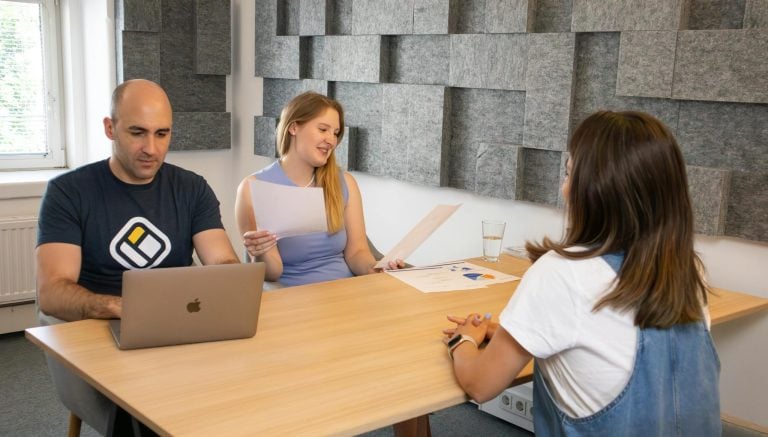
An ESFJ workspace works best when it reflects warmth, order, and connection. The right setup combines personal touches that feel welcoming, organizational tools that reduce friction, and sensory elements that support the ESFJ’s natural energy for collaboration and care.
ESFJs are wired to give. They show up for their teams, their families, and their communities with genuine enthusiasm. A workspace that doesn’t support that giving nature quietly drains them, and most ESFJs don’t realize how much their physical environment is either fueling or depleting them until someone points it out.
If you’re not sure whether ESFJ fits your personality, take our free MBTI test before reading further. Knowing your type changes how you read everything that follows.
Over the years I’ve watched people across every personality type struggle with workspace design, not because they lacked resources, but because they were setting up spaces that worked for someone else’s brain. ESFJs have specific needs that go beyond a tidy desk and a to-do list, and this guide covers the products and principles that actually match how this type operates. For a broader look at how ESFJs and ESTJs approach work, relationships, and identity, our MBTI Extroverted Sentinels hub covers the full picture.

What Does an ESFJ Actually Need From Their Workspace?
ESFJs are Extraverted, Sensing, Feeling, and Judging types. That combination means they thrive on structure, respond deeply to their physical environment, and feel most productive when their space signals safety and belonging. They’re not minimalists by nature. A completely bare desk can feel cold and uninspiring to an ESFJ, the opposite of how it might feel to an INTJ like me.
What’s your personality type?
Take our free 40-question assessment and get a detailed personality profile with dimension breakdowns, context analysis, and personalised insights delivered to your inbox.
Discover Your Type8-12 minutes · 40 questions · Free and private
I’ll be honest: my own preferences run toward sparse and functional. When I ran my first agency, my office had one plant, a whiteboard, and a lot of empty space. My ESFJ office manager, on the other hand, had photos of her team, a small diffuser, a color-coded planner, and a little dish of candy on her desk that everyone stopped by to grab. Her space drew people in. Mine kept them at a respectful distance. Both worked, but for very different reasons.
ESFJs need workspaces that do a few things well. First, the space should feel warm enough to invite the social interaction they rely on for energy. Second, it should be organized enough to satisfy their Judging preference for closure and completion. Third, it should carry personal meaning, because ESFJs connect deeply to objects and environments that remind them of the people they care about.
According to the American Psychological Association’s overview of personality, people’s traits consistently shape how they respond to their environments, including physical spaces. For ESFJs, that responsiveness is particularly strong because their Sensing function keeps them anchored in present-moment physical reality.
Which Organizational Products Fit the ESFJ Brain?
ESFJs love systems, but not cold, abstract systems. They want organization that feels human and approachable. A rigid productivity framework built for analytical types often feels alienating to ESFJs, even when they genuinely want more structure in their lives.
Color-coded planners are a natural fit. Products like the Passion Planner or Erin Condren LifePlanner give ESFJs the visual satisfaction of seeing their week laid out clearly while leaving room for personalization. The ability to add stickers, color blocks, and handwritten notes makes the planning process feel like an act of care rather than a chore.
Desk organizers with visible compartments work well too. ESFJs tend to be helpers, and part of being a helper is always knowing where things are so you can assist quickly. A multi-tier desktop organizer with labeled sections reduces the friction between wanting to help and actually being able to. I’ve seen this play out in agency settings repeatedly: the most organized people on my teams were almost always the ones who fielded the most requests from colleagues. Their organization wasn’t self-serving, it was service-oriented.
Magnetic whiteboards or glass board systems are worth considering too. ESFJs often manage multiple people’s needs simultaneously, and a visible board helps them track commitments without relying entirely on memory. The physical act of writing something down and then erasing it when complete gives ESFJs a satisfying sense of closure that digital tools sometimes miss.
One note worth raising here: ESFJs who over-organize as a way to manage anxiety or people-please their way into exhaustion may want to read about the darker patterns that can emerge from ESFJ tendencies. Workspace setup is a practical topic, but it doesn’t exist in isolation from the emotional habits ESFJs carry into their spaces.

How Should ESFJs Personalize Their Space Without Losing Focus?
Personalization is where ESFJs genuinely shine in workspace design. They have an instinct for making spaces feel alive, and that instinct is worth honoring rather than suppressing. The challenge is finding the balance between meaningful and cluttered.
Photo displays are among the most powerful tools for ESFJ motivation. Seeing faces of people they love or colleagues they’ve worked alongside gives ESFJs an emotional anchor throughout the day. A small multi-frame display or a corkboard with pinned photos works well. Digital photo frames that rotate through images are another option, particularly for ESFJs who work remotely and miss the ambient presence of their people.
Plants add life to a workspace in a way that resonates with ESFJs’ nurturing instincts. Low-maintenance options like pothos, succulents, or snake plants give ESFJs something to tend without demanding too much attention. There’s a quiet satisfaction in caring for something living, and for ESFJs, that satisfaction carries over into their work mood.
Meaningful objects deserve a place on the ESFJ desk too. A mug from a memorable trip, a small gift from a mentee, a framed quote from someone they admire: these objects aren’t distractions. They’re anchors. ESFJs process their sense of identity through relationships, and objects that represent those relationships keep them connected to their purpose.
That said, ESFJs sometimes struggle to draw a line between personalizing a space and filling it with every obligation they feel toward others. A workspace covered in reminders of everyone else’s needs can quietly reinforce the pattern that makes ESFJs liked by everyone but truly known by very few. A few carefully chosen personal items carry more emotional weight than a desk crowded with tokens of other people’s appreciation.
What Sensory Products Help ESFJs Stay Comfortable and Energized?
ESFJs are Sensing types, which means their physical environment registers more consciously and persistently than it might for intuitive types. Temperature, lighting, scent, and sound all affect how an ESFJ feels in their workspace, and getting these elements right matters more than most productivity guides acknowledge.
Lighting is the first variable to address. Harsh fluorescent overhead lighting is genuinely fatiguing for many people, and ESFJs who work long hours supporting others are particularly vulnerable to that fatigue. A warm-toned desk lamp or a full-spectrum light bulb in a table lamp creates a more comfortable atmosphere. Products like the BenQ e-Reading LED desk lamp or the Elgato Key Light are popular for their adjustability, though any lamp that moves light away from harsh overhead fixtures is a step forward.
Scent is another sensory element ESFJs often respond to strongly. A small essential oil diffuser with calming or uplifting blends, lavender for stress reduction, citrus for energy, eucalyptus for clarity, can meaningfully shift the feeling of a workspace. The Mayo Clinic notes that stress symptoms often manifest physically, and creating a sensory environment that signals safety can reduce that physical load before it accumulates.
Sound matters too. ESFJs generally enjoy ambient human presence, but not everyone has a collaborative office environment available. A white noise machine or a speaker playing low-level ambient sound can soften the isolation of solo work without becoming distracting. For ESFJs working from home who miss the energy of an office, lo-fi music or coffeehouse ambient playlists often help bridge that gap.
Ergonomic comfort is worth mentioning here as well. ESFJs who spend their days giving to others often neglect their own physical wellbeing. A supportive chair, a monitor at eye level, and a keyboard that doesn’t strain the wrists aren’t luxuries. They’re the foundation that makes sustained generosity possible. I used to push through physical discomfort in my agency years, treating it as a sign of dedication. Experience eventually taught me that ignoring your body is a form of self-neglect that catches up with you, and for ESFJs who already tend to deprioritize their own needs, that lesson is worth learning earlier rather than later.

Which Communication and Connection Tools Belong in an ESFJ’s Setup?
ESFJs are natural connectors. Their workspace isn’t just a place where they do individual work, it’s often a hub for communication, coordination, and care. The right tools support that relational energy without letting it spiral into constant interruption.
A quality webcam and microphone are genuinely important for ESFJs who work remotely or in hybrid environments. ESFJs read facial expressions and vocal tone carefully, and being seen and heard clearly in video calls matters to them in a way that goes beyond mere professionalism. Products like the Logitech Brio or the Jabra Speak conferencing speaker give ESFJs the audio and visual clarity they need to feel truly present in virtual conversations.
A dedicated communication hub, whether that’s a second monitor for keeping messaging apps visible, or a tablet propped beside the main screen, helps ESFJs stay responsive without constantly switching contexts. ESFJs feel anxious when they think someone is waiting on them, and a visible communication channel reduces that background tension.
Thoughtful note-taking tools matter here too. ESFJs often carry mental notes about what colleagues need, what promises they’ve made, and what follow-ups are pending. A dedicated notebook for relationship-based notes, separate from project notes, helps ESFJs honor their commitments without relying entirely on memory. I kept a simple relationship log during my agency years: not formal CRM software, just a notebook where I jotted down what each client mentioned in our last conversation. It made people feel remembered, and for ESFJs, being the person who remembers is deeply satisfying.
ESFJs who find themselves overwhelmed by the volume of communication they manage should explore what happens when they start setting clearer limits around their availability. The shift from people-pleasing ESFJ to boundary-setting ESFJ often begins with small, practical changes, including how accessible you make yourself through your workspace tools.
How Can ESFJs Design Their Space to Support Emotional Sustainability?
ESFJs give a lot. They give attention, energy, emotional labor, and practical help, often without being asked. A workspace that doesn’t actively support their emotional replenishment quietly accelerates burnout, and ESFJs are more vulnerable to burnout than many people realize because they rarely stop to acknowledge their own depletion.
A designated “reset corner” within the workspace can make a meaningful difference. This doesn’t require a separate room. Even a small side table with a comfortable chair, a journal, and a few calming objects creates a visual and physical signal that stepping away briefly is allowed. ESFJs often need external permission to rest, and a dedicated space gives that permission a physical form.
Journals designed for emotional reflection rather than task tracking are worth including in an ESFJ’s workspace toolkit. Products like the Five Minute Journal or a simple dot-grid notebook used for end-of-day reflection help ESFJs process the emotional residue of their day before it accumulates. The American Psychological Association has documented the connection between expressive writing and psychological wellbeing, and for ESFJs who absorb others’ emotions throughout the day, that outlet matters.
Boundary-setting tools, even something as simple as a “do not disturb” sign or a visual indicator that signals focused work time, help ESFJs protect pockets of uninterrupted work. ESFJs often struggle to enforce these signals because they feel guilty turning people away. Reading about when ESFJs need to stop keeping the peace can reframe that guilt productively: protecting your focus isn’t rejection, it’s self-preservation.
The Mayo Clinic’s research on burnout identifies chronic overextension as one of the primary drivers of exhaustion and disengagement. ESFJs who design their workspaces without any restorative elements are essentially building a space optimized for giving with no mechanism for receiving.

What Digital Tools Complement the ESFJ Workspace Setup?
ESFJs tend to adopt digital tools that feel social and relational rather than purely functional. They’re more likely to stick with tools that have a human dimension, whether that’s collaborative features, visual warmth, or the ability to share and celebrate progress with others.
Project management tools with visual boards work well for ESFJs. Trello’s card-based system or Asana’s timeline view give ESFJs a clear picture of where things stand and who is responsible for what. ESFJs feel responsible for everyone around them, and a shared project board satisfies that need to know what’s happening across the team without requiring constant check-ins.
Habit-tracking apps with social features or accountability elements tend to stick better for ESFJs than solo tracking systems. Apps like Habitica, which gamifies habit building with a community element, or simply sharing a habit tracker with a trusted friend, tap into the ESFJ’s motivation through connection. ESFJs are more consistent when someone else knows their goals.
Calendar tools with color-coding capabilities are genuinely useful for ESFJs who manage complex schedules involving multiple people. Google Calendar’s color-coding by person or project type gives ESFJs a visual snapshot of where their time is going and whose needs are dominating their week. That visual awareness can be the first step toward a more balanced allocation of energy.
One pattern worth watching: ESFJs who people-please digitally, saying yes to every meeting request, keeping every communication channel open, responding to messages at all hours, often don’t recognize the behavior as people-pleasing because it feels like responsibility. Exploring what changes when ESFJs stop people-pleasing can reframe how they approach their digital workspace in ways that feel both healthier and more sustainable.
For ESFJs who share their workspace with family or who are also parents handling the overlap between home and work life, the dynamics of structure and care can get complicated. Some of the tension ESFJs feel around control and flexibility in shared spaces echoes themes explored in our piece on ESTJ parents and the line between concerned and controlling, which offers useful perspective on how Sentinel types approach structure in relational contexts.
What Physical Comfort Products Make the Biggest Difference for ESFJs?
ESFJs often underinvest in their own physical comfort because spending on themselves feels indulgent when there are other people’s needs to consider. That pattern is worth interrupting directly, because physical comfort is not a luxury for someone who spends their workday pouring into others.
A quality ergonomic chair is the single highest-impact purchase most people can make for their workspace, and ESFJs are no exception. Chairs like the Herman Miller Aeron, the Steelcase Leap, or more accessible options like the Branch Ergonomic Chair provide lumbar support and adjustability that reduce the physical strain of long seated workdays. ESFJs who feel physically uncomfortable at work are less patient, less creative, and less generous, the exact opposite of what they want to be.
A standing desk or a sit-stand converter gives ESFJs the option to shift positions throughout the day. ESFJs are often physically expressive and energetic, and being locked into a seated position for hours can feel constraining. The ability to stand, pace slightly, or shift posture gives their body the movement it craves without requiring a full break.
A good quality mug warmer is a small purchase that ESFJs consistently appreciate. ESFJs often make a cup of tea or coffee and then forget it while they’re attending to someone else’s need. A mug warmer keeps that small pleasure available whenever they finally get back to it, which is a tiny but genuine act of self-care built into the workspace.
Soft textiles in the workspace, a throw blanket on the chair, a small cushion, a fabric desk mat rather than a hard plastic one, add sensory warmth that ESFJs respond to positively. These aren’t frivolous additions. They’re signals to the nervous system that this is a safe and welcoming place, which directly supports the emotional generosity ESFJs bring to their work.

How Should ESFJs Approach Workspace Setup as a Form of Self-Respect?
ESFJs are exceptional at creating environments where other people feel welcomed, valued, and cared for. They do it instinctively in their homes, their offices, and their relationships. The gap that many ESFJs carry is the failure to extend that same care to their own workspace experience.
Setting up a workspace intentionally, choosing products that serve your specific needs, creating sensory comfort, protecting space for reflection, is an act of self-respect. For ESFJs who have spent years prioritizing everyone else’s comfort over their own, it can feel almost transgressive to spend time and money on their own workspace. That discomfort is worth sitting with rather than rushing past.
During my agency years, I watched several talented ESFJs burn out not because they lacked skill or dedication, but because they had built their entire professional identity around being available and accommodating. Their workspaces reflected that: piles of other people’s projects, no personal items, no comfort features, nothing that said “this space belongs to me.” When one of them finally left, she told me she’d spent three years in an office that never felt like hers. That stayed with me.
A workspace that reflects who you are, not just what you do for others, is a foundation for sustainable contribution. ESFJs who invest in their own space tend to show up with more genuine energy rather than the depleted, anxious generosity that comes from running on empty. According to Psychology Today’s overview of personality and environment, the spaces we inhabit shape our mood, cognition, and behavior in ways that compound over time. For ESFJs, getting the environment right isn’t a nice-to-have. It’s a professional investment.
The most important product an ESFJ can add to their workspace isn’t something you can buy. It’s the decision to treat their own comfort and needs as equally valid to everyone else’s. Everything else, the planners, the plants, the ergonomic chair, the warm lighting, flows from that foundational shift in perspective.
Explore more resources on how ESFJs and ESTJs approach work, identity, and relationships in our complete MBTI Extroverted Sentinels hub.
Curious about your personality type?
Our free MBTI assessment goes beyond the four letters. Get a full breakdown of your scores, see how your type shows up at work and in relationships, plus borderline analysis for close-call dimensions.
Take the Free Test8-12 minutes · 40 questions · Free and private
About the Author
Keith Lacy is an introvert who’s learned to embrace his true self later in life. After 20 years in advertising and marketing leadership, including running agencies and managing Fortune 500 accounts, Keith now channels his experience into helping fellow introverts understand their strengths and build fulfilling careers. As an INTJ, he brings analytical depth and authentic perspective to every article, drawing from both professional expertise and personal growth.
Frequently Asked Questions
What kind of workspace does an ESFJ need to feel productive?
An ESFJ workspace works best when it balances warmth and order. ESFJs need enough structure to satisfy their Judging preference for completion and clarity, combined with personal touches that keep them emotionally connected to their purpose. Meaningful photos, color-coded organizational systems, comfortable lighting, and sensory elements like plants or a diffuser all contribute to a space where ESFJs can sustain their natural generosity without burning out.
Should ESFJs personalize their workspace?
Yes, and more intentionally than they might expect. ESFJs process their identity through relationships, and objects that represent meaningful connections serve as genuine motivational anchors. A few carefully chosen personal items, photos, a meaningful gift, a plant they tend, carry more emotional weight than a desk crowded with tokens of obligation. The goal is personalization that reflects who the ESFJ is, not just who they serve.
What organizational tools work best for ESFJs?
ESFJs respond well to organizational tools that feel human and visually satisfying rather than cold or purely functional. Color-coded planners like the Passion Planner or Erin Condren LifePlanner, visible desk organizers with labeled compartments, and magnetic whiteboards for tracking commitments all suit the ESFJ approach to organization. Digital tools with collaborative features, like Trello or shared Google Calendars with color-coding, also align well with the ESFJ’s relational way of working.
How can ESFJs prevent burnout through workspace design?
ESFJs can build restorative elements directly into their workspace to counter their natural tendency to overextend. A designated reset area with a journal and comfortable seating, a mug warmer that keeps small pleasures accessible, soft textiles that signal comfort, and clear visual signals for focused work time all help ESFJs protect their energy. Investing in ergonomic comfort, a supportive chair, proper lighting, and a sit-stand desk option, also reduces the physical fatigue that accelerates emotional depletion.
Why do ESFJs sometimes struggle to invest in their own workspace?
ESFJs often prioritize other people’s comfort and needs so consistently that spending time or money on their own workspace feels self-indulgent. This pattern reflects the same people-pleasing tendency that can affect other areas of ESFJ life. Reframing workspace investment as a professional decision rather than a personal luxury helps ESFJs give themselves permission to create spaces that genuinely support their wellbeing. A workspace that reflects the ESFJ’s own needs, not just their role in serving others, is the foundation for sustainable contribution.