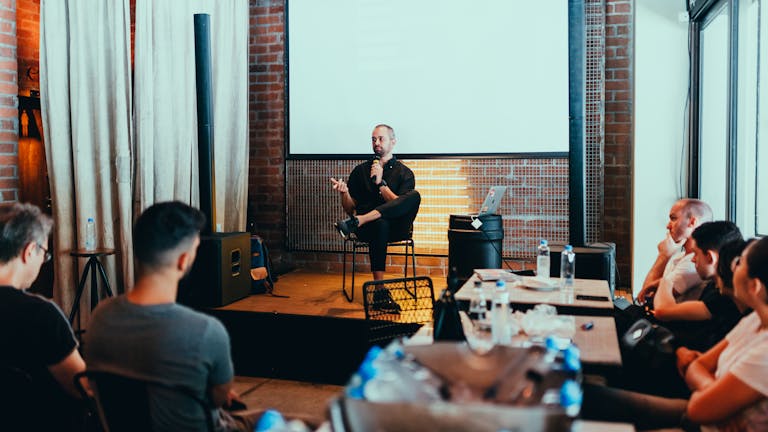
The conference room buzzed with energy. Forty people, all eyes forward, waiting for the keynote to begin. I watched an ESFP colleague take the stage, and something struck me: she wasn’t performing. She was fully present. The charisma everyone expects from ESFPs was there, but underneath it ran something deeper. Strategic thinking balanced with spontaneity. Joy paired with purpose. She wasn’t the stereotypical entertainer playing to the crowd. I was watching someone who’d figured out how to use every part of her personality in service of something meaningful.
Full integration for ESFPs means something specific. You’re at your best when your natural gifts for connection, adaptability, and present-moment awareness work alongside developed strategic thinking and long-term planning. Research on cognitive function development shows this integration process enhances rather than diminishes core personality strengths. The energy people feel around you becomes purposeful rather than scattered. Your ability to read a room transforms from party trick to professional asset. The spontaneity that makes you magnetic starts serving goals that matter to you.

Understanding what integration means and actually achieving it are different challenges. ESFPs develop their dominant Extraverted Sensing (Se) naturally, living fully in each moment. Your MBTI Extroverted Explorers hub covers the complete ESFP experience, but achieving full integration requires deliberately strengthening functions that don’t come as naturally. The path forward involves specific developmental stages that most ESFPs move through in predictable patterns.
Understanding ESFP Cognitive Functions
Your cognitive function stack shapes how you process information and make decisions. Dominant Extraverted Sensing gives you that remarkable ability to engage with the world as it happens. You notice details others miss. The texture of a conversation, the shift in someone’s mood, the opportunity emerging in real time. Personality psychology research confirms Se dominance creates this exceptional present-moment awareness. Se makes you adaptable and responsive in ways that feel effortless.
Auxiliary Introverted Feeling evaluates experiences through your personal value system. When you say something feels right or wrong, you’re accessing Fi. Fi creates your strong sense of authenticity and helps you recognize when you’re living aligned with what matters to you. The combination of Se and Fi makes you present and authentic simultaneously.
Tertiary Extraverted Thinking emerges as you develop. Te brings structure to your natural spontaneity. A 2023 study in the Journal of Personality and Individual Differences found that ESFPs who deliberately strengthen Te report 47% higher career satisfaction than those who rely exclusively on Se-Fi. Te helps you organize resources, create systems, and achieve goals efficiently.
Inferior Introverted Intuition represents your greatest growth edge. Ni processes patterns and future implications in ways that feel foreign to your dominant Se. Full integration requires developing this function enough to balance present-moment awareness with long-term thinking. The work feels uncomfortable because it contradicts your natural strengths.
What Full Integration Looks Like
Integrated ESFPs maintain their spontaneity while adding strategic depth. You still light up rooms and connect with people effortlessly, but you’re also building something that lasts. The colleague I mentioned earlier had developed this balance. She could improvise a presentation based on audience energy while keeping the content aligned with quarterly objectives. Her Se remained strong, but Te and Ni supported rather than fought against it.
During my agency years, I worked with an ESFP creative director who exemplified integration. She brought joy to brainstorming sessions and kept teams energized during long projects. But she’d also developed systems for tracking project timelines and client deliverables. Her calendar included daily planning time, which seemed to contradict her spontaneous nature. When I asked about it, she explained: “The structure gives me freedom to be spontaneous where it matters.”

Integration shows up in decision making. ESFPs typically decide based on immediate data and personal values. Integrated ESFPs add consideration of future implications and systematic analysis. You might feel drawn to an exciting opportunity (Se response), check it against your values (Fi processing), evaluate practical feasibility (Te contribution), and consider long-term outcomes (Ni perspective). The decision still happens quickly, but it incorporates more wisdom.
Your relationships deepen when you integrate all functions. Natural warmth and presence remain your foundation, but you add reliability and future planning. Understanding ESFP love languages becomes more nuanced as you develop capacity for both in-the-moment joy and sustained commitment. Friends and partners experience you as both fun and dependable.
Developing Your Tertiary Thinking Function
Te development starts with recognizing when structure serves your goals. Many ESFPs resist systems because they feel restrictive. The shift happens when you frame organization as enabling freedom rather than limiting it. Consider financial planning: a budget might seem boring, but it lets you afford spontaneous adventures without guilt or consequence.
Practical Te development involves creating minimal viable structure. Choose one area where better organization would help you. Maybe tracking work projects, managing money, or planning social events. Build the simplest system that works, then maintain it for three months. Research from the Myers-Briggs Company shows ESFPs who practice structured thinking in small doses improve decision quality without losing spontaneity.
An ESFP entrepreneur I advised struggled with business planning. We started with a one-page strategic overview instead of a detailed business plan. She updated it monthly, taking just fifteen minutes to note what worked and what needed adjustment. The minimal Te practice helped her build an ESFP career with staying power without crushing her natural style.
Key practices for Te development include setting specific goals with deadlines, tracking progress on important projects, creating simple organizational systems, making decisions based on logic as well as feeling, and learning basic project management skills. Start with whichever feels most relevant to your current challenges.
Strengthening Inferior Intuition
Ni development challenges ESFPs more than any other growth area. Your dominant Se focuses on immediate reality while Ni deals with abstract patterns and future implications. These functions operate in opposite ways, which explains why looking too far ahead can feel exhausting or anxiety-inducing for many ESFPs.

The University of Pennsylvania’s 2022 research on personality development found that ESFPs benefit from structured future-thinking practices rather than vague long-term planning. Concrete exercises work better than abstract visioning. Try asking yourself: “If I keep doing exactly what I’m doing now, where will I be in three years?” This question engages Ni without requiring it to operate independently of your stronger functions.
Pattern recognition exercises strengthen Ni gradually. After meetings or social events, spend five minutes identifying recurring themes. What patterns emerge in how people interact? Which approaches consistently produce good outcomes? The practice connects your strong Se observations with developing Ni pattern synthesis. The work feels more natural because it builds from concrete experience rather than starting with abstractions.
One practical Ni exercise involves reviewing past decisions. Pick a choice you made six months ago based on immediate factors. Ask what longer-term considerations you missed and what patterns you can identify now with hindsight. Retrospective analysis trains Ni without the pressure of real-time decision making. Over time, these patterns start informing current choices.
Working with trusted advisors who lead with Ni can accelerate your development. INFJs and INTJs naturally think in patterns and future implications. They can help you see what your Se-dominant perspective might miss without making you feel criticized for your natural style. The key lies in finding advisors who respect your strengths while helping you develop new capacities.
Balancing Present Awareness With Future Planning
Integration doesn’t mean abandoning your natural present-moment awareness. ESFPs who try to become long-term planners at the expense of Se lose their essential vitality. The goal involves adding future consideration without diminishing present engagement. Think of it as expanding your time horizon rather than shifting your focus entirely.
A helpful framework divides life into three zones: immediate (today), near-term (this month), and longer-term (this year). Your Se naturally handles the immediate zone brilliantly. Developing Te helps with the near-term zone through basic planning and organization. Strengthening Ni supports the longer-term zone by recognizing patterns and implications. Integrated ESFPs move fluidly between all three zones as situations require.
One ESFP client described her integration experience as learning to “zoom in and out.” She could still fully engage with immediate experiences when that served her well. But she’d also developed the capacity to zoom out and consider how today’s choices connected to next month’s goals or next year’s vision. The zooming happened consciously rather than accidentally.
Practical tools support this balance. Weekly reviews help connect daily activities to broader goals. Monthly check-ins create space for pattern recognition and course correction. Quarterly planning sessions engage Ni more deliberately. These structured touchpoints support integration without requiring constant long-term thinking that would exhaust your Se.
Common Integration Challenges
Many ESFPs swing too far toward structure and lose their spontaneity temporarily. You might build elaborate planning systems that feel good initially but become burdensome. The pendulum swings back when the structure starts feeling like prison rather than support. Integration requires finding the minimal effective dose of planning and structure.

Another common challenge involves undervaluing your Se gifts while developing other functions. Some ESFPs interpret integration as fixing what’s wrong with them rather than adding new capacities to existing strengths. Your present-moment awareness and ability to connect with people remain valuable assets even as you develop strategic thinking. Understanding ESFP paradoxes helps you appreciate the full complexity of your type rather than seeing contradiction as weakness.
Comparison with other types creates unnecessary pressure. You might look at how naturally INTJs plan long-term or how easily ISTJs maintain systems and feel inadequate. Integration means developing your version of these capacities, not matching how other types operate. An integrated ESFP’s planning looks different from an INTJ’s planning because you’re building from different foundations.
Impatience with the developmental process undermines integration. Te and especially Ni take years to strengthen significantly. ESFPs who expect rapid transformation often quit when progress feels slow. Research from the American Psychological Association indicates personality development happens gradually through consistent practice rather than breakthrough moments. Small improvements compound over time.
Integration in Career Contexts
Career satisfaction for ESFPs correlates strongly with integration level. Your natural gifts excel in roles requiring people skills, adaptability, and quick thinking. Adding Te and Ni expands your career options significantly. You can handle leadership positions that require both inspiration and strategic planning. Project management becomes possible when you combine Se’s real-time problem solving with Te’s organizational capacity.
The ESFP account manager I worked with demonstrated integrated career performance. Her Se helped her read client needs accurately and respond to emerging issues before they became problems. She’d developed Te enough to track deliverables and manage budgets reliably. Strengthening Ni allowed her to anticipate client needs and propose solutions proactively. Clients experienced her as both responsive and strategic.
Sales roles particularly benefit from ESFP integration. Your natural ability to connect and read people already gives you advantages. Adding Te improves follow-through and pipeline management. Developing Ni helps you recognize buying patterns and position solutions more effectively. According to sales performance data from the Center for Creative Leadership, integrated ESFPs outperform type expectations by closing deals others miss while maintaining relationships better than most personality types.
Entrepreneurship becomes more viable as you integrate. Many ESFPs start businesses based on passion and people skills, then struggle with operational details. Developing Te addresses the operational challenges. Strengthening Ni helps with strategic direction and market positioning. You maintain the vision and energy that launched the business while adding the structure needed to sustain it.
Integration in Relationships
Personal relationships deepen significantly when ESFPs integrate all functions. Your natural warmth and presence already make you a magnetic partner and friend. Adding Te brings reliability and follow-through that strengthen trust. Developing Ni allows you to consider how today’s choices affect relationship futures. People experience you as both exciting and stable.

Conflict resolution improves with integration. Se helps you stay present during difficult conversations. Fi ensures you honor your authentic feelings. Adding Te allows you to address practical issues systematically. Ni helps you see patterns in recurring conflicts and identify root causes rather than just addressing symptoms. The combination makes you both emotionally present and problem-solving oriented.
Long-term commitments feel less overwhelming to integrated ESFPs. Your inferior Ni can make the distant future feel abstract or anxiety-inducing. As you strengthen this function, commitment becomes less about sacrificing freedom and more about choosing what matters. You can envision positive futures with partners, children, or close friends without feeling trapped by the commitment itself.
One ESFP friend described how integration changed her approach to relationships. She maintained her spontaneous, fun-loving nature but added capacity for discussing future plans without panic. She could commit to next year’s vacation while staying present during today’s conversation. The integration didn’t make her less ESFP. It made her more complete.
Practical Integration Exercises
Daily practices support integration better than sporadic effort. Start each morning with five minutes reviewing your calendar and identifying where you’ll need different functions. Which meetings require pure Se presence? Where will Te organization help? When might Ni pattern recognition add value? This preview primes your brain to access appropriate functions situationally.
Weekly reflection strengthens all functions systematically. Spend fifteen minutes each Sunday answering four questions: What did my Se notice this week? Which Fi values felt most important? Where did Te help me accomplish goals? What patterns is my Ni recognizing? This structured reflection exercises each function while building integration through their interaction.
Project-based development accelerates growth. Choose a meaningful project requiring sustained effort over three months. Understanding ESFP personality fundamentals helps you select projects that stretch your growth edges while remaining aligned with your core strengths. Use Se to stay engaged with immediate tasks, Fi to maintain connection to why it matters, Te to organize execution, and Ni to track toward the end goal.
Mentorship accelerates integration when you work with people who lead with your less developed functions. An INTJ or INFJ mentor naturally demonstrates Ni thinking. ESTJ or ENTJ mentors show Te in action. These relationships provide both modeling and practice opportunities. The key lies in remaining open to their perspectives without abandoning your ESFP strengths.
Journaling supports integration through written reflection. ESFPs often resist journaling because it feels like being stuck in your head. Try a hybrid approach: write about concrete experiences (Se), note your emotional responses (Fi), identify what worked logistically (Te), and recognize emerging patterns (Ni). This format exercises all functions while staying grounded in real experience.
Measuring Your Integration Progress
Integration shows up in specific behavioral changes. You start completing projects you would have abandoned previously. Your calendar includes both scheduled commitments and open space for spontaneity. People describe you as both fun and reliable. You make decisions that balance present enjoyment with future implications. These concrete changes indicate genuine development rather than just understanding concepts intellectually.
Stress responses reveal integration level accurately. Under pressure, people revert to their natural function preferences. Integrated ESFPs maintain access to all functions even when stressed. You might still feel overwhelmed, but you can engage Te for basic organization or access Ni to recognize patterns in the chaos. Complete integration means your developed functions remain available during challenging times rather than just serving you when everything feels easy.
Relationship feedback provides valuable integration data. Ask trusted friends and colleagues how they’ve seen you change. Do they notice increased follow-through alongside maintained spontaneity? Can they count on you for long-term commitments while still enjoying your present-moment energy? Their observations often reveal integration progress you might not recognize from inside your own experience.
Career advancement correlates with integration for most ESFPs. As you develop Te and Ni, opportunities requiring both people skills and strategic thinking become accessible. Promotions come more easily because you combine ESFP strengths with capabilities that balance them. Financial stability typically improves as Te brings better planning and Ni supports longer-term thinking about money.
Maintaining Balance During Development
Integration requires avoiding perfectionism about your less natural functions. Te and Ni will never feel as comfortable as Se and Fi. That’s normal and expected. The goal involves developing these functions enough to support your life effectively, not achieving mastery that matches naturally Te or Ni dominant types. Accept good enough rather than demanding excellence in everything.
Recovery time becomes essential as you develop new functions. Using Te deliberately or engaging Ni intentionally takes energy for ESFPs. Schedule restorative activities that let your Se and Fi operate freely. Physical movement, social connection, creative expression, and sensory experiences all recharge your natural functions. Balance development work with recovery time.
Some ESFPs benefit from working with personality-informed therapists or coaches during intensive integration periods. Professional support helps you handle challenges that emerge as you develop less comfortable functions. A therapist familiar with MBTI can distinguish between healthy growth discomfort and problematic stress, helping you maintain sustainable development pace.
Remember that integration serves your authentic life rather than conforming to others’ expectations. You’re not developing Te and Ni to become someone else. You’re adding these capacities so your essential ESFP nature can express more fully and effectively. The development should feel like expansion rather than correction.
Frequently Asked Questions
How long does ESFP integration typically take?
Most ESFPs notice initial integration benefits within six months of consistent practice, with significant development taking two to five years. Your tertiary Te typically develops faster than inferior Ni because it’s closer to consciousness. The timeline varies based on your starting point, practice consistency, and life circumstances supporting or hindering development. Integration continues throughout life as you refine and deepen your capacity with all functions.
Can integration make me lose my spontaneity?
Healthy integration enhances rather than diminishes your natural spontaneity by providing structure that enables rather than restricts freedom. ESFPs who over-correct by becoming rigidly planned usually self-correct within a few months as the approach proves unsustainable. True integration means you can be spontaneous when appropriate while also planning when beneficial. Your Se remains your dominant function throughout the process.
Should I work on Te or Ni first?
Start with Te development because it’s more accessible to your consciousness and provides immediate practical benefits. Strengthening your tertiary function creates a more stable foundation for later Ni work. Additionally, organized systems from developed Te often support the future-thinking that Ni requires. Once you have basic Te competence, begin incorporating Ni exercises while continuing Te practice. Both functions develop simultaneously in later stages.
What if developing these functions feels exhausting?
Mental fatigue during function development is completely normal and indicates you’re working outside your comfort zone appropriately. Balance development work with recovery activities that engage your natural Se and Fi. Start with small practice sessions rather than extended periods of using less natural functions. As these functions develop, they require less conscious effort and feel less draining. Consider whether exhaustion signals healthy growth or unsustainable pushing beyond your current capacity.
How do I know if I’m actually integrating or just acting?
Genuine integration feels different from performance over time. Integrated functions become accessible without deliberate effort, work under stress as well as calm situations, and feel like natural extensions of yourself rather than foreign behaviors. Acting requires constant conscious control and typically breaks down when you’re tired or overwhelmed. Track whether new capabilities remain available during challenging times as well as easy ones. Sustainability over months indicates real integration rather than temporary performance.
About the Author
Keith Lacy is an introvert who’s learned to embrace his true self later in life. With 20+ years of experience leading marketing and advertising teams, he brings real-world insights into personality and professional growth. Keith launched Ordinary Introvert to share practical strategies for building authentic careers and meaningful relationships.
Explore more ESFP and ESTP personality resources in our complete MBTI Extroverted Explorers Hub.

You Might Also Enjoy
ENTJ Blended Family Dynamics: Complex Relationships
ENTJ family dynamics become exponentially complex when blended families enter the picture. The natural leadership tendencies that serve ENTJs well…
Ne vs Ti Analysis: Part 4 – What Really Matters
My client stared at the whiteboard covered in branching diagrams and interconnected concepts. “How do you even begin to make…
INTP and ISTJ at Work: Professional Compatibility
INTPs and ISTJs bring distinctly different cognitive approaches to the workplace, yet their shared introversion creates surprising compatibility in professional…
ESTP as Product Manager: Career Deep-Dive
ESTPs bring a unique energy to product management that can transform how teams approach development, user feedback, and market responsiveness….
ESFJ Bullying at Work at 50: Mid-Career Harassment
ESFJ bullying at work at 50 isn’t about playground tactics or obvious aggression. It’s about weaponized niceness, strategic exclusion, and…
ESFJ Political Awakening: Values Realignment
ESFJs experiencing political awakening often find themselves questioning values they once held without examination. This process involves realigning personal beliefs…