

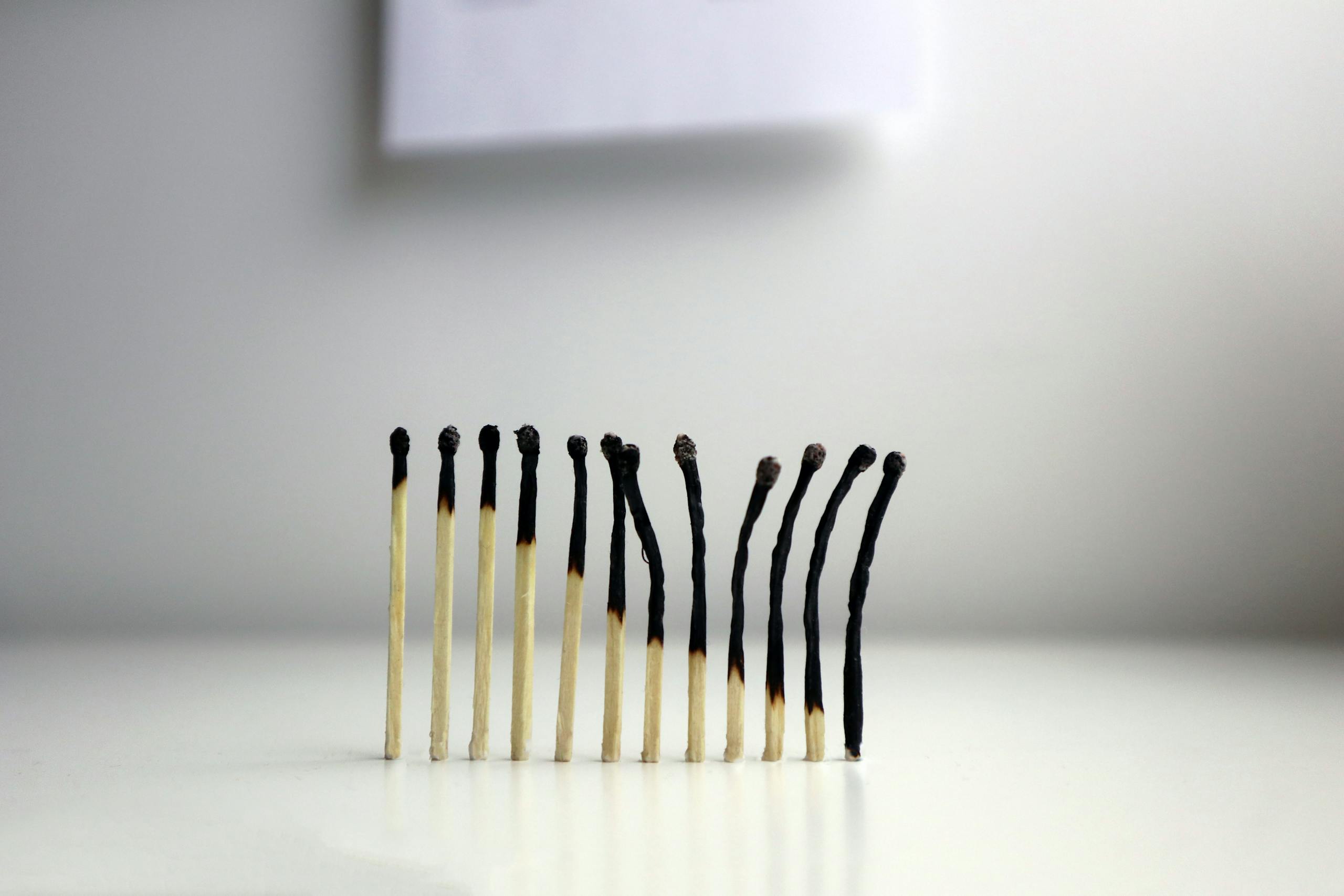
ESTJs in healthcare are often described as the people who keep everything running. They’re the charge nurses who remember every protocol, the physicians who arrive early and leave late, the administrators who actually fix the scheduling problem that’s been broken for six months. Structure, accountability, and efficiency come naturally to them. So why do so many ESTJ healthcare professionals quietly burn out?
The answer isn’t what most people expect. It’s not that ESTJs lack compassion. It’s that their particular brand of caring, the kind expressed through competence and reliability rather than emotional warmth, gets misread by patients and colleagues alike. And when your way of showing up goes unrecognized, the emotional cost accumulates faster than you realize.
ESTJs can thrive in healthcare for decades without burning out, but doing so requires understanding how their personality type processes stress, where their natural strengths create friction, and what recovery actually looks like for someone wired the way they are.
Our MBTI Extroverted Sentinels hub covers both ESTJ and ESFJ personality types across a wide range of professional and personal contexts. This article focuses on what makes healthcare a uniquely demanding environment for ESTJs specifically, and how they can sustain their effectiveness without grinding themselves down in the process.
What Makes ESTJs Naturally Suited for Healthcare?
Before we get into the harder parts, it’s worth naming what ESTJs actually bring to healthcare, because the list is substantial.
What’s your personality type?
Take our free 40-question assessment and get a detailed personality profile with dimension breakdowns, context analysis, and personalised insights.
Discover Your Type8-12 minutes · 40 questions · Free
ESTJs lead with Extraverted Thinking. They organize information, create systems, enforce standards, and make decisions with speed and clarity. In a hospital setting where a wrong decision at 2 AM can have permanent consequences, that cognitive profile is genuinely valuable. They don’t freeze under pressure. They don’t need consensus to act. They assess the situation, apply the relevant protocol, and move.
Their secondary function, Introverted Sensing, gives them an exceptional memory for established procedures and a deep respect for what has worked before. An ESTJ nurse who’s been on the same floor for eight years isn’t just experienced. They’re a living institutional memory, the person who knows exactly which attending physician prefers which communication style, which patient population tends to present with atypical symptoms, and which supply chain workaround actually works when the system fails.
I watched something similar play out in my agency years. The people who kept client relationships stable during chaos weren’t always the most creative people in the room. They were the ones who remembered exactly what had been promised, who held the timeline accountable, who could reconstruct a project’s history from memory when a dispute arose. ESTJs carry that same function into healthcare, and it matters enormously.
If you’re not certain whether ESTJ fits your profile, taking a validated MBTI personality assessment can help you understand your cognitive preferences before applying any of this to your own situation.
| Career / Role | Why It Fits | Key Strength Used | Watch Out For |
|---|---|---|---|
| Physician | Clear hierarchies, evidence-based protocols, high-stakes decisions under pressure, and rigorous professional standards align perfectly with ESTJ cognitive strengths and natural functioning. | Extraverted Thinking with speed and clarity in decision-making under pressure | Risk of burnout from responsibility for outcomes beyond your control and internal processing of emotional weight without adequate support systems. |
| Registered Nurse | Requires organizing information, creating systems, enforcing standards, and making quick decisions with permanent consequences where ESTJ strengths directly protect patient safety. | Extraverted Thinking combined with Introverted Sensing for protocol mastery and institutional memory | Compassion fatigue develops differently for ESTJs through over-responsibility rather than over-feeling; watch for analysis-driven guilt about outcomes. |
| Hospital Administrator | Leadership role leveraging natural ability to organize information, create systems, enforce standards, and make quick decisions with institutional accountability and clear hierarchies. | Extraverted Thinking for systematic organization and standard-setting across departments | High standards that motivate some staff may demoralize others; learning to calibrate expectations individually rather than applying uniform standards is crucial. |
| Surgical Specialist | Demands immediate high-stakes decisions, protocol adherence, minimal ambiguity, and the ability to remain calm under extreme pressure where ESTJs naturally excel. | Extraverted Thinking for decisive action without consensus and emotional composure in crisis situations | Internal processing of difficult patient outcomes combined with high personal accountability can accelerate burnout without proactive emotional processing strategies. |
| Clinical Protocol Developer | Creates evidence-based systems and standards that improve outcomes organization-wide, matching ESTJ strengths in systematization and protocol enforcement. | Introverted Sensing paired with Extraverted Thinking for building respect for what works while enforcing rigorous standards | May struggle with protocols that lack clear evidence or require flexibility; need to balance thoroughness with implementation realities. |
| Emergency Medicine Physician | Constant high-stakes decisions with incomplete information, clear protocols, rapid assessment and action, and minimal need for consensus align with core ESTJ strengths. | Extraverted Thinking for rapid assessment and decisiveness without freezing under maximum pressure | Extreme emotional weight and responsibility for outcomes in chaotic environments; high burnout risk without strong recovery and boundary-setting strategies. |
| Quality Assurance Manager | Role focuses on enforcing standards, identifying protocol deviations, creating systems, and holding teams accountable for established procedures and patient safety outcomes. | Extraverted Thinking for standard enforcement combined with Introverted Sensing for identifying what deviates from proven procedures | May be perceived as overly critical or rigid; requires developing relational skills to deliver necessary feedback without damaging team morale. |
| Chief Nursing Officer | Leadership position requiring system-wide protocol implementation, accountability standards, decision-making under pressure, and organizational accountability across departments. | Extraverted Thinking combined with institutional memory for scaling proven practices across large healthcare systems | Managing diverse team members with different personality types and work styles; need to understand that not everyone responds to high standards the same way. |
| Patient Safety Officer | Directly addresses protocol adherence, standards enforcement, and speaking up about safety concerns, protecting ESTJs’ natural inclination to confront problems for better outcomes. | Extraverted Thinking for direct problem identification combined with willingness to address deviations without conflict-avoidance | Frequent direct confrontation without relational skill development can lead to isolation; need to balance necessary confrontation with team relationship maintenance. |
| Medical Director | Combines clinical expertise with leadership, requiring clear decision-making, protocol establishment, team accountability, and the ability to operate within medical hierarchies effectively. | Both Extraverted Thinking and Introverted Sensing for evidence-based leadership grounded in what has proven successful | Balancing high personal standards with developing other leaders; risk of burnout from carrying responsibility for team performance and patient outcomes. |
Why Does Healthcare Create Specific Burnout Risks for ESTJs?
Healthcare is one of the few professions where emotional labor, physical demands, ethical weight, and systemic dysfunction all converge at once. A 2022 report from the Centers for Disease Control and Prevention found that nearly half of healthcare workers reported frequent burnout symptoms, with nurses and physicians reporting the highest rates. That’s the baseline environment ESTJs are working in.
For ESTJs specifically, several dynamics accelerate that risk.
The Competence Trap
ESTJs are exceptionally good at their jobs. That’s not flattery, it’s a structural reality of their personality type. And in healthcare, being exceptionally good at your job means you get more of it. The reliable nurse gets the complex patients. The efficient physician gets the back-to-back schedule. The organized administrator gets the impossible project.
Over time, competence without boundaries becomes a slow drain. The ESTJ keeps saying yes because saying yes is what responsible professionals do. The work keeps coming because the ESTJ keeps delivering. And somewhere in that cycle, the margin for recovery disappears.
The Emotional Expression Gap
ESTJs process emotion internally and express care through action. They show up on time. They complete tasks thoroughly. They follow up. To them, these behaviors communicate that they take the patient seriously, that they’re committed to doing right by everyone in their care.
Patients, particularly those who are scared or in pain, often need something different. They need someone to slow down, make eye contact, and say “I hear how frightening this is.” That’s not inauthenticity for an ESTJ, it’s just a different communication register that doesn’t come naturally. Learning to access it, without abandoning the strengths that make them effective, is one of the central challenges ESTJs face in patient care.
The article on ESTJ communication explores this tension in more depth, specifically how directness can be reframed so it reads as warmth rather than coldness.
The Systemic Frustration Problem
ESTJs believe in systems. They trust that clear protocols, well-enforced standards, and logical hierarchies produce good outcomes. Healthcare, especially in the United States, is full of systems that are broken, underfunded, or actively working against patient care. For an ESTJ who is wired to fix problems through proper channels, encountering bureaucratic dysfunction day after day is genuinely demoralizing.
A 2021 study published through the National Institutes of Health identified organizational factors, including inadequate staffing, poor administrative support, and lack of control over working conditions, as the primary drivers of healthcare burnout, outweighing even emotional demands. ESTJs feel this acutely because they can see exactly what the fix would be and lack the authority to implement it.

What About Medicine as a Career for ESTJs?
Medicine is frequently cited as one of the top career matches for ESTJ personality types, and the reasoning is straightforward. Physicians operate within clear hierarchies, apply evidence-based protocols, make high-stakes decisions under pressure, and are held to rigorous professional standards. Every one of those elements aligns with how ESTJs naturally function.
But the question worth asking isn’t whether medicine suits ESTJs in theory. It’s whether specific medical specialties and practice environments suit them in practice, because the variation within medicine is enormous.
Which Medical Specialties Tend to Fit ESTJs Best?
ESTJs often find deep satisfaction in specialties that reward procedural mastery, clear decision trees, and measurable outcomes. Emergency medicine tends to be a strong fit. The environment is high-stakes, fast-moving, and structured around rapid triage and decisive action. There’s little ambiguity about what needs to happen next, and competent execution is immediately visible.
Surgery appeals to many ESTJs for similar reasons. The operating room has a clear hierarchy, defined roles, and outcomes that are concrete rather than probabilistic. An ESTJ surgeon knows whether the procedure went well. That clarity is satisfying in a way that, say, managing a chronic condition with ambiguous improvement markers might not be.
Hospital medicine, hospitalist roles, and critical care also tend to suit ESTJs well. These environments reward the ability to manage multiple complex patients simultaneously, coordinate across departments, and make rapid decisions with incomplete information. ESTJs don’t freeze in those moments. They assess and act.
Where ESTJs sometimes struggle is in specialties that require extended emotional attunement as the primary therapeutic tool. Psychiatry and certain areas of palliative care, for example, ask practitioners to sit with ambiguity, hold space for grief, and resist the impulse to fix things that can’t be fixed. That’s genuinely difficult for a personality type whose instinct is to identify the problem and solve it efficiently.
That said, ESTJs who develop their tertiary and inferior functions, specifically their Introverted Feeling, can become remarkably effective in those settings precisely because they bring structure and stability to environments that are often chaotic for patients and families. It’s not a natural fit, but it’s not an impossible one either.
What About Nursing and Allied Health for ESTJs?
The ESTJ profile shows up strongly in nursing leadership. Charge nurses, nurse managers, and directors of nursing often have ESTJ characteristics, and for good reason. Managing a unit requires exactly the combination of clinical knowledge, organizational skill, and willingness to enforce standards that ESTJs bring naturally.
Bedside nursing, particularly in acute care settings, can be deeply satisfying for ESTJs who connect their daily tasks to concrete patient outcomes. Where it gets harder is in long-term care settings where progress is slow, patients may not improve, and the emotional demands are high relative to the visible results.
Allied health roles in areas like physical therapy, surgical technology, and respiratory therapy often suit ESTJs well. These roles combine procedural expertise with clear patient goals and measurable progress, which maps well onto how ESTJs evaluate their own effectiveness.
How Does Compassion Fatigue Actually Develop in ESTJ Healthcare Workers?
Compassion fatigue is sometimes described as the cost of caring, the emotional and physical exhaustion that comes from sustained exposure to others’ suffering. For ESTJs, the development pathway is a bit different from what you’d see in a high-Fe type like an ESFJ.
ESTJs don’t typically burn out because they feel too much. They burn out because they carry too much responsibility for outcomes they can’t fully control, while simultaneously managing the emotional weight of those outcomes in a largely private, internal way.
Consider what happens when an ESTJ healthcare professional loses a patient they believed could have been saved with better resources, or faster response, or a different protocol decision. The ESTJ doesn’t just grieve. They analyze. They replay the sequence of events looking for the decision point where a different choice would have produced a different outcome. That analytical loop, which is genuinely useful for quality improvement, becomes toxic when it runs without a stop mechanism.
I recognize that pattern from my own experience, though in a very different context. Running an agency during a major client crisis, I would mentally reconstruct every decision point for days afterward, not because I was wallowing, but because my brain genuinely believed that finding the error would prevent the next one. The problem is that without a deliberate off switch, that process runs in the background constantly, consuming cognitive and emotional resources you don’t realize you’re spending.
For ESTJs in healthcare, the stakes of that loop are much higher. And the frequency of triggering events, difficult diagnoses, system failures, patient deaths, ethical conflicts, is much greater than anything I faced in advertising.
The American Psychological Association has documented that unprocessed occupational stress in healthcare workers correlates with increased medical errors, reduced patient satisfaction, and accelerated career exit. The cost isn’t just personal. It’s systemic.

How Can ESTJs Manage Patient Care Without Losing Themselves?
Sustainable practice for ESTJs in healthcare isn’t about becoming someone different. It’s about applying the same systematic thinking that makes them effective clinicians to the problem of their own sustainability.
Build Recovery Into the System, Not Around It
ESTJs are good at building systems. They’re less good at treating their own recovery as a legitimate system component. The reframe that tends to work for this personality type is treating personal recovery not as self-indulgence but as professional maintenance.
A physician who doesn’t sleep adequately makes worse decisions. A nurse who skips meals all shift has slower reaction times. An administrator who never takes a full day off accumulates cognitive errors. Framing recovery as performance optimization rather than rest for its own sake makes it easier for ESTJs to prioritize it without guilt.
Practically, this means building non-negotiable recovery blocks into the schedule with the same firmness applied to patient appointments. Not “I’ll try to take a real lunch break.” A specific time, a specific location, a specific duration, treated as protected time.
Develop a Deliberate Decompression Protocol
ESTJs benefit from structured transition rituals between work and non-work. The analytical mind doesn’t automatically stop processing when the shift ends. Creating a deliberate signal, a specific route home, a brief walk before entering the house, a consistent post-shift routine, helps the brain recognize that the processing window has closed.
What doesn’t work as well for ESTJs is unstructured decompression. Telling an ESTJ to “just relax” is about as useful as telling someone to “just be taller.” Giving the decompression time a structure, even a loose one, makes it more accessible.
Learn the Difference Between Accountability and Self-Blame
ESTJs hold themselves to high standards, which is admirable until it becomes corrosive. There’s a meaningful difference between genuine accountability, examining what you did, what you could have done differently, and what you’ll change, and the kind of circular self-criticism that produces no new information and serves no corrective purpose.
Developing the ability to conduct a mental debrief and then close it, rather than leaving the loop running indefinitely, is one of the most protective things an ESTJ can do. Some ESTJ healthcare professionals find it helpful to literally write down their post-incident analysis, reach a conclusion, and then physically close the notebook. The externalization creates a stopping point the internal loop doesn’t naturally have.
How Should ESTJs Handle Difficult Conversations With Patients?
Delivering bad news, managing a patient who is non-compliant, addressing a family member who is demanding and hostile, these are situations where the ESTJ’s natural directness can either be their greatest asset or their biggest liability, depending entirely on how it’s deployed.
ESTJs tend to lead with the facts. A diagnosis is a diagnosis. A treatment plan is a treatment plan. The sooner the patient understands the situation clearly, the sooner productive decisions can be made. That logic is sound. The problem is that patients are rarely in a cognitive state to receive and process clinical information efficiently, especially when the information is frightening.
A 2019 analysis published in the Harvard Business Review on communication in high-stakes professional contexts found that the sequence of emotional acknowledgment followed by information delivery consistently produced better comprehension and compliance than information-first approaches. For ESTJs, this means building a brief but genuine acknowledgment step into difficult conversations before moving to the clinical content.
It doesn’t have to be elaborate. “I know this isn’t what you were hoping to hear, and I want to make sure you have everything you need to understand what comes next.” That’s twelve seconds. It changes the entire dynamic of what follows.
For deeper strategies on managing these moments without compromising your directness, the article on how ESTJs handle difficult conversations offers specific approaches that preserve both honesty and relationship.
What Role Does Conflict Play in ESTJ Burnout?
ESTJs are not conflict-avoidant. They’re actually among the most willing personality types to address problems directly and expect resolution. In healthcare, that tendency produces mixed results.
On one hand, ESTJs are often the people who actually say something when a colleague is cutting corners or a protocol isn’t being followed. That willingness to confront problems directly is genuinely protective for patient safety. A 2020 report from the World Health Organization on patient safety culture found that organizations where staff felt empowered to speak up about concerns had significantly lower rates of preventable adverse events.
On the other hand, ESTJs who engage in frequent direct confrontation without the relational skills to manage the aftermath can find themselves increasingly isolated. Colleagues who feel criticized or overruled may begin to avoid collaboration. Physicians who are too blunt with nursing staff may find that critical information gets withheld. The ESTJ’s effectiveness depends on a functional team, and the team’s willingness to function depends partly on how conflict is managed.
The resource on ESTJ conflict resolution addresses this directly, specifically how to confront problems in ways that produce solutions rather than resentment.
What I observed in agency settings was that the leaders who were most effective at addressing real problems were the ones who had learned to separate the issue from the person. They could say “this process isn’t working” without it reading as “you are incompetent.” ESTJs in healthcare who develop that same precision tend to have much better outcomes in conflict situations.

How Do ESTJs Lead Healthcare Teams Without Burning Others Out?
ESTJs in leadership positions, and many of them end up there, face a specific challenge. Their high standards are genuinely motivating for some team members and genuinely demoralizing for others. Learning to calibrate expectations to the individual rather than applying a single standard uniformly is one of the more sophisticated leadership skills ESTJs develop over time.
Part of this is understanding that not everyone on a healthcare team is wired the same way. An ESFJ colleague, for example, brings a very different set of strengths to patient care. Where an ESTJ ensures the protocol is correct, an ESFJ ensures the patient feels seen. Both matter. Neither is sufficient alone. The article on ESFJ communication strengths illuminates exactly why that type’s natural connector instincts complement ESTJ efficiency so well in clinical settings.
ESTJs who lead well in healthcare tend to be the ones who have learned to recognize and leverage the different cognitive styles on their teams rather than expecting everyone to operate the way they do. That’s not a natural inclination for this personality type, but it’s a learnable one.
Influence without positional authority is another area where ESTJs sometimes struggle, particularly early in their careers. A new ESTJ physician who is technically excellent but hasn’t yet built relationships may find that their recommendations aren’t implemented the way they expect. The article on ESTJ influence without formal authority addresses the mechanics of building credibility and buy-in in environments where your title isn’t yet enough.
How Does ESTJ Development Change Across a Healthcare Career?
One of the most encouraging things about the MBTI framework is that it isn’t static. Personality type describes your natural preferences and cognitive defaults, not a ceiling on your growth. ESTJs who invest in their development over the course of a long healthcare career often find that the functions they were weakest in early on become genuine strengths by midcareer.
For ESTJs, the developmental arc typically involves gradually accessing more of their tertiary function, Introverted Feeling, and their inferior function, Extraverted Intuition. In practical terms, this means becoming more comfortable with emotional nuance, more willing to sit with uncertainty, and more open to possibilities that don’t fit the established protocol.
In healthcare, that development shows up as the difference between a competent ESTJ clinician and a truly exceptional one. The exceptional version can read the room, sense when the patient’s words and body language are telling different stories, and respond to what’s actually happening rather than just what’s been documented.
It’s worth noting that the ESFJ type, which shares some surface characteristics with ESTJ but has a very different cognitive function stack, shows a related but distinct developmental pattern. The article on ESFJ development after 50 offers an interesting parallel for ESTJs thinking about their own long-term growth, particularly around how dominant functions can evolve when they’re no longer the only tool in the kit.
What Practical Recovery Strategies Work Best for ESTJ Healthcare Professionals?
Recovery from burnout, or prevention of it, looks different for ESTJs than it does for other types. Generic self-care advice, “take a bath,” “talk to someone,” “practice mindfulness,” often doesn’t land because it doesn’t account for how ESTJs actually process stress.
What tends to work better:
Physical Activity With Structure
ESTJs respond well to physical activity that has a goal, a metric, or a competitive element. Running a specific route in a target time. Lifting a specific weight. Completing a specific number of laps. The structure gives the ESTJ’s organizing mind something to do while the body processes stress, rather than leaving the mind free to continue replaying work scenarios.
Social Recovery on Their Own Terms
ESTJs are extroverted, which means social interaction generally replenishes rather than depletes them. But the kind of social interaction matters. After a demanding clinical day, an ESTJ may find that structured social activities, dinner with specific people, a regular group activity, a defined event with a start and end time, are more restorative than open-ended social situations that require ongoing navigation.
Competency-Building Outside of Work
ESTJs often find genuine restoration in developing skills in domains completely separate from their professional life. Learning a craft, mastering a sport, building something with their hands. These activities engage the same cognitive strengths that make ESTJs effective at work, systematic learning, measurable progress, concrete results, without the emotional weight of clinical stakes.
The Mayo Clinic’s research on physician wellness consistently identifies meaning and mastery as two of the most protective factors against burnout. For ESTJs, finding mastery experiences outside the clinical environment provides a buffer when the clinical environment becomes overwhelming.
Professional Support That Respects Their Intelligence
ESTJs who seek therapy or coaching tend to respond best to structured, goal-oriented approaches. Cognitive behavioral approaches, solution-focused models, and coaching frameworks that treat the ESTJ as a capable adult working on specific challenges tend to be more effective than approaches that feel unstructured or that seem to pathologize the ESTJ’s natural directness and high standards.
A Psychology Today overview of burnout recovery approaches notes that individuals with high conscientiousness, a trait strongly associated with the ESTJ profile, often benefit most from structured interventions with clear goals and measurable progress markers. That’s not a coincidence. It’s type-aligned treatment working the way it’s supposed to.

What Does Long-Term Sustainability Actually Look Like for ESTJs in Healthcare?
Long-term sustainability for an ESTJ in healthcare isn’t about working less. It’s about working smarter, in environments that leverage their strengths, with colleagues who value what they bring, and with enough self-awareness to catch the early signs of depletion before they become a crisis.
The ESTJs I’ve observed who sustain long, effective healthcare careers share a few common characteristics. They’ve found practice environments that match their values around standards and accountability. They’ve built genuine relationships with at least a small number of colleagues who understand them. They’ve developed enough self-awareness to recognize their own stress patterns early, before those patterns become entrenched. And they’ve made peace with the fact that their way of caring, thorough, reliable, competent, and protective, is genuinely valuable even when it doesn’t look the way patients or colleagues might expect.
That last point matters more than it might seem. ESTJs in healthcare sometimes carry a quiet grief about not being the warmest person in the room. They see their ESFJ colleagues light up patient interactions with natural warmth and wonder if they’re somehow doing it wrong. They’re not. They’re doing it differently. And the patients who get an ESTJ healthcare provider who has done the work to understand their own type are getting someone who will fight for them, follow through for them, and hold the standard for them, even when no one is watching.
That’s not a lesser form of care. It’s an essential one.
If you want to explore more about how ESTJ and ESFJ personalities show up across professional and personal contexts, our full MBTI Extroverted Sentinels resource hub covers the complete range of topics for both types.
About the Author
Keith Lacy is an introvert who’s learned to embrace his true self later in life. After 20 years in advertising and marketing leadership, including running agencies and managing Fortune 500 accounts, Keith now channels his experience into helping fellow introverts understand their strengths and build fulfilling careers. As an INTJ, he brings analytical depth and authentic perspective to every article, drawing from both professional expertise and personal growth.
Frequently Asked Questions
Is medicine a good career for ESTJs?
Medicine is one of the strongest career matches for ESTJ personality types. The combination of clear hierarchies, evidence-based protocols, high-stakes decision-making, and rigorous professional standards aligns well with ESTJ cognitive preferences. Specialties like emergency medicine, surgery, hospital medicine, and critical care tend to be particularly strong fits. ESTJs may find certain specialties that require sustained emotional attunement as the primary therapeutic tool more challenging, though personal development can expand their effectiveness across a wide range of medical contexts.
How do ESTJs experience compassion fatigue differently from other personality types?
ESTJs typically develop compassion fatigue through a different pathway than high-feeling types. Rather than burning out from feeling too much, ESTJs tend to exhaust themselves through an excessive sense of responsibility for outcomes, combined with the tendency to analyze adverse events in a mental loop that doesn’t have a natural stopping point. They also carry emotional weight privately, without the processing outlets that more feeling-oriented types use naturally. Recognizing this pattern and building deliberate decompression structures into their routines is one of the most effective protective strategies for this personality type.
What are the biggest challenges ESTJs face in patient communication?
The primary challenge for ESTJs in patient communication is the gap between how they express care, through competence, reliability, and thoroughness, and what patients often need to feel cared for, which includes emotional acknowledgment and warmth. ESTJs naturally lead with information and solutions, while patients who are scared or in pain often need emotional acknowledgment before they can absorb clinical information. Learning to build a brief acknowledgment step into difficult conversations, before moving to the clinical content, significantly improves patient comprehension and the therapeutic relationship without requiring ESTJs to abandon their natural directness.
How can ESTJ healthcare professionals prevent burnout long-term?
Long-term burnout prevention for ESTJs in healthcare involves several interconnected strategies: treating personal recovery as a professional performance requirement rather than optional self-care, building structured decompression rituals between work and non-work time, developing the ability to close the mental debrief loop after adverse events rather than letting analysis run indefinitely, finding practice environments that align with their values around standards and accountability, and investing in competency-building activities outside of clinical work that provide mastery experiences without clinical stakes. Seeking structured professional support, such as cognitive behavioral approaches or coaching, when stress accumulates is also more effective for this type than unstructured support models.
How do ESTJs and ESFJs work together in healthcare settings?
ESTJs and ESFJs bring complementary strengths to healthcare teams. ESTJs excel at protocol adherence, decisive action, organizational efficiency, and holding high standards. ESFJs excel at patient rapport, team harmony, emotional attunement, and creating environments where people feel genuinely supported. Together, they cover a wider range of patient and team needs than either type can address alone. The most effective healthcare teams tend to include both types of contributors, with ESTJs ensuring the system works correctly and ESFJs ensuring the people within the system feel seen and supported.