

Extroverted introvert parents model something most parenting books never mention: that social flexibility is a strength, not a contradiction. When your child watches you engage warmly at a school event and then quietly recharge at home, they absorb a lesson about emotional range that no curriculum can teach. Your wiring is shaping them in ways you may not yet see.
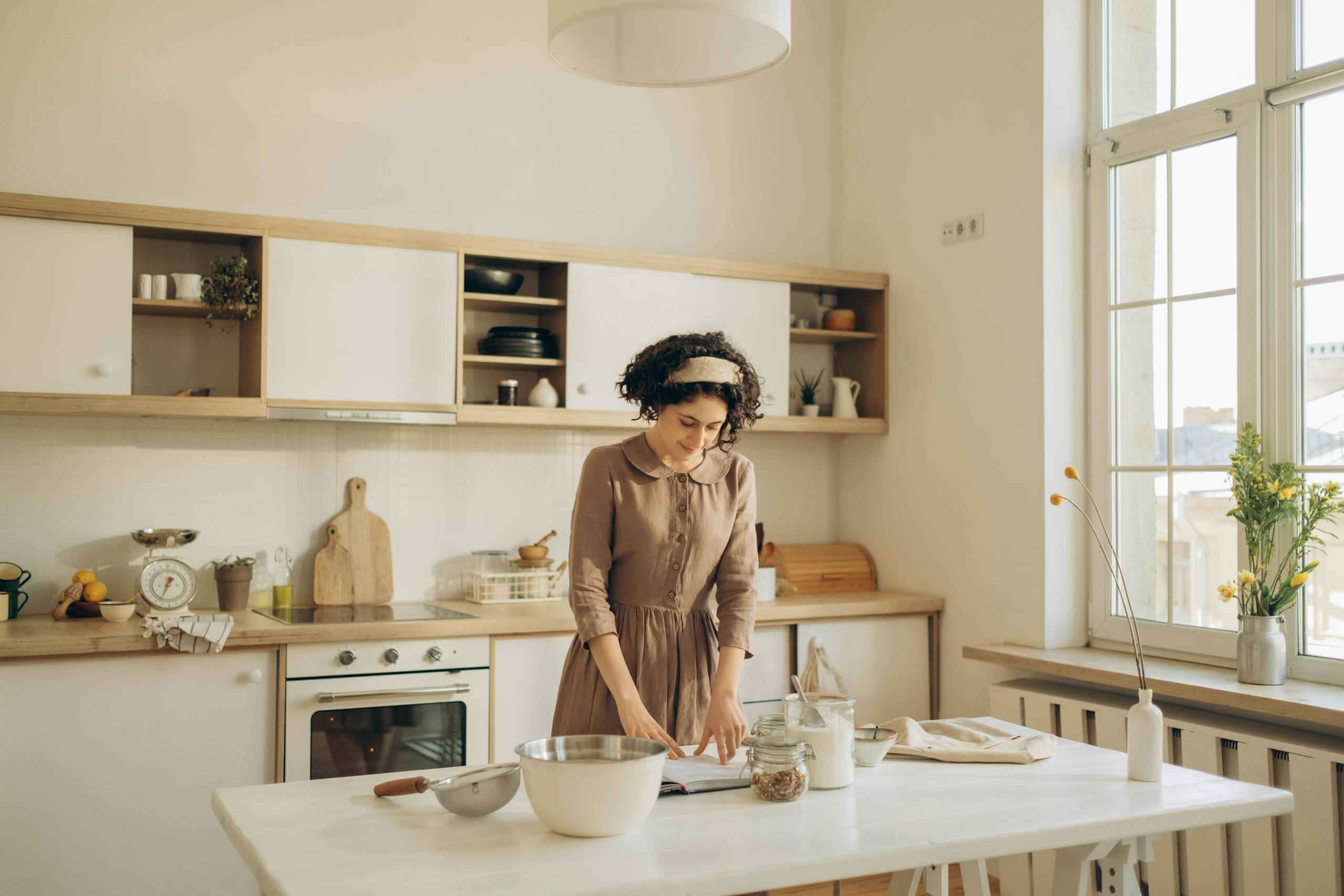
My daughter once asked me why I get quiet after we have people over. She wasn’t upset. She was genuinely curious. I told her my brain works a little differently, that I love people and I also need time to reset afterward. She thought about it for a second and said, “Oh, like charging a phone.” That moment stuck with me. She had been watching me for years, piecing together a model of what it means to be a person in the world. And what she saw wasn’t someone broken or antisocial. She saw someone who moves between connection and solitude with intention.
That’s the quiet power of being an extroverted introvert parent. You don’t fit a clean personality mold, and that ambiguity turns out to be one of the most valuable things you can pass on.
Our Personality and Identity hub explores the full spectrum of introvert experience, but parenting adds a layer that most personality content overlooks entirely. What follows is an honest look at what your kids are absorbing from watching you move through the world.
What Does It Mean to Be an Extroverted Introvert Parent?
The term “extroverted introvert” describes someone who draws energy from solitude but can engage socially with genuine warmth and presence. You’re not performing extroversion. You’re capable of it. You just pay a different price afterward.
What’s your personality type?
Take our free 40-question assessment and get a detailed personality profile with dimension breakdowns, context analysis, and personalised insights.
Discover Your Type8-12 minutes · 40 questions · Free
For parents, this plays out in specific ways. You can run a birthday party with real enthusiasm and then need two hours alone once the last guest leaves. You can hold a meaningful conversation with your child’s teacher, advocate confidently at a school board meeting, and still feel completely depleted by 8 PM. You show up fully. You just can’t do it indefinitely without cost.
A 2022 study published by the American Psychological Association found that personality traits related to introversion and extroversion exist on a continuum rather than as fixed categories, and that many people shift along that continuum depending on context and environment. This matters for parents because it means your social behavior isn’t inconsistent. It’s adaptive. (American Psychological Association: Personality)
Your children don’t experience you as a personality type. They experience you as a person who sometimes wants to talk and sometimes needs quiet. They experience your warmth at the dinner table and your withdrawal after a long weekend. And they are building their own emotional frameworks around what they observe.
Are Kids Actually Paying Attention to How You Handle Social Situations?

Yes. Consistently and carefully.
Children learn social behavior primarily through observation of their caregivers. The National Institutes of Health has documented that social learning, the process of acquiring behavior by watching others, is one of the most powerful developmental mechanisms in early childhood. What children see modeled repeatedly becomes their baseline for what is normal and possible. (National Institutes of Health: Health Information)
When you decline a social invitation and explain why without shame, your child learns that boundaries are acceptable. When you attend an event you’d rather skip and still engage genuinely, they learn that discomfort doesn’t have to mean avoidance. When you come home quiet and ask for space, they learn that needing solitude isn’t rejection.
I remember being at a neighborhood cookout where I knew almost no one. My son was with me. I could have stayed on the edge of the yard the whole time, which is honestly where I wanted to be. Instead, I introduced myself to two people, had real conversations, and then found a quiet corner to decompress for a bit before we left. On the drive home, my son said, “You’re pretty good at talking to people you don’t know.” He had no idea how much effort that took. But he also saw that it was possible.
That’s the modeling that matters. Not the performance of ease, but the demonstration that effort and authenticity can coexist.
What Social Lessons Are Extroverted Introvert Parents Unintentionally Teaching?
Some of the most important lessons you pass on aren’t ones you planned to teach. They emerge from the patterns your children observe over years of watching you exist in the world.
That Social Energy Is a Finite Resource
Children raised by extroverted introvert parents often develop an intuitive understanding that people have limits. They see a parent who gives fully in social situations and then needs to replenish. Over time, many of these children become more considerate of others’ energy, more aware that someone can love you and still need time away from you.
The Mayo Clinic notes that chronic social overstimulation without adequate recovery time contributes to stress, irritability, and reduced emotional regulation in adults. When you model intentional recovery, you’re also modeling self-awareness as a health practice. (Mayo Clinic: Stress Management)
That Depth Matters More Than Volume
Extroverted introverts tend to prefer fewer, more meaningful connections over large social networks. Children watching this pattern learn that quality of relationship carries more weight than quantity. They may grow up valuing one close friend over a crowd of acquaintances, and that’s not a deficit. A 2019 Harvard study on adult development found that the quality of close relationships is one of the strongest predictors of long-term wellbeing. (National Institutes of Health: Health Information)
That Listening Is Its Own Form of Social Skill
Extroverted introverts are often exceptional listeners. They engage deeply in one-on-one conversations and notice things others miss. Children raised in this environment frequently develop stronger listening skills themselves, not because they were instructed to listen, but because they watched a parent do it consistently.
In my years running an advertising agency, I found that the most effective client relationships I built weren’t the ones where I talked the most. They were the ones where I listened carefully enough to understand what the client actually needed, not just what they said they wanted. My kids have watched me in enough conversations to absorb some version of that instinct.

How Does Your Recharge Behavior Affect Your Children’s Emotional Development?
The way you handle your own emotional needs shapes your children’s relationship with theirs. Extroverted introvert parents who recharge openly and without apology give their children permission to do the same.
Psychology Today has written extensively on the connection between parental emotional modeling and children’s emotional intelligence. When a parent names their need (“I need some quiet time to reset”), they give children a vocabulary for their own internal states. (Psychology Today: Introversion)
The challenge comes when recharge behavior is hidden or framed as something to be ashamed of. A parent who disappears without explanation, who seems irritable after social events but never acknowledges why, or who pushes through exhaustion until they snap, teaches a different lesson. Children in that environment may learn that emotional needs are something to suppress rather than something to manage with intention.
Transparency doesn’t mean oversharing. It means simple, honest language. “I had a big day with lots of people and my brain needs a rest” is enough. Children understand this immediately. They feel tired after big days too.
What they’re learning isn’t just about introversion. They’re learning that self-awareness is a skill, that emotional honesty is possible, and that taking care of yourself is something adults do without guilt.
What Happens When Your Child’s Personality Doesn’t Match Yours?
Some extroverted introvert parents raise deeply extroverted children. Some raise children who are more introverted than they are. Either situation creates its own kind of friction, and its own kind of gift.
An extroverted child watching an introverted parent learns early that not everyone processes the world the same way. That’s a genuinely important insight. The CDC’s developmental milestone research emphasizes that children’s social development is shaped significantly by exposure to different interpersonal styles within the family environment. A child who grows up watching a parent manage social energy differently than they do develops flexibility and perspective. (CDC: Child Development)
A more introverted child watching an extroverted introvert parent sees someone who proves that social engagement is possible even when it doesn’t come naturally. They see that you can show up for people, have meaningful conversations, and still be someone who needs quiet. That’s an enormously reassuring model for a child who worries that their own quietness is a flaw.
The mismatch is rarely the problem. The problem comes when parents pathologize the difference. An extroverted parent who frames their child’s need for solitude as antisocial, or an introverted parent who frames their child’s social hunger as exhausting, creates shame around something that’s simply wiring. The extroverted introvert parent, having lived on the spectrum themselves, is often better positioned to hold space for a range of temperaments.
How Can You Model Social Flexibility Without Forcing It?

Social flexibility is the capacity to engage meaningfully across different contexts without losing yourself in the process. Extroverted introvert parents model this naturally. The question is how to do it consciously, in ways your children can absorb and eventually apply.
Name What You’re Doing
When you’re heading into a social situation that requires effort, say so. Not as a complaint, but as a fact. “I’m a little tired today, but I’m looking forward to seeing everyone.” This normalizes the idea that showing up for people sometimes takes intention, not just instinct.
Model Recovery Without Drama
After a socially demanding day, let your children see you recharge in whatever way works for you. Reading alone. Taking a walk. Sitting quietly with coffee. Don’t hide it, but don’t make it a production either. A calm, matter-of-fact return to solitude teaches more than any explanation.
Resist the Urge to Rescue Them From Discomfort
When your child is uncomfortable in a social situation, your instinct may be to remove them from it immediately, especially if you recognize the feeling from your own experience. Occasionally, that’s the right call. More often, staying nearby while letting them work through the discomfort builds the same capacity you’ve built in yourself over years.
A 2021 APA report on childhood resilience found that children develop stronger coping skills when caregivers provide emotional support without eliminating the source of stress entirely. Being present without solving everything is itself a form of modeling. (APA: Resilience)
Talk About Your Own Social Experiences Honestly
Children benefit enormously from hearing parents reflect on their own social lives with honesty. Not oversharing, but acknowledging. “I felt a little awkward at that party at first, but then I found someone interesting to talk to and it got better.” That kind of narration gives children a roadmap for their own experiences.
What Are the Specific Strengths Extroverted Introvert Parents Bring to Raising Kids?
Beyond modeling, extroverted introvert parents bring a particular set of strengths to the day-to-day work of raising children.
Depth of attention is one of them. When you are present with your child, you tend to be genuinely present. Not scanning the room, not half-listening while thinking about the next thing. The same quality of attention that makes you a good listener in adult conversations makes you a perceptive parent. Children feel seen by you in ways they may not be able to articulate but absolutely register.
Comfort with quiet is another. Extroverted introvert parents don’t feel compelled to fill every silence with noise. This creates space for children to think, to speak at their own pace, and to develop their own inner voice. In a culture that often treats silence as awkward, a parent who is comfortable with it gives children a rare gift.
Adaptability is a third. Because you move between social and solitary modes yourself, you tend to be more accepting of your children doing the same. You’re less likely to push a quiet child into overstimulating situations or to shame an outgoing child for wanting more connection than you do.
Working with Fortune 500 clients over two decades, I watched the most effective leaders share one trait: they could read a room and adapt without losing their core. That’s exactly what extroverted introvert parents do every day, in the most important room they’ll ever be in.

How Do You Explain Your Personality to Your Kids Without Overcomplicating It?
Children don’t need a psychology lecture. They need honest, simple language that matches what they’re already observing.
For younger children, concrete analogies work well. The “charging a phone” comparison my daughter offered is perfect because it came from her. Invite your child to describe what they notice. Their explanations are often more accurate and more useful than anything you’d script.
For older children and teenagers, more nuance is appropriate. You can explain that some people feel energized by being around others and some people feel energized by being alone, and that you’re somewhere in the middle depending on the day. You can talk about why you sometimes decline invitations, why you need quiet after big events, and why you still genuinely enjoy people even when you need space from them.
What matters most is that the explanation matches the behavior they’re already seeing. Consistency between what you say and what you do is what builds trust and understanding over time.
Explore more resources on introvert identity and self-understanding in our Personality and Identity hub.
About the Author
Keith Lacy is an introvert who’s learned to embrace his true self later in life. After 20 years in advertising and marketing leadership, including running agencies and managing Fortune 500 accounts, Keith now channels his experience into helping fellow introverts understand their strengths and build fulfilling careers. As an INTJ, he brings analytical depth and authentic perspective to every article, drawing from both professional expertise and personal growth.
Frequently Asked Questions
What is an extroverted introvert parent?
An extroverted introvert parent is someone who can engage socially with warmth and genuine presence but draws their core energy from solitude. They may thrive at school events, parent gatherings, or social occasions and still need significant quiet time afterward to recover. Their children experience them as both socially capable and privately self-contained.
How does an extroverted introvert parent’s behavior affect their child’s social development?
Children of extroverted introvert parents often develop a nuanced understanding of social energy. They observe that it’s possible to engage fully and still need recovery time, that depth of connection matters more than breadth, and that emotional honesty about one’s needs is a sign of self-awareness rather than weakness. These lessons shape how they approach their own social lives.
Should I explain introversion to my child?
Simple, honest explanations matched to your child’s age are more useful than detailed personality theory. Younger children respond well to concrete analogies. Older children benefit from straightforward descriptions of how your energy works. The most important thing is that your explanation aligns with the behavior they’re already observing, which builds trust and reduces confusion.
What if my child is more extroverted than I am?
A more extroverted child watching an extroverted introvert parent gains early exposure to the reality that people are wired differently. Rather than framing your child’s social hunger as exhausting or your own need for quiet as a problem, focus on mutual respect. Let your child see that different energy styles can coexist without one being wrong.
How can I model social flexibility for my children without forcing them into uncomfortable situations?
Model it through your own behavior rather than through pressure. Name what you’re doing when you engage socially despite tiredness. Let them see you recover calmly after demanding events. Stay nearby when they’re uncomfortable without immediately removing the source of discomfort. The most powerful modeling happens in the ordinary moments, not in planned lessons.