

Shyness and introversion are not the same thing, even though they get tangled together in conversation constantly. Shyness is a fear of negative social judgment, a kind of anxious self-consciousness that makes social situations feel threatening. Introversion, by contrast, is about where you get your energy, not about fear at all.
That distinction changed how I understood myself. And once I saw it clearly, I stopped apologizing for the wrong things.

Most of what gets written about shyness conflates it with introversion, and most of what gets written about introversion treats shyness as a side effect. Neither framing is quite right. Shyness has its own psychology, its own roots, and its own path forward. And understanding it clearly matters, especially if you’ve spent years wondering whether your quietness comes from fear or simply from how you’re wired.
Our Introversion vs Other Traits hub covers the full landscape of how introversion relates to, and differs from, adjacent concepts like shyness, ambiverted tendencies, and social anxiety. That broader picture is worth having before we go deeper here, because shyness doesn’t exist in isolation. It sits alongside personality traits, social history, and nervous system responses in ways that take some untangling.
What Is Shyness, Actually?
Shyness is a tendency to feel tense, worried, or awkward in social situations, particularly with unfamiliar people or in situations where you might be evaluated or judged. It shows up as hesitation, self-consciousness, and sometimes physical symptoms like a racing heart or flushed face. Psychologists generally describe it as sitting on a spectrum, from mild social awkwardness to something closer to social anxiety disorder when it becomes severe enough to interfere with daily life.
What’s your personality type?
Take our free 40-question assessment and get a detailed personality profile with dimension breakdowns, context analysis, and personalised insights.
Discover Your Type8-12 minutes · 40 questions · Free
What makes shyness distinct is the fear component. A shy person wants connection but feels held back by worry. An introvert, by contrast, may simply prefer fewer, deeper interactions without any accompanying dread. Some introverts are not shy at all. Some extroverts are quite shy. The overlap exists, but it’s not a given.
I ran advertising agencies for over two decades. Some of the most visibly confident people in those agencies were also, by their own admission, deeply shy. They had learned to perform extroversion so convincingly that their shyness was invisible until you caught them alone in a hallway before a big presentation, visibly steeling themselves. Meanwhile, I was the quiet one in the room who wasn’t afraid of the room at all. I just didn’t see the point of filling silence with noise.
That difference matters. One of us was managing fear. The other was managing energy. Those are different problems with different solutions.
Where Does Shyness Come From?
Shyness has both biological and environmental roots, and most psychologists think it emerges from the interaction between the two. Some children show behavioral inhibition early in life, a tendency to withdraw from novelty and unfamiliar people that appears to have a temperamental basis. Jerome Kagan’s work on inhibited children identified this pattern decades ago, and it remains one of the more well-supported findings in developmental psychology.
Yet temperament isn’t destiny. Children who show early inhibition don’t all grow into shy adults. Environment shapes the trajectory. Parents who model confident social behavior, who gently encourage their children toward new experiences without forcing or shaming, tend to raise kids whose shyness softens over time. Environments that reinforce self-consciousness, through teasing, overprotection, or repeated social failure, can solidify shyness into something more entrenched.
There’s also a social learning dimension. Shyness can develop after experiences of rejection, humiliation, or social failure that leave a person hypervigilant about judgment. A kid who gets laughed at during a class presentation may carry that wariness into adulthood. An employee who gets publicly criticized by a manager in a team meeting may start shrinking in group settings even if they never did before.
I watched this happen on my teams more than once. A talented account manager would come in confident, then have one bad client presentation where the room turned cold, and suddenly they’d go quiet in meetings for months. That wasn’t introversion. That was learned self-protection. Recognizing the difference helped me respond to it differently than I would have otherwise.

How Is Shyness Different From Introversion?
Psychologist Philip Zimbardo, who spent years studying shyness, estimated that a large portion of people identify as shy at some point in their lives. What his work also showed was that shyness cuts across personality types. You can be an extrovert who craves social connection but feels terrified of judgment. You can be an introvert who prefers solitude but feels perfectly at ease in the social situations you do choose to enter.
Introversion is about preference and energy. Extroversion is about where you draw stimulation and vitality. If you want to get a clearer read on where you actually fall, a well-constructed introvert, extrovert, ambivert, and omnivert test can help you see your tendencies more clearly, separate from the fear-based lens that shyness adds.
Shyness, on the other hand, is about fear of evaluation. It’s the anxious monitoring of how others perceive you, the internal voice that says “they’re judging you” or “you said the wrong thing” or “don’t draw attention to yourself.” That voice has nothing to do with whether you’re energized by solitude. It’s a fear response, not an energy preference.
The confusion between the two causes real harm. Shy extroverts get told they just need to “come out of their shell,” as if the problem is preference rather than fear. Introverts who aren’t shy get told they must be hiding something, or that they’re antisocial, when in fact they’re simply comfortable with quiet. And some people who are both introverted and shy carry double the misunderstanding, unsure which part of their experience is which.
Understanding whether you fall somewhere on the spectrum between fairly introverted or extremely introverted can help you separate what’s about your natural wiring from what might be rooted in anxiety or social fear. Those are different things, and they deserve different kinds of attention.
What Does Shyness Feel Like From the Inside?
Shyness isn’t just a behavioral pattern. It’s a felt experience, often quite uncomfortable. People who identify as shy frequently describe a kind of split awareness in social situations: part of them is present in the conversation while another part is watching from a distance, cataloging every word, every expression, every potential misstep.
That internal observer is exhausting. It consumes cognitive bandwidth that could otherwise go toward genuine engagement. This is part of why shy people sometimes come across as distracted or distant. They’re not uninterested. They’re managing an internal broadcast that won’t turn off.
Physical symptoms are common too. Blushing, sweating, a tight chest, a voice that comes out quieter than intended, a mind that goes blank at the worst moment. These aren’t character flaws. They’re the body responding to perceived threat. The nervous system doesn’t distinguish well between a predator and a boardroom full of people waiting for you to say something smart.
What’s interesting is how much this experience overlaps with, and diverges from, what introverts describe. Introverts often talk about social fatigue, the depletion that comes from extended interaction. Shy people describe something more like social dread, the anticipatory anxiety before the interaction even begins. Both can result in avoidance, but for different reasons. One person avoids the party because they know they’ll be tired afterward. The other avoids it because they’re afraid of how they’ll be perceived while they’re there.
A piece in Psychology Today on why introverts crave deeper conversations gets at something relevant here: the desire for meaning over small talk is an introvert preference, not a fear response. Shyness, by contrast, often makes even meaningful conversation feel risky because any conversation is a potential site of judgment. That’s a meaningful difference in what’s actually happening internally.
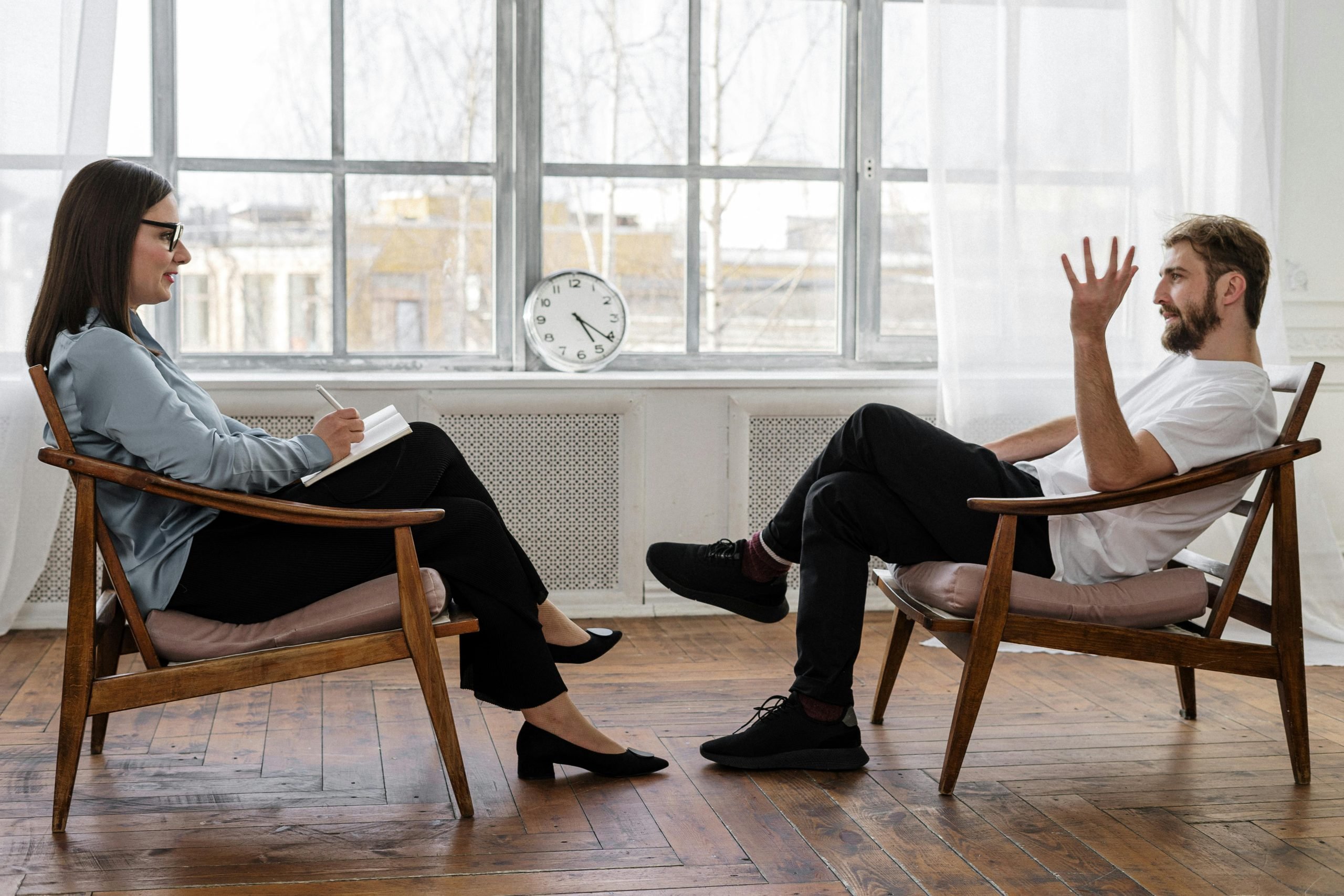
Can Shyness Overlap With Other Personality Traits?
Yes, and the combinations matter more than any single label. Shyness can coexist with introversion, extroversion, high sensitivity, anxiety disorders, and any number of MBTI types. It’s not owned by any one personality profile.
Some personality frameworks distinguish between people who shift across social contexts depending on the situation. If you’ve ever wondered whether you might be an omnivert rather than an ambivert, part of what you might be noticing is not just energy variation but also context-dependent confidence. Sometimes what looks like introversion in one setting and extroversion in another is actually shyness lifting or tightening depending on how safe the environment feels.
Highly sensitive people, those who process sensory and emotional information more deeply, often get labeled as shy because they hesitate before acting and respond visibly to stimulation. But sensitivity and shyness are also distinct. A highly sensitive person might pause before entering a loud room not because they fear judgment but because the sensory input is genuinely overwhelming. The behavioral result looks similar from the outside. The internal experience is quite different.
There’s also the question of what happens when shyness meets ambition. I’ve managed people who were genuinely shy but also deeply driven. They wanted the promotion, the client relationship, the speaking opportunity. Their shyness wasn’t about lacking desire. It was about the gap between what they wanted and their confidence in their ability to be seen without being diminished. That gap is painful in a particular way, and it deserves acknowledgment rather than dismissal.
One of my account directors at the agency was an extrovert by every measure except when it came to authority figures. Around peers, she was magnetic. Around senior clients or executive leadership, she went quiet and deferential in ways that didn’t serve her. That wasn’t introversion. That was situational shyness triggered by power dynamics. Once she named it, she could work with it. Before she named it, she just thought she wasn’t cut out for the room.
How Does Shyness Show Up in Professional Settings?
Workplaces are full of evaluation. Performance reviews, presentations, client pitches, open-plan offices where everyone can see whether you’re busy or staring out the window. For someone with shyness, this constant visibility creates a low-grade stress that can be genuinely debilitating over time.
Shy professionals often get passed over not because of their work but because of how they’re perceived in moments of visibility. They don’t speak up in meetings. They don’t advocate for themselves in salary conversations. They don’t put their hand up for high-profile projects, not because they don’t want them but because the fear of being seen and found wanting is louder than the ambition.
A Harvard Program on Negotiation piece on whether introverts are at a disadvantage in negotiation touches on something relevant: the assumption that quietness signals weakness or disinterest. That framing misses the distinction between strategic silence and fearful silence. Shy people in negotiation aren’t being strategic. They’re managing anxiety. Introverts who are not shy can hold silence with genuine confidence. The outcomes look different even when the behavior looks the same.
What helped the shy people on my teams most was not being pushed to perform confidence they didn’t have. It was being given structures that reduced the stakes of visibility: smaller meetings first, written contributions valued alongside verbal ones, one-on-one conversations before group presentations. The work came through when the fear had somewhere to go.
If you’re trying to figure out whether your quietness in professional settings is introversion or something closer to shyness, an introverted extrovert quiz can be a useful starting point. It won’t diagnose anxiety, but it can help you see whether your social preferences are about energy or about something that feels more like self-protection.
Is Shyness Something You Can Change?
Shyness is not fixed. That’s one of the more important facts about it. Temperament may create a predisposition, but shyness as it manifests in adult life is significantly shaped by experience, belief, and practice. People do change their relationship with shyness, sometimes dramatically.
Cognitive behavioral approaches have a strong track record with social anxiety, which is shyness at its more severe end. The core work involves identifying and challenging the beliefs that fuel social fear, testing those beliefs against reality, and gradually expanding the situations you’re willing to enter. Over time, the threat response quiets. Not because the person becomes someone different, but because the evidence accumulates that the feared outcome doesn’t actually happen most of the time.
That said, success doesn’t mean become an extrovert. That framing does a lot of damage. Shy people who work on their shyness don’t suddenly crave the spotlight. They often become more comfortable in social situations while still preferring depth over breadth, still finding large groups tiring, still doing their best thinking alone. The shyness recedes. The underlying temperament remains.
Research published in PubMed Central on social anxiety and its treatment underscores that behavioral and cognitive interventions can meaningfully reduce the fear component of shyness without requiring personality change. What changes is the relationship to fear, not the person’s fundamental nature.
I’ve watched people in their forties and fifties significantly shift their relationship with shyness. One creative director I worked with had been quiet in client meetings for years, not because she lacked opinions but because she was afraid of being wrong in public. She started working with a therapist and, over about eighteen months, became one of the most confident voices in the room. She didn’t become louder or more performative. She became less afraid. Those are different things.
Where Does Shyness End and Social Anxiety Begin?
Shyness exists on a continuum. At the mild end, it’s a slight hesitation in new social situations, a preference for warming up before engaging. At the more intense end, it starts to look like social anxiety disorder, where the fear of judgment is pervasive, persistent, and significantly impairs daily functioning.
The clinical distinction matters. Social anxiety disorder is a diagnosable condition that responds well to treatment, both therapy and, in some cases, medication. Shyness that doesn’t reach clinical threshold can still be worked with, but through different means. The mistake is treating severe social anxiety as mere shyness and telling someone to just push through it, or treating ordinary shyness as a disorder that requires clinical intervention.
Signs that shyness may have crossed into territory worth professional attention include: avoiding situations that significantly matter to you because of social fear, physical symptoms that are intense or persistent, significant distress about social situations even when they go well, and a pattern of social avoidance that’s narrowing your life over time.
A piece from PubMed Central examining the relationship between temperament and anxiety disorders offers useful context here: the biological underpinnings of inhibited temperament don’t automatically produce clinical anxiety, but they do create a vulnerability that environment and experience can either amplify or buffer. That’s a more nuanced picture than “shy people just need more confidence.”
For professionals wondering whether their social discomfort is within normal range, the Pointloma resource on introverts in counseling roles makes an interesting adjacent point: introverts and shy people both enter helping professions, and distinguishing between the two matters for how they function in those roles. The same principle applies in any career where social presence is part of the job.
What Shyness Gets Right That Extroversion Culture Gets Wrong
There’s something worth retrieving from the experience of shyness, even as we acknowledge its costs. Shy people are often exquisitely attuned to social dynamics. They notice what’s unsaid. They read the room carefully because they’ve had to. They’re often thoughtful communicators because they’ve spent so much time listening rather than talking.
Extroversion culture treats hesitation as weakness and silence as emptiness. That’s a profound misreading. Some of the most perceptive people I’ve worked with were also the quietest in group settings. Their observations, when they did share them, were often sharper than anything that came out of the louder voices in the room.
The problem isn’t the attentiveness that shyness can cultivate. The problem is when fear prevents that attentiveness from translating into contribution. The goal, as I see it, isn’t to talk more. It’s to fear less. Those aren’t the same instruction.
Understanding what extroversion actually means helps here too. Extroversion isn’t about confidence or social skill. It’s about where you draw energy. Conflating extroversion with competence is one of the more persistent myths in workplace culture, and it does particular damage to people who are shy, introverted, or both.
Some people who seem to move fluidly between introversion and extroversion depending on context are worth considering separately. The distinction between an otrovert and an ambivert gets at something real about how personality expression shifts with context, and for shy people, that context-dependence is often about safety rather than preference. Knowing which dynamic is at play can change how you approach your own social development.

Practical Ways to Work With Shyness Rather Than Against It
Naming the experience accurately is the first step. If what you’re feeling in social situations is fear of judgment rather than a preference for quiet, that naming matters. It changes what you do with the feeling.
From there, gradual exposure tends to work better than avoidance or forced immersion. Small steps into situations that feel mildly uncomfortable, done consistently, build a different kind of evidence base. The feared catastrophe usually doesn’t happen. Over time, the nervous system updates its threat assessment.
Preparation helps enormously. Shy people often do better when they’ve had time to think through what they want to say before entering a high-stakes social situation. That’s not a crutch. That’s working with your cognitive style rather than against it. I’ve always prepared more than anyone else in the room before major client presentations. That preparation was partly INTJ thoroughness and partly an understanding that I do my best thinking before the conversation, not during it.
Conflict, when it arises in social or professional settings, is particularly hard for shy people because it raises the stakes of judgment exponentially. A Psychology Today framework for introvert-extrovert conflict resolution offers some useful structure for those moments when the social stakes feel highest and the fear is loudest.
Finally, finding environments that reduce the cost of being seen, communities, workplaces, and relationships where your presence is welcomed rather than evaluated, makes an enormous difference. Shyness doesn’t have to be a permanent condition. But it does respond to environment. Putting yourself in places where you’re valued for your depth rather than your volume is not avoidance. It’s wisdom.
There’s a fuller picture of how introversion relates to all of these adjacent traits, including shyness, social anxiety, and sensitivity, in our complete Introversion vs Other Traits resource hub. If you’ve been carrying a label that doesn’t quite fit, that’s a good place to start sorting through what’s actually yours.
About the Author
Keith Lacy is an introvert who’s learned to embrace his true self later in life. After 20 years in advertising and marketing leadership, including running agencies and managing Fortune 500 accounts, Keith now channels his experience into helping fellow introverts understand their strengths and build fulfilling careers. As an INTJ, he brings analytical depth and authentic perspective to every article, drawing from both professional expertise and personal growth.
Frequently Asked Questions
Is shyness the same as introversion?
No. Shyness is a fear of social judgment and evaluation, while introversion is a preference for less stimulating environments and a tendency to recharge through solitude. Introverts can be socially confident. Extroverts can be shy. The two traits are independent of each other, even though they often get conflated in everyday conversation.
Can shyness be overcome?
Shyness can change significantly over time, especially with deliberate work. Gradual exposure to social situations, cognitive reframing of fear-based beliefs, and supportive environments all contribute to reducing the fear that drives shyness. success doesn’t mean become extroverted, but to reduce the anxiety that prevents full participation in situations that matter to you.
What causes shyness in adults?
Shyness in adults typically stems from a combination of temperamental predisposition toward behavioral inhibition and environmental experiences that reinforced social fear. Past experiences of rejection, humiliation, or harsh judgment can solidify shyness. Power dynamics in professional settings can also trigger situational shyness in people who are otherwise socially comfortable.
How do I know if I’m shy or introverted?
Ask yourself whether social situations feel threatening or simply tiring. If you avoid social situations because you fear being judged or evaluated, shyness is likely a factor. If you avoid them because they deplete your energy and you’d rather be alone, that’s more consistent with introversion. Many people experience both, but the distinction matters for how you address each.
When does shyness become social anxiety?
Shyness becomes social anxiety when the fear of social situations is persistent, pervasive, and significantly interferes with daily life. Signs include avoiding situations that matter to you, intense physical symptoms, significant distress even after social situations go well, and a pattern of narrowing social engagement over time. Social anxiety disorder is a clinical condition that responds well to therapy and, in some cases, medication.