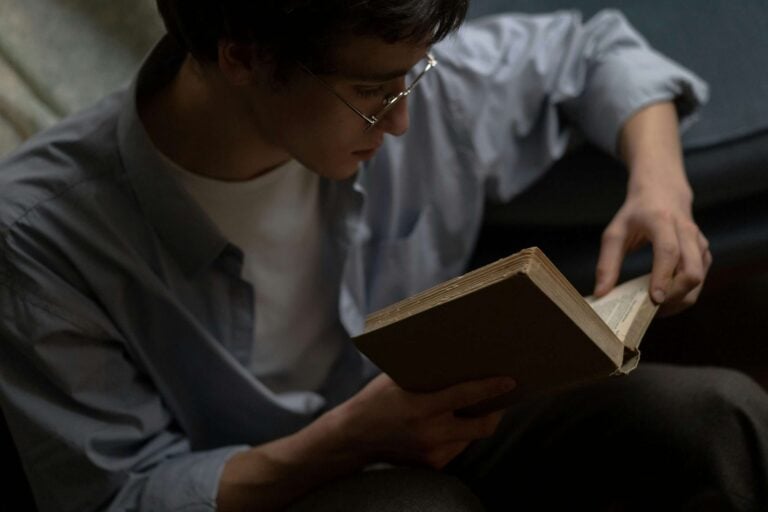

A quiet, responsible father brings something to family life that louder, more expressive parenting styles often can’t replicate: steady presence, thoughtful guidance, and the kind of deep attention that makes children feel genuinely seen. These fathers may not fill a room with noise or perform affection for an audience, but their influence runs deep, shaping how their kids understand reliability, integrity, and what it means to show up consistently.
If you’re a father who processes the world internally, who leads through example rather than declaration, and who sometimes wonders whether your quieter style is enough, I want to offer you a different frame. Your personality isn’t a limitation you’re working around. It’s a foundation your family is building on.
Fathers who lead quietly often find that their approach connects naturally to broader patterns in introvert family life. Our Introvert Family Dynamics and Parenting hub looks at how introverted personalities shape the full arc of family experience, from parenting style to emotional communication to the way we build connection with the people closest to us.
What Does a Quiet Responsible Father Actually Look Like?
There’s a version of fatherhood that gets celebrated in popular culture: the coach, the cheerleader, the life-of-the-party dad who’s always ready with a joke and a high five. That version gets a lot of airtime. The quieter version, the father who sits beside his kid during a hard moment without immediately trying to fix it, who notices the small things, who keeps his word without needing credit for it, gets far less.
What’s your personality type?
Take our free 40-question assessment and get a detailed personality profile with dimension breakdowns, context analysis, and personalised insights.
Discover Your Type8-12 minutes · 40 questions · Free
I ran advertising agencies for over two decades. I managed creative teams, presented to Fortune 500 boards, and spent years in rooms that rewarded volume and visibility. And I spent a long time believing that the way I naturally operated, observing before speaking, processing before reacting, thinking before emoting, was something I needed to compensate for rather than lean into.
That same misread followed me home. I worried that my children needed a louder, more demonstrably enthusiastic version of me. What I eventually understood was that they didn’t need me to be someone else. They needed me to be present in the way I actually knew how to be present: attentive, consistent, and genuinely engaged with what mattered to them.
A quiet responsible father tends to show up in specific, recognizable ways. He’s the one who remembers the details his kids mentioned weeks ago. He follows through on promises even when no one would notice if he didn’t. He creates routines that give his family a sense of stability. He thinks carefully before offering advice, which means when he does speak, his children have learned to listen. He models emotional regulation not by lecturing about it but by demonstrating it.
These aren’t small things. These are the things that form a child’s understanding of what trustworthy love looks like.
How Does Personality Actually Shape the Way You Father?
Personality isn’t destiny, but it does set the tone for how we naturally approach relationships, including the relationship we have with our children. Temperament research from MedlinePlus describes how inborn traits shape behavior patterns from early childhood onward, and those patterns don’t disappear when we become parents. They become part of how we parent.
As an INTJ, I’m wired to think in systems and long-term outcomes. My instinct as a father was always to consider what my kids would need five years from now, not just what would make the current moment easier. That meant I sometimes held back from rescuing them from discomfort, not because I didn’t care, but because I was thinking about what the discomfort was teaching them. That approach required explanation. My kids needed to understand why I wasn’t rushing in, and learning to articulate that was its own kind of growth for me.
If you’ve ever taken a Big Five personality traits test, you’ve seen how dimensions like conscientiousness, agreeableness, and openness map onto real behavioral tendencies. Fathers who score high in conscientiousness, for example, tend to be reliable, organized, and follow-through-oriented. Those traits translate directly into parenting behaviors that children find deeply reassuring, even if they’re not flashy.
What matters isn’t matching some idealized parenting template. What matters is understanding your own wiring well enough to use it intentionally, and to recognize where it might need deliberate adjustment.

Where Quiet Fathers Often Struggle (And Why It’s Worth Naming)
Honest conversation about quiet, introverted fatherhood has to include the friction points. Pretending there aren’t any doesn’t help anyone.
One of the most common challenges I hear from fathers with quieter personalities is the gap between what they feel internally and what their children actually receive. We process emotion deeply, but we don’t always externalize it. A father can feel immense pride, warmth, and love while projecting what looks, from the outside, like mild interest. Children, especially young ones, read the external signals. If those signals are muted, kids can misread presence as indifference.
I had a version of this conversation with my own kids when they were older. One of them told me they sometimes couldn’t tell if I was proud of them because I didn’t react the way other dads did. That landed hard. Not because I hadn’t felt the pride, but because I’d assumed they could sense what I hadn’t said out loud. That assumption was wrong, and correcting it required me to build a new habit: saying the thing, not just feeling it.
Another friction point involves overstimulation. Family life, particularly with young children, is loud, unpredictable, and relentlessly sensory. For fathers who process the world through careful internal filtering, the constant noise and interruption can create genuine depletion. A study published in Frontiers in Psychology examined how sensory sensitivity intersects with emotional processing, finding meaningful connections between how people filter sensory input and how they regulate emotional responses. For a quiet father, recognizing that depletion isn’t weakness, it’s neurological, can be the difference between withdrawing and communicating.
Highly sensitive fathers face a particular version of this. If you identify with high sensitivity, the article on HSP parenting and raising children as a highly sensitive parent addresses this terrain directly, including how to manage your own nervous system while staying emotionally available for your kids.
There’s also the social comparison problem. Other fathers at school events, sports games, and neighborhood gatherings can seem effortlessly warm and gregarious. A quiet father standing at the edge of a crowd can feel like he’s failing some unspoken test of parental engagement. He’s not. He’s just operating at a different frequency, one his children often understand better than anyone else does.
What Do Children Actually Need From a Father’s Personality?
The question underneath all of this is a real one: what do children actually need from their fathers, and does a quieter personality deliver it?
Family dynamics research covered by Psychology Today consistently points to a few core elements that matter most in parent-child relationships: emotional availability, consistency, warmth, and the sense that a parent genuinely knows and sees their child as an individual. None of those require a loud or extroverted personality. Several of them actually favor quieter, more observant approaches.
Emotional availability doesn’t mean constant emotional expression. It means being reachable when your child needs you, responding rather than shutting down, and creating a relational environment where your child feels safe bringing you the hard things. Quiet fathers who have done the work of understanding their own emotional landscape are often exceptionally good at this, because they don’t panic in the face of difficult feelings.
Consistency is perhaps where quiet, responsible fathers shine most clearly. When I think about the fathers I’ve known across my life and career, the ones whose children spoke about them with the deepest trust weren’t the most charismatic. They were the most reliable. They showed up. They kept their word. They were the same person on a bad day as on a good one. That kind of consistency is a form of love that children internalize in ways that shape them for decades.
Genuinely knowing your child as an individual is something quiet fathers often excel at, because observation is a natural strength. When you’re not performing for a room, you’re watching it. I noticed things about my kids that their more socially active friends’ parents missed entirely, small shifts in mood, patterns in what they avoided talking about, the specific kind of silence that meant something was wrong. That attention was a form of care, even when it didn’t announce itself.

How Responsibility Becomes a Love Language
Quiet fathers often express love through action rather than words. They fix the thing that’s broken. They plan the trip that matters to their child. They research the school, the doctor, the program, because they care about getting it right. They carry the mental and logistical weight of family life in ways that rarely get named or celebrated.
In my agency years, I managed teams of people with wildly different working styles. I once had an account director on a major retail brand who was the quietest person in every room, but whose clients renewed year after year because she never dropped a ball. She remembered every commitment, anticipated every problem, and delivered without drama. Her clients trusted her completely, not because she was warm and expressive in the conventional sense, but because she was absolutely reliable. I watched her build relationships through that reliability that more outwardly charming colleagues couldn’t match.
That same dynamic plays out in families. A father whose children know without question that he will be there, that he means what he says, and that he takes their wellbeing seriously, is providing something that no amount of performative enthusiasm can replace.
The challenge is making sure children can recognize it as love. That sometimes requires translation, particularly when children are young. Being explicit about the connection between action and care (“I spent time researching this because it matters to me that you have what you need”) helps children understand that responsibility is its own form of devotion.
Some fathers find it useful to reflect on how they come across in relationships more broadly. Tools like the likeable person test can offer interesting perspective on how your warmth and engagement register with others, which can be genuinely useful data when you’re trying to calibrate how your personality lands with the people you love most.
handling Family Dynamics When Your Personality Doesn’t Match the Room
Some quiet fathers find themselves in families where everyone else seems to operate at a higher emotional temperature. An extroverted partner, a highly expressive child, a household that runs on noise and spontaneity. That mismatch can create real friction, and it’s worth thinking through directly.
Research published through PubMed Central on personality and relationship functioning points to the importance of understanding how different personality profiles interact within close relationships, and how mismatches in expressiveness or social need can create misunderstanding when they’re not named and worked through.
The answer isn’t to become someone you’re not. It’s to build enough shared language with your family that they understand how you work. My kids eventually came to understand that when I went quiet after a hard day, it wasn’t rejection. It was recharging. But they only understood that because we talked about it. I had to explain my own operating system in terms they could work with.
That kind of self-awareness extends to recognizing when quietness tips into withdrawal, or when responsibility-as-love becomes emotional distance. There’s a difference between a father who processes internally and remains engaged, and one who has genuinely checked out. If you’re uncertain which side of that line you’re on, honest reflection matters. Some fathers find value in structured self-assessment tools. Others benefit from professional support.
For fathers who work in caregiving roles or who are thinking about how their personality shapes their professional helping relationships as well as their family ones, the personal care assistant test online offers a window into how your interpersonal strengths and preferences translate into direct care contexts.
It’s also worth noting that personality alone doesn’t explain everything. If you’re experiencing persistent emotional numbness, difficulty connecting with your children despite wanting to, or patterns of behavior that concern you, those deserve attention beyond personality frameworks. The borderline personality disorder test is one resource for people who want to explore whether what they’re experiencing might involve something beyond introversion or temperament.

Growing as a Father Without Abandoning Who You Are
Every father grows into the role. That growth doesn’t require becoming a different person. It requires becoming a more intentional version of the person you already are.
For quiet, introverted fathers, growth often looks like learning to externalize what’s already happening internally. It looks like building the habit of verbal affirmation even when it feels redundant to you, because it isn’t redundant to your child. It looks like creating structured one-on-one time that plays to your natural strengths, a walk, a project, a shared interest, rather than trying to perform in group settings that drain you.
It also looks like understanding your own limits without using them as excuses. There were periods in my agency career when I was running on empty and had nothing left by the time I got home. I told myself my family understood. Some of them did. Some of them needed more than understanding, they needed presence, and I wasn’t delivering it. Recognizing that gap, and doing something about it, was harder than any client presentation I ever gave.
Physical health matters here too, more than quiet fathers often acknowledge. The connection between how we care for our own bodies and how available we are emotionally is real. Fathers who are chronically depleted, whether from overwork, undersleep, or neglecting their own needs, have less to give. If you’re drawn to fitness and wellness as a way of maintaining your capacity for presence, tools like the certified personal trainer test can help you assess your knowledge base and approach to physical wellbeing in a structured way.
Growth also means being honest with your children about who you are. Not as an excuse, but as an invitation. Telling your teenager “I’m someone who needs quiet to think clearly, and sometimes I go silent when I’m processing something hard” is not weakness. It’s modeling self-awareness and communication. It gives your child a framework for understanding you that they’ll use for the rest of their relationship with you.
The 16Personalities framework describes how different personality types approach their core relationships, and understanding your own type can be a useful starting point for these kinds of conversations with your family. Not as a label that limits you, but as a vocabulary that opens things up.
The Long View: What Quiet Fathers Leave Behind
What do children remember about their fathers? Not usually the big performances. They remember the small constants: the Saturday morning ritual, the way their father listened without interrupting, the fact that he always came to the thing that mattered even when he was tired. They remember being known.
Quiet, responsible fathers are often building something their children won’t fully appreciate until they’re adults. The values absorbed through observation rather than lecture. The emotional steadiness that becomes a child’s internal model for how to handle difficulty. The sense of being worth someone’s sustained, careful attention.
I’ve had conversations with my kids as adults that circled back to things I’d said or done when they were young, things I’d largely forgotten. Small moments that had lodged in them in ways I couldn’t have predicted. That’s the long game of quiet fatherhood. The influence isn’t always visible in real time. It accumulates.
The fathers I’ve admired most across my life weren’t the loudest ones. They were the ones whose children grew up knowing, without question, that they were seen, valued, and safe. That kind of knowing doesn’t require performance. It requires presence. And presence, for a quiet father, is something you can genuinely give.
Psychology Today’s coverage of blended family dynamics also speaks to how a father’s steady, consistent personality can be an anchor for children handling complex family structures. Reliability doesn’t become less valuable in complicated circumstances. It becomes more essential.

There’s much more to explore about how introverted personalities shape family life across every stage. Our complete Introvert Family Dynamics and Parenting hub brings together articles on parenting, relationships, communication, and the particular textures of family life when you’re someone who processes the world from the inside out.
About the Author
Keith Lacy is an introvert who’s learned to embrace his true self later in life. After 20 years in advertising and marketing leadership, including running agencies and managing Fortune 500 accounts, Keith now channels his experience into helping fellow introverts understand their strengths and build fulfilling careers. As an INTJ, he brings analytical depth and authentic perspective to every article, drawing from both professional expertise and personal growth.
Frequently Asked Questions
Can a quiet father be as emotionally connected to his children as an expressive one?
Yes, and in many cases more so. Emotional connection depends on attentiveness, consistency, and genuine responsiveness, not volume or expressiveness. Quiet fathers who are present and observant often build deep bonds with their children precisely because their attention is focused rather than scattered. The key adjustment for many quiet fathers is learning to externalize some of what they feel internally, so children can receive it clearly.
How can an introverted father recharge without his children feeling abandoned?
Communication is everything here. When children understand that a parent’s need for quiet time is about recharging rather than rejection, they can hold that need without personalizing it. Naming it directly (“I need some quiet time to feel like myself again, and then I want to hear about your day”) turns a withdrawal into a transparent, bounded process. Building predictable routines around alone time also helps children know when their father will be fully available again.
What’s the difference between a quiet personality and emotional unavailability in fathers?
A quiet personality involves processing emotions internally and expressing them less visibly, while still being genuinely engaged and responsive. Emotional unavailability involves a consistent pattern of not responding to a child’s emotional needs, regardless of whether that stems from personality, stress, unresolved personal history, or other factors. The distinction matters: a quiet father who shows up, listens, and responds when his child needs him is emotionally available. A father who consistently deflects, dismisses, or disappears during emotional moments is not, and that pattern warrants honest reflection and often professional support.
How does a quiet father’s personality affect his children’s own personality development?
Children absorb a great deal from observing their parents, including how to handle emotions, how to approach problems, and what reliability looks like in practice. A quiet, responsible father models emotional regulation, thoughtfulness, and follow-through in ways that often shape his children’s own approaches to relationships and challenges. Children of quiet fathers may also feel more comfortable with silence and internal processing than children raised in more verbally expressive households, which can be a genuine strength in contexts that reward reflection.
Is it harder for introverted fathers in extroverted family environments?
It can create friction, particularly around energy management and communication style. An introverted father in a high-energy, expressive household may find family life more draining than his partner or children do, which can lead to withdrawal if it isn’t managed intentionally. The most effective approach involves honest conversations about different needs, building in structured recharge time, and finding connection points that work across personality styles, such as shared activities rather than purely social interaction. Personality mismatch within families is common and workable when it’s named and respected rather than ignored.