

Feeling guilty for wanting alone time is one of the most common struggles introverts carry quietly. That guilt is not a character flaw or a sign that something is wrong with you. It is a natural response to living in a culture that treats solitude as antisocial and recharging as laziness, when for introverts, time alone is simply how the nervous system restores itself.
Most of us have spent years absorbing the message that wanting space means we are cold, selfish, or broken. We cancel plans and then feel relieved, then immediately feel bad about feeling relieved. We close the office door and wonder if people think we are unfriendly. We turn down invitations and rehearse apologies we never quite stop giving. That cycle is exhausting, and it does not have to be the default.

If you have been wrestling with this particular kind of guilt, you are in the right place. Our Solitude, Self-Care and Recharging hub explores the full spectrum of what it means to rest, restore, and take care of yourself as an introvert. This article goes straight to the emotional core of why that guilt exists and what it actually costs us when we keep giving into it.
Where Does the Guilt Come From in the First Place?
Guilt about wanting alone time does not appear out of nowhere. It gets built, slowly and consistently, through years of small social corrections. A parent who called you antisocial for reading in your room. A teacher who marked you down for not participating enough. A manager who equated visibility with ambition. These moments stack up, and eventually the internal voice starts doing the work for them.
What’s your personality type?
Take our free 40-question assessment and get a detailed personality profile with dimension breakdowns, context analysis, and personalised insights.
Discover Your Type8-12 minutes · 40 questions · Free
I spent most of my advertising career operating from that place. Running an agency means constant contact. Client calls, team meetings, pitch presentations, networking events, creative reviews. The pace is relentless, and the culture rewards people who seem energized by all of it. Early on, I worked hard to look like one of those people. I stayed late at events I wanted to leave. I kept my office door open even when I needed to think. I said yes to dinners I did not have the bandwidth for because I was afraid of what saying no would signal about me as a leader.
What I was actually doing was managing other people’s perceptions of me at the expense of my own functioning. And the guilt was the enforcement mechanism. Every time I wanted to pull back, the guilt showed up to remind me that wanting space was something to be ashamed of.
The cultural framing around this is worth examining honestly. Western workplaces, in particular, have long treated extroversion as the baseline for professionalism. Being available, visible, and enthusiastically social is coded as engaged and committed. Needing quiet is coded as disengaged or difficult. That framing is not neutral. It is a values system, and it was not designed with introverted nervous systems in mind.
Is Wanting Alone Time Actually Selfish?
No. And I want to be direct about that because the question itself reveals how deeply the guilt has taken root. Selfishness implies taking something from others. Wanting time to recharge does not take anything from anyone. It is a maintenance function, the same way sleep is a maintenance function.
What is worth understanding is that the relationship between solitude and wellbeing is well documented in psychological literature. Time spent alone, when chosen freely rather than forced by circumstance, tends to support emotional regulation, creative thinking, and a clearer sense of personal values. For people who process internally, solitude is not a luxury. It is the environment in which the most important thinking actually happens.
I have a specific memory that clarified this for me. We were in the middle of a high-stakes pitch for a Fortune 500 account, one of the larger opportunities my agency had pursued. The team was in constant collaboration mode, brainstorming sessions every morning, working lunches, evening check-ins. By day four I was running on fumes. Not tired, exactly. More like cognitively flattened. My contributions in the group sessions were getting thinner and I knew it.
I made a decision that felt uncomfortable at the time. I told my team I needed a morning to work alone and I would reconnect in the afternoon. I expected to feel guilty about it. What I did not expect was that the three hours I spent alone with the brief produced the strategic angle that won us the account. The quiet was not a retreat from the work. It was where the real work happened for me.
Selfishness would have been staying in those group sessions, performing participation, and delivering mediocre thinking. Asking for the space I needed was, in retrospect, the most useful thing I could have done for the team.

What Does Guilt About Alone Time Actually Cost You?
The cost is real and it compounds over time. When we consistently override the need for solitude because we feel guilty about it, we are not just tired. We are operating from a diminished version of ourselves, and the people around us receive less of us, not more.
There is a piece I wrote about what happens when introverts do not get enough alone time that gets into the specifics of this. The short version is that the effects are not subtle. Irritability, difficulty concentrating, emotional flatness, a kind of low-grade resentment toward the people and obligations that are filling every available hour. None of those outcomes serve the relationships we are trying to protect by saying yes to everything.
There is also a longer-term cost that is harder to name. When you spend years suppressing a legitimate need because you feel guilty about it, you start to lose touch with what you actually need. The self-knowledge that comes from honoring your own rhythms gets eroded. You become good at performing availability and not particularly good at knowing when you are genuinely okay versus running on empty.
I watched this happen to a senior account director on my team. She was exceptionally talented and deeply committed to her clients. She never said no to anything. Over about eighteen months, I watched her shift from someone who brought sharp, original thinking to every client meeting to someone who was just managing the day-to-day. When I finally had a direct conversation with her about it, she told me she could not remember the last time she had done anything just for herself. She had been so focused on being available that she had stopped replenishing anything.
That conversation changed how I thought about availability as a leadership value. Being always accessible is not the same as being genuinely present. And for people who recharge in solitude, those two things are often in direct tension.
Why Do We Feel Guilty Even When We Know We Need the Space?
Knowing something intellectually and feeling it emotionally are two different things. Most introverts who read about their personality type understand, on a cognitive level, that solitude is restorative for them. The guilt does not care about that understanding. It operates on a different register entirely.
Part of what sustains the guilt is the fear of being misread. We worry that if we say we need time alone, the people we care about will hear rejection. We worry that if we leave a party early, we will seem ungrateful. We worry that if we close the door, we will seem unapproachable. So we stay, and we perform presence, and we feel resentful, and then we feel guilty about the resentment, and the whole cycle tightens.
For highly sensitive people, this cycle can be particularly intense. The need for solitude among HSPs is not just about introversion. It is about nervous system regulation and the need to process the volume of sensory and emotional information that accumulates throughout a day. The guilt in those cases can feel even more acute because the need is even more pressing, and the gap between what is needed and what feels socially acceptable can be wider.
There is also something worth naming about the relationship between guilt and identity. Many of us built our professional identities around being reliable, present, and accessible. Wanting alone time can feel like a threat to that identity, like admitting a limitation rather than honoring a need. Reframing that, genuinely reframing it rather than just telling yourself you should, takes time and repetition.
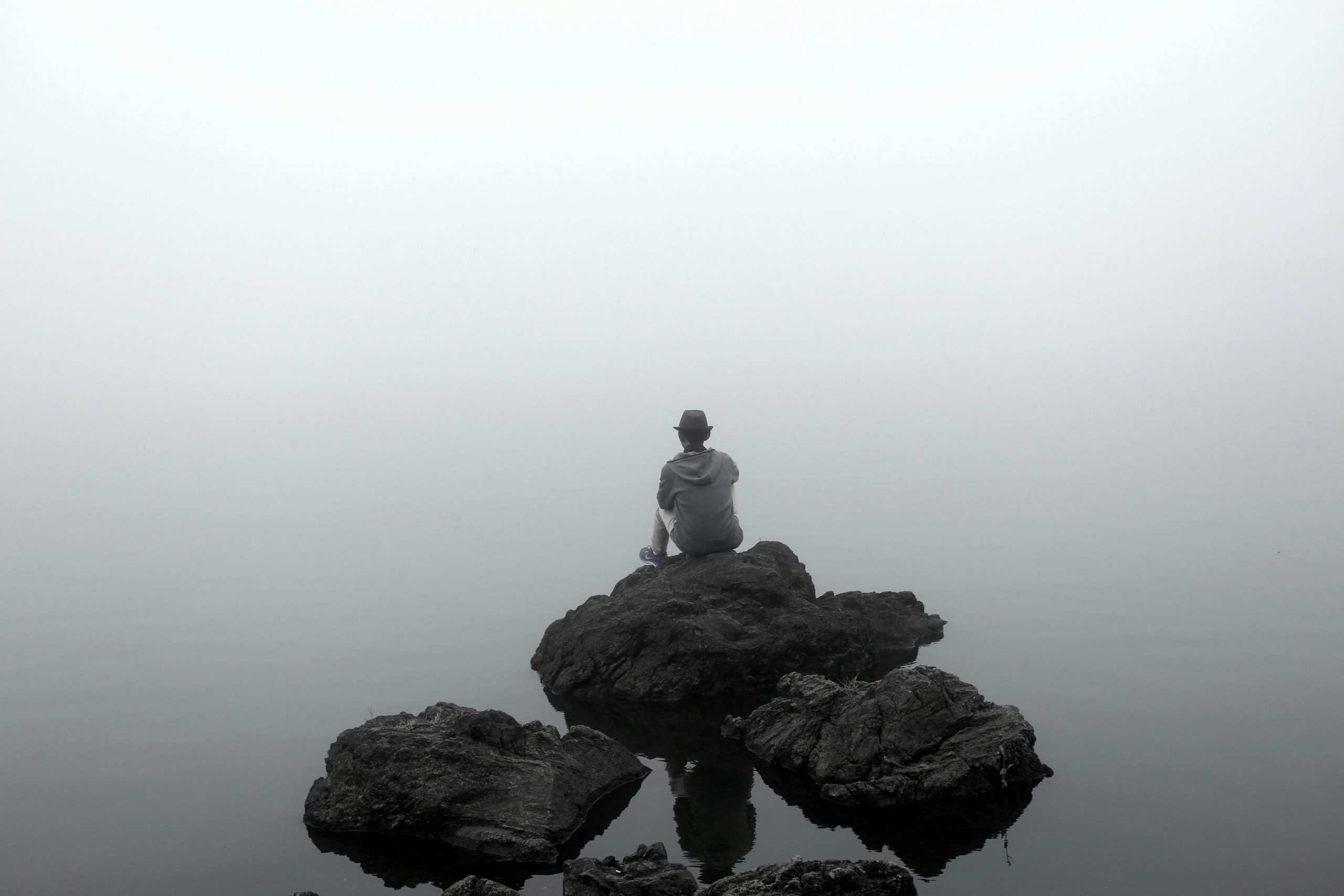
How Do You Actually Let Go of the Guilt?
Releasing guilt about alone time is not a single decision. It is a practice, and it starts with something smaller than most people expect: noticing the guilt without immediately acting on it.
Most of us respond to guilt by either caving to it (canceling the alone time we planned) or arguing with it (building a mental case for why we deserve the space). Both responses keep the guilt in charge. What tends to work better is developing the capacity to observe it. To notice that the guilt is present, acknowledge it, and continue with what you know you need anyway.
That sounds simple and it is genuinely not easy. What makes it more manageable is building structures that support the alone time rather than leaving it up for negotiation every time. Blocking time on your calendar the same way you would block a client meeting. Establishing rhythms that the people around you come to understand and expect. Having a clear, simple way of communicating your needs that does not require an apology attached to it.
The communication piece matters more than most introverts realize. We tend to either over-explain (turning a simple “I need some quiet time this evening” into a lengthy justification) or under-communicate (just disappearing and hoping people do not notice). Neither works particularly well. A clear, warm, non-apologetic statement is usually far more effective than either extreme.
Something like: “I’m going to take the evening for myself, I’ll be more present tomorrow” does not require a defense. It is a complete sentence. Practicing that kind of direct communication was one of the more useful things I worked on in my forties, and it changed the texture of my relationships in ways I had not anticipated. People did not feel rejected. They felt informed. That is a meaningful difference.
Building sustainable self-care practices around your introversion also helps dissolve the guilt over time. When alone time becomes a consistent, visible part of how you take care of yourself, it stops feeling like something you are sneaking away to do. The daily self-care practices that support sensitive, introverted people often include small rituals that signal to your own nervous system that restoration is legitimate and scheduled, not something to be squeezed in when no one is looking.
What Role Does Nature Play in This Kind of Restoration?
One of the things I have found consistently useful, and that many introverts report as well, is that solitude in natural settings carries a particular kind of restorative quality that is different from solitude indoors. There is something about removing yourself from the built environment, from screens and notifications and the visual noise of modern life, that allows the nervous system to settle in a way that is harder to achieve otherwise.
The healing quality of time in nature for sensitive and introverted people is something I have come back to repeatedly in my own life. During the most demanding stretches of agency work, a Saturday morning walk through a park or a few hours on a trail was often the thing that allowed me to return to the following week with any clarity at all. Not because I was avoiding responsibility, but because that particular kind of quiet was doing something that nothing else could replicate.
Thinkers at the Greater Good Science Center at Berkeley have explored the connection between solitude and creativity, and the evidence points consistently toward quiet, unstructured time as a condition that supports original thinking. For introverts, this is often less surprising than it is validating. We already know this from experience. Having the external framing helps when the guilt starts whispering that we are being indulgent.

What About the People Who Depend on You?
This is usually where the guilt digs in hardest. It is one thing to want alone time when the only person affected is yourself. It is another when you have a partner who wants to spend the evening together, children who want your attention, or a team that needs your leadership. The guilt in those situations feels more legitimate because there are real people with real needs on the other side of it.
What I have found, both personally and in watching others work through this, is that the framing shifts when you start thinking about alone time as something that serves the relationship rather than something that competes with it. You are not a better partner, parent, or leader when you are depleted. The version of you that shows up after genuine restoration is more patient, more present, and more capable of actually giving something real.
That is not a rationalization. It is a practical reality that becomes visible once you stop treating your own needs as the last item on the list. Embracing solitude as a health practice rather than a social withdrawal has measurable effects on mood, cognitive function, and emotional availability. The people who depend on you benefit from that, even if they do not immediately recognize what is making the difference.
There is also something worth saying about modeling. If you have children who are introverted, the way you handle your own need for solitude teaches them something about whether their needs are legitimate. Watching a parent treat their own quiet time as something to apologize for teaches a child to do the same. Watching a parent protect it with warmth and directness teaches something entirely different.
Can Alone Time Coexist With Genuine Connection?
Yes, and in fact the two tend to reinforce each other when both are honored. The fear underneath much of the guilt is that wanting solitude signals a lack of care for the people in our lives. That fear rarely survives close examination, but it is persistent.
What the evidence and experience both suggest is that solitude and connection are not opposites. They are complementary needs that exist on a continuum. The distinction between loneliness and chosen solitude is significant here. Loneliness is the painful experience of feeling disconnected from others against your will. Chosen solitude is the deliberate cultivation of time alone in service of your own wellbeing. Conflating the two is one of the sources of the guilt, because if solitude equals loneliness in the cultural imagination, then wanting it must mean something is wrong.
My experience has been the opposite. The periods in my life when I have been most genuinely connected to the people I care about have been the periods when I was also most consistent about protecting my own restorative time. The connection was richer because I was actually present, not just physically available.
There is a piece I came across about Mac’s experience with alone time that captures something true about this. The desire for solitude is not about pushing people away. It is about creating the conditions in which you can genuinely show up for them.
Sleep is another dimension of this that often gets overlooked. When introverts are consistently overstimulated and under-rested, the effects compound quickly. The sleep and recovery strategies that support sensitive introverts often overlap significantly with the broader practices of protecting solitude. The evening wind-down, the reduction of stimulation before bed, the creation of a quiet environment. These are not separate issues. They are part of the same underlying need for genuine restoration.
There is also a broader social context worth acknowledging. The CDC’s work on social connectedness highlights the real risks of isolation, and those risks are genuine. What is important to hold alongside that data is that chosen solitude and social isolation are not the same thing. An introvert who protects their alone time while maintaining meaningful relationships is not isolated. They are balanced. The guilt sometimes uses public health messaging about loneliness to reinforce itself, and it is worth being clear-eyed about that conflation.
Across the research on personality and wellbeing, what tends to emerge is that the quality of social connection matters far more than the quantity. Findings published in Frontiers in Psychology point toward the importance of person-environment fit, the idea that wellbeing depends significantly on how well your environment matches your actual needs. For introverts, an environment that includes regular, protected solitude is not a retreat from life. It is the condition under which a full life becomes possible.

What Does It Look Like to Actually Make Peace With This?
Making peace with the need for alone time is less dramatic than it sounds and more significant than most people expect. It does not require a major life overhaul. It starts with a series of smaller decisions made consistently over time.
For me, the shift came gradually through my late thirties and into my forties. I stopped treating my need for quiet as a problem to be managed and started treating it as information about how I work best. That reframe changed what I did with the guilt when it showed up. Instead of caving to it or arguing with it, I started getting curious about it. What was it actually protecting? What story was it telling me about what other people needed from me? Was that story accurate?
More often than not, the story was not accurate. The people around me were more adaptable than the guilt gave them credit for. My team did not need me available every hour. My clients did not need me at every event. My family did not need me present in the room every evening. What they needed was for me to be genuinely engaged when I was with them, and that required me to protect the time that made genuine engagement possible.
The guilt does not disappear entirely, at least not in my experience. What changes is your relationship to it. It becomes less authoritative. You can hear it without obeying it. That is a meaningful shift, and it accumulates into something that feels a lot like self-respect.
If you are at the beginning of that process, start small. Protect one hour this week that is genuinely yours. Not productive alone time where you are catching up on work. Not useful alone time where you are running errands. Time that is simply restorative. A walk, a quiet morning, an evening with a book and no obligations. Notice the guilt when it arrives. Let it be there. Do the thing anyway.
That single practice, repeated over weeks and months, does more to dissolve the guilt than any amount of intellectual convincing. You learn through experience that the world does not fall apart when you take care of yourself. And eventually, the guilt starts to lose its grip.
There is more to explore on all of this. Our complete Solitude, Self-Care and Recharging hub brings together everything we have written about rest, restoration, and the specific needs of introverted and sensitive people. If this article resonated, that hub is a good next step.
About the Author
Keith Lacy is an introvert who’s learned to embrace his true self later in life. After 20 years in advertising and marketing leadership, including running agencies and managing Fortune 500 accounts, Keith now channels his experience into helping fellow introverts understand their strengths and build fulfilling careers. As an INTJ, he brings analytical depth and authentic perspective to every article, drawing from both professional expertise and personal growth.
Frequently Asked Questions
Is it normal to feel guilty about wanting alone time?
Yes, and it is extremely common among introverts. The guilt typically develops over years of absorbing cultural messages that treat solitude as antisocial or selfish. Many introverts grow up being told they are too quiet, too withdrawn, or not engaging enough, and those messages become internalized. Feeling guilty about a genuine need does not mean the need is wrong. It means the cultural framing around that need has been inaccurate.
Does wanting alone time mean I do not care about the people in my life?
No. Wanting solitude is about nervous system restoration, not about the quality of your relationships. Introverts who protect their alone time consistently tend to show up more present and engaged in their relationships, not less. The version of you that has had adequate time to recharge is more patient, more attentive, and more genuinely available than the depleted version that has been overriding its own needs to appear accessible.
How do I explain my need for alone time without sounding like I am rejecting someone?
Clear, warm, non-apologetic communication works better than lengthy justifications or silent disappearances. A simple statement like “I need some quiet time this evening, I will be more present tomorrow” is complete and does not require a defense. Framing your need as something that serves the relationship rather than something that competes with it helps the people in your life understand what is actually happening. Most people respond better to being informed than to being left to guess.
What is the difference between healthy solitude and unhealthy isolation?
Chosen solitude is deliberate, restorative time alone that you return from feeling replenished and ready to engage. Unhealthy isolation tends to be driven by avoidance, anxiety, or a gradual withdrawal from relationships and activities that once mattered to you. The key distinction is whether the alone time is serving your wellbeing and your capacity for connection, or whether it is replacing connection entirely. If solitude leaves you feeling restored and your relationships remain meaningful, it is healthy. If it is deepening disconnection and accompanied by distress, it may be worth examining more closely.
How do I stop feeling guilty about alone time over the long term?
The most effective approach is consistent practice rather than intellectual convincing. Protect small amounts of alone time regularly and notice that the consequences you feared do not materialize. Over time, your nervous system learns that solitude is safe and legitimate. Building visible rituals around your restorative time, treating it as a scheduled commitment rather than something to be squeezed in, also helps shift the internal framing from indulgence to maintenance. The guilt tends to lose authority gradually as you accumulate evidence that honoring your needs does not damage the things you care about.