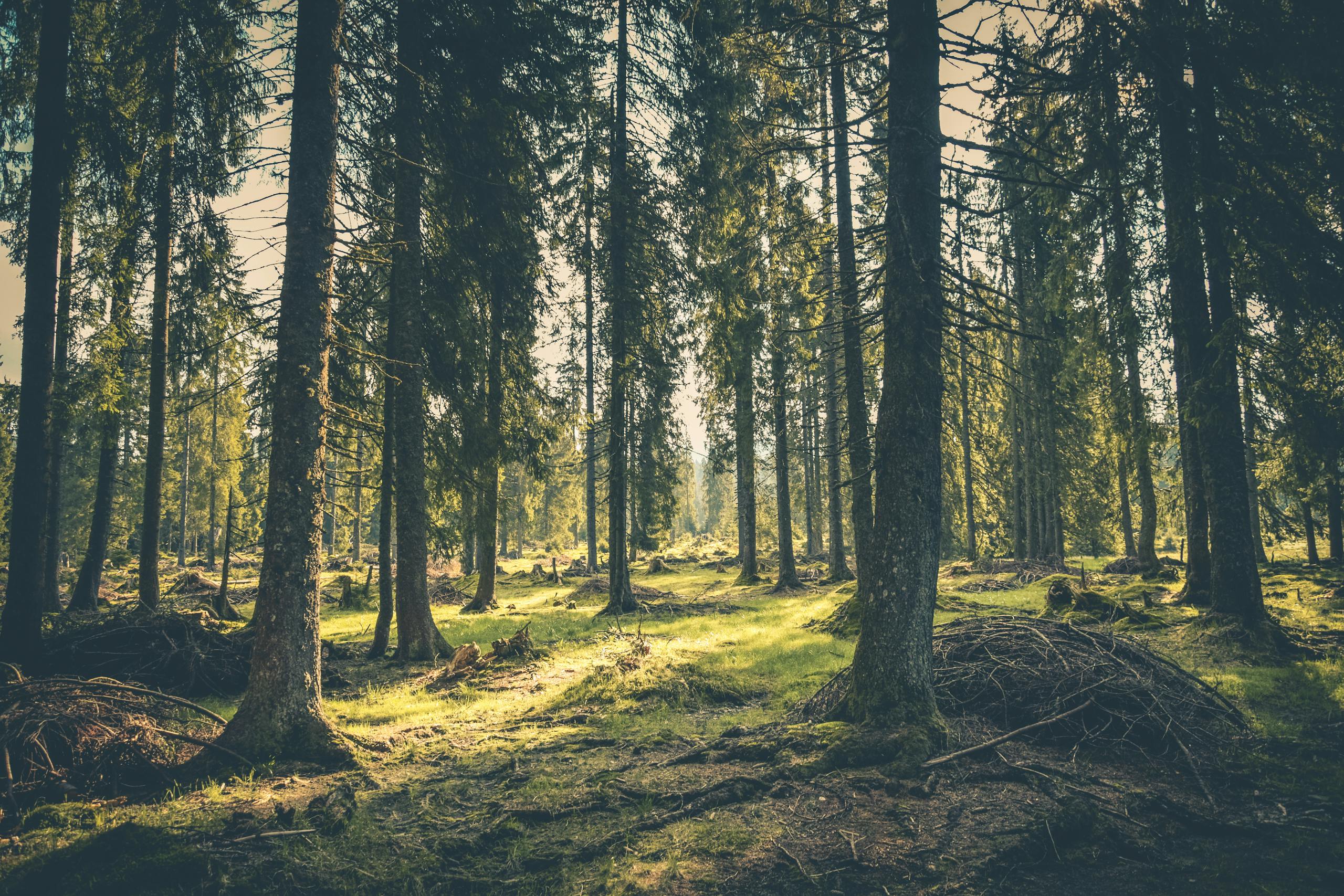

Reclusive introverts who feel drawn to forest living aren’t running away from life. They’re running toward something more aligned with how they’re actually wired. Solitude, natural quiet, and distance from social overstimulation aren’t signs of dysfunction. For deeply introverted people, these conditions are often what makes sustained creativity, clarity, and emotional wellbeing possible.
That distinction matters more than most people realize. There’s a wide gap between withdrawing because you’re struggling and choosing an environment that genuinely fits your nervous system. Forest living, for the right person, sits firmly in the second category.
Spend enough time in rooms full of people who expect you to perform, and eventually you start wondering what it would feel like to stop performing entirely. That question led me to think seriously about what introverts, especially deeply reclusive ones, actually need to function at their best. Not what they’re told they should want. What actually works for them.

Our broader exploration of introvert lifestyle choices covers a wide range of environments and living situations, but forest living occupies a specific and fascinating corner of that conversation. It’s where the psychology of solitude meets practical daily life, and where the needs of deeply introverted people become impossible to ignore.
Why Do Reclusive Introverts Feel Such a Strong Pull Toward Nature?
Not every introvert wants to live in the woods. But for those who do, the pull is rarely casual. It feels more like a correction, like the body and mind finally pointing toward something they’ve been missing for a long time.
What’s your personality type?
Take our free 40-question assessment and get a detailed personality profile with dimension breakdowns, context analysis, and personalised insights.
Discover Your Type8-12 minutes · 40 questions · Free
Part of that pull has a measurable basis. A 2019 study published by the National Institutes of Health found that spending time in natural environments significantly reduces cortisol levels and lowers physiological markers of stress. For people whose nervous systems are already working overtime in social and urban settings, that kind of relief isn’t a luxury. It’s closer to a biological need.
Deeply introverted people tend to process sensory input more thoroughly than their extroverted counterparts. Noise, crowds, fluorescent lighting, the constant ambient hum of city life, all of it gets processed at a level of depth that most people don’t experience. That depth is a genuine cognitive strength, but it comes with a cost. The more stimulation in the environment, the faster the mental battery drains.
Forests offer something almost uniquely suited to this kind of nervous system. The sounds are complex but not jarring. The visual field is rich but not demanding. There’s movement without urgency. A 2021 review from the American Psychological Association described nature exposure as one of the most consistently effective environmental interventions for restoring directed attention, the kind of focused cognitive capacity that introverts rely on heavily and that overstimulating environments deplete fastest.
Sitting with a client brief at 11 PM in my agency days, after a full day of meetings and presentations, I’d sometimes feel like my brain had been wrung out like a wet cloth. Nothing left. The kind of tired that sleep doesn’t fully fix. What I didn’t understand then was that the environment itself was a major part of the problem. Open offices, constant interruptions, back-to-back calls with no transition time between them. It was a system designed for people who refuel through interaction. I was being asked to run on a fuel source I didn’t have.
What Does Forest Living Actually Look Like for Deeply Introverted People?
There’s a version of this that lives in fantasy, a remote cabin with no neighbors, no obligations, no one expecting anything from you. And while that image resonates for a reason, the practical reality of forest living for introverts is both more grounded and more interesting than the fantasy suggests.
Most reclusive introverts who choose forest or rural living aren’t completely off the grid. They’re recalibrating the ratio. Less noise, fewer social obligations, more control over when and how they engage with the outside world. The forest becomes a base of operations rather than a hiding place.
What that looks like in practice varies considerably. Some people choose a small property at the edge of a rural town, close enough to access what they need, far enough to have genuine quiet. Others go further, choosing land with significant acreage and building routines that center around solitary work, creative projects, or simply being present in a natural environment without an agenda.

What the most sustainable versions of this lifestyle share is intentionality. People who thrive in forest settings tend to have thought carefully about what they actually need versus what they’re escaping. Those are different questions, and the answers shape very different outcomes.
An introvert who moves to the woods because they’re burned out from a toxic work environment may find temporary relief, but they’ll eventually encounter the same unresolved questions in a quieter setting. An introvert who moves because they’ve genuinely identified that solitude, nature, and reduced stimulation are conditions under which they do their best thinking and their most meaningful work, that person tends to build something sustainable.
Is Choosing Solitude a Sign of Something Wrong?
This is the question most reclusive introverts carry around quietly, often for years. Society sends a pretty consistent message that wanting to be alone, especially wanting it strongly and consistently, is a symptom of something that needs fixing. Social anxiety. Depression. Avoidant personality disorder. The diagnostic labels come easily when someone doesn’t fit the expected pattern of wanting more connection.
The distinction worth making is between solitude as a preference and isolation as a response to pain. Psychology Today has written extensively about this difference, noting that healthy solitude tends to be chosen freely and leaves people feeling restored, while problematic isolation is usually driven by avoidance and tends to compound distress rather than relieve it.
Reclusive introverts who genuinely thrive in low-contact environments typically report feeling more like themselves in solitude, not less. Their thinking is clearer. Their creative output increases. Their emotional regulation improves. These aren’t signs of dysfunction. They’re signs of a person operating in conditions that match their actual wiring.
That said, honest self-examination matters here. There were periods in my own life, particularly during the more brutal stretches of agency leadership, when I wanted to disappear not because solitude nourished me but because I was running on empty and had no idea how to stop. That kind of withdrawal is different. It’s worth knowing which one you’re in.
The Mayo Clinic distinguishes between introversion and social anxiety, pointing out that introverts generally don’t fear social situations so much as find them draining, while social anxiety involves genuine distress and avoidance rooted in fear of judgment. Forest living, for a healthy introvert, is an environmental preference. For someone with untreated anxiety, it can become a way of avoiding necessary growth. Knowing which situation applies to you is the most honest starting point.
What Are the Real Psychological Benefits of Living Close to Nature?
Beyond the general stress-reduction findings, the psychological case for nature-immersive living is more specific and more compelling than most people realize.
Attention Restoration Theory, developed by environmental psychologists Rachel and Stephen Kaplan, proposes that natural environments support a particular kind of mental recovery that urban environments actively prevent. The theory distinguishes between directed attention, the effortful focus required for most professional and social tasks, and involuntary attention, the effortless engagement that happens when something is genuinely interesting without being demanding. Natural environments are exceptionally good at engaging involuntary attention, which gives directed attention time to recover.
For introverts who do cognitively demanding work, whether creative, analytical, or strategic, this recovery cycle is essential. The work requires sustained directed attention. The environment needs to support its restoration. A forest setting does both in ways that most other environments simply don’t.
There’s also something worth noting about the quality of thought that emerges in genuinely quiet settings. Some of my clearest strategic thinking across two decades in advertising happened not in conference rooms but in the car between meetings, or on solitary walks, or in those rare moments when the office was empty and the building itself went quiet. The insights that shaped the best campaigns I worked on rarely came from brainstorming sessions. They came from uninterrupted reflection.
A 2020 study referenced by the National Institutes of Health found that people who spent at least two hours per week in natural settings reported significantly better health and wellbeing outcomes than those who didn’t, with effects that held across age groups, occupations, and socioeconomic backgrounds. Two hours per week is a low bar. Imagine what living in those settings does for the people whose minds are most responsive to them.
How Do Reclusive Introverts Maintain Meaningful Connection Without Losing Their Solitude?
This is probably the most practically important question for anyone seriously considering a more reclusive lifestyle. Complete isolation isn’t what most deeply introverted people actually want, even when they think they do. What they want is connection on their own terms, with people they’ve chosen, at a pace and depth that doesn’t deplete them.
Forest living doesn’t have to mean cutting off. It means redesigning the terms of engagement. Many reclusive introverts who’ve built sustainable lives in rural or forested settings describe a pattern of deep but infrequent connection. Long conversations with a small number of people they genuinely trust, rather than constant low-level social maintenance with a wide network.
That pattern maps directly onto what introversion research consistently finds about relationship quality. The American Psychological Association has noted that introverts tend to report higher satisfaction from fewer, deeper relationships than from broad social networks. The quantity-versus-quality distinction isn’t just a preference. It reflects a fundamentally different way of experiencing connection.
Managing Fortune 500 client relationships taught me something about this. The accounts that went well long-term weren’t the ones where we were constantly in contact. They were the ones where the contact we had was substantive, where both sides came prepared, where something real got discussed. The clients I trusted most were the ones I heard from less frequently but more meaningfully. That’s not a business insight. It’s just an accurate description of how depth works.
Reclusive introverts in forest settings often maintain connection through writing, correspondence, scheduled calls, or periodic visits that are planned and anticipated rather than spontaneous and draining. The intentionality itself is part of what makes the connection feel meaningful rather than obligatory.
What Practical Challenges Should Reclusive Introverts Expect?
Honest conversation about forest living has to include the parts that aren’t romantic. The logistical reality of rural and forested living comes with genuine friction, and some of that friction is harder for introverts than others.
Access to healthcare is one of the most significant practical considerations. The Centers for Disease Control and Prevention has documented persistent health disparities in rural communities, including reduced access to mental health services, specialist care, and emergency response. For someone managing a chronic condition or who benefits from regular therapeutic support, geographic distance from services is a real variable that deserves serious weight in the decision.
Income and work structure matter enormously. Forest living is far more viable now than it was even ten years ago, largely because remote work has become genuinely normalized across many industries. Still, the assumption that you can simply move to the woods and figure out the income piece later tends to create the kind of financial stress that undermines the very peace you moved there to find.

Property maintenance in rural and forested settings is also more demanding than most people anticipate. Heating systems, water sources, road access during winter, the physical infrastructure of rural living requires consistent attention and either the skills to handle problems yourself or the resources to hire people who can. Neither is a dealbreaker, but both require planning.
There’s also the question of what happens when solitude tips into loneliness. The two feel very different from the inside, and most reclusive introverts are good at telling them apart. Yet even people who genuinely thrive in solitude can find that extended periods without meaningful human contact start to feel hollow rather than peaceful. Having a clear sense of what your social floor actually is, the minimum connection you need to feel anchored, helps prevent the kind of slow drift that’s easy to miss until it’s become a problem.
How Can Introverts Know If Forest Living Is Right for Them?
There’s no single profile that predicts whether someone will thrive in a forest or rural setting. But certain patterns tend to show up consistently in the people who do.
People who do well in reclusive natural settings tend to have a strong relationship with their own inner life. They’re comfortable with silence not because nothing is happening, but because a great deal is happening internally. They tend to have creative or intellectual pursuits that sustain them across long stretches of solitary time. They’ve usually already experienced enough social environments to know, from direct experience rather than assumption, that those environments cost them more than they return.
A useful test before making a major life change is to spend an extended period, at least two or three weeks, in the kind of environment you’re considering. Not a vacation, which carries its own temporary relief regardless of setting, but a genuine trial run where you’re living the actual rhythms of that life. Working, cooking, handling logistics, spending evenings without a full social calendar. What that period reveals tends to be more accurate than any amount of imagining.
Reflecting on the times in my career when I had the most genuine clarity, the periods when I produced my best strategic work and felt most like myself, they were almost always characterized by some version of reduced noise and increased solitude. Not complete isolation, but a meaningful reduction in the ambient social demand of my days. That pattern, once I recognized it, told me something important about what I actually needed versus what I’d been taught to want.
A Harvard Business Review piece on the value of solitude for creative and strategic thinking noted that many of the most effective thinkers across fields deliberately structure their lives to include significant uninterrupted time. That’s not a personality quirk. It’s a professional practice. Harvard Business Review has written about how solitude supports the kind of reflective thinking that crowded, always-on environments actively suppress.
What Does Thriving Actually Look Like for a Reclusive Introvert?
Thriving for a reclusive introvert doesn’t look the way most productivity culture would define it. It’s not maximum output, constant growth metrics, or an optimized schedule. It tends to look quieter and more internal than that, which makes it easy to undervalue from the outside.
What it actually involves is a sustainable rhythm between deep work and genuine rest, between solitary engagement and chosen connection, between the internal world and the external one. The people who build this well tend to describe a quality of daily life that feels coherent, like the pieces fit together rather than pulling in different directions.

Creative output often increases significantly in these conditions. Not because the forest is magical, but because the conditions that support sustained creative work, low interruption, adequate recovery time, a nervous system that isn’t constantly managing overstimulation, are finally present. The work that was always there, waiting to emerge, finally has the space it needed.
Emotional regulation tends to improve as well. Not because problems disappear, but because the cognitive resources to process them are no longer being consumed by environmental noise. Introverts who’ve spent years feeling reactive or emotionally depleted in high-stimulation environments often discover, in quieter settings, that they’re actually quite steady. That steadiness was always there. It just couldn’t surface through the interference.
Spending years believing I wasn’t suited for leadership because I found the social performance of it so exhausting, and then eventually realizing that the exhaustion was about the environment rather than any fundamental incapacity, was one of the more clarifying experiences of my adult life. The same thing happens for reclusive introverts who finally find their way to environments that fit. The question shifts from “what’s wrong with me?” to “what was I doing in that environment to begin with?”
That shift is worth everything.
Find more perspectives on introvert lifestyle choices and personality-aligned living in our complete Introvert Lifestyle Hub at Ordinary Introvert.
About the Author
Keith Lacy is an introvert who’s learned to embrace his true self later in life. After 20 years in advertising and marketing leadership, including running agencies and managing Fortune 500 accounts, Keith now channels his experience into helping fellow introverts understand their strengths and build fulfilling careers. As an INTJ, he brings analytical depth and authentic perspective to every article, drawing from both professional expertise and personal growth.
Frequently Asked Questions
Is wanting to live in the forest a sign of depression or social anxiety?
Not necessarily. The desire for forest or rural living is often a genuine personality-based preference rather than a symptom of a mental health condition. Healthy solitude is freely chosen and leaves people feeling restored and more like themselves. Problematic isolation tends to be driven by avoidance and compounds distress rather than relieving it. Deeply introverted people frequently find that natural, low-stimulation environments support their best thinking, clearest emotional regulation, and most meaningful creative work. That said, if the pull toward isolation is accompanied by persistent low mood, loss of interest in things you once valued, or avoidance rooted in fear, speaking with a mental health professional is a worthwhile step.
Can reclusive introverts maintain healthy relationships while living remotely?
Yes, and many do so more successfully than they did in conventional social environments. Reclusive introverts tend to prioritize depth over frequency in relationships, which means fewer but more meaningful connections. Remote living often supports this pattern naturally, replacing obligatory social maintenance with intentional, substantive contact. Many people in rural or forested settings maintain close relationships through regular correspondence, scheduled calls, and periodic visits that feel anticipated rather than draining. The quality of connection tends to improve when both parties are fully present rather than fitting interaction into the margins of overscheduled lives.
What are the biggest practical challenges of forest living for introverts?
The most significant practical considerations include access to healthcare and mental health services, which are often limited in rural areas; reliable income, which requires either remote work arrangements or locally viable livelihood; and the physical demands of property maintenance in natural settings. Beyond logistics, the most common psychological challenge is distinguishing between healthy solitude and loneliness, which can develop gradually in extended low-contact environments. Having a clear sense of your minimum social needs and maintaining intentional connection with a small number of trusted people helps prevent the kind of slow drift that’s easy to miss until it’s become a genuine problem.
How do you know if you’re genuinely suited for reclusive forest living?
People who tend to thrive in reclusive natural settings share a few consistent characteristics. They have a strong, comfortable relationship with their own inner life and don’t experience silence as threatening or empty. They have creative, intellectual, or contemplative pursuits that sustain them across long stretches of solitary time. They’ve had enough experience in social and urban environments to know, from direct experience, that those environments cost them more than they return. The most reliable test is an extended trial period of at least two to three weeks in the kind of setting you’re considering, living the actual rhythms of that life rather than treating it as a vacation, and paying close attention to how your energy, creativity, and emotional state respond.
Does living in nature actually improve mental health for introverts?
The evidence supporting nature’s positive effects on mental health is substantial and consistent across studies. Natural environments reduce cortisol levels, restore directed attention capacity, and lower physiological stress markers in ways that urban environments typically don’t. For introverts whose nervous systems process sensory input more deeply, the lower stimulation load of forested settings provides meaningful relief that allows cognitive and emotional resources to recover rather than remaining constantly depleted. A 2020 study found that spending at least two hours per week in natural settings produced significantly better health and wellbeing outcomes across diverse populations. For people who live in these settings rather than simply visiting them, the cumulative effects on clarity, creativity, and emotional steadiness tend to be considerably more pronounced.