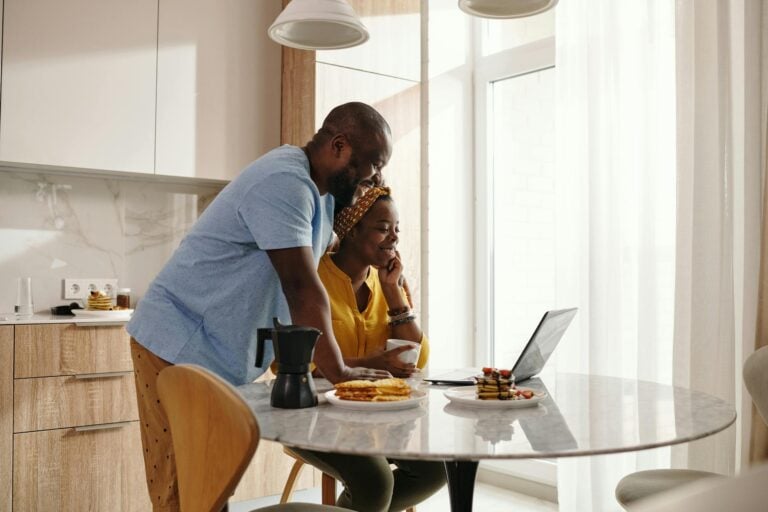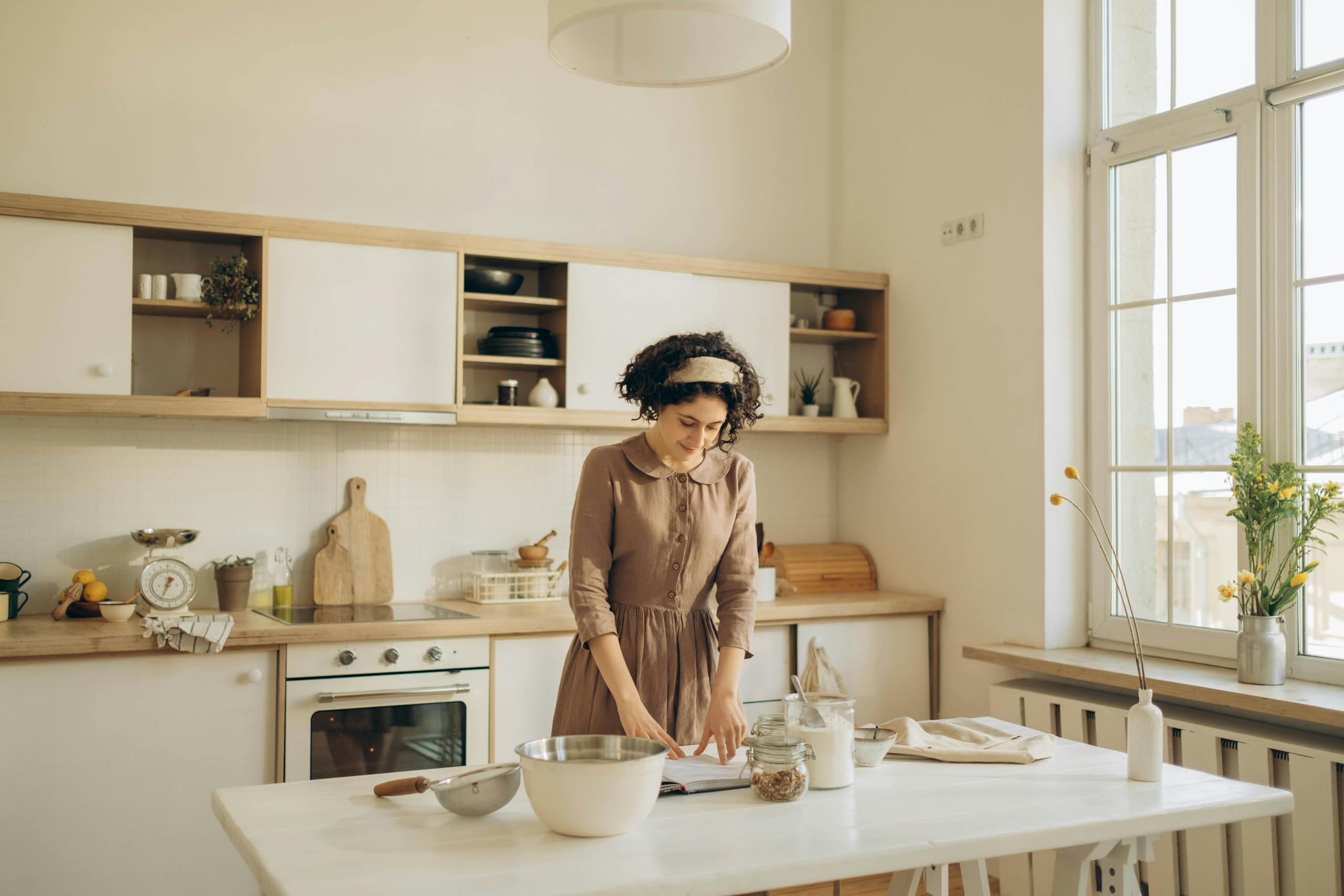

Being a homebody isn’t a personality flaw. It’s a legitimate lifestyle choice made by millions of people who simply find more meaning, comfort, and genuine pleasure inside their own walls than out in the noise of the world. Yet somewhere along the way, society decided that preferring your couch to a crowded bar made you antisocial, depressed, or somehow broken.
You’re not broken. You’re wired differently, and that difference deserves defense, not apology.
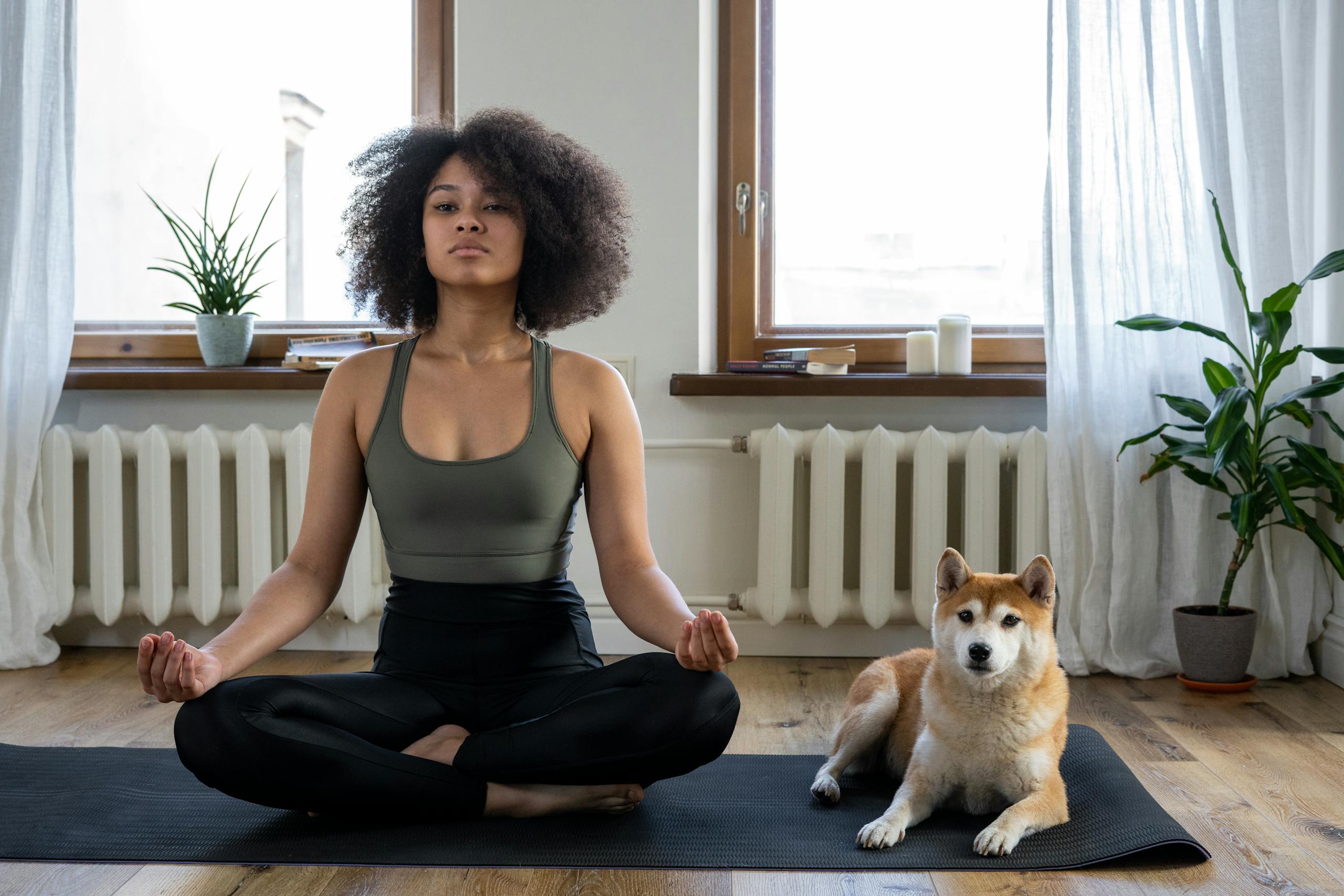
Our Introvert Home Environment hub covers everything from designing a restorative space to building rituals that actually recharge you, and this piece adds something that hub doesn’t quite say out loud: you have every right to be angry when people dismiss your homebody lifestyle as something to fix.
Why Does Society Treat Homebodies Like a Problem to Solve?
My advertising career ran on social performance. Pitch meetings, client dinners, agency parties, industry conferences. For over two decades, I showed up to all of it, smiled through most of it, and came home absolutely hollowed out. The expectation was clear: successful people are visible people. They network. They circulate. They are seen.
What’s your personality type?
Take our free 40-question assessment and get a detailed personality profile with dimension breakdowns, context analysis, and personalised insights.
Discover Your Type8-12 minutes · 40 questions · Free
Nobody ever said, “Keith, maybe you do your best thinking alone.” Nobody rewarded the three-hour strategy session I had with myself on a Saturday morning that produced the campaign concept we eventually sold to a Fortune 500 client. What got noticed was who showed up at the industry mixer afterward.
That’s the cultural bias we’re dealing with. Western society, particularly American culture, has built its mythology around extroverted behavior. The idea that a full life requires constant outward engagement is so deeply embedded that many people genuinely cannot conceive of someone choosing to stay home as anything other than avoidance or fear.
So when you tell someone you’d rather spend Friday night reading, cooking a new recipe, or simply existing quietly in your own space, they hear something you didn’t say. They hear “I’m struggling.” They hear “I need help.” They hear “I’m missing out and don’t know it.” And then they appoint themselves your social rescue team, which is both exhausting and condescending.
What Does Being a Homebody Actually Mean?
A homebody is someone who genuinely prefers the domestic environment over frequent social outings. Not someone who is afraid of people. Not someone who has given up on life. Someone who finds their most authentic experience of living happens within the spaces they’ve created and curated for themselves.
There’s a meaningful distinction worth making here. Choosing to stay home because you love being home is categorically different from staying home because anxiety or depression makes leaving feel impossible. Both experiences are real and valid, but they are not the same thing. The conflation of the two is part of what fuels the judgment homebody introverts face constantly.
Psychological wellbeing research has examined what actually makes people feel satisfied and restored. Work published in PMC points to the importance of autonomy and self-determination in life satisfaction. Choosing how you spend your time, including choosing to spend it at home, is a fundamental expression of that autonomy. It’s not withdrawal. It’s agency.

My homebody couch is not a metaphor for defeat. It’s where some of my sharpest thinking happens. It’s where I’ve worked through complex problems, read things that changed how I see the world, and had conversations with my family that I would have missed entirely if I’d been out “networking” instead.
Who Gets to Judge How You Spend Your Time?
Somewhere in my early agency years, I had a business partner who was a textbook extrovert. Loud, magnetic, always moving toward the next social opportunity. He genuinely couldn’t understand why I didn’t want to join him at every event, every happy hour, every spontaneous gathering. His feedback was always framed as concern: “You’re going to miss out,” he’d say. “You need to be out there.”
What he was really saying was: “You need to be out there the way I’m out there.” His metric for a well-lived professional life was his own metric, and he was applying it to someone with a completely different operating system.
This is the core of the judgment problem. People who thrive on external stimulation genuinely cannot imagine that someone else’s nervous system works differently. They’re not always being malicious. Many are being sincere. But sincerity doesn’t make the judgment less intrusive or less wrong.
As an INTJ, I process the world through internal frameworks. I observe, I analyze, I synthesize, and then I act. That process requires space and quiet. It requires time that looks, from the outside, like nothing is happening. When someone judges that stillness as laziness or social failure, they’re misreading the entire situation.
Psychology Today has explored how introverts often crave deeper, more meaningful conversations rather than frequent surface-level socializing. That preference isn’t a deficit. It’s a different set of values around human connection, and those values are just as legitimate as the extroverted preference for breadth of social contact.
The Specific Ways People Judge Homebodies (And Why Each One Is Wrong)
Let me name the judgments directly, because vague defensiveness doesn’t help anyone. These are the actual things people say, and they deserve actual responses.
“You’re Going to Regret Not Getting Out More”
This one assumes that the speaker’s version of a life worth living is the correct version. It treats social experiences as inherently more valuable than solitary ones, which is a cultural preference masquerading as universal truth. Many homebodies have rich inner lives, deep creative practices, and meaningful relationships. They’re not accumulating regrets. They’re accumulating exactly what they value.
“You’re Antisocial”
Antisocial is a clinical term that refers to a disregard for others’ rights and wellbeing. Preferring to stay home is not antisocial. Most homebodies care deeply about the people in their lives. They simply prefer connection in smaller doses, in more controlled environments, on their own terms. Those of us who find genuine connection through online spaces and chat communities know that meaningful human contact doesn’t require leaving the house.
“You Must Be Depressed”
This conflation is perhaps the most damaging. Depression is a serious mental health condition that deserves proper attention and care. Introversion and homebody preferences are personality traits. Treating them as symptoms of illness pathologizes normal human variation and, frankly, trivializes actual depression in the process. Someone who is thriving, productive, creative, and genuinely content at home is not depressed simply because they’re at home.
“You’re Wasting Your Youth / Life / Best Years”
Wasting according to whom? The assumption embedded in this judgment is that youth must be spent in loud, crowded, outward-facing ways to count as properly lived. Some of the most meaningful experiences of my adult life happened in quiet rooms. Books that rewired my thinking. Conversations at my own kitchen table that went deeper than any conference networking session ever did. Solitude that produced genuine clarity.

How Highly Sensitive People Experience the Homebody Judgment Differently
Not every homebody is an introvert, and not every introvert is a highly sensitive person, but there’s significant overlap in all three categories. For those who identify as HSPs, the judgment hits differently because their nervous system is genuinely more reactive to external stimulation. What feels like “a fun night out” to a non-HSP can feel physically and emotionally overwhelming to someone whose sensory processing is calibrated at a higher sensitivity.
The approach of HSP minimalism resonates here precisely because simplifying your environment and your social calendar isn’t avoidance for sensitive people. It’s a legitimate strategy for sustainable functioning. When the world consistently overstimulates you, choosing a quieter life isn’t giving up. It’s self-knowledge in action.
Research published through PMC has examined how individual differences in sensory processing sensitivity affect how people respond to their environments. The data supports what many HSPs already know intuitively: some nervous systems genuinely require more downtime and environmental control to function well. Judging that need as weakness is like judging someone for needing glasses.
Building a Home Environment That Defends Itself
One of the most powerful things a homebody can do is stop apologizing for their space and start investing in it deliberately. When your home is genuinely wonderful to be in, the case for staying there makes itself. You don’t need to defend your lifestyle to someone who can see that you’ve built something worth being present in.
This isn’t about spending money you don’t have. It’s about intentionality. What makes a space feel restorative to you specifically? For me, it’s natural light, a well-organized workspace, and enough physical quiet that my mind can actually move at its own pace. I spent years in open-plan offices with ambient noise and constant interruption, and the contrast taught me exactly what I needed at home.
If you’re looking for ideas on creating a genuinely comfortable homebody environment, a good homebody gift guide can surface things you might not have thought to invest in for yourself. Sometimes the best home upgrades come from treating yourself the way you’d treat someone you love.
The same goes for what you keep in your space. A thoughtfully chosen homebody book on your shelf isn’t just reading material. It’s a signal to yourself and to anyone who visits that you take your inner life seriously. That you’ve built a home that reflects who you actually are, not who you’re supposed to perform being.

What to Say When Someone Judges Your Homebody Lifestyle
You have options beyond silent resentment and defensive arguments. consider this I’ve found actually works, drawn from years of managing these conversations in professional settings where my preference for solitude was constantly misread as disengagement.
Own it without hedging. “I genuinely love being home” lands very differently than “I know it’s probably weird, but I kind of prefer staying in.” The first statement is confident and complete. The second invites the other person to agree with your self-deprecation. Don’t hand them that opening.
Redirect with curiosity. When someone says “you need to get out more,” a useful response is a genuine question: “What makes you think that?” Most people haven’t actually examined the assumption underneath their advice. Asking them to articulate it often reveals that it’s based on projection rather than any real concern for you.
Set the terms of the conversation. You don’t owe anyone a full explanation of your nervous system or your personality type. “This is what works for me” is a complete sentence. Conflict resolution approaches that center on expressing your own experience clearly, as Psychology Today explores in this piece on introvert-extrovert dynamics, tend to be more effective than trying to convince someone their worldview is wrong.
Stop explaining yourself to people who aren’t listening. Some people will never understand a preference they don’t share. That’s their limitation, not your problem to solve. You can be warm and clear and firm all at once. “I appreciate that you’re thinking about me. I’m genuinely happy with how I spend my time” closes the loop without hostility.
The Gifts You Give Yourself as a Homebody
There’s a version of this conversation that focuses entirely on defense, on pushing back against judgment, on arguing for validity. That’s necessary sometimes. But there’s something equally important: recognizing what the homebody lifestyle actually gives you that the relentlessly social lifestyle doesn’t.
You know yourself better. Solitude is where self-knowledge happens. When you’re not constantly performing for an audience or calibrating your behavior to social expectations, you get to find out what you actually think, feel, and want. That self-knowledge compounds over time into something genuinely valuable.
Your relationships tend to be deeper. When you’re selective about your social time, the connections you do invest in carry more weight. I’ve watched colleagues maintain hundreds of shallow professional relationships and struggle to name five people they could call in a real crisis. Homebodies, in my experience, tend to have fewer but far more substantial bonds.
You’re building something. The hours you spend at home aren’t empty hours. They’re hours spent reading, creating, thinking, resting, cooking, building skills, maintaining your space, developing your inner life. That’s not nothing. That’s a life being constructed with intention rather than filled with distraction.
If the people in your life have asked what to get you for birthdays or holidays, sending them toward a curated list of gifts for homebodies is genuinely useful. It signals that your lifestyle is worth supporting, not fixing, and it tends to produce gifts that actually enhance your life rather than push you toward someone else’s version of it.
When the Judgment Comes From Inside the House
Sometimes the harshest critic of your homebody lifestyle is you. After years of absorbing the cultural message that staying in makes you lesser, many homebodies have internalized that judgment so thoroughly that they feel guilty every time they choose the couch over the invitation.
That guilt deserves examination. Is it coming from genuine evidence that your lifestyle isn’t working for you? Or is it coming from a cultural script you never actually agreed to follow?
Midway through my agency career, I went through a period of forcing myself to attend every event, accept every invitation, and perform enthusiasm I didn’t feel. I told myself it was professional development. In retrospect, it was self-abandonment. I was so convinced that my natural preference was wrong that I spent years overriding it, and the cost showed up in my work, my health, and my relationships.
The research on introversion and wellbeing, including work examined through Frontiers in Psychology, increasingly points toward the importance of person-environment fit. When your lifestyle aligns with your actual temperament, you function better across every dimension. When it doesn’t, the friction accumulates into something that looks a lot like burnout.
Choosing your home isn’t giving up. It’s alignment. And alignment is something worth protecting fiercely.

The Broader Case for Letting People Live
At its core, judging someone’s homebody lifestyle is a failure of imagination. It requires assuming that your own preferences are the correct ones, that the way you find meaning and restoration is the way everyone should find it, and that deviation from your model represents a problem rather than a difference.
Most of us would reject that logic if it were applied to food preferences or creative interests. Nobody argues that someone who prefers reading to watching sports is broken. Yet somehow the introvert homebody who prefers their living room to a bar still gets treated as a project.
The extrovert who thrives on constant social contact isn’t wrong. They’re right, for themselves. Extending that same courtesy to homebodies isn’t a radical ask. It’s basic respect for human variation.
Some of the most creative, productive, and genuinely fulfilled people I’ve encountered in my career were the ones nobody saw at the parties. They were home, doing the work, living the life they’d actually chosen. They didn’t need anyone’s approval to feel good about that. And neither do you.
There’s a lot more to explore about creating a home environment that truly supports your introvert nature. The full Introvert Home Environment hub covers everything from sensory design to routines that restore rather than drain.
About the Author
Keith Lacy is an introvert who’s learned to embrace his true self later in life. After 20 years in advertising and marketing leadership, including running agencies and managing Fortune 500 accounts, Keith now channels his experience into helping fellow introverts understand their strengths and build fulfilling careers. As an INTJ, he brings analytical depth and authentic perspective to every article, drawing from both professional expertise and personal growth.
Frequently Asked Questions
Is being a homebody a sign of depression or social anxiety?
Not inherently. Preferring to spend time at home is a personality trait and lifestyle choice, not a symptom. Depression and social anxiety are distinct conditions that require proper attention, but they are not the same as introversion or a genuine preference for domestic life. Someone can be a thriving, content homebody without any underlying mental health concerns. If staying home feels like escape from fear rather than a genuine preference, that distinction is worth exploring with a professional.
How do I respond when friends and family pressure me to go out more?
Own your preference without apologizing for it. “I genuinely love being home” is a complete and confident answer. You can also redirect the conversation by asking what specifically concerns them, which often reveals that the pressure is based on projection rather than real concern for your wellbeing. Setting clear, warm boundaries without extensive explanation tends to be more effective than lengthy justifications.
Can you be a homebody and still have meaningful relationships?
Absolutely. Homebodies often cultivate fewer but significantly deeper relationships than those who spread their social energy widely. Meaningful connection doesn’t require constant outward socializing. Many homebodies maintain rich friendships through intentional one-on-one time, online connection, and the kind of focused attention they’re able to give precisely because they’re not overextended socially.
Is the homebody lifestyle compatible with professional success?
Yes, and in many fields it’s an advantage. Deep focus, independent thinking, thorough preparation, and the kind of strategic clarity that comes from regular solitude are all traits that show up in high-performing professionals across industries. The cultural myth that visibility equals success is increasingly challenged by evidence that quiet, focused contributors often produce disproportionate results. Many introverts find that aligning their work environment with their temperament is what finally allows their real capabilities to show up.
How can I make my home environment better support my homebody lifestyle?
Start with intentionality. Identify what specifically makes you feel restored in your space, whether that’s natural light, quiet, visual simplicity, or dedicated areas for different activities, and invest in those elements deliberately. Removing clutter, creating a comfortable reading or thinking space, and curating your environment to reflect your actual values rather than what you think a home “should” look like can make a significant difference in how much your home genuinely supports you.