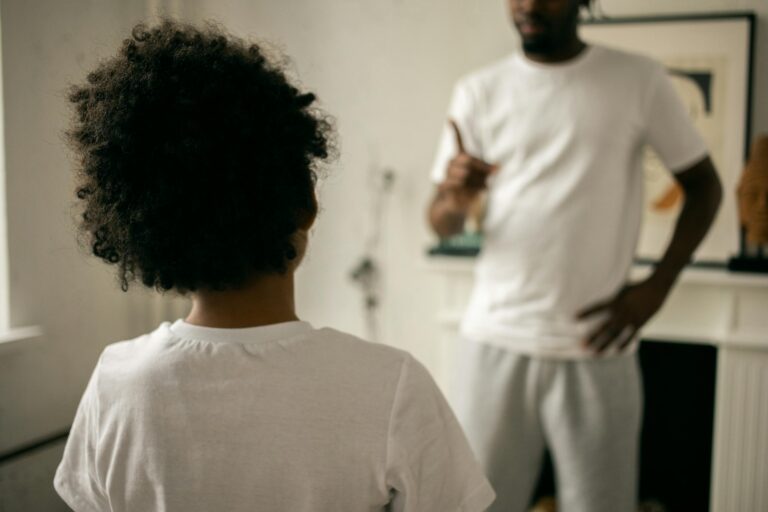

A funny award for a quiet person can be one of the most revealing things a family or workplace ever hands out. Whether it lands as a loving joke or an accidental sting, those little certificates and gag trophies tell you exactly how the people around you interpret your silence, your stillness, and your preference for depth over noise. And if you’re the quiet one receiving that award, you probably felt something complicated the moment everyone laughed.
Quiet people are rarely just quiet. There’s an entire interior world running beneath the surface, cataloguing observations, weighing words, and processing meaning in ways that don’t always translate into visible social performance. A gag award can honor that, or it can inadvertently reduce it to a punchline.

If you’re exploring how introversion, temperament, and personality shape the way families relate to each other, our Introvert Family Dynamics and Parenting hub covers the full range of those dynamics, from how quiet parents raise children to how personality differences create friction and closeness in equal measure. This article adds a more specific layer: what it actually means when a family or group singles out the quiet person for a laugh.
Why Do Groups Feel the Need to Award Their Quietest Member?
Humor is often how groups process what they don’t fully understand. I saw this play out constantly in the advertising world. Every agency I ran had its own ecosystem of personalities, and without fail, the quietest person on the team eventually became the subject of some kind of running joke. Not always mean-spirited. Sometimes genuinely affectionate. But always revealing.
What’s your personality type?
Take our free 40-question assessment and get a detailed personality profile with dimension breakdowns, context analysis, and personalised insights.
Discover Your Type8-12 minutes · 40 questions · Free
One year, my creative team put together an end-of-year awards ceremony. Someone had designed actual printed certificates. One of my senior strategists, a deeply thoughtful woman who spoke maybe a dozen words in any given meeting but whose written briefs were consistently the sharpest documents in the building, received the “Most Likely to Be Thinking Something Brilliant But Not Telling Anyone” award. The room laughed. She smiled tightly. Later, she told me it felt like being appreciated and dismissed in the same breath.
That moment stuck with me. Because I recognized it. As an INTJ who spent the better part of two decades trying to perform extroversion for clients and board rooms, I had been on the receiving end of similar comments my whole career. “You’re so hard to read.” “Do you ever get excited about anything?” “You were so quiet in that pitch, I couldn’t tell if you liked the work.” The subtext was always the same: your internal processing is inconvenient for us.
According to the National Institutes of Health, temperament traits associated with introversion appear early in life and show meaningful continuity into adulthood. The quiet child at the family reunion who hides behind a parent and the quiet adult who disappears from the party early are often the same person, just older. Families notice this pattern across years. And sometimes they commemorate it with a certificate.
What Makes a Funny Award Land Well Versus Land Wrong?
There’s a real difference between an award that celebrates a quiet person’s particular way of being and one that gently mocks them for failing to be louder. The distinction matters more than most people realize in the moment they’re handing over the trophy.
An award that lands well tends to name something specific and true. “Best Observer in the Room” works because it frames attentiveness as a skill. “Most Likely to Have Already Noticed What You Just Said” works because it acknowledges that quiet people are often several steps ahead. “Deepest Thinker at the Table” works because it positions the trait as an asset rather than an absence.
An award that lands wrong tends to frame quietness as a deficit or a failure to show up. “Most Invisible,” “Least Likely to Be Remembered,” or even the seemingly harmless “Best at Disappearing” can carry an edge that the recipient feels even when the giver didn’t intend it. Humor about absence, about not being enough, about being forgettable, cuts differently for people who have spent their lives being told they should be more.
Part of what shapes how a quiet person receives these moments is their own relationship with their personality. Someone who has done real work understanding themselves, perhaps through something like the Big Five Personality Traits test, tends to have a clearer sense of where their introversion ends and their anxiety or sensitivity begins. That self-knowledge changes how much a gag award can rattle you.

I’ve watched this play out differently depending on who was receiving the award. The people who laughed most freely at their own “quiet person” certificates were usually the ones who had made peace with how they moved through the world. The ones who went quiet in a different way, who smiled and tucked the certificate away quickly, were often still carrying some version of the message that their quietness was a problem to be solved.
How Does the Family System Shape the Quiet Person’s Experience?
Families are the original personality laboratories. Long before any workplace hands out a gag award, most quiet people have already been categorized, labeled, and assigned a role within their family system. The shy one. The bookworm. The one who needs to come out of their shell. These labels calcify over time, and they shape how family humor lands decades later.
Psychology Today’s overview of family dynamics points to the way roles within families become self-reinforcing over time. The quiet child learns to be quieter because their quietness gets noticed and named. The loud sibling fills more space because the quiet one has vacated it. By the time everyone is adults gathering at Thanksgiving, the roles are so embedded that a funny award feels like confirmation of something that was decided long ago.
My own family had this dynamic. I was the one who sat at the edge of things, watching, absorbing, filing away observations I rarely shared out loud. My siblings were louder, funnier in the conventional sense, quicker to fill a room with noise. At family gatherings I was the one who ended up in long one-on-one conversations in the kitchen while everyone else was in the living room. For years I thought something was wrong with me. It took a long time to understand that I wasn’t failing at the party. I was having a different, and for me richer, experience of it.
Quiet parents face a version of this dynamic with their own children. The experience of raising kids while managing your own need for stillness and depth is its own particular challenge. If you’re a highly sensitive parent working through those layers, the piece on HSP parenting and raising children as a highly sensitive parent gets into the specifics of that experience in a way that might resonate.
What makes family humor about quietness complicated is that it carries the full weight of that history. A coworker’s gag award is one thing. A family’s version of the same joke is layered with thirty years of Christmas dinners, report cards, and the look your mother gave you when you didn’t speak up at the table. That’s a lot to compress into a certificate.
What Are the Best Funny Award Ideas for a Quiet Person?
If you’re on the giving end of this, the goal is to make the quiet person feel seen rather than exposed. There’s a meaningful difference. Feeling seen means someone noticed the specific texture of who you are. Feeling exposed means someone reduced you to a single trait and made it the joke.
Some award ideas that tend to land with warmth rather than edge:
- The Depth Charge Award: For the person who says one thing and means seventeen.
- Most Likely to Have Already Read the Room: For the observer who clocked every dynamic before anyone else noticed there was one.
- The Quiet Storm Certificate: For the person whose stillness contains more energy than most people’s noise.
- Best Internal Monologue: For the one whose thoughts, if spoken aloud, would have been the most interesting conversation at the table.
- The Still Waters Award: For the person who runs deeper than they let on.
- Most Likely to Have Solved the Problem Before Anyone Finished Explaining It: For the quiet strategist who was three steps ahead the whole time.
- The Thoughtful Pause Champion: For the person who actually thinks before speaking, a radical act in most group settings.
What these have in common is that they frame the quiet person’s traits as active rather than passive. Quietness isn’t an absence of something. It’s a presence of something else: attention, depth, processing power, emotional attunement. Awards that capture that distinction tend to be received with genuine warmth.

There’s also something worth considering about whether the quiet person in your life actually wants to be singled out at all. Some quiet people have a warmth and social ease that makes them genuinely enjoy being the center of a good-natured joke. Others find any public spotlight uncomfortable, even a flattering one. Taking a moment to consider what that person actually enjoys, rather than what the group finds entertaining, is itself a form of seeing them clearly.
That question of how likeable someone comes across in social settings, and what shapes that perception, is something the likeable person test explores in interesting ways. Quiet people often score differently than they expect on those kinds of assessments, because likeability and visibility are not the same thing, even though groups tend to conflate them.
How Does Receiving This Kind of Recognition Affect a Quiet Person?
The emotional experience of receiving a funny award as the quiet person in the group is more layered than it probably looks from the outside. On the surface, most quiet people will smile, maybe laugh, say something self-deprecating, and move on. Internally, the processing takes considerably longer.
Part of what gets activated is the old question: am I being appreciated or tolerated? Quiet people, especially those who grew up in families or schools where their temperament was treated as something to overcome, often carry a low-level vigilance about how their quietness is being received. A funny award can trigger that vigilance even when it was meant entirely affectionately.
There’s also the question of what the award reveals about how the group actually sees you. In my agency years, I paid close attention to the gag awards that circulated at holiday parties and end-of-year events. They were remarkably accurate personality assessments disguised as jokes. The person who got “Most Likely to Still Be Working at Midnight” was, in fact, the one carrying the most anxiety about performance. The person who got “Best at Pretending to Listen in Meetings” was, in fact, checked out in ways that were becoming a real problem. Humor was the group’s way of naming what it couldn’t say directly.
For the quiet person, that dynamic cuts both ways. The award might be naming something true and affirming. It might be naming something true and uncomfortable. It might be naming something the group has misread entirely. Figuring out which one requires the kind of self-knowledge that takes time to build.
Some quiet people carry emotional patterns that go deeper than introversion. If someone consistently finds social recognition, even warm and well-intentioned recognition, destabilizing or difficult to process, it might be worth exploring whether there are other factors at play. The borderline personality disorder test is one resource for people trying to understand whether their emotional responses to social situations reflect something beyond temperament.
That’s not to pathologize the quiet person who feels ambivalent about their gag award. Ambivalence is a completely reasonable response. It’s just worth knowing the difference between “this activated something old and familiar” and “this is genuinely fine and I’m overthinking it.” Quiet people, in my experience, are often very good at the former and less practiced at the latter.
What Does This Look Like in a Workplace Context?
The workplace version of the funny award for a quiet person has its own specific texture. In families, the humor is layered with decades of shared history. At work, it’s layered with power dynamics, professional identity, and the particular vulnerability of being seen as something other than competent.
Quiet people in professional settings often work harder than anyone realizes to be taken seriously. They prepare more thoroughly. They choose their words with more precision. They contribute in ways that don’t always register in the moment but compound over time. A gag award that reduces all of that to “the quiet one” can feel like it erases the work.
At the same time, workplaces that have genuinely good cultures often use humor to create belonging, and quiet people can be part of that if the humor is done right. Some of the most cohesive teams I built over my career had a shared comedic language that included everyone, including the quietest members. The difference was that the humor was never punching at someone’s core identity. It was celebrating the specific, idiosyncratic ways each person showed up.
There’s also something worth noting about the kinds of roles quiet people tend to gravitate toward and how those roles shape the award culture around them. Quiet people often end up in positions that require sustained focus, careful attention to individuals, and deep listening. Roles in caregiving, coaching, and support functions often attract people with this temperament. Someone exploring whether a caregiving role suits their personality might find the personal care assistant test online a useful starting point for thinking through that fit.
Similarly, quiet people who are drawn to one-on-one coaching and mentoring roles, whether formal or informal, often bring a quality of presence that more performatively energetic people can’t replicate. The certified personal trainer test is another example of a role-fit assessment that can help quiet people understand how their temperament translates into professional strengths rather than liabilities.

The broader point is that workplace humor about quiet people reflects the culture’s actual relationship with introversion. In cultures that genuinely value depth and thoughtfulness, the quiet person’s award tends to be one of the most coveted of the night. In cultures that still equate volume with value, it tends to carry an edge that everyone pretends not to notice.
Can a Funny Award Actually Change How a Quiet Person Sees Themselves?
Sometimes, yes. And that’s worth taking seriously.
There’s something powerful about having your specific way of being named and celebrated by a group, even in a light-hearted way. For quiet people who have spent years feeling like their temperament was something to apologize for, a well-crafted funny award can function as a small but genuine reframe. It says: we see this thing about you, and we think it’s worth honoring.
I’ve seen this happen. A junior account manager on one of my teams, someone who had been consistently underestimated in client meetings because she rarely spoke up in groups, received an award at our year-end event that called her “The Person Who Said Three Words and Changed the Direction of the Whole Project.” It referenced a specific moment everyone remembered. She had sat through forty-five minutes of circular debate, said one precise sentence, and the room had immediately realigned around her point.
That award did something. Not because it was a certificate, but because it named something real in front of the people whose opinion mattered to her. She walked differently after that. Not louder, but more settled. More willing to trust that her way of contributing had value even when it didn’t look like everyone else’s.
The science of temperament supports the idea that these early-life and career-shaping experiences have real staying power. Research published in PubMed Central on personality and social behavior points to the way social feedback shapes self-perception over time, particularly for people who are more internally oriented and therefore more dependent on occasional external validation to calibrate their sense of how they’re landing.
There’s also something in the literature on personality and interpersonal relationships about how being accurately perceived by others is itself a form of intimacy. Most quiet people don’t need to be the center of attention. They need to feel that someone has actually looked at them carefully enough to see what’s there. A funny award that does that, that reflects genuine observation rather than lazy categorization, can be surprisingly meaningful.
What Should the Quiet Person Do With the Award Once They Have It?
My honest answer: whatever feels right. And that’s not a non-answer. It’s actually the point.
Quiet people spend a lot of energy calibrating their responses to what the group needs. Laughing loud enough to signal they’re not offended. Displaying the certificate long enough to seem appreciative. Performing the appropriate level of self-deprecating humor so no one feels awkward about having given it. All of that performance is exhausting, and it’s also unnecessary.
If the award genuinely landed well and you want to display it, display it. If it activated something you want to think about privately, think about it privately. If you want to have a quiet conversation with the person who gave it to you about what they actually meant by it, have that conversation. Quiet people are often at their best in exactly those kinds of direct, one-on-one exchanges anyway.
What I’d push back on is the impulse to minimize it entirely, to tuck it away immediately and signal that you’re unbothered when you’re actually processing something. That processing is legitimate. It’s also, characteristically, happening at a depth that the rest of the room probably isn’t aware of.
The 16Personalities piece on introvert-introvert relationships makes an interesting point about how quiet people sometimes struggle most in relationships with other quiet people, precisely because both parties are doing so much internal processing that neither one surfaces it. A funny award in a group of introverts can land in a room full of people having complicated private reactions and showing almost none of them. Which is its own kind of funny, if you think about it.

What I’ve come to believe, after years of watching quiet people receive recognition in various forms, is that the most useful thing a funny award can do is open a door. Not to a conversation the quiet person has to have in public, in front of the group, on the spot. But to a longer, slower recognition that their particular way of being is worth something. That the stillness is not a failure. That the depth is not a deficiency. That the person who says less and means more has always been contributing, even when the group couldn’t see it clearly enough to name it.
There’s a lot more to explore on how introversion shapes family life, parenting, and the relationships we build across a lifetime. Our Introvert Family Dynamics and Parenting hub is the place to keep reading if these questions resonate with you.
About the Author
Keith Lacy is an introvert who’s learned to embrace his true self later in life. After 20 years in advertising and marketing leadership, including running agencies and managing Fortune 500 accounts, Keith now channels his experience into helping fellow introverts understand their strengths and build fulfilling careers. As an INTJ, he brings analytical depth and authentic perspective to every article, drawing from both professional expertise and personal growth.
Frequently Asked Questions
What is a good funny award for a quiet person?
A good funny award for a quiet person names something specific and true about how they show up, framing their quietness as an active quality rather than an absence. Awards like “Best Observer in the Room,” “Most Likely to Have Already Read the Room,” or “The Still Waters Award” tend to land with warmth because they position attentiveness and depth as strengths. Avoid awards that frame the quiet person as forgettable or invisible, even if the intent is playful.
Why do quiet people get singled out for awards at family gatherings or work events?
Groups often use humor to name what they don’t fully understand, and quiet people stand out precisely because their way of being differs from the more visible social norms of most group settings. At family gatherings, the quiet person has often held that role for decades, and a gag award can feel like confirmation of a label that was assigned long ago. At work, the humor reflects the culture’s actual relationship with introversion, whether it genuinely values depth or still equates volume with contribution.
How should a quiet person respond when they receive a funny award?
There’s no single right response, and quiet people often exhaust themselves trying to perform the reaction the group expects. If the award landed well and felt genuinely affirming, receiving it warmly is perfectly appropriate. If it activated something more complicated, processing that privately is equally valid. The most important thing is to resist the impulse to minimize a real reaction just to make the group comfortable. Quiet people are allowed to have layered responses to being publicly named, even in a light-hearted context.
Can a funny award actually be meaningful to an introverted person?
Yes, and sometimes more meaningful than the giver realizes. For quiet people who have spent years feeling like their temperament was something to overcome, a well-crafted award that names their specific qualities with genuine observation can function as a real reframe. It signals that someone looked carefully enough to see what’s actually there, not just the absence of noise. That kind of accurate perception is itself a form of connection, and quiet people often value it deeply even when they don’t express that value loudly.
What is the difference between an award that celebrates quietness and one that mocks it?
The difference lies in whether the award frames quietness as an active strength or a passive deficit. An award that celebrates a quiet person positions their attentiveness, depth, and thoughtfulness as things the group values. An award that mocks them, even gently, tends to frame their quietness as an absence of participation, a failure to show up in the way the group prefers. Words like “invisible,” “forgettable,” or “disappearing” carry an edge that the recipient usually feels even when the intent was entirely affectionate. Specificity and warmth are the clearest signals that an award is celebrating rather than reducing.