Introverts learn best through self-paced, low-stimulation environments that allow for deep focus, independent reflection, and meaningful processing time. As education continues shifting toward flexible, technology-driven formats, people wired for depth and internal processing are finding that the learning world is finally catching up to how their minds actually work.
Sitting in a lecture hall with 200 other students, hand raised, waiting to be called on while the fluorescent lights hummed overhead, I felt the familiar weight of performing rather than learning. My mind had already moved three steps ahead of the discussion, turning the concept over quietly, finding the angles no one else seemed to notice. Yet the grade reflected participation points I never earned because I preferred to think before I spoke.
That experience stayed with me. Not as resentment, but as a reference point. Because what I eventually understood is that the problem was never my capacity to learn. It was the format.

Exploring how introverts can build fulfilling careers and lives starts with understanding how they absorb and process information. Our Ordinary Introvert resource hub covers the full range of topics around introvert strengths, and the way quiet learners engage with education sits at the center of so much else.
Why Do Traditional Classrooms Often Fail Introverted Learners?
Traditional education was built around a specific model: group discussion, spontaneous participation, competitive performance, and constant social interaction. For students who process information externally and quickly, that model feels natural. For those who need quiet reflection time before forming a response, it can feel like being graded on someone else’s strengths.
What’s your personality type?
Take our free 40-question assessment and get a detailed personality profile with dimension breakdowns, context analysis, and personalised insights.
Discover Your Type8-12 minutes · 40 questions · Free
A 2012 study published in the Journal of Personality and Social Psychology found that introverts show stronger activation in areas of the brain associated with long-term memory and planning, suggesting a natural orientation toward depth over speed. That finding matters because most traditional grading systems reward speed: the fastest hand raised, the quickest verbal response, the student who fills silence most confidently.
Classrooms also tend to equate volume with engagement. A student who speaks up frequently is perceived as more involved, even when the quality of their contributions is shallow. A student who listens carefully, synthesizes quietly, and produces thoughtful written work can be overlooked or even flagged as disengaged.
The result is a system that consistently underestimates a significant portion of its learners. According to the American Psychological Association, introversion is one of the most stable personality traits across a lifetime, meaning this is not a phase students grow out of. It is a fundamental aspect of how their minds work.
What Does the Shift Toward Online Learning Mean for Introverts?
The expansion of online and hybrid education over the past decade has quietly changed something important. Introverted learners now have access to formats that align with how they actually process information, often without having to advocate loudly for accommodation.
Self-paced courses eliminate the pressure of real-time performance. Asynchronous discussion boards give students time to formulate thoughtful responses before posting. Video lectures can be paused, rewound, and reviewed without social consequence. These are not just conveniences. For someone wired toward depth and deliberate processing, they are structural advantages that change the entire learning experience.

When I made the transition from working inside large agencies to running my own, I leaned heavily on online learning to fill knowledge gaps quickly. What struck me was how much more I retained from self-directed courses compared to the seminars and workshops I had attended in person over the years. The difference was not the quality of the instruction. It was the absence of social performance pressure. I could focus entirely on the material.
A 2021 analysis from the National Institute of Child Health and Human Development highlighted how learner-controlled pacing significantly improves comprehension and retention, particularly for students with more reflective cognitive styles. That research aligns with what many introverted adults have discovered through their own experience: given control over the pace and environment, they often outperform their own expectations.
How Do Introverts Actually Process Information Differently?
Understanding the neurological side of introversion helps explain why certain learning environments produce better outcomes. Introverts tend to have higher baseline arousal in the cortex, which means external stimulation, noise, social interaction, and sensory input can push them past an optimal threshold faster than it would someone with a more extroverted profile.
This is not a weakness. It is a calibration difference. An introvert in a calm, low-stimulation environment often reaches a state of focused concentration more quickly and sustains it longer. The same person in a busy, socially demanding classroom may spend significant cognitive energy managing the environment rather than absorbing the content.
The Psychology Today archives include extensive coverage of research by Dr. Marti Olsen Laney, whose work on introvert neurology helped establish that introverts process information through longer, more complex neural pathways associated with planning and problem-solving. That depth of processing takes time. Environments that reward immediate response systematically disadvantage it.
There is also a meaningful distinction between performing knowledge and actually possessing it. Many introverted learners carry deep expertise that never surfaces in group settings because the format does not invite it. Written assignments, project-based assessments, and independent research tasks tend to reveal what they actually know far more accurately.
What Learning Formats Work Best for Introverted Adults?
Not every format works equally well for every person, but certain structures consistently produce stronger outcomes for people who lean toward internal processing and deep focus.
Self-Directed and Asynchronous Learning
Platforms like Coursera, LinkedIn Learning, and MasterClass have made high-quality instruction available without the social overhead of traditional classrooms. The ability to engage with material on your own schedule, at your own pace, without needing to perform comprehension in real time, is a significant structural advantage for introverted learners.
Asynchronous formats also allow for the kind of preparation that introverts naturally prefer. Before contributing to a discussion board, a learner can spend time with the material, form a considered perspective, and write a response that reflects genuine understanding rather than quick recall.
Deep Reading and Independent Research
Long-form reading remains one of the most effective learning tools for people who process through reflection. Books, detailed articles, case studies, and research papers allow a reader to move at their own pace, return to complex passages, and sit with ideas before forming conclusions.
My own learning style has always been anchored in reading. During the years I managed large client accounts, I read constantly, not just industry publications but psychology, systems thinking, and organizational behavior. That breadth of self-directed reading shaped my strategic thinking more than any formal training I received. The solitude of reading gave me space to actually integrate what I was absorbing.
Writing as a Learning Tool
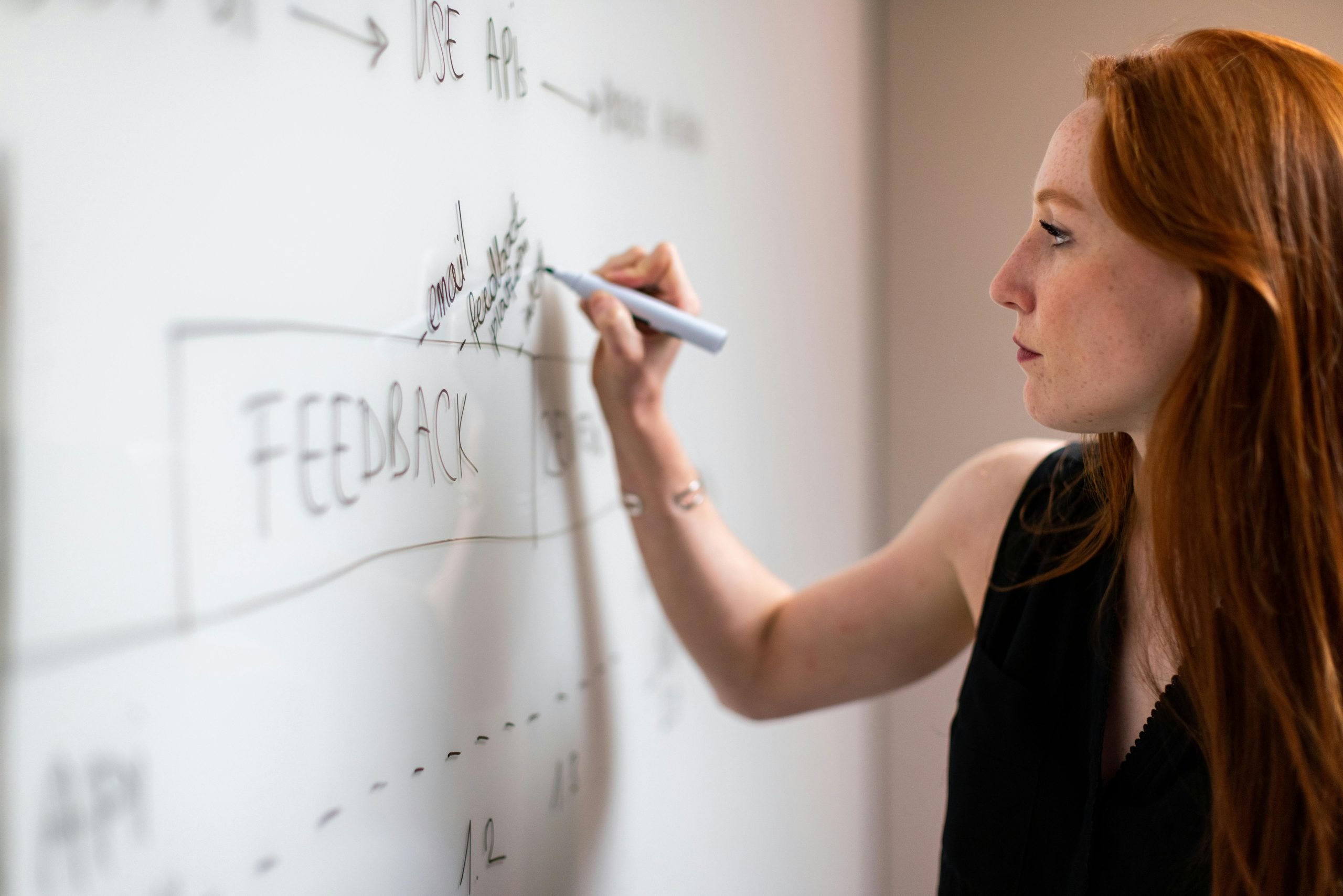
Writing is not just a way to demonstrate learning. For many introverts, it is how learning actually happens. The act of putting ideas into written form forces clarity, reveals gaps in understanding, and creates a record for later reflection. Journaling, note-taking systems, and essay-based assessments tend to surface the kind of depth that verbal performance often obscures.
Educational systems that prioritize written expression over verbal performance tend to produce more equitable outcomes across personality types. The growing emphasis on portfolios, written reflections, and project documentation in progressive educational models is a meaningful development for introverted learners.
Small Group and One-on-One Learning
Large group dynamics can be overwhelming, but small, focused groups with clear purpose often work well. The difference lies in the social math. In a group of four or five people with a specific task, every voice carries weight and there is less pressure to compete for airtime. One-on-one mentorship and tutoring relationships can be particularly powerful because they remove performance anxiety entirely and create space for genuine dialogue.
Are There Emerging Educational Technologies That Favor Introverted Learners?
Several developments in educational technology align naturally with how introverted people prefer to engage with information.
Artificial intelligence-driven personalization is one of the more significant shifts. Adaptive learning platforms adjust content difficulty, pacing, and format based on individual performance data. A learner who processes slowly but deeply can move through material at a pace that matches their cognitive style without being penalized for it. A 2023 report from Harvard Business Review noted that personalized learning environments consistently produce stronger engagement and retention compared to standardized formats, particularly among learners who struggle in traditional classroom dynamics.
Virtual reality learning environments are also worth watching. Early applications in medical education, vocational training, and language learning suggest that immersive, low-social-pressure environments can produce rapid skill development. A learner practicing a difficult conversation in a simulated environment, without the social stakes of a real audience, can build competence before bringing it into high-pressure situations.
Text-based AI tutoring tools allow learners to ask questions they might feel embarrassed to raise in a classroom, get immediate answers without judgment, and revisit explanations as many times as needed. For someone who has spent years feeling self-conscious about asking for clarification in front of others, that accessibility changes the learning dynamic significantly.

How Can Introverted Learners Advocate for Better Learning Conditions?
Understanding your own learning profile is the first practical step. Many introverted adults have spent years assuming they were simply not good students, when what they actually needed was a different format. Recognizing the difference between a genuine knowledge gap and an environmental mismatch matters.
In formal educational settings, advocating for written participation options, extended response time, and project-based assessments is reasonable and increasingly accepted. Many institutions now recognize that participation metrics built entirely around verbal contribution are not valid measures of engagement or comprehension.
In professional development contexts, choosing self-directed formats over mandatory group workshops when possible is a legitimate strategy. Many organizations now offer a mix of learning modalities, and selecting the ones that match your cognitive style is not avoidance. It is intelligent resource allocation.
There is also value in communicating your learning preferences clearly to managers, mentors, and colleagues. Early in my career, I assumed everyone understood that I needed time to think before responding. Most of them interpreted my silence as disengagement. Learning to say “give me a day to think this through and I’ll come back with a detailed response” changed how my contributions were received. The quality of what I produced was always there. The framing just needed to make it visible.
What Does the Future of Education Actually Look Like for Quiet Learners?
The trajectory of education is moving in a direction that, on balance, favors the strengths of introverted learners. Flexibility is increasing. Personalization is expanding. Written and project-based assessment is gaining ground. The pressure to perform comprehension in real time in front of a large group is diminishing as a primary measure of learning.
That said, social and collaborative skills remain important in most professional contexts, and education will continue to develop them. The shift is not toward eliminating collaboration but toward offering more varied pathways for demonstrating knowledge and engaging with content.
A 2022 review published through the National Institutes of Health on learning modality preferences found that students who had access to multiple formats for engaging with the same content showed significantly higher retention and reported greater confidence in their understanding. That finding points toward a future where format diversity is not an accommodation but a standard design principle.
For introverted learners who have spent years feeling like the system was working against them, that shift is meaningful. Not because it erases the challenge, but because it signals that the way quiet people learn is finally being taken seriously as a legitimate and valuable cognitive style rather than a deficit to correct.
My own experience running an agency and working with Fortune 500 clients taught me that the most incisive thinking in any room often came from the quietest people in it. They had been processing while others were performing. They arrived at the table with fully formed ideas while others were still working through the surface layer. The future of learning, at its best, will be built to capture that kind of depth rather than penalize it.

Explore more resources on introvert strengths, career development, and personal growth in our complete Ordinary Introvert hub.
About the Author
Keith Lacy is an introvert who’s learned to embrace his true self later in life. After 20 years in advertising and marketing leadership, including running agencies and managing Fortune 500 accounts, Keith now channels his experience into helping fellow introverts understand their strengths and build fulfilling careers. As an INTJ, he brings analytical depth and authentic perspective to every article, drawing from both professional expertise and personal growth.
Frequently Asked Questions
How do introverts learn best?
Introverts tend to learn best in low-stimulation environments that allow for self-paced engagement, deep focus, and reflection time before responding. Formats like self-directed online courses, independent reading, written assignments, and small group settings typically produce stronger outcomes than large group discussions or high-pressure verbal performance contexts.
Is online learning better for introverts?
Online learning often aligns well with introvert strengths because it removes real-time social performance pressure, allows for learner-controlled pacing, and provides asynchronous options for participation. That said, the quality of any learning format depends on how well it matches an individual’s specific needs. Online learning is a strong option for many introverted learners, but it works best when combined with intentional structure and self-discipline.
Why do introverts struggle in traditional classrooms?
Traditional classrooms often reward speed, verbal participation, and social confidence over depth, reflection, and written expression. Introverts tend to process information through longer neural pathways associated with careful analysis, which means they often need more time before responding. Grading systems that heavily weight spontaneous verbal participation can systematically underestimate what introverted students actually know.
What careers are well-suited to introverted learners?
Introverted learners often excel in careers that reward deep expertise, independent research, analytical thinking, and written communication. Fields like data analysis, software development, writing, research, architecture, accounting, and many areas of science and engineering tend to value the strengths that introverted people develop through their preferred learning style. That said, introverts succeed across virtually every field when they find environments that respect their working and learning style.
How can introverts advocate for better learning environments?
Advocating for better learning conditions starts with understanding your own cognitive style clearly enough to articulate it. In educational settings, requesting written participation options, extended response time, and project-based assessments is reasonable and increasingly accepted. In professional development contexts, choosing self-directed formats and communicating your preference for preparation time before contributing to discussions are practical strategies that most organizations can accommodate.