Greece for solo travellers offers something that most popular destinations simply cannot: a culture that moves at the pace of reflection, landscapes that reward stillness, and a social rhythm that lets you choose your depth of engagement on any given day. Ancient ruins sit quietly beside whitewashed villages, and the sea stretches out in every direction without demanding anything of you. For introverts especially, Greece doesn’t just accommodate solitude, it seems almost designed for it.
My first solo trip to Greece happened during what I’d now call a reckoning. I’d spent most of my adult life running advertising agencies, managing teams of forty-plus people, flying between client meetings in New York and Chicago, performing the version of leadership I thought I was supposed to embody. Loud. Decisive. Always on. I was good at it, technically. But I was exhausted in a way that sleep couldn’t fix. Greece was supposed to be a working holiday. I brought my laptop. I barely opened it.
What I found instead was a country that seemed to understand something about the value of sitting still, watching light change on old stone, and letting a conversation happen only when it naturally wanted to. I’ve returned three times since, always alone, always for the same reason: Greece gives me back to myself.
Solo travel, particularly to a place as layered as Greece, has a way of surfacing questions you’ve been too busy to ask. It fits naturally into the kind of reflection we explore in the Life Transitions and Major Changes hub, where the real subject is always the inner work that accompanies outer movement. Greece, as it turns out, is one of the better classrooms for that work.

What Makes Greece Different From Other Solo Destinations?
There’s a quality to Greek time that I’ve never quite found elsewhere. Philosophers gave it a name: kairos, the idea of the right or opportune moment, as opposed to the relentless forward march of chronological time. Whether or not modern Greeks consciously think in those terms, you feel it. Lunch doesn’t end. Coffee lasts as long as the conversation warrants. An afternoon nap isn’t laziness, it’s built into the architecture of the day.
What drains your social battery?
Not all social exhaustion is the same. Our free quiz identifies your specific drain pattern and gives you personalised recharging strategies.
Find Your Drain PatternUnder 2 minutes · 8 questions · Free
For someone wired the way I am, this matters enormously. My mind works best when it has room to process without interruption. I notice things slowly, thoroughly, in layers. Running agencies, I was often praised for strategic thinking that seemed to come from nowhere, but it never came from nowhere. It came from long quiet periods of observation that I’d learned to steal between meetings, on early morning walks, in the margins of other people’s schedules. Greece handed me that time openly, without apology.
The country’s geography also works in a solo traveller’s favor. Islands create natural containers. When you’re on Naxos or Hydra or Sifnos, the world is exactly as big as the island. That limitation becomes a gift. You stop scanning for what’s next and start actually inhabiting where you are. I spent four days on Hydra once, a car-free island where the only sounds are donkeys, footsteps, and water, and I wrote more clearly and thought more precisely than I had in years. The absence of noise wasn’t just pleasant. It was productive in the deepest sense.
Mainland Greece carries a different energy, but it’s equally welcoming to the solo traveller who prefers depth over spectacle. The Mani peninsula in the Peloponnese, for example, is stark and ancient and almost aggressively quiet. Villages there feel like they haven’t decided whether to acknowledge the twenty-first century yet. That ambivalence suits me perfectly.
How Do You Actually Spend Your Days Traveling Greece Alone?
One of the questions I get most often from people considering solo travel is a practical one: what do you actually do all day without someone to share it with? My honest answer is that I do more, not less. Without the social negotiation of group travel, I follow my own curiosity completely. I wake up when I want, eat when I’m hungry, and spend as long as I need in any given place.
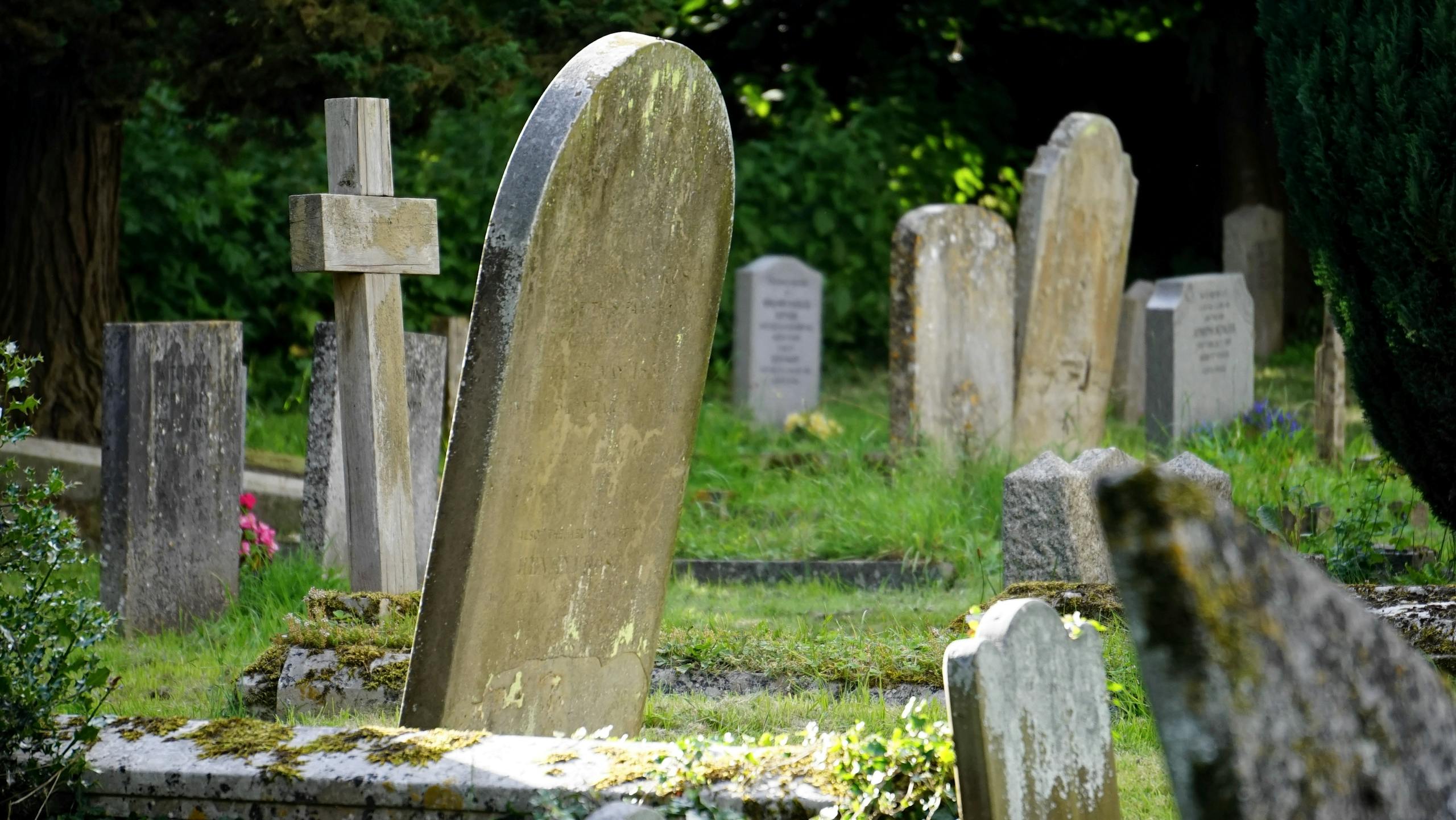
In Athens, I spent an entire morning at the Kerameikos cemetery, one of the oldest in the ancient world, nearly alone except for a few archaeologists working in the distance. Most tourists rush through it on the way to the Acropolis. I sat on a low wall for an hour watching cats sleep on ancient grave markers and thinking about legacy in ways that felt genuinely useful to my own life, not abstract or academic. That kind of unstructured time with meaningful surroundings is something I’ve come to think of as one of the most valuable things a person can give themselves.
The practical rhythm of a solo day in Greece tends to organize itself naturally. Mornings are cool and clear, ideal for sites and walking. Midday heat pushes you toward shade, coffee, and reading. Late afternoon revives everything, the light turns extraordinary, and tavernas begin setting out tables. Evenings are long and unhurried. This structure suits a person who processes experience in waves rather than all at once.
Food becomes a particular pleasure when you’re alone. Eating solo at a Greek taverna is not the awkward experience it might be in other countries. Greeks eat late, eat slowly, and have a genuine interest in where you’re from and what brought you there. I’ve had some of my most interesting conversations over a plate of grilled octopus and a carafe of house wine, conversations that went deep quickly because there was no social performance involved. Nobody was trying to impress a group. It was just two people talking, and then it ended naturally when it was done.
There’s something worth noting here about the quality of those exchanges. Psychology Today has written about the introvert preference for depth in conversation, and Greece consistently provided that. Greeks aren’t small-talkers by nature. They want to know what you think about things that matter. That directness, which can feel abrupt in other cultural contexts, felt like home to me.
Which Greek Islands Are Best for Introverts Who Need Real Quiet?
Not all Greek islands are created equal for the solo traveller seeking genuine stillness. Santorini and Mykonos are extraordinary in their way, but they’re also extraordinarily crowded, particularly in summer. The introvert’s Greece is a different map entirely.
Sifnos was a revelation on my second trip. Small, relatively undiscovered by mass tourism, famous among Greeks for its food and its ceramic tradition. I rented a small house in the village of Artemonas for ten days and established a routine that felt more sustainable than most of my daily life at home. Morning coffee on the terrace. A walk to a different beach each day. Afternoons reading or writing. The local baker knew my order by day three. That kind of quiet familiarity, anonymous enough to be free but connected enough to feel human, is exactly what I needed.
Ikaria has a reputation that deserves its own paragraph. It’s one of the world’s so-called Blue Zones, places where people routinely live past ninety in good health and good spirits. The islanders have a particular relationship with time, specifically with not being enslaved to it. Buses run approximately when they feel like it. Festivals start when enough people have arrived. Nothing is optimized. Everything is lived. As someone who spent two decades optimizing everything, I found Ikaria genuinely disorienting at first, and then profoundly clarifying.
Hydra, which I mentioned earlier, deserves special attention. No cars, no motorbikes, no roads in the conventional sense. The island runs on foot and donkey power. The art community that settled there in the 1960s, Leonard Cohen lived there for years, left a certain quality of intellectual seriousness in the atmosphere. The island feels like it expects you to be doing something worthwhile with your time. I always rise to that expectation.
For those drawn to the mainland, the Zagori region in Epirus is almost unknown to international tourists. Stone villages connected by ancient paths, deep gorges, monasteries perched on cliffs. It’s the Greece that exists before the postcard version, and it’s extraordinary for anyone who needs landscape that asks something of them.

What Does Solo Travel in Greece Actually Do to Your Inner Life?
This is the question I find most interesting, and the one most travel writing carefully avoids. Solo travel isn’t just about logistics and scenery. It does something to the interior. Greece, specifically, seems to accelerate a particular kind of self-recognition.
Part of it is the historical weight of the place. Standing in Delphi, where people traveled for centuries to ask the oracle who they were and what they should do, you can’t help but feel the weight of that question pressing back on you. The famous inscription at the Temple of Apollo, “Know thyself,” isn’t a tourist slogan. It’s a genuine invitation. Greece keeps extending it.
I’ve thought a lot about why solitude in a foreign place feels different from solitude at home. At home, solitude is always adjacent to obligation. There’s always something I should be doing. In Greece, that scaffolding falls away. What remains is closer to the actual self, the one that exists when no one is watching and nothing is expected. I find that self more interesting than the performing version, and considerably easier to live with.
There’s a piece I return to often on this site about what shifts when you genuinely stop resisting aloneness, about embracing solitude and what changes when you stop fighting it. Greece was where that shift happened for me in practice, not just in theory. I’d read enough about introversion to understand myself intellectually. Greece made it experiential.
Something else happens on extended solo travel that I didn’t anticipate: you start to notice your own patterns with unusual clarity. The way you make decisions when no one else’s preferences are in the equation. The things you choose when choice is entirely yours. I noticed on my first Greece trip that I consistently chose old things over new ones. Ancient sites over modern beaches. Local wine over international labels. Small villages over resort towns. Those preferences, observed cleanly without social negotiation, told me something real about who I am that twenty years of agency life had obscured.
Understanding how personality shapes the way we process major experiences is something worth examining carefully. The way MBTI life planning intersects with every significant decision becomes surprisingly visible when you’re traveling alone and watching yourself choose, repeatedly and freely, without external influence.
How Do You Handle the Social Demands of Solo Travel Without Burning Out?
Solo travel doesn’t mean zero social interaction. It means you control the dosage. Greece makes this particularly manageable because the culture has a natural rhythm of engagement and withdrawal built into daily life that mirrors what introverts need anyway.
Greeks are warm but not intrusive. They’ll invite you into a conversation enthusiastically, and they’ll also let you sit alone with a book for three hours without checking whether you’re okay. That combination is rarer than it sounds. In many cultures, a person sitting alone is a problem to be solved. In Greece, it’s simply a person sitting alone, which is a perfectly legitimate thing to be.
I’ve developed a few practical habits over my trips that help manage energy well. I treat mornings as sacred solo time, no social obligations before noon if I can help it. I choose accommodation carefully, small family-run guesthouses rather than large hotels, because the interactions are more genuine and less draining. I carry a book everywhere, not because I always read it, but because it signals to others that I’m comfortable in my own company, which tends to attract the kind of person who respects that.
The ferry system in Greece is worth mentioning as a social environment in itself. Long ferry crossings, some lasting eight or ten hours, create a peculiar intimacy. You’re neither here nor there. The usual social categories dissolve somewhat. I’ve had extraordinary conversations on ferries with people I’d never have spoken to in ordinary circumstances, and then we’ve arrived at our respective islands and never seen each other again. That temporary depth, meaningful without obligation, is something introverts often find easier to access than the sustained social performance of conventional networking.
One thing I’ve noticed is that solo travel in Greece tends to surface sensitivities I don’t always acknowledge at home. The beauty of certain places, particularly at dusk, can be almost overwhelming. The loneliness of certain evenings is real. I’ve learned to treat both as information rather than problems. The research on how sensitivity develops and shifts across a lifetime, particularly the work around how HSP traits evolve over time, has helped me understand that what I experience in those moments isn’t weakness. It’s a different kind of perception that has genuine value.
Managing social energy well also means being honest about what depletes you. For me, it’s tourist crowds, not because I dislike people, but because the ambient noise and stimulation of a crowded site makes it impossible to actually think. My solution in Greece is simple: go early. The Acropolis at 8 AM, when it opens, is a completely different experience from the Acropolis at noon. The same is true of almost every major site. The crowds arrive with the heat. Beat both.
What Practical Things Should You Know Before You Go?
Greece is genuinely easy to travel alone. The infrastructure for independent travel is well-developed, English is widely spoken in tourist areas, and the country is broadly safe for solo travellers of all kinds. That said, a few specifics are worth knowing before you arrive.
The ferry system is the backbone of island travel and it’s worth understanding before you rely on it. Ferries run frequently in summer and much less so in shoulder and off seasons. Some smaller islands have limited connections. I always book ferries in advance for the first leg of any trip, then stay flexible after that. The booking platforms are straightforward and most accept international payment cards without issue.
Accommodation in Greece ranges from international hotel chains in major cities to extraordinary small guesthouses on islands that have been in the same family for generations. For solo introverts, I’d consistently recommend the latter. The scale is human. The interactions are genuine. You’re more likely to get a real recommendation for where to eat or what to see from a guesthouse owner than from any app. I’ve had guesthouse owners in Greece who functioned almost like the kind of thoughtful advisor who changes how you see things, the way deep listeners in supportive roles can shift your perspective simply by paying close attention to what you actually need rather than what you say you want.
Timing matters significantly. July and August are peak season, which means crowds, heat, and prices at their highest. May, June, September, and October are considerably more pleasant for the kind of travel I’m describing. Spring in particular is remarkable: wildflowers everywhere, mild temperatures, sites that are nearly empty. I visited Delphi in early May once and had the sanctuary almost entirely to myself for two hours. That experience would be impossible in August.
Budget planning is straightforward. Greece is moderately priced by Western European standards. Food, particularly at local tavernas rather than tourist-facing restaurants, is excellent value. A full meal with wine at a good local place rarely costs more than fifteen euros. Accommodation varies widely but a comfortable private room in a family guesthouse on most islands runs between forty and eighty euros a night depending on season.
One more practical note: learn a few words of Greek. Not because you’ll need them, but because Greeks respond to the effort with warmth that changes the entire quality of an interaction. “Kalimera” (good morning), “efharisto” (thank you), “parakalo” (please/you’re welcome). These small gestures signal respect and genuine interest in where you are, and they open doors that stay closed to people who treat every country as an extension of their home culture.
What Does Greece Teach You That You Carry Home?
Every time I’ve returned from Greece, I’ve come back different in some specific, identifiable way. Not dramatically different, not “transformed” in the breathless way travel writing tends to promise. Differently calibrated. More willing to let things take the time they need. Less convinced that efficiency is the highest virtue.
After my first trip, I restructured how I ran my agency. I started protecting two hours each morning for thinking time with no meetings, no calls, no email. My team thought I’d lost my mind. Revenue went up that quarter. The connection wasn’t coincidental. Greece had reminded me that my best work came from depth, not speed, and I’d brought that understanding back and applied it practically.
After my second trip, I started being more honest with clients about what I actually thought rather than what I thought they wanted to hear. Greeks are direct. Not unkind, but direct. They say what they mean and they respect people who do the same. That quality, which I’d always had but suppressed in the performance of client-facing work, became something I stopped apologizing for.
The third trip was harder. I went through a significant professional transition that year, stepping back from day-to-day agency leadership, and Greece held that uncertainty without trying to resolve it. I sat with questions I couldn’t answer yet and found that sitting with them was enough. The country has a patience embedded in its stones that communicates itself if you stay long enough.
There’s something about ancient places specifically that helps with this. Research on awe and its psychological effects suggests that encounters with things vastly larger or older than ourselves can reduce self-focused thinking and increase a sense of connection to something beyond immediate concerns. Greece delivers awe in concentrated doses. Standing at Mycenae, where the civilization that inspired Homer’s epics actually existed, produces a particular kind of humility that is genuinely useful for anyone who has spent too long believing their immediate problems are the most important thing happening.
What I carry home most consistently is permission. Permission to take time. Permission to think before speaking. Permission to find a quiet corner and stay in it. Greece doesn’t make you feel like you’re missing out by being still. It makes stillness feel like the most intelligent choice available.

Solo travel to Greece isn’t a cure for anything. It won’t fix a career that needs rethinking or a relationship that needs attention or a self-understanding that’s still incomplete. What it will do, if you let it, is give you the conditions in which those things become clearer. The quiet, the beauty, the cultural permission to slow down, these create the space where honest thinking becomes possible. That’s not nothing. For many of us, it’s exactly what’s been missing.
If you’re in the middle of a significant life change and wondering whether travel belongs in that process, the full collection of articles in the Life Transitions and Major Changes hub explores exactly that territory, including how to think about major decisions, how sensitivity shifts across a lifetime, and how to make peace with the kind of solitude that precedes real clarity.
Running on empty?
Five drain profiles, each with specific triggers, warning signs, and a recharging playbook.
Take the Free QuizUnder 2 minutes · 8 questions · Free
About the Author
Keith Lacy is an introvert who’s learned to embrace his true self later in life. After 20 years in advertising and marketing leadership, including running agencies and managing Fortune 500 accounts, Keith now channels his experience into helping fellow introverts understand their strengths and build fulfilling careers. As an INTJ, he brings analytical depth and authentic perspective to every article, drawing from both professional expertise and personal growth.
Frequently Asked Questions
Is Greece a good destination for solo introverts who need a lot of alone time?
Greece is exceptionally well-suited to solo introverts. The culture supports unhurried, individual travel without social pressure. Smaller islands and rural mainland regions offer genuine quiet, and Greeks generally respect a person’s choice to be alone without treating it as a problem to be solved. The country’s natural rhythm of activity and rest mirrors what many introverts need to recharge effectively.
Which Greek islands are best for avoiding crowds?
Sifnos, Ikaria, Folegandros, and Hydra are among the best options for travellers seeking genuine quiet. Hydra is car-free and has a contemplative atmosphere. Ikaria is famous for its unhurried pace and long-lived population. Sifnos offers excellent food and a strong local culture without mass tourism. Visiting any island in May, June, September, or October rather than peak summer significantly reduces crowds everywhere.
How do you manage social energy on a solo trip to Greece?
Protecting morning time as solo time is one of the most effective strategies. Choosing small family-run guesthouses over large hotels keeps social interactions genuine and manageable rather than performative. Visiting major archaeological sites at opening time avoids the crowd-related overstimulation that builds through the day. Carrying a book signals comfort with solitude and tends to attract respectful rather than intrusive interactions.
When is the best time of year for solo travel in Greece?
May and early June, along with September and October, offer the best combination of good weather, manageable crowds, and lower prices. Spring brings wildflowers and mild temperatures with nearly empty archaeological sites. Autumn extends warm swimming weather into October while the summer crowds have largely departed. July and August are the most popular months but also the most crowded and expensive, with intense heat that can make daytime sightseeing uncomfortable.
What does solo travel in Greece offer beyond typical sightseeing?
Greece offers a particular quality of reflective time that is difficult to access in ordinary daily life. The combination of ancient historical sites, a culture that values unhurried conversation and rest, and landscapes that reward stillness creates conditions for genuine self-examination. Many solo travellers, particularly those at transitional points in their lives, find that extended time in Greece clarifies priorities and surfaces self-knowledge that busy routines tend to obscure. The country’s philosophical heritage, from the Delphic “know thyself” to the Stoic tradition, gives that inner work a meaningful cultural context.